Monitoring and Safety Hub
Monitoring is an important part of living with aspergillosis, particularly during long-term treatment. Regular checks can help assess whether treatment is working, identify side effects early and make sure medicines are being used safely.
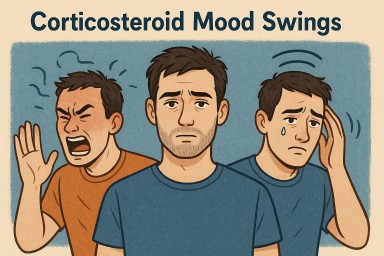
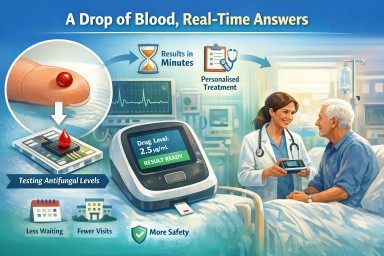
This hub focuses particularly on treatment safety and ongoing surveillance. This can include blood tests, liver and kidney function, therapeutic drug monitoring (measuring antifungal levels), drug interactions, steroid-related risks and recognising symptoms or changes that should be discussed with your healthcare team.
Monitoring varies according to the type of aspergillosis, the medicines being used and your individual health. Not everyone will need the same tests or the same frequency of testing.
Topics in This Hub
Latest Monitoring & Safety Articles








Aspergillosis topics
Find the information you need
Explore our information about aspergillosis, its treatment and the
practical realities of living with the condition.
These hubs bring together articles inspired by real questions from
patients and carers. Choose a subject area below to browse its latest
articles and resources.
Start here
If you are new to aspergillosis, these guides explain what it is, how it is diagnosed, the main treatments and how to manage day-to-day life.
- What is aspergillosis? — A clear introduction to the different forms of aspergillosis, who it affects and what happens next.
- Diagnosis and monitoring — How doctors use symptoms, scans, blood tests and sputum tests to understand aspergillosis.
- Treatment and management — An overview of antifungals, other treatments, monitoring and managing side effects.
- Living with aspergillosis — Practical information about symptoms, fatigue, wellbeing, daily life and support.
Browse all information hubs
Select the area that best matches what you want to understand. Each hub
contains related articles, explanations and practical guidance.
Types of aspergillosis
Learn about the different conditions caused by, or associated with,
Aspergillus.
Diagnosis, symptoms and associated conditions
Understand tests, scans and symptoms, and explore how asthma, bronchiectasis, COPD and other respiratory conditions can overlap with aspergillosis.
Treatment and monitoring
Explore medicines, physical treatments, safety monitoring and
complementary approaches.
Living with aspergillosis
Practical support for daily life, emotional wellbeing, travel, your
home and those around you.
Community, NAC and research
Keep up with our community, specialist-centre information and
developments in aspergillosis research.
- NAC communities
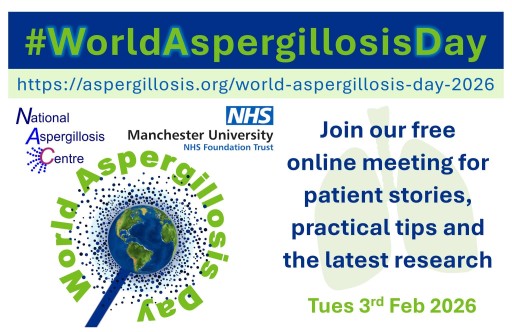
- World Aspergillosis Day 2026 — Presentations and Recordings
- NAC news and guidance
- Research
Healthcare Professionals Hub
Clinical guidance, research updates and specialist resources for healthcare professionals involved in diagnosing and managing aspergillosis.
Research Hub
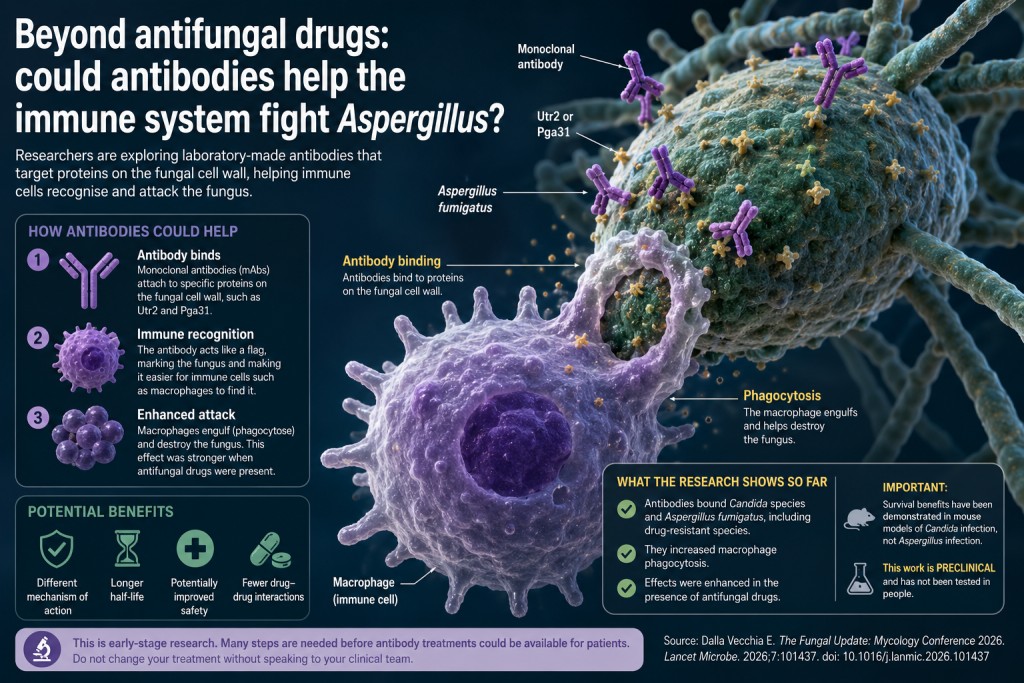
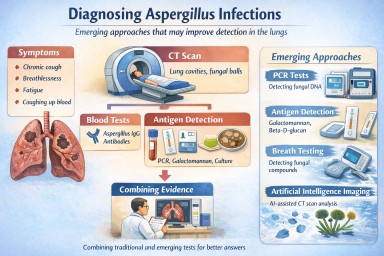
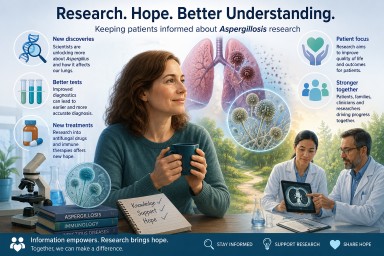
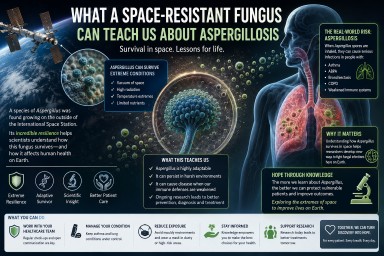
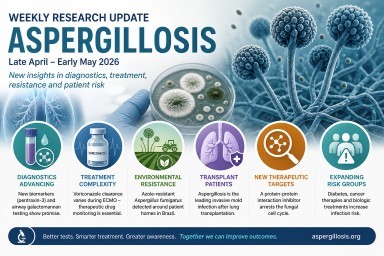
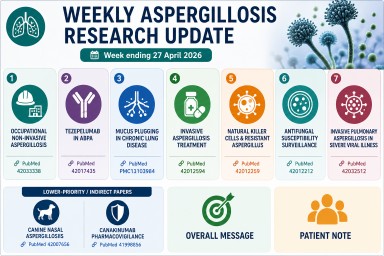
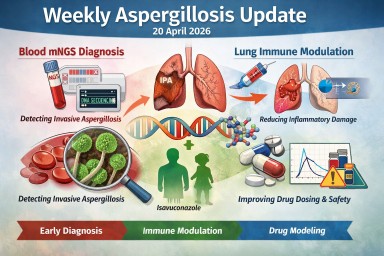
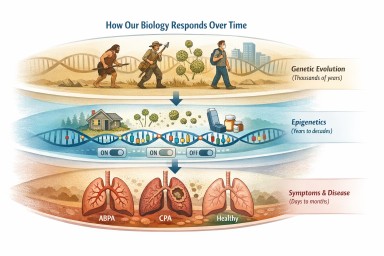
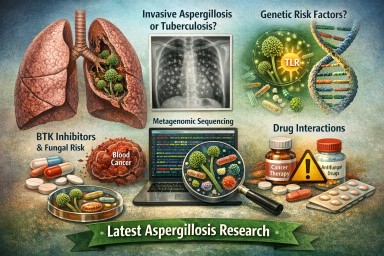
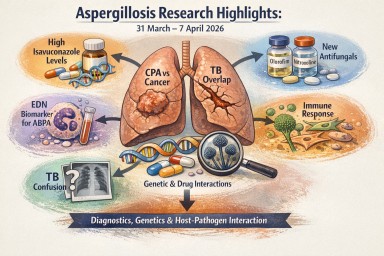
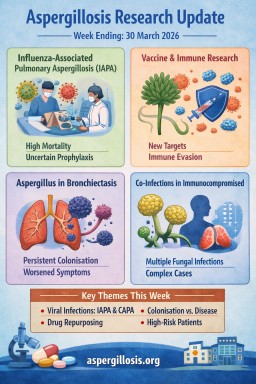
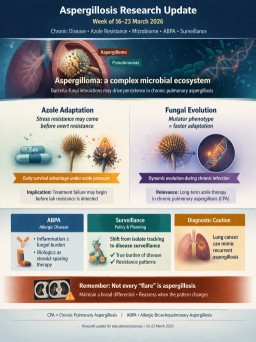
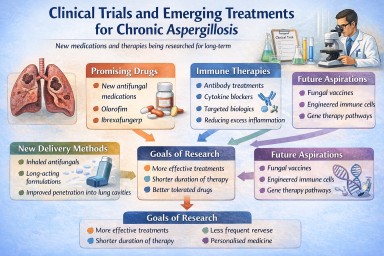
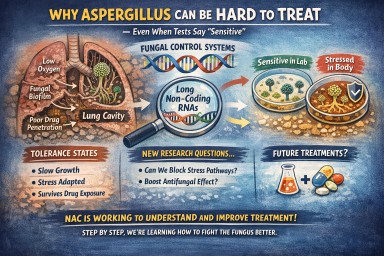
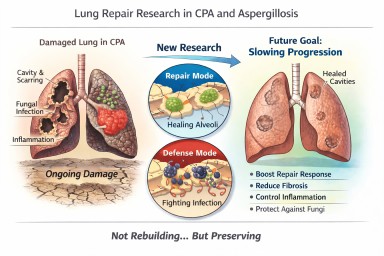
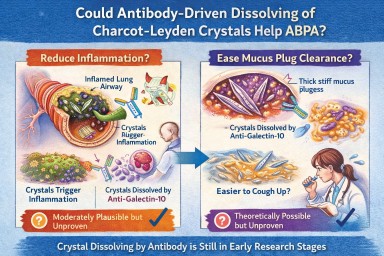
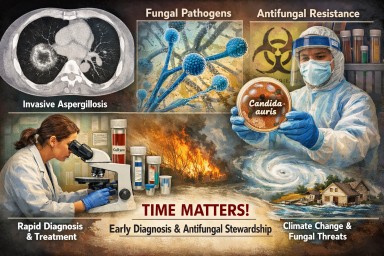
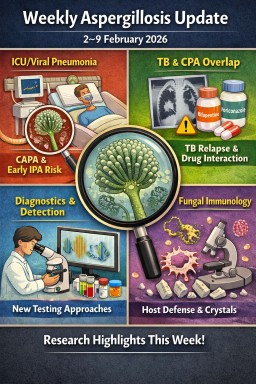
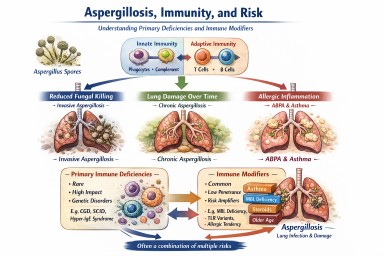
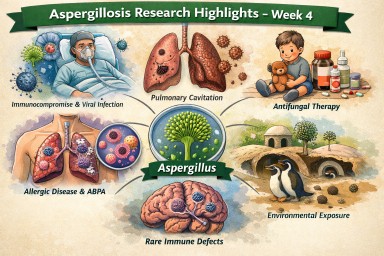
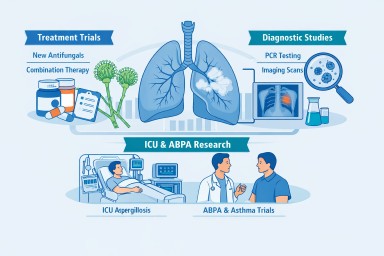
Aspergillosis research is evolving rapidly, including the development of new antifungal medicines, biologic treatments, diagnostic tests, monitoring approaches and ways to improve respiratory health and quality of life.
Research findings do not necessarily mean that a new test or treatment is ready for routine clinical use. Studies may be at very different stages, from laboratory and animal research through clinical trials to evidence that could influence future guidelines and patient care.
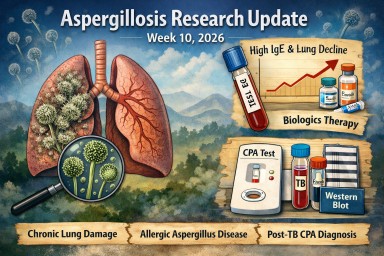
This hub brings together recent aspergillosis research and explains what new findings may mean for patients, carers and healthcare professionals. We aim to distinguish promising early research from developments that are closer to changing clinical practice.
Research to Watch
These selected developments may be especially interesting or potentially important for people with aspergillosis and for anyone wanting to understand how care may change.
Each article explains what is new, why it might matter, how close it may be to clinical use, and what remains uncertain.

Additional Research Articles
Topics in This Hub
Latest Research Articles



NAC Communities Hub
The National Aspergillosis Centre (NAC) supports a wider community of people affected by aspergillosis alongside its specialist clinical work. Regular online meetings, educational sessions and other community activities give patients and carers opportunities to learn, ask questions and connect with others who understand the condition.
This hub focuses on community, support and participation. It brings together information about patient meetings, educational sessions, recordings, community activities and ways for people affected by aspergillosis to stay connected.
Community resources can complement medical care by providing information and peer support, but they are not a substitute for individual advice from your healthcare team.
Topics in This Hub
Latest NAC Communities Articles
Nothing found.
Damp, Mould and Housing Hub
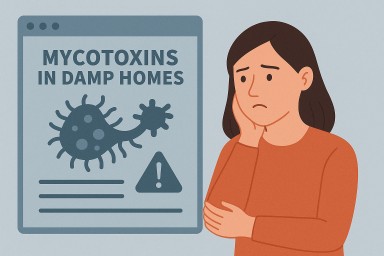
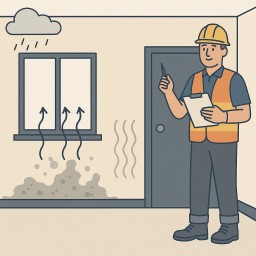
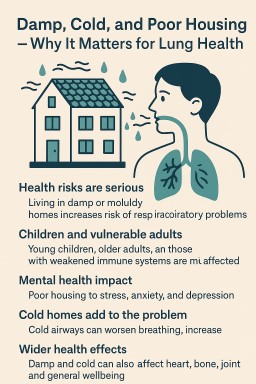
Damp, mould and poor ventilation can worsen respiratory symptoms and make life with a long-term lung condition harder. This hub brings together practical, evidence-based information for people with aspergillosis, their families and carers.
The aim is not to suggest that every damp home causes aspergillosis. Aspergillus is common in the environment, and most exposure does not cause infection. However, persistent damp and mould should be taken seriously, particularly when symptoms are worsening or someone has asthma, bronchiectasis, COPD, a weakened immune system or another lung condition.
Start here
- Damp, mould and health in 2026: what we know and what people can do
- Why damp-home exposure does not usually mean you have aspergillosis
- Damp, mould and aspergillosis in rented homes
- Verified UK resources for damp, mould and health
What you will find here
- Recognising damp, condensation and mould problems
- Reducing exposure sensibly at home
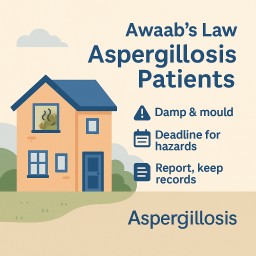
- Advice for tenants, landlords and housing providers
- Indoor air quality, ventilation and practical prevention
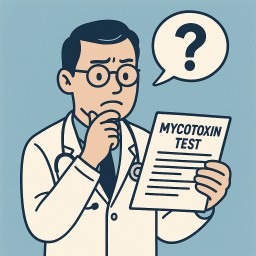
- What the evidence says—and how to avoid misleading tests or “detox” claims
For wider advice on gardening, compost, air quality, masks, travel and other environmental exposures, see Prevention & Environment.
Topics in This Hub
Latest Housing Articles









Carers & Family Hub
Supporting someone with aspergillosis can involve far more than practical help. You may be a partner, relative, friend or unpaid carer helping with appointments, medicines, symptoms, everyday tasks and difficult days — while managing your own concerns and responsibilities too.
This hub brings together practical information for people close to someone with aspergillosis. You do not have to understand everything at once, and you do not have to manage everything alone.
Start here: practical guides for carers
If you are new to supporting someone with aspergillosis, these guides are a good place to start. They explain the condition, common practical challenges, how you can help, and how to look after your own wellbeing.
- Supporting Someone with Aspergillosis: A Guide for Carers and Families
An introduction to supporting someone day to day while respecting their independence. - Energy Pacing for Carers: Helping Someone with Aspergillosis Manage Their Energy
Practical ways to understand fatigue, plan activities and avoid doing too much on a better day. - Understanding Aspergillosis Medicines: A Guide for Carers
A plain-language guide to medicines, side effects, interactions and preparing for discussions with the healthcare team. - Aspergillosis Carer Checklist: What to Watch For and What Helps
Helpful observations to record, practical preparation and when to seek advice. - When Someone with Aspergillosis Has a Bad Day: A Guide for Carers
Support for the more difficult days, including how to help calmly and when to seek urgent help.
More help for carers and families
Understanding and communicating
Aspergillosis can be difficult for other people to understand, particularly when symptoms such as fatigue and breathlessness fluctuate or are not obvious.
- Talking to Friends and Family about Aspergillosis — help with explaining the illness and what support is useful.
- Adjusting to a Lifelong Diagnosis — emotional support for people with aspergillosis and those close to them.
- When Others Do Not Fully Understand How You Feel — understanding invisible and fluctuating symptoms.
Appointments and managing care
Carers and family members can help someone prepare for appointments, keep important information organised and remember questions — while keeping the person with aspergillosis involved in decisions about their own care.
- How to Ask Fewer, Better Questions in Appointments
- The Power of Keeping a Health Diary
- Keep Important Aspergillosis Information With You
- Getting a Second Opinion or Specialist Advice
Looking after yourself and getting support
Caring can be rewarding, but it can also become exhausting. Carers have needs of their own, and asking for help is part of making caring sustainable.
- When Caring Becomes Overwhelming — recognising carer strain and sharing responsibility.
- Practical Support for Carers — Carer’s Assessments, breaks, benefits, practical help and backup planning.
- Support and Community — meetings, online communities and other ways to connect with people who understand.
Additional support and planning ahead
Some people living with severe or complex aspergillosis may need additional help with difficult symptoms, quality of life or planning for changing needs.
- Living Well with Aspergillosis: Understanding Palliative and Supportive Care — additional support with symptoms, wellbeing, family needs and planning ahead while treatment continues.
Explore more topics
Latest articles for carers and families

Travel & Insurance Hub
Having aspergillosis or another chronic lung condition does not necessarily prevent you from travelling, but some people need additional planning to travel safely and confidently.
Good preparation can prevent many travel problems. Depending on your health and destination, this may include discussing fitness to fly, arranging oxygen or other respiratory equipment, carrying enough medication, understanding how medicines should be stored, obtaining appropriate travel insurance and checking recommended vaccinations.
This hub brings together practical information about travelling with aspergillosis, including flying with lung disease, travel insurance, medicines and documentation, vaccinations, respiratory equipment, infection risks and looking after your health while away from home.
Topics in This Hub
Latest Travel Articles
Nothing found.
Mental Health Hub
Living with aspergillosis can affect emotional as well as physical wellbeing. Persistent symptoms, fatigue, uncertainty, repeated tests and appointments, treatment side effects and changes to everyday life can contribute to anxiety, low mood, stress, disrupted sleep and loss of confidence.
Mental and physical health are closely connected. Anxiety and stress can make symptoms such as breathlessness, fatigue and poor sleep harder to cope with, while persistent physical symptoms can themselves affect mood and emotional wellbeing.
This hub brings together practical information about anxiety, low mood, stress, health worries, sleep, coping with uncertainty and psychological wellbeing, as well as strategies that may help people adjust to living with a long-term condition.
Topics in This Hub
Latest Mental Health Articles
Nothing found.
Living With Aspergillosis Hub
Living with aspergillosis can affect much more than the lungs. Fatigue, breathlessness, treatment, medical appointments and uncertainty can influence work, family life, relationships, exercise, travel, mood and everyday routines.
Managing a long-term condition is not only about medical treatment. Learning how to pace activities, stay active where possible, manage symptoms, look after emotional wellbeing and adapt everyday life can all form part of living well with aspergillosis.
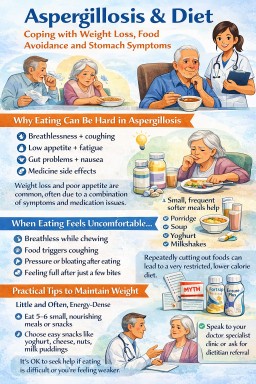
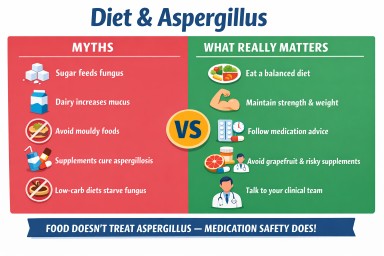
This hub brings together practical information about daily life with aspergillosis, including activity and exercise, fatigue and pacing, work, sleep, diet and nutrition, relationships, emotional wellbeing, travel, environmental issues and experiences shared by other patients and families.
Topics in This Hub
Latest Living With Aspergillosis Articles












Complications Hub
Some forms of aspergillosis can lead to complications such as haemoptysis (coughing up blood), progressive lung damage and, less commonly, problems such as pneumothorax. The risks and types of complication vary according to the form and severity of aspergillosis and a person’s underlying lung health.
A complication is different from a symptom. Symptoms such as cough, fatigue and breathlessness describe how you feel, while a complication is an additional medical problem that develops as a consequence of the disease or its effects on the lungs.
This hub brings together information about complications associated with aspergillosis, why they can occur, how they are investigated and treated, warning signs to look out for, and when urgent medical assessment may be needed.
Topics in This Hub
Latest Complication Articles