

COVID Vaccines: Yes, There Is Some Risk — But COVID Infection Causes Far More Harm

People living with aspergillosis, CPA, ABPA, bronchiectasis, asthma or sarcoidosis often feel understandably anxious about vaccination.
Concerns about myocarditis, side effects, and frightening stories online are completely normal.

But when you compare the risks of the vaccine with the risks of COVID infection, a clear picture emerges:

⚠️ The vaccine carries some risk

🚨 COVID infection carries far, far more risk — and affects almost everyone

This article explains that difference clearly and honestly.


1. COVID vaccines can cause harm — but this is rare

No medical treatment is risk-free.
A very small number of people experience:

  • Fever

  • Fatigue

  • Headache

  • Swollen glands

  • Sore arm

  • Mild myocarditis (usually short-lived, rare, and mostly in young men)

Serious reactions such as hospitalisation or anaphylaxis are extremely rare — roughly 1–2 cases per million doses.

We should acknowledge this openly.


2. Almost everyone has had COVID in the last five years

Across the UK and most of the world, over 90% of adults now show antibodies from a past COVID infection, even if they didn’t realise they had it.

Many infections felt like a cold or passed unnoticed, but the body still experienced real risks:

  • heart inflammation

  • blood clots

  • lung inflammation

  • long-term fatigue

  • worsening of existing lung disease

Many people have had COVID more than once, and the risks increase with repeated infections.

So when we compare vaccine risk with infection risk, we’re not discussing a rare scenario — we are talking about something nearly everyone has already experienced, often multiple times.


3. COVID vaccines have prevented millions of hospitalisations and deaths

Global studies estimate that:

  • In the first year alone, COVID vaccines prevented around 19 million deaths worldwide.

  • WHO Europe reports more than 1.4 million lives saved in Europe alone.

  • A wider analysis suggests vaccines prevented over half of all potential hospitalisations and severe outcomes across many countries.

A simple way to think about it:

For every serious vaccine reaction, the vaccine prevents tens of thousands of hospitalisations and deaths.

This benefit is especially important for people with:

  • chronic lung disease

  • aspergillosis

  • bronchiectasis

  • asthma

  • immune suppression

  • long-term steroid use

For these groups, the protective effect of vaccination is greater than average, because COVID complications are more dangerous.


4. COVID infection causes far more harm than the vaccine

This is the crucial point.

COVID infection is 30–100 times more likely to cause myocarditis than the vaccine.

And infection-related myocarditis is:

  • more severe

  • more likely to require hospital care

  • more likely to leave long-term effects

COVID infection also increases the risk of:

  • blood clots

  • heart attacks

  • strokes

  • lung scarring

  • long COVID

  • ICU admission

  • worsening of asthma, ABPA, CPA and bronchiectasis

And the risk of death from infection is hundreds of times higher than the risk from vaccination.


5. Why scare stories feel louder than scientific facts

Scary individual stories spread quickly online.
But they are rare.

What we don’t see in the same dramatic way:

  • “Thousands of vulnerable patients avoided severe illness because they were vaccinated.”

  • “Vaccination prevented hospital admissions this week.”

  • “Most myocarditis cases after vaccination recover fully within days.”

Positive outcomes never go viral — but they happen constantly.


6. What this means for people with aspergillosis

COVID infection can:

  • trigger ABPA flares

  • worsen CPA cavities

  • increase mucus blockage

  • increase breathlessness

  • raise the risk of secondary fungal infections

  • accelerate lung damage

  • lead to hospitalisation

Vaccination significantly reduces all of these risks.

For most people with aspergillosis, vaccination is far safer than repeated COVID infections.


7. A supportive message for anyone still unsure

“It's true the vaccine carries some risk — all medicines do.
But COVID infection carries far, far more risk, and nearly everyone has had it at least once already.
Vaccination is the option that best protects your heart, your lungs, and your long-term health.”


🌿 Covid-19 and ABPA / Bronchiectasis: What Patients Need to Know

Many patients with ABPA, bronchiectasis, and asthma ask:

“If I test positive for Covid, am I at higher risk, and do I need antivirals or steroids?”
“Is Covid still a dangerous infection now that everyone has had it many times?”

Here’s what’s important right now.


🎯 Why you may be at higher risk

Having ABPA, bronchiectasis, or asthma doesn’t guarantee severe illness, but it does put you at higher risk compared to the average healthy adult. This means you are more likely to experience:

  1. More severe Covid illness – infections can trigger worse chest symptoms (wheeze, shortness of breath, cough).

  2. Secondary infections – bronchiectasis makes it easier for bacteria to grow in mucus after a viral infection.

  3. Flares of existing disease – Covid can set off asthma attacks or ABPA flare-ups.

  4. Slower recovery – fatigue, breathlessness, and extra sputum can last longer.

⚠️ Important: “Higher risk” does not mean you will definitely become very unwell. Many people with chronic lung disease still have mild Covid and recover fully at home.


âś… Current Covid treatments in the UK (2025)

  1. Antivirals / monoclonal antibodies

    • People with conditions like ABPA, bronchiectasis, or severe asthma may be eligible for medicines such as Paxlovid or Molnupiravir.

    • These must usually be started within 5 days of symptoms or a positive test.

    • Access is through the NHS Covid Medicines Delivery Unit (CMDU), often arranged via NHS 111 or your GP.

  2. Steroids

    • Oral steroids (prednisolone) are not routinely given for Covid unless oxygen levels drop, or you already take them for your lung condition.

    • If your asthma/ABPA flares, follow your specialist’s guidance on when to start rescue steroids.

  3. Antibiotics

    • Covid is viral, so antibiotics don’t treat it directly.

    • But if your doctor suspects a bacterial infection (e.g. in bronchiectasis), they may prescribe something like doxycycline.


đź§ľ Practical steps if you test positive

  • Call NHS 111 or your GP: Tell them you have ABPA/bronchiectasis/asthma and ask about referral for antivirals.

  • Monitor symptoms closely:

    • Use a pulse oximeter if you have one (seek help if oxygen ≤94%).

    • Watch for worsening breathlessness, chest pain, or confusion.

  • Keep safe at home: Ventilate rooms, use masks if possible, and wash hands often — though once exposed, focus mainly on monitoring and treatment.


🚨 When to seek urgent help

  • Severe shortness of breath

  • Oxygen levels ≤92–94%

  • Chest pain, confusion, or sudden collapse
    → Call 999


âť“ Is Covid still dangerous in 2025?

Why it feels less dangerous now

  • Vaccination and immunity: Most people have had jabs and multiple infections, so later bouts are usually milder.

  • Variants: Current strains spread more easily but often cause less pneumonia than the original virus.

  • Better treatments: Antivirals and steroids (when needed) are widely available.

Why it can still be dangerous

  • Vulnerable groups: People with lung disease, weakened immunity, or older age are still more likely to need hospital care.

  • Exacerbations: Even mild Covid can set off asthma or ABPA flares, or worsen bronchiectasis infections.

  • Long Covid: Some people continue to develop fatigue, breathlessness, or brain fog lasting weeks to months.

  • Hospital admissions: Lower than during the pandemic, but NHS hospitals still see severe cases every winter.

👉 In summary: For most healthy people, Covid now feels like a bad cold or flu. For people with ABPA, bronchiectasis, or severe asthma, it can still be a dangerous infection — which is why monitoring and access to antivirals remain important.


âś… Key message

With ABPA and bronchiectasis, you are more vulnerable to complications from Covid. Most people still recover at home, but you may be eligible for antivirals. Steroids are only used if your underlying condition flares or if your oxygen drops. Stay alert, act quickly if symptoms worsen, and reach out for NHS support as soon as you test positive.


Winter 2025–26: Flu & Other Respiratory Viruses. Bad Flu Season coming?

Information for people living with aspergillosis (ABPA, CPA and related conditions)

What the evidence says right now

Signals pointing to a tougher flu season

  • Southern Hemisphere “preview.” Australia saw higher-than-usual flu notifications in early 2025 compared with 2024, which often foreshadows a busier winter in the UK and Europe. That doesn’t guarantee the same for us, but it’s a warning sign. ausvaxsafety.org.au

    • By September 2025 the numbers of cases in Australia had reached similar levels to those seen in 2024 www.health.gov.au
  • Co-circulation of viruses. In recent winters, influenza, RSV and COVID-19 have circulated together, increasing pressure on people at risk and on health services. WHO continues to flag this pattern in seasonal updates. World Health Organization

  • UK picture (late Sept 2025). UKHSA reports flu and COVID-19 at baseline/low levels for now. Activity can rise quickly as weather cools and schools/universities return. GOV.UK

  • Vaccine effectiveness (VE). Last season’s European interim VE against influenza A was ~32–53%, which is moderate—helpful at preventing severe illness and hospitalisation, especially in higher-risk groups. Effectiveness varies by age, strain and match. PMC

  • Timing. After Southern Hemisphere signals and based on past seasons, an earlier start (late Oct–Nov) with a Dec–Jan peak is plausible, though not certain. Local surveillance will confirm if that pattern emerges.

Why forecasts are uncertain (and what can improve outcomes)

  • Vaccine uptake. Higher uptake = smaller peaks and fewer hospitalisations. GOV.UK

  • Strain match. If circulating strains stay close to vaccine strains, protection is better; drift reduces it. PMC

  • Public behaviour. Ventilation, masks in crowded indoor spaces, and staying home when unwell still reduce spread. NHS Covid

  • Population immunity & health-system readiness. Recent infections and prior vaccines help; NHS readiness also matters.

What this means if you have aspergillosis

People with ABPA/CPA or bronchiectasis can have more severe or longer-lasting symptoms from flu, RSV, or COVID-19. Practical steps:

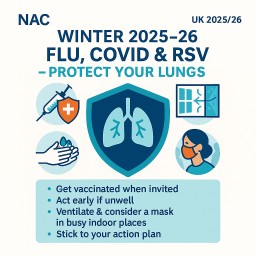
  • Get your vaccines when invited.

    • Flu vaccine (annual) and the autumn COVID-19 dose if you’re eligible. These don’t eliminate risk but reduce severe illness and hospitalisation. Flu  Covid

  • Act early if you become unwell.

    • Watch for fever, sore throat, cough, breathlessness, increased sputum, chest pain, or a fall in home SpOâ‚‚. NHS Covid  NHS Flu

    • Seek medical advice promptly—early antivirals (for COVID-19, and occasionally for flu in high-risk people) are time-sensitive.

  • Keep your baseline care tight.

    • Continue airway clearance, inhalers/other prescribed medicines, and your personalised action plan.

    • Ask about a rescue plan (who to call, when to test, when to increase treatments).

  • Reduce exposure where you can.

    • Improve ventilation, avoid poorly ventilated crowded spaces during peaks, consider masking indoors when rates rise, and hand hygiene.

Bottom line

  • Many experts anticipate a busier-than-average flu season in the UK/Europe this winter, but outcomes are not fixed. What we each do—vaccination, early help if ill, and sensible precautions—can make a big difference.


Autumn 2025 COVID-19 Booster – What Aspergillosis Patients Need to Know

The UK Health Security Agency (UKHSA) has updated who will be offered the COVID-19 booster this autumn. The programme is now more limited than in 2024, so it’s important to know if you qualify.


Who will be offered the booster?

You can get a free COVID-19 booster this autumn if you are:

  • Aged 75 or over

  • Living in a care home for older adults

  • Aged 6 months or older and immunosuppressed

This is a change from 2024, when everyone aged 65+ and many other clinical risk groups were included.


What “immunosuppressed” means

Many people with aspergillosis fall into this category. You may be considered immunosuppressed if you are:

  • Taking systemic steroids for more than a month

  • Receiving biologic therapy or other immunomodulatory medication

  • Living with a condition that affects your immune system

  • Having had chemotherapy, radiotherapy, or a transplant

If you’re unsure whether this applies to you, check with your GP or hospital specialist.


Timing of the booster

  • Boosters are usually offered at least 6 months after your last dose, including the spring booster.

  • Even if you’ve never had a COVID-19 vaccine before, you can still get one this autumn if you are in one of the eligible groups.


Why this matters for aspergillosis patients

People with aspergillosis often have weaker lungs and higher risks from infections. If your immune system is also suppressed by medication or illness, COVID-19 can be more severe. The booster offers added protection during the winter months.


đź’™ Key advice:

  • If you are immunosuppressed or over 75, you should be offered the vaccine.

  • If you think you qualify but haven’t received an invitation, speak to your GP or specialist.

  • Don’t delay — protecting yourself against COVID-19 is especially important when living with aspergillosis.


📌 Full details from UKHSA: Who’s eligible for the 2025 COVID-19 vaccine or autumn booster


COVID-19 Associated Pulmonary Aspergillosis (CAPA) for Expert Patients and non-Specialist Clinicians

Expert Information for Patients, GPs, and Specialist Nurses


🔎 What Is CAPA?

CAPA is a form of invasive pulmonary aspergillosis (IPA) that develops in patients with severe COVID-19, particularly those in intensive care units (ICU) with acute respiratory distress syndrome (ARDS). It is an opportunistic fungal infection caused by Aspergillus fumigatus, occurring without traditional risk factors such as neutropenia.

CAPA is part of the broader group of IAPA (Influenza-Associated Pulmonary Aspergillosis) and VAPA (Viral-Associated Pulmonary Aspergillosis).


🧬 Pathophysiology

  • Severe viral pneumonia (COVID-19) damages the airway epithelium.

  • Inhaled Aspergillus spores invade damaged lung tissue.

  • Corticosteroids (e.g. dexamethasone), immunomodulators (e.g. tocilizumab), and prolonged ventilation increase susceptibility.


👥 Who Is at Risk?

Primarily affects patients with:

  • Severe COVID-19 pneumonia, especially those with:

    • ICU admission

    • Mechanical ventilation

    • ARDS

  • Corticosteroid therapy or IL-6 inhibitors (e.g. tocilizumab)

  • Underlying lung disease (COPD, asthma)

  • Diabetes mellitus

📍 CAPA may occur even in immunocompetent individuals due to local lung immune disruption.


⚠️ Clinical Features

Often non-specific and difficult to distinguish from worsening COVID-19:

  • Persistent or worsening respiratory failure

  • New pulmonary infiltrates on imaging

  • Fever despite antibacterial therapy

  • Haemoptysis or pleuritic chest pain (less common)

  • Increased oxygen or ventilatory support requirement


đź§Ş Diagnosis

CAPA is challenging to diagnose and relies on clinical suspicion, radiology, and mycological evidence.

Diagnostic Tools:

  • CT Chest:

    • Nodules, cavitations, halo sign (often non-specific in COVID)

  • Bronchoscopy with BAL:

    • Galactomannan (BAL GM ≥1.0 = probable CAPA)

    • Culture and PCR for Aspergillus

  • Serum Galactomannan or β-D-glucan:

    • May be positive but less sensitive than BAL

  • Histopathology (rarely obtained due to ICU setting)

Diagnostic Categories (ECMM/ISHAM 2020):

  • Proven: histology showing fungal invasion

  • Probable: radiology + mycology from BAL

  • Possible: suggestive clinical picture + limited microbiology


đź’Š Treatment

First-Line:

  • Voriconazole (IV or oral)

  • Isavuconazole (alternative with fewer side effects)

  • Consider liposomal amphotericin B if azole resistance or intolerance

Additional Considerations:

  • Therapeutic drug monitoring (TDM) required for voriconazole

  • Duration: typically 6–12 weeks depending on response and immune status

  • Minimise immunosuppression where possible

Empirical antifungal therapy may be started in ICU when suspicion is high, even before full confirmation.


đź§ľ Monitoring

  • Respiratory function

  • Repeat imaging to assess progression or resolution

  • Serum galactomannan

  • Liver function, renal function, and drug levels

  • Screen for drug interactions (especially with azoles)


📚 More Information

  • CAPA is a recently recognised entity, requiring close coordination between ICU, respiratory, and infectious disease teams.

  • Early antifungal treatment improves outcomes, but diagnosis is often delayed due to overlapping features with COVID-19 pneumonia.

  • Resources: ECMM/ISHAM CAPA definitions, aspergillosis.org


COVID-19 News

[et_pb_section fb_built="1" _builder_version="4.16" custom_padding="0px||0px||true|false" global_colors_info="{}" theme_builder_area="post_content"][et_pb_row _builder_version="4.16" background_size="initial" background_position="top_left" background_repeat="repeat" global_colors_info="{}" theme_builder_area="post_content"][et_pb_column type="4_4" _builder_version="4.16" custom_padding="|||" global_colors_info="{}" custom_padding__hover="|||" theme_builder_area="post_content"][et_pb_text _builder_version="4.21.0" background_size="initial" background_position="top_left" background_repeat="repeat" hover_enabled="0" global_colors_info="{}" theme_builder_area="post_content" sticky_enabled="0"]

COVID-19 App no longer in use

The NHS COVID-19 app, which alerted close contacts of a positive case and provides the latest health advice about the virus, closed on 27 April 2023.

Over the past year, the success of the vaccination programme, increased access to treatments and high immunity in the population has enabled the government to target its COVID-19 services, meaning the app is no longer needed. The knowledge, technology and lessons learnt from the app will be used to help inform planning and response to future pandemic threats.

It is important that people continue to follow the latest guidance to protect themselves and others:

This includes reporting NHS lateral flow test results on GOV.UK. Those eligible for COVID-19 treatment must report their result so the NHS can contact them about treatment.

COVID-19 vaccination spring programme
The 2023 spring coronavirus (COVID-19) booster programme is now underway. A spring booster dose is being offered to:

  • adults aged 75 years and over
  • residents in a care home for older adults
  • individuals aged 5 years and over who are immunosuppressed

Those eligible can book their vaccination on the National Booking Service or NHS App.

The last date for the public to book spring boosters will be 30 June 2023.
The offer of a first and second dose of the COVID-19 vaccine will also come to an end for many people on 30 June. After this date, the NHS offer will become more targeted to those at increased risk, usually during seasonal campaigns.


[/et_pb_text][/et_pb_column][/et_pb_row][/et_pb_section]


Spring COVID Booster

COVID-19 levels of infection in the UK are far lower than they have been earlier in the pandemic, even while most people have returned to taking fewer precautions against infection. Increased immunity in the UK population caused by vaccination and infection has likely brought us to this better place.

However levels of immunity are not fixed and much like the common cold it gradually declines in each of us, leaving us open to re-infection within a year. Consequently, we must keep 'topping up' immunity in order to avoid severe symptoms should we be infected. For most of us that are now likely to be a natural process of periodic re-infection until the virus stops circulating so widely.

If you are in a highly vulnerable group it is safest to top-up your immunity without being infected by having a booster vaccination. The Uk government will launch a spring booster campaign shortly to address this need.

Those who will be offered this booster will only be the most at risk, so you may or may not be offered it depending on the opinion of your local hospital doctor or GP. The criteria for the spring booster seem to be more restricted than earlier boosters and will only be offered 6 months after your last booster.

Criteria for the spring campaign are:

  • adults aged 75 years and over
  • residents in a care home for older adults
  • individuals aged 5 years and over who are immunosuppressed (Your doctor will get guidelines to decide this for you)

There will likely be a less restricted booster jab in autumn 2023 too.


Facemask Anxiety

[et_pb_section fb_built="1" admin_label="section" _builder_version="4.16" global_colors_info="{}" theme_builder_area="post_content" custom_padding="4px||4px||true|false"][et_pb_row admin_label="row" _builder_version="4.16" background_size="initial" background_position="top_left" background_repeat="repeat" global_colors_info="{}" theme_builder_area="post_content"][et_pb_column type="4_4" _builder_version="4.16" custom_padding="|||" global_colors_info="{}" custom_padding__hover="|||" theme_builder_area="post_content"][et_pb_text admin_label="Text" _builder_version="4.16" background_size="initial" background_position="top_left" background_repeat="repeat" global_colors_info="{}" theme_builder_area="post_content"]Facemask wearing is still an important part of how we protect ourselves and others from COVID-19 infection and will continue to be so for some time yet. Wearing facemasks in public is something government regulations currently require us to do. For most people that doesn't cause a problem, but for some groups, it is a difficult thing to comply with.

For some, there are medical reasons for their inability to wear a facemask and for that reason, they are granted exemptions from government guidance (Exemptions in England, Exemptions in Wales, Exemptions in Scotland, Exemptions in NI).

The mental health charity MIND has considered the difficulties faced by people who are prone to suffering from anxiety that is difficult to control and in particular the anxieties associated with facemasks. This may be anxiety when attempting to wear a facemask, but it can also include anxiety caused when not wearing a facemask in situations where many other people will be wearing one. MIND has written a useful information page that addresses all of these difficulties and offers tips on how to manage those emotions - even those who are wearing a facemask and who feel anxious about being around others not wearing one.

We can all suffer from anxiety when placed in unfamiliar, unusual or uncomfortable situations - none more so than in a global pandemic - so there is something to learn for most of us in this article

Click here to go to the MIND website page on facemask anxiety.

[/et_pb_text][/et_pb_column][/et_pb_row][/et_pb_section]


Vaccine Types

[et_pb_section fb_built="1" admin_label="section" _builder_version="4.16" global_colors_info="{}" theme_builder_area="post_content" custom_padding="5px||5px||true|false"][et_pb_row admin_label="row" _builder_version="4.16" background_size="initial" background_position="top_left" background_repeat="repeat" global_colors_info="{}" theme_builder_area="post_content"][et_pb_column type="4_4" _builder_version="4.16" custom_padding="|||" global_colors_info="{}" custom_padding__hover="|||" theme_builder_area="post_content"][et_pb_text admin_label="Text" _builder_version="4.16" background_size="initial" background_position="top_left" background_repeat="repeat" global_colors_info="{}" theme_builder_area="post_content"]

Vaccines. Something most, if not all of us, are familiar with. MMR (Measles, Mumps & Rubella), TB (Tuberculosis), Smallpox, Chicken Pox, and the more recent HPV (Human Papillomavirus) and Covid-19 vaccines are just a few of the many available to protect us from harmful pathogens (an organism that causes disease like bacteria or viruses – aka 'germs'). But what exactly is a vaccine, and how does it protect us?


Firstly, to understand vaccines, it helps to have a fundamental understanding of the immune system. The immune system is the body's natural defence against harmful pathogens. It is a complex system of organs and cells that work together to help fight off infection caused by invading pathogens. When a 'germ' enters our body, the immune system triggers a series of responses to identify and destroy it.

Outward signs we are having an immune response are:

  • A raised temperature (fever) and uncontrollable shivering (Rigors).
  • Inflammation; this can be internal or visible on the skin's surface – for example, from a cut.
  • Coughing & Sneezing (mucus traps germs, which are then removed by the action of coughing or sneezing).

Types of immunity:

Innate (also called nonspecific or natural) immunity:  We are born with a combination of physical (skin and mucous membranes in the respiratory and gastrointestinal tracts), chemical (for example, stomach acid, mucous, saliva and tears contain enzymes that breakdown the cell wall of many bacteria1), and cellular (natural killer cells, macrophages, eosinophils are just a few2) defences against pathogens. Innate immunity is a type of general protection designed to immediately respond to the presence of a pathogen.

Adaptive immunity: The adaptive, or acquired, immune response is more specific to an invading pathogen and occurs after exposure to an antigen (a toxin or foreign substance which induces an immune response) either from a pathogen or vaccination.3

Below is an excellent video from TedEd that provides a simple yet detailed explanation of how the immune system works.  

Types of vaccines

There are several different types of vaccines that use various mechanisms to 'teach' our immune systems how to fight off specific pathogens. These are:

Inactivated vaccines

Inactivated vaccines use a version of the pathogen that has been killed. These vaccines generally require several doses or boosters for immunity to be ongoing. Examples include Flu, Hepatitis A and Polio.

Live-attenuated vaccines

A live-attenuated vaccine uses a weakened live version of the pathogen, mimicking natural infection without causing serious disease. Examples include Measles, Mumps, Rubella, and Chickenpox.

Messenger RNA (mRNA) vaccines

An mRNA vaccine contains no actual part of the pathogen (alive or dead). This new type of vaccine works by teaching our cells how to make a protein that will in turn, trigger an immune response. In the context of Covid-19 (the only mRNA vaccine approved for use in the form of the Pfizer and Moderna vaccinations), the vaccine instructs our cells in making a protein found on the surface of the Covid-19 virus (the spike protein). This causes our bodies to create antibodies. After delivering the instructions, the mRNA is immediately broken down.4

Subunit, recombinant, polysaccharide, and conjugate vaccines

Subunit, recombinant, polysaccharide, and conjugate vaccines do not contain any whole bacteria or viruses. These vaccines use a piece from the pathogen's surface —like its protein, to elicit a focused immune response. Examples include Hib (Haemophilus influenzae type b), Hepatitis B, HPV (Human papillomavirus), Whooping cough (part of the DTaP combined vaccine), Pneumococcal and Meningococcal disease.5

Toxoid vaccines

Toxoid vaccines are used to protect against pathogens that cause the release of toxins. In these cases, it is the toxins that we need to be protected from. Toxoid vaccines use an inactivated (dead) version of the toxin produced by the pathogen to trigger an immune response. Examples include Tetanus and Diphtheria.6

Viral Vector

A viral vector vaccine uses a modified version of a different virus (the vector) to deliver information in the form of a genetic code from a pathogen to our cells. In the case of the AstraZeneca and Janssen/Johnson & Johnson vaccines and Covid-19, for example, this code teaches the body to make copies of the spike proteins – so if exposure to the actual virus occurs, the body will recognise it and know how to fight it off.7 


The video below was developed by Typhoidland and The Vaccine Knowledge Project and describes what happens inside our cells when we are infected with a virus - using Covid-19 as the example.


References

  1. Science Learning Hub. (2010). The body's first line of defence. Available: https://www.sciencelearn.org.nz/resources/177-the-body-s-first-line-of-defence Last accessed 18 Nov 2021.
  2. Khan Academy. (Unknown). Innate Immunity. Available: https://www.khanacademy.org/test-prep/mcat/organ-systems/the-immune-system/a/innate-immunity Last accessed 18 Nov 2021.
  3. Molnar, C., & Gair, J. (2015). Concepts of Biology – 1st Canadian Edition. BCcampus. Retrieved from https://opentextbc.ca/biology/
  4. Mayo Clinic Staff. (Nov 2021). Different types of COVID-19 vaccines: How they work. Available: https://www.mayoclinic.org/diseases-conditions/coronavirus/in-depth/different-types-of-covid-19-vaccines/art-20506465 Last accessed 19 Nov 2021.
  5. Office of Infectious Disease and HIV/AIDS Policy (OIDP). (2021). Vaccine Types. Available: https://www.hhs.gov/immunization/basics/types/index.html Last accessed 16 Nov 2021.
  6. Vaccine Knowledge Project. (2021). Types of vaccine. Available: https://vk.ovg.ox.ac.uk/vk/types-of-vaccine Last accessed 17 Nov 2021.
  7. CDC. (Oct 2021). Understanding Viral Vector COVID-19 Vaccines. Available: https://www.cdc.gov/coronavirus/2019-ncov/vaccines/different-vaccines/viralvector.html#:~:text=First%2C%20COVID%2D19%20viral%20vector,is%20called%20a%20spike%20protein Last accessed 19 Nov 2021.

[/et_pb_text][/et_pb_column][/et_pb_row][/et_pb_section]


Is it COVID or just a cold?

https://www.youtube.com/watch?v=kTTMMmZfHmQ