Expert Information for Patients, GPs, and Specialist Nurses
🔎 What Is CAPA?
CAPA is a form of invasive pulmonary aspergillosis (IPA) that develops in patients with severe COVID-19, particularly those in intensive care units (ICU) with acute respiratory distress syndrome (ARDS). It is an opportunistic fungal infection caused by Aspergillus fumigatus, occurring without traditional risk factors such as neutropenia.
CAPA is part of the broader group of IAPA (Influenza-Associated Pulmonary Aspergillosis) and VAPA (Viral-Associated Pulmonary Aspergillosis).
🧬 Pathophysiology
-
Severe viral pneumonia (COVID-19) damages the airway epithelium.
-
Inhaled Aspergillus spores invade damaged lung tissue.
-
Corticosteroids (e.g. dexamethasone), immunomodulators (e.g. tocilizumab), and prolonged ventilation increase susceptibility.
👥 Who Is at Risk?
Primarily affects patients with:
-
Severe COVID-19 pneumonia, especially those with:
-
ICU admission
-
Mechanical ventilation
-
ARDS
-
-
Corticosteroid therapy or IL-6 inhibitors (e.g. tocilizumab)
-
Underlying lung disease (COPD, asthma)
-
Diabetes mellitus
📍 CAPA may occur even in immunocompetent individuals due to local lung immune disruption.
⚠️ Clinical Features
Often non-specific and difficult to distinguish from worsening COVID-19:
-
Persistent or worsening respiratory failure
-
New pulmonary infiltrates on imaging
-
Fever despite antibacterial therapy
-
Haemoptysis or pleuritic chest pain (less common)
-
Increased oxygen or ventilatory support requirement
🧪 Diagnosis
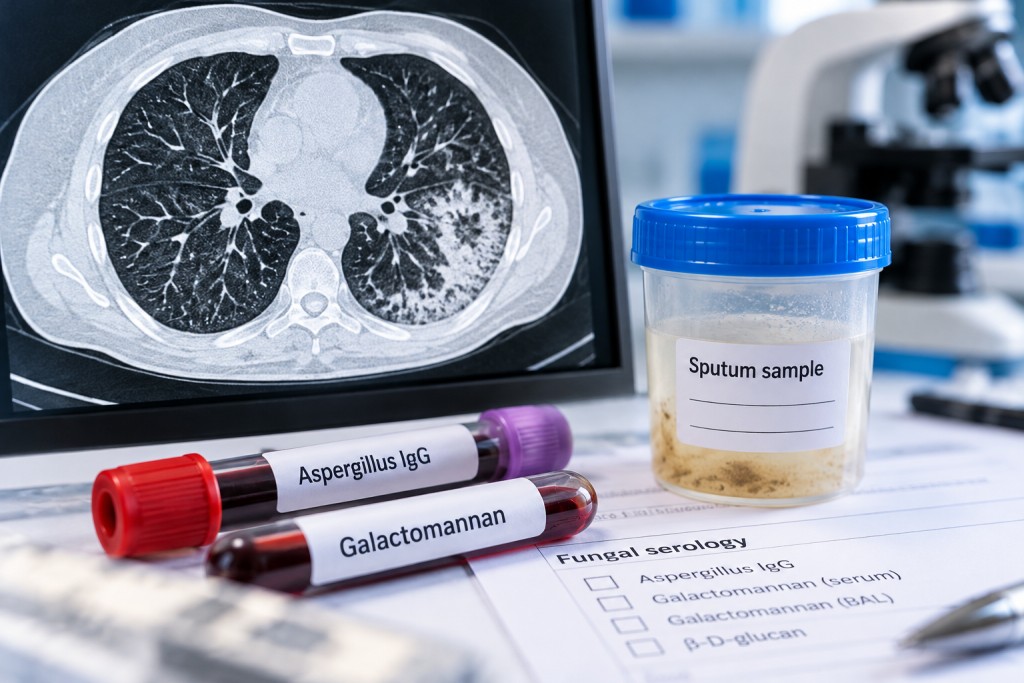
CAPA is challenging to diagnose and relies on clinical suspicion, radiology, and mycological evidence.
Diagnostic Tools:
-
CT Chest:
-
Nodules, cavitations, halo sign (often non-specific in COVID)
-
-
Bronchoscopy with BAL:
-
Galactomannan (BAL GM ≥1.0 = probable CAPA)
-
Culture and PCR for Aspergillus
-
-
Serum Galactomannan or β-D-glucan:
-
May be positive but less sensitive than BAL
-
-
Histopathology (rarely obtained due to ICU setting)
Diagnostic Categories (ECMM/ISHAM 2020):
-
Proven: histology showing fungal invasion
-
Probable: radiology + mycology from BAL
-
Possible: suggestive clinical picture + limited microbiology
💊 Treatment
First-Line:
-
Voriconazole (IV or oral)
-
Isavuconazole (alternative with fewer side effects)
-
Consider liposomal amphotericin B if azole resistance or intolerance
Additional Considerations:
-
Therapeutic drug monitoring (TDM) required for voriconazole
-
Duration: typically 6–12 weeks depending on response and immune status
-
Minimise immunosuppression where possible
Empirical antifungal therapy may be started in ICU when suspicion is high, even before full confirmation.
🧾 Monitoring
-
Respiratory function
-
Repeat imaging to assess progression or resolution
-
Serum galactomannan
-
Liver function, renal function, and drug levels
-
Screen for drug interactions (especially with azoles)
📚 More Information
-
CAPA is a recently recognised entity, requiring close coordination between ICU, respiratory, and infectious disease teams.
-
Early antifungal treatment improves outcomes, but diagnosis is often delayed due to overlapping features with COVID-19 pneumonia.
-
Resources: ECMM/ISHAM CAPA definitions, aspergillosis.org

Did this page help you?
Tell us in one minute