Updated 2025

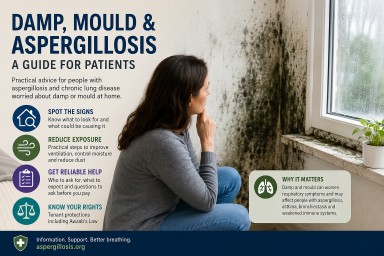
Living with an aspergillosis condition (such as allergic or chronic pulmonary aspergillosis) means your lungs are more vulnerable to environmental conditions — including what’s going on in your home. One of the most important hazards is damp (and associated mould and poor ventilation). This article explains why damp matters, what the health risks are, what you can do, and how your housing and health care teams should respond.


Why damp is a hazard

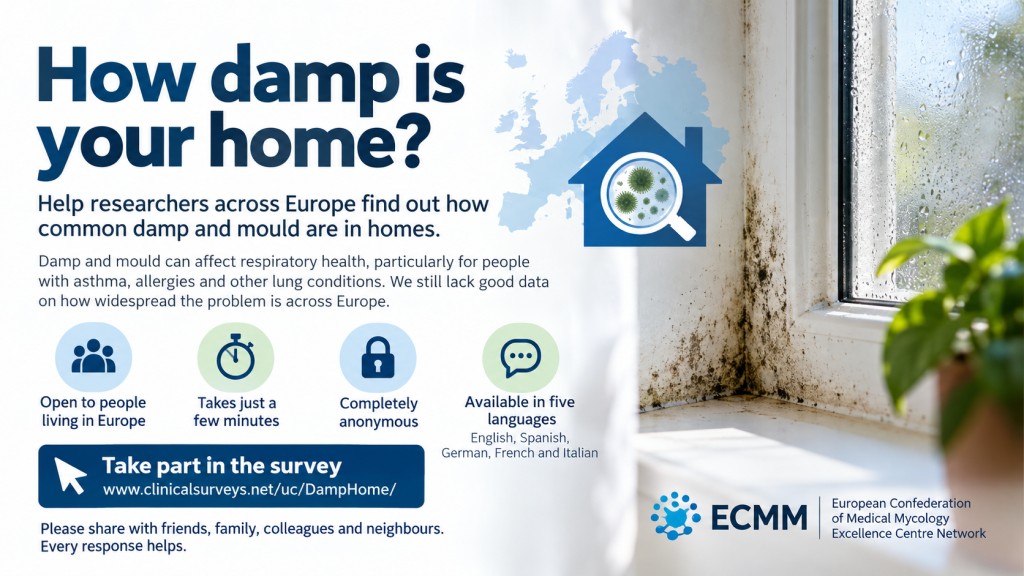
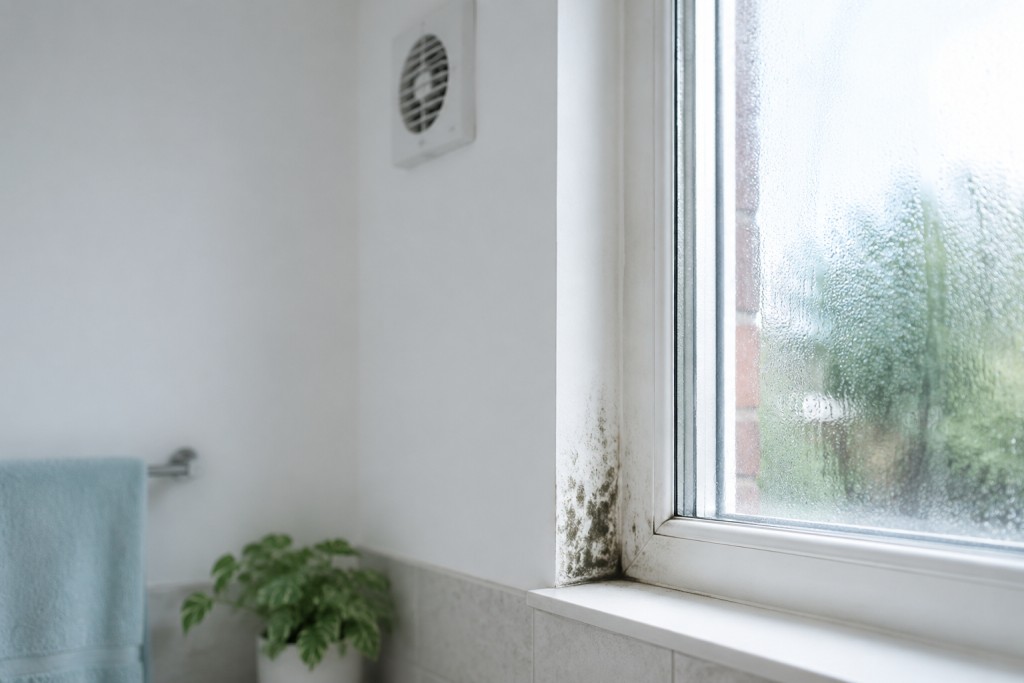
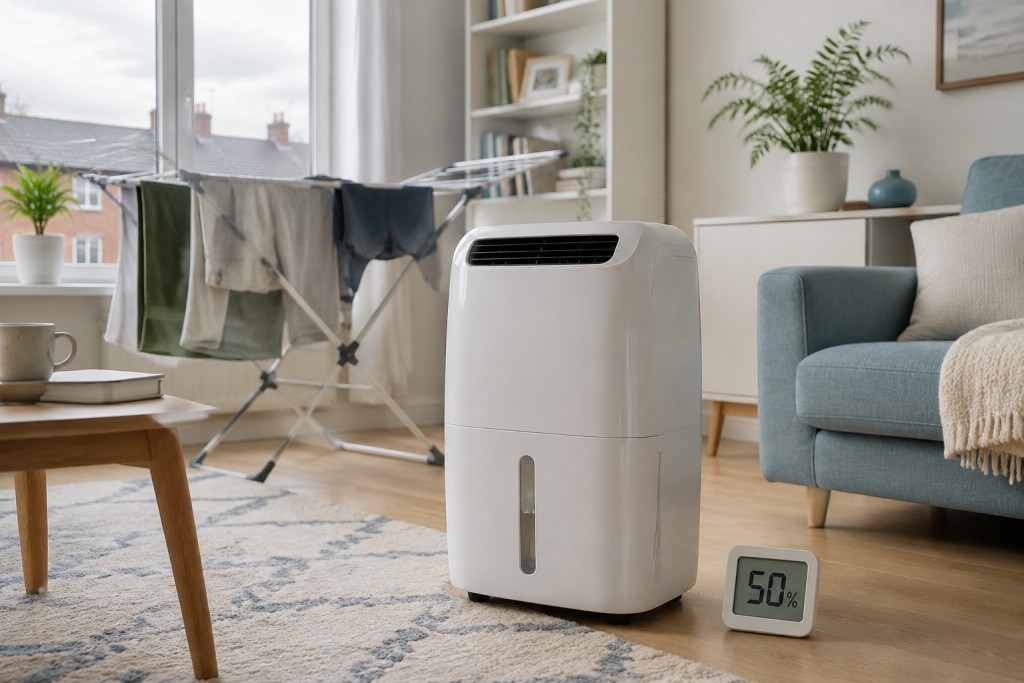
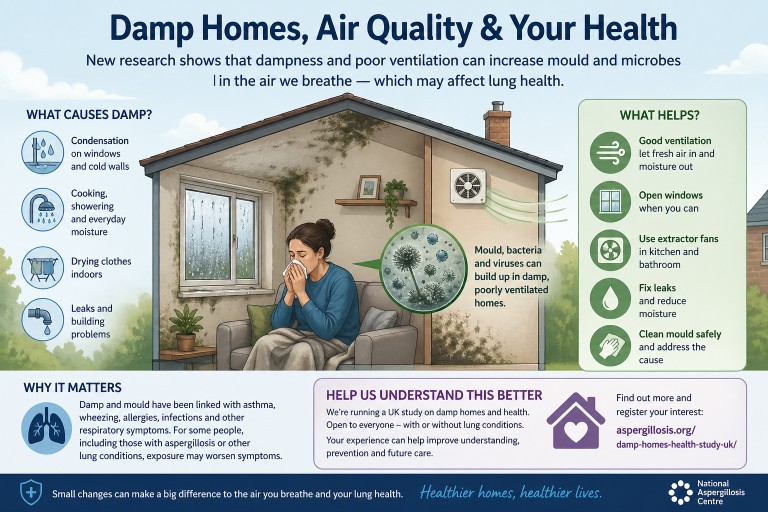
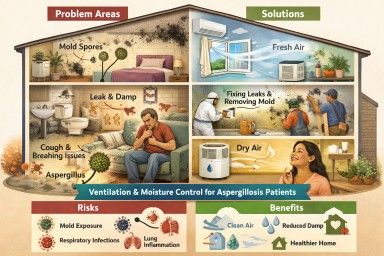
Damp in homes typically arises from three main causes: condensation, penetrating damp (water entry from outside), and rising damp (ground moisture moving up through walls). Whatever the cause, excess moisture provides the conditions for mould growth, dust-mite proliferation, bacteria and fungal spores — all of which can affect indoor air quality and thus your lungs.

Homes affected by damp and mould are recognised in guidance from National Institute for Health and Care Excellence (NICE) as being associated with poorer health outcomes. nice.org.uk The World Health Organization and other reviews also highlight that occupants of damp or mouldy buildings may have up to a 75 % higher risk of respiratory symptoms. World Health Organization exposure to spores (including Aspergillus) and irritants triggers symptoms or worsens infection risk.


What are the health risks?

Respiratory & lung risks

  • Damp and mould are strongly associated with increased incidences of coughing, wheezing, breathlessness, and respiratory infections. iaqscience.lbl.gov

  • They are linked with the development or worsening of asthma, allergic rhinitis, and other inflammatory lung conditions. GOV.UK

  • For people living with aspergillosis, damp homes can mean higher fungal spore loads, greater irritation, and possibly increased risk of complications or flare-ups.

Other physical health impacts

  • Eye irritation, itchy skin, nasal and throat discomfort may occur in some people exposed to damp/mould‐dominated environments. GOV.UK

  • For people with weakened immune systems, there is evidence (though less strong) that some fungal infections may be more likely in damp or mouldy homes. NCBI

Mental health & wellbeing

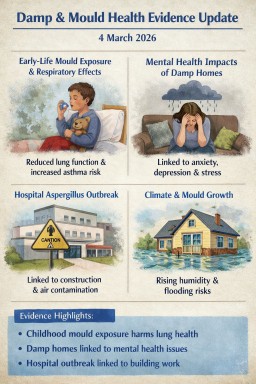
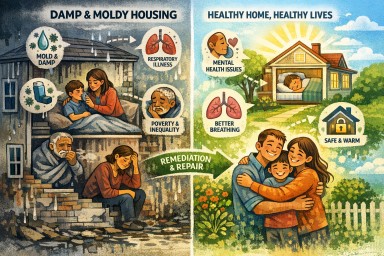
  • Living in a damp or mould-affected home can lead to anxiety, stress and feelings of loss of control — especially if repairs are slow or you feel blamed for the conditions. GOV.UK

  • The combination of physical symptoms + poor housing environment + financial/housing stress can impact overall quality of life.

Who is more at risk?

People with the following are at increased risk from damp/mould:

  • Existing respiratory illnesses (such as aspergillosis, asthma, COPD)

  • Immune compromise

  • Young children, pregnant women, older people — all more vulnerable to poor indoor air quality. nice.org.uk

  • People on low income, in poorly insulated homes, or renting socially — these homes are more likely to have damp/mould. GOV.UK


What you (or your clinician) should do

For you (the patient)

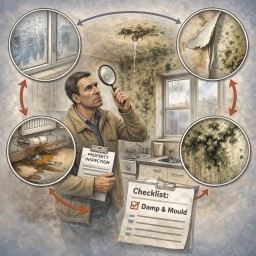
  • Monitor your home environment: Look for repeated condensation, musty smells, damp patches, and black mould growth.

  • Tell your healthcare team: If you notice worsening respiratory symptoms (cough, wheeze, shortness of breath) alongside signs of damp/mould, inform your specialist nurse or physician. Based on NICE guidance, you should:

    “Ask about their housing conditions. If housing factors are a health concern … help them request a housing assessment.” nice.org.uk

  • Document the issues: Take photos, notes of communication with landlord/housing provider (if applicable).

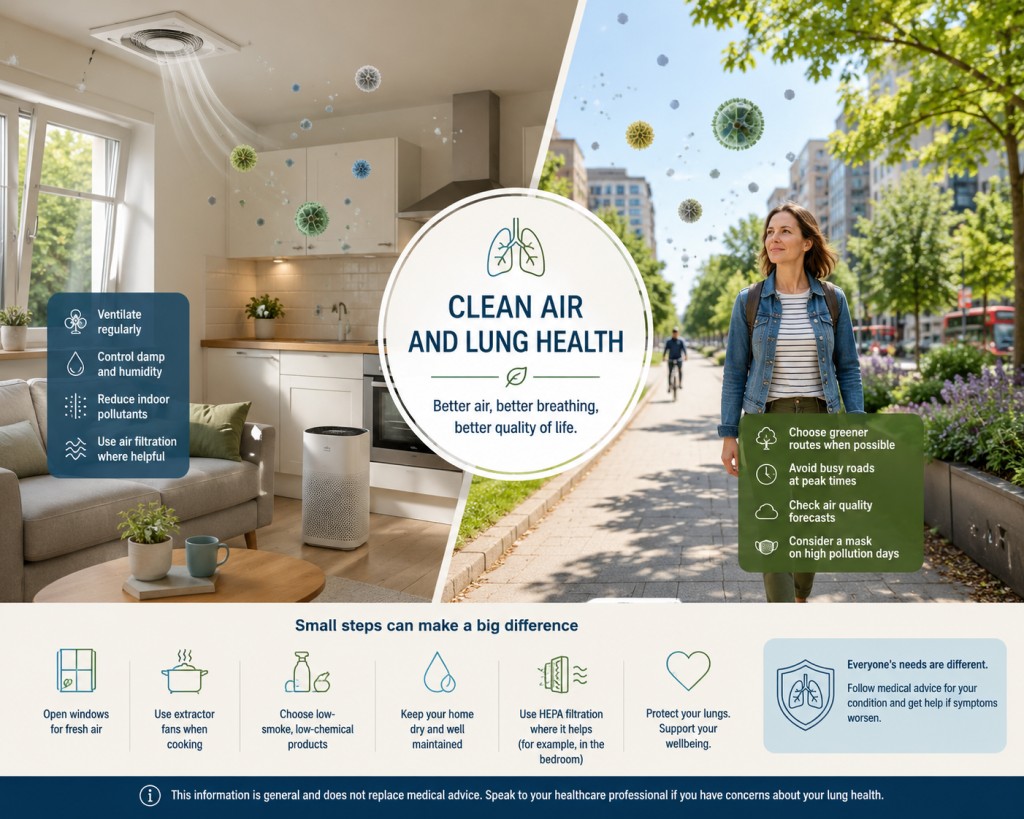
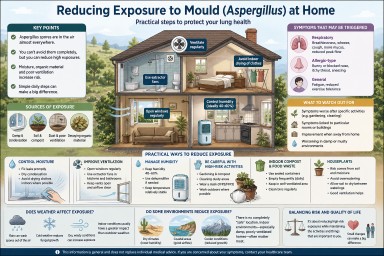
  • Take protective steps at home: Ensure good ventilation, control moisture, keep heating consistent (see the separate “Damp Prevention” article on the website for detailed steps).

  • If living with aspergillosis, in consultation with your specialist, consider whether a housing referral or indoor air assessment is appropriate.

For your healthcare/support team

  • Recognise that housing conditions are part of the care package for people with lung disease.

  • Ask routinely about the housing environment in history-taking for patients with recurrent respiratory symptoms.

  • Make referrals (housing assessment, environmental health) when conditions suggest damp/mould may be contributing to health problems. nice.org.uk

  • Work across sectors: link with housing providers, social care, and environmental health to ensure a coordinated response.

For housing providers/landlords (context)

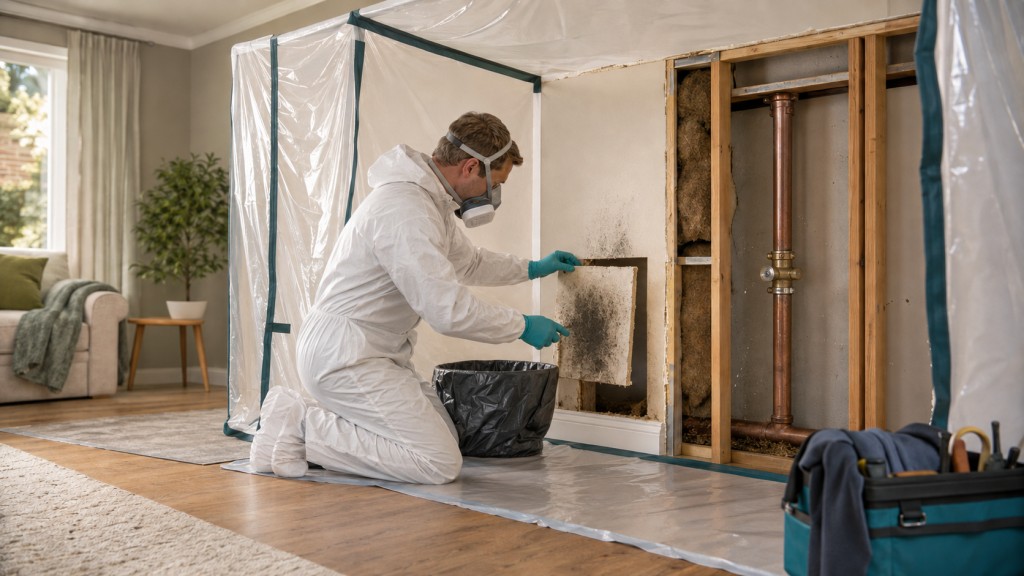
  • Damp and mould must not be seen as “cosmetic” issues—they are health hazards. Guidance emphasises that simply removing visible mould without fixing the underlying issue is inadequate. GOV.UK

  • Landlords and housing providers should have policies to inspect, document and address damp/mould, especially where tenants have known health vulnerabilities. GOV.UK


Key message

If you live with aspergillosis, living in a dry, well-ventilated, well-maintained home is not optional — it’s essential. Damp and mould are proven risk factors for respiratory illness and can undermine your management of aspergillosis.

Combined with what you can do at home (ventilate, control moisture, maintain warmth) and initiating action via your healthcare and housing teams, you can reduce the preventable risks related to your home environment.


Useful Links & Further Reading