

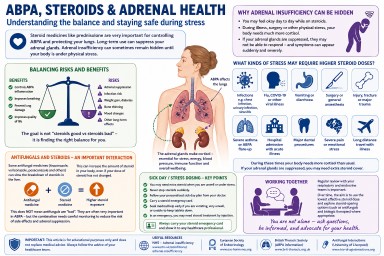
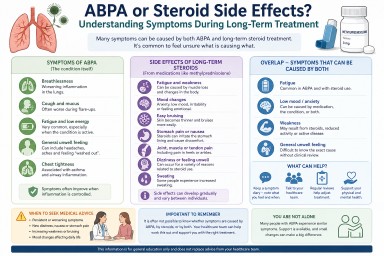
Corticosteroids such as prednisolone and methylprednisolone are powerful anti-inflammatory medicines. They are particularly important in conditions such as ABPA, where an excessive immune response to Aspergillus causes inflammation in the lungs.
Steroids are not antifungal medicines. They reduce inflammation and immune activity rather than killing Aspergillus. Depending on the condition, they may therefore be used alongside antifungal medicines or other treatments such as biologics.
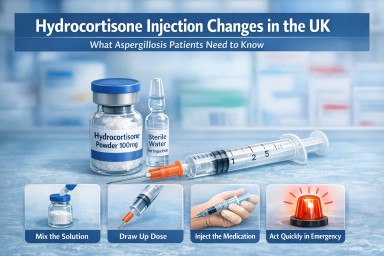
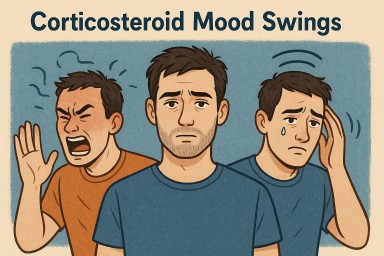
This hub explains short courses and longer-term steroid treatment, side effects, dose reduction and tapering, adrenal suppression and adrenal insufficiency, bone protection, mood and sleep changes, and approaches to safer long-term use.
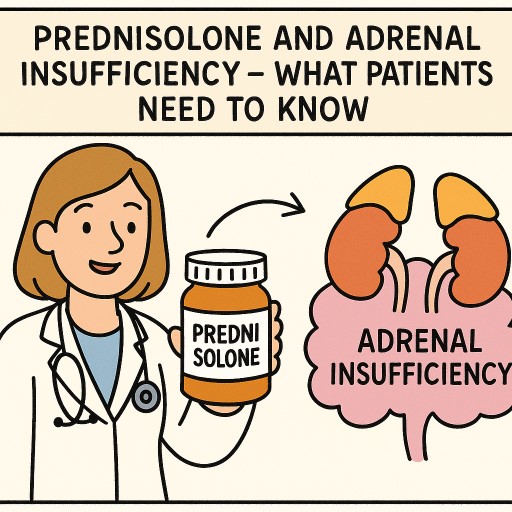
Steroid doses should not normally be reduced or stopped suddenly without medical advice. After prolonged treatment, the body’s own production of cortisol can be suppressed, making careful dose reduction particularly important.
Topics in This Hub
Latest Steroid Articles








Related Hubs
Did this page help you?
Tell us in one minute