

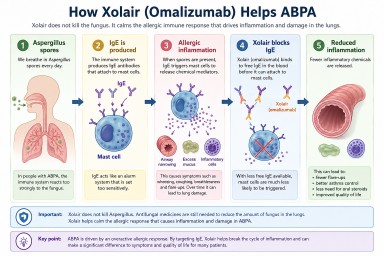
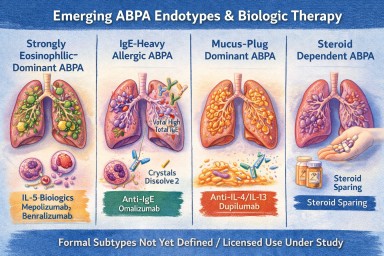
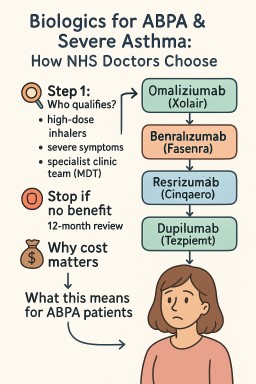
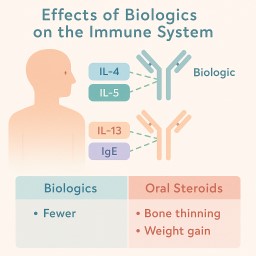
Biologic medicines target specific parts of the immune system involved in inflammation. Medicines such as omalizumab, mepolizumab, benralizumab, dupilumab and tezepelumab are used particularly in severe asthma and other conditions driven by type 2 inflammation.
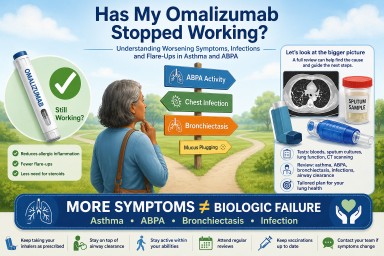
Biologics may also be considered in some people with ABPA, particularly when severe asthma, eosinophilic inflammation or recurrent disease is difficult to control. They are not antifungal medicines and do not directly kill Aspergillus.
This hub brings together information about how biologics work, the different immune pathways they target, who may benefit, possible side effects, monitoring and their potential role in reducing the need for systemic corticosteroids.
Topics in This Hub
Latest Biologics Articles








Related Hubs
Did this page help you?
Tell us in one minute