Depemokimab – a new long-acting treatment for severe asthma: what aspergillosis patients need to know
A new medicine called depemokimab is being reviewed by European and UK regulators as a possible treatment for severe eosinophilic (type-2) asthma. Many people with aspergillosis-related conditions – especially allergic bronchopulmonary aspergillosis (ABPA) and severe asthma with fungal sensitisation (SAFS) – also have this type of inflammation, so new options are always important.
⭐ What is depemokimab?
Depemokimab is a biologic treatment, similar to medicines like mepolizumab or benralizumab, but designed to last much longer in the body. It blocks interleukin-5 (IL-5), one of the key signals that drives eosinophils – a type of white blood cell involved in allergy, asthma and ABPA flares.
⭐ What makes it different?
The most important difference is how rarely it needs to be taken.
Current biologics for type-2 asthma are given every 4, 6 or 8 weeks.
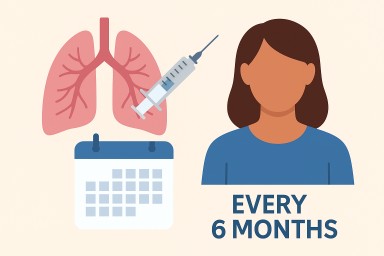
Depemokimab is designed to be taken twice a year – only once every six months.
For many people, this could mean:
-
Fewer injections
-
More steady asthma control
-
Less disruption to daily life
-
A treatment that’s easier to stick with over time
In clinical trials, depemokimab also helped to:
-
Reduce asthma attacks
-
Lower the need for oral steroids
-
Improve symptoms in people with chronic sinusitis and nasal polyps, which commonly affects ABPA and SAFS patients
⭐ Is this a treatment for ABPA or CPA?
Not specifically.
Depemokimab is not a treatment for the Aspergillus fungus itself and it does not replace antifungal medicines.
However, for people whose asthma drives their ABPA symptoms, better asthma control can mean:
-
fewer flare-ups
-
better breathing
-
less need for steroids
-
reduced pressure on already damaged airways
So while it is not an antifungal, it may become another option in the toolkit for managing asthma linked to aspergillosis.
⭐ When might this be available in the UK?
Depemokimab is currently under review by European regulators.
In the UK, the NICE appraisal for NHS use is underway, with a decision expected in March 2026.
If approved, it could become available on the NHS sometime in 2026.
⭐ What should patients do now?
At this stage:
-
There is no action needed from patients.
-
Your asthma or ABPA team will be the first to know when new biologics are approved.
-
If you already receive a biologic (e.g., mepolizumab, benralizumab, omalizumab, dupilumab), there is no change to your treatment plan.
-
If you struggle with frequent injections or poor asthma control, your clinician may consider depemokimab in the future once approved.