Cecilia Williams suffers from aspergillosis in the form of an aspergilloma and Chronic Pulmonary Aspergillosis (CPA). In this post, Cecilia talks about how a light but regular exercise regime has helped improve her health and wellbeing.
I downloaded the exercise guide (available here) in September this year. My oxygen levels had been dreadful, and I wanted to do some form of at-home pulmonary rehabilitation. I was surprised that the exercises in the programme were to be undertaken daily, as previous pulmonary programmes at the hospital were only three times a week. However, this programme was a lot simpler.
I do a stretching routine for a few minutes before the exercises, and I have now introduced 2.5kg weights, but I would do them without weights when I first started. I started at the lowest number of reps for the seated and standing exercises and have gradually increased to the recommended sets. I take my time to do the exercises as I can get breathless, and the time it takes depends on the kind of day I’m having. I break the 30-minute step into two; one first thing in the morning and one after lunch. If I go for a walk outside, I just do the other exercises and no step routine. I make a conscious effort to concentrate on my breathing as indicated on the chart. I use the breathing techniques recommended by Phil (National Aspergillosis Centre Specialist Physiotherapist, video available here), which has been my go-to for getting my breathing back to normal.
When I started this programme, my oxygen saturation levels were poor. I was breathless for long periods, and I would suffer all day with terrible nasal congestion and postnasal drip – I was forever steaming with menthol crystals. Incorporating the exercises and breathing techniques into my daily routine (first thing in the morning in my bedroom with the windows open) has had a profound effect. My congestion clears easier without steaming. I can take deeper breaths and hold my breath for longer. I have noticed the time it takes for me to recover from episodes of low oxygen levels and breathlessness has also improved. I do all the exercises on the table; the balance ones are essential, and with time and practice, I am improving – though I haven’t started doing them with my eyes closed – I am not there yet! I hope that writing my account of the benefits even the lightest of exercise programmes has gives others confidence and encouragement to undertake an at-home exercise programme.
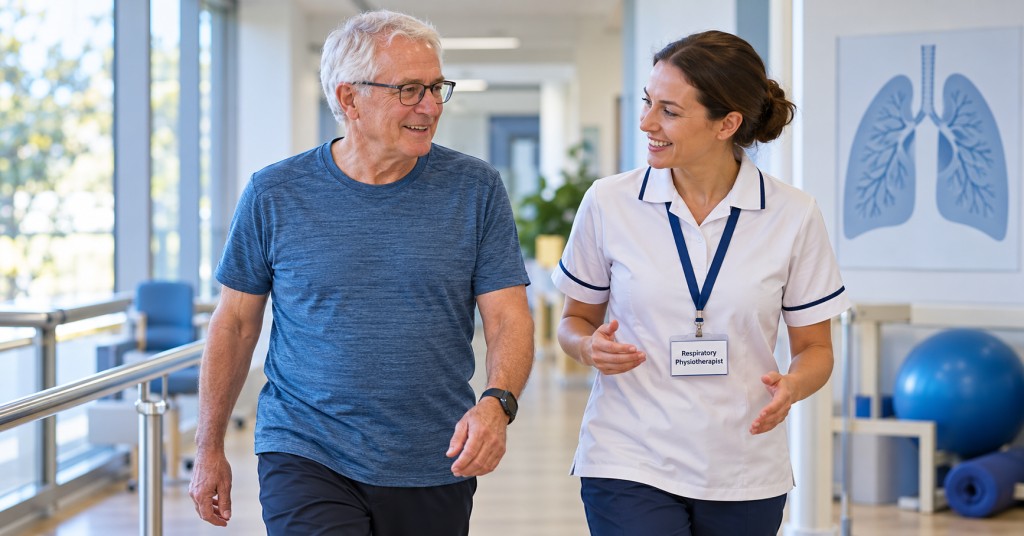
If you want to know more about exercising with aspergillosis, our Specialist Physiotherapist Phil Langdon has a talk available via our YouTube channel here.

Did this page help you?
Tell us in one minute