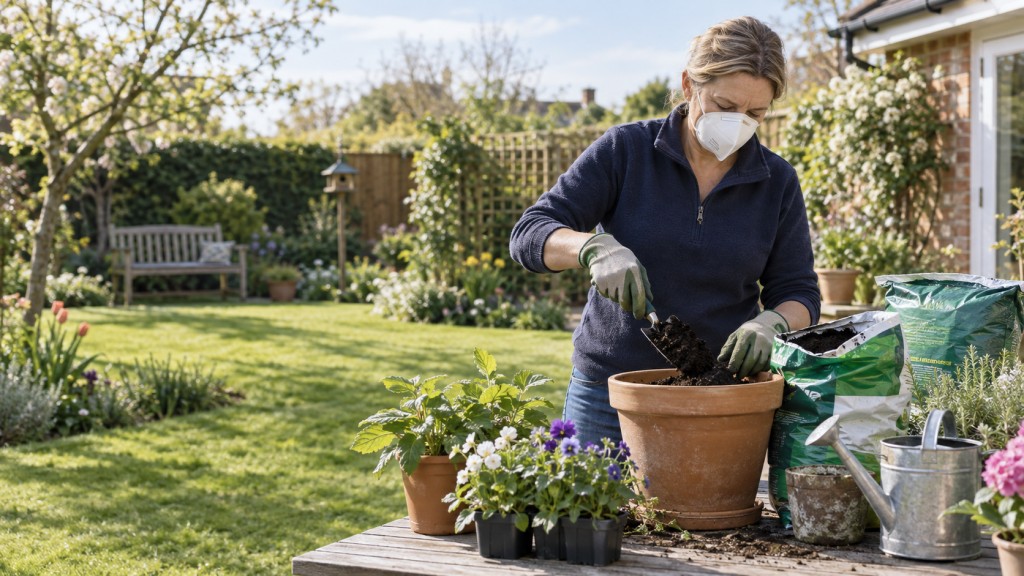
Face masks and respirators can reduce the amount of dust, fungal material and respiratory-virus particles that you breathe in. They are most useful for short periods of higher exposure—not as something that people with aspergillosis need to wear whenever they go outside.
This guide explains when a mask may be helpful, how to choose one, and what else matters when dealing with dust, compost, mould or respiratory viruses.
Key points
- For dust, compost, mouldy material and similar tasks, a well-fitting FFP2 or FFP3 respirator offers substantially more protection than a cloth face covering or standard surgical mask.
- A mask is most useful during unusually dusty or mouldy activities. Ordinary outdoor life, such as walking, sitting in a garden or meeting friends, does not usually require one.
- Fit matters as much as filter type. Air leaking around the sides bypasses the filter.
- Masks reduce exposure; they do not make it safe to tackle major mould contamination, demolition work or heavily dusty jobs yourself.
- For respiratory viruses, a well-fitting respirator can be a reasonable extra precaution in crowded, poorly ventilated indoor settings—particularly during a local wave of infection or if you have been advised that you are at higher risk.
Why might someone with aspergillosis use a mask?
Aspergillus and other fungal spores are naturally present in outdoor and indoor air. Completely avoiding them is impossible and, for most people, neither necessary nor helpful.
However, some activities can disturb large amounts of dust, soil, compost, decaying vegetation or mouldy material. This can temporarily increase exposure to fungal spores and other particles that may irritate the airways. People with aspergillosis, severe asthma, bronchiectasis, chronic lung disease or a weakened immune system may prefer to reduce these higher exposures.
A suitable respirator can be one part of that approach. It works best alongside avoiding unnecessary dust, improving ventilation and asking someone else to undertake a task when that is the safer option.
When is a mask most useful?
Consider a well-fitting particulate respirator for short periods of higher exposure, for example:
- opening bags of compost or potting mix;
- turning compost heaps or handling rotting leaves;
- digging dry soil, sweeping sheds, garages or lofts, or working with mulch, bark or wood chippings;
- dusty DIY, sanding, drilling or renovation work;
- entering an area with visible mould or a persistent musty smell while it is being assessed;
- visiting farms, stables, grain stores or other unusually dusty environments;
- periods of wildfire smoke or very poor particulate air quality, where avoiding the exposure completely is not practical.
For some people—particularly those who are severely immunosuppressed or have previously been advised to avoid these exposures—the better option is not to do the task at all. A mask reduces exposure; it does not remove every risk.
Dusty jobs: move them outside where possible
Avoid creating or disturbing dust, compost, mouldy material or debris in enclosed spaces such as sheds, garages, lofts, greenhouses or poorly ventilated rooms. Particles can build up in the air and remain suspended after the work has stopped.
- Move the task outdoors where practical, away from doors and open windows.
- Do not dry-sweep, use compressed air or shake dusty items indoors.
- Open bags of compost and pot plants outside, not in a shed, garage or conservatory.
- For major mould, water damage, demolition or heavily contaminated spaces, ask somebody else or a competent professional to do the work.
A well-fitting FFP2 or FFP3 respirator can reduce exposure, but it does not replace avoiding the task, moving it into fresh air or controlling the source of dust.
Bonfires, fireworks and smoke
Bonfire smoke contains fine particles and gases that can irritate the airways and worsen cough, wheeze or breathlessness. Fireworks can also temporarily increase local particle pollution. This is particularly relevant around Bonfire Night and during local events.
- Avoid standing near bonfires or downwind of smoke where possible.
- Choose a viewing position well away from the smoke, or watch from indoors if your lungs are particularly sensitive.
- Keep windows and external vents closed temporarily if smoke is entering your home, then ventilate again once the air has cleared.
- An FFP2 or FFP3 respirator may reduce inhalation of smoke particles, but it does not filter all gases in smoke and should not be treated as a reason to remain in heavy smoke.
Leave the area and seek medical advice if smoke exposure causes significant or persistent worsening of breathing symptoms.
When is a mask usually not needed?
Most people with aspergillosis do not need to wear a mask for normal time outdoors. That includes sitting in the garden, walking down the street, visiting friends or taking ordinary exercise.
It can be easy to become anxious about fungal spores after a diagnosis, especially when symptoms have been difficult to manage. But treating all outdoor air as dangerous can unnecessarily restrict activity, confidence and social life. A more useful approach is to identify clearly high-exposure situations and take proportionate precautions.
Which type of mask should I choose?
Not all face coverings are designed to protect the wearer from fine airborne particles. For dust, mould and fungal spores, look for a properly certified particulate respirator.
| Type | Protection for dust and fungal spores | When it may be useful |
|---|---|---|
| Cloth face covering | Low and variable | Not suitable for dusty, compost or mould exposure |
| Standard surgical mask | Limited wearer protection | Can reduce spread from someone who is unwell, but is not designed for dusty or mouldy tasks |
| FFP2 respirator | Good, when it fits well | Suitable for many short, higher-exposure tasks |
| FFP3 respirator | Higher protection, when it fits well | Useful for higher-exposure tasks or where additional protection is advised |
| Reusable half-mask respirator with P3 filters | High protection, when correctly selected and fitted | May suit people who frequently undertake dusty work; requires cleaning, storage and filter replacement |
FFP2 and FFP3 are European/UK respirator standards. An FFP2 respirator is designed to filter at least 94% of test particles; an FFP3 respirator at least 99%, when used correctly. The real-world benefit depends heavily on fit and whether the task is suitable to do at all.
Do not rely on products described only as “anti-dust”, “fashion”, “reusable fabric” or “HEPA-style” masks without a recognised respirator standard. A filter only works when air is drawn through it rather than around it.
Getting a good fit
A respirator should cover both your nose and mouth and sit closely against the face. If it feels very loose, slips down, leaves obvious gaps or blows air strongly towards your eyes, it is unlikely to offer its intended protection.
- Choose a size and shape that fits comfortably from the bridge of your nose to beneath your chin.
- Press the nose clip into shape and adjust the straps according to the manufacturer’s instructions.
- Try more than one model if necessary; different designs fit different faces.
- Facial hair where the mask seals against the face can substantially reduce protection.
- Do not modify, cut or puncture a respirator.
- Replace a disposable respirator if it becomes damaged, damp, visibly dirty or difficult to breathe through.
Workplaces that require tight-fitting respiratory protective equipment should have formal selection, training and fit-testing arrangements. For occasional home use, follow the manufacturer’s fitting instructions carefully and choose a mask that genuinely seals comfortably.
Gardening, compost and outdoor dust
Gardening can be enjoyable, active and good for wellbeing. You do not need to give it up simply because you have aspergillosis. The main concern is avoiding activities that create a dense cloud of dust or disturb mouldy, decaying material close to your face.
Useful precautions include asking someone else to open compost bags, dampening very dry soil before working with it, avoiding leaf clearing on windy days and washing hands after gardening. Change clothes and shower if you have been heavily exposed to dust or plant material.
If you regularly garden, an FFP2 respirator may be a practical option for particular jobs. An FFP3 respirator may be preferable for more obviously dusty work, but it can feel more restrictive. Comfort matters: a respirator that you can wear correctly for the whole task is more useful than a higher-rated one that you repeatedly need to remove.
See our Gardening Safely With Aspergillosis guide for broader advice on soil, compost and mould exposure.
Mould in the home: a mask is not the solution
Do not use a mask as a reason to clean extensive mould growth yourself. Brushing, dry-scraping or disturbing mouldy materials can release dust and spores. Significant mould, recurring damp, a musty smell, water damage or a structural leak should be investigated and dealt with at its source.
For a small, isolated patch, the best approach depends on your health, the location and the cause of the mould. If you have a serious lung condition, ask somebody else to undertake straightforward cleaning where possible. Visible mould, widespread contamination or repeated growth usually needs a landlord, housing provider, competent contractor or ventilation specialist—not just surface treatment.
Read our Housing, Damp and Mould hub for advice on damp homes and obtaining repairs.
Masks and respiratory viruses, including COVID-19
Respiratory viruses can trigger a flare-up of asthma, bronchiectasis and other lung conditions. COVID-19 continues to circulate alongside influenza, RSV and other viruses. A well-fitting FFP2 or FFP3 respirator can be a personal layer of protection in crowded or poorly ventilated indoor settings, particularly during a period of high local illness, when travelling, or when you need to be around someone who is unwell.
It is a personal, risk-based choice—not a requirement to withdraw from ordinary life. Other useful measures include vaccination when offered or recommended, good ventilation, avoiding close contact when you are unwell, and asking visitors with respiratory symptoms to postpone where practical.
If you develop symptoms of COVID-19 and are eligible for COVID-19 treatments, follow the NHS advice on testing and contact your GP, NHS 111 or specialist team promptly if you test positive.
What if I find masks difficult to wear?
Many people find respirators uncomfortable, hot, claustrophobic or tiring, particularly if they already experience breathlessness or anxiety. You are not failing if you struggle with them.
- Try different shapes and sizes while sitting somewhere calm before using one for a task.
- Start with short periods and remove the mask in cleaner air if you become distressed or uncomfortable.
- Choose the least demanding option that gives appropriate protection for the task.
- Plan rest breaks, especially in hot weather or during physical work.
- If wearing a respirator causes dizziness, marked breathlessness or chest discomfort, leave the exposure, remove the respirator and seek medical advice if symptoms do not settle.
If you have significant heart or lung disease, ask your healthcare professional for individual advice before using a tight-fitting respirator for strenuous work.
Further information
- Air Quality hub
- Gardening Safely With Aspergillosis
- Housing, Damp and Mould hub
- Seasonal Changes and Aspergillosis
This information is for general education. The precautions appropriate for you depend on the type of aspergillosis you have, your other lung conditions, your immune system and your clinical team’s advice.

Did this page help you?
Tell us in one minute