Damp Homes, Indoor Air and Health: What a Recent Evidence Review Tells Us

Summary: A recent rapid review by researchers from the Health and Safety Executive examined evidence on microbiological hazards in buildings, including moulds, bacteria and viruses. The review highlights that dampness, poor ventilation and building design can all affect indoor air quality and respiratory health.
Key points
- People spend much of their time indoors, so indoor air quality can strongly affect health.
- Damp indoor conditions increase the risk of mould growth and musty odours.
- Common indoor moulds include Aspergillus, Penicillium and Cladosporium.
- Dampness and visible or hidden mould are linked with asthma, rhinitis, wheeze and other respiratory symptoms.
- Ventilation is one of the most important ways to reduce moisture and dilute airborne contaminants.
- Improving energy efficiency is important, but very airtight homes still need adequate ventilation.
Contents
- Why indoor air matters
- What the review found
- Damp, mould and lung health
- Aspergillus and aspergillosis
- Ventilation and building design
- What can help reduce risk?
- Help us understand damp homes and health
- When to seek medical advice
Why indoor air matters
Most of us spend a large amount of time indoors — at home, at work, or in public buildings. The air inside buildings can contain particles from many sources, including dust, mould spores, bacteria, viruses, cooking, cleaning products, pets and outdoor air entering the home.
The recent review, Exposure Risks from Microbiological Hazards in Buildings and Their Control — A Rapid Review of the Evidence, looked at evidence for harmful microorganisms in indoor air and on surfaces, and how building design, ventilation and moisture affect exposure.
What the review found
The review found strong evidence that microorganisms can be present in indoor air and on surfaces. These include fungi, bacteria and viruses. The evidence was strongest for the role of dampness and poor ventilation in increasing the risk of indoor mould growth and respiratory health effects.
The review’s main conclusions included:
- Airborne allergenic fungi are well documented in indoor air.
- Damp conditions increase mould growth and mouldy odours indoors.
- Dampness and mould are associated with respiratory ill health, including asthma, rhinitis and wheezing.
- Penicillium, Aspergillus and Cladosporium are commonly detected in damp buildings.
- Infectious viruses and bacteria can also be detected in indoor air and on surfaces.
- Ventilation is a key control measure for reducing moisture and diluting airborne contaminants.
Damp, mould and lung health
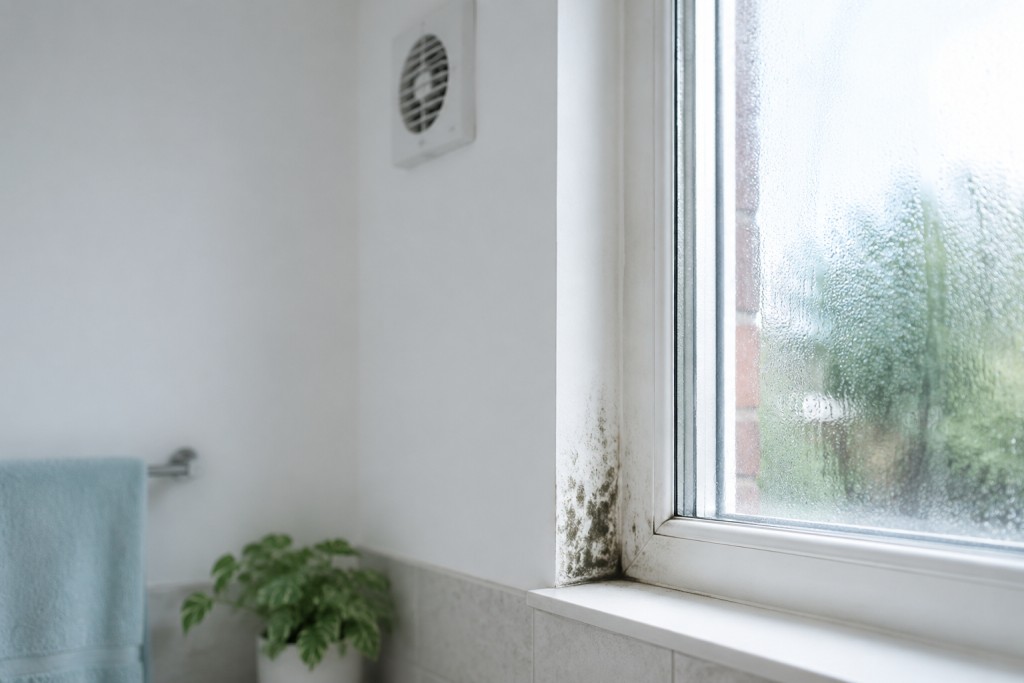
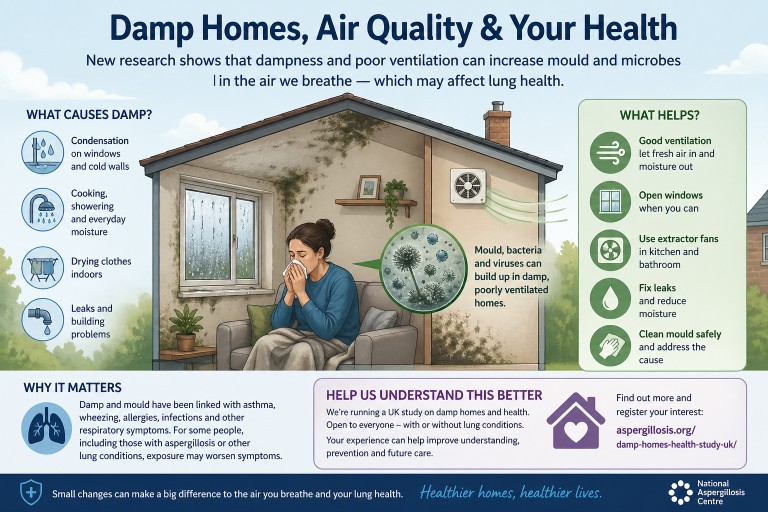
Dampness is one of the most important drivers of indoor mould growth. Moisture can come from leaks, condensation, flooding, poor insulation, inadequate heating, drying clothes indoors, cooking, showering, or poor ventilation.
When dampness persists, mould can colonise indoor materials such as plasterboard, wallpaper, wood, carpets, soft furnishings and settled dust. Mould may be visible, but it can also grow in hidden areas such as behind furniture, inside wall cavities, behind wallpaper, under flooring, or around poorly ventilated cold surfaces.
Exposure to damp and mould has been linked with:
- Wheezing
- Asthma symptoms or asthma worsening
- Rhinitis and nasal symptoms
- Cough
- Respiratory infections
- Worsening symptoms in people with existing lung disease
Importantly, the review notes that the relationship between indoor microorganisms and health is complex. Risk depends on the type of organism, the level of exposure, the building conditions and the susceptibility of the person exposed.
Aspergillus and aspergillosis
Aspergillus is a common mould found in the environment. Most people inhale Aspergillus spores every day without becoming ill. However, some people are more vulnerable, including those with asthma, bronchiectasis, chronic lung disease, weakened immune systems, or previous lung damage.
In susceptible people, exposure to Aspergillus may contribute to conditions such as allergic bronchopulmonary aspergillosis (ABPA), severe asthma with fungal sensitisation (SAFS), aspergillus bronchitis, or chronic pulmonary aspergillosis (CPA). The home environment is not the only source of exposure, but damp indoor spaces may increase the amount of fungal material a person breathes in.
This does not mean that every damp home causes aspergillosis, or that every person exposed to mould will become ill. It does mean that reducing dampness, improving ventilation and addressing visible or hidden mould are sensible steps for respiratory health.
Ventilation and building design
One of the strongest messages from the review is that ventilation is central to controlling indoor microbiological risk. Ventilation helps by:
- Removing moisture from indoor air
- Reducing condensation
- Diluting airborne mould spores and other particles
- Reducing the build-up of infectious aerosols
- Improving overall indoor air quality
The review also highlights an important modern problem. Homes are increasingly designed or retrofitted to be more airtight and energy efficient. This can improve warmth and reduce energy use, but if ventilation is inadequate, moisture and airborne contaminants may accumulate indoors.
In other words, insulation and energy efficiency are important, but they need to be balanced with effective ventilation and moisture control.
What can help reduce risk?
The review does not suggest that one single action solves all indoor air problems. Instead, it supports a combined approach.
1. Reduce moisture
- Repair leaks promptly.
- Check roofs, gutters, pipes and window seals.
- Use extractor fans in kitchens and bathrooms where available.
- Avoid drying clothes indoors where possible, or ventilate well if you do.
- Reduce condensation on windows and cold walls.
2. Improve ventilation
- Use trickle vents if fitted.
- Open windows when safe and practical.
- Use mechanical ventilation systems correctly.
- Keep air bricks and vents clear.
- Make sure extractor fans are working effectively.
3. Deal with mould safely
- Small areas of surface mould may be cleaned carefully using appropriate household methods.
- Large, persistent or recurring mould usually needs the underlying damp problem fixed.
- People with significant lung disease, immune suppression or severe symptoms should avoid heavy mould disturbance and seek advice.
4. Reduce dust reservoirs
- Regular cleaning can reduce settled dust and spores.
- HEPA-filter vacuum cleaners may be helpful for some households.
- Hard flooring may be easier to keep dust-free than carpets in high-risk situations.
5. Consider air filtration where appropriate
Portable high-efficiency particulate air (HEPA) filters may help reduce airborne particles in some settings. They are not a substitute for fixing damp or improving ventilation, but they may be a useful additional measure for some people.
Help us understand damp homes and health
The evidence linking damp homes, mould and respiratory health is strong, but there are still important unanswered questions. We need to better understand how different homes, building types, ventilation patterns and damp conditions affect people’s health in real life.
The National Aspergillosis Centre is running a UK citizen science study looking at damp homes and health.
We are inviting people to register their interest in taking part.
The study is open to people with and without lung conditions, and to people living in homes with or without damp or mould. This comparison is important because it helps researchers understand which factors are most strongly linked with health outcomes.
Register your interest in the damp homes and health study
Taking part may involve completing a questionnaire and, at a later stage, providing a dust sample from your home. The information gathered will help improve understanding of indoor environments and respiratory health.
When to seek medical advice
Please seek medical advice if you have:
- New or worsening breathlessness
- Chest pain
- Coughing up blood
- Persistent fever
- Repeated chest infections
- Rapidly worsening asthma symptoms
- Unexplained weight loss or severe fatigue
If you already have aspergillosis, asthma, bronchiectasis, chronic obstructive pulmonary disease (COPD), immune suppression, or another lung condition, it is worth discussing any significant damp or mould exposure with your healthcare team.
Common questions
Can mould affect health even if I cannot see it?
Yes. Hidden mould or dampness may still affect indoor air quality. A musty smell, persistent condensation or symptoms that worsen in a particular room may suggest a problem.
Does all mould cause aspergillosis?
No. Mould exposure is common, and most people do not develop aspergillosis. Aspergillosis usually occurs when exposure combines with individual susceptibility, such as asthma, bronchiectasis, immune suppression or existing lung damage.
Is ventilation always good?
Ventilation is usually important for reducing moisture and improving indoor air quality. However, the best approach depends on the building, outdoor conditions and the person’s health. Ventilation should not replace fixing leaks or removing sources of damp.
Can air purifiers solve damp and mould problems?
No. Air purifiers may reduce airborne particles, but they do not remove the source of moisture or mould growth. Damp problems need to be addressed at source.
Summary
This recent evidence review reinforces a practical message: indoor air quality matters. Dampness, poor ventilation and mould growth are not simply cosmetic housing problems — they can affect respiratory health, especially in people with asthma, aspergillosis or other lung conditions.
The most effective approach is to reduce moisture, improve ventilation, remove mould sources where possible and understand how buildings influence exposure. Research such as the UK damp homes and health study will help build better evidence for patients, clinicians, housing providers and policymakers.
References and further reading
- Beswick A, Crook B, Gosling B, et al. Exposure Risks from Microbiological Hazards in Buildings and Their Control — A Rapid Review of the Evidence. Atmosphere. 2025;16:1243. doi:10.3390/atmos16111243.
- Damp homes and health study — register your interest
- Aspergillosis.org — patient and carer information
Article type: Patient and public information
Last reviewed: April 2026
Based on: Recent evidence review of microbiological hazards in buildings and their control.
Recognising a damp or mouldy home
Home › Knowledge Hub › Damp, mould and aspergillosis › Recognising a damp home
Many high-risk exposures occur before mould is obvious. This page helps you identify early signs and start documenting evidence.
Early warning signs (often missed)
- Condensation on windows most mornings
- Cold, clammy walls or cupboards; wardrobes that feel “damp”
- Persistent musty odour (especially when returning home)
- Peeling wallpaper, bubbling paint, cracking plaster
- Recurring black staining on silicone/grout
- Swollen skirting boards, warped flooring, rusting fittings
High-risk hidden locations
- Behind wardrobes/sofas on external walls
- Inside cupboards on outside walls
- Under sinks, behind washing machines, around toilets/baths
- Window reveals, behind curtains/blinds
- Loft hatches and boxed-in pipework
Common causes (useful when speaking to landlords)
- Water ingress (doors/windows, defective seals, roof, gutters, downpipes)
- Plumbing leaks (slow leaks behind walls or under floors)
- Ventilation failures (broken/weak extract fans, blocked vents)
- Cold bridging and persistent condensation in poorly insulated areas
- Previous flooding/leaks with inadequate drying
Quick evidence checklist (10 minutes)
- Take dated photos of any mould, staining, peeling paint, wet patches.
- Photograph likely sources: door thresholds, window seals, gutters if visible, extractor fans, vents.
- Write down where the smell is strongest and when it’s worst (after rain, in winter, after showers).
- Start a brief symptom note (see Page 3) and keep everything in one folder.
- Report the issue in writing to your landlord/agent and keep screenshots/confirmation.
What not to do (for safety)
- Do not scrape or disturb mouldy plasterboard or insulation yourself.
- Do not rely on bleach-only cleaning as a “solution” (it may not address underlying moisture or embedded contamination).
- Do not accept repeated “paint over and close the ticket” approaches without a cause-and-fix plan.
Remediation, verification, and refusal to move you
Home › Knowledge Hub › Damp, mould and aspergillosis › Remediation & refusal to move
If remediation is done but symptoms persist or worsen, the key question becomes: has the home been demonstrated to be safe to occupy?
What “good remediation” should include
- Cause fixed: leak/ingress/defect repaired, not just cleaned.
- Drying: adequate drying time and moisture checks.
- Material decisions: water-damaged porous materials removed where needed.
- Safe work: dust/spore spread controlled (important for medically vulnerable households).
- Verification: documented checks that work is complete and the home is safe.
Red flags (“bad remediation”)
- Paint over staining or “mould spray” only
- No drying plan, no moisture measurements
- No documentation of what was removed/replaced
- Work that creates dust without protection/containment
- Refusal to provide any meaningful post-remediation checks
If symptoms worsen after remediation
Worsening symptoms can occur if contaminated materials were disturbed or if damp persists behind walls/floors. This is a strong indicator that the hazard may not be resolved.
Actions:
- Document symptoms and healthcare visits (Page 3 template).
- Ask landlord for written evidence of safety and remediation details.
- Request escalation to Environmental Health if unresolved.
If the landlord refuses to move you (decant)
Use this framing:
- The issue is not “repairs completed” — it is safety and health risk.
- Ask: “What evidence shows the home is safe to occupy?”
Template request for temporary alternative accommodation
Subject: Request for temporary alternative accommodation (health risk / damp and mould) Hello [Name/Team], Despite remediation work, we are experiencing ongoing damp/mould concerns and worsening health symptoms in a clinically vulnerable household. Please provide written evidence that the home is safe to occupy, including: - confirmation the moisture source has been resolved, - evidence of drying/moisture checks, - what materials were removed/replaced, - what post-remediation checks were completed. Given the uncertainty around safety and the health impacts, we are requesting temporary alternative accommodation until the property can be demonstrated to be safe to occupy. Kind regards, [Name]
If you return “under protest”
If you have no alternative but to return, keep it in writing:
We are returning to the property due to lack of alternative accommodation. We do not accept that the damp/mould hazard has been resolved and will continue to document health impacts and seek independent assessment.
How to raise damp and mould with your landlord (and get action)
Home › Knowledge Hub › Damp, mould and aspergillosis › Raising with your landlord
Your aim is to secure a safe, evidence-based plan: fix the cause, dry properly, remediate safely, and confirm the home is safe to occupy.
Principles that prevent “cosmetic fixes”
- Source control: stop the leak/ingress/defect.
- Drying: dry building fabric, not just the air.
- Safe remediation: remove/clean contaminated materials appropriately.
- Verification: show the home is safe to occupy.
How to report effectively
- Report in writing (email/portal) and keep everything.
- Attach dated photos and a brief symptom timeline.
- Use health-focused language: “damp and mould hazard”, “medical vulnerability”, “safe to occupy”.
- Ask for timescales, named contact, and written findings.
Template email (copy/paste)
Subject: Damp and mould hazard – urgent investigation and repair plan (health impact) Hello [Landlord/Housing Officer/Letting Agent], I am reporting ongoing damp and/or mould at [address], affecting [rooms/locations]. This has been present since [date] and appears linked to [water ingress/leak/condensation/ventilation failure]. We have clinically vulnerable occupants in the household, including [brief: chronic lung disease / aspergillosis / severe asthma / bronchiectasis], and symptoms are worsening. Please confirm in writing: 1) the inspection date and who will attend, 2) the findings (including likely cause), 3) the repair and drying plan (including timeframes), 4) what remediation will be undertaken (not just surface cleaning/painting), 5) how you will confirm the property is safe to occupy once works are completed. Thank you, [Name] [Phone]
If you are told it is “lifestyle” or “just condensation”
You can reply calmly:
Thank you. We are doing reasonable ventilation and heating measures. However, the pattern and location suggest a building/ventilation defect that requires investigation and repair. Given medical vulnerability in the household, we need a written plan that addresses the underlying cause and confirms the home is safe to occupy.
When to escalate early
- Repeated failed repairs, or mould returns quickly
- Visible mould plus long-term damp patches
- Health deterioration, repeated GP/A&E attendances
- Pressure to accept repainting/bleach-only cleaning
See Page 6 for UK escalation routes and support organisations.
Verified UK Resources for Damp, Mould & Health
Here is a short, reliable, UK-verified list of resources for people worried about damp, mould and health. Each link is trustworthy, evidence-based, and not influenced by companies selling testing or “mycotoxin cleanses”.
1. NICE – Damp and Mould Guidelines
This guideline covers indoor air quality in residential buildings. It aims to raise awareness of the importance of good air quality in people's homes and how to achieve this.
🔗 https://www.nice.org.uk/guidance/NG149
2. UK Health Security Agency (UKHSA) – Damp & Mould Health Guidance
The most authoritative public health guidance used by councils, housing providers, and clinicians.
Includes:
-
How mould affects health
-
Who is at higher risk
3. Shelter – Tenant Rights on Damp and Mould
For renters needing practical, legal steps to get repairs done.
🔗Damp and mould in private rented homes
🔗Damp and mould in council and housing association homes
4. Citizens Advice – Step-by-Step Action for Damp Problems
Simple language, includes letter templates for landlords.
🔗 https://www.citizensadvice.org.uk/housing/repairs-and-housing/repairs-and-housing-conditions/whos-responsible-for-repairs/repairs-damp/
5. Housing Ombudsman – Damp & Mould Guidance for Social Housing
Very helpful for council and housing association tenants dealing with delays or poor responses.
🔗 https://www.housing-ombudsman.org.uk/damp-and-mould/
6. Awaab’s Law Information (Housing Ombudsman)
Sets strict deadlines for social landlords to investigate and fix reported damp/mould.
🔗 https://www.housing-ombudsman.org.uk/centre-for-learning/key-topics/awaabs-law/
7. Asthma + Lung UK – Mould and Breathing Problems
Good for people with asthma, COPD, ABPA or bronchiectasis.
Practical tips and when to seek medical help.
🔗 https://www.asthmaandlung.org.uk/blog/advice-support/know-your-rights-what-do-if-you-have-damp-mould-rented-home
8. London Fire Brigade – Safe Use of Dehumidifiers & Ventilation Advice
Useful because many people misuse heaters or dehumidifiers while trying to “dry out” a home.
🔗https://www.london-fire.gov.uk/safety/
9. Royal Institution of Chartered Surveyors
The Royal Institution of Chartered Surveyors (RICS) is the global professional body setting standards for land, property, construction and the built environment. Its members help ensure that buildings and infrastructure are safe, well-managed and sustainable, providing trusted expertise for governments, industry and the public.
https://www.rics.org/consumer-guides/damp-and-mould
Optional extras (carefully chosen):
World Health Organization – Indoor Dampness & Health Review
A global evidence assessment → helps debunk myths about “toxic mould” testing.
🔗 https://www.who.int/publications/i/item/9789289041683
Important reassurance you can give people
These sources are aligned on three key points:
✔ Mould exposure can worsen asthma, allergies and respiratory illness.
Especially in children, older adults, and people with chronic lung conditions (like ABPA, CPA, bronchiectasis).
✔ Mycotoxins in UK homes are not a common cause of chronic, systemic illness.
Reputable agencies (NHS, UKHSA, WHO) do not support “mycotoxin testing” or expensive “detox” treatments.
✔ Fixing the building is the most important treatment.
Ventilation, reducing humidity, removing contaminated soft furnishings, and remediation are the real interventions.