
If you use CPAP for sleep apnoea and have aspergillosis, asthma, bronchiectasis or another lung condition, it is natural to wonder whether the machine could make symptoms worse. CPAP itself does not usually interfere with recovery from aspergillosis. Good sleep and treatment of sleep apnoea can support overall health. The important things are comfort, correct settings and keeping the mask, tubing and humidifier clean.
This page is general information. Continue using CPAP as prescribed unless your sleep or respiratory team advises otherwise.
What does CPAP do?
CPAP stands for continuous positive airway pressure. It delivers a gentle flow of air through a mask to keep the upper airway open during sleep. It treats obstructive sleep apnoea; it is not a treatment for Aspergillus infection or allergic fungal disease.
When CPAP is working well, people may sleep more soundly and feel less tired during the day. If the mask leaks, the air feels too dry, or nasal symptoms are troublesome, it may disrupt sleep and make cough or throat irritation feel worse.
Can CPAP spread Aspergillus?
There is no good evidence that correctly used CPAP causes aspergillosis or routinely worsens it. Like any equipment that carries air and water, a poorly maintained mask, tube or humidifier chamber can collect environmental organisms over time. This is why regular cleaning and drying matter—particularly for people with chronic lung disease.
Do not assume that a cough or a chest flare is caused by CPAP. It may be due to asthma, bronchiectasis, a viral or bacterial infection, reflux, nasal disease or Aspergillus-related inflammation. Discuss persistent changes with your usual clinical team.
Using a humidifier safely
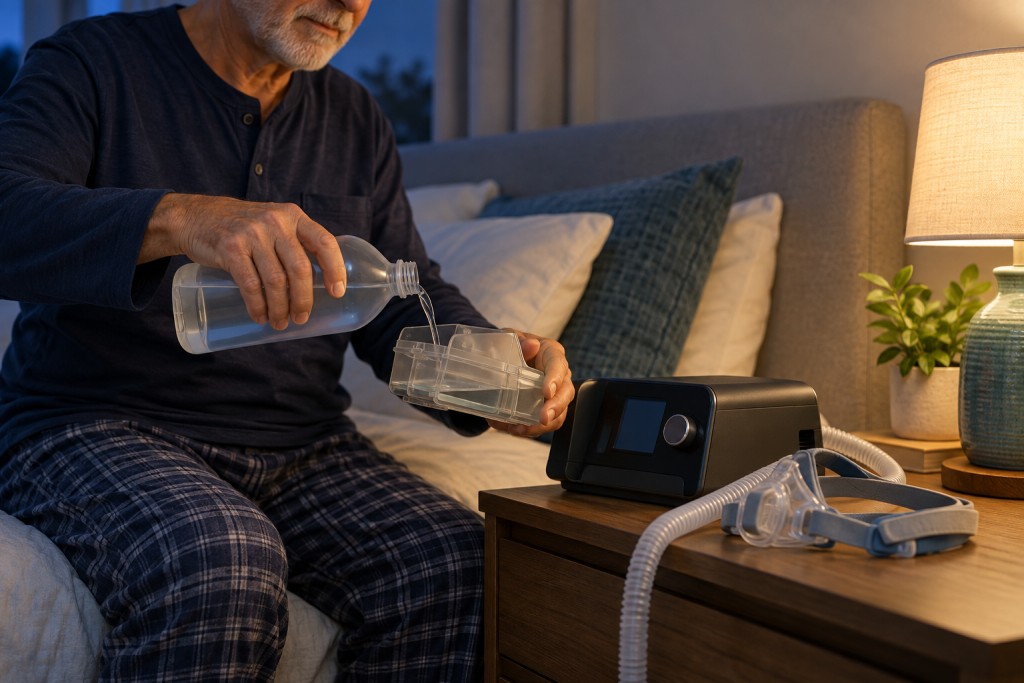
A heated humidifier can reduce dry mouth, dry nose, congestion and throat irritation. It may be particularly helpful if CPAP air feels uncomfortable. Use the water and cleaning method recommended by your machine manufacturer or sleep service; many advise distilled water for the humidifier chamber.
- Empty any remaining water from the chamber each morning.
- Allow the chamber to dry fully before refilling.
- Use fresh water each night rather than topping up old water.
- Clean the chamber regularly with warm water and mild detergent, following the manufacturer’s instructions.
- Do not use a room humidifier, tap water or homemade disinfectants in the CPAP chamber unless your sleep service or manufacturer specifically advises this.
A simple cleaning routine
Always follow the instructions for your own device, as materials and replacement schedules vary. A practical routine is:
| Part | Routine care |
|---|---|
| Humidifier chamber | Empty and air-dry daily; wash regularly as advised. |
| Mask cushion | Wipe or wash regularly to remove skin oils and residue, helping the seal as well as hygiene. |
| Tubing | Wash and rinse regularly, then hang or lay it so that it can dry completely. |
| Machine filter | Check, clean or replace it on the schedule given by your manufacturer or sleep service. |
Avoid unapproved ozone or ultraviolet “CPAP cleaning” machines. They may damage equipment and can irritate the airways if residues remain. Ordinary washing, rinsing and thorough air-drying are usually all that is needed.
When CPAP seems to make symptoms worse
CPAP can contribute to dryness, nasal irritation, mouth breathing, congestion or cough when the humidity is too low, the mask leaks, or the pressure and mask type need adjustment. This is a comfort and fitting issue—not proof of infection.
Contact your sleep service if you notice:
- persistent dry mouth, sore throat or blocked nose
- new mask leaks, pressure marks or a poor seal
- water collecting in the tubing (“rainout”)
- visible mould, persistent odour, cracked tubing or a damaged chamber
- a recurring cough that seems closely linked with CPAP use.
They may be able to adjust humidity or temperature, check the pressure setting, arrange a different mask or replace worn parts. Do not alter prescribed pressure settings yourself unless your service has shown you how and advised that it is appropriate.
When to seek medical advice
Contact your respiratory team or GP if you have a sustained increase in cough, sputum, wheeze or breathlessness; fever, chest pain, or blood-stained sputum. These need assessment as respiratory symptoms, rather than simply cleaning the CPAP equipment and waiting.
Seek urgent help for severe breathlessness, difficulty speaking in full sentences, blue or grey lips/skin, confusion, chest pain, or more than small streaks of blood in sputum.
The main message
CPAP is usually safe to continue for people with aspergillosis. Keep the equipment clean and dry, use the humidifier as instructed, and ask the sleep service to help with leaks, dryness or congestion. A new chest symptom should be assessed on its own merits rather than blamed on CPAP.
Related information
Last reviewed: September 2026

Did this page help you?
Tell us in one minute