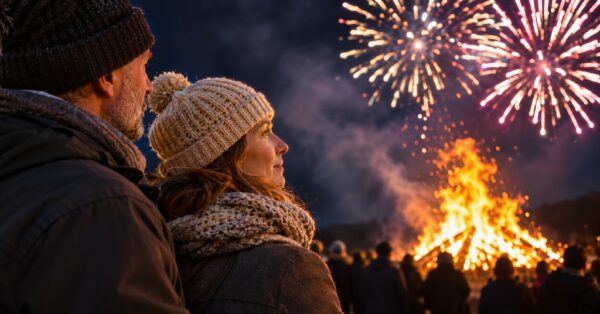
Fireworks and bonfires are part of many celebrations, especially between Bonfire Night and New Year. But smoke and air pollution can make breathing more difficult for people living with aspergillosis and other lung conditions.
For many people, fireworks are an enjoyable part of autumn and winter celebrations. For others, the smoke drifting across gardens, streets and even into homes can trigger coughing, wheezing or breathlessness.
If you have allergic bronchopulmonary aspergillosis (ABPA), chronic pulmonary aspergillosis (CPA), bronchiectasis or asthma, you may be particularly sensitive to smoke and other airborne irritants.
The good news is that there are practical ways to reduce your exposure without necessarily missing out on the celebrations.
Why can fireworks and bonfires affect your breathing?
Fireworks and bonfires both release pollutants into the air, although their emissions differ.
Fireworks produce short bursts of smoke containing fine particles, gases and compounds associated with the chemicals used to create their colours and effects.
Bonfires release smoke from burning wood and other materials. This can contain fine particles, carbon monoxide and other potentially harmful substances. Burning damp wood, garden waste or unsuitable materials can produce particularly unpleasant smoke.
One of the main concerns is fine particulate matter, known as PM2.5.
These particles are so small that they can travel deep into the lungs. They may irritate the airways, increase inflammation and aggravate existing respiratory symptoms.
Exposure can cause:
- Increased coughing or throat irritation
- Wheezing or chest tightness
- Breathlessness
- Increased mucus production
- Irritated eyes, nose or throat
People with existing respiratory disease may experience stronger or more prolonged symptoms than people with healthy lungs.
Why might people with aspergillosis be more sensitive?
Aspergillosis affects the lungs in several different ways.
Allergic bronchopulmonary aspergillosis (ABPA)
ABPA involves an exaggerated immune response to Aspergillus in the airways, commonly in people with asthma or cystic fibrosis.
The airways may already be inflamed and unusually sensitive.
Smoke and airborne pollutants can provoke coughing, wheezing and chest tightness, much as other irritants can.
Importantly, a reaction to smoke does not necessarily mean that Aspergillus activity has increased or that ABPA is relapsing.
However, persistent or worsening symptoms should still be assessed, particularly if they resemble a previous flare-up.
Chronic pulmonary aspergillosis (CPA)
CPA can cause long-term inflammation and damage to lung tissue.
Some people also have underlying conditions such as COPD, bronchiectasis or previous lung infections.
Smoke may aggravate coughing and breathlessness, particularly when lung function is already reduced.
People with CPA may also experience haemoptysis (coughing up blood).
Although smoke can provoke coughing, new or worsening haemoptysis should not simply be attributed to firework or bonfire exposure. It requires medical assessment according to its severity and any individual management plan.
Bronchiectasis
Bronchiectasis causes permanent widening and damage to parts of the airways, often accompanied by increased mucus production.
Smoke can irritate these airways and trigger coughing or make it more difficult to clear mucus comfortably.
An increase in symptoms following smoke exposure does not automatically indicate an infection, but persistent changes in sputum, breathlessness or general health may require assessment.
Do bonfires release Aspergillus spores?
This is an understandable concern for people living with aspergillosis.
Aspergillus is widespread in the environment, particularly in soil, compost, decaying vegetation and other organic material.
Piles of damp leaves, rotting wood and garden waste may contain fungal spores.
Moving, turning or disturbing mouldy material before a bonfire can release spores into the air.
However, the main respiratory hazard from an active bonfire is usually the smoke and combustion pollution rather than Aspergillus infection.
Fireworks themselves are not recognised as a significant source of Aspergillus spores.
This distinction matters because smoke irritation, fungal allergy and fungal infection are different processes, even though they can sometimes produce similar respiratory symptoms.
If you are particularly vulnerable to Aspergillus exposure, it is sensible to avoid handling or disturbing mouldy garden waste. See also our information on damp and mould.
Why can the smoke linger after the fireworks have finished?
You may notice that smoke hangs in the air long after a display has ended.
This is particularly common on cold, still evenings.
Normally, moving air helps disperse pollutants. However, when there is little wind, smoke can accumulate close to the ground.
Sometimes a temperature inversion develops. This occurs when warmer air above the ground restricts the upward movement of colder air and the pollution it contains.
As a result, fine particles may remain in the local atmosphere for hours, and elevated pollution can sometimes persist into the following day or longer.
This explains why someone may experience respiratory symptoms even when they have not attended a display.
Smoke from neighbouring gardens or nearby celebrations may also travel into homes through open windows, doors and ventilation.
Seven ways to protect your lungs
1. Avoid standing in smoke
If you attend an outdoor celebration, stay well away from bonfires and firework launch areas.
Pay attention to wind direction and avoid standing downwind, where smoke is blowing towards you.
If the smoke becomes uncomfortable, move away rather than trying to tolerate it.
2. Consider watching from indoors
Watching fireworks through a window can be a good alternative, particularly if you have severe respiratory symptoms or have previously reacted badly to smoke.
You can still enjoy the display without being directly exposed to the outdoor air.
3. Keep smoke out of your home
If fireworks or bonfires are taking place nearby, close windows and external doors while the smoke is present.
If you have a suitable air purifier with a HEPA filter, it may help reduce airborne particles indoors.
Remember that HEPA filters remove particles but do not reliably remove gases such as carbon monoxide.
Once outdoor air quality has improved, ventilate your home as appropriate.
4. Take your prescribed respiratory medicines
Continue taking inhalers and other prescribed treatments as directed.
If you have asthma, make sure your reliever inhaler is available and follow your asthma action plan if symptoms worsen.
Do not increase antifungal treatment or change other medicines simply because you have been exposed to smoke.
5. Think carefully about face masks
A well-fitting FFP2 or FFP3 respirator can reduce inhalation of airborne particles, including many smoke particles and fungal spores. Read our related information on face masks.
However, these masks do not protect against harmful gases in smoke, and they cannot make heavy smoke exposure safe.
Some people with significant respiratory disease may also find tight-fitting respirators uncomfortable.
Avoiding smoke remains preferable to relying on a mask.
6. Check local air quality
Air pollution can vary considerably between locations and from one evening to the next.
You can check conditions using the UK-AIR air pollution information service or local air quality forecasts.
Remember that pollution close to a bonfire or firework display may be considerably higher than the readings from a monitoring station some distance away.
7. Choose alternatives when possible
There are many ways to celebrate without creating additional smoke.
Light displays, drone shows and indoor celebrations may be more comfortable for people with respiratory conditions.
If family members or neighbours are planning fireworks or a bonfire, explaining that smoke affects your breathing may help them make considerate choices.
What about exercising outdoors?
If you normally walk, run or exercise outdoors, it may be sensible to change your plans when smoke is noticeable or air quality is poor.
Exercise increases the amount of air you breathe, potentially increasing your exposure to pollutants.
For someone with sensitive or damaged lungs, exercising in smoky air may provoke more symptoms than walking slowly or remaining indoors.
Consider exercising earlier in the day, choosing a different location or postponing strenuous activity until the air has cleared.
When should you seek medical advice?
Mild throat irritation or a temporary increase in coughing may improve after you move away from smoke.
However, do not assume that all respiratory symptoms following fireworks are harmless.
Contact your GP, respiratory team or NHS 111 if you develop persistent or worsening breathlessness, wheezing, coughing or other symptoms that are not settling, or if your usual treatment is not helping.
If you have a personalised asthma, bronchiectasis or other respiratory management plan, follow it.
Call 999 if you have severe difficulty breathing, cannot speak in full sentences because of breathlessness, develop blue or grey lips, collapse, or have other signs of a medical emergency.
If you cough up blood, follow your individual haemoptysis plan where one has been provided. New or worsening bleeding needs prompt assessment; substantial bleeding or bleeding accompanied by breathing difficulty requires emergency help.
Fireworks are not just a Bonfire Night issue
Although Bonfire Night on 5 November is particularly associated with smoke and fireworks in the UK, displays also take place around Diwali, Christmas, New Year, weddings and other celebrations.
For some people, repeated exposure over several weeks can be frustrating, especially when neighbouring displays are unpredictable.
The same precautions apply throughout the year.
You do not need to avoid every celebration, but understanding your own respiratory triggers and planning ahead can make a considerable difference.
Further information
- Asthma + Lung UK: Fireworks and bonfires with a lung condition – Practical advice on avoiding smoke and managing respiratory symptoms.
- UK-AIR: Air pollution information – National air quality information and forecasts.
- Aspergillosis.org: Lung bleeding and haemoptysis – Understanding coughing up blood and when to seek help.
- Aspergillosis.org: Face masks – Further information about respiratory protection.
The important message
Smoke from fireworks and bonfires can aggravate existing lung disease, but this does not necessarily mean that your aspergillosis is getting worse.
The immediate problem is usually irritation and inflammation caused by smoke and airborne pollutants, rather than a new fungal infection.
Avoiding heavy smoke, checking air quality, keeping prescribed medicines available and recognising significant changes in symptoms can help you enjoy celebrations more comfortably.
You should be able to enjoy the occasion without feeling pressured to expose yourself to smoke that makes breathing difficult.
This article provides general information and does not replace advice from your clinical team. People with severe or unstable respiratory disease should follow their individual management plans.

Did this page help you?
Tell us in one minute