Clinical Trials Update: Progress in ABPA and Invasive Aspergillosis Research

Date reviewed: 8 June 2026
Clinical research into aspergillosis continues to move forward, although there have been relatively few major new trial launches in recent weeks. The most significant developments involve two areas:
- Growing evidence supporting biologic treatment for Allergic Bronchopulmonary Aspergillosis (ABPA).
- Progress towards completion of a major international trial of a new antifungal drug for invasive aspergillosis.
Contents
- ABPA: More Evidence for Dupilumab
- Olorofim Trial Moves Towards Completion
- Why These Studies Matter
- What We Didn't Find This Month
- Common Questions
- When to Seek Medical Advice
ABPA: More Evidence for Dupilumab
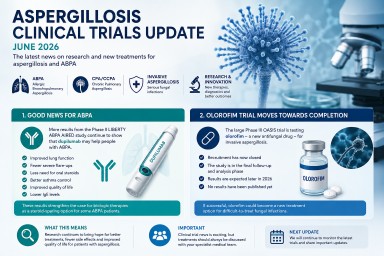
One of the most encouraging developments in recent years has been the emergence of biologic therapies for ABPA. Researchers continue to publish and present results from the Phase II LIBERTY ABPA AIRED study, which investigated the biologic drug dupilumab.
Dupilumab works by blocking two important inflammatory pathways (Interleukin-4 and Interleukin-13) that contribute to allergic inflammation in asthma and ABPA.
Additional scientific presentations and publications appearing during 2025 and 2026 continue to show consistent benefits for many patients:
- Improved lung function.
- Fewer severe respiratory exacerbations.
- Reduced need for oral corticosteroids.
- Better asthma control.
- Improved quality of life.
- Reductions in total Immunoglobulin E (IgE) and Aspergillus-specific IgE levels.
Although biologics are not suitable for everyone with ABPA, these results continue to strengthen the evidence that targeted immune therapies may offer an alternative to long-term steroid treatment for some patients.
For people living with ABPA, this remains one of the most promising areas of current research.
Olorofim Trial Moves Towards Completion
The other major development concerns olorofim, a novel antifungal medication being developed for difficult-to-treat invasive fungal infections.
The large international Phase III OASIS trial has been comparing olorofim with standard treatment in patients with invasive aspergillosis.
Recent updates suggest that recruitment has now effectively closed and that the study is entering its final follow-up and analysis phase.
This is an important milestone because it usually means researchers have enrolled enough participants and are now collecting the final outcome data needed to determine whether the treatment works and how safe it is.
However, the most important information is still awaited:
- The primary trial results have not yet been published.
- No peer-reviewed Phase III paper is currently available.
- The effectiveness of olorofim compared with current standard treatments remains under formal evaluation.
If the final results are positive, olorofim could become an important additional treatment option for patients with invasive aspergillosis, particularly those whose infections are resistant to existing antifungal drugs or who cannot tolerate current therapies.
Why These Studies Matter
Research into aspergillosis has traditionally lagged behind many other respiratory and infectious diseases. It is therefore encouraging to see progress occurring in two key areas:
- Allergic disease (ABPA) – where biologics are offering the possibility of reducing steroid dependence.
- Invasive disease – where new antifungal drugs may help address drug resistance and treatment failure.
These studies also reflect a broader trend towards more personalised treatment approaches, matching therapies to the specific type of aspergillosis and the underlying immune response of the patient.
What We Didn't Find This Month
While there has been progress in ongoing studies, we did not identify any major new:
- ABPA clinical trials.
- Chronic Pulmonary Aspergillosis (CPA) treatment trials.
- Severe Asthma with Fungal Sensitisation (SAFS) interventional studies.
- Aspergillus bronchitis treatment trials.
- Major environmental intervention studies.
- Newly terminated or withdrawn aspergillosis drug-development programmes.
This is not unusual. Large clinical trials often take several years to complete, and periods of data analysis between recruitment and publication can be lengthy.
Common Questions
Is dupilumab available for ABPA?
Dupilumab is already licensed for several allergic and eosinophilic conditions, including some forms of severe asthma. Its use specifically for ABPA varies between countries and healthcare systems. Decisions about treatment remain highly individual and should be discussed with a specialist team.
What is a Phase III trial?
Phase III studies are large clinical trials designed to determine whether a new treatment works and how safe it is compared with existing treatments. Positive Phase III results are often required before regulatory approval.
Could olorofim be used for CPA?
Research has explored olorofim in a variety of fungal diseases, but the current Phase III programme focuses on invasive aspergillosis. Further evidence would be needed before routine use in Chronic Pulmonary Aspergillosis.
When might the OASIS results be available?
There is currently no confirmed publication date. As recruitment appears to have finished, the next major milestone will be release of the primary efficacy and safety results.
When to Seek Medical Advice
Clinical trial news is exciting, but it should not replace advice from your healthcare team.
Seek medical attention if you experience:
- Worsening breathlessness.
- New or worsening haemoptysis (coughing blood).
- Persistent fever.
- Sudden deterioration in asthma control.
- Significant side effects from antifungal or biologic treatments.
If you are interested in taking part in clinical research, speak with your specialist team about studies that may be available in your area.
Key Takeaway: The strongest current momentum in aspergillosis research remains in biologic treatments for ABPA and new antifungal therapies for invasive aspergillosis. While no major new trials have appeared this month, ongoing studies continue to move closer to delivering results that could influence future care.
Last reviewed: 8 June 2026
What’s New in Aspergillosis Clinical Trials (Last ~4 Months)
An overview for patients and non-specialist readers — 19 January 2026
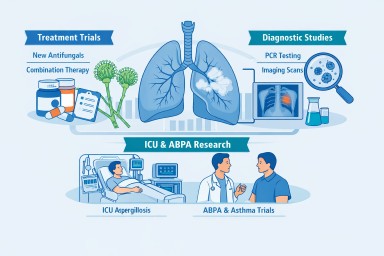
Over the past four months, research into aspergillosis — including chronic, allergic, and invasive forms — has continued across a range of clinical trials. These studies include treatments, diagnostics, and better ways to understand who gets sick and how best to manage it.
Below is a summary of the most relevant trials now active, recruiting, or updated recently. Whenever possible, we link to the official ClinicalTrials.gov record so you can see the details, eligibility criteria, locations, and contact information.
📋 Clinical Trials of Interest
1. Phase III Olorofim Trial for Invasive Aspergillosis
Study title: Olorofim Aspergillus Infection Study
Condition: Invasive aspergillosis (IA)
What it’s testing: A new antifungal drug called olorofim compared with liposomal amphotericin B followed by standard care.
Status: Active — not currently recruiting new patients but ongoing through 2026.
Official record: Olorofim Aspergillus Infection Study on ClinicalTrials.gov
Last updated: January 4, 2026
Why this matters: Olorofim is a completely new class of antifungal designed for patients whose infection is difficult to treat with standard drugs. It may offer an alternative for those with drug-resistant or treatment-intolerant infections.
2. Rezafungin in Chronic Pulmonary Aspergillosis (CPA)
Study title: Rezafungin for Treatment of Chronic Pulmonary Aspergillosis
Condition: Chronic pulmonary aspergillosis
What it’s testing: A long-acting echinocandin antifungal (rezafungin) that might reduce dosing frequency.
Status: Recruiting / active
Official record: Rezafungin CPA Trial on ClinicalTrials.gov
Why this matters: Current CPA treatments can require daily medication and prolonged therapy. Rezafungin’s once-weekly dosing could help reduce burden and hospital visits.
3. Combination Trial: Ibrexafungerp + Voriconazole (SCYNERGIA)
Study title: Evaluate Safety and Efficacy of Ibrexafungerp With Voriconazole in Invasive Pulmonary Aspergillosis
Condition: Invasive pulmonary aspergillosis
What it’s testing: Whether combining two antifungals works better than standard therapy alone.
Status: Active (ongoing)
Official record: SCYNERGIA Combination Trial on ClinicalTrials.gov
Why this matters: Some patients don’t respond well to single-agent treatment. Combination therapy may help in severe cases, especially where resistance is a concern.
4. PCR Diagnostic Study for Aspergillus fumigatus
Study title: PCR for Aspergillus Fumigatus in Blood and Bronchoalveolar Lavage Fluid
Condition: Aspergillosis (diagnostic focus)
What it’s testing: A blood and lung fluid PCR test to improve early detection of aspergillosis.
Status: Recruiting
Official record: PCR Aspergillus fumigatus Diagnostic Trial on ClinicalTrials.gov
First posted: 2 January 2026
Why this matters: Early diagnosis increases the chance of successful treatment. A reliable PCR test could allow clinicians to start antifungal therapy sooner.
🔎 What Else Is Ongoing?
There are other studies that include aspergillosis patients or Aspergillus exposure as part of broader research, such as:
-
All-of-Us Research Program fungal infection analysis — large observational work looking at fungal disease patterns in hundreds of thousands of people in the U.S., including aspergillosis. (Not a clinical trial per se but relevant to understanding how aspergillosis affects populations.)
-
Historic or related trials — e.g., older isavuconazole comparisons (e.g., NCT00412893) exist but are not newly updated.
🧠 What This Means for Patients
-
New antifungal drugs like olorofim and rezafungin are being tested in late-stage studies — these could expand treatment options in the future.
-
Combination therapies (e.g., ibrexafungerp + voriconazole) are being assessed to tackle difficult or resistant infections.
-
Improved diagnostics (e.g., PCR tests for Aspergillus fumigatus) are now being studied to help clinicians diagnose infections earlier and more accurately.
-
Not all trials are about treatment — some focus on better ways to detect infection or understand disease patterns, which are important for prevention and clinical practice.
🗓 How to Use These Links
Clicking a trial link takes you to the official ClinicalTrials.gov page, where you can often see:
-
Who can participate
-
Locations and contact information
-
Detailed eligibility criteria
-
Sponsor and trial timelines
If you have questions about joining a trial or how it applies to you specifically, always discuss this with your healthcare team.