

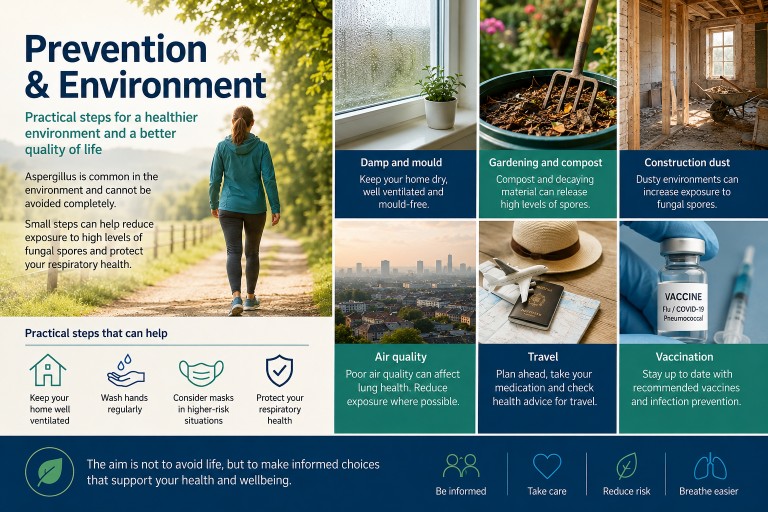
The environment plays an important role in fungal exposure, respiratory health and quality of life.
Aspergillus is common in the environment and cannot be avoided completely. However, understanding common sources of exposure and practical ways to reduce risk can help people affected by aspergillosis make informed decisions about their health.
Quick summary
- Aspergillus is a common fungus found in soil, compost, dust, decaying vegetation and indoor environments.
- Most people breathe in fungal spores every day without becoming ill.
- Some people with lung disease or weakened immunity may benefit from reducing high-level exposure.
- Damp and mould can worsen respiratory symptoms and should be addressed where possible.
- Vaccination and infection prevention can help reduce respiratory complications.
- The aim is practical risk reduction, not avoiding normal life.
Understanding environmental exposure
Aspergillus is a group of fungi found naturally throughout the environment. It plays an important role in breaking down organic material, but some species can cause disease in people with certain lung conditions, immune problems or other risk factors.
Aspergillus may be found in:
- Soil
- Compost
- Decaying leaves and vegetation
- House dust
- Building materials
- Outdoor air
- Damp indoor environments
Exposure is normal and unavoidable. For most people, the immune system and lungs clear fungal spores without causing illness.
Aspergillus in everyday life
People encounter Aspergillus spores during normal daily life. Complete avoidance is neither realistic nor necessary for most people.
Common sources of exposure may include:
- Parks and gardens
- Woodland and farms
- Compost heaps
- House dust
- Construction sites
- Damp or water-damaged buildings
The focus should be on recognising situations where exposure may be unusually high and taking sensible precautions where appropriate.
Damp and mould
Damp and mould are important public health issues. They can affect indoor air quality and may worsen respiratory symptoms, particularly for people with asthma, allergies or long-term lung disease.
Damp and mould may be linked with:
- Increased cough or wheeze
- Asthma exacerbations
- Poor indoor air quality
- Sleep disruption
- Reduced quality of life
- Concern about housing safety
Visible mould or persistent damp should be investigated and addressed. People concerned about damp and mould may need advice from landlords, housing providers, environmental health services or healthcare professionals.
Home environment
Many patients ask whether they need to make major changes at home. Most homes do not need extreme environmental controls, but practical steps can help reduce damp, dust and poor air quality.
Useful steps may include:
- Repairing leaks and water damage promptly
- Improving ventilation where safe and practical
- Reducing condensation
- Maintaining heating systems
- Cleaning visible mould safely
- Avoiding unnecessary dust exposure
- Seeking help for persistent damp or mould problems
Advice may need to be individualised for people with severe lung disease, immune suppression or complex medical conditions.
Gardening and compost
Gardening can provide exercise, enjoyment and mental wellbeing benefits. However, compost, soil and decaying plant material may contain high concentrations of fungal spores.
Some people choose to reduce exposure by:
- Avoiding direct handling of compost
- Wearing gloves
- Wearing respiratory protection for dusty or mouldy tasks
- Asking someone else to turn compost heaps or clear decaying leaves
- Avoiding gardening when material is very dry, dusty or mouldy
- Washing hands and changing clothes after high-exposure tasks
Decisions should be individualised according to health status, diagnosis and medical advice. The aim is to reduce unnecessary high-level exposure without removing activities that support wellbeing.
Construction and renovation work
Construction, demolition and renovation work can release dust and fungal spores, especially when buildings are old, water-damaged or poorly ventilated.
Potential higher-exposure situations include:
- Demolition
- Major building renovation
- Water-damaged buildings
- Dust-generating work
- Loft, cellar or attic clearance
- Removal of mouldy materials
People at higher risk may wish to avoid prolonged exposure to construction dust where possible and discuss specific concerns with their healthcare team.
Air quality and pollution
Air quality affects respiratory health. While air pollution is not the same as fungal exposure, poor air quality can worsen symptoms in people with asthma, bronchiectasis, chronic obstructive pulmonary disease or other lung conditions.
Relevant factors may include:
- Outdoor air pollution
- Indoor air quality
- Tobacco smoke
- Wood-burning stoves and biomass fuels
- Workplace dusts or fumes
- Strong odours or chemical irritants
Improving air quality where possible may support overall respiratory wellbeing.
Travel and holidays
Many people with aspergillosis travel successfully with appropriate planning. Travel decisions depend on symptoms, oxygen needs, medicines, immune status, destination and access to healthcare.
Planning may include:
- Carrying enough medication for the full trip
- Keeping medicines in hand luggage where appropriate
- Arranging travel insurance
- Taking a medical summary or medication list
- Checking vaccination requirements
- Considering climate, altitude, air quality and local healthcare access
- Planning oxygen or mobility support where needed
People with complex disease or recent instability should discuss travel plans with their healthcare team.
Vaccination and infection prevention
Respiratory infections can worsen symptoms and complicate aspergillosis management. Preventing avoidable infections is an important part of protecting respiratory health.
Preventive measures may include:
- Influenza vaccination
- COVID-19 vaccination
- Respiratory syncytial virus (RSV) vaccination where eligible
- Pneumococcal vaccination where appropriate
- Hand hygiene
- Avoiding close contact with people who have acute respiratory infections where possible
- Seeking early medical advice when symptoms worsen significantly
Vaccination recommendations vary between individuals and countries. Patients should follow advice from their healthcare team or national vaccination programme.
Masks and respiratory protection
Some people choose to wear masks or respirators in situations where fungal spore exposure, dust or respiratory infection risk may be higher.
Examples may include:
- Handling compost
- Clearing decaying leaves
- Cleaning dusty or mouldy areas
- Being near construction or demolition work
- Crowded indoor spaces during respiratory virus seasons
- Travel on public transport or flights, depending on personal risk
Respiratory protection should be viewed as one possible tool rather than a requirement for everyone. People at higher risk should seek individual advice.
Finding a practical balance
Living with aspergillosis should not mean avoiding normal life. Many people continue to travel, garden, work, exercise, socialise and enjoy hobbies.
The goal is not to eliminate risk completely. That is impossible. The goal is to make informed decisions that balance health, independence, emotional wellbeing and quality of life.
Practical risk reduction works best when it is realistic, proportionate and tailored to the individual.
Frequently asked questions
Can Aspergillus be completely avoided?
No. Aspergillus is widespread in the environment. Complete avoidance is not possible and is not usually necessary.
Should I stop gardening if I have aspergillosis?
Not necessarily. Many people continue gardening. Some may choose to avoid compost, decaying leaves or dusty tasks, especially if they are at higher risk.
Is mould in the home dangerous?
Visible mould and persistent damp should generally be investigated and addressed, particularly if respiratory symptoms are worsening.
Should I wear a mask?
Some people choose to wear respiratory protection in dusty, mouldy or crowded environments. The need depends on individual risk and the situation.
Can I travel with aspergillosis?
Many people with aspergillosis travel successfully with planning. Medication supplies, insurance, vaccinations and access to healthcare should be considered.
Does air pollution affect aspergillosis?
Air pollution may worsen respiratory symptoms in people with lung disease. Reducing exposure to poor air quality may support overall respiratory health.
Author and review information
This page is intended for people living with aspergillosis, carers, families, patient advocates and non-specialist healthcare professionals.
It provides general information about environmental exposure and prevention. Advice should be individualised for people with severe lung disease, immune suppression or complex medical needs.
Last reviewed: June 2026.
Did this page help you?
Tell us in one minute