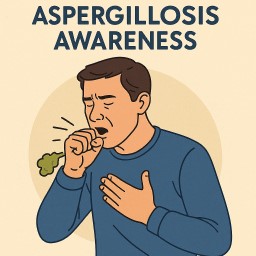
Why Join the Aspergillosis Patient Advisory Group (PAG)?
Supported by the European Lung Foundation (ELF), NAC CARES, and the European Respiratory Society (ERS).
Living with aspergillosis — CPA, ABPA, SAFS, Aspergillus bronchitis or sinus disease — can be overwhelming. Many people feel isolated, struggle to find clear information, or feel unsure how to influence the care they receive.
That is exactly why the Aspergillosis Patient Advisory Group (PAG) exists.
The PAG is supported by the European Lung Foundation (ELF) — based in Sheffield — and by NAC CARES, the patient engagement and support team at the UK National Aspergillosis Centre (NAC) in Manchester. Together, ELF, NAC CARES and the PAG work closely with the European Respiratory Society (ERS) to make sure the patient voice shapes research, education, and clinical practice across Europe and the UK.
What ELF Does
ELF brings together patients, carers, researchers and professionals from across Europe including the UK. It:
-
Provides clear, trustworthy patient information
-
Organises and hosts patient advisory groups
-
Ensures patient voices are included in ERS guidelines and research
-
Supports patient–professional workshops, surveys and consultations
-
Helps patients shape respiratory policy and awareness campaigns
Because ELF is UK-based, participation is easy for UK patients.
What NAC CARES Does
NAC CARES is the patient-facing team at the National Aspergillosis Centre in Manchester.
They:
-
Support UK patients to join the PAG
-
Help connect lived experience from UK clinics to the wider European PAG
-
Share updates, resources, and educational material
-
Bring PAG priorities back into NAC’s clinical and research work
-
Ensure UK patients feel included, represented and supported within ELF and ERS structures
NAC CARES acts as a bridge between UK clinical expertise and European patient involvement.
What the Aspergillosis PAG Does
The PAG ensures that people living with aspergillosis have a direct say in:
-
Research design
-
European Respiratory Society guidelines
-
New diagnostic and treatment pathways
-
Patient-friendly information materials
-
Awareness projects and health campaigns
-
Surveys that drive change in policy and clinical practice
Your lived experience is treated as meaningful expertise.
Why Join the PAG? Why Spend Your Energy?
Many people with aspergillosis have limited energy.
Here is why members say it is worth it:
1. You receive clear, reliable information
Updates on research, antifungals, biologics, trials and guidelines — written for patients, not scientists.
2. Your voice shapes real decisions
ERS guideline committees and research teams listen.
Your input changes how care is delivered.
3. You feel less alone
Aspergillosis is rare.
The PAG connects you with people across Europe and the UK who truly understand.
4. You choose how involved you want to be
You can simply receive updates — or you can complete the occasional survey, join a focus group, or help shape a guideline.
No pressure, no obligation.
5. It improves care for everyone — including you
Your experience helps highlight what really matters:
-
Delayed diagnosis
-
Side-effects
-
Treatment access
-
Fatigue and breathlessness
-
Impact on quality of life
This evidence influences clinicians, researchers and policymakers.
6. It is free, inclusive and easy to join
No travel.
No cost.
All online.
Europe includes the UK, and ELF is based in Sheffield.
Who Can Join?
Anyone affected by aspergillosis:
-
Patients with CPA, ABPA, SAFS, Aspergillus bronchitis or sinus disease
-
People with fungal allergy in asthma or bronchiectasis
-
Family members and carers
No medical background needed.
How to Join
You can join in a few minutes:
👉 https://europeanlung.org/en/patient-advisory-groups/
Choose “Aspergillosis”.
You’ll then receive updates and invitations to take part — always at your own pace.
In One Line:
The PAG gives you good information, a real voice in shaping aspergillosis care, and a supportive community — with full backing from ELF, ERS and NAC CARES.
Aspergillosis Awareness: Conversation with Tom Bermingham - European Lung Foundation
Conversation with Tom Bermingham - European Lung Foundation
👨 Meet Tom Bermingham
-
Lives in rural County Wexford, Ireland, with his wife.
-
Works as a Rural Development Manager.
-
Diagnosed with aspergillosis in 2022 after years of lung issues.
🌪️ What Triggered His Aspergillosis
-
He grew sunflowers in a polytunnel; handling decaying heads released dust he inhaled.
-
Later, home renovation stirred up bathroom mould/dust—both likely exposures.
🏥 The Path to Diagnosis
-
2019: Hospitalised for cavitating pneumonia and diagnosed with bronchiectasis.
-
Later treated for chronic fatigue syndrome, repeated infections, tiring quickly.
-
Feb 2022: Hospitalised again (17 days), diagnosed with severe adult-onset asthma, oxygen-dependent, with mucus positive for Aspergillus fumigatus.
-
Initially labelled with Chronic Pulmonary Aspergillosis (CPA), treated with steroids, antifungals, inhalers, antibiotics, and fatigue medications.
-
2024: Diagnosis revised to ABPA + Severe Asthma with Fungal Sensitisation (SAFS).
-
October 2024: Hospitalised for COVID-19 and Pseudomonas lung infection treated via PICC line. European Lung Foundation
💔 How It Affects His Daily Life
-
Mornings bring coughing up “dirty mucus” daily—an unsettling reminder.
-
Extreme fatigue, headaches, regular infections dominate his life.
-
Gave up gardening (risk of soil exposure), community work, and physical chores.
-
Lives with constant fear of infection, medication side effects, and hospitalisations.
-
Chronic disease has made long-term planning impossible; relaxation and mental wellbeing are vital.
🧭 How He Manages
-
Supported by his wife and daughters and his flexible employer.
-
Practices listening to his body: rests when needed.
-
Regular check-ups—including CT scans, lung function, sputum and blood tests—keep his care monitored. European Lung Foundation
-
Accepting limitations while focusing on what he can still do helps his mindset.
✅ Key Insights for Aspergillosis Patients
-
Environmental exposures matter: mould, dust, soil may trigger illness—even long after.
-
Diagnosis can be complex and evolve: often overlaps with asthma, bronchiectasis, ABPA, SAFS.
-
Daily life can change significantly, with physical decline and emotional stress.
-
Support network and personalised care are crucial—family, employer flexibility, specialist monitoring.
-
Self-care and mindset: acceptance, rest, and focusing on abilities, not limitations.