Side effects from Biologic Medication

It’s completely understandable to feel unsure before starting a biologic — especially when you’ve heard different experiences from different people.
Most patients with ABPA or severe Aspergillus-related asthma do very well on biologics. Side effects can happen, but they’re usually mild and settle quickly.

🌟 Most people report very few problems

Patients often say:

  • The injections are straightforward

  • They feel the same or better within days or weeks

  • There’s little or no impact on daily life

🌟 Common, mild side effects

These are the ones we hear most often across omalizumab, benralizumab, dupilumab and tezepelumab:

📌 Injection-site reactions

  • Redness

  • Itching

  • A small tender lump

  • Bruising
    These usually disappear within 24–48 hours.

📌 Mild tiredness

Some people feel slightly “wiped out” after the first few doses.

📌 Headache

Very common with the first injection. Less so afterwards.

📌 Minor joint or muscle aches

A bit like the feeling after a flu jab.

📌 Nasal or sinus changes

Occasional mild dryness or congestion, especially with dupilumab.

🌟 Less common (still mild)

  • Mild tummy upset

  • Sore throat

  • A brief “flu-ish” feeling

  • Temporary increase in eczema (mainly with dupilumab)

  • Slight mood dip for a day or two (rare)

🌟 Rare but important

These are very uncommon, and your team will explain what to look out for:

  • Allergic reaction shortly after an injection
    (This is why your first dose is supervised.)

  • Eye inflammation — mostly linked to dupilumab, usually mild and treatable

Your team will give you clear advice on what to do if anything unusual happens.

🌟 What ABPA patients often notice

People with ABPA frequently describe:
👉 Fewer allergic symptoms
👉 Clearer breathing
👉 Much less mucus
👉 Fewer flare-ups and fewer steroids

But biologics don’t help everyone — which is why the first few months are monitored closely.

🌟 Final reassurance

For many aspergillosis patients, biologics are far easier than long-term steroids or antifungals. Most say the benefits outweigh the side effects — but every person’s experience is individual.


Understanding Risk: How Common Is “Rare”?

When doctors talk about risk, it can sound worrying — especially when you’re already living with a lung condition.
But every day, we all take small, managed risks without realising it.

Understanding how everyday risks compare with medical or vaccine risks helps put the numbers into perspective — and shows why treatment is almost always worth it.


🚶‍♀️ Everyday activities carry small risks

Everyday life is full of tiny risks we accept because the benefits are clear — exercise, travel, independence, and social connection.

Activity Estimated risk of serious harm Equivalent comparison
Driving a car for 250 miles About 1 in 1 million chance of fatal accident Roughly the same as the risk of a severe vaccine reaction
Cycling for 30 minutes About 1 in 3 million Similar to being struck by lightning in your lifetime
Walking near traffic for a day Around 1 in 15 million Negligible, but not zero
Taking a domestic flight (UK) Less than 1 in 10 million chance of fatal accident Far safer than most road journeys
Catching flu during winter Around 1 in 10 chance of getting ill Much higher risk than most medicine side effects

We don’t think of these activities as “dangerous” because the benefit far outweighs the risk — just as it does with most treatments.


💊 Medicines and vaccines we take safely every day

Most common medicines have mild, short-lived side effects. Serious reactions are possible but extremely rare.

Medicine Typical mild effects Serious reactions (approx. frequency) Comment
Paracetamol (acetaminophen) Nausea, rash Serious liver injury ≈ 1 in 100,000 (usually after overdose) Very safe when taken correctly
Ibuprofen Heartburn, upset stomach Ulcer or stomach bleed ≈ 1 in 1,000 if used long term Safer when taken with food
Amoxicillin Diarrhoea, mild rash Severe allergic reaction ≈ 1 in 5,000–10,000 Rare but recognised
Influenza vaccine Sore arm, tiredness Severe allergic reaction ≈ 1 in 1 million Prevents thousands of serious infections yearly
COVID-19 vaccine Mild flu-like symptoms (≈ 1 in 10) Severe allergic reaction ≈ 1 in 100,000 Benefits far outweigh risks
Oral steroids (short course) Increased appetite, insomnia Major side effects only with prolonged use Vital during ABPA or asthma flares

⚕️ What does “serious side effect” really mean?

When you read about serious reactions in medical leaflets or vaccine information, it doesn’t necessarily mean life-changing.
The term “serious” has a specific medical meaning, used by the MHRA, EMA, and WHO.

A reaction is called serious if it:

  • leads to hospitalisation,

  • is life-threatening at the time,

  • causes temporary disability or incapacity,

  • results in death, or

  • causes a birth defect.

👉 It’s about medical urgency, not always long-term harm.

In reality, most serious reactions are short-lived and fully reversible with prompt treatment.
For example:

  • An anaphylactic reaction to a vaccine is medically serious because it needs immediate care — but nearly everyone recovers completely once treated.

  • A high fever or rash that requires a day in hospital may be serious in reporting terms, but causes no permanent damage.

By contrast, life-changing reactions (such as nerve injury or organ failure) are extraordinarily rare — far rarer than being struck by lightning.

“When doctors say ‘serious reaction’, they mean something that needs urgent medical attention — not something that will leave you permanently unwell.”


🩺 More common health risks we all face

While medicine risks are very small, the everyday risks to life and health are much higher — especially if conditions go untreated.

Health event or cause Approximate annual risk (UK adult) Lifetime risk Notes
Heart attack Around 1 in 200–300 per year 1 in 4 men, 1 in 6 women Increases with age, smoking, and high blood pressure
Stroke Around 1 in 250 per year About 1 in 5 adults Preventable with healthy lifestyle and medication
Cancer (any type) Around 1 in 125 per year Around 1 in 2 people in their lifetime Most treatable when found early
Serious road accident About 1 in 15,000 per year Around 1 in 100 lifetime Far higher than a vaccine reaction
Severe flu needing hospital care Around 1 in 500 per winter Higher for people with lung disease Preventable by flu vaccination
Fatal asthma attack About 1 in 100,000 per year Higher in uncontrolled asthma Preventable with good management
COVID-19 death (current UK levels) Around 1 in 2,000–5,000 per year for older/vulnerable adults Major reason vaccination still matters
Lightning strike About 1 in 15 million per year Around 1 in 300,000 lifetime Benchmark for “extremely rare” risk

⚖️ Making sense of the numbers

  • A 1 in 1,000 risk means one person in a large GP practice might experience it.

  • A 1 in 100,000 risk means one person in a football stadium crowd.

  • A 1 in 1 million risk is so rare that most doctors never see it in their career.

So when you hear that a serious vaccine reaction occurs in one in a million people, that’s about the same as:

  • being struck by lightning once in your life, or

  • winning a small lottery prize several times in a row.


❤️ The real takeaway

The greatest risks to life and health are the common diseases we can prevent or treat — not the rare side effects of treatment.

Every vaccine or medicine is carefully assessed so that its benefits far outweigh its risks, especially for people with asthma, ABPA, bronchiectasis, or weakened immunity.
Treatments don’t add danger — they reduce the much bigger risks from infection, inflammation, and lung damage.


🧭 Key message

We all live with risk, but:

  • Most everyday and health-related risks are far greater than the tiny chance of a medicine reaction.

  • Managing your lung condition well — with the right treatment, vaccines, and follow-up — protects your lungs and lengthens your life.

  • The safest path is always informed care, not avoidance through fear.


🧠 Article 2: Why Awareness Matters – Staying Safe and Confident on Aspergillosis Treatment

Subtitle: How understanding your medicines can protect you and improve your quality of life.


💬 Awareness Means Safety

For people managing aspergillosis or related lung conditions, awareness isn’t just about learning facts — it’s about staying safe.
Knowing how your treatment works, what to expect, and who to ask for help gives you control and confidence.


1️⃣ Awareness Builds Understanding

Understanding each medicine’s purpose helps you:

  • Recognise genuine warning signs early.

  • Avoid anxiety over mild or harmless side effects.

  • Know when something needs professional advice.

Example: a patient who knows voriconazole can cause brief light sensitivity won’t panic, but they will report a new rash or jaundice straight away.


2️⃣ Awareness Improves Communication

Informed patients are better partners in care.
You can explain symptoms clearly, ask the right questions, and notice how medicines affect you.
This helps doctors and nurses tailor treatment quickly and safely.


3️⃣ Awareness Supports Safer Treatment

Many aspergillosis patients take multiple interacting medicines — antifungals, steroids, antibiotics, and sometimes biologics.
Being aware of potential interactions means you can prevent problems before they happen.

You can check interactions using the official
👉 BNF Interactions Checker – NICE Medicines Guidance
(Free, reliable, and used by UK healthcare professionals.)

💡 Tip: If you find a possible interaction online, don’t stop any medicine yourself. Take a screenshot or note and discuss it with your pharmacist or specialist.


🧴 Awareness Includes Working With Your Pharmacist

Pharmacists — both hospital and community — are a vital part of your care team.
They are medicine specialists who can:

  • Review your prescriptions for clashes between antifungals, steroids, and other drugs.

  • Advise how to take medicines for best absorption (for example, itraconazole with food, not with omeprazole).

  • Explain potential side effects and how to manage them safely.

  • Contact your GP or hospital consultant if adjustments are needed.

Whenever you start or stop a medicine — even an over-the-counter painkiller or herbal supplement — let your pharmacist know.
They can quickly check your full medication list using the same professional databases doctors use.

🧭 Remember: Your pharmacist is your first safety checkpoint.
They’re there to protect you, clarify confusion, and help your medicines work safely together.


4️⃣ Awareness Builds Confidence and Control

Long-term illness can feel unpredictable.
Understanding your medicines helps you:

  • Manage flare-ups calmly.

  • Recognise early changes and act quickly.

  • Feel more confident talking with your care team.

Research shows that informed patients have fewer hospital admissions, better symptom control, and improved wellbeing.


⚖️ Balanced Information

Awareness is only helpful if it’s accurate.
Stick to trusted sources such as:

  • aspergillosis.org

  • NHS and NICE websites

  • Your hospital’s patient information leaflets

  • Local or hospital pharmacists who can explain details clearly

Avoid social-media “miracle cures” or alarming headlines that lack evidence.


🌱 The Bottom Line

Awareness doesn’t just make you more knowledgeable — it makes you safer.

Learn what each medicine does, recognise early warning signs, and use trusted resources like the BNF Interactions Checker and your pharmacist to keep your treatment on track.
Awareness turns uncertainty into confidence — and confidence into better health.


🔗 Related Resource

Managing Side Effects of Aspergillosis Treatments » — detailed guide to medicines, monitoring, and how pharmacists and doctors work together to keep you safe.


🩺 Article 1: Managing Side Effects of Aspergillosis Treatments

Subtitle: What to expect, how to recognise problems early, and when to ask for help.


💊 Why This Matters

People living with aspergillosis, bronchiectasis, or Primary Ciliary Dyskinesia (PCD) often take several medicines for months or even years.
These drugs are vital for controlling infection, inflammation, and allergic reactions — but they can also cause side effects or drug interactions.

Being aware of what’s normal, what’s not, and when to seek help helps you stay safe while getting the most from treatment.


⚗️ Antifungal Medicines

Antifungal (azole) drugs are the backbone of treatment for Chronic Pulmonary Aspergillosis (CPA) and Allergic Bronchopulmonary Aspergillosis (ABPA).
They control infection but can affect the liver, heart, or skin, so regular blood monitoring is essential.

Itraconazole (Sporanox® / generic)

Used for long-term control in CPA and ABPA.

  • Common: tiredness, nausea, ankle swelling, blurred vision.

  • Serious: yellowing skin/eyes, dark urine, shortness of breath.

  • Tips:

    • Take with a main meal or fizzy drink (acidic stomach aids absorption).

    • Avoid taking it with omeprazole or similar acid-reducing drugs, as these block absorption.

    • Have regular liver-function and drug-level blood tests.

    • Report ankle swelling or jaundice immediately.


Voriconazole (Vfend®)

Used when itraconazole isn’t effective or tolerated.

  • Common: temporary visual flashes or blurred vision, sunlight sensitivity, mild headache.

  • Serious: severe rash, blistering, or long-term skin-cancer risk from sunlight.

  • Tips:

    • Always use SPF 30+ sun cream, even in winter.

    • Avoid prolonged sun exposure.

    • Report any visual change, rash, or fatigue promptly.

    • Blood monitoring checks for safe drug levels.


Posaconazole (Noxafil®)

Used for resistant infections or as a second-line therapy.

  • Common: nausea, diarrhoea, fatigue.

  • Serious: liver inflammation, low potassium (causing muscle cramps or irregular heartbeat).

  • Tips:

    • Take with a main meal or full-fat snack.

    • Report unexplained muscle weakness or palpitations.

    • Keep up with blood tests.


Isavuconazole (Cresemba®)

A newer antifungal option that may cause fewer interactions.

  • Common: headache, mild nausea, ankle swelling.

  • Tips:

    • Continue regular liver and kidney checks.

    • Report any new swelling, fatigue, or breathlessness.


💨 Corticosteroids

(Prednisolone, Methylprednisolone, Hydrocortisone)
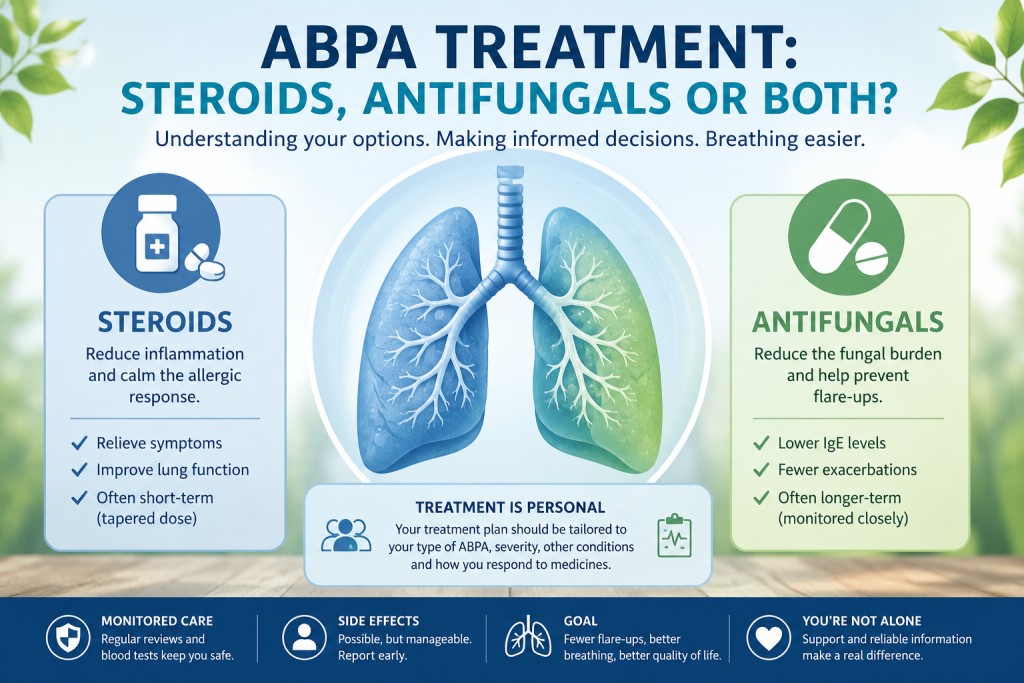
These reduce inflammation and allergic response in ABPA and asthma.
They are powerful — but long-term use can affect weight, mood, bones, and hormone balance.

  • Common: increased appetite, fluid retention, mood swings, difficulty sleeping.

  • Long-term: thinning bones, higher blood sugar, adrenal suppression.

  • Tips:

    • Never stop suddenly — always taper under medical advice.

    • Carry a Steroid Emergency Card.

    • Ask about bone protection (vitamin D, calcium, bisphosphonates).

    • See your GP if you feel very tired, dizzy, or unwell.


🧬 Biologic Treatments

(Mepolizumab, Benralizumab, Omalizumab)
These injection-based medicines target inflammation or allergic responses in severe asthma or ABPA.

  • Common: mild injection-site soreness, tiredness, headache.

  • Occasional: mild fever or muscle aches.

  • Serious: allergic swelling of lips, tongue, or throat.

  • Tips:

    • Record any mild reactions.

    • If you develop swelling or difficulty breathing, call 999 immediately.


💊 Long-Term Antibiotics

(Azithromycin, inhaled colomycin, tobramycin)
Used to reduce bacterial infections in bronchiectasis or PCD.

  • Common: stomach upset, diarrhoea, mild throat irritation.

  • Long-term: tinnitus or hearing loss (especially with azithromycin).

  • Tips:

    • Have periodic hearing checks.

    • Rinse mouth and nebuliser after inhaled antibiotics.

    • Report ringing in the ears, severe diarrhoea, or rash.


⚠️ Drug Interactions

Antifungal medicines (especially azoles) can interfere with many common drugs, including:

  • Steroids (e.g., prednisolone, fluticasone) — may increase steroid levels.

  • Reflux medicines (e.g., omeprazole, lansoprazole) — reduce antifungal absorption.

  • Statins and warfarin — increase risk of side effects or bleeding.

  • Some antihistamines and antibiotics — can affect heart rhythm.

These interactions can be complex — always check before starting or stopping any medication.

Check it yourself:
You can use the official BNF Interactions Checker (NICE Medicines Guidance) to see if two medicines are known to interact.
Simply type the names (e.g., itraconazole and prednisolone) and it will show the risk level, what the interaction does, and what clinicians usually recommend.
If unsure, show the result to your GP, pharmacist, or hospital team — they can interpret it for your situation.


🚨 When to Seek Help

Call your specialist or GP urgently if you notice:

  • Yellowing of skin or eyes

  • Severe rash, blistering, or peeling

  • New ankle swelling or breathlessness

  • Sudden fatigue or dark urine

  • Visual changes or increased photosensitivity

  • Ringing in the ears or hearing loss

If you feel acutely unwell, do not stop your medication abruptly — contact your hospital team or emergency services.


🔗 Next read: Why Awareness Matters – Staying Safe and Confident on Aspergillosis Treatment »


⚠️ Omeprazole and PPIs: What’s Behind the Recent Warning?

Recently, several newspapers – including The Mirror – reported that a “BBC doctor” had issued a warning to anyone taking omeprazole, a commonly prescribed drug for acid reflux and heartburn.
So, is this something new, or just another media scare? Let’s look at what the evidence actually says – and what it means if you’re living with aspergillosis, bronchiectasis, or other chronic lung diseases.


💊 What Are PPIs?

Proton Pump Inhibitors (PPIs) such as omeprazole, lansoprazole, and esomeprazole are medicines that reduce stomach acid.
They’re often used to:

  • Treat reflux, indigestion, or stomach ulcers

  • Protect the stomach from irritation caused by anti-inflammatory drugs or steroids

They’re very effective and widely prescribed — millions of people in the UK take them every day.


⚠️ Why the Headlines?

The recent news stories stem from a discussion on BBC Morning Live, where GP Dr Punam Krishan highlighted the potential long-term side effects of PPIs.
Although these aren’t “new discoveries”, they serve as an important reminder that long-term PPI use should be reviewed regularly.


🧠 What the Evidence Shows

Research over the past decade has shown that taking PPIs for a long time or at high doses can lead to several possible side effects:

Possible Issue What Happens Why It Matters
Infections Higher risk of gut infections such as Clostridioides difficile and bacterial overgrowth Stomach acid normally helps kill harmful bacteria; reducing it alters the balance
Changes in gut microbiome Loss of protective “friendly” bacteria May influence digestion, immunity, and inflammation
Reduced absorption of nutrients Low magnesium, iron, or vitamin B12 Can lead to tiredness, cramps, or anaemia
Bone health Slightly higher risk of fractures with very long-term use May relate to calcium absorption
Kidney and heart effects (rare) Observed in some studies Still being researched

Most of these risks are small, and for many people the benefits outweigh them — but it’s still important to make sure you’re taking the lowest effective dose and that your doctor reviews the need for it periodically.


🫁 Why It Matters for Aspergillosis and Lung Conditions

If you have aspergillosis, bronchiectasis, or Primary Ciliary Dyskinesia (PCD), there are extra reasons to think carefully about long-term PPI use:

  • Microbiome connections: The gut and lungs are linked through what’s called the gut–lung axis. Disturbances in gut bacteria can affect immune responses elsewhere in the body — possibly including the lungs.

  • Infection control: PPIs can slightly increase the risk of bacterial or fungal overgrowth in the gut. While this doesn’t directly cause lung infection, it may influence the body’s balance between helpful and harmful microbes.

  • Medication interactions: Some antifungal medicines (like itraconazole or posaconazole) rely on stomach acidity for absorption — so PPIs can reduce their effectiveness. Your specialist will usually time doses or adjust medication accordingly.

  • Reflux and aspiration: On the other hand, reflux itself can worsen lung disease if acid is inhaled into the lungs — so stopping PPIs suddenly can make things worse. Always discuss any change with your doctor first.


🩺 What You Can Do

If you take omeprazole or another PPI:

  1. Check why you’re on it – Is it for reflux, ulcer protection, or another reason?

  2. Review the dose and duration – Many people can step down to a lower dose or switch to on-demand use once symptoms are controlled.

  3. Don’t stop suddenly – Stopping PPIs abruptly can cause a rebound in acid production and make symptoms flare.

  4. Ask about alternatives – Some people can switch to H2-blockers (e.g. ranitidine-type medicines), or use lifestyle changes such as avoiding late meals, raising the bedhead, and reducing caffeine or alcohol.

  5. Discuss with your specialist team – Particularly if you’re also on antifungal or antibiotic treatments, as interactions can occur.


🧩 Key Takeaway

The recent headlines about omeprazole are not new, but they highlight a genuine issue:
PPIs are very useful drugs — but long-term use should always be reviewed to make sure the benefits outweigh the risks.

For most people, there’s no need to panic.
Just make sure you:

  • Use the lowest effective dose

  • Review your need for PPIs at least once a year

  • Discuss any concerns with your respiratory or gastroenterology team


🔗 Useful References


Drug Safety in the UK: What Aspergillosis Patients Need to Know

Living with aspergillosis often means taking powerful medicines for a long time — antifungals, steroids, antibiotics, or even biologics. These treatments can be life-saving, but they can also cause side effects, especially when used together. It’s natural to wonder: How do we know these drugs are safe? What happens if something goes wrong?

This article explains how drug safety is managed in the UK, what happens when rare problems occur, and what resources patients can use to protect themselves.


How Medicine Safety Works

Before a drug is approved:
Every new medicine goes through several phases of clinical trials. These trials are not just about proving that the drug works (efficacy) — they are also about proving it is safe enough to use in people. Researchers record every possible side effect, monitor blood tests, and look for safety signals as well as improvements in the illness.

However, trials have limits. They usually include only a few thousand participants, so they can reliably detect common side effects but not very rare ones. For example, if a side effect happens in 1 in 100,000 people, and a trial only studies 50,000, it may not appear at all.

After a drug is approved:
Once a medicine is prescribed to thousands or millions of people, those rare side effects start to appear. For example, in the first million patients, perhaps 10 cases may be reported. That’s not manipulation — it’s just the maths of large numbers.


How Do Doctors Link a Side Effect to a Medicine?

When someone develops a new symptom, it isn’t always obvious whether it’s caused by their illness, another condition, or the medicine they’re taking. Linking a side effect to a drug usually involves several steps:

  1. Timing – Did the symptom start soon after beginning the medicine? Did it improve when the medicine was stopped? Timing is often the strongest clue.

  2. Known side effect profile – Doctors check if the symptom has been reported before in trials, studies, or drug safety updates.

  3. Other explanations – Could it be the underlying condition (like aspergillosis) or another drug? All possible causes are reviewed.

  4. Drug interactions – Many side effects come from the way medicines interact, rather than one drug alone. Antifungals like itraconazole and voriconazole interact with steroids, antibiotics, and heart drugs.

  5. Rechallenge (rarely used) – Sometimes a drug is restarted to see if the side effect returns. This can provide strong evidence but is only done when absolutely necessary.

  6. Patient reporting – A single case may not prove much, but when dozens of patients report the same issue, patterns become clear.

🔎 Key message: It’s not always quick or simple to prove a side effect. That’s why your own observations — when it started, how it feels, what other medicines you’re on — are so valuable to your doctors and to the Yellow Card system.


What Happens to Those Patients?

  • Every case is recorded and investigated. Regulators like the MHRA (Medicines and Healthcare products Regulatory Agency) look for patterns.

  • If a link is confirmed, they can issue warnings, add monitoring requirements, restrict use, or withdraw the drug.

  • For the patients affected, the drug is usually stopped, and supportive treatment is given. Sadly, in some cases, harm cannot be reversed.

This is why reporting side effects is so important. Each individual case helps build the full safety picture and protects others in the future.


Is This “Experimenting on Patients”?

It can sometimes feel that way — because new medicines are still watched closely after approval, and some harms are only seen later.

But there’s an important distinction:

  • Clinical trials are the experiments, and they are about safety as much as efficacy. Every trial phase collects safety data, and a medicine cannot be approved unless it is shown to be safe enough for use.

  • Post-marketing monitoring is not an experiment — it’s a safety net that exists for all medicines, because no trial is ever large enough to catch every very rare problem.

Patients aren’t being experimented on after approval, but your experience does matter. Every report adds to knowledge and helps keep medicines safe for everyone.


Who Is Liable If Harm Occurs?

  • Negligence (e.g. wrong dose, ignoring abnormal tests): the prescriber or hospital may be liable.

  • Defective product or hidden data: the manufacturer may be held responsible, sometimes through compensation schemes or legal action.

  • Very rare, unpredictable events despite correct use: liability is often less clear, and compensation is not guaranteed.

This can feel unfair. A few patients may suffer harm without anyone being “at fault.” That’s why strong safety monitoring and reporting are so essential.


Balancing Benefit and Risk

If 10 people out of a million are harmed, 999,990 people may have been helped — often in life-saving ways. That doesn’t make the harm any less real, but it explains why regulators still approve medicines with very rare risks: the benefit to the vast majority outweighs the small chance of harm, as long as those harms are recognised and acted on quickly.

Looking forward, science may allow us to predict who is at risk of those 1-in-a-million harms (through genetics or biomarkers) and screen them out — so that only those who can benefit safely receive the drug.


Key UK Drug Safety Resources

Here are the most useful resources for patients in the UK:


What Aspergillosis Patients Need to Remember

Because aspergillosis often requires long-term, powerful medicines like itraconazole, voriconazole, posaconazole, steroids, or biologics, patients are more likely to:

  • Experience side effects

  • Need regular blood tests to check drug levels

  • Take multiple medicines with possible interactions

Three key takeaways:

  1. Know where to look – check NHS Medicines A–Z or your medicine leaflet (eMC) if you’re unsure about a side effect.

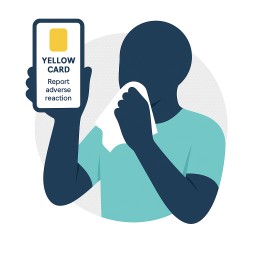
  2. Report problems – use the Yellow Card scheme to flag any suspected reaction.

  3. Stay in touch with your team – never stop or change your medicine without advice, but do share new symptoms with your GP or specialist promptly.


Bottom line: Clinical trials test both safety and effectiveness, but no study can capture every rare event. That’s why medicines continue to be monitored after approval, and why patient reporting is so important. By working together — patients, doctors, and regulators — we make medicines safer for everyone.


Medicine Leaflets, Side Effects, and Interactions: Where to Find Reliable Information

When you open a new box of medicine, you’ll usually find a folded sheet of paper inside — the Patient Information Leaflet (PIL). These leaflets are important, but they can be hard to read because of the tiny print and the amount of information squeezed onto the page.

Patients often ask: Where does this information come from? What if I can’t read it? And how do I check for drug interactions as well as side effects?

Here’s what you need to know.


1. Where do leaflets come from?

  • Written by the manufacturer – The drug company that makes the medicine is legally required to prepare the leaflet.

  • Checked by regulators – In the UK, the MHRA (Medicines and Healthcare products Regulatory Agency) reviews and approves the leaflet before the medicine is sold. In Europe, this role is carried out by the EMA.

  • Updated regularly – If new safety information comes to light (for example, through the Yellow Card reporting system), the leaflet must be revised and re-approved.

By law, leaflets must include:

  • What the medicine is for.

  • Who can and cannot take it.

  • How to take it.

  • Side effects and how common they are.

  • Possible drug interactions.

  • Storage instructions.

  • How to report suspected side effects.


2. Why the text is so small

Because there’s so much information to fit into a tiny folded sheet, the print is often very small and difficult to read. For many patients, the leaflet in the box just isn’t practical.


3. Where to find more readable versions

If the leaflet is hard to read, you have better options:

  • Electronic Medicines Compendium (eMC)

    • www.medicines.org.uk/emc

    • Up-to-date PILs and professional information for nearly all UK-licensed medicines.

    • Easy to zoom, search, and print in large text.

  • BNF (British National Formulary)

    • bnf.nice.org.uk

    • Trusted source for doctors and pharmacists, but also useful for patients.

    • Lists side effects, cautions, and drug interactions clearly.

  • NHS.uk

  • Pharmacist

    • Can print a large-text version of the leaflet.

    • Can check for interactions with other medicines you take.

    • Some companies provide Braille, audio, or large-print versions on request.


4. Where to check drug interactions

Drug interactions are just as important as side effects, because they can make medicines stronger, weaker, or more dangerous.

  • BNF online (bnf.nice.org.uk) – the best source in the UK, used by clinicians, with a clear section on interactions.

  • eMC (SmPC section) – each drug’s Summary of Product Characteristics includes detailed interaction data.

  • Pharmacist or GP – the safest and most personal check, since they know your full medication list.

  • Hospital specialists – especially important if you are on antifungals, as these interact with many other medicines.


5. The bottom line

Medicine leaflets are carefully written, regulated documents — but the folded sheet in your box isn’t the only option, and it’s often not the easiest to use.

👉 You don’t have to struggle with tiny print. Reliable, readable versions are available online (eMC, BNF, NHS.uk), and your pharmacist can explain and print large-text copies.

👉 For drug interactions, never rely on random internet sources — use the BNF, eMC, or your healthcare team.

And if you’re ever unsure, ask your doctor or pharmacist before starting anything new, including over-the-counter medicines or supplements.


Side Effects, New Medicines, and Safety Reporting: What Every Patient Should Know

Modern medicines, including antifungals used for aspergillosis, can be life-saving. But they can also have powerful side effects. One patient recently described developing nerve damage (neuropathy) while on treatment, but never mentioned it to their doctor, because they didn’t know it could be a side effect. Sadly, by the time it was recognised, the damage was permanent.

This story shows why patients and doctors need to work together in partnership to spot and report side effects early — especially when medicines are new and real-world safety data is still limited.


1. From passive role to partnership

In the past, healthcare was one-way: the doctor gave instructions, the patient followed. Today the NHS encourages shared responsibility:

  • Doctors bring their expertise about the illness and treatments.

  • Patients bring their daily experience of living with the condition.

  • Together they can make safer, better-informed decisions.

This partnership is essential for powerful drugs like antifungals, where side effect monitoring depends on both sides working together.


2. Why side effect statistics can be misleading

Leaflets list side effects as “common” or “rare,” often with percentages. But these figures don’t always reflect real life because:

  • Trials are limited – only a few thousand people take part, often younger and healthier than typical NHS patients.

  • Under-reporting is common – doctors and patients often fail to report side effects, especially mild ones.

  • Bias exists – severe or unusual reactions are reported more often than everyday ones.

👉 Bottom line: leaflets tell us what can happen, not always how often it happens.


3. The Yellow Card system

The UK’s main tool for detecting safety issues is the Yellow Card Scheme, run by the MHRA.

  • Anyone can report: doctors, nurses, pharmacists, patients, or carers.

  • Reports are vital: patterns in these reports may reveal risks not seen in trials.

  • Action is taken: if needed, leaflets are updated, warnings issued, or drugs restricted/withdrawn.

You can report suspected side effects at yellowcard.mhra.gov.uk.


4. Why reporting matters

Poor reporting leads to harm:

  • Delayed warnings – e.g. photosensitivity with voriconazole took years to be recognised.

  • Biased safety data – drugs may seem safer than they are.

  • Preventable harm – patients may suffer permanent injury before action is taken.

For new medicines (marked with a ▼ black triangle in the BNF and leaflets), the MHRA asks for all side effects to be reported, no matter how small.


5. Extra protections for new medicines

When a drug is new, safety systems are stronger than usual:

  • Black triangle (▼) – signals “additional monitoring” so all suspected ADRs should be reported.

  • Specialist prescribing – new antifungals are usually limited to centres like NAC.

  • Closer monitoring – frequent blood tests, drug levels, eye or skin checks depending on risk.

  • Risk Management Plans – agreed with regulators, spelling out what to watch for.

  • Post-marketing studies – Phase 4 trials track safety in real-world patients.

These safeguards are extensive, but not fool-proof. Rare or long-term effects may still emerge only after years of wider use.


6. The NHS challenge

Despite the systems:

  • Only a small percentage of doctors file Yellow Card reports each year.

  • Most GPs never prescribe brand-new drugs — so reporting falls heavily on specialist centres like NAC.

  • Under-reporting risks harm, increases NHS costs, and erodes trust.


7. Who sets the rules?

Several organisations provide guidance on reporting and safety:

  • MHRA (UK regulator): runs Yellow Card, monitors new and established drugs, and issues safety updates.

  • BNF (British National Formulary): highlights side effects, black triangle drugs, and links to reporting tools.

  • GMC (General Medical Council): obliges doctors to report serious ADRs and all reactions to ▼ drugs.

  • EMA (European Medicines Agency): operates EudraVigilance, pooling reports from across Europe.

  • Global standards: the UK follows international rules (ICH E2B) so data is shared worldwide.


8. What patients can do

You are central to this safety net:

  • Be observant – notice anything new or unusual.

  • Keep a record – note when it started, how often, and any changes with medication.

  • Report promptly – tell your team and consider submitting a Yellow Card yourself.

  • Ask questions – “What side effects should I look out for? Which are urgent? How will we monitor this drug?”

  • Use trusted sources – NHS.uk, bnf.nice.org.uk, NAC, or your pharmacist.


9. The reality of side effects

For many, side effects are not “minor inconveniences.” They can mean:

  • Permanent disability (e.g. nerve or vision damage).

  • Loss of independence or mobility.

  • Social isolation and depression.

That’s why side effect monitoring is not just bureaucracy — it’s about protecting real lives.


Key message

The systems around new medicines are extensive but not fool-proof. That’s why patients and doctors must work as partners.

👉 If you notice something new, strange, or worrying while on antifungal medication — however small — tell your healthcare team and consider reporting it. Your report may be the missing piece that protects you and others.


Working With Your Medical Team: What Every Patient With Aspergillosis Needs to Know

Modern antifungal treatments, and many of the medicines used alongside them, can be life-saving. They help control infections that would otherwise cause severe damage to the lungs and other organs. But these medicines are also powerful, and like all strong treatments, they sometimes carry risks.

One patient recently shared that they developed nerve damage (neuropathy) while taking antifungal medication, but did not mention it to their doctor because they did not know it could be a side effect. Sadly, problems like this can sometimes become permanent if not spotted early.

This raises an important question: what do patients need to know about their responsibilities when taking medicines like antifungals, and more broadly, when living with aspergillosis?


From passive role to partnership

In the past, healthcare often worked in one direction: the doctor gave instructions, and the patient was expected to follow them. Patients were mostly passive, with little chance to ask questions or take part in decisions.

The NHS is now moving towards a very different way of working: partnership.

This means:

  • Doctors and nurses share their medical knowledge.

  • Patients share their experiences of living with their condition.

  • Together, both sides decide what treatment and care will work best.


Why doctors sometimes hesitate about side effects

Some patients are surprised to learn that not all doctors automatically tell patients about possible side effects. Why is this?

  • Some worry about causing anxiety or putting patients off treatment.

  • Others fear the nocebo effect — where simply knowing about a side effect can make someone more likely to notice it.

  • They may also feel that handing over a long list of possible effects is overwhelming.

But when it comes to antifungals and other long-term, powerful medicines, not knowing can be dangerous. If patients do not know what to look for, they may ignore early signs of serious problems until it is too late.

The best approach is balance:

  • Patients don’t need to memorise an endless list.

  • They do need a clear, short list of the most important and urgent symptoms to look out for — and to know what to do if they appear.


Medicines: what patients should do

  • Take medicines as prescribed – antifungals, inhalers, steroids, or biologics must be taken on schedule. Missing doses can reduce effectiveness or drive resistance.

  • Do not stop suddenly – especially steroids. Always follow tapering advice.

  • Check for interactions – antifungals can clash with common medicines such as statins, blood pressure tablets, and painkillers. Always tell your team about new prescriptions, over-the-counter drugs, or supplements.

  • Use the same pharmacy if possible – so interactions are checked consistently.


Monitoring your health

  • Attend all scheduled tests – blood work, lung function, CT scans. These can reveal hidden changes before you feel them.

  • Know your “normal” – keep track of oxygen levels (if you use a pulse oximeter), peak flow, sputum colour, cough, and breathlessness.

  • Spot infections early – worsening cough, fever, or new sputum colour may mean infection or flare-up. Report these quickly.


Communication with your team

  • Bring notes to clinic – write down questions and symptoms so nothing is forgotten.

  • Be open and honest – if you’ve missed doses, struggled with side effects, or found treatment difficult, let your team know.

  • Keep contact details handy – know who to call if problems arise (specialist nurse, hospital helpline, GP).


Lifestyle and prevention

  • Reduce exposure to moulds – avoid compost heaps, rotting leaves, damp basements, and building dust. If you cannot avoid them, wear an FFP2/3 mask.

  • Protect your lungs – keep up with vaccinations (flu, COVID-19, pneumococcal).

  • Support your overall health – eat well, stay as active as you can, and rest when needed.

  • Look after your mental health – chronic illness is stressful. Patient groups, counselling, or peer support can make a big difference.


Self-management skills

  • Recognise flare-ups – learn the difference between ABPA flare, CPA progression, and bacterial infection symptoms.

  • Know your rescue plan – what to do if you suddenly worsen (extra inhalers, antibiotics, or emergency help).

  • Keep records – note symptoms, hospital visits, and medication changes. This helps spot long-term patterns.

  • Be part of decisions – ask about benefits, risks, and alternatives of treatments. Care should fit your life as well as your lungs.


Where to find reliable information on medicines

Many patients say the leaflet in the medicine box is written in tiny print or feels overwhelming. You do have other options:

  • Ask your clinical team or pharmacist — they can give you a short list of the most important side effects to watch for and explain what’s urgent.

  • Check the BNF (British National Formulary) online — the NHS makes this trusted reference free to the public at bnf.nice.org.uk. It lists side effects, drug:drug interactions, and safety notes.

  • Use NHS.uk — clear pages on most medicines, written in plain English.

  • Patient support organisations — such as the National Aspergillosis Centre or relevant charities, which often provide tailored advice.

If you’re unsure, it’s always safer to ask rather than guess.


The bigger picture: partnership

In the past, doctors made decisions and patients followed instructions. Today, with complex conditions like aspergillosis, patients are central members of the care team.

  • You notice problems first.

  • You take daily responsibility for medication.

  • You decide when to seek help.

This isn’t about shifting the whole burden onto patients — it’s about recognising that care works best when it is a true partnership.


Key message

👉 If you notice something new, strange, or worrying while on antifungal medication — however small — tell your healthcare team. Don’t assume it’s not important.

And remember: safe, effective treatment is a two-way street. Your role as a patient is not just to take medicines, but to observe, record, communicate, and partner with your team. That partnership is what keeps you safe and makes your treatment work.


Biologics and Long Term Side Effects

What Are Biologics?

Biologics are targeted treatments made from living cells. They work by blocking parts of the immune system that cause inflammation — for example:

  • IL-4, IL-5, IL-13: linked to eosinophilic inflammation

  • IgE: linked to allergies and ABPA

They are not immunosuppressants like steroids or chemotherapy, but rather immune modulators.


💊 Long-Term Side Effects – What Do We Know?

👨‍⚕️ What research and experience show:

Biologic Used for Long-term safety known? Side effects most reported
Omalizumab (Xolair) Allergic asthma, ABPA 20+ years of use Injection site reactions, headache, very rare anaphylaxis
Mepolizumab (Nucala) Eosinophilic asthma, CPA 10+ years Fatigue, headache, shingles (rare), mild infections
Benralizumab (Fasenra) Severe asthma, CPA ~6–7 years Headache, pharyngitis, injection site issues
Dupilumab (Dupixent) Asthma, eczema, nasal polyps 6–8 years Eye dryness/redness, cold sores, joint pain (rare)
Tezepelumab (Tezspire) Severe asthma ~2 years Sore throat, joint pain, injection site reactions

⚠️ Possible Long-Term Concerns (but rare)

  • Infections: Some concern about slightly increased risk of herpes zoster (shingles) or respiratory viruses, but overall risk is very low compared to steroids.

  • Immunogenicity: Your body might develop antibodies to the drug over time, reducing its effect — this is more a loss of benefit, not a dangerous side effect.

  • Cancer risk: No consistent evidence linking asthma/ABPA biologics to cancer.

  • Unknowns: Because some biologics are new (e.g. tezepelumab), we don't yet have 20-year data — but so far the safety profile is reassuring.


🩺 Compared to Oral Steroids

Treatment Side Effects Over Time
Steroids (e.g. prednisolone) Weight gain, diabetes, infections, bone thinning, cataracts, adrenal suppression
Biologics Mostly minor – injection site pain, headache, mild infection risk, rare allergic reaction

So in most cases, biologics reduce the need for steroids and therefore reduce long-term harm.


💬 Patient Experience

Most patients report:

  • Improved quality of life

  • Reduced asthma/ABPA attacks

  • Fewer hospital visits

  • Very few stop due to side effects


✅ Summary

Question Answer
Do biologics have long-term side effects? Usually mild and rare; mostly injection reactions or mild infections
Are they safer than long-term steroids? Yes, especially over years
Should I be worried? Not usually — but always monitor with your team
How long have they been used? 6–20+ years, depending on the biologic, with very good safety data