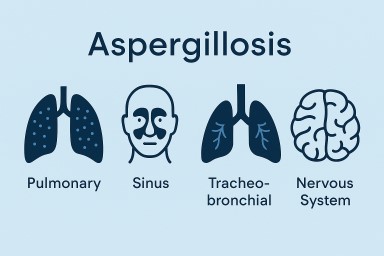
Other forms of aspergillosis: Aspergillus Empyema, A Rare and Serious Complication of Aspergillosis
What Is Aspergillus Empyema?
Aspergillus empyema is a very rare but serious fungal infection where Aspergillus invades the pleural space — the thin cavity between the lungs and the chest wall. Normally, this space contains a small amount of lubricating fluid. In empyema, it fills with infected pus, often due to rupture from a lung cavity or complication following severe illness or surgery.
In this form of aspergillosis, the infection goes beyond the lungs into the lining around the lungs (pleura), and is typically seen in people with severe underlying lung disease or who are very immunocompromised.
How Rare Is It?
| Type of Aspergillosis | Estimated Cases per 100,000 People | How Common? | Who Is Most at Risk? |
|---|---|---|---|
| ABPA (Allergic Bronchopulmonary Aspergillosis) | ~40–60 | Moderately common | People with asthma or cystic fibrosis |
| CPA (Chronic Pulmonary Aspergillosis) | ~3–4 | Uncommon | People with underlying lung disease (e.g. TB, COPD) |
| Aspergilloma (fungus ball) | ~0.5–1 | Rare | People with lung cavities (often overlaps with CPA) |
| Aspergillus Empyema | < 0.1 | Very rare | Severely immunocompromised or critically ill ICU patients |
Most people living with ABPA or CPA will never develop Aspergillus empyema.
Who Is at Risk?
Risk of empyema increases in people who have:
- Severely weakened immune systems (e.g. high-dose corticosteroids, cancer treatment, transplant)
- Lung surgery, trauma, or chest drain procedures
- A ruptured aspergilloma (fungus ball)
- Existing lung cavities (from TB, sarcoidosis, or CPA)
- Severe COVID-19 or ARDS (acute respiratory distress syndrome) with damaged lung tissue
Even among high-risk patients, Aspergillus empyema remains rare.
Symptoms
- Fever that does not improve with antibiotics
- Chest pain or tightness
- Breathlessness
- Cough (may be foul-smelling)
- Persistent fluid seen on chest X-ray or CT scan
Diagnosis
Doctors may use:
- CT scans or chest X-rays to detect fluid or cavities
- Pleural fluid sampling (for fungal culture, galactomannan, PCR)
- Tissue biopsy in difficult or unclear cases
Treatment Options
1. Drain the Infected Fluid
- Chest drain (tube)
- Surgical drainage in complex cases
2. Antifungal Therapy
- Usually voriconazole (oral or IV)
- Treatment may last months, depending on response
3. Surgery
- May include decortication (removing infected pleura)
- Repair of fistulas or ruptured cavities
- Muscle or fat flaps to prevent recurrence and close space
4. Other Measures (used selectively)
- Intrapleural antifungal instillation (amphotericin)
- Endobronchial valves or spigots to manage air leaks
Outcomes and Prognosis
- Historically high mortality (30–75%), mostly due to delayed diagnosis or underlying illness
- Outcomes improving with specialist antifungal and surgical treatment
- Early intervention saves lives
Summary for Patients
- Aspergillus empyema is very rare, and affects only a tiny number of people with aspergillosis — usually those who are very unwell, immunocompromised, or post-surgery.
- It is treatable with antifungals, drainage, and sometimes surgery.
- Most people with ABPA or CPA will never experience this complication.
- Stay aware of symptoms, and ensure regular check-ups if you have known lung cavities or risk factors.