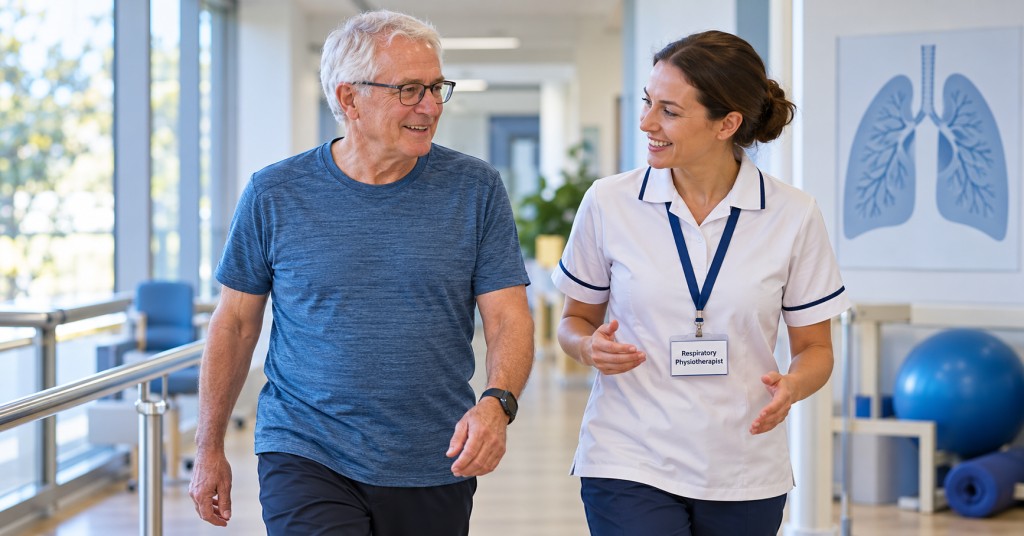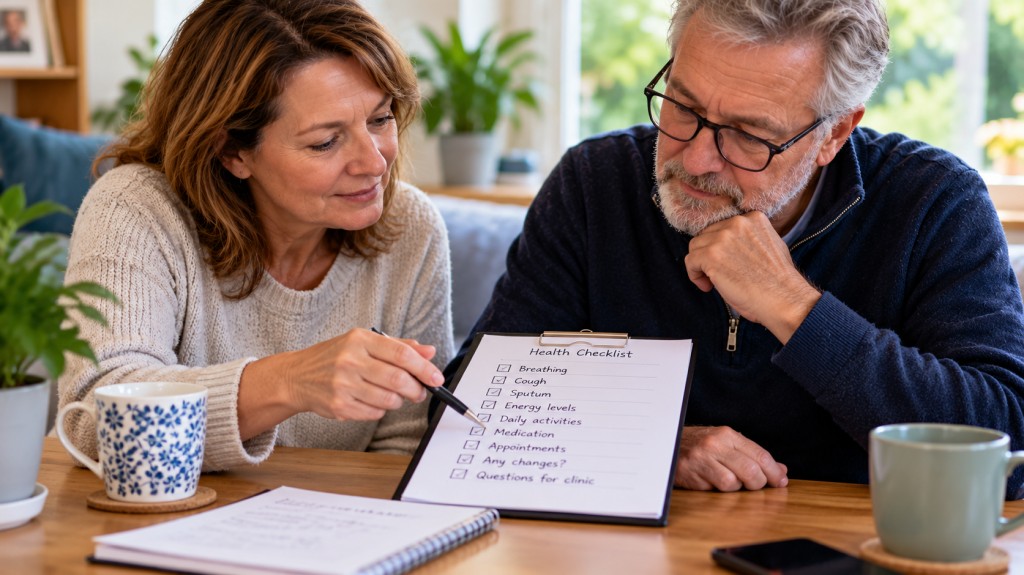
Living with aspergillosis or another long-term lung condition can make everyday activities feel harder. Breathlessness, fatigue, cough and worry about triggering symptoms can gradually lead to doing less. Pulmonary rehabilitation may help some people safely rebuild confidence and fitness.
What is pulmonary rehabilitation?
Pulmonary rehabilitation (PR) is a structured programme of individually tailored exercise, education and support for people whose lung condition causes breathlessness or limits daily activity. It is not a test that you have to “pass”, and it is not simply being told to exercise harder.
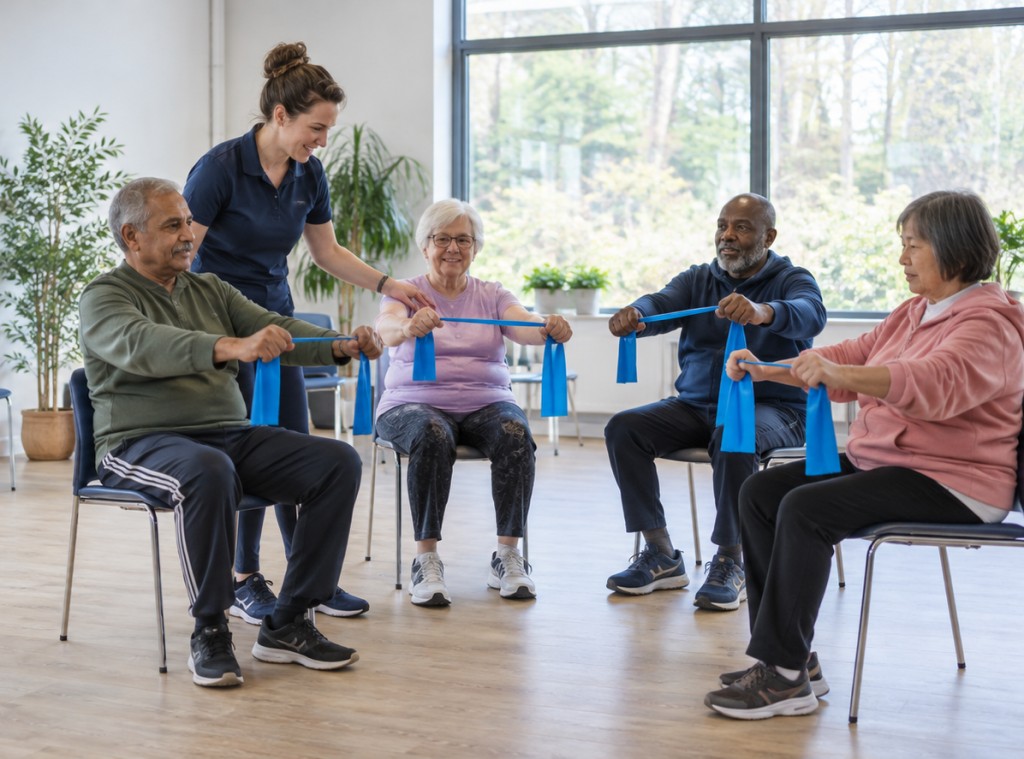
Most programmes run for six to eight weeks, with supervised sessions at least twice a week. They usually include aerobic and strengthening exercises, advice about managing breathlessness and fatigue, and a plan for staying active afterwards.
Can it help people with aspergillosis?
Many people with aspergillosis also have bronchiectasis, asthma, COPD or another long-term lung condition. Current British Thoracic Society standards say pulmonary rehabilitation should be offered promptly to people with symptomatic chronic respiratory disease, including bronchiectasis, asthma and interstitial lung disease.
The 2025 European bronchiectasis guideline also strongly recommends pulmonary rehabilitation for people who experience breathlessness or reduced exercise capacity.
There is less research specifically in aspergillosis, so PR should be considered as part of your individual care rather than as treatment for the infection itself. Your clinical or physiotherapy team can advise whether it is appropriate and whether any adaptations are needed.
Is it worth it?
For many people, yes. Pulmonary rehabilitation cannot remove the underlying lung condition, but it may help you:
- do more before becoming breathless;
- build strength for everyday activities;
- feel more confident about moving and exercising safely;
- understand pacing, breathlessness and energy conservation better; and
- maintain activity after the course has ended.
A good programme should be adapted to you. Tell the team if you find a group setting tiring, have transport difficulties, are recovering from a deterioration in symptoms, or need adaptations around oxygen use, pain, fatigue or other health conditions. Centre-based PR is not the only option: evidence-based home or digital programmes may be available where these are more suitable.
What do patients say?
A large international survey of 1,685 people with chronic lung disease found strong support for pulmonary rehabilitation among people who had experienced it. Participants also highlighted real barriers, including travel, cost and limited awareness of the service. Aspergillosis was not specifically represented in that survey, but the message remains useful: a well-designed programme can be valuable, while access and individual support matter.
How do I access pulmonary rehabilitation?
Ask your GP, respiratory consultant, specialist nurse or physiotherapist whether pulmonary rehabilitation could help you. Services vary locally. If centre-based sessions are not practical, ask whether there is an evidence-based home, digital or community-based alternative.
Do not begin a demanding exercise programme alone if you are currently unwell, have had a recent deterioration in symptoms, or have been advised to limit activity. Seek individual advice from your clinical team.
Further reading
- NHS England: Pulmonary rehabilitation
- British Thoracic Society quality standard for pulmonary rehabilitation (2026)
- European Lung Foundation: bronchiectasis guideline information
- Patients’ perspective on pulmonary rehabilitation

Did this page help you?
Tell us in one minute