For: patients, carers, general practitioners, specialist nurses and other non-specialists
Last reviewed: 22 September 2026
Important: This page provides general information and does not replace advice from your own clinical team.
Key points
- Eating difficulties can occur in people with aspergillosis, particularly chronic pulmonary aspergillosis (CPA) and other chronic lung conditions.
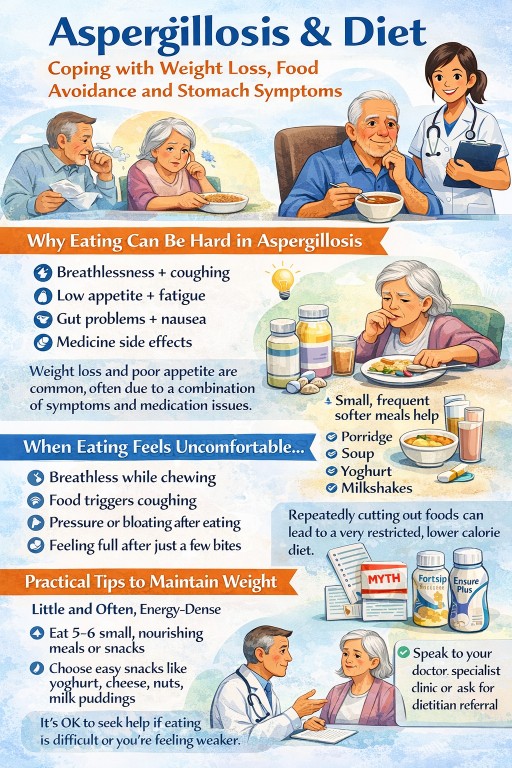
- Breathlessness, coughing, fatigue, reflux, nausea, altered taste and medicine side effects can all make eating difficult.
- Some people gradually avoid more and more foods because they believe these worsen mucus, reflux or fungal disease.
- The immediate nutritional priority is often enough energy, protein and fluids—not a perfect diet.
- Small, frequent meals and nourishing drinks may be easier than three large meals.
- Unplanned weight loss, persistent nausea, reflux or a very restricted diet should be discussed with a healthcare professional or dietitian.
Why eating can become difficult
Many people living with aspergillosis find that eating becomes harder than it used to be. This may be particularly important in chronic pulmonary aspergillosis, where weight loss, fatigue and poor general health can occur.
Several problems may overlap:
- Breathing takes more effort and may increase energy needs.
- Coughing or breathlessness can interrupt meals.
- Fatigue can make shopping, cooking and eating feel exhausting.
- Chronic inflammation can reduce appetite and contribute to muscle loss.
- Antifungal medicines and other treatments may cause nausea, indigestion, altered taste or poor appetite.
- Reflux, bloating or early fullness may make even small meals uncomfortable.
This can create a difficult cycle: eating becomes unpleasant, food intake falls, weight and strength decrease, and eating then becomes even more difficult.
Who is most likely to be affected?
Nutritional problems can affect anyone with a long-term illness, but they may be more likely in people with:
- chronic pulmonary aspergillosis
- bronchiectasis, COPD or previous tuberculosis
- long-term fatigue, breathlessness or coughing
- persistent nausea or reflux
- recent unplanned weight loss
- side effects from antifungal or other medicines
- anxiety around eating because meals repeatedly trigger symptoms
People with ABPA may also experience eating difficulties. Steroid treatment, asthma symptoms, reflux, medicine side effects and changes in appetite can all affect diet.
How eating difficulties may feel
People do not always describe the problem as a nutrition issue. They may say:
- “I get full after a few mouthfuls.”
- “I cannot face a proper meal.”
- “Eating makes me cough.”
- “Food feels uncomfortable.”
- “Some foods seem to sit badly.”
- “I only eat a few safe foods now.”
These experiences may reflect a combination of breathlessness, reflux, medicine effects, fatigue and learned food avoidance—not a lack of willpower.
When eating becomes very restricted
Some people gradually reduce their diet because certain foods seem safer or easier to manage. This may involve avoiding dairy products, sweet foods, bread, meat, acidic foods or anything associated with a previous unpleasant episode.
Sometimes there is a genuine reason to avoid a particular food. For example, reflux may be worsened by certain foods, or dry and crumbly foods may trigger coughing. However, repeated difficult experiences can lead to over-restriction, where more food groups are removed than necessary.
A very narrow diet can result in:
- weight loss
- loss of muscle
- greater weakness and fatigue
- nutritional deficiencies
- slower recovery from illness
- increased anxiety around food
The aim is usually to adapt food so that it is easier and more comfortable to eat, rather than removing whole food groups without a clear reason.
Could reflux or stomach symptoms be contributing?
Yes. Nausea, reflux, bloating, early fullness and abdominal discomfort can all reduce appetite. Reflux may also irritate the throat and contribute to coughing, throat-clearing or chest discomfort around meals.
Possible contributors include:
- medicine side effects
- gastro-oesophageal reflux disease
- reduced activity and chronic illness
- constipation
- an unrelated digestive condition
If eating repeatedly causes nausea, upper abdominal discomfort or reflux, this should be treated as a symptom requiring review rather than simply a dietary preference.
Practical ways to make eating easier
Try little and often
Five or six small eating opportunities may be easier than three large meals. This could include a small breakfast, snack, light lunch, nourishing drink, evening meal and supper snack.
Choose easier foods
Soft and moist foods are often easier than dry, chewy or crumbly foods. Examples include:
- porridge
- yoghurt
- custard or rice pudding
- mashed potato with added butter or cheese
- scrambled eggs
- soup with cream or grated cheese
- stews, casseroles and sauced dishes
Use drinks as nutrition
Some people find nourishing drinks easier than solid food. Options may include milk-based drinks, smoothies, milkshakes, fortified hot drinks or prescribed oral nutritional supplements.
Rest before meals
If fatigue or breathlessness are major barriers, try eating after a period of rest rather than immediately after exertion. Some people find breakfast or lunch easier than an evening meal.
Sit upright
Sitting upright while eating and remaining upright afterwards may help when reflux, coughing or chest discomfort are problems.
Eat slowly
Small mouthfuls, pauses and a slower pace may make eating more manageable. There is no need to finish a meal quickly.
Supporting weight and muscle
When weight maintenance is difficult, it may help to increase the energy and protein content of foods that are already tolerated.
- Add butter, cream, cheese, yoghurt, milk powder or olive oil where suitable.
- Choose full-fat products rather than reduced-fat versions if weight loss is a concern.
- Add grated cheese to soup, mashed potato, eggs or vegetables.
- Make porridge with milk rather than water.
- Keep easy snacks available, such as yoghurt, cheese and crackers, hummus, custard or rice pudding.
Protein helps preserve muscle. Useful sources include milk, yoghurt, cheese, eggs, meat, fish, poultry, beans, lentils and suitable nut products.
If food alone is not enough, a doctor or dietitian may suggest oral nutritional supplements. These are often taken between meals rather than instead of meals.
Food and antifungal medicines
Some medicines can affect appetite, taste, digestion or bowel function. If nausea, altered taste or poor appetite began after a medicine was started or changed, discuss this with the prescribing team.
Food can also affect how some medicines are absorbed. For example:
- Itraconazole capsules are generally taken with or just after food, while itraconazole liquid is generally taken on an empty stomach.
- Voriconazole is usually taken on an empty stomach.
- Some medicines interact with antacids or acid-suppressing medicines.
Formulations and instructions can differ. Follow the advice supplied with your prescription and ask a pharmacist or clinical team if you are unsure.
Common diet myths
There is no special diet that treats aspergillosis. For information about dairy, sugar, anti-fungal diets, Candida diets and other common claims, read Diet and Aspergillosis: What Helps, What Doesn’t, and What Matters Most.
When to seek medical advice
Speak to your doctor, specialist team or dietitian if you have:
- ongoing unplanned weight loss
- difficulty eating most days
- a very narrow diet
- persistent nausea, reflux, bloating or abdominal discomfort
- increasing weakness or fatigue
- concerns that medicines are affecting appetite or digestion
Ask for urgent medical advice if you are becoming dehydrated, vomiting repeatedly, unable to keep food or fluids down, losing weight rapidly or developing difficulty swallowing.
Related information
- Diet and Aspergillosis – common diet myths and what the evidence shows.
- Airways mucus and aspergillosis – why mucus becomes thick or difficult to clear.
- Loosen and clear mucus – practical airway-clearance advice.
References and further reading
- Carter C, Muldoon EG, Kosmidis C. Chronic pulmonary aspergillosis – a guide for the general physician. PubMed
- Roboubi A, et al. Allergic bronchopulmonary aspergillosis. PubMed
- British Dietetic Association. Spotting and treating malnutrition. BDA resource
- BAPEN. Food first and food enrichment. BAPEN resource
- NHS. Heartburn and acid reflux. NHS advice
- Manchester University NHS Foundation Trust, National Aspergillosis Centre. Patient information: Itraconazole. NAC information
- Manchester University NHS Foundation Trust, National Aspergillosis Centre. Patient information: Voriconazole. NAC information
- Balfour-Lynn IM. Milk, mucus and myths. Archives of Disease in Childhood

Did this page help you?
Tell us in one minute