Last updated: 19 October 2026
Audience: Patients, carers, families and non-specialists
Applies to: Allergic bronchopulmonary aspergillosis (ABPA), chronic pulmonary aspergillosis (CPA), Aspergillus bronchitis and severe asthma with fungal sensitisation (SAFS)
Exercise with Aspergillosis: Staying Active Safely
Living with aspergillosis can make physical activity surprisingly difficult. Walking upstairs, shopping, gardening or even getting dressed may leave you breathless or exhausted.
This can be frustrating, especially if you were previously active. However, difficulty exercising is not simply a sign of poor fitness. Lung inflammation, airway narrowing, structural lung damage, fatigue and the effects of treatment can all contribute.
Physical activity can help many people with aspergillosis maintain muscle strength, confidence and independence. However, exercise needs to be appropriate for your individual lung condition.
People with chronic pulmonary aspergillosis, lung cavities, previous haemoptysis (coughing up blood) or severe asthma may need particular precautions.
Before starting or substantially increasing exercise, discuss your plans with your respiratory team and ask whether an assessment by a respiratory physiotherapist would be appropriate. This is especially important if you have significant breathlessness, unstable symptoms or complications affecting your lungs.
Key points
- Breathlessness and fatigue are common in aspergillosis and have several possible causes.
- Appropriate physical activity can improve strength, stamina and quality of life.
- Exercise is not automatically safe at every intensity for everyone with aspergillosis.
- People with haemoptysis, lung cavities, aspergillomas or severe asthma need individual assessment and advice.
- A respiratory physiotherapist can help identify suitable activities, breathing techniques and precautions.
- Pacing and adequate recovery are important, particularly when symptoms fluctuate.
- People who experience prolonged or delayed worsening after exertion should not follow automatic increases in exercise.
Why exercise feels difficult
Aspergillosis affects people in different ways. Someone with well-controlled ABPA may have very different exercise limitations from someone with advanced CPA, bronchiectasis or severe asthma.
Several factors can make activity more demanding:
- Inflamed or narrowed airways: Airway inflammation and bronchospasm can make breathing more difficult during exertion.
- Excess mucus: Mucus can obstruct airways and contribute to coughing and breathlessness.
- Structural lung damage: Cavities, scarring and other changes may reduce respiratory function.
- Reduced oxygen levels: Some people experience a fall in blood oxygen during exercise.
- Increased work of breathing: Breathing itself may require more effort than usual.
Other causes of reduced stamina
Long-term respiratory illness can affect the whole body.
- Reduced activity can lead to muscle weakness and loss of fitness.
- Persistent coughing may disrupt sleep.
- Long-term oral corticosteroids can contribute to muscle weakness and other adverse effects.
- Repeated infections or exacerbations can interrupt recovery.
- Poor nutrition, anaemia, hormonal problems and other conditions may contribute to fatigue.
These factors can occur together, making it difficult to identify one cause of exhaustion.
Breathlessness and fatigue should not automatically be dismissed as a lack of fitness. New or worsening symptoms deserve medical assessment.
Understanding fatigue and recovery
Fatigue is common in people living with chronic respiratory disease. It can be more disabling than ordinary tiredness and may not improve completely after a night’s sleep.
It is useful to distinguish between different patterns of fatigue.
Ordinary tiredness after activity
Some tiredness following exercise is expected, particularly after a period of illness or inactivity.
When medically appropriate, regular exercise with adequate recovery may gradually improve muscle strength and stamina.
Fatigue associated with chronic illness
Persistent inflammation, breathlessness, disturbed sleep and the demands of managing a long-term condition can contribute to ongoing fatigue.
Symptoms may vary considerably from day to day.
Post-exertional symptom exacerbation
Some people experience a substantial worsening of symptoms after physical or mental exertion. This is known as post-exertional symptom exacerbation (PESE), sometimes called post-exertional malaise (PEM).
Symptoms may be delayed until later that day or the following day and may take a prolonged period to settle.
PESE is not established as a typical feature of aspergillosis itself, but recognising this pattern is important.
If activity repeatedly causes a marked or prolonged deterioration, do not attempt to overcome it by continually increasing exercise.
Discuss these symptoms with your healthcare team. Your activity plan may need to focus on energy management rather than conventional exercise progression.
Why respiratory physiotherapy matters
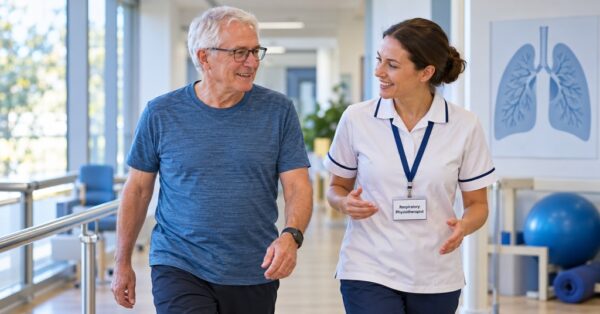
One of the most useful steps for someone struggling with activity is to seek advice from a respiratory physiotherapist.
Respiratory physiotherapists are trained to assess and support people with lung disease. They can help patients understand their physical limitations, manage breathlessness and identify suitable forms of activity.
For people with complicated aspergillosis, physiotherapy advice should be coordinated with the respiratory specialist responsible for their care.
What can a respiratory physiotherapist assess?
Depending on your condition, an assessment may include:
- Your usual level of physical activity and exercise tolerance.
- Breathlessness during everyday tasks.
- Breathing patterns and techniques.
- Oxygen saturation at rest and, when appropriate, during exertion.
- Muscle strength, balance and mobility.
- Mucus production and airway clearance needs.
- Relevant medical precautions, including previous haemoptysis and severe asthma.
Some patients require medical assessment or stabilisation before exercise testing is appropriate.
How can physiotherapy help?
A respiratory physiotherapist can recommend activities suited to your current abilities and medical circumstances.
They may also help with:
- Breathing control during exertion.
- Safe and effective airway clearance.
- Managing breathlessness during everyday activities.
- Planning activity and recovery periods.
- Identifying suitable strengthening exercises.
- Referral to pulmonary rehabilitation.
- Recognising symptoms that mean exercise should be reduced or stopped.
If you have significant aspergillosis-related breathlessness, severe asthma, lung cavities or a history of haemoptysis, ask your respiratory team about an individual assessment by a respiratory physiotherapist before increasing exercise.
Pacing and managing your energy
Many people with chronic illness recognise a pattern of doing too much on a good day, becoming exhausted afterwards and then needing extra recovery time.
This is sometimes called the boom-and-bust cycle.
Pacing involves planning activities around your symptoms and available energy rather than repeatedly pushing yourself to exhaustion.
Practical ways to pace activity
- Know your baseline: Identify what you can usually manage without a substantial deterioration afterwards.
- Spread activities throughout the day: Avoid concentrating all demanding tasks into one period.
- Plan rest periods: Take breaks before becoming completely exhausted.
- Alternate activities: Combine more demanding tasks with less strenuous ones.
- Adjust for difficult days: Reduce activity during infections, exacerbations or periods of worsening symptoms.
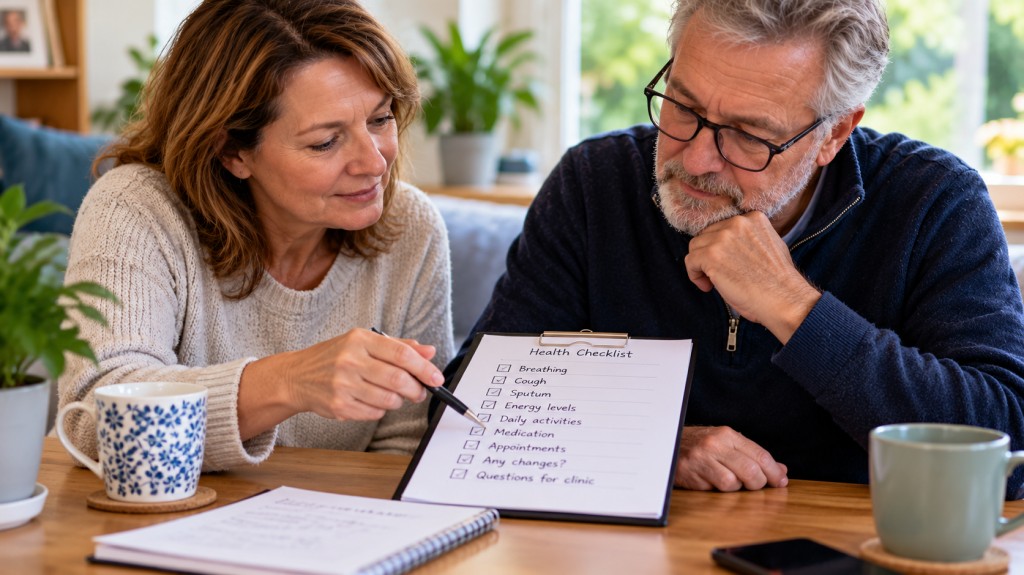
- Keep a simple diary: Record activity, symptoms and recovery to identify useful patterns.
Pacing is not necessarily the same as avoiding exercise. For many people, it helps make regular activity more sustainable.
However, people with PESE may require more structured energy management and should avoid fixed exercise increases that provoke symptom deterioration.
Becoming more active safely
The following suggestions are general examples, not an individual exercise prescription.
They are intended for people whose respiratory condition is stable and for whom their healthcare team considers activity appropriate.
If you have severe asthma, recent haemoptysis, significant lung cavities, unstable symptoms or marked breathlessness, obtain individual advice before starting or increasing exercise.
Start at an appropriate level
Depending on your abilities, suitable activities might include:
- Short walks on level ground.
- Gentle movements while seated.
- Light everyday activities around the home.
- Supervised strengthening exercises.
- Other low-impact activities recommended by your physiotherapist.
For some people, only a few minutes of activity may initially be manageable. Others may already tolerate much longer periods.
The correct starting point depends on your symptoms, underlying lung disease and recovery.
Increase gradually when appropriate
When your condition is stable and you are recovering comfortably, your physiotherapist may recommend gradual increases in activity.
There is no requirement to increase exercise every week or to reach a predetermined target.
Any increase should be guided by your symptoms, response to activity and professional advice.
Breathing techniques
Some people find breathing control techniques helpful when managing breathlessness.
For example, pursed-lip breathing involves breathing in gently and breathing out slowly through lightly pursed lips.
However, breathing techniques are not equally helpful for everyone. A respiratory physiotherapist can demonstrate those most appropriate to your condition.
Muscle strengthening
Maintaining muscle strength can make daily activities easier.
Exercises such as standing from a chair or using light resistance may be suitable for some patients.
However, people with a history of haemoptysis, significant lung damage, osteoporosis or other medical complications should obtain individual guidance before undertaking resistance training, heavy lifting or strenuous exertion.
Exercise, lung cavities and haemoptysis
Some people with chronic pulmonary aspergillosis develop cavities within the lungs. An aspergilloma, sometimes called a fungal ball, may develop inside an existing cavity.
These conditions can be associated with haemoptysis — coughing up blood.
Why can bleeding occur?
In CPA, inflammation and structural lung damage can be associated with enlarged or abnormal blood vessels around affected areas.
These vessels may bleed, sometimes unpredictably.
Having a cavity or aspergilloma does not automatically mean that all exercise is unsafe. However, the risks vary between individuals, and there is insufficient evidence to define a universally safe exercise intensity for patients at risk of haemoptysis.
What precautions are needed?
If you have a history of haemoptysis, particularly recurrent or significant bleeding, discuss your exercise plans with your respiratory specialist before increasing activity.
Depending on your circumstances, your team may advise precautions concerning strenuous exercise, heavy lifting or activities involving substantial straining.
A respiratory physiotherapist can help identify appropriate activities once your specialist considers exercise safe.
If you are currently coughing up blood, stop exercising and seek urgent medical advice. Do not continue an exercise programme while active bleeding is being assessed.
Airway clearance also needs consideration
Some people with aspergillosis and bronchiectasis require regular airway clearance to manage mucus.
However, certain airway clearance techniques may need to be modified or temporarily withheld during episodes of haemoptysis.
Seek guidance from your respiratory team or respiratory physiotherapist rather than independently intensifying airway clearance when bleeding occurs.
Exercise and severe asthma
People with ABPA or severe asthma with fungal sensitisation (SAFS) may have asthma that is difficult to control.
Exercise can trigger temporary airway narrowing, known as exercise-induced bronchoconstriction.
This may cause:
- Wheezing.
- Chest tightness.
- Coughing during or after activity.
- Unusual breathlessness.
Physical activity can still be beneficial for people with asthma, but it is important that symptoms are adequately controlled.
Before increasing exercise
If you have severe or poorly controlled asthma, speak to your asthma specialist or respiratory team about:
- Whether your asthma is sufficiently controlled for the proposed activity.
- Whether your inhaler treatment needs reviewing.
- Your personalised asthma action plan.
- Whether medication is recommended before exercise under your prescribed treatment plan.
- How to recognise exercise-induced bronchoconstriction.
- Whether supervised physiotherapy or pulmonary rehabilitation would be appropriate.
A gradual warm-up may help some people, but it does not replace appropriate asthma treatment.
Do not attempt to push through significant wheezing, chest tightness or increasing breathlessness.
Stop activity and follow your prescribed asthma action plan. Seek emergency help if you have a severe attack or symptoms are not responding to reliever treatment as directed.
Pulmonary rehabilitation
Pulmonary rehabilitation is a structured programme combining individually adapted exercise, education and self-management support.
It is commonly offered to people whose chronic respiratory conditions cause breathlessness or limit everyday activities.
What are the potential benefits?
Depending on the underlying condition and individual circumstances, pulmonary rehabilitation may help:
- Improve exercise tolerance.
- Increase muscle strength.
- Improve confidence in managing breathlessness.
- Support everyday independence.
- Improve health-related quality of life.
Pulmonary rehabilitation has a strong evidence base in several chronic respiratory conditions, although research specifically involving aspergillosis remains more limited.
People with aspergillosis may also have bronchiectasis, asthma, COPD or other respiratory conditions for which rehabilitation may be beneficial.
Is pulmonary rehabilitation suitable for everyone?
Not necessarily.
Patients with active haemoptysis, unstable severe asthma, acute illness or other significant medical complications may need treatment or specialist assessment before participating.
Programmes should be adapted to individual needs, and some patients may require additional medical supervision.
If breathlessness or fatigue limits your daily life, ask your GP or respiratory team whether pulmonary rehabilitation is appropriate and whether you should first be assessed by a respiratory physiotherapist.
Recognising progress
Improvement does not always mean walking further or exercising for longer.
For someone living with aspergillosis, progress might mean:
- Climbing stairs with fewer stops.
- Being able to prepare a meal more comfortably.
- Walking around the garden without becoming excessively breathless.
- Recovering more comfortably after ordinary activities.
- Feeling more confident about leaving the house.
- Maintaining independence despite ongoing symptoms.
Progress is rarely completely consistent. Respiratory infections, seasonal changes, treatment effects and fluctuations in symptoms may all affect what you can manage.
Sometimes maintaining your existing abilities during a difficult period is itself an important achievement.
The goal is to improve or preserve the activities that matter to you, without exposing yourself to unnecessary risk.
When to seek medical help
Contact your healthcare team if you develop:
- New or worsening breathlessness.
- A significant reduction in exercise tolerance.
- Persistent or unexplained fatigue.
- Repeated prolonged deterioration after activity.
- Increasing wheezing or poorly controlled asthma symptoms.
- Changes in cough or sputum that suggest an exacerbation.
Haemoptysis: coughing up blood
Stop exercising if you cough up blood.
Even small amounts of new haemoptysis should be assessed promptly. Contact your respiratory team urgently, or seek advice through your GP or NHS 111 if your team is unavailable.
Call 999 if you cough up a significant amount of blood, particularly if accompanied by breathing difficulty, chest pain, dizziness or faintness.
Severe breathlessness or asthma symptoms
Stop activity if you develop marked breathlessness, wheezing or chest tightness.
Follow your prescribed asthma action plan if applicable.
Call 999 for severe breathing difficulty, a severe asthma attack that is not responding to treatment as directed, severe chest pain or collapse.
Final message: finding a safe way to stay active
Aspergillosis can make physical activity difficult, but remaining appropriately active may help preserve strength, confidence and independence.
The safest approach depends on your diagnosis, symptoms, lung function and any complications.
For people with severe asthma, lung cavities, aspergillomas, significant breathlessness or a history of haemoptysis, exercise should be planned with particular care.
A respiratory physiotherapist, working alongside your respiratory specialist, can help you understand your limitations and identify activities that are appropriate for you.
You do not need to push yourself to exhaustion to make progress. The aim is to find a level of activity that is useful, sustainable and safe for your individual condition.
In one sentence
Exercise can benefit people with aspergillosis, but anyone with significant respiratory symptoms or complications should seek individual advice from their respiratory team and a respiratory physiotherapist before increasing activity.
Further information and support
You may also find information on these topics helpful:
- Pulmonary rehabilitation and respiratory physiotherapy.
- Airway clearance and managing mucus.
- Fatigue and breathlessness in aspergillosis.
- Chronic pulmonary aspergillosis and lung cavities.
- Haemoptysis (coughing up blood).
- Managing asthma and ABPA.
Explore the information hubs at aspergillosis.org, or speak to your respiratory team about your individual circumstances.

Did this page help you?
Tell us in one minute