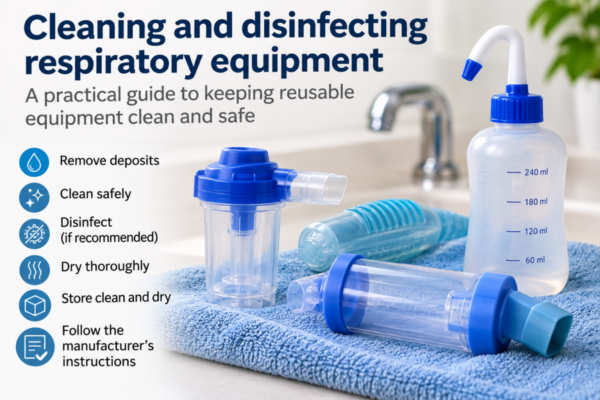
Many people living with aspergillosis regularly use plastic equipment to help manage their respiratory symptoms. This equipment can come into contact with mucus, saliva and moisture, making regular cleaning particularly important.
During one of our Thursday patient support meetings, we discussed how best to clean these devices, including whether disinfecting solutions intended for babies’ feeding bottles could be used.
Which equipment needs cleaning?
Reusable respiratory equipment may include:
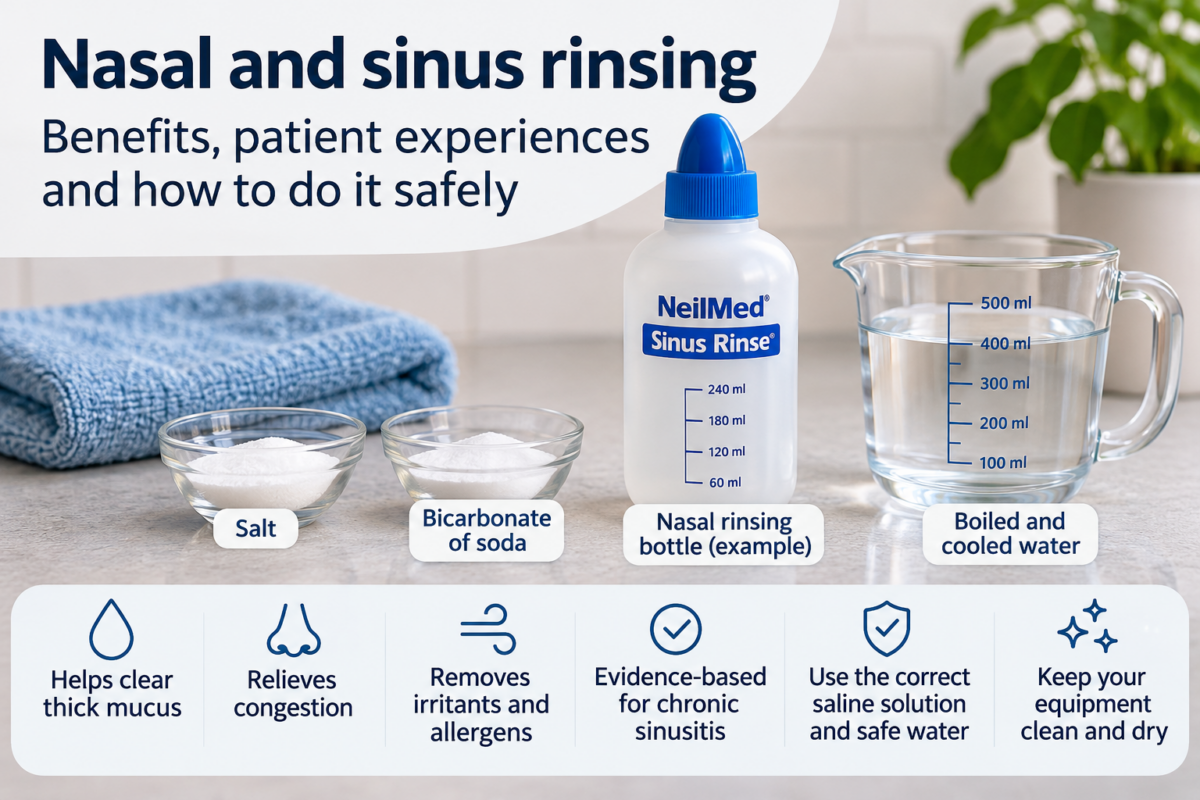
- Nasal and sinus rinsing bottles.
- Nebuliser chambers and mouthpieces.
- Airway clearance devices, such as Acapella and Aerobika.
- Inhaler spacers.
- Reusable respiratory masks.
Each device has its own cleaning requirements, and even apparently similar devices may need to be treated differently.
Why is cleaning important?
Bacteria and fungi can grow in moist environments, particularly where small amounts of mucus or other organic material remain.
Regular cleaning helps prevent the accumulation of these deposits and reduces the opportunity for microorganisms to grow.
This is particularly important for people with underlying lung disease or weakened immune systems.
What is the difference between cleaning, disinfection and sterilisation?
These terms are often used interchangeably, but they mean different things.
- Cleaning removes mucus, saliva, dirt and other deposits, together with some microorganisms.
- Disinfection kills or inactivates many microorganisms.
- Sterilisation eliminates all viable microorganisms, including resistant bacterial spores, when performed using a validated process.
Most reusable respiratory equipment used at home does not require medical-grade sterilisation. However, some devices require regular disinfection as well as cleaning.
Cleaning is generally an important first step because mucus and other deposits can reduce the effectiveness of disinfectants.
Can I use baby bottle sterilising fluid?
Some members of our patient community use disinfecting solutions designed for babies’ feeding bottles.
These products are convenient and readily available, but they are not necessarily suitable for every type of respiratory equipment.
Different plastics, valves, seals and other components may react differently to chemical disinfectants. There is also a need to avoid potentially harmful chemical residues remaining inside equipment through which you breathe.
Only use these products if they are recommended or permitted by the equipment manufacturer.
If they are suitable, follow the instructions carefully, including the correct dilution, contact time and any requirements for rinsing afterwards.
Do not assume that making a disinfecting solution stronger will make it safer or more effective.
What about boiling, steam or microwave disinfection?
Some respiratory devices are designed to withstand high temperatures and can be disinfected using boiling water or steam.
Others may become distorted or damaged, sometimes in ways that are not immediately obvious.
Microwave disinfection is also suitable for certain products but not others.
Even a device that appears to be made entirely of plastic may contain components that are sensitive to heat.
Always check the manufacturer’s instructions before using any of these methods.
Drying is important too
It is easy to concentrate on cleaning and forget about drying.
Leaving equipment damp between uses may provide favourable conditions for microbial growth.
Where the manufacturer recommends air drying:
- Dismantle the equipment as instructed.
- Allow excess water to drain away.
- Leave components to dry in a clean area.
- Avoid storing damp equipment in a closed container.
- Reassemble and store the equipment as directed.
Developing a regular cleaning routine
The easiest way to maintain your equipment is to make cleaning part of your normal treatment routine.
Check the instructions for your particular device to establish:
- How often it should be cleaned.
- Whether additional disinfection is required.
- Which cleaning products and methods are suitable.
- What type of water should be used for rinsing.
- How the equipment should be dried and stored.
- When individual components or the entire device should be replaced.
If you have lost the original instructions, manufacturers often provide downloadable copies on their websites.
Your respiratory physiotherapist, specialist nurse, pharmacist or equipment supplier may also be able to help.
The most important message
There is no single cleaning or disinfecting method that is suitable for all plastic respiratory equipment.
Following the manufacturer’s instructions is the safest way to reduce microbial contamination without damaging your equipment or exposing yourself to potentially harmful chemical residues.
If you have been given additional infection prevention advice by your specialist respiratory team, follow that advice too.
This article was inspired by a discussion during our Thursday patient support meeting.
Find out more about our online patient support meetings.

Did this page help you?
Tell us in one minute