Nasal congestion, sinus problems and the accumulation of thick mucus can be persistent and frustrating problems for people living with aspergillosis and other chronic respiratory conditions.
During our Thursday patient support meeting on 26 November 2026, several patients described the considerable benefits they had experienced from regularly rinsing their noses and sinuses with a saltwater solution.
For some, nasal rinsing had become an established part of their daily healthcare routine.
But how does nasal rinsing work, what does the scientific evidence tell us, and how can we do it safely?
What our patients tell us
There was considerable support for nasal and sinus rinsing among those attending our meeting.
One patient described experiencing a persistently blocked nose following a cold. After approximately two weeks of using nasal rinses, they experienced an improvement.
Another described how rinsing helped flush out lumps of hardened mucus that had accumulated in their nasal passages.
Several patients used nasal rinses routinely and reported considerable benefit.
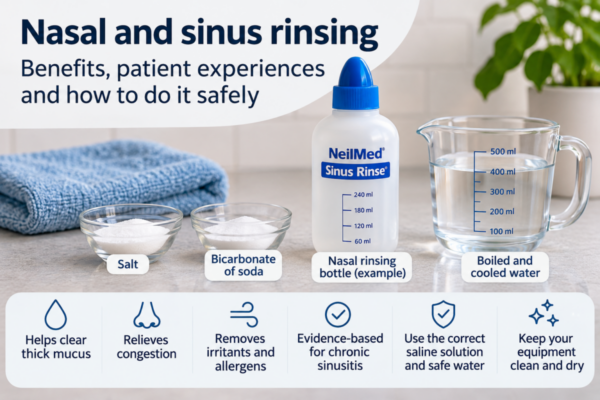
The NeilMed Sinus Rinse system, which features in patient information provided by several NHS hospitals, was specifically mentioned. Others described preparing their own saline solutions using salt, bicarbonate of soda and previously boiled water.
Gargling with saltwater was also discussed.
These experiences highlight some relatively simple and inexpensive ways in which people can help manage symptoms affecting their nose, sinuses and throat.
Why do we produce mucus?
Mucus is an important part of our body’s natural defence system.
The lining of our nose and respiratory tract produces mucus that helps trap dust, pollen, fungal spores, bacteria and other particles that we breathe in.
Tiny hair-like structures called cilia help move this mucus along, allowing our bodies to remove trapped material.
However, inflammation, infection and allergies can interfere with this process. Mucus may become thicker, more difficult to clear and sometimes dry out, forming crusts or hardened deposits.
This can contribute to:
- A persistently blocked nose.
- Difficulty breathing through the nose.
- Facial pressure and discomfort.
- Reduced sense of smell.
- Postnasal drip.
- Throat irritation and coughing.
Nasal rinsing can help support the body’s natural mucus clearance mechanisms.
What is nasal and sinus rinsing?
Nasal rinsing, also known as nasal irrigation, involves washing the nasal passages with a carefully prepared saltwater solution called saline.
Unlike a nasal spray, which delivers a relatively small amount of liquid, nasal irrigation generally uses a larger volume of solution to wash through the nasal passages.
Depending on the equipment and technique used, some of the solution may also reach the sinuses.
Nasal irrigation can help:
- Soften thick or dried mucus.
- Wash away accumulated secretions.
- Remove allergens and irritants.
- Relieve nasal congestion.
- Reduce crusting inside the nose.
- Improve the comfort of inflamed nasal tissues.
It is a mechanical cleaning process rather than a treatment designed to kill microorganisms.
What does the scientific evidence tell us?
There is good scientific evidence supporting saline nasal irrigation for people experiencing chronic rhinosinusitis – long-term inflammation of the nose and sinuses.
International clinical guidelines recommend nasal irrigation as part of the management of this condition.
A clinical practice guideline published in 2022 examined evidence from randomised controlled trials and systematic reviews and made a strong recommendation for nasal irrigation in adults with chronic sinusitis and those who have undergone endoscopic sinus surgery.
Updated international guidance published in 2025 also recommends saline irrigation, nasal corticosteroids or a combination of both to help manage chronic rhinosinusitis symptoms.
The evidence suggests that larger-volume rinses can be more effective than small-volume nasal sprays at removing accumulated secretions.
| Potential benefit | What the evidence suggests |
|---|---|
| Chronic sinusitis symptoms | Good supporting evidence |
| Removal of thick mucus and crusts | Well-established benefit |
| Nasal congestion | Can improve symptoms, particularly in chronic sinusitis |
| Quality of life | Improvements demonstrated in clinical studies |
| Recovery following sinus surgery | Recommended as part of postoperative care |
| Postnasal drip | May help where symptoms originate in the nose and sinuses |
| Congestion following a cold | May provide relief, although evidence is less certain |
| Pulmonary aspergillosis | No established therapeutic benefit |
It is important to recognise that most of this research concerns chronic sinus disease rather than aspergillosis specifically.
Nevertheless, our patients’ experiences are consistent with many of the benefits described in the published research.
Could nasal rinsing help with coughing?
Some people experience a sensation of mucus constantly draining down the back of their throat. This is known as postnasal drip.
It can cause frequent throat clearing, irritation and coughing.
For someone who already has a chronic lung condition, this may add to the burden of an existing cough.
Where nasal congestion or accumulated mucus is contributing to these symptoms, nasal rinsing may help.
However, coughing in people with aspergillosis can have many different causes. Nasal rinsing should not be expected to resolve coughing that originates in the lungs.
Persistent or worsening coughing should be discussed with your healthcare team.
Commercial nasal rinsing systems
Several commercial nasal rinsing systems are available from pharmacies.
One mentioned during our patient meeting was the NeilMed Sinus Rinse system.
This uses a squeezable bottle and pre-measured sachets containing salt and sodium bicarbonate. The sachets are dissolved in the specified volume of water to produce a buffered saline solution.
One advantage of using pre-measured sachets is that there is less uncertainty about the correct quantities of ingredients.
Other nasal irrigation bottles and devices, including nasal irrigation pots sometimes called neti pots, are also available.
It is important to follow the instructions supplied with whichever system you choose.
The Guy’s and St Thomas’ NHS Foundation Trust website provides information about NeilMed and homemade alternatives:
Guy’s and St Thomas’ NHS – NeilMed Sinus Rinse
Can I make my own nasal rinsing solution?
Yes. Homemade saline solutions are an established and inexpensive alternative to commercial sachets.
Several patients at our meeting described making their own solutions using salt, bicarbonate of soda and warm, previously boiled water.
This is consistent with NHS recommendations, provided the solution is prepared correctly.
The quantities are important. Do not simply add a spoonful of salt and bicarbonate of soda to a small amount of water.
A solution that is too concentrated may cause burning, irritation and discomfort.
The NHS recipe
The national NHS website recommends the following quantities:
- Approximately 570 ml (one imperial pint) of boiled water, allowed to cool.
- One teaspoon of salt.
- One teaspoon of bicarbonate of soda.
Full preparation and usage instructions are available here:
NHS – Sinusitis and homemade nasal rinsing solutions
Different NHS hospitals publish slightly different recipes. For example, Guy’s and St Thomas’ recommends a recipe using 500 ml of water, one teaspoon of salt and half a teaspoon of bicarbonate of soda.
These differences do not mean that you should experiment with the concentrations yourself.
Choose an established recipe and follow its instructions, including the correct volume of water.
Bicarbonate of soda and baking powder are not the same thing. Do not use baking powder.
You do not need to use all the solution during one rinsing session. Discard any unused solution and prepare a fresh supply next time.
Important: use safe water
Water that is safe to drink is not necessarily safe to use directly for nasal irrigation.
Tap water can contain small numbers of microorganisms that are generally harmless when swallowed but may cause infections when introduced into the nose and sinuses.
Although serious infections associated with nasal irrigation are rare, they can have severe consequences.
This is particularly important for people with a weakened immune system, including some patients taking immunosuppressive medicines or long-term corticosteroids.
Never use untreated tap water directly for nasal or sinus rinsing.
Suitable options include:
- Sterile water suitable for irrigation.
- Distilled water suitable for nasal irrigation.
- Previously boiled and cooled drinking water.
Follow NHS or manufacturer instructions for preparing the water.
It should be comfortably lukewarm or at room temperature when used, not hot.
Ordinary bottled drinking water should not automatically be assumed to be sterile.
If you have a significantly weakened immune system, ask your healthcare team whether nasal irrigation is appropriate for you and whether any additional precautions are necessary.
Keep your rinsing equipment clean
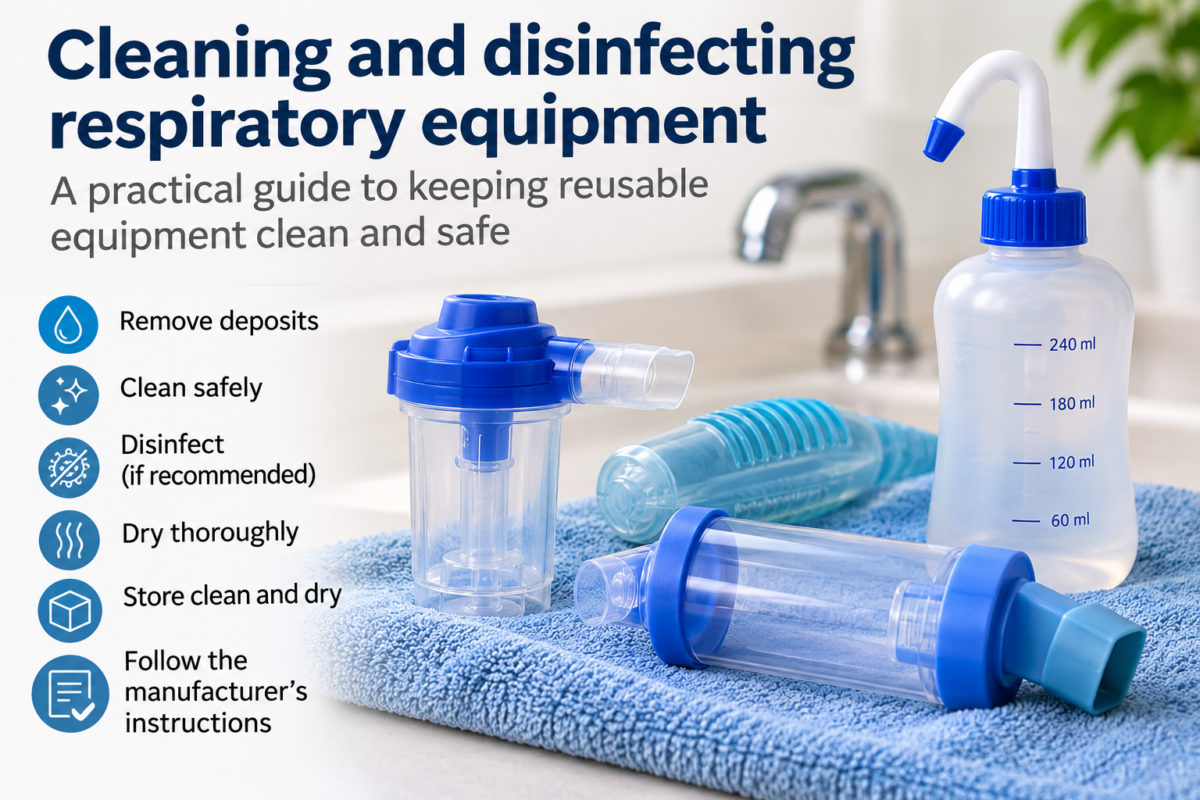
Nasal irrigation bottles and other devices can become contaminated if they are not cleaned and dried properly.
It is therefore important to:
- Wash your hands before preparing the solution.
- Prepare fresh saline for each rinsing session.
- Discard any remaining solution afterwards.
- Clean the equipment after use according to the manufacturer’s instructions.
- Allow the equipment to dry completely.
- Avoid sharing equipment with other people.
- Replace bottles and other components at the recommended intervals.
For example, Guy’s and St Thomas’ recommends replacing the NeilMed squeeze bottle every three months.
These straightforward precautions help reduce the risk of introducing unwanted microorganisms into your nose and sinuses.
How often should I rinse my nose?
There is no single routine that suits everyone.
Some people use nasal rinses for a short period when experiencing congestion following a cold. Others, particularly those with chronic sinusitis, may benefit from regular long-term use.
Several of our patients described considerable benefits from incorporating nasal rinsing into their normal routine.
How frequently you should rinse will depend on your symptoms, the equipment you are using and any recommendations from your healthcare team.
Follow the instructions provided by your clinician or the relevant NHS patient information leaflet.
Never force a rinse through a completely blocked nose. If rinsing causes persistent pain, ear discomfort, bleeding or significant irritation, stop and seek advice.
If you have recently undergone nasal or sinus surgery, follow your surgeon’s specific instructions.
What about gargling with saltwater?
During our meeting, patients also discussed gargling with saltwater.
Gargling is different from nasal irrigation. It primarily affects the mouth and throat rather than the nose and sinuses.
The NHS recommends warm saltwater gargles as one way of soothing a sore throat. Gargling may also help with discomfort associated with mucus accumulating at the back of the throat.
Saltwater used for gargling should be spat out, not swallowed.
Follow the appropriate NHS instructions for gargling rather than assuming that a nasal rinsing recipe is necessarily the correct solution to use.
If a small amount of correctly prepared nasal saline accidentally enters your mouth during rinsing, spit it out. Accidentally swallowing a small amount is unlikely to cause harm in most adults.
However, nasal rinsing solutions are not intended to be drunk or deliberately passed down the throat.
When rinsing your nose, breathe through your mouth and follow the instructions for your chosen device.
Rinsing your mouth and gargling after using inhalers
Another important reason for rinsing your mouth and gargling is to remove traces of medication left behind after using inhalers containing corticosteroids.
Small amounts of these medicines can remain in the mouth and throat after inhalation, increasing the risk of:
- Oral thrush (a fungal infection usually caused by Candida).
- Hoarseness or changes in your voice.
- Throat irritation and discomfort.
Rinsing your mouth and gargling with plain water after using a corticosteroid inhaler can help reduce these risks.
Remember to spit out the water rather than swallowing it.
You do not need to add salt or bicarbonate of soda to the water for this purpose.
Using a spacer with a compatible inhaler can also help reduce the amount of medication deposited in the mouth and throat.
If you experience persistent hoarseness, soreness or white patches inside your mouth, speak to your healthcare team or pharmacist.
Do not stop using your prescribed inhaler without medical advice.
Does nasal rinsing remove fungal material?
Nasal rinsing can physically remove accumulated mucus and other material from the nasal passages.
However, finding lumps of hardened mucus in the rinsing solution does not necessarily mean that you have removed fungal material.
Thick or discoloured mucus can occur for many reasons.
People with allergic fungal rhinosinusitis may produce particularly thick secretions, but identifying fungal disease requires appropriate clinical assessment and sometimes laboratory investigations.
Saline nasal rinsing is not itself an antifungal treatment.
Do not add antifungal medicines, disinfectants, essential oils or other unapproved substances to your rinsing solution.
If your specialist has prescribed a particular medicated rinse, follow their instructions.
When should I seek medical advice?
Although nasal rinsing can be helpful, it is important not to overlook an underlying condition that may require treatment.
Seek advice from your healthcare team if you experience:
- Persistent or worsening sinus symptoms.
- Recurrent sinus infections.
- A persistently blocked nostril, particularly on one side.
- Unexplained or repeated nasal bleeding.
- Persistent facial pain.
- Symptoms that do not improve despite routine treatment.
People with significantly weakened immune systems should seek medical advice promptly if they develop new or worsening sinus symptoms.
Severe facial pain, facial or eye swelling, visual disturbances or severe headaches require urgent medical assessment, particularly in people with weakened immune systems.
What we learned from our patient meeting
Our discussion highlighted how beneficial nasal rinsing can be for some people experiencing persistent nasal and sinus problems.
Several patients had already incorporated rinsing into their routine and were keen to share their positive experiences with others.
There is good scientific evidence supporting nasal irrigation for chronic sinusitis, and homemade solutions can provide an inexpensive alternative to commercial products.
However, getting the quantities right, using safe water and keeping the equipment clean are essential parts of the process.
Further information
NHS patient information
- NHS – Sinusitis
- NHS – Catarrh and postnasal mucus
- NHS – Sore throat
- Guy’s and St Thomas’ NHS – NeilMed Sinus Rinse
Scientific evidence
- Park DY et al. (2022). Clinical Practice Guideline: Nasal Irrigation for Chronic Rhinosinusitis in Adults. Clinical and Experimental Otorhinolaryngology, 15(1), 5–23. Read the full paper.
- Clinical Practice Guideline: Adult Sinusitis Update (2025). Otolaryngology–Head and Neck Surgery. Read the guideline.
Share your experiences
Have you found nasal rinsing helpful? Has it become part of your everyday routine? Have you experienced difficulties using it?
You can share your experiences at one of our online patient support meetings.
Take-home message
Nasal rinsing is a relatively simple, inexpensive and evidence-based way of helping manage chronic sinus symptoms. Several of our patients report considerable benefits from using it regularly.
Whether you choose a commercial rinsing system or prepare your own saline solution, remember three important things:
- Measure the ingredients accurately.
- Use safe water.
- Keep the equipment clean.
Nasal rinsing can be a valuable addition to your healthcare routine, but it does not replace appropriate investigation and treatment of fungal sinus disease or pulmonary aspergillosis.

Did this page help you?
Tell us in one minute