Many people living with aspergillosis also have other lung conditions, such as bronchiectasis or COPD, and may need frequent courses of antibiotics to treat bacterial chest infections.
Although antibiotics are an important part of managing these infections, they can sometimes cause problems elsewhere in the body, particularly in the digestive system.
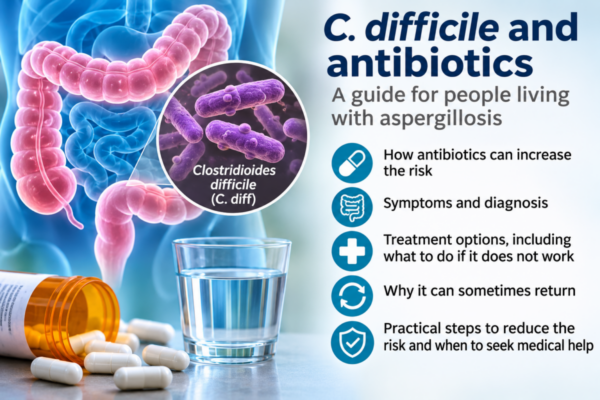
One potentially serious complication is an infection caused by a bacterium called Clostridioides difficile, commonly known as C. difficile or C. diff.
What is C. difficile?
Our intestines contain a large and diverse community of microorganisms, collectively known as the gut microbiome.
These microorganisms help us digest food, support our immune system and protect us against potentially harmful bacteria.
Antibiotics can disturb this community by killing beneficial bacteria alongside those responsible for an infection.
When this happens, C. difficile may have an opportunity to multiply and produce toxins that damage the bowel lining, causing inflammation and diarrhoea.
C. difficile was previously known as Clostridium difficile, so you may still encounter both names.
Who is most at risk?
People may be more susceptible to C. difficile infection if they:
- Frequently take antibiotics or need prolonged courses.
- Are over 65.
- Have recently spent time in hospital.
- Have a weakened immune system.
- Take medicines that reduce stomach acid, such as omeprazole.
- Have previously experienced C. difficile infection.
Several of these risk factors are common among people living with aspergillosis.
What are the symptoms?
Symptoms can include:
- Frequent, watery diarrhoea.
- Stomach pain or cramps.
- Fever.
- Nausea.
- Loss of appetite.
- Dehydration.
Symptoms may develop during a course of antibiotics or in the weeks following treatment.
Not everyone who develops diarrhoea after taking antibiotics has C. difficile infection. Antibiotics can cause digestive problems for several other reasons.
However, it is important to investigate the possibility of infection.
Does finding C. difficile mean that I have an infection?
Not necessarily.
Some people carry C. difficile in their intestines without experiencing any illness. This is known as colonisation.
Doctors may request a stool sample and look for evidence of the bacterium and its toxins. The laboratory findings need to be interpreted alongside your symptoms and medical history.
This can be particularly important if you already have another bowel condition that causes diarrhoea or abdominal discomfort.
How is C. difficile treated?
It may seem surprising that an infection associated with antibiotic use is itself treated with antibiotics.
However, particular antibiotics are effective against C. difficile.
UK NICE guidance recommends oral vancomycin as the usual initial treatment for adults experiencing their first infection. Another antibiotic, fidaxomicin, is available when initial treatment is unsuccessful and in certain cases where infection returns.
Your doctor may also review your other medicines, including any antibiotics you are taking for chest infections.
For people with chronic lung disease, this requires careful consideration because those antibiotics may still be essential.
Do not stop or change your prescribed medicines without discussing this with your medical team.
What if treatment does not work?
Recovery is not always immediate. Although symptoms may begin to improve within several days, diarrhoea can take up to two weeks to settle.
However, if your symptoms are not improving as expected, or are getting worse, further medical assessment is important.
There may be several explanations:
- The original treatment has not been sufficiently effective.
- The infection has returned.
- Your bowel is still recovering from the infection.
- Another bowel condition is contributing to your symptoms.
NICE guidance recognises the importance of seeking specialist advice when necessary. Your GP can consult a clinical microbiologist, infectious diseases specialist or gastroenterologist for further guidance.
There are established treatment options for C. difficile infection when initial treatment is unsuccessful.
Can C. difficile keep coming back?
Unfortunately, some people experience repeated episodes of infection.
C. difficile can produce highly resistant structures called spores, which can survive unfavourable conditions. The normal protective community of gut bacteria may also take time to recover following antibiotic treatment.
For adults who have experienced several episodes, specialists may consider a treatment called faecal microbiota transplantation (FMT).
This involves introducing carefully screened donor microorganisms into the patient’s digestive system to help restore a healthier gut microbiome.
Although the idea may sound unusual, it is an established specialist treatment for selected patients with recurrent C. difficile infection.
Would probiotics help?
People frequently ask whether probiotic yoghurts or supplements can help restore their gut bacteria following antibiotic treatment.
Although probiotics have been studied for this purpose, their benefits vary between products and circumstances.
NICE does not recommend routinely taking probiotics or prebiotics to prevent C. difficile infection during antibiotic treatment.
People with significantly weakened immune systems should discuss live microbial supplements with their medical team before using them.
Can C. difficile spread to other people?
Yes. C. difficile produces spores that can survive on surfaces and spread through contact with contaminated hands and objects.
If you have an active infection:
- Wash your hands thoroughly with soap and water, especially after going to the toilet.
- Do not rely on alcohol hand sanitiser alone, as it is ineffective against C. difficile spores.
- Clean bathroom surfaces using a disinfectant suitable for C. difficile spores, following the product instructions.
- Use separate towels and wash contaminated clothing and bedding separately.
- Remain at home until at least 48 hours after your diarrhoea has stopped.
When should I seek medical help?
Contact your GP urgently or NHS 111 if you develop diarrhoea during or following antibiotic treatment, particularly if it is persistent or accompanied by other symptoms.
Seek urgent medical advice if you have blood in your stools, worsening abdominal pain, difficulty maintaining your fluid intake or deteriorating symptoms.
Severe abdominal pain or swelling, confusion, collapse or becoming seriously unwell may require emergency hospital assessment.
Drink sufficient fluids to help prevent dehydration, unless your medical team has advised you to restrict your fluid intake.
Do not take medicines such as loperamide (Imodium) for suspected or confirmed C. difficile infection.
What should I tell my respiratory team?
If you have had C. difficile infection, make sure your respiratory team knows about it, particularly when future antibiotic treatment is being considered.
It may influence the choice of antibiotics and help your doctors balance the need to treat your chest infections against the risk of another bowel infection.
You may still need antibiotics. The aim is not necessarily to avoid them altogether, but to use them appropriately.
Questions you could ask your doctor
If you have persistent bowel problems following antibiotic treatment, you may find these questions helpful:
- Could my symptoms be caused by C. difficile?
- What exactly did my stool test show?
- Is the organism causing an infection, or am I simply carrying it?
- Could my existing bowel condition be contributing to my symptoms?
- What are the next treatment options if my symptoms persist?
- Would advice from a clinical microbiologist or gastroenterologist be helpful?
- How might this affect the antibiotics I need for my respiratory condition?
Further information
- NHS – Clostridioides difficile (C. diff)
- NICE – Clostridioides difficile infection: antimicrobial prescribing (NG199)
This article was inspired by a question raised during our Thursday patient support meeting.
Find out more about our online patient support meetings.

Did this page help you?
Tell us in one minute