Why do some people cough up long, tube-shaped pieces of mucus?

In several chronic lung conditions, the airways can become inflamed and produce thick mucus.
When this mucus sits in the bronchial tubes, it can sometimes harden into a cast shaped exactly like the airway.

People often describe these casts as:

  • long, ribbon-like or “snakeskin” pieces

  • rubbery or stretchy

  • white, yellow, or green

  • shaped like the inside of a tube

Coughing one up can feel dramatic but is usually a sign that your lungs are finally able to clear a blockage.


What does it mean if a cast has black flecks or dark spots?

This can look alarming, but several common, mostly harmless explanations exist.

1. Old or dried blood

Tiny amounts of bleeding from irritated airways can dry and turn:

red → brown → black

This often appears as tiny black dots or threads.

2. Inhaled particles

Dust, soot, pollution, or smoke can get trapped in mucus deeper in the lungs and show up as dark specks.

3. Debris from infection or inflammation

Long-standing inflammation can cause:

  • darkened mucus fragments

  • tiny bits of fungal, bacterial or biofilm material

  • oxidised (darkened) mucus layers

These often look like pepper-like flecks and are not dangerous on their own.

4. Oxidation or ageing of thick mucus

When mucus sits for a long time before it is coughed out, it can become darker in spots.


When this is usually not worrying

Black flecks are often harmless when:

  • the amount is small

  • the colour change is occasional

  • you feel better after coughing the cast out

  • there is no new increase in blood, fever, or breathlessness

  • this fits your usual pattern of mucus plugging

Most people with chronic airway disease experience occasional colour changes in mucus.


When to mention it to your doctor

You should let your team know if:

  • black flecks keep appearing repeatedly

  • you cough up more blood than usual

  • your breathing worsens suddenly

  • your sputum smells different

  • you have fever or chest pain

  • casts become bigger, more frequent, or harder to clear

These changes do not always mean something serious, but they are worth checking.


Why do casts form in the first place?

Conditions that can cause airway casts include:

  • Bronchiectasis

  • ABPA (Allergic Bronchopulmonary Aspergillosis)

  • Severe or eosinophilic asthma

  • Chronic infections, including fungal or bacterial

  • COPD with mucus hypersecretion

Inflammation makes mucus thicker, and narrowed airways make it harder to clear.
Over time, mucus can mould itself into the shape of the airway — becoming a cast.


What to do if you cough one up

  1. Stay calm — this often brings relief.

  2. Take note of its colour and size.

  3. Hydrate well to thin mucus.

  4. Continue your usual airway-clearance technique (physio, nebulisers, saline, etc.)

  5. Let your team know if it is unusual for you.


Final reassurance

Coughing up a long, tube-like piece of mucus can feel shocking, but in most cases it simply means your lungs are clearing a blocked area.
Black flecks are usually:

  • old blood

  • trapped dust or soot

  • dried mucus debris

Most of the time, these findings are not dangerous, but they can give useful clues about airway inflammation.


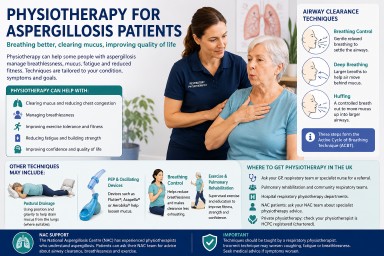
Physiotherapy and Aspergillosis: Why It Matters

Physiotherapy is an important part of care for many people with aspergillosis, including allergic bronchopulmonary aspergillosis (ABPA), chronic pulmonary aspergillosis (CPA), aspergillus bronchitis, and severe asthma with fungal sensitisation (SAFS).
It doesn’t diagnose the disease on its own, but physiotherapists play a key role in detecting symptoms, collecting good sputum samples, and helping patients stay stable.


1. How Physiotherapy Helps With Diagnosis

🔍 A. Spotting patterns of sputum, breathlessness, and airway clearance problems

Respiratory physiotherapists often notice:

  • Thick, sticky mucus that is difficult to clear

  • Recurrent phlegm plugs

  • Wheeze, crackles, or airflow changes

  • Reduced ability to clear secretions after infection
    These patterns can be early clues pointing toward ABPA, aspergillus bronchitis, or bronchiectasis linked to Aspergillus.

🔍 B. Supporting high-quality sputum collection

A good sputum sample is essential for:

  • Fungal culture

  • PCR

  • Galactomannan tests

  • Antibiotic/antifungal susceptibility testing

Techniques like huff coughing, breathing control, postural drainage, or using devices such as Acapella or Aerobika help ensure the sample comes from deep in the lungs, not just saliva.

🔍 C. Identifying airway collapsibility or dysfunctional breathing

Physiotherapists can pick up:

  • Tracheobronchomalacia

  • Inducible laryngeal obstruction

  • Breathing pattern disorder
    These are often overlooked and can mimic or worsen aspergillosis symptoms.

If a physio notices these features, they feed findings back to the medical team, supporting a faster, more accurate diagnosis.


2. How Physiotherapy Helps With Treatment

🫁 A. Airway clearance

One of the biggest challenges in aspergillosis—especially ABPA, CPA, and bronchiectasis—is mucus.
Physiotherapy helps patients learn techniques to keep the lungs clear:

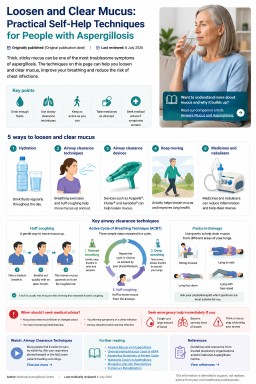
  • Active Cycle of Breathing Techniques (ACBT)

  • Huffing

  • Directed huff / forced expiration technique

  • Gravity-assisted drainage

  • Oscillating PEP devices (Acapella/Aerobika)

  • Autogenic drainage

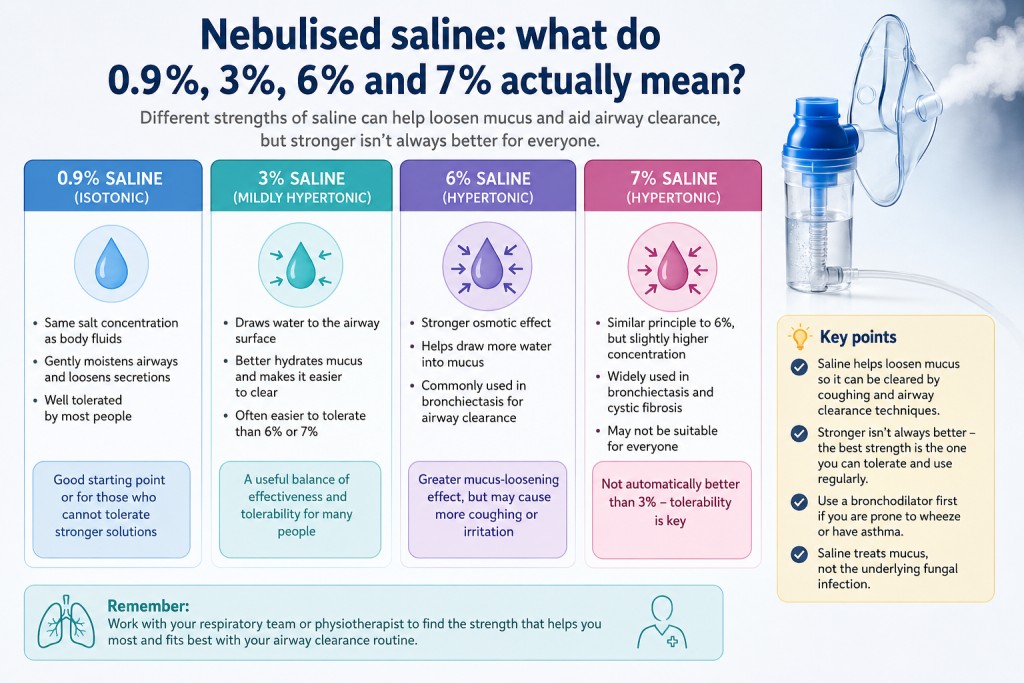
  • Saline nebulisers to thin mucus

Keeping the airways clear:

  • Reduces cough and breathlessness

  • Helps antifungal treatment reach affected areas

  • Lowers risk of infection and flare-ups

  • Improves quality of life

💨 B. Managing breathlessness and fatigue

Physiotherapists teach:

  • Breathing control

  • Pacing techniques

  • Positions of ease

  • Diaphragmatic breathing

  • Inspiratory muscle training (if appropriate)

This is especially valuable for patients with:

  • ABPA flare-ups

  • CPA with reduced lung capacity

  • COPD or asthma overlap

  • Deconditioning after illness

🏃 C. Exercise, strength, and rehabilitation

Long-term aspergillosis can reduce fitness due to:

  • Repeated infections

  • Inflammation

  • Steroid side-effects

  • Time spent resting

Physios provide personalised rehab plans to rebuild:

  • Strength

  • Endurance

  • Balance

  • Activity levels

  • Confidence

🧠 D. Managing the “vicious cycle” of breathlessness and anxiety

Breathlessness naturally triggers anxiety, which then worsens breathlessness.
Physiotherapists help break this cycle through:

  • Breathing retraining

  • Relaxation strategies

  • Education on pacing and control

This also reduces the number of A&E visits for “flare-ups” that are actually driven by breathlessness-anxiety spirals.


3. Supporting Long-Term Stability

Regular physiotherapy follow-up helps patients:

  • Spot flare-ups early

  • Adjust airway clearance routines

  • Stay active despite chronic illness

  • Prevent hospital admissions

  • Maintain independence

For many patients with aspergillosis, physio becomes a key part of long-term disease management, just like antifungals, inhalers, and specialist review.


4. When Should Patients See a Physiotherapist?

Physiotherapy is particularly helpful if you have:

  • ABPA with repeated mucus plugging

  • CPA with sputum, breathlessness, or reduced activity

  • Bronchiectasis

  • Frequent chest infections

  • Difficulty producing sputum for testing

  • Breathing pattern disorder

  • Muscle weakness from steroids or long illness

  • Unexplained breathlessness

  • Tracheal or airway collapsibility


Summary

Physiotherapy is not just an “add-on” to aspergillosis care—it is a core part of both diagnosis and treatment.
Physiotherapists help:

  • Identify airway issues

  • Support accurate testing

  • Improve breathing control

  • Clear mucus

  • Build strength and stamina

  • Stabilise long-term disease

This combination leads to better outcomes, fewer infections, and a better quality of life.


🫁 Mucus Plugging in Aspergillosis: What It Is, Why It Happens, and What It Means

For patients with ABPA, CPA, Aspergillus bronchitis, or asthma


🔍 What Is a Mucus Plug?

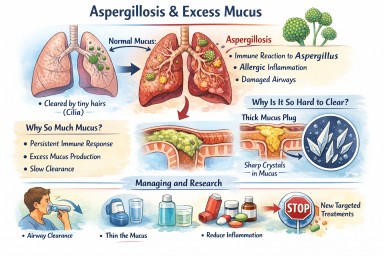
A mucus plug is a thick clump of sticky mucus that becomes trapped in your lungs. It can block airways, cause coughing, and make breathing more difficult. In people with aspergillosis, this is common — but the type, location, and cause of the mucus can vary.


🧪 What Causes Mucus Plugging?

Your lungs naturally make mucus to protect against germs and irritants. But in fungal or allergic lung disease, this mucus may:

  • Be produced in excess

  • Become too thick or sticky

  • Get trapped due to airway damage

Aspergillosis-related causes include:

  • ABPA (Allergic Bronchopulmonary Aspergillosis) – inflammation causes thick, sticky mucus

  • Aspergillus bronchitis – fungus lives in mucus, producing biofilms

  • CPA (Chronic Pulmonary Aspergillosis) – may lead to mucus due to structural damage

  • Bronchiectasis – airways are widened and can no longer clear mucus properly


🧬 Are All Mucus Plugs the Same?

No. Mucus plugs vary in colour, texture, cause, and treatment. Here's how they differ:

Type of Plug What You Might See What It Could Mean Common in...
Sticky, stringy Clear/yellow, like glue Allergic inflammation ABPA, asthma
Rubbery or solid Brown, rubbery, “slug-like” Allergic + fungal mix ABPA, Aspergillus bronchitis
Green or smelly Thick, foul-smelling Infection (bacteria) Bronchiectasis
Foamy or frothy Clear/white, bubbly Non-infectious irritation COPD, asthma
Black or speckled May contain fungal specks Fungal growth CPA, fungal bronchitis

🖼️ What Do Mucus Plugs Look Like on a CT Scan?

Below are real examples of CT scan findings showing mucus plugging in different forms of aspergillosis and related conditions.

🧷 1. Finger-in-glove sign (ABPA)

Mucus in large airways appears like fingers inside a glove. This is common in allergic fungal airway disease.

➡ Seen in: ABPA, bronchiectasis with fungal colonisation
📍 Note: Branching tubular opacities filled with mucus.


🌿 2. Tree-in-bud pattern

Small airway blockage — plugs in the tiniest branches of the lungs. Common in infection, inflammation, and Aspergillus bronchitis.

➡ Seen in: Aspergillus bronchitis, asthma, CPA with superinfection
📍 Note: Tiny dots and lines in a tree-like shape.


🧱 3. Lung collapse (atelectasis) from plug

A large mucus plug can block a main airway, causing collapse of part of the lung.

➡ Seen in: Severe ABPA, CPA, patients with weakened cough reflex
📍 Note: Whiteout of part of lung where plug is blocking airflow.


📸 Example CT Findings


1. Bronchiectasis + mucus plug
Area in the left lower lung shows dilated bronchi filled with mucus—classic for bronchiectasis with mucoid impaction

2. Extensive bronchiectasis with plugs
Widespread thick-walled airway dilatation accompanied by mucus plugs (black arrows) and consolidation (black arrowheads)

3. Luminal plugging in small airways
Subtle luminal opacities in peripheral bronchi—the “tree‑in‑bud” pattern common in asthma, COPD, and infections.

4. Atelectasis (part of the lung has collapsed or isn’t fully inflating) due to mucus plugging
Consolidation and small airway blockage leading to lung collapse, highlighted by arrows in the upper lobe.

💡 Clinical Takeaways

Feature What it indicates
Mucoid impaction Large airway fungal/allergic plugs (e.g., ABPA) or bronchiectasis
Tree‑in‑bud Small-airway infection/inflammation (e.g., TB, PCD, asthma)
Atelectasis Complete blockage, leading to collapse and consolidation
Persistent luminal plugs Associated with worse airflow obstruction and symptoms in COPD/asthma

✅ Next Steps / Applications

  • These CT examples are valuable for educational use—they illustrate the different patterns seen in mucus plugging across disease types.

  • Radiologists often use these signs to help diagnose and tailor management (infection, allergy, structural lung disease).

  • If your patients or students need simplified visuals, these scans paired with annotations (e.g., arrows, labels) can make great teaching tools.

🧠 What Does It Feel Like?

People often say:

“It felt like something was stuck and wouldn’t come out.”
“I finally coughed up a rubbery strand — like glue.”
“Once it cleared, I could breathe better instantly.”


🧼 How Are Mucus Plugs Treated?

Treatment depends on the underlying cause:

✅ Medications

  • Steroids – reduce inflammation in ABPA and asthma

  • Antifungals – lower fungal load (e.g., itraconazole, posaconazole)

  • Mucolytics – thin mucus (e.g., carbocisteine, hypertonic saline)

  • Antibiotics – treat bacterial infections

✅ Airway Clearance Techniques

  • Respiratory physio – helps you learn how to shift mucus

  • Devices – flutter valve, PEP mask, Acapella

  • Inhaled/nebulised therapy – opens airways and loosens plugs

⚠️ Always speak to your clinical team before starting a new technique.


🧪 Can Coughing Up a Plug Help Diagnosis?

Yes! If you cough up a rubbery, large, or unusual plug, it can be:

  • Tested for fungus, bacteria, or allergy cells (eosinophils)

  • Sent for culture to detect Aspergillus

  • Helpful in guiding or confirming diagnosis of ABPA or Aspergillus bronchitis


👣 Key Points for Aspergillosis Patients

Question Answer
Is mucus plugging common? Yes, especially in ABPA, CPA, and bronchiectasis
Are all mucus plugs the same? No – they vary in size, shape, colour, and cause
What should I do if I cough one up? Tell your doctor – it may be useful to test
Can it be seen on scans? Yes – CT can show where plugs are and how severe
Can it be treated? Yes – treatments include steroids, antifungals, mucolytics, and physio

🫁 Understanding Bronchiectasis, COPD, and Aspergillosis: What Patients Need to Know

Living with a lung condition can be confusing — especially when the symptoms of bronchiectasis, COPD, and aspergillosis are so similar. This guide explains the differences, how they are diagnosed, and why many people are wrongly diagnosed (or underdiagnosed) at first.


🌬️ What Are These Conditions?

Bronchiectasis

A condition where the airways become damaged, widened, and scarred, often from past infections, immune problems, or conditions like ABPA or CPA. This makes it hard to clear mucus, leading to regular infections.

COPD (Chronic Obstructive Pulmonary Disease)

A group of conditions — including emphysema and chronic bronchitis — that cause narrowed airways and damaged air sacs. Most often caused by smoking or long-term exposure to fumes or dust.

Aspergillosis

An infection or allergic reaction caused by the fungus Aspergillus. Types include:

  • ABPA (allergic bronchopulmonary aspergillosis) — mostly in asthma or bronchiectasis

  • CPA (chronic pulmonary aspergillosis) — causes lung cavities and fungal balls

  • Aspergillus bronchitis — low-grade infection in people with bronchiectasis


🔄 Shared Symptoms

All three can cause:

Symptom Bronchiectasis COPD Aspergillosis
Chronic cough
Sputum (phlegm) ✅ (often a lot) ✅ (varies) ✅ (sticky, sometimes brown)
Breathlessness
Recurrent infections
Fatigue
Wheezing Sometimes ✅ in ABPA
Coughing blood (haemoptysis) ⚠️ ✅ (especially in CPA)

Because the symptoms are so similar, many people with aspergillosis are first told they have COPD or bronchiectasis until further tests are done.


🖥️ How Are They Diagnosed?

🧪 Tests Used

Test Helps Diagnose
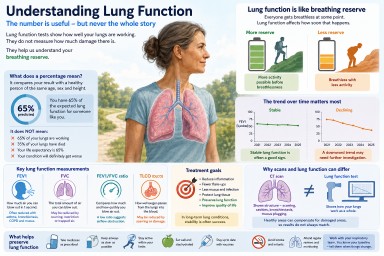
Spirometry (lung function) COPD or asthma (airflow obstruction)
High-resolution CT scan Bronchiectasis, CPA, emphysema
Aspergillus IgG & IgE blood tests CPA (IgG), ABPA (IgE)
Sputum culture or PCR Finds Aspergillus or bacterial infections
Eosinophil count High in ABPA
Chest X-ray May show cavities, but CT is better

🫁 CT Scan Signs: What Do Radiologists Look For?

Feature Bronchiectasis COPD CPA / Aspergillosis
Airway shape Widened, thickened (signet-ring sign) Narrowed or normal May have overlapping bronchiectasis
Lung tissue Scarring, mucus plugging Blackened areas (emphysema) Cavities, fungal balls, fibrosis
Mucus Often present Sometimes present Mucus or fungus in airways
Other signs Tree-in-bud, cystic changes Air trapping, flattened diaphragm Thickened cavity walls, pleural changes

💨 What Are Air Trapping and Hyperinflation?

These are signs that air is getting stuck in the lungs — common in asthma, COPD, ABPA, and sometimes CPA.

🔹 Air trapping

Air gets into the lungs but can’t get out fully. You may feel like you can’t finish exhaling.

  • Seen on CT scan as dark areas during breathing out.

  • Lung function tests show high residual volume (RV).

  • Common in asthma, ABPA, bronchiectasis, and COPD.

🔹 Hyperinflation

The lungs are permanently overfilled with air, even when you’re not trying to breathe in.

  • Seen on CT/X-ray as large lungs, flattened diaphragm, and horizontal ribs.

  • Lung function shows high total lung capacity (TLC).

  • Common in emphysema, severe asthma, and ABPA.

Why it matters: Both conditions make breathing harder and less efficient, especially when active. Treatment like inhalers, antifungals, airway clearance, or biologics may help.


💊 Treatment Approaches

Treatment Bronchiectasis COPD Aspergillosis
Airway clearance physiotherapy ✅ Essential Sometimes ✅ Often vital
Antibiotics ✅ Regularly used During flares ✅ For Aspergillus bronchitis/CPA
Inhalers (bronchodilators) Sometimes helpful ✅ Core treatment ✅ In ABPA if asthma is present
Steroids In flares or ABPA ✅ Often ✅ In ABPA
Antifungals (e.g. itraconazole, voriconazole) ❌ Not routine ✅ Main treatment for CPA/ABPA
Pulmonary rehab ✅ May help fatigue/breathlessness
Oxygen Rare ✅ In advanced disease ✅ In some advanced cases

🧠 Why It’s Complicated

Many patients are misdiagnosed at first:

  • Aspergillosis can develop on top of COPD or bronchiectasis

  • A long delay in diagnosis is common

  • Some people have all three conditions, or overlapping features (e.g. COPD + ABPA)

That’s why blood tests and CT scans are so important — symptoms alone aren’t enough.


✅ Summary Table

Feature Bronchiectasis COPD Aspergillosis
Cause Infection, immune issues Smoking, pollutants Fungal allergy or infection
Airway problem Widened, mucus-filled Narrowed, damaged sacs Cavities, fungus growth or allergy
Diagnostic test CT scan Spirometry CT + Aspergillus IgG/IgE
Key treatment Clearance + antibiotics Inhalers, steroids Antifungals ± steroids

💬 What Should I Ask My Doctor?

  • Could my symptoms be due to more than one condition?

  • Have I had a CT scan and Aspergillus blood tests?

  • Should I be seen by a specialist centre (e.g. for ABPA or CPA)?

  • Am I using the right inhalers or physiotherapy?

  • Could I benefit from a sputum test or antifungal treatment?


🫁 Airway Clearance in Aspergillosis: A Patient Guide

Managing mucus to breathe easier, stay healthier, and feel more in control


💡 Why Is Mucus Clearance Important?

If you’re living with a condition like chronic pulmonary aspergillosis (CPA), allergic bronchopulmonary aspergillosis (ABPA), or aspergillus bronchitis, you may experience ongoing mucus build-up in your lungs. This can:

  • Make breathing harder

  • Trap infection

  • Cause inflammation and damage

  • Trigger coughing, wheeze or breathlessness

Airway clearance techniques (ACTs) help loosen and remove this mucus, reduce chest infections, and improve daily comfort.

🗣️ “Before I started clearing mucus properly, I thought breathlessness was just something I had to live with. But it’s made a big difference.”


🔧 What Techniques Are Available?

Type Examples Purpose Needs Guidance?
Breathing exercises ACBT (Active Cycle of Breathing), huffing Loosens mucus, clears airways ✅ Yes – to be effective
Postural drainage Lying in specific positions Uses gravity to drain mucus ✅ Yes – to avoid reflux or fatigue
Devices Flutter, Acapella, Aerobika (OPEP devices) Vibrate airways + create back pressure to shift mucus ✅ Yes – to use correctly
Manual techniques Chest percussion, assisted cough Help loosen stubborn mucus ✅ Often needs a helper
Mechanical devices HFCWO (“The Vest”), IPV Used in severe or complex cases ✅ Prescribed in specialist settings

🗣️ “I use the Acapella in the mornings while the kettle boils. It’s part of my routine now – and it really helps.”


🗣️ What Do Other Patients Say?

People with aspergillosis often try more than one method before finding what works best. Here are some common reflections:

On devices:
“The flutter helped a lot once I got the angle and rhythm right – but I needed someone to show me how.”

On ACBT:
“Breathing control and huffing helped me get more up with less effort than coughing all day.”

On adapting to daily life:
“It’s about what fits into your day. If something’s too awkward or tiring, you won’t keep doing it – and that’s okay.”

On trial and error:
“It took me months to find the right technique – but now I can manage my mucus better and avoid antibiotics.”


⚠️ Should I Use a Flutter or Acapella Without Help?

Not at first. These devices are effective only if used correctly. Risks of incorrect use include:

  • Not moving mucus effectively

  • Fatigue or breathlessness

  • Worsening reflux or chest tightness

  • In rare cases, worsening of lung symptoms (e.g., if air trapping occurs)

🗣️ “I bought a device online and started using it myself – but it made me dizzy. A physio later explained I was blowing too hard.”

Always ask your respiratory team or GP for referral to a respiratory physiotherapist before starting.


📝 Patient Decision Guide: Should You Use ACTs?

✅ You may benefit if:

  • You cough up mucus daily or feel it’s “stuck”

  • You’ve had repeated chest infections

  • You live with CPA, ABPA, bronchiectasis, or aspergillus bronchitis

❌ Don’t start without guidance if:

  • You have COPD, asthma, or lung scarring

  • You’ve had haemoptysis (coughing up blood)

  • You experience dizziness, nausea, or chest pain during breathing exercises

  • You have gastric reflux or recent chest surgery


🧑‍⚕️ What Can I Start Safely at Home?

Without needing equipment, you can begin with:

  • 💧 Drink plenty of fluids – thin mucus is easier to clear

  • 🪑 Sit upright – especially when coughing or during infections

  • 🌬️ Use breathing control – calm, gentle breaths can reduce breathlessness

  • 🗣️ Try huffing – like breathing out a mirror; easier than deep coughing

🗣️ “Even on days when I’m tired, I try to stay upright and do a few rounds of breathing exercises. It’s become a habit that helps.”


🧭 Next Steps: What to Ask Your Doctor or Nurse

  • Could I see a respiratory physiotherapist to help with mucus clearance?

  • What technique is best for my condition (e.g., ABPA vs. CPA)?

  • Can I be shown how to use a flutter device or Acapella safely?

  • What should I do if I feel worse after using a technique?

🗣️ “The physio made all the difference – she explained what my lungs were doing and helped me pick something that actually worked.”


💬 Final Word

🗣️ “It’s not just about technique – it’s about what fits your life. Small steps like staying hydrated, using huffing, and getting guidance made a big difference for me.”

There’s no one-size-fits-all approach – but with the right support, airway clearance can help you take control of your lungs, reduce flare-ups, and breathe easier.


🗣️ Managing Cough in Aspergillosis: A Patient Guide

Cough is one of the most common and exhausting symptoms of aspergillosis. Whether you have ABPA, CPA, Aspergillus bronchitis, or co-existing bronchiectasis, coughing can:

  • Disrupt sleep

  • Cause fatigue, pain, or incontinence

  • Trigger bleeding (haemoptysis)

  • Affect emotional wellbeing

The good news: many strategies can help reduce cough, loosen mucus, and protect your lungs.


🧪 First: Understand Why You're Coughing

Underlying cause Why it triggers cough
Inflammation (e.g. ABPA) Airways swell and become hyperreactive
Mucus overproduction Thick secretions irritate airway linings
Fungal burden or infection Triggers immune response and inflammation
Bronchiectasis Traps mucus and fosters infection
Dry air, scents, reflux External triggers aggravate coughing reflex

🧹 1. Clear Your Airways Safely and Effectively

Clearing mucus gently can reduce irritation and risk of infection.

✅ Best techniques:

  • Postural drainage (lying in positions to let mucus drain out)

  • Active cycle of breathing technique (ACBT):

    1. Relaxed breathing

    2. Deep breaths in

    3. Gentle "huff" to move mucus up

  • Autogenic drainage (controlled breathing at different depths)

⚠️ Caution after haemoptysis:

Pause airway clearance or get medical advice first.


💧 2. Keep Mucus Thin

Thick mucus worsens cough and is harder to clear.

  • Stay hydrated – aim for 6–8 glasses of water a day

  • Nebulised saline (0.9% or 3% hypertonic) – prescribed for some patients to thin secretions

  • Humidifiers (cool mist) – especially in dry indoor environments

  • Warm showers/steam – unless they trigger coughing


💊 3. Medications to Control Cough (Prescription only)

Type Purpose Notes
Steroids (oral or inhaled) Reduces inflammation in ABPA Short-term or long-term
Antifungals (e.g. itraconazole) Reduce fungal burden in CPA, ABPA May take weeks to improve cough
Bronchodilators (e.g. salbutamol) Open airways and relieve tightness Can help with productive coughing
Macrolide antibiotics (e.g. azithromycin) Anti-inflammatory for bronchiectasis Prescribed long-term in some cases
Antitussives (e.g. low-dose codeine) Suppress dry, irritating cough Use with care — consult doctor

🧘 4. Gentle Breathing to Calm Cough Reflex

Some coughs are partly reflexive — especially in ABPA and fungal bronchitis.

Try:

  • Pursed-lip breathing

  • Diaphragmatic (belly) breathing

  • Silent counting breath cycles

  • Box breathing (inhale 4, hold 4, exhale 4, hold 4)

✅ These can reduce throat tension and break cough–irritation cycles.


🍃 5. Avoid Triggers

Many patients notice patterns — keep a cough diary to spot yours.

Common triggers:

  • Dust, damp, mould, perfumes, cleaning sprays

  • Sudden changes in temperature

  • Acid reflux (especially at night)

  • Lying flat without elevation

Tip: Try HEPA air purifiers, keep rooms ventilated, and elevate your pillow at night.


🛌 6. Manage Night-time Cough

  • Use two pillows or a wedge to keep your head elevated

  • Avoid eating or drinking large amounts just before bed

  • Use humidified air

  • Try a warm, non-irritating drink (e.g. water with honey) if safe for you

  • Consider a bedside lozenge or mild cough suppressant on bad nights (with GP approval)


🫁 7. When to Seek Help

Speak to your specialist if:

  • Cough worsens suddenly

  • You develop fever, chest pain, or breathlessness

  • You start coughing up blood or clots

  • You are losing sleep or weight due to cough

  • Current treatments no longer help

You may need:

  • Repeat chest imaging

  • Change in antifungal or steroid dose

  • Additional airway clearance support (e.g. physiotherapy)

  • Blood or sputum tests for infection


🤝 Support Is Available

  • National Aspergillosis Centre (UK) – offers advice and remote support

  • Respiratory physiotherapists – can teach breathing and mucus clearance techniques

  • Patient support groups – many share cough coping strategies


Managing ABPA: How to Protect Your Lungs and Stay Well

If you’ve been diagnosed with ABPA (Allergic Bronchopulmonary Aspergillosis), you’re probably already working to control inflammation and clear mucus from your lungs. These are essential steps—but there’s more you can do to protect your lung function and prevent long-term damage.

This guide will help you understand what matters most in managing ABPA and feeling your best.


✅ The Basics: What You're Probably Already Doing

1. Keep Inflammation Low

  • This means reducing your IgE levels and calming the immune system.

  • Your doctor may prescribe:

    • Steroids (like prednisolone)

    • Antifungal medication (like itraconazole or voriconazole)

    • In some cases, biologic treatments like omalizumab or mepolizumab

2. Clear Mucus Regularly

  • Mucus can trap infection and block your airways.

  • You might be using:

    • Airway clearance techniques (like chest physiotherapy or postural drainage)

    • Nebulised medications (saline or bronchodilators)

    • Mucus-thinning medicines (like carbocisteine or NAC)

These two steps are essential, but they’re not the whole picture.


💡 What Else Can Help You Stay Well?

3. Prevent Chest Infections

ABPA can lead to bronchiectasis, a condition where your airways get scarred and damaged. To help prevent this:

  • Treat infections early

  • Get regular chest scans to monitor changes

  • Stay up to date with vaccines (flu, pneumonia, COVID, etc.)

  • Your doctor may consider low-dose antibiotics if infections are frequent

4. Avoid Fungal Exposure

Aspergillus is a fungus found in the environment, especially in:

  • Compost, soil, or damp leaves (gardening can be risky)

  • Mouldy or damp areas in homes

  • Older buildings with water damage

Use air filters, wear a mask when needed, and keep your living space clean and dry.

5. Look After Your Overall Lung Health

  • Pulmonary rehabilitation (specialist-guided breathing and exercise therapy) can improve your stamina and lung function.

  • Practice breathing exercises daily.

  • Stay physically active in ways that are manageable for you.

6. Take Care of Your Body

Steroids can cause side effects over time, like bone thinning and fragile skin.

  • Make sure you're getting enough calcium and vitamin D

  • Ask your doctor about a bone density (DEXA) scan

  • Eat a balanced, anti-inflammatory diet and stay hydrated

7. Look After Your Mental Health

Living with ABPA can be exhausting. Fatigue, breathlessness, and medical side effects can affect your mood and confidence.

  • Track how you’re feeling—physically and emotionally

  • Talk to your care team about fatigue or mental health support if needed

  • You’re not alone—support groups and patient communities can really help


🗣️ Talk to Your Doctor About:

  • Biologic treatments (like omalizumab or mepolizumab) — these may help reduce steroid use

  • Sputum testing to catch early infections

  • Specialist referral to a severe asthma or lung clinic if needed


🧭 Summary: What to Focus On

What to Manage Why It Matters
Inflammation (IgE levels) Reduces flare-ups and long-term damage
Mucus clearance Keeps airways open and lowers infection risk
Chest infections Slows or prevents bronchiectasis
Environmental exposure Reduces fungal triggers
Exercise & breathing Supports stronger lungs and energy levels
Bone and general health Counters effects of long-term steroid use
Mental wellbeing Helps you stay strong and supported

Final Tip

Managing ABPA is a long-term journey, but you're not alone. With the right care, medications, and lifestyle changes, many people with ABPA are able to stabilise their condition and keep their lungs as healthy as possible.


NAC Physio Mairead runs the Manchester Marathon for the Fungal Infection Trust

[et_pb_section fb_built="1" admin_label="section" _builder_version="4.16" global_colors_info="{}" theme_builder_area="post_content" custom_padding="3px||3px||true|false"][et_pb_row admin_label="row" _builder_version="4.16" background_size="initial" background_position="top_left" background_repeat="repeat" global_colors_info="{}" theme_builder_area="post_content"][et_pb_column type="4_4" _builder_version="4.16" custom_padding="|||" global_colors_info="{}" custom_padding__hover="|||" theme_builder_area="post_content"][et_pb_text admin_label="Text" _builder_version="4.16" background_size="initial" background_position="top_left" background_repeat="repeat" global_colors_info="{}" theme_builder_area="post_content"]

[metagallery id=5597]
One of our specialist physiotherapists Mairead Hughes ran the Manchester Marathon last Sunday in support of the Fungal Infection Trust (FIT). The Fungal Infection trust supports the National Aspergillosis Centre in many ways - not least providing support so that we can run our patient support websites and these Facebook support groups that mean so much to thousands of patients and carers across the NHS and the world beyond.
As it turned out Mairead's support was also called into action as 21 miles into her run she stopped to give medical assistance to a fellow runner. The delay cost her 45 minutes on her final time which was just over 6 hours - still an amazing effort I am sure you will agree.
We are all proud of you Mairead and maybe on day you will break that 6 hour mark?
If anyone would like to donate to Mairead's fundraising fr the Fungal Infection Trust please go to https://www.justgiving.com/fundraising/mairead-hughes4
Many Thanks

[/et_pb_text][/et_pb_column][/et_pb_row][/et_pb_section]