For: patients, carers, general practitioners, specialist nurses and other non-specialists
Last reviewed: 22 September 2026
Important: This page provides general information and does not replace advice from your own clinical team.
What is airway mucus?
Mucus is normal, healthy and essential. Everyone produces it continuously, although most people do not notice it.
Mucus helps to:
- trap dust, pollution, bacteria and fungal spores
- protect the airway lining from drying and irritation
- support local immune defences
- carry trapped material towards the throat, where it can be swallowed or coughed out
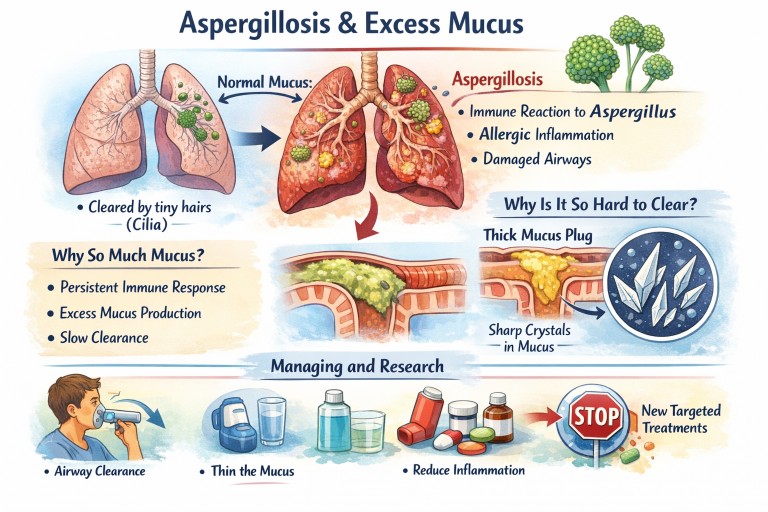
Tiny moving hairs called cilia help move mucus upwards. This process is sometimes called the mucociliary escalator.
In healthy lungs, mucus is usually thin, produced in small amounts and cleared without you noticing it.
Why can aspergillosis cause thick or excessive mucus?
Several processes may contribute, and the balance is different for each person.
Inflammation
Aspergillosis can involve inflammation in the airways. In ABPA, for example, the immune system reacts strongly to Aspergillus and may stimulate the airways to produce more mucus.
Inflammation may continue even when there is no active fungal infection. This is one reason why symptoms do not always change immediately when antifungal treatment is started or stopped.
Airway damage
Bronchiectasis, long-standing asthma, previous infections and other lung conditions can damage or widen the airways. Mucus may then collect in pockets and become harder to move.
Reduced clearance
Inflammation, infection, dehydration and reduced activity can all make mucus clearance less effective. Mucus may remain in the airways for longer, becoming thicker and more difficult to cough up.
What begins as a protective response can therefore become a continuing problem.
What symptoms can thick mucus cause?
Abnormal or excessive mucus may:
- trigger coughing, particularly overnight or on waking
- make breathing feel more difficult
- contribute to wheezing or chest tightness
- interfere with sleep and daily activities
- trap bacteria and contribute to repeated chest infections
- form plugs that partly block an airway
People describe thick sputum in different ways, including “glue-like”, “stringy”, “rubbery” or “impossible to move”.
Mucus plugs and allergic airway disease
Very thick mucus can form a plug within an airway. A mucus plug may cause a sudden increase in breathlessness or wheezing and may sometimes be seen on a CT scan.
In ABPA and other eosinophilic airway diseases, mucus can contain material produced during allergic inflammation. This may make it particularly sticky, rubbery or difficult to clear.
A mucus plug does not automatically prove that an infection is present. The cause needs to be considered alongside symptoms, blood tests, scans and sputum results.
Why mucus management matters
Managing mucus is an important part of day-to-day care for many people with aspergillosis, asthma and bronchiectasis.
Keeping mucus moving may help to:
- reduce the sensation of blockage
- make coughing more effective
- improve comfort and sleep
- reduce the chance of mucus remaining trapped
- help the clinical team recognise changes that may need assessment
Mucus management does not replace treatment for the underlying condition. Inflammation, infection, asthma, bronchiectasis and fungal disease may all need separate treatment.
What may help?
Keep adequately hydrated
Dehydration can make mucus thicker. Drinking regularly may help keep secretions easier to move. The amount that is appropriate depends on your health, medicines and any advice you have been given about fluid intake.
People with heart, kidney or other conditions should ask their clinical team how much fluid is suitable for them.
Use your airway-clearance plan
A respiratory physiotherapist can recommend techniques suited to your condition. These may include:
- active cycle of breathing techniques
- huffing techniques
- postural drainage where appropriate
- oscillating devices such as Flutter, Acapella or Aerobika
- gentle physical activity
Not every technique is suitable for every person. If you cough up blood, have severe breathlessness or have recently had a procedure, ask your clinical team which techniques are safe.
Nebulised saline
Nebulised saline can help some people loosen mucus. Normal saline and hypertonic saline are used in different circumstances.
Use nebulised saline only as advised by your respiratory team. Hypertonic saline can irritate the airways and may cause coughing, wheezing or chest tightness in some people. A bronchodilator may be recommended before it in certain circumstances.
Medicines
Some people are prescribed medicines intended to make mucus easier to clear. Others need treatment aimed at the inflammation, infection, asthma or fungal disease that is driving the mucus problem.
Do not start, stop or change inhalers, steroids, antifungals or mucus-thinning medicines without discussing this with your clinical team.
Keep moving where possible
Gentle, regular movement can help maintain muscle strength and support breathing. Walking, pulmonary rehabilitation or other activity should be adapted to your abilities and medical advice.
What about food and dairy products?
Food does not usually cause the lungs to produce more mucus. Dairy products may leave some people with a temporary coated feeling in the mouth or throat, but this is different from increased mucus production in the lungs.
For more information, read Diet and Aspergillosis: What Helps, What Doesn’t, and What Matters Most.
When should mucus changes be checked?
Contact your doctor or specialist team if you notice:
- more sputum than usual
- a persistent change in sputum colour, smell or thickness
- increasing breathlessness or wheezing
- fever or feeling acutely unwell
- chest pain
- a sustained reduction in exercise tolerance
- more frequent or severe coughing
These changes may be caused by infection, an asthma or ABPA flare, worsening bronchiectasis, medication changes or another problem. They should not automatically be blamed on diet or dehydration.
Seek urgent help if:
- you cough up a large or increasing amount of blood
- you become severely breathless
- you feel faint or extremely unwell
- you think a mucus plug is seriously obstructing your breathing
What research is exploring
Research is investigating better ways to understand and treat abnormal mucus. Areas of interest include:
- reducing excessive mucus production while preserving protective mucus
- changing the structure of very dense mucus
- improving mucus clearance from damaged airways
- treating the allergic and inflammatory pathways that drive mucus production
- developing more personalised treatments based on the individual’s type of lung disease
These approaches are still developing. For now, the most reliable strategies remain treating the underlying disease, following an appropriate airway-clearance plan and seeking advice when symptoms change.
Related information
- Loosen and clear mucus – practical advice about hydration, airway clearance and activity.
- Diet and aspergillosis – whether dairy, sugar or other foods affect mucus and fungal lung disease.
- Aspergillosis and diet – help with poor appetite, weight loss and food avoidance.

Did this page help you?
Tell us in one minute