Physiotherapy is an important part of care for many people with aspergillosis, including allergic bronchopulmonary aspergillosis (ABPA), chronic pulmonary aspergillosis (CPA), aspergillus bronchitis, and severe asthma with fungal sensitisation (SAFS).
It doesn’t diagnose the disease on its own, but physiotherapists play a key role in detecting symptoms, collecting good sputum samples, and helping patients stay stable.
1. How Physiotherapy Helps With Diagnosis
🔍 A. Spotting patterns of sputum, breathlessness, and airway clearance problems
Respiratory physiotherapists often notice:
-
Thick, sticky mucus that is difficult to clear
-
Recurrent phlegm plugs
-
Wheeze, crackles, or airflow changes
-
Reduced ability to clear secretions after infection
These patterns can be early clues pointing toward ABPA, aspergillus bronchitis, or bronchiectasis linked to Aspergillus.
🔍 B. Supporting high-quality sputum collection
A good sputum sample is essential for:
-
Fungal culture
-
PCR
-
Galactomannan tests
-
Antibiotic/antifungal susceptibility testing
Techniques like huff coughing, breathing control, postural drainage, or using devices such as Acapella or Aerobika help ensure the sample comes from deep in the lungs, not just saliva.
🔍 C. Identifying airway collapsibility or dysfunctional breathing
Physiotherapists can pick up:
-
Tracheobronchomalacia
-
Inducible laryngeal obstruction
-
Breathing pattern disorder
These are often overlooked and can mimic or worsen aspergillosis symptoms.
If a physio notices these features, they feed findings back to the medical team, supporting a faster, more accurate diagnosis.
2. How Physiotherapy Helps With Treatment
🫁 A. Airway clearance
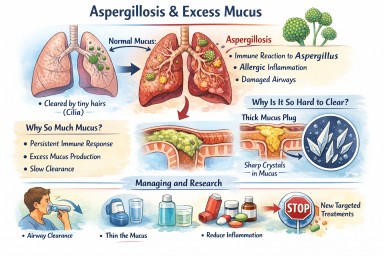
One of the biggest challenges in aspergillosis—especially ABPA, CPA, and bronchiectasis—is mucus.
Physiotherapy helps patients learn techniques to keep the lungs clear:
-
Active Cycle of Breathing Techniques (ACBT)
-
Huffing
-
Directed huff / forced expiration technique
-
Gravity-assisted drainage
-
Oscillating PEP devices (Acapella/Aerobika)
-
Autogenic drainage
-
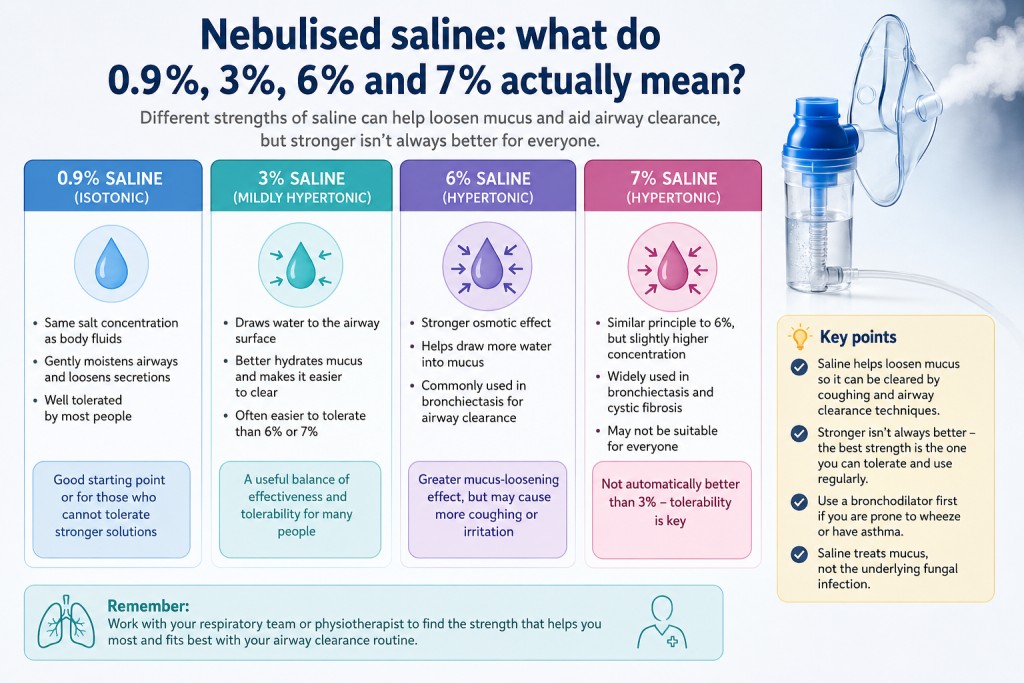
Saline nebulisers to thin mucus
Keeping the airways clear:
-
Reduces cough and breathlessness
-
Helps antifungal treatment reach affected areas
-
Lowers risk of infection and flare-ups
-
Improves quality of life
💨 B. Managing breathlessness and fatigue
Physiotherapists teach:
-
Breathing control
-
Pacing techniques
-
Positions of ease
-
Diaphragmatic breathing
-
Inspiratory muscle training (if appropriate)
This is especially valuable for patients with:
-
ABPA flare-ups
-
CPA with reduced lung capacity
-
COPD or asthma overlap
-
Deconditioning after illness
🏃 C. Exercise, strength, and rehabilitation
Long-term aspergillosis can reduce fitness due to:
-
Repeated infections
-
Inflammation
-
Steroid side-effects
-
Time spent resting
Physios provide personalised rehab plans to rebuild:
-
Strength
-
Endurance
-
Balance
-
Activity levels
-
Confidence
🧠 D. Managing the “vicious cycle” of breathlessness and anxiety
Breathlessness naturally triggers anxiety, which then worsens breathlessness.
Physiotherapists help break this cycle through:
-
Breathing retraining
-
Relaxation strategies
-
Education on pacing and control
This also reduces the number of A&E visits for “flare-ups” that are actually driven by breathlessness-anxiety spirals.
3. Supporting Long-Term Stability
Regular physiotherapy follow-up helps patients:
-
Spot flare-ups early
-
Adjust airway clearance routines
-
Stay active despite chronic illness
-
Prevent hospital admissions
-
Maintain independence
For many patients with aspergillosis, physio becomes a key part of long-term disease management, just like antifungals, inhalers, and specialist review.
4. When Should Patients See a Physiotherapist?
Physiotherapy is particularly helpful if you have:
-
ABPA with repeated mucus plugging
-
CPA with sputum, breathlessness, or reduced activity
-
Bronchiectasis
-
Frequent chest infections
-
Difficulty producing sputum for testing
-
Breathing pattern disorder
-
Muscle weakness from steroids or long illness
-
Unexplained breathlessness
-
Tracheal or airway collapsibility
Summary
Physiotherapy is not just an “add-on” to aspergillosis care—it is a core part of both diagnosis and treatment.
Physiotherapists help:
-
Identify airway issues
-
Support accurate testing
-
Improve breathing control
-
Clear mucus
-
Build strength and stamina
-
Stabilise long-term disease
This combination leads to better outcomes, fewer infections, and a better quality of life.

Did this page help you?
Tell us in one minute