Understanding Mucous Casts in Allergic Bronchopulmonary Aspergillosis (ABPA)
People living with Allergic Bronchopulmonary Aspergillosis (ABPA) often notice thick, unusual mucus coming up during a flare. Some of this mucus can look very different from “normal” sputum and may be described as mucous casts. This leaflet explains what they are, why they happen, and what they mean for your ABPA.
⭐ What are mucous casts?
A mucous cast is a thick, sticky plug of mucus that forms inside your airways.
It takes on the exact shape of the airway or branch it was sitting in – a bit like a soft mould of the inside of your lungs.
When coughed up, casts may look:
-
long and tube-shaped
-
soft and rubbery
-
curled or C-shaped
-
occasionally branching, like a twig
-
pale yellow/cream with darker specks
These darker flecks can include dead inflammatory cells, airway debris, and sometimes tiny amounts of fungal material trapped inside.
⭐ Why do they happen in ABPA?
ABPA is not an infection, but an allergic over-reaction to the Aspergillus fungus.
This allergic inflammation causes:
1. Excess mucus production
Your airways create far more mucus than usual.
2. Thicker, stickier mucus
Inflammation changes the chemistry of the mucus, making it harder to clear.
3. Swollen, narrowed airways
This makes it easy for mucus to get stuck and form plugs.
4. Trapped material
Casts can contain:
-
fungal spores
-
inflammatory cells
-
dust or other inhaled particles
-
old blood or tissue debris
All of this can glue together into a cast.
⭐ Are mucous casts harmful?
They are not dangerous on their own, but they can cause problems:
-
Airway blockage → breathlessness, wheeze, sudden tightness
-
Chest infections → trapped mucus is an ideal place for bacteria
-
ABPA flare-ups → casts often appear during periods of high inflammation
-
Reduced airflow on CT scans → seen as “bronchial impaction”
Telling your clinical team when you notice casts helps them judge how active your ABPA is.
⭐ What do mucous casts look like in ABPA?
Patients often describe:
-
“noodles”
-
“worms”
-
“rubbery plugs”
-
“little branches”
-
“specks of brown/black” within pale mucus
These appearances are normal in ABPA and do not mean your lungs are permanently worsening.
⭐ How are mucous casts managed?
1. Airway clearance
This is the most important step. Techniques include:
-
huff-coughing
-
active cycle of breathing
-
nebulised saline (hypertonic or isotonic)
-
flutter/PEP devices (Acapella, Aerobika)
-
chest physiotherapy
These help loosen and move mucus from deeper airways.
2. Medication
Depending on your treatment plan:
-
inhalers (bronchodilator + inhaled steroids)
-
biologics (e.g., mepolizumab, dupilumab, omalizumab)
-
antifungal medication if prescribed as part of your ABPA care
-
oral steroids if medically appropriate
Biologics can reduce the inflammation that causes casts, so many patients notice fewer plugs over time.
3. Monitoring
Your team may keep an eye on:
-
sputum samples
-
IgE levels
-
CT scan changes
-
symptom patterns
⭐ When should I tell my team?
Contact your clinical team if you notice:
-
more frequent mucous casts
-
sudden breathlessness or chest tightness
-
a drop in your usual oxygen saturation
-
fever or signs of infection
-
coughing up blood
-
a change in colour or smell of mucus
⭐ Reassurance
Mucous casts are very common in ABPA.
They can look alarming, but they are simply a sign that your airways are inflamed and producing thick mucus.
Coughing them out is helpful, not harmful.
It allows the affected airway to reopen and can rapidly improve breathing.
✅ Further Reading
For more patient-oriented information, you can visit the AFIT website where the term “casts” is discussed in the context of aspergillosis: Aspergillus.org.uk – search “casts”.
🌿 ABPA: Infection, Allergy, Biologics, and What It All Means for You
A calm, supportive guide for patients living with Allergic Bronchopulmonary Aspergillosis (ABPA)
Allergic Bronchopulmonary Aspergillosis (ABPA) can be confusing.
Some people hear “fungus” and think it is a dangerous infection.
Others hear “allergy” and think it has nothing to do with fungi at all.
The truth is somewhere in the middle — and understanding this can make your treatment feel much clearer and less frightening.
This article explains:
-
Whether ABPA is an infection, an allergy, or both
-
How the fungus Aspergillus fumigatus fits into the picture
-
Why biologics help — and whether they allow the fungus to grow
-
Why your future with ABPA is more hopeful than ever
🌼 1. Is ABPA an infection or an allergic over-reaction?
The simplest explanation is:
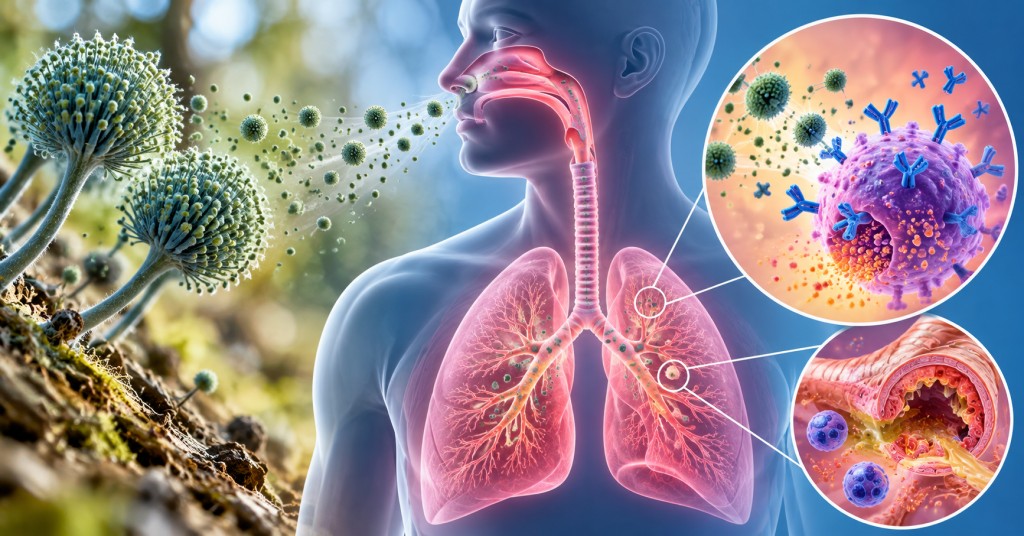
ABPA happens when Aspergillus lives in mucus in the airways, and the immune system overreacts. It’s driven by allergy, not by fungal invasion.
In ABPA:
-
Aspergillus fumigatus sits in mucus, especially in asthma, bronchiectasis or cystic fibrosis
-
It does not invade or damage lung tissue
-
The immune system becomes over-sensitised and reacts too strongly
This allergic reaction triggers:
-
Very high IgE
-
High eosinophils
-
Swelling, tightness, wheeze
-
Thick “stringy” mucus or plugs
-
Repeated flare-ups that feel like chest infections
The inflammation — not the fungus — is what damages the lungs over time.
🌻 2. If it’s not a typical infection, why treat the fungus?
Even though ABPA is allergic, reducing fungal load can still help.
Here’s why:
-
Less fungus in mucus → less allergen
-
Less allergen → less immune reaction
-
Less reaction → fewer flare-ups, better breathing
This is why some people take antifungals.
But antifungals are not always necessary, especially today with the arrival of biologics.
🌈 3. Do biologics weaken the immune system and let the fungus grow?
No.
This is a very common worry — but the biologics used for ABPA do not suppress the parts of the immune system that keep you safe from fungi.
Biologics such as:
-
Omalizumab (anti-IgE)
-
Mepolizumab / Benralizumab (anti-IL-5)
-
Dupilumab (anti-IL-4/IL-13)
-
Tezepelumab (anti-TSLP)
target overactive allergic pathways, not antifungal defences.
They do not affect:
-
Neutrophils
-
Macrophages
-
Dectin-1
-
TLR antifungal pathways
-
Complement
These are the real fungus-clearing systems — and biologics leave them intact.
🍃 4. Do biologics actually help clear fungus? Surprisingly, sometimes yes.
Many patients on biologics show:
-
Fewer mucus plugs
-
Better airflow
-
Fewer positive sputum cultures
-
Reduced symptoms
-
Lower exacerbation rates
-
Less need for steroids or antifungals
When mucus plugs shrink, fungus loses its hiding place.
Your natural defences can finally clear it.
So biologics do not encourage growth — they may even help reduce fungal load.
🌺 5. Why are outcomes improving so much?
ABPA used to be a condition dominated by:
-
frequent flare-ups
-
repeated steroids
-
fear of lung damage
-
long periods of being unwell
Today, with biologics:
-
far fewer flare-ups
-
easier breathing
-
more stable lung function
-
much less steroid use
-
better quality of life
-
higher confidence and control
For many patients, biologics are transforming ABPA from a cycle of crises into a more manageable long-term condition.
🌼 6. Key reassurance
If you remember only one sentence, let it be this:
Biologics calm the allergic response that causes ABPA, without weakening your natural ability to clear fungus — and many patients do better than ever on them.
🌟 7. Moving forward with confidence
ABPA is complex, but it is treatable, manageable, and increasingly well-understood.
You are not dealing with a dangerous lung infection — you are dealing with an over-active immune response that modern treatments can control.
With the right support, airway clearance, the best inhalers, and (where needed) biologics or antifungals, most people:
-
stabilise
-
breathe more easily
-
reduce flare-ups
-
protect their lungs
-
live full, active lives
You’re not alone — and the future for ABPA care has never looked brighter.
Inhaled Steroids and ABPA: Do They Help or Should They Be Avoided?
Many people living with allergic bronchopulmonary aspergillosis (ABPA) also use inhaled steroid inhalers such as Symbicort, Fostair, Seretide or Clenil. It’s common to feel confused about whether these inhalers help, whether they should be continued, or whether they could cause harm.
This guide explains what inhaled steroids do, what they don’t do, and how they fit into the treatment of ABPA, asthma, and bronchiectasis.
1. Understanding the basics
What are inhaled steroids?
Inhaled corticosteroids (ICS) are medications breathed directly into the lungs to reduce airway inflammation, especially in asthma. Combination inhalers (e.g., Symbicort, Fostair) contain a steroid + a long-acting bronchodilator.
What they don’t do
Inhaled steroids do not treat ABPA itself.
ABPA is caused by an immune over-reaction to Aspergillus in the lungs. This reaction sits too deep in the airways for inhaled steroids to reach, and the inflammation is too strong for inhaled doses to control.
This is why ABPA flares are treated with:
-
Oral steroids, or
-
Biologics, such as mepolizumab, benralizumab, dupilumab or omalizumab.
2. Why inhaled steroids are still useful for many ABPA patients
Although inhaled steroids don’t treat ABPA directly, most people with ABPA also have asthma.
In asthma:
-
the airways are twitchy
-
inflamed
-
narrow easily
-
and respond well to inhaled steroids
If your symptoms include wheeze, chest tightness, breathlessness that varies from day to day, or a good response to your reliever inhaler, there is a strong chance that asthma is part of your condition.
In those cases, inhaled steroids can be very helpful in keeping the asthma component under control.
3. When inhaled steroids may offer little benefit
Some patients with ABPA have:
-
minimal asthma
-
mainly bronchiectasis
-
or are fully controlled on a biologic
In these situations, inhaled steroids might not provide much additional benefit and occasionally can increase the risk of airway infections, especially in people with significant bronchiectasis.
This is why doctors sometimes sound vague: the answer genuinely depends on your individual mix of ABPA, asthma, and bronchiectasis.
4. How biologics change the picture
Biologics used for ABPA and asthma (e.g., benralizumab, mepolizumab, dupilumab) reduce airway inflammation far more effectively than inhaled steroids. Once a patient is stable on a biologic, many specialists will slowly reduce the inhaled steroid dose if asthma symptoms remain well-controlled.
This does not happen quickly — it is done gradually and only if your breathing tests and symptoms stay stable.
5. Why there is no simple “yes” or “no” answer
Doctors often hesitate to give a straight answer because inhaled steroids can be:
-
Essential for asthma
-
Optional for mild asthma
-
Less useful if ABPA is the main issue
-
Potentially overused in some bronchiectasis patients
-
Safely reduced in people doing well on biologics
Your treatment has to sit in the right place on that spectrum.
6. Questions that can help you get a clear answer from your own team
Many patients say they receive vague responses. These direct questions can help:
✔ “Am I using this inhaler for my asthma, or for my ABPA?”
(If it’s for ABPA, that usually signals a misunderstanding.)
✔ “Do you think my asthma is active, and is the dose of inhaled steroid still appropriate?”
This invites your clinician to be specific.
✔ “If I stay stable on my biologic, could we review the inhaled steroid dose in the future?”
This aligns with typical specialist practice.
7. The bottom line
-
Inhaled steroids do not treat ABPA itself.
-
They are helpful if you also have asthma — which many ABPA patients do.
-
They may be less useful if asthma is mild or absent, especially in pure bronchiectasis.
-
When patients stabilise on biologics, inhaled steroid doses are often reviewed and sometimes reduced.
-
The best approach is individual: the right treatment mix varies from patient to patient.
If you’re unsure what role your inhaler is playing, it’s absolutely reasonable to ask your specialist to explain exactly why you’re on it and whether the dose is still right for you.
ABPA or Bronchiectasis? A Detailed Guide to Understanding Flare-Ups
Many people with allergic bronchopulmonary aspergillosis (ABPA) also live with bronchiectasis, and the symptoms can overlap so much that it’s difficult to know what’s flaring. This guide explains what is happening inside the lungs, the typical signs of each condition, and how to judge when to seek help.
1. What exactly happens during an ABPA flare?
ABPA is an allergic immune reaction to Aspergillus in the airways.
The fungus is usually present in tiny amounts, but the immune system over-reacts to it.
During a flare:
-
The immune system releases large amounts of inflammatory chemicals (especially IgE and eosinophils).
-
Airways become swollen, narrow and sticky.
-
Thick, glue-like mucus forms and can block off airway sections.
Typical symptoms of an ABPA flare
-
Increased wheeze, chest tightness or asthma-like symptoms
-
Shortness of breath, sometimes sudden
-
Very thick, sticky, tenacious sputum
-
Mucus plugs — sometimes shaped like soft tubes or “casts” of an airway
-
Drop in peak flow or lung function
-
IgE levels rising (but this may lag behind symptoms by days or weeks)
Colour of mucus in ABPA
-
Often golden-brown
-
Can be brown or even dark brown if old mucus is clearing
-
May contain small black dots (fungal elements) but this can also appear in bronchiectasis
2. What happens during a bronchiectasis flare?
Bronchiectasis is a structural lung condition. The airways are wider and more damaged, meaning mucus gets trapped more easily.
During a flare:
-
The airway lining becomes irritated or infected.
-
Mucus production increases.
-
Trapped mucus becomes a breeding ground for bacteria.
-
Breathing may be heavier simply because of mucus load.
Typical symptoms of a bronchiectasis flare
-
Increase in sputum volume
-
Change in sputum colour (yellow, green, brown)
-
Worsening cough
-
Feeling more tired, feverish, or run down
-
Chest tightness from mucus but not usually dramatic wheeze
-
No immediate change in IgE levels
Bronchiectasis and brown sputum
-
Brown sputum is common when old blood, dried mucus or debris is being cleared.
-
After a lung bleed, blood changes colour as it ages:
-
Fresh = bright red
-
24–48 hours = dark red
-
After a few days = brown, tar-like, sticky
-
This often appears suddenly after you think everything has settled.
3. Comparing the two conditions side-by-side
| Feature | ABPA Flare | Bronchiectasis Flare |
|---|---|---|
| Main cause | Immune/allergic reaction to Aspergillus | Infection, inflammation, mucus trapping |
| Breathing | Sudden ↑ wheeze + breathlessness | Heavy/chesty breathing, fatigue |
| Mucus amount | Normal amount but very thick or plug-like | More mucus than usual |
| Mucus colour | Golden-brown, brown, plug-like | Yellow, green, brown |
| Mucus plugs | Common | Possible but less typical |
| IgE | Often rises (but may lag) | Stable |
| Peak flow | Drops significantly | Mild change or no change |
| General wellbeing | Often feel “inflamed” without infection symptoms | More infection-like tiredness/malaise |
4. Understanding brown sputum properly
Brown sputum doesn’t always mean ABPA.
It can be:
-
Old blood breaking loose
-
Dried mucus from bronchiectasis
-
A mixture of dried secretions and oxidised blood proteins
-
Debris from a recently cleared airway infection
This is why a single brown plug — especially after a bleed — is rarely a sign of ABPA on its own.
5. When you should ask for help
Contact your specialist if you notice any of these:
-
Several days of brown plugs or repeated mucus casts
-
Dramatically increased wheeze
-
Peak flow drop >20% from your baseline
-
Fever, chills, or sudden tiredness
-
Breathlessness that feels “different” from normal
-
A major change in your usual bronchiectasis pattern
-
New chest pain
Seek urgent help if:
-
You cough up fresh bright red blood
-
You feel suddenly very breathless
-
You cough up a large amount of blood-stained sputum
-
You have signs of severe infection (rigors, high fever, confusion)
6. And what about IgE?
IgE is helpful, but has limitations:
-
It rises slowly — sometimes days or weeks after symptoms appear.
-
It can stay stable at your “baseline” even when mild inflammation is happening.
-
A stable IgE level is reassuring, but it does not rule out a flare.
Think of IgE as a trend, not an immediate alarm light.
7. The real-world takeaway
-
Bronchiectasis = more mucus, infected/inflamed feeling, colour change.
-
ABPA = allergic response, wheeze, plugs, sudden breathing changes.
-
Brown sputum alone is not enough to diagnose either way.
-
After a bleed, brown sputum is expected for days as the airway clears.
Learning your own pattern takes time. Even experienced patients still contact their team if something feels wrong — and that’s always the safest approach.
Why Exposure to Young Children Can Increase Illness in Aspergillosis, ABPA, and Bronchiectasis — and How to Track Viral Outbreaks
Many patients with Allergic Bronchopulmonary Aspergillosis (ABPA), aspergillus-related asthma, or bronchiectasis notice that they become ill far more often when spending time around younger children. This applies whether you work with them, live with them, or spend time with grandchildren or family groups. Here’s why it happens, what other patients experience, and how to monitor viral outbreaks so you can protect yourself.
Why Young Children Increase Illness Risk
1. Young children spread far more respiratory infections
Children under 11:
-
Carry more colds, viruses, and respiratory bugs
-
Shed viruses for longer periods
-
Have high viral loads
-
Are still learning hygiene habits
-
Spend a lot of time in close physical contact with adults
Even small viral infections can cause major lung flares in ABPA and bronchiectasis.
2. Viral infections trigger flare-ups, exacerbations, and pneumonia
With:
-
Bronchiectasis → mucus doesn’t clear properly, so infections “stick”
-
ABPA → airways are inflamed, reactive, and mucus-filled
-
Asthma → viruses are the most common exacerbation trigger
A simple cold in a child can turn into:
-
Fever
-
Chest infection
-
Need for antibiotics
-
Pneumonia
-
Weeks of recovery
This pattern is extremely common.
3. Children spread viruses even when only mildly ill
Some viruses (RSV, adenovirus, flu) spread before symptoms, or for many days after a child appears well.
Adults with lung conditions may experience far more severe symptoms from these same infections.
4. Any indoor, close-contact time increases risk
This includes:
-
Teaching music or classroom work
-
Caring for grandchildren
-
Sitting in cars together
-
Birthday parties, playgroups, soft play
-
Family gatherings
-
Living in the same household
Even short exposures can be enough in winter months.
What Other Aspergillosis Patients Report
Across support groups and clinics:
-
Many patients stay well until grandchildren reach nursery/school age.
-
Switching from high school to primary/elementary teaching often leads to repeated infections.
-
People frequently report more pneumonias in winter when around young children.
This is very common and not your fault.
How to Reduce Risk (Realistically)
1. Improve ventilation
-
Open windows/doors during visits or lessons
-
Use a HEPA air purifier at home or work
-
Avoid long stays in small rooms
2. Control exposure without avoiding children
Shorter visits with good ventilation are safer than long indoor contact.
3. Keep up with airway clearance routines
Vital for preventing infections from settling.
4. Mask during periods of high virus circulation
Especially when RSV, flu, COVID, or “winter bugs” are rising.
5. Stay vaccinated
Flu, pneumococcal, COVID (if eligible), and pertussis if around infants.
6. Get medical review if you're repeatedly unwell
Your team may consider:
-
Prophylactic antibiotics
-
Nebulised saline
-
Optimising inhalers/biologics
-
Checking ABPA control
7. Use Occupational Health if exposure is workplace-related
Ask for:
-
Teaching older groups
-
Ventilation improvements
-
Reduced winter exposure
Where to Get Reliable Information on Viral Outbreaks
Tracking viral activity can help you plan safer weeks and reduce the chance of flare-ups.
1. UK Health Security Agency (UKHSA)
Weekly reports on:
-
Flu
-
COVID
-
RSV
-
Measles and other outbreaks
-
Regional activity levels
Best official national overview. Link
2. GOV.UK Infectious Disease Reports
Lists:
-
Confirmed outbreaks
-
Public health warnings
-
School/nursery clusters
-
Localised alerts
3. Local NHS Trust or ICB Websites
Many publish:
-
Weekly respiratory dashboards
-
Local flu/RSV alerts
-
Outbreak notices for schools and care settings
(Example: Greater Manchester ICB has regular respiratory activity updates.)
4. GP Surgeries & NHS App Alerts
GPs can push:
-
Local viral alerts
-
Flu surges
-
Measles/strep notifications
Often one of the earliest local signals.
5. School/Nursery Letters and Newsletters
Schools must notify families about:
-
Flu/strep outbreaks
-
High absence levels
-
Confirmed clusters
Very useful if you work with or spend time around children.
6. Zoe Health Study App
Crowd-sourced, real-time data on:
-
Colds
-
Flu-like illness
-
COVID
-
Regional spikes
Good for early warning.
7. Local Council Public Health
Check:
[Your council] + “Public Health”
They often post:
-
Local outbreak alerts
-
Enhanced infection-control notices
-
Community virus trends
8. NHS 111 Online Data
Shows real-time spikes in:
-
Cough
-
Fever
-
Chest infections
-
Sore throat or strep symptoms
A useful snapshot of local trends.
Key Message
Yes — any exposure to young children can raise infection risk when you have aspergillosis, ABPA, or bronchiectasis.
Tracking viral outbreaks helps you plan safer contact, adjust your activities, and reduce the chance of pneumonia or flare-ups.
Resources
Here are direct links to trusted resources you can use to monitor viral outbreaks and infection risk (especially helpful for those with ABPA, bronchiectasis, asthma, and other lung conditions):
-
UK Health Security Agency (UKHSA) “Influenza and Respiratory Viruses” dashboard — UK data on influenza, RSV, COVID-19, ICU/hospital admission rates.
https://ukhsa-dashboard.data.gov.uk/ -
UKHSA / GOV.UK “National flu and COVID-19 surveillance reports” — weekly/bi-weekly reports summarising community, primary care, hospital and mortality data.
https://www.gov.uk/government/statistics/national-flu-and-covid-19-surveillance-reports-2025-to-2026-season -
GOV.UK “Outbreaks under monitoring” — current outbreaks of various infectious diseases in the UK.
https://www.gov.uk/government/publications/outbreaks-under-monitoring-in-2025/outbreaks-under-monitoring-week-41-week-ending-12-october-2025 -
GOV.UK “Infectious diseases: detailed information” — data, guidance, and analysis for a wide range of infections (flu, RSV, scarlet-fever, etc.).
https://www.gov.uk/government/collections/infectious-diseases-detailed-information -
Public Health Wales “Weekly influenza and acute respiratory infection report” — regional data including GP consultations and infection trends.
https://www.phw.nhs.wales/topics/immunisation-and-vaccines/fluvaccine/weekly-influenza-and-acute-respiratory-infection-report/ -
GOV.UK “Prepare – infectious disease outbreaks” — advice for the public on how to stay prepared for outbreaks, with hygiene and vaccination guidance.
https://prepare.campaign.gov.uk/be-informed-about-hazards/health-infectious-disease-outbreaks/
🫁 “Lung Flush” (Bronchoalveolar Lavage) in ABPA – What It Is and Why It Brings Only Short-Term Relief
A lung flush (also called a bronchoalveolar lavage, or BAL) isn’t a regular treatment for Allergic Bronchopulmonary Aspergillosis (ABPA), but it’s sometimes used selectively in NHS hospitals.
💧 What Happens During a Lung Flush
It’s done during a bronchoscopy, where a thin, flexible tube is passed through the nose or mouth into the lungs.
A small amount of sterile saline is washed into part of the lung and then gently suctioned back out.
The fluid is tested for:
-
Aspergillus growth or DNA
-
Other infections (bacteria, fungi, viruses)
-
Signs of inflammation or allergic activity
You’re given local anaesthetic and light sedation, so you stay comfortable but sleepy. Most people go home the same day.
🧪 Main Purpose – Diagnosis
In most ABPA cases, a lavage is done to find out what’s causing symptoms – whether they’re due to Aspergillus, another infection, or ongoing inflammation.
The results help doctors fine-tune treatment, such as adjusting antifungal doses or deciding if a biologic drug might help.
🫁 Sometimes Used to Clear Mucus
In certain situations – especially when thick mucus plugs are blocking airways or causing part of a lung to collapse – doctors may use lavage as a therapeutic “flush.”
This can wash out sticky secretions and temporarily improve airflow, helping physiotherapy and medication work more effectively.
It’s usually a short, day-case procedure, and most people feel back to normal after a day or two.
⚠️ Why It’s Only Short-Term Relief
Although lavage can clear mucus, ABPA is caused by an allergic immune reaction, not by the mucus itself.
Unless that reaction is controlled with:
-
Corticosteroids (to reduce inflammation),
-
Antifungal drugs (to lower the fungal load), or
-
Biologic injections (to block allergy pathways),
…the lungs will continue to produce thick, sticky mucus, which can re-accumulate within days or weeks.
So while a “lung flush” can make breathing easier in the short term, the effect is temporary – like clearing a blocked drain while the tap is still running.
⚠️ Risks and After-Effects
A bronchoscopy with lavage is generally safe, but it is still an invasive procedure. Possible effects include:
-
Temporary sore throat, cough, or hoarseness (common)
-
Mild bleeding or streaks of blood in sputum for a short time
-
Low oxygen levels during or after the procedure (monitored carefully)
-
Chest tightness, infection, or fever – uncommon but possible
-
Bronchospasm (airway narrowing) in people with very sensitive lungs, which is why it’s done in a hospital with respiratory support available
Because of these small but real risks, the NHS uses lavage only when the benefits outweigh the downsides – for example, when mucus is causing serious blockage or when test results will change management.
💬 In Summary
A “lung flush” can temporarily clear mucus and ease breathing, but it doesn’t stop ABPA’s underlying allergic inflammation.
The mucus often returns unless that inflammation is brought under control with long-term medical treatment.
It’s a useful tool when needed, but not something done regularly or lightly.
🌿 Covid-19 and ABPA / Bronchiectasis: What Patients Need to Know
Many patients with ABPA, bronchiectasis, and asthma ask:
“If I test positive for Covid, am I at higher risk, and do I need antivirals or steroids?”
“Is Covid still a dangerous infection now that everyone has had it many times?”
Here’s what’s important right now.
🎯 Why you may be at higher risk
Having ABPA, bronchiectasis, or asthma doesn’t guarantee severe illness, but it does put you at higher risk compared to the average healthy adult. This means you are more likely to experience:
-
More severe Covid illness – infections can trigger worse chest symptoms (wheeze, shortness of breath, cough).
-
Secondary infections – bronchiectasis makes it easier for bacteria to grow in mucus after a viral infection.
-
Flares of existing disease – Covid can set off asthma attacks or ABPA flare-ups.
-
Slower recovery – fatigue, breathlessness, and extra sputum can last longer.
⚠️ Important: “Higher risk” does not mean you will definitely become very unwell. Many people with chronic lung disease still have mild Covid and recover fully at home.
✅ Current Covid treatments in the UK (2025)
-
Antivirals / monoclonal antibodies
-
People with conditions like ABPA, bronchiectasis, or severe asthma may be eligible for medicines such as Paxlovid or Molnupiravir.
-
These must usually be started within 5 days of symptoms or a positive test.
-
Access is through the NHS Covid Medicines Delivery Unit (CMDU), often arranged via NHS 111 or your GP.
-
-
Steroids
-
Oral steroids (prednisolone) are not routinely given for Covid unless oxygen levels drop, or you already take them for your lung condition.
-
If your asthma/ABPA flares, follow your specialist’s guidance on when to start rescue steroids.
-
-
Antibiotics
-
Covid is viral, so antibiotics don’t treat it directly.
-
But if your doctor suspects a bacterial infection (e.g. in bronchiectasis), they may prescribe something like doxycycline.
-
🧾 Practical steps if you test positive
-
Call NHS 111 or your GP: Tell them you have ABPA/bronchiectasis/asthma and ask about referral for antivirals.
-
Monitor symptoms closely:
-
Use a pulse oximeter if you have one (seek help if oxygen ≤94%).
-
Watch for worsening breathlessness, chest pain, or confusion.
-
-
Keep safe at home: Ventilate rooms, use masks if possible, and wash hands often — though once exposed, focus mainly on monitoring and treatment.
🚨 When to seek urgent help
-
Severe shortness of breath
-
Oxygen levels ≤92–94%
-
Chest pain, confusion, or sudden collapse
→ Call 999
❓ Is Covid still dangerous in 2025?
Why it feels less dangerous now
-
Vaccination and immunity: Most people have had jabs and multiple infections, so later bouts are usually milder.
-
Variants: Current strains spread more easily but often cause less pneumonia than the original virus.
-
Better treatments: Antivirals and steroids (when needed) are widely available.
Why it can still be dangerous
-
Vulnerable groups: People with lung disease, weakened immunity, or older age are still more likely to need hospital care.
-
Exacerbations: Even mild Covid can set off asthma or ABPA flares, or worsen bronchiectasis infections.
-
Long Covid: Some people continue to develop fatigue, breathlessness, or brain fog lasting weeks to months.
-
Hospital admissions: Lower than during the pandemic, but NHS hospitals still see severe cases every winter.
👉 In summary: For most healthy people, Covid now feels like a bad cold or flu. For people with ABPA, bronchiectasis, or severe asthma, it can still be a dangerous infection — which is why monitoring and access to antivirals remain important.
✅ Key message
With ABPA and bronchiectasis, you are more vulnerable to complications from Covid. Most people still recover at home, but you may be eligible for antivirals. Steroids are only used if your underlying condition flares or if your oxygen drops. Stay alert, act quickly if symptoms worsen, and reach out for NHS support as soon as you test positive.
💊 Biologics for ABPA & Severe Asthma: How NHS Doctors Choose
Biologics are modern injection or infusion treatments that target the immune system. They can help people with Allergic Bronchopulmonary Aspergillosis (ABPA) by reducing inflammation, cutting down on steroid use, and lowering flare-ups.
In the UK, consultants must follow NICE (National Institute for Health and Care Excellence) guidance, which sets both clinical criteria and cost-effectiveness rules.
🔎 Step 1: Who qualifies?
-
You must already be on high-dose inhalers and still have severe symptoms.
-
Decisions are made by a specialist severe asthma / ABPA clinic team (MDT).
-
Blood tests, flare history, and steroid use are all considered.
🧭 Step 2: Which biologic?
Consultants match the drug to the type of inflammation you have:
| Pathway / Clues | Possible Biologic | Notes |
|---|---|---|
| IgE-allergic (allergic tests positive, high IgE) | Omalizumab (Xolair) | Works best if perennial allergies are driving symptoms. |
| Eosinophilic (high eosinophil counts, frequent flare-ups, or long-term steroid use) | Mepolizumab (Nucala) or Benralizumab (Fasenra) | NHS requires doctors to choose the least-expensive if both fit. |
| Eosinophils ≥400 + frequent flare-ups | Reslizumab (Cinqaero, IV drip) | Less used, but an option if IV therapy is acceptable. |
| Still severe after above / not eligible | Dupilumab (Dupixent) | Also helps if you have eczema or nasal polyps. |
| Any type, severe with ≥3 flare-ups or on daily steroids | Tezepelumab (Tezspire) | Works even if blood tests don’t show high eosinophils or IgE. |
🛑 Step 3: Stop if no benefit
NICE requires a 12-month review.
-
If your flare-ups or daily steroid dose haven’t fallen enough (usually by ≥50%), treatment should stop.
💷 Why cost matters
-
The NHS only funds biologics judged “cost-effective.”
-
If two drugs are equally suitable, consultants must use the least-expensive one.
-
This doesn’t mean you won’t get the right drug — but sometimes doctors must justify why one biologic is better for you personally.
📌 What this means for ABPA patients
-
ABPA is not directly covered by NICE guidance, but the same biologics are often used if you also meet asthma criteria.
-
Main goals:
-
Reduce oral steroids (prednisolone) and their side-effects.
-
Control flare-ups and lung damage.
-
-
Evidence supports omalizumab, mepolizumab, benralizumab, and dupilumab in ABPA; tezepelumab has less data so far.
✅ Bottom line:
Biologics can be life-changing for ABPA patients, but the NHS pathway means the choice depends on your blood results, flare history, steroid needs — and cost-efficiency rules. If one option doesn’t work, another may still be possible.
Information on Allergic BronchoPulmonary Aspergillosis (ABPA) / SAFS – For Family and Friends
Print out or share electronically
WHAT IT IS
ABPA (Allergic Bronchopulmonary Aspergillosis) and SAFS (Severe Asthma with Fungal Sensitisation) are allergic reactions to a common fungus, Aspergillus. In some people with asthma, the immune system overreacts to spores in the air, causing inflammation, swelling, and mucus plugs in the lungs.
WHAT IT'S NOT
-
Not contagious – you can't catch it.
-
Not poor hygiene – Aspergillus is everywhere in the air.
-
Not the patient's fault – flare-ups happen because of the condition, not something they did or didn't do.
WHY AREN'T OTHERS AFFECTED?
Most people's lungs clear these spores easily. In ABPA/SAFS the immune system reacts too strongly – more likely with long-standing asthma, severe allergies, damaged airways (e.g., bronchiectasis), or a genetic tendency. It's not weakness or lifestyle choices – often just lung history and bad luck.
TYPICAL SYMPTOMS
-
Wheezing, cough (sometimes with mucus plugs)
-
Breathlessness
-
Severe fatigue
-
Sometimes coughing up blood
WORST SYMPTOMS
-
Mucus plugs – thick, sticky clumps blocking airways, making breathing suddenly harder.
-
Intense coughing – can be exhausting, cause chest pain, and disrupt sleep.
TREATMENT
-
Anti-inflammatory medicines (often steroids)
-
Antifungals to reduce Aspergillus in the airways
-
Biologics for severe asthma/allergic inflammation
-
Monitoring with blood tests, breathing tests, and scans
THE REALITY
This condition can dominate daily life. On bad days the person may not be able to do much at all. Energy and breathing can change day-to-day (even hour-to-hour). If plans are cancelled, it isn't a lack of interest – it's the illness. Flare-ups can also make people feel short-tempered – a natural reaction to frustration, not a lack of care. Many people also live with a constant awareness of environmental risks – weighing up every new place or activity for dust, damp, or spores. This can feel exhausting and may lead them to avoid situations that others wouldn’t think twice about.
LOOKING AHEAD
-
With good control – Many people manage their symptoms well, reduce flare-ups, and keep active with the right treatment and avoidance of triggers.
-
Risks – Without good control, repeated flare-ups can slowly damage the lungs and lead to bronchiectasis.
-
Change over time – Some improve and need less treatment; others have ongoing ups and downs. Early action on flare-ups makes a big difference.
ENVIRONMENTAL TRIGGERS & PROTECTION
Some people with ABPA or SAFS have to avoid dust, mould, strong smells, smoke, and damp places – these can trigger flare-ups. Activities like gardening, compost turning, or DIY can be risky because they release fungal spores into the air. Wearing a well-fitting mask (e.g., FFP2/FFP3) can help reduce exposure – it's about staying well, not being antisocial.
HOW FRIENDS AND FAMILY CAN BEST HELP
-
Be flexible with plans – energy and breathing can change suddenly; last-minute cancellations aren't personal.
-
Help avoid triggers – choose low-dust, low-mould venues and activities.
-
Support treatment routines – lifts to appointments, collecting prescriptions, or reminders if welcome.
-
Listen without judgement – let them share symptoms and frustrations.
-
Encourage safe activities – suggest hobbies and outings with low environmental risk.
-
Show affection and reassurance – a hug, a kind message, or checking in can mean a lot.
MORE INFORMATION & SUPPORT
National Aspergillosis Centre (UK): https://mft.nhs.uk/wythenshawe/services/infectious-diseases/national-aspergillosis-centre/
Patient information & community: https://aspergillosis.org
📘 What is ABPA? (Allergic Bronchopulmonary Aspergillosis)
Patient handout for A&E staff who ask what aspergillosis is.
What is ABPA?
ABPA is an allergic lung condition caused by the immune system overreacting to the fungus Aspergillus. It mainly affects people with asthma or cystic fibrosis.
When Aspergillus spores are inhaled, most people clear them without issue. In ABPA, the immune system sees these spores as dangerous and mounts a strong inflammatory response. This leads to asthma-like symptoms, mucus plugging, and can result in permanent lung damage (bronchiectasis) if left untreated.
Symptoms
-
Worsening breathlessness
-
Wheezing, chest tightness
-
Coughing up thick, often brown mucus
-
Fever, fatigue, or feeling generally unwell
-
Unintentional weight loss (advanced cases)
Diagnosis
-
History of asthma or cystic fibrosis
-
High IgE levels and positive Aspergillus-specific IgE
-
Eosinophilia (raised white blood cells)
-
Sputum culture or PCR positive for Aspergillus
-
Chest imaging showing mucus plugging or bronchiectasis
Treatment
-
Oral corticosteroids (e.g. prednisolone) to reduce inflammation
-
Antifungal medication (e.g. itraconazole) to lower fungal burden
-
Biologic therapies (e.g. omalizumab or benralizumab) in some patients
-
Regular monitoring by respiratory or infectious diseases specialists
Key Points for A&E:
✅ ABPA is an allergic lung disease, not a classical infection
✅ Can present with severe asthma, mucus plugging, or type 2 respiratory failure
✅ Requires early recognition and often systemic steroids and antifungal therapy
✅ Take bloods (IgE, eosinophils, CRP), consider chest imaging, and review oxygen status
📍 For specialist support:
National Aspergillosis Centre (NAC)
🏥 Wythenshawe Hospital, Manchester University NHS Foundation Trust
🌐 NAC homepage on MFT website https://mft.nhs.uk/wythenshawe/services/infectious-diseases/national-aspergillosis-centre/
🌐 www.aspergillosis.org
📞 Daytime contact: 0161 291 2891 or 0161 291 4362
📞 Urgent out-of-hours: Call Wythenshawe switchboard on 0161 998 7070
📢 Ask for the on-call Infectious Diseases Consultant