Understanding IgE Levels in ABPA: What They Mean, How They Change, and What to Expect
If you’ve been diagnosed with Allergic Bronchopulmonary Aspergillosis (ABPA) or are being assessed for it, you may have heard that your IgE level is high. This can feel alarming, especially if treatment hasn’t yet been started. You might be wondering: What does a high IgE actually mean? How do treatments affect it? And what happens if treatment is stopped?
This article aims to explain what IgE levels tell us in ABPA, how they change over time, and how they’re used to guide treatment.
🧪 What is IgE and Why Is It Important in ABPA?
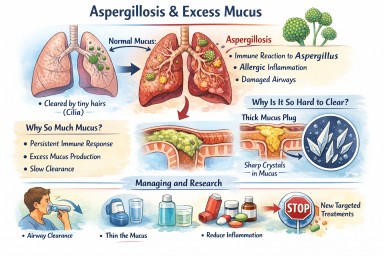
IgE (Immunoglobulin E) is a type of antibody made by your immune system when it overreacts to allergens. In ABPA, the immune system has an allergic-type response to the fungus Aspergillus fumigatus, which is commonly found in the environment. This immune overreaction leads to inflammation in the lungs, mucus buildup, and potential long-term lung damage.
A raised total IgE level:
-
Helps support a diagnosis of ABPA.
-
Is used by doctors to track how active the disease is.
-
Can help monitor how well treatment is working, and whether the disease is flaring up again.
While a high IgE level alone doesn’t always mean you feel worse, it often reflects that the allergic inflammation is active and needs managing.
💊 How Is IgE Reduced in ABPA?
Treatments for ABPA aim to bring down inflammation in the lungs, and when that happens, IgE levels often fall as well. There are three main types of treatment:
1. Steroids (e.g. prednisolone)
-
These are often used as the first treatment for ABPA.
-
They can bring down IgE levels within a few weeks, and help improve breathing and reduce mucus.
-
However, when steroids are stopped, IgE levels often rise again unless other treatments are also used.
2. Biologic therapies (e.g. omalizumab, mepolizumab, dupilumab)
-
These newer treatments target specific parts of the immune system that drive allergic inflammation.
-
They may help keep IgE levels lower over the long term and reduce the need for steroids.
-
In some cases, IgE may remain stable for months or years while on biologics, though responses vary from person to person.
3. Antifungal medication (e.g. itraconazole, voriconazole)
-
These drugs reduce the amount of Aspergillus in the lungs, which may reduce the allergic reaction.
-
They may help stabilise IgE levels but are usually not enough on their own for active ABPA.
⏱️ What Happens When Treatment Stops?
One of the most common concerns among patients is how long IgE stays low once treatment is stopped.
-
After stopping steroids, IgE levels often begin to rise again within a few weeks to a few months, especially if no other treatment is in place.
-
After stopping biologics, the return of symptoms and rise in IgE may happen more slowly — over several months — but varies from person to person.
-
If fungal exposure continues (e.g. in a damp or mouldy home), or the underlying immune reaction stays active, IgE is more likely to increase again.
It’s important to remember that monitoring IgE over time helps your doctor decide whether ABPA is active again and whether a change in treatment is needed.
🧠 Why Might Treatment Be Delayed?
Not everyone with a high IgE level is started on treatment right away. Your doctor may be:
-
Waiting for more information, such as CT scan results or lung function tests.
-
Being cautious about starting long-term steroids, especially if you've had side effects before.
-
Considering alternative treatment options like antifungals or biologics.
-
Monitoring to see if symptoms improve on their own or remain stable.
If you're not receiving treatment and you're unsure why, it's completely reasonable to ask for clarification — or to seek a second opinion.
👥 What Do Other Patients Say?
Many people with ABPA share similar experiences:
-
“Steroids helped quickly, but the effect didn’t last after I stopped.”
-
“I’ve been stable on a biologic and haven’t needed steroids in months.”
-
“It took a long time to get diagnosed — I had to ask lots of questions and push for answers.”
-
“My IgE rose again when I was exposed to damp or dusty environments.”
Your experience might be different, but it can be helpful to hear from others and learn what has worked for them.
✅ Key Points to Remember
-
A raised IgE level is a common and important feature of ABPA.
-
IgE usually falls during treatment and rises again when treatment stops — especially if nothing else is done to control the inflammation.
-
Steroids work quickly, but effects often wear off without long-term planning.
-
Biologics and antifungals may help maintain lower IgE and reduce flares.
-
If you feel uncertain about your care, seeking a second opinion is perfectly appropriate.
Tip: Keep a personal record of your IgE levels, symptoms, and any treatments you're on. This can help you and your doctor spot patterns and make informed decisions together.
🌿 The Different Forms of ABPA
Understanding Your Diagnosis and What It Means
Allergic Bronchopulmonary Aspergillosis (ABPA) is a condition where your immune system overreacts to a fungus called Aspergillus fumigatus, which can be found in air, soil, and compost. This allergic reaction happens mostly in people with asthma or bronchiectasis.
But not everyone with ABPA has the same experience. Doctors now recognise that ABPA can appear in several different forms or stages, depending on how far it has progressed and what’s happening in your lungs.
Here’s a simple guide to help you understand where you might fit — and what it means for your care.
✅ 1. ABPA-S (Serologic ABPA) — The early stage
This is the mildest form of ABPA. It means your immune system is reacting to Aspergillus, but your lungs haven’t been damaged yet.
What’s usually found:
-
High levels of IgE (allergy antibodies)
-
Positive test for Aspergillus-specific IgE
-
Normal or near-normal scans (X-ray or CT)
-
Asthma or mild chest symptoms
🟢 This form is often picked up with blood tests before any permanent changes in the lungs happen.
🟠 2. ABPA-CB — ABPA with Central Bronchiectasis
This is a more typical form of ABPA, where the ongoing allergic reaction has started to damage your airways. “Bronchiectasis” means some airways have become widened and scarred.
What’s usually found:
-
All of the features above plus
-
Changes on a CT scan showing central bronchiectasis
-
More mucus, coughing, or breathlessness
🟠 This form may need regular treatment to reduce inflammation and protect the lungs.
🔴 3. Severe ABPA — ABPA with frequent flares
This isn’t a separate type, but a more active or harder-to-control version of ABPA.
What’s usually happening:
-
Frequent flare-ups (exacerbations)
-
Need for ongoing steroids or antifungals
-
Possible use of biologic medicines (e.g. Xolair/omalizumab)
-
More serious asthma symptoms
🔴 This form can still be well-managed, but needs close monitoring and a good treatment plan.
⚠️ 4. ABPA-CPF — ABPA with Lung Scarring (Fibrosis)
This is the late stage of ABPA, where ongoing inflammation over many years has caused permanent damage to the lungs. It’s now much rarer thanks to earlier diagnosis and treatment.
What’s usually found:
-
Extensive scarring or fibrosis on lung scans
-
Breathlessness or tiredness
-
May overlap with another condition called chronic pulmonary aspergillosis (CPA)
⚠️ This stage needs careful support, but many people can still manage symptoms and improve quality of life.
📈 How doctors track your ABPA
Some doctors will also use stages to describe how your ABPA is behaving, though this does not comply with the most recent guidelines (ISHAM 2024):
-
Stage 0 – No symptoms, but abnormal blood test
-
Stage 1 – Newly diagnosed (active symptoms)
-
Stage 2 – Responding to treatment
-
Stage 3 – In remission (no active disease)
-
Stage 4 – Flare-up
-
Stage 5 – Long-term lung damage (fibrosis)
🩺 Why this matters to you
Knowing what form of ABPA you have helps you and your healthcare team:
-
Choose the right treatments
-
Decide how often you need scans or blood tests
-
Spot early signs of flare-ups
-
Protect your lungs from long-term damage
💬 Final message:
No matter which form you have, there are treatments that work. Many people with ABPA live full lives with the right support.
If you're unsure what form of ABPA you have, ask your doctor — it can help you understand what to expect and how to take care of your lungs.
🧪 Understanding Blood Tests in ABPA-S
How Aspergillus-specific IgE and Eosinophil Counts Help with Diagnosis
If you’ve been told you might have Allergic Bronchopulmonary Aspergillosis – Serologic type (ABPA-S), you’ve probably had blood tests measuring your Aspergillus-specific IgE and your eosinophil count. These markers help doctors understand whether your immune system is reacting unusually to a common fungus called Aspergillus fumigatus.
This article explains what those tests mean — and why normal results don’t always rule out ABPA-S.
🌾 What is Aspergillus-specific IgE?
This blood test checks whether your immune system is producing allergy antibodies (IgE) against Aspergillus fumigatus. High levels suggest that your body is reacting to this fungus — a key sign in ABPA.
What do the results usually look like in ABPA-S?
-
Above 0.35 kUA/L – this is the minimum level needed for ABPA diagnosis
-
Above 1.5–6.5 kUA/L – this is very common in ABPA-S
-
Above 20 or even 50 kUA/L – these are often seen in more active or severe cases
🔍 Low or normal levels (below 0.35) are rare in ABPA-S unless:
-
You are already receiving treatment
-
You are in remission
-
There was a problem with the test
-
Your condition might be a different type of fungal allergy
So if your Aspergillus-specific IgE is high, that strongly supports the diagnosis. If it’s low, your doctor may retest or look at other factors.
🧬 What is an eosinophil count?
Eosinophils are a type of white blood cell linked to allergic inflammation. In many allergic conditions, including ABPA-S, these levels can go up.
What levels are typical in ABPA-S?
-
Above 500 cells/µL – commonly seen in untreated or active ABPA-S
-
Above 1,500 cells/µL – often seen in flare-ups
-
Below 500 cells/µL – can occur in people with milder disease or if they’ve started treatment
🟡 Normal eosinophils are not rare in ABPA-S
Many people with ABPA-S — especially those already on steroids or antifungals — may have eosinophil levels in the normal range. Up to a third of people with ABPA-S may show normal counts at some point.
🩺 What This Means for You
| Test | What’s Common in ABPA-S | Is It Rare in ABPA-S? |
|---|---|---|
| Aspergillus-specific IgE | High levels (often >1.5 or 6.5) | Low or normal levels are rare |
| Eosinophils | High counts often seen | Normal counts are not rare, especially during treatment |
So if your blood tests show:
-
High Aspergillus-specific IgE → that strongly supports ABPA-S
-
Normal eosinophils → this does not rule it out
💬 What patients often ask:
“Can I have ABPA-S with normal eosinophils?”
Yes. Especially if you’re already on steroids, or your symptoms are mild, your eosinophil count may appear normal.
“Does a low Aspergillus-specific IgE mean I don’t have ABPA?”
Not necessarily. Your doctor will consider your symptoms, scan results, and other blood tests too. Sometimes the test needs repeating.
🤝 Patient voices matter
If you’ve had these tests and been diagnosed with ABPA-S, sharing your experience can help others feel less alone — and more informed when navigating lab results.
Need help understanding your lab report?
Ask your care team:
-
What was my Aspergillus-specific IgE level?
-
What was my eosinophil count?
-
Are these results typical for someone with ABPA-S like mine?
Understanding your blood tests can help you take more confident steps in managing your condition.
🏥 Surgery in Patients with ABPA or CPA: Can It Worsen Symptoms, and Should It Proceed?
Patients with Aspergillus-related lung diseases, such as Allergic Bronchopulmonary Aspergillosis (ABPA) and Chronic Pulmonary Aspergillosis (CPA), sometimes report worsened symptoms after undergoing surgery under general anaesthetic. While this is a recognised clinical pattern, it does not mean surgery should be avoided. Instead, it requires preparation and close perioperative management to reduce risk.
🔍 Can Surgery Worsen Aspergillosis Symptoms?
Yes — and here's why:
✳️ 1. Airway Irritation from Intubation
-
Endotracheal tubes can irritate airways already inflamed by ABPA or structurally altered by CPA.
-
Mechanical ventilation can impair mucus clearance and exacerbate cough or infection.
✳️ 2. Postoperative Immunosuppression
-
Surgery temporarily suppresses immune function.
-
Perioperative corticosteroids or stress-induced immune suppression can permit fungal flare-ups or reactivation.
✳️ 3. Impaired Mucus Clearance
-
Pain, immobility, and sedation reduce the patient’s ability to cough and clear secretions.
-
In CPA or ABPA, this can lead to plugging, fungal regrowth, or secondary bacterial infection.
✳️ 4. Drug Interactions
-
Azole antifungals (e.g. itraconazole, posaconazole) interact with many anaesthetics, opioids, and steroids.
-
These interactions can alter drug levels, reduce antifungal efficacy, or increase toxicity risk.
✳️ 5. Stress and Inflammation
-
Surgical stress may worsen the inflammatory or allergic component of ABPA.
-
CPA-related cavities may bleed or become re-infected post-op.
✅ Should Surgery Still Go Ahead?
Yes — surgery can and often should proceed when it is medically indicated.
Delaying needed procedures (e.g. for cancer, fractures, or pain relief) can lead to worse outcomes than the potential risks related to aspergillosis.
🛡️ Recommended Precautions
🔷 Pre-Operative Planning
-
Ensure all care teams are aware of the diagnosis.
-
Review lung imaging, baseline oxygenation, and current antifungal/steroid regimens.
-
Arrange for pre-op airway clearance if sputum is a concern.
🔷 Antifungal Management
-
Continue antifungal therapy through the perioperative period.
-
Use IV formulations if oral administration isn’t possible.
-
Check for drug interactions with anaesthetic or post-op medications.
🔷 Steroid Cover (ABPA and CPA on steroids)
-
Patients on chronic steroids may need perioperative hydrocortisone supplementation (adrenal cover).
-
Apply “sick day rules” or use the patient’s adrenal insufficiency plan, if applicable.
🔷 Post-Op Monitoring
Watch for:
-
Worsening cough, breathlessness, or sputum
-
Fever or signs of secondary infection
-
Raised IgE (in ABPA) or haemoptysis (in CPA)
-
Any signs of antifungal failure or drug toxicity
⚠️ When Might Surgery Be Delayed?
Consider postponing non-urgent surgery if:
-
There is active haemoptysis
-
The patient has uncontrolled inflammation or fungal burden
-
A recent scan shows expanding cavities or new infiltrates
-
Antifungal resistance is suspected or not yet managed
💬 Key Message for Patients
“Having ABPA or CPA doesn’t mean you can’t have surgery — but we do need to take extra care around your airways, your antifungal treatment, and your recovery. With the right team and planning, we can safely support you through your procedure.”
Allergic Bronchopulmonary Aspergillosis (ABPA) Without Asthma: A Hidden Reality
Most people – including many doctors – associate Allergic Bronchopulmonary Aspergillosis (ABPA) almost exclusively with asthma or cystic fibrosis. In fact, the current diagnostic criteria for ABPA often assume the presence of asthma as a prerequisite. But what happens when a patient has all the features of ABPA… without ever having had asthma?
This article explores the possibility – and growing recognition – of ABPA without asthma.
🔍 What Is ABPA?
ABPA is an allergic (hypersensitivity) reaction to the fungus Aspergillus fumigatus, which can colonise the lungs and cause:
-
Severe allergic inflammation
-
Damage to lung tissue (bronchiectasis)
-
High levels of IgE (often >1000 IU/mL)
-
Positive skin tests or blood tests for Aspergillus
Traditionally, ABPA is diagnosed in people with asthma or cystic fibrosis, where the airways are already vulnerable.
❗But Can ABPA Occur Without Asthma?
Yes. Though uncommon, there are confirmed cases where ABPA occurs in people who:
-
Do not have asthma
-
Have no wheeze, breathlessness or variability in symptoms
-
Show no reversibility on a bronchodilator test
-
May not respond to inhaled corticosteroids
This presentation is now increasingly recognised – particularly:
-
After viral infections like COVID-19
-
In people exposed to environmental moulds
-
In those with no personal or family history of asthma
🧪 Diagnostic Clues
Patients with ABPA but no asthma typically still show:
-
Very high total IgE levels
-
Positive Aspergillus-specific IgE and IgG
-
Radiological changes like central bronchiectasis
-
Sometimes eosinophilia in blood
But they do not show:
-
Classic asthma symptoms (e.g. wheeze, reversible breathlessness)
-
Improvement with bronchodilators
-
Variable peak flow readings
🧬 How Might This Happen?
There are a few theories:
-
Some people have a strong allergic immune response (IgE-driven) to Aspergillus alone, even without underlying asthma
-
COVID-19 and other infections may prime the immune system or damage airways enough to allow fungal colonisation
-
Not all bronchial hypersensitivity is asthma — the airway inflammation in ABPA is unique and not always “asthmatic” in pattern
✅ What Tests Can Help Confirm or Rule Out Asthma?
For patients who have ABPA but no clear asthma symptoms:
-
Bronchodilator reversibility test → May be negative
-
Methacholine or histamine challenge test → Gold standard for confirming asthma
-
FeNO test → Measures eosinophilic airway inflammation (may be high in both ABPA and asthma)
-
Peak flow monitoring → Often stable in ABPA without asthma
These tests can help clarify the diagnosis and prevent mislabeling patients as asthmatic when they are not.
🧭 Why Does It Matter?
Correct diagnosis matters because:
-
Not all ABPA patients benefit from inhaled corticosteroids or asthma drugs
-
Treatment should be tailored — e.g. antifungals and oral steroids for ABPA, but not unnecessary asthma medications
-
Misdiagnosis may delay the right treatment and overburden patients
🩺 A Call to Clinicians
If a patient has high IgE, bronchiectasis, and strong Aspergillus sensitisation — but no clinical asthma — consider ABPA without asthma.
Request confirmatory tests before labeling someone asthmatic for life. In these rare cases, asthma criteria do not fully apply — but the patient still needs support for ABPA.
🧾 Summary
| Feature | ABPA With Asthma | ABPA Without Asthma |
|---|---|---|
| Wheeze/breathlessness | Common | May be absent |
| Bronchodilator response | Often positive | Usually negative |
| Total IgE | High | High |
| Aspergillus IgE/IgG | Positive | Positive |
| Imaging (HRCT) | Bronchiectasis | Bronchiectasis |
🙋 What Can Patients Do?
If you’ve been diagnosed with ABPA but don’t believe you have asthma:
-
Ask your doctor about further testing to confirm or rule out asthma
-
Keep a record of your symptoms, peak flow (if used), and medication response
-
Discuss your IgE levels, CT scan results, and whether other diagnoses (e.g. chronic pulmonary aspergillosis) might apply
Do antifungals actually help with breathing in ABPA?
🔹 Sometimes, yes — but it depends on the person and the stage of the disease.
In ABPA (Allergic Bronchopulmonary Aspergillosis), the main problem is an allergic reaction to Aspergillus, rather than a full-blown infection. This reaction causes inflammation, mucus plugging, and sometimes long-term damage like bronchiectasis.
🧪 What do antifungals do?
Antifungal medicines like itraconazole or voriconazole don’t treat the allergy directly.
Instead, they reduce the amount of Aspergillus in your lungs, which helps:
-
Lower the allergic response (so less inflammation)
-
Reduce flare-ups
-
Sometimes reduce the need for steroids
-
May improve symptoms like wheezing, chest tightness, or mucus
But…
⚠️ They don’t work instantly
-
You may not feel a dramatic improvement in breathing straight away.
-
The effect builds over weeks or months.
-
If your symptoms are caused more by scarring or fixed airway damage (like bronchiectasis), antifungals may not reverse that — but they can still help prevent things getting worse.
📊 What does research say?
-
Studies show antifungals can reduce IgE levels, mucus plugging, and exacerbations in many people.
-
About 60–70% of patients feel some improvement in symptoms or lung function.
-
Some don’t respond — or get side effects and have to stop.
💬 So, in short:
Antifungals can help breathing for many people with ABPA, especially if inflammation and allergy are still active. But they’re not a guaranteed fix — and they work best as part of an overall plan, not on their own.
If someone’s unsure whether to start, it’s worth discussing a trial of antifungal treatment with their respiratory team, and seeing how symptoms, lung tests, and IgE levels respond over time.
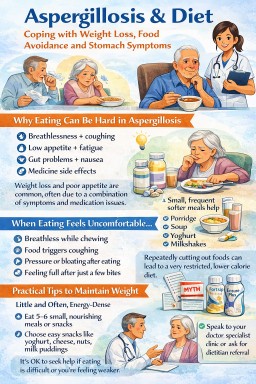
Diet Help for Patients with ABPA, Bronchiectasis & Asthma
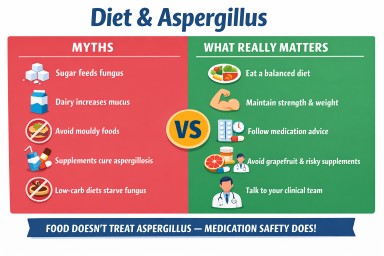
Living with Allergic Bronchopulmonary Aspergillosis (ABPA), bronchiectasis, and asthma means managing chronic lung inflammation, mucus production, and allergies. While no diet can cure these, the right food choices can help support the lungs, reduce flare-ups, and boost immunity.
It is worth noting that a good balanced diet is important. The foods suggested below are to be included in addition to a good diet, not instead of one.
✅ What to Include
1. Anti-inflammatory foods
- 🍇 Berries, cherries, grapes
- 🐟 Oily fish (salmon, sardines, mackerel – omega-3)
- 🫒 Olive oil, avocado, flaxseed
- 🍵 Green tea and turmeric (with black pepper for absorption - remember to mention that you are taking any food supplement to your doctor )
2. High-antioxidant foods
- 🥦 Broccoli, spinach, kale, sweet potatoes
- 🍅 Tomatoes (rich in lycopene for lung health)
- 🧄 Garlic and onions (natural anti-inflammatories)
3. Good hydration
- 💧 Plenty of water and herbal teas to loosen mucus
- 🍲 Soups and broths can help soothe airways
4. Foods rich in vitamin D, C and zinc
- 🥚 Eggs, fortified cereals, mushrooms (vitamin D)
- 🍊 Oranges, bell peppers, kiwi (vitamin C)
- 🥜 Nuts, seeds, legumes (zinc)
❌ Foods to Avoid or Limit
1. 'Mucus-thickening' foods
- 🧀 Excess dairy (cheese, cream, full-fat milk) may worsen the sensation of mucus for some
- 🍬 Processed sugar (cakes, sweets, fizzy drinks) triggers inflammation
2. Common allergens
- 🌾 Wheat/gluten or dairy can worsen symptoms if you're intolerant
- 🥜 Nuts or soy – avoid if known allergens
3. Pro-inflammatory foods
- 🍟 Fried foods, processed meats (bacon, sausages)
- 🥤 Artificial additives and preservatives
4. Alcohol and caffeine (in excess)
- Can dehydrate and irritate airways
🚫 Watch Out For:
- Mouldy or fermented foods (blue cheese, kimchi, kombucha) can contain fungi and may trigger ABPA if spores are inhaled.
- Compost or mouldy food in the kitchen – avoid exposure due to risk of inhaling fungal spores.
🔁 Bonus Tips
- Eat small meals if large ones trigger breathlessness
- Keep a food-symptom diary to spot personal triggers
- Work with a dietitian if weight loss, fatigue, or food intolerance is an issue
🚫 Foods to Avoid or Limit While Taking Aspergillosis Medications
| ⚠️ Food or Drink | ❓ Why Avoid It |
|---|---|
| Grapefruit and grapefruit juice | Blocks liver enzymes (CYP3A4), increasing drug levels dangerously (especially itraconazole, voriconazole) |
| Seville oranges (marmalade) | Same enzyme-blocking effect as grapefruit |
| High-fat meals (with voriconazole) | May reduce absorption – best taken on an empty stomach |
| Very low-acid foods (with itraconazole capsules) | Needs stomach acid to absorb – avoid taking with antacids, PPIs (e.g. omeprazole), or alkaline meals |
| Alcohol | Increases the risk of liver toxicity, especially with long-term antifungal use |
| Liquorice root (in large amounts) | May raise blood pressure and interact with the metabolism of antifungals |
| St John’s Wort (herbal) | Dramatically reduces antifungal effectiveness by speeding up liver metabolism |
| Supplements with high calcium or magnesium | Can interfere with some oral suspensions or acid levels, depending on timing |
💊 Drug-Specific Tips
| Antifungal | Take With Food? | Notes |
|---|---|---|
| Itraconazole capsules | ✅ Yes – needs acid and fat for absorption | |
| Itraconazole solution | ❌ No – better on empty stomach | |
| Voriconazole | ❌ No – take 1 hour before or 1–2 hours after food | |
| Posaconazole tablets | ✅ Yes – improved absorption with food | |
| Isavuconazole | ✅ Can be taken with or without food |
✅ General Diet Tips During Treatment
-
Stay well hydrated
-
Eat a liver-friendly diet (low alcohol, reduced processed food, good hydration)
-
Focus on whole foods – vegetables, fruits (except grapefruit), whole grains, lean protein
-
Keep your pharmacist or consultant informed of any supplements or dietary changes
📌 Summary
Avoid:
-
Grapefruit, Seville oranges
-
Alcohol
-
Mouldy/fermented foods (for ABPA patients)
-
Herbal products like St John’s Wort
-
Antacids/PPIs without timing advice
Eat:
-
As recommended for your specific antifungal (some require food, others don’t)
-
A balanced, anti-inflammatory diet supportive of liver and immune health
🧬 Biologic Treatments for ABPA (Allergic Bronchopulmonary Aspergillosis)
Many people with ABPA who continue to experience flare-ups despite steroids and antifungals are now being offered biological therapies—also known as monoclonal antibodies.
These treatments target specific parts of the immune system involved in allergic inflammation. They're often used when:
-
Steroids are needed frequently or at high doses
-
Antifungals alone aren’t enough
-
ABPA keeps recurring and affecting quality of life
💉 Biologics Currently Used in ABPA
The following biologics are being used in the UK, particularly in specialist centres and often in patients with ABPA plus severe asthma or eosinophilic disease:
| Biologic Name | Target | Brand Name | Notes |
|---|---|---|---|
| Omalizumab | IgE | Xolair | Most commonly used; good for high IgE and allergic asthma |
| Mepolizumab | IL-5 | Nucala | For eosinophilic inflammation; steroid-sparing |
| Benralizumab | IL-5 receptor (IL-5Rα) | Fasenra | Rapidly reduces eosinophils; monthly or 8-weekly injection |
| Dupilumab | IL-4 and IL-13 | Dupixent | Used in allergic-type asthma and some ABPA patients |
| Reslizumab | IL-5 | Cinqaero | IV infusion; less commonly used in ABPA |
| Tezepelumab | TSLP (upstream cytokine) | Tezspire | Newest option; blocks multiple inflammatory pathways; doesn’t require high IgE or eosinophils |
👉 Note: No biologic is officially licensed specifically for ABPA, but many are used off-label in patients with overlapping severe asthma or allergic disease.
✅ What Do Patients Say?
Many people treated with biologics report:
-
Fewer flare-ups or “chest infections”
-
Less need for oral steroids
-
Clearer breathing, less coughing, and better energy
Not everyone responds, but many see significant improvement in control and quality of life.
⚠️ Side Effects
Biologics are generally well-tolerated. Possible side effects include:
-
Mild injection site reactions (redness, swelling)
-
Headaches or fatigue
-
Allergic reactions (rare)
They’re usually given every 2–8 weeks as an injection under the skin, sometimes in hospital at first and then possibly at home.
🩺 What to Ask Your Consultant
-
Why have you chosen this biologic for me?
-
Will it help my asthma as well as ABPA?
-
How soon will I know if it’s working?
-
Will I still need antifungals or steroids?
-
Are there any alternatives if this one doesn’t work?
📌 Summary
| Key Point | Biologics in ABPA |
|---|---|
| Used when | Steroids aren’t enough or cause side effects |
| Most used | Omalizumab, Mepolizumab, Tezepelumab |
| Goals | Reduce flares, improve breathing, lower steroid use |
| Licensed for ABPA? | ❌ No – but used off-label in many UK centres |
| NHS funding? | ✅ Yes – when criteria for severe asthma are met |
Allergic Bronchopulmonary Aspergillosis (ABPA) for Expert Patients and non-Specialist Clinicians
Expert Information for Patients, GPs, and Specialist Nurses
🔎 What Is ABPA?
ABPA is a complex hypersensitivity reaction to Aspergillus fumigatus colonising the airways. It is not a fungal infection in the classic sense, but rather an exaggerated immune response — particularly involving IgE and eosinophils — seen in people with asthma or cystic fibrosis (CF).
It leads to recurrent inflammation, mucus plugging, and bronchial damage (including central bronchiectasis) if untreated.
🧬 Disease Mechanism
-
Type I and III hypersensitivity to A. fumigatus
-
Chronic airway inflammation causes mucus impaction and permanent lung damage
-
Associated with elevated total and specific IgE, eosinophilia, and recurrent flares
👥 Who Is at Risk?
-
Moderate to severe asthma
-
Cystic fibrosis
-
Rarely, patients with bronchiectasis or other chronic airway disease
ABPA is often underdiagnosed, especially in adults with difficult-to-control asthma.
⚠️ Common Symptoms
-
Worsening asthma control
-
Wheeze and chest tightness
-
Cough with thick mucus plugs
-
Shortness of breath
-
Intermittent low-grade fever
-
Haemoptysis (less common, usually mild)
-
Fatigue and poor response to inhaled steroids alone
🧪 Diagnosis
Diagnosis is based on a combination of clinical, radiological, and immunological features.
Core Investigations:
-
Total IgE ≥1000 IU/mL (or >500 in treated patients)
-
Aspergillus-specific IgE positive
-
Aspergillus-specific IgG (or precipitating antibodies)
-
Blood eosinophilia (>0.5 x10⁹/L typically)
-
Chest CT: central bronchiectasis, mucus plugging (“finger-in-glove”), fleeting infiltrates
-
Sputum culture or PCR positive for A. fumigatus
Diagnostic Criteria:
Use updated ISHAM criteria (2024 version preferred) combining major and minor features.
💊 Treatment
First-Line:
-
Oral corticosteroids (e.g. prednisolone) – cornerstone of flare management
-
Typically tapered over 3–6 months
-
Adjunct:
-
Itraconazole or posaconazole – reduces antigen burden and steroid need
-
3–6 months or longer; monitor liver function and drug levels
-
Steroid-Sparing Options:
-
Biologics (increasingly used, especially in steroid-dependent or relapsing patients):
-
Omalizumab (anti-IgE)
-
Mepolizumab, Benralizumab (anti-IL-5)
-
Dupilumab, Tezepelumab (emerging options)
-
🧾 Monitoring
-
Total IgE every 1–3 months (a 25–50% rise may indicate relapse)
-
Pulmonary function tests (FEV1, peak flow)
-
Repeat CT if clinical deterioration or poor steroid response
-
Sputum cultures in persistent symptoms (to exclude Aspergillus bronchitis)
⚠️ Complications
-
Progression to bronchiectasis
-
CPA (if antifungals are stopped prematurely in chronic cases)
-
Recurrent flares leading to irreversible damage
-
Steroid side effects (weight gain, osteoporosis, adrenal suppression)
📚 More Information
-
Specialist referral: patients should be considered for referral to the National Aspergillosis Centre (NAC) or local respiratory immunology team for persistent/recurrent ABPA.
-
Patient support: aspergillosis.org, CF Trust, Asthma + Lung UK
-
Key guidelines: Guidance
How Weather Affects CPA and ABPA – and What You Can Do About It
Living with Chronic Pulmonary Aspergillosis (CPA) or Allergic Bronchopulmonary Aspergillosis (ABPA) means being aware not just of your lungs, but also of what’s happening outside your window. Weather — especially wind, humidity, temperature, and seasonal changes — can have a real impact on breathing, energy levels, and symptom control. Here’s why, and what you can do to stay ahead of it.
🌬️ Windy Days: A Hidden Risk
Windy weather stirs up fungal spores, dust, and other irritants. For people with CPA or ABPA, this matters because:
-
Aspergillus spores are more airborne on windy days, increasing the risk of exposure.
-
In ABPA, this can trigger allergic inflammation — causing wheeze, tight chest, and coughing.
-
In CPA, inhaling spores can worsen existing infection or symptoms, particularly if lung cavities are already inflamed or colonised.
What you can do:
-
Avoid being outdoors for long periods on very windy days, especially in dry weather.
-
If you must go out, wear a well-fitted mask (e.g., FFP2 or FFP3).
-
Shower and change clothes when you come in — spores can cling to skin and fabric.
🌡️ Temperature Extremes: Cold or Hot
-
Cold air can tighten the airways, leading to breathlessness and coughing.
-
Hot, humid weather can feel heavy on the chest and worsen fatigue.
-
Both extremes may contribute to oxygen desaturation and general discomfort.
What you can do:
-
In cold weather: Breathe through your nose or wear a scarf or mask to warm the air before it hits your lungs.
-
In hot weather: Stay hydrated, rest in cool rooms, and avoid going out during peak heat.
🌧️ Rain and Damp Weather
Rain might temporarily reduce airborne spores, but damp conditions indoors (e.g., from leaks or poor ventilation) can allow Aspergillus to grow on walls, furniture, or in bathrooms.
What you can do:
-
Use a dehumidifier indoors and ensure good ventilation.
-
Fix any damp or mould problems promptly.
-
Clean areas like windowsills and shower tiles regularly with anti-fungal solutions* see accompanying post for more details .
🌸 Pollen and Seasonal Changes
-
In ABPA, allergic responses can be triggered or worsened in spring and summer, when other environmental allergens (like pollen or grass) are high.
-
These allergens can amplify immune responses already sensitised to Aspergillus.
What you can do:
-
Monitor pollen forecasts and avoid high-pollen areas on bad days ** see forecast details here.
-
Keep windows closed during peak pollen hours.
-
Consider using HEPA filters in the home.
📉 Barometric Pressure Drops
Some people notice worsened symptoms just before storms or weather changes — this may be due to changes in air pressure affecting breathing or causing low mood and fatigue.
What you can do:
-
Track weather patterns (ie. keep a diary) if you notice recurring patterns with your symptoms.
-
Speak with your care team if you feel you’re more vulnerable during certain types of weather — you might benefit from adjustments to medications or a rescue plan.
🚨 When to Seek Help
If you experience:
-
Oxygen saturations dropping below 92% and not improving within 20–30 minutes,
-
Rapid breathing, chest tightness, or a pounding heart that doesn’t settle,
-
Confusion, faintness, or signs of a flare-up that feels “different” from usual,
Don’t wait — contact 111 or go to A&E. You know your body best, but these signs mean your lungs are struggling.
✅ How to Prepare for Weather Sensitivity
-
Keep a symptom diary linked to weather changes — it helps your specialist spot patterns.
-
Ask your consultant if you should have:
-
A rescue inhaler (e.g., salbutamol),
-
A short-term steroid plan (for ABPA flares),
-
Portable oxygen or a pulse oximeter for home monitoring.
-
-
Have a weather-safe plan for exercise — walking indoors or using a treadmill can help stay active without exposure.
🧘♀️ Final Thought
You can’t control the weather, but you can control your environment and how you respond to it. Understanding how CPA and ABPA react to different conditions helps you stay safe, informed, and in charge of your health.
If you’ve noticed your symptoms worsen in certain weather, don’t hesitate to mention it to your specialist — it’s a valuable piece of your health puzzle.