I feel worse: is it my ABPA or Asthma?
Deciding which is causing a symptom change is one of the biggest challenges in managing ABPA and asthma together, since the two conditions often overlap and interact.
Here’s a breakdown to help you tell which condition might be driving your symptoms — though in many cases, they contribute together:
🧭 ABPA vs Asthma: Symptom Clues
| Symptom | More Likely ABPA | More Likely Asthma |
|---|---|---|
| Increased sputum / mucus plugging | ✅ Thick, sticky, brownish mucus common in ABPA | ❌ Asthma usually has dry cough, not much mucus |
| Sudden worsening after steroid reduction | ✅ Flare of ABPA likely | ❌ Asthma usually responds to inhalers unless severe |
| Persistent wheeze despite good inhaler use | ✅ Could suggest ABPA inflammation or mucus | ✅ Asthma too, but should improve with bronchodilators |
| Raised total IgE or eosinophils | ✅ Strong ABPA clue | ✅ Can happen in asthma too, but less extreme |
| Fever, malaise, or feeling 'infected' | ✅ Possible in ABPA flares | ❌ Not typical in asthma |
| Crackles or signs on chest exam | ✅ More common in ABPA with bronchiectasis | ❌ Asthma usually has wheeze, not crackles |
| Daily productive cough | ✅ Common in ABPA and bronchiectasis | ❌ Asthma usually has dry, episodic cough |
🧪 How Doctors Distinguish Them
-
Blood tests: Total IgE, eosinophils, Aspergillus-specific IgE
-
Sputum cultures: To check for Aspergillus or secondary infection
-
Spirometry: Looks for reversible airflow obstruction (asthma)
-
Chest CT scan: Shows mucus plugging, central bronchiectasis (ABPA)
-
Steroid response test: Asthma often improves rapidly; ABPA needs longer or higher doses
🔄 Important: They Often Coexist
-
Many people with ABPA have asthma first.
-
ABPA may worsen asthma symptoms by causing inflammation, mucus plugging, and airway damage.
-
Treating ABPA (with steroids, antifungals, or omalizumab) often improves asthma control.
✅ What You Can Do
-
Keep a symptom diary: track mucus, breathlessness, triggers, and response to inhalers or steroids.
-
Ask your care team to help you track your IgE and eosinophils over time.
-
If you're on biologics (e.g., omalizumab), monitor exacerbation frequency and inhaler needs.
Omalizumab: how does it help relieve ABPA?
Omalizumab (Xolair) is a monoclonal antibody that can significantly relieve symptoms in patients with Allergic Bronchopulmonary Aspergillosis (ABPA) by targeting the underlying allergic response.
Here’s how it works and why it helps:
🧬 Mechanism of Action
-
Omalizumab binds to free IgE antibodies in the blood.
-
This prevents IgE from attaching to immune cells (like mast cells and basophils), blocking the allergic cascade.
-
Over time, this leads to downregulation of IgE receptors, reducing immune hypersensitivity.
🩺 Benefits for Patients with ABPA
ABPA is driven by an IgE-mediated hypersensitivity to Aspergillus fumigatus, so omalizumab directly targets a key driver of the disease.
✅ Key Clinical Effects:
| Effect | How Omalizumab Helps |
|---|---|
| Reduces airway inflammation | By calming the immune overreaction to Aspergillus |
| Improves asthma control | Fewer exacerbations and better lung function |
| Lowers total IgE levels | A marker of disease activity in ABPA |
| Reduces corticosteroid use | Helps wean off oral steroids safely |
| Improves quality of life | Less coughing, breathlessness, mucus plugging |
📊 Who Responds Best?
-
Patients with uncontrolled ABPA despite steroids and antifungals
-
Those with frequent exacerbations or steroid dependency
-
Particularly helpful in patients with asthma + ABPA
⚠️ Notes
-
Omalizumab is given by injection every 2–4 weeks (dose based on weight and IgE levels).
-
It is not a cure for ABPA but can significantly reduce flare-ups and steroid need.
-
Not all patients respond — monitoring is essential.
What is Bronchiectasis and does it cause ABPA?
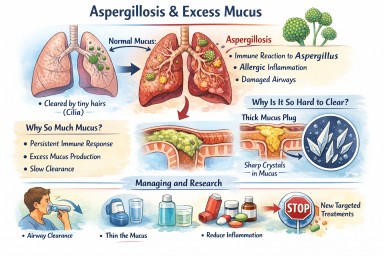
Bronchiectasis is a chronic lung condition where the airways (bronchi) become damaged, widened, and scarred, making it harder to clear mucus properly.
🫁 What Happens in Bronchiectasis?
-
Normally, your airways move mucus (with trapped bacteria and dust) out of the lungs using tiny hairs called cilia.
-
In bronchiectasis, the airway walls are damaged and permanently widened.
-
This leads to mucus buildup, which creates a cycle of infection, inflammation, and further airway damage.
🧾 Common Symptoms
-
Chronic cough with daily mucus production (can be clear, yellow, green)
-
Frequent chest infections
-
Breathlessness or wheezing
-
Fatigue
-
Coughing up blood (haemoptysis) in some cases
-
Throat irritation or constant throat clearing (especially if mucus pools or reflux occurs)
⚠️ Causes of Bronchiectasis
It may result from:
-
Severe or repeated chest infections (e.g., pneumonia, TB)
-
Underlying lung diseases (like ABPA, asthma, or COPD)
-
Immune system problems
-
Cystic fibrosis (a genetic form)
-
Non-tuberculous mycobacteria (NTM) infections
-
Sometimes, no cause is found (idiopathic bronchiectasis)
🩺 How Is It Diagnosed?
-
High-resolution CT scan of the chest (gold standard)
-
Blood tests, sputum cultures
-
Lung function tests (spirometry)
-
Tests for underlying conditions like ABPA or immunodeficiency
🛠️ Treatment Goals
-
Clear mucus: chest physiotherapy, airway clearance techniques
-
Control infection: antibiotics when needed
-
Reduce inflammation: inhalers or steroids (if overlapping asthma/ABPA)
-
Address underlying cause, if known
The relationship between bronchiectasis and ABPA (Allergic Bronchopulmonary Aspergillosis) is not symmetrical.
✅ ABPA causes bronchiectasis — not the other way around.
🔁 Here’s how it works:
-
ABPA is an allergic reaction to the Aspergillus fungus (commonly A. fumigatus) in people with asthma or cystic fibrosis.
-
This allergic reaction causes:
-
Inflammation in the airways
-
Mucus plugging
-
Repeated airway damage
-
-
Over time, this chronic inflammation and mucus blockage damages the bronchial walls → leading to central bronchiectasis, a classic feature of ABPA.
🔬 Diagnostic Clue:
-
Central bronchiectasis (bronchiectasis near the centre of the chest) on CT is considered a key imaging sign of ABPA.
-
If bronchiectasis is peripheral or widespread, another cause is more likely.
Summary:
-
ABPA can cause bronchiectasis, especially if not diagnosed early or if poorly controlled.
-
Bronchiectasis does not cause ABPA, but patients with bronchiectasis may become colonised with Aspergillus, which can confuse the picture — this is not the same as ABPA.
If I have both, how can I tell if a symptom is caused by ABPA or bronchiectasis?
ABPA and bronchiectasis often overlap, but they have different underlying mechanisms and treatment approaches, so understanding which condition is driving your symptoms can help guide better management.
Here’s a breakdown to help you distinguish:
🩺 ABPA vs Bronchiectasis: Symptom Comparison
| Symptom | More Likely ABPA | More Likely Bronchiectasis |
|---|---|---|
| Worsening asthma | ✅ Frequent flare-ups despite treatment | 🔸 Less common unless ABPA coexists |
| Wheezing | ✅ Due to allergic airway inflammation | 🔸 Can occur, but less prominent |
| Thick, brown or plug-like mucus | ✅ Classic ABPA sign (mucus plugging) | 🔸 Mucus usually looser, green/yellow |
| Fever & feeling unwell | ✅ During flare-ups ("exacerbation") | 🔸 During infections |
| Cough with daily mucus | 🔸 May occur in mild ABPA | ✅ Very common and persistent |
| Recurrent chest infections | 🔸 Possible if poorly controlled | ✅ Hallmark of bronchiectasis |
| Coughing up blood (haemoptysis) | ✅ Sometimes in ABPA | ✅ Common in moderate/severe bronchiectasis |
| Crackles on chest exam | 🔸 Less common | ✅ Frequent finding |
| Raised IgE and eosinophils | ✅ Diagnostic clue | ❌ Not typical unless ABPA overlaps |
| CT scan shows central bronchiectasis | ✅ Strong ABPA indicator | ❌ Other patterns more likely |
| Worsens with steroid taper | ✅ Suggests allergic nature | ❌ Usually stable or infection-related |
🧪 Tests to Help Differentiate
-
Total IgE: Usually >1000 IU/mL in ABPA
-
Aspergillus-specific IgE: Positive in ABPA
-
Aspergillus precipitins/IgG: Often raised in chronic forms or colonisation
-
Sputum culture: May show Aspergillus in either condition
-
High-Resolution CT: Can suggest central bronchiectasis (ABPA) vs widespread (other causes)
🔄 Key Point: You Can Have Both
Many people have both ABPA and bronchiectasis, especially if ABPA wasn’t diagnosed early. In these cases:
-
ABPA drives inflammation and allergic flare-ups
-
Bronchiectasis causes chronic mucus and infections
✅ What You Can Do
-
Track when and how symptoms worsen (after stopping steroids? with weather changes? during infections?)
-
Discuss blood tests and CT scan findings with your doctor
-
Ask whether biologic therapy or antifungals may be appropriate if ABPA is active
-
Make sure airway clearance techniques are part of your bronchiectasis care
🌱 Risks of Gardening for ABPA/CPA Patients
-
High fungal spore exposure: Soil, compost, leaf mould, mulch, and rotting vegetation are rich in Aspergillus fumigatus and other mold spores.
-
Spores can trigger ABPA flares or worsen CPA progression, especially in immunocompromised or structurally damaged lungs.
-
Bagged compost is particularly risky—opening bags or mixing damp materials can release a high spore load (documented in outbreaks and case reports).
✅ Benefits of Gardening
-
Mental health: Gardening reduces stress, anxiety, and depression, which are common in chronic lung disease.
-
Physical activity: Gentle exercise helps preserve lung function and general health.
-
Quality of life: A fulfilling hobby with strong therapeutic and social value for many.
🛡️ Risk Reduction Strategies (If Continuing Gardening)
If the patient chooses to keep gardening:
-
Avoid compost, mulch, and leaf mould – especially bagged compost.
-
Use sealed, peat-free, low-dust alternatives if composting is essential.
-
Wear a well-fitted FFP2 or FFP3 respirator when handling soil or dusty material.
-
Wet down soil before working to reduce airborne dust.
-
Garden in open air, not greenhouses or sheds, where spores can concentrate.
-
Shower and change clothes immediately after gardening.
-
Consider delegating high-risk tasks (e.g. compost turning) to someone else.
🧭 Summary: Risk–Benefit Decision
| Patient Type | Recommendation |
|---|---|
| Stable ABPA | Can garden with precautions |
| CPA, mild/stable | Garden with strong precautions, avoid compost |
| CPA, moderate-severe or immunosuppressed | Avoid gardening unless cleared by specialist |
| Recent flare or hospitalization | Avoid until stabilized |
Ultimately, this should be a shared decision based on:
-
Severity and stability of lung disease
-
Individual mental health benefits
-
Availability of safe gardening practices
🌸 Spring & Summer Advice for ABPA and CPA Patients
🟡 1. Watch for Rising Mold and Pollen Levels
-
Spring = exploding pollen (trees first, then grasses).
-
Early summer = mold spore counts rise sharply (especially after rain or damp evenings).
-
Pollen and mold are inflammatory triggers for ABPA.
-
CPA patients also risk extra mucus, chest tightness, and infections after pollen/mold exposure.
Action: ✅ Check daily mold and pollen forecasts (AccuWeather, Met Office, University of Worcester).
✅ On high pollen/high spore days → limit time outdoors, mask if needed, and keep windows closed.
🔵 2. Avoid Gardening Without Protection
-
Soil and compost are full of Aspergillus and other molds — especially after spring rains.
-
Even "dry" gardens can have dangerous spore clouds when digging, mowing, or raking leaves.
Action: ✅ Wear an FFP2/N95 mask for light gardening.
✅ For heavy work (mowing, compost turning), use an FFP3/N99 mask (preferably valved).
✅ Shower and change clothes immediately after heavy garden work.
🟠 3. Stay Cool but Stay Safe Indoors
-
Summer heat = open windows — but warm damp air boosts indoor mold growth.
-
CPA patients are especially vulnerable to indoor mold spores triggering flares.
Action: ✅ Use fans, shades, or air conditioning to cool the house without leaving windows wide open all day.
✅ If you open windows, close them at night when humidity rises.
✅ Use a dehumidifier if your home gets humid (>50% humidity inside = higher mold risk).
🔴 4. Hydrate and Protect Airways
-
Warm weather dries out airways, making mucus thicker and harder to clear — dangerous for CPA.
-
ABPA patients also get thicker mucus in drier air, risking plugging and flares.
Action: ✅ Drink plenty of water (keep mucus thin).
✅ Consider using a saline nasal spray or humidifier if indoors with air conditioning.
✅ Continue any airway clearance techniques your doctor or physio recommended.
🧹 5. Be Extra Cautious After Rain
-
After a spring/summer rainstorm, mold spore counts spike massively outdoors.
-
Within hours of rain stopping, air can be thick with spores — even if it smells fresh.
Action: ✅ If you're outside right after rain, mask up.
✅ Prefer next-day outings once things dry fully.
🚨 Bonus Caution for CPA:
-
CPA patients are prone to bacterial infections after pollen/mold exposure + mucus retention.
-
Any sudden worsening of cough, fever, or chest pain → seek help fast (don't wait days).
Spring/summer CPA flares often start as "just pollen" or "just tiredness" but can tip into infections without quick action.
🎯 Simple Spring & Summer Rule for ABPA/CPA
If it’s damp, dusty, or smells “earthy” outside → mask up.
If pollen count is high → limit time outdoors.
Stay hydrated, stay cool, and protect your lungs.
✅ Quick Mini Checklist:
| Risky Activity | What to Do |
|---|---|
| Gardening | FFP2/FFP3 mask + change clothes |
| After rain | Mask up or delay outing |
| High pollen/mold forecast | Indoor day or short trip with mask |
| Open windows at night | Avoid or control humidity indoors |
| Feeling tight or coughing | Rest + rescue inhaler if prescribed |
🧡 You absolutely can enjoy spring and summer —
you just need to plan ahead, protect yourself smartly, and listen carefully to your body.
ABPA: Can I sit in my garden or walk down the street without a mask?
If you have any of:
- Asthma
- Bronchiectasis
- ABPA (Allergic Bronchopulmonary Aspergillosis)
These conditions mean you are more vulnerable to airborne irritants (like dust, mold spores, pollen), but you don't have to avoid fresh air or being outside completely — in fact, getting fresh air (safely) is good for your lungs and mental health!
🌿 Can you sit outside in your garden?
✅ YES, you can sit in your garden in most conditions.
BUT:
- Pick dry, low-wind days: avoid sitting outside right after heavy rain (high mold spores) or on very windy days (lots of dust/spores stirred up).
- Avoid sitting close to compost piles, damp flowerbeds, rotting leaves, or dense shrubs (these are spore-rich).
- Sit on patios, decks, or paved areas where mold exposure is much lower.
- Early morning or late afternoon can be better — spores peak late morning after sunrise warmth.
- Keep a lightweight FFP2/N95 mask nearby: you don't need it all the time, but if the wind picks up or gardeners start mowing nearby, pop it on.
💬 Simple rule:
If it feels fresh and dry, and you’re sitting away from compost/disturbed soil, you don’t need a mask just to sit outside.
🚶♂️ Can you walk down the street without a mask?
✅ YES, most of the time you can walk outdoors without a mask.
BUT:
- If you’re walking on a paved road or path, you are very unlikely to encounter dangerous mold levels.
- Avoid walking near construction work, gardening teams, or heavy dust clouds — that's when spores/dust are stirred up and masking becomes smart.
- On windy, dusty days (especially dry, hot ones), consider carrying a mask and using it if needed.
- No mask needed for most calm, dry-day strolls on sidewalks or quiet streets.
💬 Simple rule:
Calm weather + paved street = no mask needed.
Dusty, windy, or fresh mowing nearby = mask if needed.
🧠 How cautious should you be?
You don't need to be hyper-cautious like never going outside.
Instead, target your precautions:
High-risk = gardening, compost, disturbed soil, renovations → mask up.
Low-risk = sitting on patio, walking on pavement, shopping inside well-kept buildings → usually no mask, but have one handy.
🔵 Think of it as:
Environment Precaution
- Fresh air, paved patio Enjoy! No mask needed
- Heavy soil disturbance, leaf mold Mask on
- Dust clouds, building work nearby Mask on
- Calm walk down street No mask needed
- Visiting park after rain Mask if very moldy
❤️ Final tips for you
- Still enjoy outdoors — it's good for your breathing and wellbeing!
- Protect during risky moments, not constantly.
- Carry a lightweight valved FFP2/N95 mask in a pocket or small bag — so it’s easy to react if the environment changes (e.g., dust storm, grass cutting nearby).
Doenload our super simple "Garden and Street Safety Checklist" that you could print and pop by the door?
(Quick reminders like "Windy? Take a mask" make life so much easier 🌸)
Resources
Given your health conditions—Asthma, Bronchiectasis, and ABPA (Allergic Bronchopulmonary Aspergillosis)—it's crucial to monitor airborne mould levels to manage your symptoms effectively. While there isn't a dedicated national airborne mould forecast service in the UK, several resources can help you stay informed about mould spore levels and take appropriate precautions:
🌿 Airborne Mould & Fungal Spore Forecasts
University of Worcester – Pollen and Fungal Spore Forecast
The University of Worcester provides weekly forecasts for pollen and fungal spores. As of late April 2025, fungal spore levels are reported as low to moderate, with Pleospora spores being more prevalent during mild, dry weather. Please note that this forecast is currently specific to the West Midlands region.
Worcester University
🌿 AccuWeather
AccuWeather – Mould Allergy Forecast
AccuWeather offers mould allergy forecasts for various locations, including Manchester. These forecasts indicate the daily risk levels of mould allergies, ranging from low to extreme, based on current weather conditions.
AccuWeather
🌿 Clarityn Pollen Tracker
While primarily focused on pollen, Clarityn's tracker provides insights into different allergen levels, including mould spores, by analyzing environmental data.
Clarityn
🏠 Indoor Air Quality & Mould
Considering your sensitivities, it might be beneficial to assess and manage indoor mould levels. See Link
✅ Practical Tips for Managing Mould Exposure
Monitor Weather Conditions: Mould spore levels often rise during mild, damp conditions. Staying indoors during such times can reduce exposure.
Ventilation: Ensure your home is well-ventilated to prevent moisture buildup, which can promote mould growth.
Avoid Disturbing Mould-Prone Areas: Activities like raking leaves or walking through damp wooded areas can release spores into the air. Limit such activities when possible.
Use Air Purifiers: High-efficiency particulate air (HEPA) filters can help reduce airborne mould spores indoors.
🌿 Garden and Street Safety Checklist (for Asthma, Bronchiectasis & ABPA)
✅ Before Sitting in the Garden:
-
Is it dry and not just rained?
-
Is it not too windy?
-
Am I away from disturbed soil, compost, rotting leaves?
-
Is my seat on a patio, paved area, or clean decking?
-
Do I have a mask handy just in case?
✅ Before Walking Down the Street:
-
Is it a calm day (not dusty or very windy)?
-
Am I walking on a paved surface (not muddy parks or woods)?
-
Are there no visible dust clouds (e.g., construction, gardeners)?
-
Do I have a light mask in my pocket or bag just in case?
✅ Weather & Mould Risk:
-
Check local weather: If it’s wet + warm = higher spore risk.
-
If unsure, check Accuweather Mould Allergy Forecast or University of Worcester spore report.
✅ When to Put the Mask ON:
-
Smell of mustiness or mold?
-
Visible dust, gardening, or mowing nearby?
-
Wind suddenly picks up dust or leaves?
-
Itchy throat, sneezing, wheeze starting?
🎯 Golden rule:
If it's a calm paved walk or dry garden sitting → enjoy without a mask.
If it's dusty, windy, damp, or you feel symptoms starting → mask up.
✨ Little Extras to Pack:
-
Lightweight FFP2/N95 mask (valved if you get breathless easily)
-
Hand sanitizer (for after handling mask)
-
Lip balm (masks can dry lips on breezy days)
-
Tissues (for sneezing/itchy nose)
📱 Garden & Street Safety Checklist (Quick Mobile Version)
🌿 Before Sitting in the Garden
-
Dry weather? (not just rained)
-
Not windy?
-
Sitting on patio/decking (not near soil/compost)?
-
Mask nearby just in case?
🚶♂️ Before Walking Down the Street
-
Calm day (not dusty or windy)?
-
Walking on pavement?
-
No dust clouds or gardeners nearby?
-
Mask in pocket just in case?
🌦️ Weather & Mould Risk
-
Wet + warm = higher spore risk.
-
Check AccuWeather or University of Worcester forecast.
😷 When to Put the Mask ON
-
Smell mustiness or mold?
-
Visible dust or soil around?
-
Wind picks up dust/leaves?
-
Itchy throat, sneeze, wheeze starting?
🎯 Golden Rule
-
Calm paved walk → no mask needed.
-
Dusty, windy, damp → mask on.
👜 Little Extras to Pack
-
Lightweight FFP2/N95 mask
-
Hand sanitizer
-
Lip balm
-
Tissues
📋 Tip:
Save this note pinned on your phone’s homescreen or as a favourite note!
Garden & Street Safety Mobile Checklist - rtf version
Garden_Street_Safety_Mobile_Checklist - txt version
Garden Street Safety Mobile Checklist - PDF version
📱 How to Pin Your Checklist to Your Phone Homescreen
🍏 For iPhone (Apple iOS)
(best for the PDF version)
-
Open the mobile PDF link in Safari.
(Use this link if you haven’t yet.) -
Tap the Share icon (square with arrow pointing up) at the bottom of the screen.
-
Scroll down and select Add to Home Screen.
-
You can rename it (e.g., "Safety Checklist") if you want.
-
Tap Add.
✅ Done!
You’ll now have an icon on your homescreen — just tap it to open the checklist instantly.
🤖 For Android (Samsung, Google Pixel, etc.)
(works great for either the PDF or TXT version)
For PDF method:
-
Open the PDF link in Chrome.
-
Tap the 3 dots menu (top right).
-
Tap Add to Home screen.
-
Rename it if you want ("Checklist" or "Mask Safety").
-
Tap Add and confirm.
Alternatively for Text method (TXT file):
-
Open the text file in your Notes app or Google Keep.
-
Save it as a pinned note or favorite for super quick access.
✅ Done!
Now, one tap on your homescreen opens your safety guide whenever you step outside.
When and Where It's Most Important to Wear a Mask with ABPA
✅ High-risk Times and Places
-
Gardening, especially mowing, composting, raking leaves, or dealing with soil (soil is full of Aspergillus spores).
-
Damp environments like basements, greenhouses, or cellars.
-
Renovation sites, building dust, or anywhere with fresh plaster, insulation, or old wood (spores cling to building materials).
-
Forests and woodlands (especially after rain — mold thrives in moisture).
-
Healthcare settings during flu season or outbreaks (protecting yourself from viruses is important too, because infections can trigger ABPA flares).
-
Cleaning chores, especially vacuuming, dusting, or disturbing carpets and curtains.
-
Public transport in cold, damp weather (mold and bacteria load can be high).
-
Post-flood environments or after water leaks at home.
💬 In your own home, if there’s no dampness or visible mold and good ventilation, you probably don't need a mask — it’s mainly in higher-exposure situations.
✅ Advantages of a Valved Mask
✅ Valved masks (e.g., most reusable respirators, and many disposable FFP3 types) have:
-
Easier breathing: the valve lets exhaled air out easily.
-
Less heat buildup: cooler and more comfortable over long periods.
-
Reduced condensation: prevents fogging up glasses or causing dampness inside the mask.
-
Better tolerance: if you have lung disease (like asthma or ABPA), it's easier to wear longer.
🚩 Small downside:
-
The valve only protects you — it doesn’t filter your exhaled air.
(Not a big issue unless you're in a clinical setting needing to protect others.)
✅ Tradeoff: Ease of Breathing vs Filtration Grade
-
FFP2 / N95:
-
Good balance — easier to breathe through, decent spore protection (~95% filtration).
-
Often enough for general outdoor use, shopping, mild-risk areas.
-
-
FFP3 / N99:
-
Harder to breathe through, especially if unvalved.
-
Best for high-risk mold areas like compost heaps, construction sites, or if you’re having a flare.
-
Might feel too "heavy" for long wear unless it’s a valved type.
-
🔵 Summary tip:
If you're just gardening lightly or commuting, an N95/FFP2 valved mask is usually enough.
If you’re deep cleaning a moldy room or working in heavy dust, use an FFP3/N99 valved respirator.
✅ Simple Decision Guide
| Situation | Recommended Mask |
|---|---|
| Light gardening, commuting | FFP2/N95 (preferably valved) |
| Heavy gardening, composting | FFP3/N99 (valved for easier breathing) |
| Dusty renovation sites | FFP3/N99 (valved if possible) |
| Shopping, public transport | FFP2/N95 (valved or unvalved) |
| Deep mold cleanup (home) | FFP3/N99 (valved) + gloves + goggles |
🛒 Disposable Masks (good for occasional or one-off use)
FFP2 / N95 level (easy breathing, decent protection)
-
3M Aura 9320+ FFP2
-
Very light and foldable.
-
Comfortable for lung conditions.
-
Good for gardening, shopping, light public exposure.
-
✅ Often recommended for sensitive patients.
-
Honeywell SuperOne 3205 FFP2
-
Another reliable, lightweight option.
FFP3 / N99 level (higher protection, harder breathing unless valved)
-
3M 8833 FFP3 Valved
-
Comfortable, valved, excellent filtration.
-
Good for heavier work: mold cleanup, compost, dusty work.
-
✅ Easier to breathe than unvalved FFP3 masks.
-
Moldex 3405 FFP3 Valved
-
Very robust, strong seal.
-
Lasts a little longer than cheap masks if worn occasionally.
♻️ Reusable Masks (better if you need regular protection, costs less over time)
Medium protection (P2/N95 filter level)
-
Cambridge Mask Pro (N99/P2)
-
Washable and reusable for months.
-
Filters bacteria, dust, mold spores, pollution.
-
Valved. Easier breathing.
-
✅ Good for daily wear like commuting, light gardening.
-
Respro Ultralight Mask (with P2 filter)
-
Super breathable, designed for people with breathing conditions.
-
Good for moderate outdoor use.
-
Comes with exchangeable filters.
Maximum protection (P3/N99+ filter level)
-
3M 6502QL Half Face Respirator + P3 filters
-
Heavy-duty, excellent for serious mold or renovation work.
-
Super comfortable and rugged.
-
✅ Replace only the filters, not the whole mask.
-
Quick latch for easy removal without touching the face.
-
Sundstrom SR100 Half Mask + P3 filters
-
Medical-quality.
-
Softer silicone facepiece (more comfortable for sensitive skin).
-
Used a lot in hospitals and mold remediation industries.
🔵 Simple Buying Tip
-
If you only need it occasionally (e.g., gardening, shopping): 3M Aura 9320+ (FFP2) disposable or Cambridge Mask Pro reusable.
-
If you often work around soil/mold/dust: 3M 8833 (FFP3) disposable or 3M 6502QL + P3 filters reusable.
🧹 Maintenance Note for Reusable Masks
-
Replace filters every 20–40 hours of use, or when breathing gets harder.
-
Wash the mask body (if washable) every few weeks depending on use.
3M Aura 9320+ FFP2
-
Very light and foldable.
-
Comfortable for lung conditions.
-
Good for gardening, shopping, light public exposure.
-
✅ Often recommended for sensitive patients.
Honeywell SuperOne 3205 FFP2
-
Another reliable, lightweight option.
3M 8833 FFP3 Valved
-
Comfortable, valved, excellent filtration.
-
Good for heavier work: mold cleanup, compost, dusty work.
-
✅ Easier to breathe than unvalved FFP3 masks.
Moldex 3405 FFP3 Valved
-
Very robust, strong seal.
-
Lasts a little longer than cheap masks if worn occasionally.
Cambridge Mask Pro (N99/P2)
-
Washable and reusable for months.
-
Filters bacteria, dust, mold spores, pollution.
-
Valved. Easier breathing.
-
✅ Good for daily wear like commuting, light gardening.
Respro Ultralight Mask (with P2 filter)
-
Super breathable, designed for people with breathing conditions.
-
Good for moderate outdoor use.
-
Comes with exchangeable filters.
3M 6502QL Half Face Respirator + P3 filters
-
Heavy-duty, excellent for serious mold or renovation work.
-
Super comfortable and rugged.
-
✅ Replace only the filters, not the whole mask.
-
Quick latch for easy removal without touching the face.
Sundstrom SR100 Half Mask + P3 filters
-
Medical-quality.
-
Softer silicone facepiece (more comfortable for sensitive skin).
-
Used a lot in hospitals and mold remediation industries.
If you only need it occasionally (e.g., gardening, shopping): 3M Aura 9320+ (FFP2) disposable or Cambridge Mask Pro reusable.
If you often work around soil/mold/dust: 3M 8833 (FFP3) disposable or 3M 6502QL + P3 filters reusable.
Replace filters every 20–40 hours of use, or when breathing gets harder.
Wash the mask body (if washable) every few weeks depending on use.
🌿 Light Daily-Use Masking Routine for ABPA
Main goal:
➡️ Use the mask only when exposure risk is meaningful — not all the time.
➡️ Protect your lungs without exhausting yourself unnecessarily.
1. At Home
🏠 No mask needed if:
-
Your home is clean, dry, and free of visible mold.
-
You have good ventilation (open windows when safe).
🚩 Wear a mask briefly if:
-
Vacuuming, dusting, or cleaning old areas.
-
Dealing with any leaks, damp, airing out old furniture, or cleaning mold-prone spots (bathroom corners, etc).
✅ Suggested mask: FFP2/N95 valved or easy-breathing type.
2. Outdoors
🌳 No mask needed for:
-
Calm walks on pavement, shops, errands in dry weather.
😷 Mask recommended if:
-
Gardening (especially digging, mowing, handling compost or soil).
-
Visiting parks/forests after rain (lots of spores in the air).
-
Heavy pollen or high dust days (pollen can aggravate lungs too).
✅ Suggested mask: FFP2/N95 valved for light tasks; FFP3/N99 for heavier tasks like compost turning.
3. Healthcare / Public Places
🏥 Mask recommended:
-
Hospitals, GP waiting rooms, crowded buses/trains.
-
Flu season (extra protection from viruses that could flare ABPA).
✅ Suggested mask: FFP2/N95 (valved or unvalved depending on comfort).
4. Renovation Sites / High Dust Work
🛠️ Always mask up:
-
Building work, sanding, plastering, any demolition dust.
-
Cleaning out garages, sheds, attics.
✅ Suggested mask: FFP3/N99 (definitely valved for comfort).
✨ Golden Rule
| Condition | Mask Type | Mask Duration |
|---|---|---|
| Light errands, dry weather | None or FFP2/N95 | Only if crowded or dusty |
| Gardening (light soil) | FFP2/N95 | While handling soil/mulch |
| Compost, heavy gardening | FFP3/N99 | Whole task, then remove |
| Indoor cleaning (dusty) | FFP2/N95 or FFP3/N99 | While vacuuming/dusting |
| Renovation/building dust | FFP3/N99 | Full task duration |
| Hospital, public transport | FFP2/N95 | During visit or journey |
🧡 Helpful Habit Tips
-
Have 2–3 masks ready: a lighter one for errands, a tougher one for risky tasks.
-
Keep one in your bag for sudden dust or unexpected situations.
-
Don’t wear a mask longer than necessary — take it off once you’re in a clean, safe space.
-
Prioritize "higher risk" activities rather than masking 24/7.
🎒 ABPA Ready Kit: What to Keep Handy
✅ 1. Mask Types
-
1 × FFP2/N95 mask (light errands, shops, public transport)
➔ Example: 3M Aura 9320+ or Cambridge Mask Pro. -
1 × FFP3/N99 mask (gardening, dusty places, high exposure)
➔ Example: 3M 8833 or Moldex 3405. -
(Optional) 1 × spare lightweight mask — in case the first gets wet, dirty, or lost.
✅ 2. Storage
-
Sealable plastic bag or small container (for clean masks)
-
Separate bag/container for used masks (if you're not near a bin)
(Important: Used masks can pick up spores — don't mix clean and dirty ones.)
✅ 3. Extras
-
Small hand sanitizer — after mask handling.
-
Travel pack of tissues — handy if lungs get irritated or you need to wipe hands before mask removal.
-
Spare gloves (optional, for gardening or heavy dust tasks)
-
Lip balm — masks can dry your lips over long periods.
-
Tiny notebook or phone note — keep track of filter change dates if using a reusable mask.
✅ 4. Home “Grab Zone”
-
Small basket, drawer, or box by the front door or garage.
-
Keep masks, gloves, and sanitizer together.
-
Quick access = less forgetting = more lung protection without stress.
🛒 Sample Ready Kit List (in one bag)
| Item | Quantity |
|---|---|
| FFP2/N95 mask (light use) | 1–2 |
| FFP3/N99 mask (heavy duty) | 1 |
| Clean storage bag/container | 1 |
| Dirty storage bag/container | 1 |
| Hand sanitizer | 1 small |
| Pack of tissues | 1 pack |
| Gardening gloves (optional) | 1 pair |
| Lip balm | 1 small |
🔵 Mini Pro Tip
If you want to make life even easier:
-
Colour code your masks (e.g., white for shopping, blue for gardening).
-
Write a quick label (“Garden Only” / “Shops Only”) on a tiny sticky note inside your bag.
🛑 Symptoms or Signs That Suggest You Should Put a Mask On
✅ Breathing/Lung Clues:
-
Sudden tightness in your chest.
-
Wheezing or whistling sounds when breathing.
-
Shortness of breath without much effort.
-
Increased coughing, especially dry or tickly cough.
-
Feeling of heaviness or irritation deep in your lungs.
✅ Throat/Nose Clues:
-
Itchy throat or scratchy feeling — an early allergic-type reaction to spores.
-
Runny nose or sudden sneezing (could mean spore or dust exposure).
-
Mucus thickening suddenly (your airways trying to trap irritants).
✅ Skin/Eye Clues:
-
Itchy eyes or watering after walking outside or entering a new area.
-
Mild rash or itch on face or neck after being in a dusty or moldy place. (Some ABPA patients are very skin-sensitive to mold-rich air.)
✅ Environmental Clues (no symptoms yet but danger signs):
-
You smell mustiness or mold (even if faint).
-
You see visible dust clouds (gardening, building work, vacuuming).
-
It’s warm and damp outside (high spore counts rise sharply after rain).
-
You are entering an older building, basement, greenhouse, or shed.
🎯 Quick Rule of Thumb
| If you notice... | Action |
|---|---|
| Itchy throat or nose | Mask up! |
| Coughing or chest tightness | Mask up + move to cleaner air |
| Musty/mold smell | Mask up before staying longer |
| Entering a damp/dusty space | Mask on immediately |
🔵 Extra tip: Pre-Emptive Masking
If you're about to do something that you already know triggers you (e.g., gardening, cleaning),
put the mask on before symptoms start.
It’s much better to stay ahead of exposure than to catch up once symptoms flare.
✨ Mini Visual Reminder
Before Symptoms: Mask when entering dusty, damp, or old environments.
First Symptoms (itchy throat, coughing, wheeze): Mask immediately and consider moving to clean air.
After Symptoms (worsening cough, wheeze): Mask + STOP exposure immediately, seek fresh air or inhalers if prescribed.
ABPA & CPA: Patient priorities
We have launched a new section that lists the commonest symptoms reported by our patient groups and offers tips on how to manage them.
In Their Words: CPA & ABPA
I Have ABPA and feel worse if I sleep with windows open
- Increased Allergen Exposure Outdoor Allergens: Opening windows can allow pollen, mould spores, and other allergens to enter, triggering respiratory symptoms. This is especially true during certain seasons (e.g., spring and fall).
Mould Growth: If mould levels are high outdoors, particularly in damp or humid conditions, this can worsen symptoms in sensitive individuals. - Temperature and Humidity Changes Cold Air: Cooler air at night can constrict airways, leading to increased asthma or allergy symptoms in some individuals.
Humidity Levels: Increased humidity can promote mold growth and worsen respiratory issues, particularly for those with ABPA. - Air Quality Pollution and Irritants: Urban areas may have higher levels of pollutants or other irritants at night, affecting respiratory health.
Odours: Nighttime activities (e.g., grilling, yard work) may introduce smoke or other irritants into the air. - Nighttime Symptoms Circadian Rhythms: Some people experience more pronounced respiratory symptoms at night due to natural variations in body functions and hormone levels.
Increased Sensitivity: Allergic individuals may be more sensitive to changes in their environment during the night when they are less distracted by daily activities. - Exposure to Pets or Dust Mites Indoor Allergens: Opening windows can stir up dust or expose individuals to pet dander and dust mites, exacerbating symptoms.Recommendations If opening windows leads to discomfort:
Keep Windows Closed: Especially during high pollen or mold seasons.
Use Air Purifiers: HEPA filters can help reduce allergens indoors.
Monitor Air Quality: Check local air quality indexes, particularly for mold and pollen counts eg. IQAir- Install an APP on your phone that tracks where you are and tells you what the local levels of pollution are.
Consult a Healthcare Provider: Discuss symptoms and management strategies, including potential adjustments to medication. If you’re experiencing significant discomfort, it may be helpful to maintain a controlled indoor environment to minimize exposure to allergens.In the UK, allergy season typically runs from March to November, with different types of pollen causing symptoms at different times.
Tree pollen
- The first wave of symptoms for some people, usually from late March to mid-May
- Hazel and birch trees are common culprits
Grass pollen
- The main cause of pollen in the UK from mid-May to July
- There are usually two peaks, one in early June and another in early July
Weed pollen
- It can start in June and last into autumn
- Dock and mugwort are common weeds that cause pollen
Other allergens
- Mould can be a problem in late summer/autumn until the first frosts
- House dust mites and pet allergens can cause year-round symptoms
Factors affecting pollen
- Weather conditions like temperature, wind, and rainfall can affect pollen counts
- Where you live can affect when and how severe symptoms are
- Urban areas tend to have lower pollen counts than rural areas
You can check the pollen forecast on the Met Office website.
Biologics & ABPA - what are they and what can they do?
Biologic medications (also known as biologics) are a class of drugs derived from living organisms or their cells. These treatments are used for various conditions, especially those involving the immune system, such as autoimmune diseases, cancers, and chronic inflammatory disorders. Here’s a breakdown of biologics:
1. What Are Biologics?
- Biologics are large, complex molecules made using biotechnology. They can be derived from living organisms such as bacteria, yeast, or animal cells.
- Unlike traditional medications (chemically synthesized), biologics are produced through genetic engineering or cell culture techniques.
2. Types of Biologic Drugs:
- Monoclonal Antibodies (mAbs): These are engineered antibodies designed to target specific proteins or cells, such as tumor cells or immune system components. Examples include drugs like adalimumab (Humira) for rheumatoid arthritis and rituximab (Rituxan) for certain cancers.
- Interferons: Proteins that modify immune system activity. They are used for conditions like multiple sclerosis and hepatitis C.
- Vaccines: Biologic drugs used to stimulate the immune system to protect against infectious diseases (e.g., the flu vaccine, COVID-19 vaccines).
- Cell and Gene Therapies: These involve altering genes or using stem cells to treat genetic disorders or cancers. CAR T-cell therapies are an example for cancer treatment.
3. Conditions Treated by Biologics:
- Autoimmune Disorders: Such as rheumatoid arthritis, Crohn’s disease, and psoriasis.
- Cancer: Biologics like monoclonal antibodies and immune checkpoint inhibitors target cancer cells.
- Infections: Some biologics, including vaccines, protect against infections like hepatitis, flu, and COVID-19.
- Chronic Inflammatory Conditions: Such as asthma and inflammatory bowel disease (IBD).
4. Advantages of Biologics:
- Targeted Action: Biologics can target specific parts of the immune system or cells involved in disease, leading to more effective treatments with fewer side effects compared to traditional drugs.
- Personalized Treatments: Some biologics can be customized based on a patient's genetics, improving outcomes for certain conditions.
5. Limitations and Side Effects:
- Expensive: Biologics tend to be more expensive than traditional medications due to the complex production process.
- Injection or Infusion: Many biologics are administered through injections or intravenous infusions rather than oral tablets.
- Immune System Effects: Since biologics modify immune system function, they can increase the risk of infections and other immune-related side effects.
Examples of Biologic Medications:
- Humira (adalimumab) for autoimmune diseases.
- Keytruda (pembrolizumab) for cancer treatment.
- Enbrel (etanercept) for rheumatoid arthritis.
Biologics are reshaping the treatment landscape, particularly in conditions where traditional medications were less effective.
In the case of Allergic Bronchopulmonary Aspergillosis (ABPA), biologic medications are increasingly being explored and used as part of treatment, particularly for patients with more severe or resistant forms of the disease. ABPA is an allergic reaction to the fungus Aspergillus, which can lead to airway inflammation and lung damage. Biologic medications, often aimed at modulating the immune system, help in managing this complex condition, especially when conventional treatments like corticosteroids fail to control symptoms or lead to significant side effects.
How Biologics Help in ABPA Treatment:
- Targeting Immune System Pathways:
- Biologics used in ABPA primarily work by targeting specific immune system pathways that drive the inflammatory response triggered by the Aspergillus fungus.
- For example, biologics that target interleukin-5 (IL-5), such as mepolizumab (Nucala), can help reduce eosinophil levels, a type of white blood cell involved in allergic reactions and inflammation in ABPA. Dupixent, another biologic, targets IL-4 and IL-13, which are cytokines involved in the inflammatory cascade in ABPA, potentially improving lung function and reducing exacerbations .
- Omalizumab (Xolair) acts directly on the patients IgE antibodies, preventing them triggering allergic inflammation
- Reducing Steroids - For ABPA patients who require long-term corticosteroid use, biologics may offer an alternative, reducing dependence on steroids and lowering the risk of long-term steroid side effects (e.g., osteoporosis, diabetes, and weight gain).
- Biologics can provide a more targeted approach, addressing the underlying immune mechanism, rather than just suppressing the overall immune response with steroids .
- Clinical Evidence:
- In trials, biologics like mepolizumab have shown improvements in asthma control and reduced exacerbations, suggesting potential benefits for ABPA patients with significant asthma components.
- Dupilumab has also demonstrated potential benefits in patients with ABPA and associated asthma, showing improvements in lung function and reduction in eosinophil levels, thus addressing both the underlying inflammation and allergic reactions .
- Safety and Efficacy:
- While biologics are typically used in cases where standard treatments (steroids, antifungals) are not sufficient or appropriate. These medications are generally well-tolerated, but they do carry risks, such as increased susceptibility to infections due to immune system modulation** .
Summary:
Biologic therapies represent an option for patients with ABPA, particularly those with severe symptoms or who struggle with long-term steroid use. By targeting specific immune pathways, biologics help reduce inflammation and improve lung function without the broad immunosuppression of steroids. Drugs like mepolizumab and dupilumab are showing encouraging results, though their use in ABPA is still being refined and evaluated in clinical trials.
If you're exploring biologics for ABPA treatment, consulting with a specialist in pulmonary or immunologic disorders is crucial, as the benefits and risks of these drugs need to be carefully balanced for each individual patient.
**One common concern is whether these treatments could increase susceptibility to viral infections, particularly respiratory viruses.
Immune Modulation and Viral Infections: Omalizumab (Anti-IgE): Omalizumab reduces IgE levels, which are primarily involved in allergic reactions, not antiviral immunity. Studies show that it may actually decrease the frequency of respiratory viral infections by reducing inflammation and preventing exacerbations triggered by viruses. In clinical trials, omalizumab was not associated with increased viral infection rates and has been shown to lower asthma exacerbations caused by viral infections.
Mepolizumab and Benralizumab (Anti-IL-5): These biologics target IL-5, which reduces eosinophil counts. Eosinophils play a minor role in viral defense, but their reduction does not seem to impair the body's ability to fight viruses significantly. Data suggest that mepolizumab and benralizumab do not increase the incidence of viral infections and can reduce asthma exacerbations, including those triggered by viruses.
Dupilumab (Anti-IL-4/IL-13): Dupilumab inhibits IL-4 and IL-13 signaling, key cytokines in allergic inflammation. It is not associated with increased viral infection susceptibility in clinical trials. It may enhance antiviral defenses by reducing Th2-skewed inflammation, potentially allowing the body to mount a better response to viruses.
Evidence from Studies: Studies have consistently shown that biologics can reduce asthma exacerbations, many of which are triggered by viral infections, suggesting they do not compromise the immune system's ability to fight viruses. No significant increase in viral infections has been observed in large clinical trials for these medications, and they are generally considered safe in this context.
Conclusion: Biologic medications for asthma do not appear to increase vulnerability to viral infections. In fact, they may reduce the risk of virus-induced asthma exacerbations by controlling airway inflammation. However, patients with severe asthma or comorbid conditions should always consult their healthcare provider regarding potential risks.