Expert Information for Patients, GPs, and Specialist Nurses
🔎 What Is ABPA?
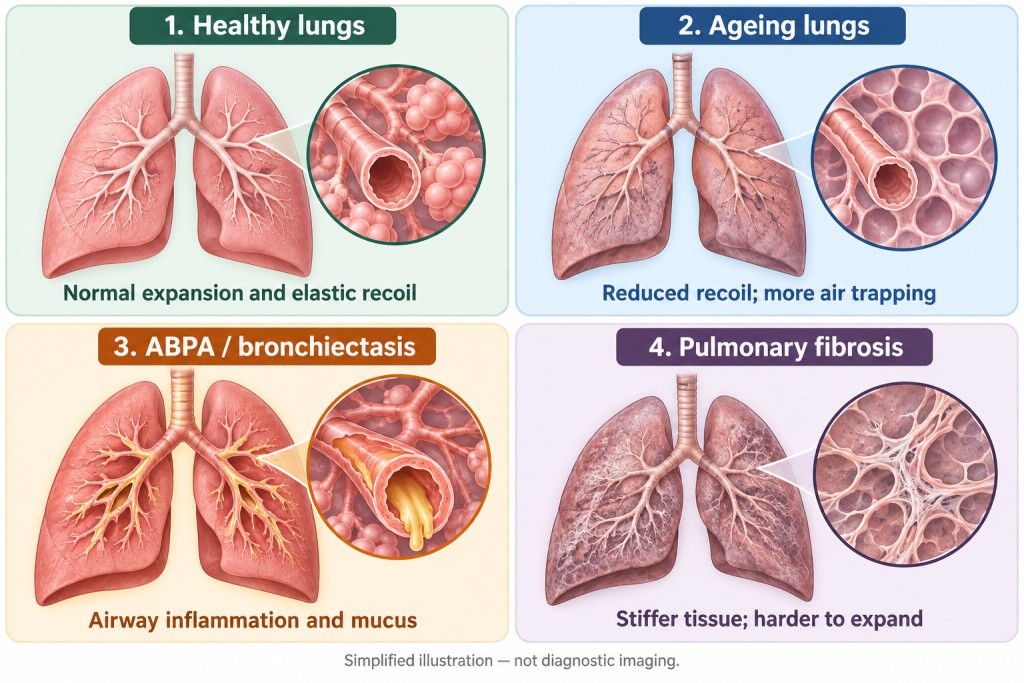
ABPA is a complex hypersensitivity reaction to Aspergillus fumigatus colonising the airways. It is not a fungal infection in the classic sense, but rather an exaggerated immune response — particularly involving IgE and eosinophils — seen in people with asthma or cystic fibrosis (CF).
It leads to recurrent inflammation, mucus plugging, and bronchial damage (including central bronchiectasis) if untreated.
🧬 Disease Mechanism
-
Type I and III hypersensitivity to A. fumigatus
-
Chronic airway inflammation causes mucus impaction and permanent lung damage
-
Associated with elevated total and specific IgE, eosinophilia, and recurrent flares
👥 Who Is at Risk?
-
Moderate to severe asthma
-
Cystic fibrosis
-
Rarely, patients with bronchiectasis or other chronic airway disease
ABPA is often underdiagnosed, especially in adults with difficult-to-control asthma.
⚠️ Common Symptoms
-
Worsening asthma control
-
Wheeze and chest tightness
-
Cough with thick mucus plugs
-
Shortness of breath
-
Intermittent low-grade fever
-
Haemoptysis (less common, usually mild)
-
Fatigue and poor response to inhaled steroids alone
🧪 Diagnosis
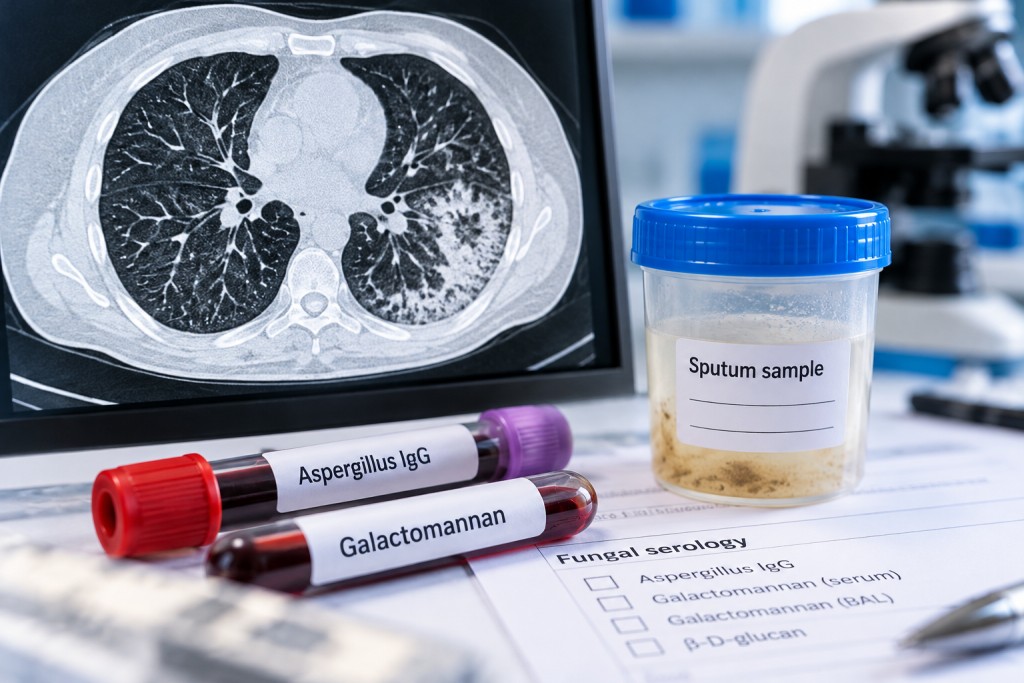
Diagnosis is based on a combination of clinical, radiological, and immunological features.
Core Investigations:
-
Total IgE ≥1000 IU/mL (or >500 in treated patients)
-
Aspergillus-specific IgE positive
-
Aspergillus-specific IgG (or precipitating antibodies)
-
Blood eosinophilia (>0.5 x10⁹/L typically)
-
Chest CT: central bronchiectasis, mucus plugging (“finger-in-glove”), fleeting infiltrates
-
Sputum culture or PCR positive for A. fumigatus
Diagnostic Criteria:
Use updated ISHAM criteria (2024 version preferred) combining major and minor features.
💊 Treatment
First-Line:
-
Oral corticosteroids (e.g. prednisolone) – cornerstone of flare management
-
Typically tapered over 3–6 months
-
Adjunct:
-
Itraconazole or posaconazole – reduces antigen burden and steroid need
-
3–6 months or longer; monitor liver function and drug levels
-
Steroid-Sparing Options:
-
Biologics (increasingly used, especially in steroid-dependent or relapsing patients):
-
Omalizumab (anti-IgE)
-
Mepolizumab, Benralizumab (anti-IL-5)
-
Dupilumab, Tezepelumab (emerging options)
-
🧾 Monitoring
-
Total IgE every 1–3 months (a 25–50% rise may indicate relapse)
-
Pulmonary function tests (FEV1, peak flow)
-
Repeat CT if clinical deterioration or poor steroid response
-
Sputum cultures in persistent symptoms (to exclude Aspergillus bronchitis)
⚠️ Complications
-
Progression to bronchiectasis
-
CPA (if antifungals are stopped prematurely in chronic cases)
-
Recurrent flares leading to irreversible damage
-
Steroid side effects (weight gain, osteoporosis, adrenal suppression)
📚 More Information
-
Specialist referral: patients should be considered for referral to the National Aspergillosis Centre (NAC) or local respiratory immunology team for persistent/recurrent ABPA.
-
Patient support: aspergillosis.org, CF Trust, Asthma + Lung UK
-
Key guidelines: Guidance

Did this page help you?
Tell us in one minute