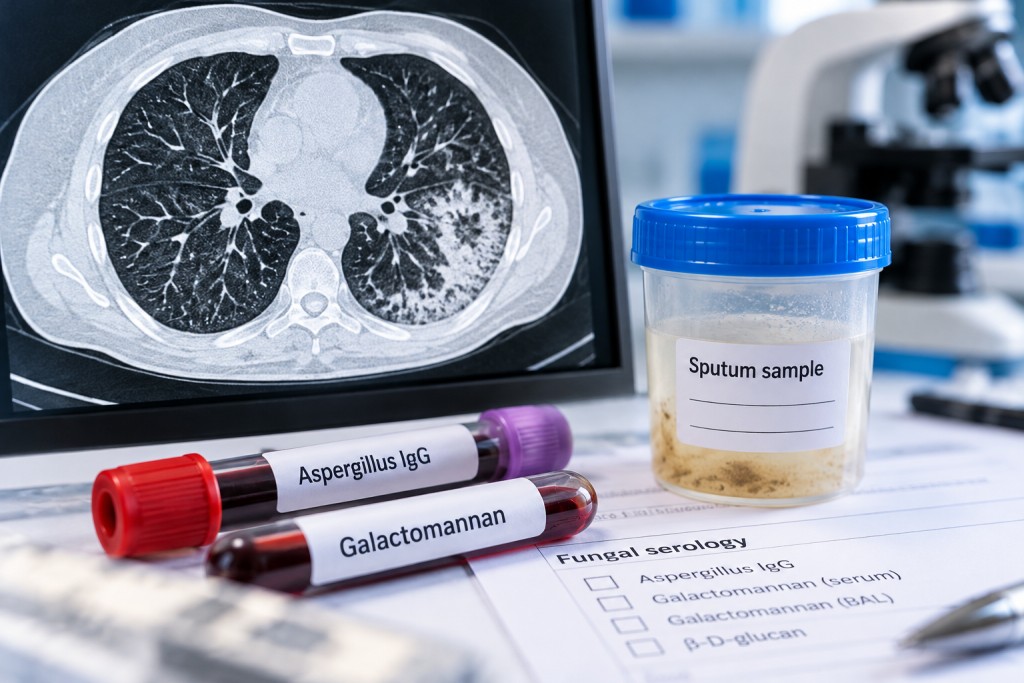
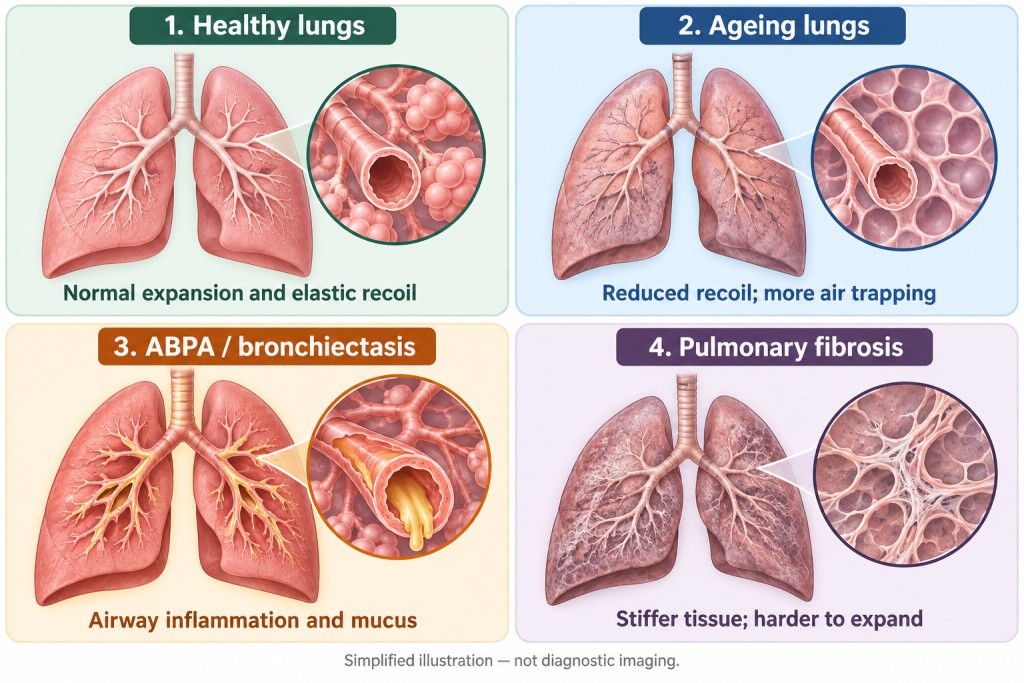
People living with Allergic Bronchopulmonary Aspergillosis (ABPA) often notice thick, unusual mucus coming up during a flare. Some of this mucus can look very different from “normal” sputum and may be described as mucous casts. This leaflet explains what they are, why they happen, and what they mean for your ABPA.
⭐ What are mucous casts?
A mucous cast is a thick, sticky plug of mucus that forms inside your airways.
It takes on the exact shape of the airway or branch it was sitting in – a bit like a soft mould of the inside of your lungs.
When coughed up, casts may look:
-
long and tube-shaped
-
soft and rubbery
-
curled or C-shaped
-
occasionally branching, like a twig
-
pale yellow/cream with darker specks
These darker flecks can include dead inflammatory cells, airway debris, and sometimes tiny amounts of fungal material trapped inside.
⭐ Why do they happen in ABPA?
ABPA is not an infection, but an allergic over-reaction to the Aspergillus fungus.
This allergic inflammation causes:
1. Excess mucus production
Your airways create far more mucus than usual.
2. Thicker, stickier mucus
Inflammation changes the chemistry of the mucus, making it harder to clear.
3. Swollen, narrowed airways
This makes it easy for mucus to get stuck and form plugs.
4. Trapped material
Casts can contain:
-
fungal spores
-
inflammatory cells
-
dust or other inhaled particles
-
old blood or tissue debris
All of this can glue together into a cast.
⭐ Are mucous casts harmful?
They are not dangerous on their own, but they can cause problems:
-
Airway blockage → breathlessness, wheeze, sudden tightness
-
Chest infections → trapped mucus is an ideal place for bacteria
-
ABPA flare-ups → casts often appear during periods of high inflammation
-
Reduced airflow on CT scans → seen as “bronchial impaction”
Telling your clinical team when you notice casts helps them judge how active your ABPA is.
⭐ What do mucous casts look like in ABPA?
Patients often describe:
-
“noodles”
-
“worms”
-
“rubbery plugs”
-
“little branches”
-
“specks of brown/black” within pale mucus
These appearances are normal in ABPA and do not mean your lungs are permanently worsening.
⭐ How are mucous casts managed?
1. Airway clearance
This is the most important step. Techniques include:
-
huff-coughing
-
active cycle of breathing
-
nebulised saline (hypertonic or isotonic)
-
flutter/PEP devices (Acapella, Aerobika)
-
chest physiotherapy
These help loosen and move mucus from deeper airways.
2. Medication
Depending on your treatment plan:
-
inhalers (bronchodilator + inhaled steroids)
-
biologics (e.g., mepolizumab, dupilumab, omalizumab)
-
antifungal medication if prescribed as part of your ABPA care
-
oral steroids if medically appropriate
Biologics can reduce the inflammation that causes casts, so many patients notice fewer plugs over time.
3. Monitoring
Your team may keep an eye on:
-
sputum samples
-
IgE levels
-
CT scan changes
-
symptom patterns
⭐ When should I tell my team?
Contact your clinical team if you notice:
-
more frequent mucous casts
-
sudden breathlessness or chest tightness
-
a drop in your usual oxygen saturation
-
fever or signs of infection
-
coughing up blood
-
a change in colour or smell of mucus
⭐ Reassurance
Mucous casts are very common in ABPA.
They can look alarming, but they are simply a sign that your airways are inflamed and producing thick mucus.
Coughing them out is helpful, not harmful.
It allows the affected airway to reopen and can rapidly improve breathing.
✅ Further Reading
For more patient-oriented information, you can visit the AFIT website where the term “casts” is discussed in the context of aspergillosis: Aspergillus.org.uk – search “casts”.

Did this page help you?
Tell us in one minute