AntifungalInteractions.org – A Specialist Resource for Safer Antifungal Treatment

Last reviewed: April 2026

Managing antifungal medications can be complex. Many antifungal drugs interact with other medicines, foods, and even supplements.
To support both patients and healthcare professionals, a dedicated resource is available:
AntifungalInteractions.org.


Key Points

  • A specialist database focused specifically on antifungal drug interactions
  • More detailed and targeted than general resources such as the British National Formulary (BNF)
  • Includes guidance designed for both healthcare professionals and patients
  • Regularly updated (typically several times per month)
  • Maintained by an experienced clinical pharmacist and prescriber
  • Owned and supported by the Fungal Infection Trust

What is AntifungalInteractions.org?

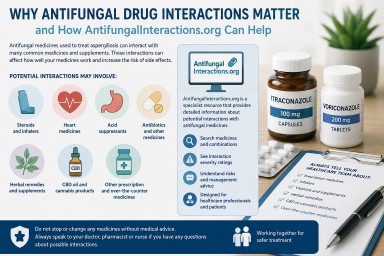
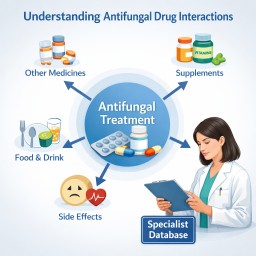
AntifungalInteractions.org is a dedicated online database designed to help users understand how antifungal medications interact with:

  • Other prescribed drugs
  • Over-the-counter medications
  • Herbal supplements
  • Certain foods and drinks

Unlike general drug reference tools, this resource focuses specifically on antifungal medicines, making it particularly useful for conditions such as aspergillosis, where treatment often involves long-term or complex therapy.


Why This Resource Matters

1. Antifungal drugs are complex

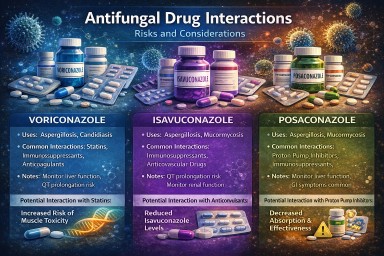
Common antifungal medications such as azoles (e.g. itraconazole, voriconazole, posaconazole) are known to interact with many other drugs.
These interactions can:

  • Increase side effects
  • Reduce treatment effectiveness
  • Require dose adjustments or monitoring

2. General resources may not go far enough

Widely used tools like the British National Formulary (BNF) are essential, but they are designed for broad use across all medicines.
AntifungalInteractions.org provides:

  • More detailed interaction explanations
  • Practical interpretation of risk
  • Condition-specific relevance

3. It supports informed discussions

The database is not a replacement for clinical advice, but it can help patients and clinicians:

  • Prepare for consultations
  • Understand potential risks
  • Ask more informed questions

Who Maintains the Database?

AntifungalInteractions.org is maintained by:

Saarah Niazi-Ali
MPharm, PG Cert (General Pharmacy Practice), PG Dip (Advanced Clinical Pharmacy Practice),
Independent Pharmacist Prescriber, Non-Medical Prescribing (Level 7), Final Medical Signatory

The database is updated frequently—typically 3–4 times per month, often on a weekly basis—ensuring that information remains current and clinically relevant.


Governance and Ownership

The resource is owned and supported by the Fungal Infection Trust, a UK-based organisation dedicated to improving the understanding, diagnosis, and treatment of fungal diseases.

This ensures that the database:

  • Remains focused on patient benefit
  • Is aligned with specialist fungal disease care
  • Supports both clinical practice and patient education

Who Is It For?

Patients and carers

  • To better understand their medications
  • To check for potential interactions
  • To support conversations with their clinical team

Healthcare professionals

  • Infectious disease specialists
  • Respiratory clinicians
  • Pharmacists
  • GPs managing complex patients

It is particularly valuable for clinicians managing conditions such as:

  • Chronic pulmonary aspergillosis (CPA)
  • Allergic bronchopulmonary aspergillosis (ABPA)
  • Other fungal infections requiring long-term antifungal therapy

How Does It Compare to Other Resources?

Feature AntifungalInteractions.org General Drug References (e.g. BNF)
Focus Antifungal-specific All medicines
Level of detail High (specialist) Moderate (broad coverage)
Patient-friendly explanations Yes Limited
Update frequency Frequent (monthly/weekly) Regular but broader scope

Important Notes for Patients

While this database is a valuable resource, it should be used appropriately:

  • Do not stop or change medication based on what you read
  • Always discuss concerns with your doctor, pharmacist, or specialist team
  • Use the information to support—not replace—medical advice

When to Seek Medical Advice

Contact your healthcare provider if you:

  • Start a new medication while on antifungal treatment
  • Experience new or worsening side effects
  • Are unsure whether a supplement or food is safe
  • Have been advised of a potential interaction

Summary

AntifungalInteractions.org is a highly valuable, specialist resource that fills an important gap in antifungal care.
Its combination of:

  • Expert clinical oversight
  • Frequent updates
  • Patient-accessible explanations
  • Specialist focus

makes it an important tool for both patients and healthcare professionals managing fungal disease.


Further Reading


Author & Review

Prepared for Aspergillosis patient and healthcare education.
Content aligned with UK specialist practice and reviewed for clarity and safety.


Voriconazole interactions: what patients need to know

Last reviewed: April 2026

Key points

  • Voriconazole interacts with many medicines.
  • It affects several liver enzyme pathways, including CYP3A4, CYP2C19, and CYP2C9.
  • Its behaviour can vary more from one person to another than some other azoles.
  • Some medicines can make voriconazole stronger, while others can make it less effective.
  • Visual side effects and sensitivity to sunlight are well recognised with voriconazole.

What is voriconazole?

Voriconazole is an azole antifungal often used in serious fungal infections, including aspergillosis. It can be very effective, but it also has a relatively complex interaction profile.

Why voriconazole interacts with so many medicines

Voriconazole affects several liver enzyme systems, including CYP3A4, CYP2C19, and CYP2C9. It can increase the levels of some medicines, while some other medicines can lower voriconazole levels and reduce its effectiveness.

Because voriconazole metabolism varies between patients, the same combination can affect people differently.

The interaction groups most likely to matter

Steroids

Voriconazole can increase exposure to some steroids, including inhaled steroids, which may increase the risk of steroid side effects.

Medicines that reduce voriconazole levels

Some medicines, including certain anti-seizure medicines and rifampicin-type antibiotics, can reduce voriconazole levels so much that the antifungal may not work properly.

Blood thinners

Some blood thinners may become stronger when taken with voriconazole, increasing bleeding risk.

Heart rhythm medicines

Voriconazole can contribute to QT prolongation, so combinations with other medicines that affect heart rhythm may be particularly important.

Statins

Some statins can become stronger when taken with voriconazole, increasing the risk of muscle side effects.

Immunosuppressants

Medicines such as tacrolimus and ciclosporin can rise significantly with voriconazole and often require specialist monitoring and dose adjustment.

Sedatives and some mental health medicines

Some sedatives and psychiatric medicines can become stronger when combined with voriconazole, increasing the risk of drowsiness, confusion, or other side effects.

Voriconazole-specific issues patients should know

Visual changes

Temporary visual disturbances are well recognised with voriconazole. Patients may notice blurred vision, brighter vision, or changes in colour perception.

Photosensitivity

Voriconazole can increase sensitivity to sunlight. Patients should use sensible sun protection and report new skin changes, especially during long-term treatment.

Variable drug levels

Voriconazole levels can vary between patients, which is one reason some teams use therapeutic drug monitoring in selected situations.

What patients should do in practice

  • Tell your clinical team and pharmacist that you are taking voriconazole.
  • Check before starting new medicines, including over-the-counter or herbal products.
  • Report visual changes, significant sensitivity to sunlight, or a change in symptoms after a medicine change.
  • Do not change treatment without advice.

When to seek medical advice

Seek medical advice urgently for severe bleeding, fainting, severe palpitations, marked confusion, or rapid worsening after a medicine change.

Important

This page is educational and does not list every interaction. For a full check, use the BNF interaction checker or speak to a pharmacist or clinician.

References


Itraconazole interactions: what patients need to know

Last reviewed: April 2026

Key points

  • Itraconazole can interact with many other medicines.
  • It usually does this by affecting liver enzymes, especially CYP3A4.
  • Some combinations need careful monitoring, while others are best avoided.
  • Capsules and liquid formulations are not handled by the body in exactly the same way.
  • This page highlights the interactions most likely to matter to people with aspergillosis.

What is itraconazole?

Itraconazole is an azole antifungal used in aspergillosis and other fungal infections. It has a relatively high interaction burden, so medicine checks are especially important before starting it and whenever another medicine is added, stopped, or changed.

Why itraconazole interacts with so many medicines

Itraconazole can increase the levels of some other medicines by affecting liver enzymes, especially CYP3A4. This means that some medicines may become stronger than intended, which can increase the risk of side effects or toxicity.

The interaction groups most likely to matter

Steroids and inhalers

This is one of the most important groups for many aspergillosis patients, especially those with asthma or allergic bronchopulmonary aspergillosis. Itraconazole can increase exposure to some steroids, including inhaled steroids, which may increase the risk of steroid side effects.

Possible symptoms to report: unusual weight gain, easy bruising, increased facial rounding, mood changes, worsening blood sugar control, weakness, or marked fatigue.

Statins

Some statins can become much stronger when taken with itraconazole. This can increase the risk of muscle toxicity.

Possible symptoms to report: new muscle pain, muscle weakness, or dark urine.

Blood thinners

Itraconazole can increase the effect of some blood thinners, which may raise bleeding risk.

Possible symptoms to report: unusual bruising, bleeding that is hard to stop, black stools, vomiting blood, or coughing up much more blood than usual.

Heart and rhythm medicines

Some combinations can increase the risk of serious heart rhythm problems. Itraconazole is also used cautiously in people with a history of ventricular dysfunction or heart failure unless the infection is serious.

Possible symptoms to report: fainting, palpitations, marked dizziness, increasing ankle swelling, or worsening breathlessness.

Sleeping tablets, sedatives, and some mental health medicines

Some sedatives and psychotropic medicines can become stronger when combined with itraconazole, increasing the risk of drowsiness, confusion, falls, or breathing problems.

Immunosuppressants

Medicines such as tacrolimus and ciclosporin can rise significantly when taken with itraconazole and usually need specialist monitoring.

Medicines that can make itraconazole less effective

Some medicines lower itraconazole levels, which means the antifungal may not work as well. This can happen with some anti-seizure medicines, rifampicin-type antibiotics, and some antiviral medicines.

Acid-reducing medicines and itraconazole capsules

Reduced stomach acid can lower the absorption of itraconazole capsules. This means reflux medicines, antacids, and some acid-suppressing treatments can affect how well the capsules work. The liquid formulation behaves differently and should not be treated as interchangeable with capsules.

What patients should do in practice

  • Keep a current medicines list and bring it to appointments.
  • Tell clinicians and pharmacists if you are taking itraconazole.
  • Ask specifically about inhalers, steroid tablets, statins, blood thinners, and reflux treatment.
  • Do not change doses or stop medicines without advice.
  • If your itraconazole formulation changes, ask whether it should be taken with food or on an empty stomach.

When to seek medical advice

Seek urgent medical advice for severe bleeding, black stools, vomiting blood, severe muscle pain, fainting, marked palpitations, or rapidly worsening breathlessness.

Important

This page is not a full interaction database. For a complete medicine-by-medicine check, use the BNF interaction checker or speak to a pharmacist or clinician.

References


Amphotericin B interactions: what patients need to know

Last reviewed: April 2026

Key points

  • Amphotericin B comes in different formulations, and they are not interchangeable.
  • Its main interaction risks are different from the azoles.
  • The most important problems are usually kidney stress, low potassium, low magnesium, and additive toxicity with other medicines.
  • These risks matter most with intravenous treatment.
  • If you hear “amphotericin B”, it is important to know which formulation is being used.

What is amphotericin B?

Amphotericin B is an antifungal used mainly for serious fungal infections. In modern UK practice this often means liposomal amphotericin B, but conventional amphotericin B deoxycholate is also a recognised formulation.

Why amphotericin B interactions are different from azoles

Unlike azole antifungals, amphotericin B does not mainly cause medicine interactions through liver enzymes. Its most important interaction risks usually relate to kidney injury, low potassium, low magnesium, and infusion-related effects.

The interaction groups most likely to matter

Other medicines that can damage the kidneys

This is one of the most important groups. Combining amphotericin B with other nephrotoxic medicines can increase the risk of kidney injury.

Diuretics, steroids, and other medicines that lower potassium

Amphotericin B can lower potassium, and some other medicines can make this worse. This may increase the risk of weakness, cramps, or heart rhythm problems.

Digoxin and heart-rhythm-sensitive situations

Low potassium caused by amphotericin B can make digoxin-related toxicity more likely and may increase the importance of electrolyte monitoring.

Flucytosine

When combined with flucytosine, specialist monitoring may be needed because toxicity can increase.

Some cancer medicines and intensive hospital treatments

In hospital, additive toxicity with other intensive treatments may be particularly important, especially where kidneys and electrolytes are already under strain.

White blood cell transfusions

Acute lung reactions are a recognised specialist concern if amphotericin B is given during or soon after leukocyte transfusions.

Why the formulations matter

Amphotericin B formulations are not interchangeable. Conventional amphotericin B deoxycholate and liposomal amphotericin B have different dosing, different handling by the body, and different safety profiles. Using the wrong formulation in the wrong dose has caused serious and even fatal errors.

In general, liposomal amphotericin B is less nephrotoxic than conventional amphotericin B deoxycholate, but it still requires careful monitoring.

What patients should do in practice

  • Ask which amphotericin B formulation is being used.
  • Tell the clinical team about all medicines, especially kidney-risk medicines, diuretics, steroids, and digoxin.
  • Expect blood tests to monitor kidney function, potassium, and magnesium during intravenous treatment.
  • Report weakness, reduced urine output, worsening swelling, palpitations, or marked dizziness.

When to seek medical advice

Seek urgent medical help for severe breathlessness, fainting, major palpitations, or a rapid deterioration during treatment.

Important

This page is educational and does not list every possible interaction. Amphotericin B treatment is usually managed by specialist teams, especially when given intravenously.

References


Isavuconazole interactions: what patients need to know

Last reviewed: April 2026

Key points

  • Isavuconazole can interact with other medicines, but its interaction profile is often less complex than older azoles.
  • It mainly interacts through CYP3A4.
  • Some medicines can increase isavuconazole levels, while others can reduce its effectiveness.
  • It has an important difference from some other azoles: it can shorten the QT interval.
  • It is still essential to check new medicines carefully.

What is isavuconazole?

Isavuconazole is a newer azole antifungal used in invasive aspergillosis and some other serious fungal infections. It is often seen as having a more predictable interaction profile than some older azoles, but it still has important interactions.

Why isavuconazole interacts with other medicines

Isavuconazole is mainly linked to CYP3A4. This means some medicines can become stronger when combined with it, while other medicines can lower isavuconazole levels and reduce its effectiveness.

The interaction groups most likely to matter

Medicines that reduce isavuconazole effectiveness

Some medicines, including rifampicin-type antibiotics and certain anti-seizure drugs, can lower isavuconazole levels and may make treatment ineffective.

Steroids

Some steroid levels may rise with isavuconazole, although the interaction pattern is often less intense than with some older azoles.

Immunosuppressants

Medicines such as tacrolimus and ciclosporin may increase and usually need specialist review and monitoring.

Blood thinners

Some blood thinners may become stronger, increasing bleeding risk.

Statins

Some statin levels may increase, which can raise the risk of muscle side effects.

Important isavuconazole-specific points

QT shortening

Unlike several other azole antifungals, isavuconazole can shorten the QT interval. This is an important difference and should be considered when other heart medicines are being reviewed.

Generally simpler interaction profile

Compared with itraconazole and voriconazole, isavuconazole is often considered a little easier to manage in patients taking several medicines, although checks are still essential.

What patients should do in practice

  • Tell your pharmacist or clinician if you are taking isavuconazole.
  • Check before starting prescription, over-the-counter, or herbal medicines.
  • Ask specifically about anti-seizure drugs, antibiotics, blood thinners, and heart medicines.
  • Do not stop or change medicines without advice.

When to seek medical advice

Seek medical advice urgently for severe bleeding, fainting, severe palpitations, severe muscle pain, or rapid worsening after a medicine change.

Important

This page is educational and not a complete interaction database. For a full check, use the BNF interaction checker or speak to a pharmacist or clinician.

References


Posaconazole interactions: what patients need to know

Last reviewed: April 2026

Key points

  • Posaconazole can interact with other medicines, although its interaction pattern is often a little simpler than itraconazole or voriconazole.
  • It mainly interacts through CYP3A4 inhibition.
  • Important interaction groups include immunosuppressants, steroids, blood thinners, and some heart medicines.
  • Some medicines can reduce posaconazole levels and make treatment less effective.
  • Tablets and oral suspension are not interchangeable in the same way.

What is posaconazole?

Posaconazole is an azole antifungal used in aspergillosis and in some high-risk patients for prevention of fungal infection. It is often seen as somewhat easier to manage than some older azoles, but important interactions still exist.

Why posaconazole interacts with other medicines

Posaconazole mainly affects CYP3A4, a key liver enzyme involved in handling many medicines. This means some drugs can become stronger, while some combinations can lower posaconazole levels and make it less effective.

The interaction groups most likely to matter

Steroids

Posaconazole can increase exposure to some steroids, including inhaled or oral steroids, which may increase the risk of steroid side effects.

Immunosuppressants

Medicines such as tacrolimus and ciclosporin can rise significantly with posaconazole and usually need close specialist monitoring.

Blood thinners

Some blood thinners may become stronger, increasing bleeding risk.

Statins

Some statins can rise in level, increasing the risk of muscle problems.

Heart rhythm medicines

Some combinations can increase the risk of heart rhythm problems and need careful review.

Medicines that reduce posaconazole effectiveness

Some medicines, including rifampicin-type antibiotics and certain anti-seizure drugs, can lower posaconazole levels and may make treatment less effective.

Posaconazole formulations and absorption

Posaconazole comes in different forms, including tablets, oral suspension, and infusion. The oral suspension and tablets are not handled identically by the body and should not be assumed to be interchangeable dose-for-dose without clinical advice.

In practice, the tablets tend to be more predictable than the suspension.

What patients should do in practice

  • Tell your pharmacist or clinician if you are taking posaconazole.
  • Ask about new medicines, especially blood thinners, steroids, statins, and heart medicines.
  • If your formulation changes, ask whether there are any special instructions.
  • Do not stop or swap medicines without advice.

When to seek medical advice

Seek medical advice urgently for severe bleeding, fainting, major palpitations, severe muscle pain, or rapid worsening after a medicine change.

Important

This page does not list every interaction. For a full check, use the BNF interaction checker or speak to a pharmacist or clinician.

References


Antifungal drug interactions: what patients with aspergillosis need to know

Last reviewed: April 2026

Key points

  • Antifungal medicines can interact with other medicines, including inhalers, steroid tablets, blood thinners, heart medicines, cholesterol tablets, and some over-the-counter or herbal products.
  • The azole antifungals usually interact by affecting how the liver handles medicines.
  • Amphotericin B is different: its main interaction risks are more often linked to kidneys, potassium, magnesium, and infusion-related effects.
  • This page gives an overview. It does not list every interaction.
  • For a full medicine-by-medicine check, use the BNF interaction checker or ask a pharmacist or clinician.

Why interactions matter in aspergillosis

People with aspergillosis often take more than one medicine. This may include inhalers, steroid tablets, medicines for reflux, antibiotics, pain relief, blood pressure treatment, blood thinners, cholesterol tablets, and drugs for other long-term conditions. That means medicine checks are especially important whenever an antifungal is started, stopped, or changed.

How the main antifungals differ

Most long-term interaction questions in aspergillosis involve the azole antifungals: itraconazole, voriconazole, posaconazole, and isavuconazole. These mainly interact because they affect liver enzymes, especially CYP3A4, although some also affect CYP2C9 and CYP2C19.

Amphotericin B behaves differently. Its most important risks are usually kidney stress, low potassium, low magnesium, and additive toxicity with other medicines rather than classic liver-enzyme interactions.

Quick comparison table

Antifungal Main interaction pattern Typical complexity Important extra point
Itraconazole Strong enzyme-based interactions, especially CYP3A4 High Capsules and liquid are not handled by the body in the same way
Voriconazole Complex enzyme-based interactions involving several CYP pathways High More variable between patients; visual side effects and photosensitivity are well recognised
Posaconazole Mainly CYP3A4-related interactions Moderate Tablets and oral suspension are not interchangeable in the same way
Isavuconazole Mainly CYP3A4-related interactions, usually less complex than older azoles Lower to moderate Can shorten the QT interval
Amphotericin B Kidney, potassium, magnesium, and infusion-related interaction risks Different rather than simpler Formulations are not interchangeable

Individual antifungal guides

What patients should do in practice

  • Keep an up-to-date list of all medicines, including inhalers, creams, over-the-counter medicines, supplements, and herbal products.
  • Tell your doctor, nurse, pharmacist, or hospital team that you are taking an antifungal.
  • Do not start, stop, or swap medicines on your own because of something you have read online.
  • Ask specifically about new medicines, steroid changes, reflux treatment, blood thinners, cholesterol medicines, and heart medicines.

When to seek medical advice

Seek medical advice promptly if symptoms change after a medicine is started, stopped, or changed. Seek urgent help for severe bleeding, fainting, severe muscle pain, marked palpitations, rapidly worsening breathlessness, severe drowsiness, or a sudden significant decline in your health.

Important

This resource is educational. It does not replace personalised advice from your clinical team, GP, or pharmacist, and it is not a complete interaction database.

References