Last reviewed: April 2026
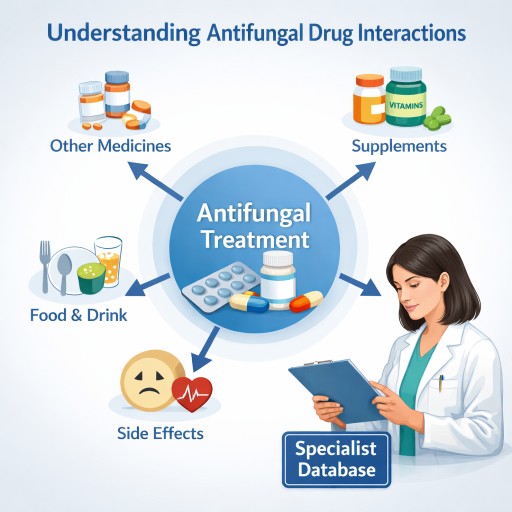
Managing antifungal medications can be complex. Many antifungal drugs interact with other medicines, foods, and even supplements.
To support both patients and healthcare professionals, a dedicated resource is available:
AntifungalInteractions.org.
Key Points
- A specialist database focused specifically on antifungal drug interactions
- More detailed and targeted than general resources such as the British National Formulary (BNF)
- Includes guidance designed for both healthcare professionals and patients
- Regularly updated (typically several times per month)
- Maintained by an experienced clinical pharmacist and prescriber
- Owned and supported by the Fungal Infection Trust
What is AntifungalInteractions.org?
AntifungalInteractions.org is a dedicated online database designed to help users understand how antifungal medications interact with:
- Other prescribed drugs
- Over-the-counter medications
- Herbal supplements
- Certain foods and drinks
Unlike general drug reference tools, this resource focuses specifically on antifungal medicines, making it particularly useful for conditions such as aspergillosis, where treatment often involves long-term or complex therapy.
Why This Resource Matters
1. Antifungal drugs are complex
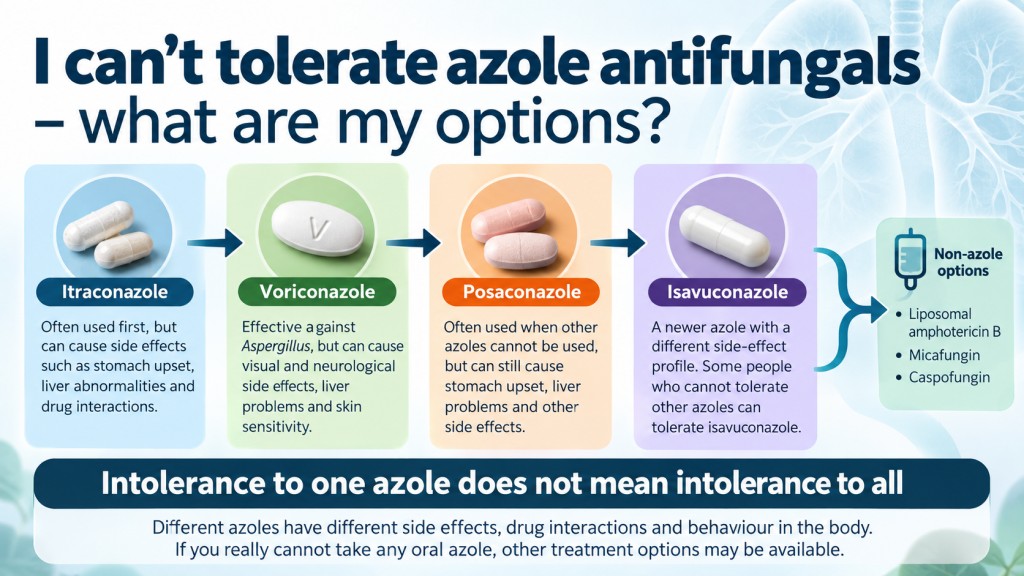
Common antifungal medications such as azoles (e.g. itraconazole, voriconazole, posaconazole) are known to interact with many other drugs.
These interactions can:
- Increase side effects
- Reduce treatment effectiveness
- Require dose adjustments or monitoring
2. General resources may not go far enough
Widely used tools like the British National Formulary (BNF) are essential, but they are designed for broad use across all medicines.
AntifungalInteractions.org provides:
- More detailed interaction explanations
- Practical interpretation of risk
- Condition-specific relevance
3. It supports informed discussions
The database is not a replacement for clinical advice, but it can help patients and clinicians:
- Prepare for consultations
- Understand potential risks
- Ask more informed questions
Who Maintains the Database?
AntifungalInteractions.org is maintained by:
Saarah Niazi-Ali
MPharm, PG Cert (General Pharmacy Practice), PG Dip (Advanced Clinical Pharmacy Practice),
Independent Pharmacist Prescriber, Non-Medical Prescribing (Level 7), Final Medical Signatory
The database is updated frequently—typically 3–4 times per month, often on a weekly basis—ensuring that information remains current and clinically relevant.
Governance and Ownership
The resource is owned and supported by the Fungal Infection Trust, a UK-based organisation dedicated to improving the understanding, diagnosis, and treatment of fungal diseases.
This ensures that the database:
- Remains focused on patient benefit
- Is aligned with specialist fungal disease care
- Supports both clinical practice and patient education
Who Is It For?
Patients and carers
- To better understand their medications
- To check for potential interactions
- To support conversations with their clinical team
Healthcare professionals
- Infectious disease specialists
- Respiratory clinicians
- Pharmacists
- GPs managing complex patients
It is particularly valuable for clinicians managing conditions such as:
- Chronic pulmonary aspergillosis (CPA)
- Allergic bronchopulmonary aspergillosis (ABPA)
- Other fungal infections requiring long-term antifungal therapy
How Does It Compare to Other Resources?
| Feature | AntifungalInteractions.org | General Drug References (e.g. BNF) |
|---|---|---|
| Focus | Antifungal-specific | All medicines |
| Level of detail | High (specialist) | Moderate (broad coverage) |
| Patient-friendly explanations | Yes | Limited |
| Update frequency | Frequent (monthly/weekly) | Regular but broader scope |
Important Notes for Patients
While this database is a valuable resource, it should be used appropriately:
- Do not stop or change medication based on what you read
- Always discuss concerns with your doctor, pharmacist, or specialist team
- Use the information to support—not replace—medical advice
When to Seek Medical Advice
Contact your healthcare provider if you:
- Start a new medication while on antifungal treatment
- Experience new or worsening side effects
- Are unsure whether a supplement or food is safe
- Have been advised of a potential interaction
Summary
AntifungalInteractions.org is a highly valuable, specialist resource that fills an important gap in antifungal care.
Its combination of:
- Expert clinical oversight
- Frequent updates
- Patient-accessible explanations
- Specialist focus
makes it an important tool for both patients and healthcare professionals managing fungal disease.
Further Reading
- British National Formulary (BNF)
- Aspergillosis treatment guidance (aspergillosis.org)
Author & Review
Prepared for Aspergillosis patient and healthcare education.
Content aligned with UK specialist practice and reviewed for clarity and safety.

Did this page help you?
Tell us in one minute