**Understanding Medicines in Rare Forms of Aspergillosis:

A Complete Guide for Patients with CPA, ABPA, SAFS and Aspergillus Bronchitis**

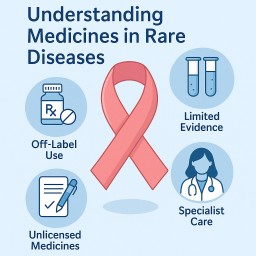
People living with chronic or allergic forms of aspergillosis often face treatments that fall outside the standard medicine licensing system. You may hear terms like off-label, unlicensed, specials medicines, or rare disease. This guide explains these concepts clearly and safely in a way that helps you feel informed and confident in your care.


⭐ 1. What is a rare disease?

In the UK and EU, a rare disease is defined as:

A condition affecting fewer than 1 in 2,000 people
(≈ fewer than ~33,500 people in the UK)

Although each rare disease affects relatively few people, over 7,000 rare diseases exist, so collectively they affect 1 in 17 people.


⭐ 2. Are CPA, ABPA, SAFS and Aspergillus Bronchitis rare diseases?

Here is how the main Aspergillus-related conditions compare to the rare-disease definition.

Chronic Pulmonary Aspergillosis (CPA)

  • ~3,600 diagnosed UK patients (under-diagnosis likely, but still rare).
    CPA is officially recognised as a rare disease.


Allergic Bronchopulmonary Aspergillosis (ABPA)

  • Occurs in 2.5–5% of all people with asthma.

  • UK estimate: 125,000–250,000 patients.
    ABPA is NOT a rare disease (but it is under-recognised).


Severe Asthma with Fungal Sensitisation (SAFS)

  • ~8,000 estimated UK cases.
    SAFS meets the definition of a rare disease.


Aspergillus Bronchitis

  • Likely <10,000 UK patients.
    Aspergillus Bronchitis qualifies as a rare disease.


Summary Table

Condition Approx UK Patients Rare Disease?
CPA ~3,600 ✔ YES
ABPA 125,000–250,000 ✘ NO
SAFS ~8,000 ✔ YES
Aspergillus Bronchitis <10,000 ✔ YES

Understanding whether a condition is rare helps explain why some treatments fall outside standard licensing.


⭐ 3. What is “off-label” prescribing?

Every medicine has a licence describing:

  • the condition it treats

  • dose

  • age group

  • how long it can be used

  • route (tablet, injection, inhaler)

Off-label means a doctor uses a licensed medicine in a way not included in the licence.

This can mean:

  • different disease

  • different dose

  • different age group

  • different route

  • different duration

Off-label prescribing is safe, legal, common and essential, especially in rare diseases.


⭐ 4. What is an “unlicensed” medicine?

An unlicensed medicine is one that has no UK licence at all.

Examples:

  • a medicine made specially for one patient (“specials”)

  • a liquid formulation when only tablets are sold

  • imported medicines licensed in another country

  • alternatives for patients with drug allergies

Unlicensed does not mean unsafe — it means the medicine isn’t commercially licensed in the UK.


⭐ 5. Why are off-label and unlicensed medicines common in rare diseases?

Rare diseases like CPA, SAFS and Aspergillus bronchitis:

  • affect small patient numbers

  • often have no licensed treatment

  • rely on specialist expertise and experience

  • require individualised dosing

  • cannot wait for slow or expensive licensing processes

Without off-label and unlicensed medicines, many rare-disease patients would have no treatment options.

This is why specialist centres exist.


⭐ 6. Biologics for ABPA: NOT licensed, but safe and widely used

This is a key point for patients.

No biologic is licensed for ABPA

(as of 2025)

Not licensed for ABPA:

  • Omalizumab (Xolair)

  • Mepolizumab (Nucala)

  • Benralizumab (Fasenra)

  • Dupilumab (Dupixent)

All biologics used in ABPA are therefore off-label.

⭐ Why do specialists use them anyway?

Because evidence is strong that biologics:

  • reduce ABPA flare-ups

  • reduce steroid need

  • improve lung function

  • improve symptoms

  • control eosinophilic/IgE-driven inflammation

  • reduce hospital admissions

ABPA lacks a commercially licensed biologic
→ but specialist evidence supports them strongly.

This is high-quality off-label prescribing.


⭐ 7. How do doctors decide what evidence is “good enough”?

Doctors use several acceptable forms of evidence, including:

✔ Randomised controlled trials

✔ National/international guidelines

✔ NAC / BTS / ECCMID / IDSA specialist protocols

✔ Observational studies and real-world evidence

✔ Case series and case reports

✔ Pharmacological reasoning (mechanisms of disease)

✔ MDT (multidisciplinary team) agreement

✔ Expert clinical experience (important in rare diseases)

All of these count as legitimate evidence.

Rare-disease medicine relies on the best available evidence, not only the “highest-level” evidence.


⭐ 8. Who holds responsibility if something goes wrong?

The prescriber carries responsibility, even for:

  • off-label use

  • unlicensed medicines

  • imported medicines

  • specials items

They must:

  • justify the decision

  • explain risks and benefits

  • obtain consent

  • document

  • monitor

If they follow guidance, they are fully protected by:

  • NHS indemnity

  • GMC standards

  • Trust governance

Patients are not responsible for adverse outcomes.


⭐ 9. Is this risky for the doctor?

Only if done unsafely.

When the doctor:

✔ follows specialist guidelines
✔ explains the situation
✔ documents their reasoning
✔ uses MDT support
✔ monitors closely

…the risk is minimal and fully protected.

In rare diseases, NOT prescribing off-label can be riskier if it denies a patient effective treatment.


⭐ 10. How are patients protected?

Patients with CPA, ABPA, SAFS or Aspergillus bronchitis are protected by:

  • careful MDT assessment

  • specialist supervision

  • decades of centre experience

  • guideline-supported decisions

  • regular reviews and monitoring

  • clear communication and consent

  • NHS governance systems

Your care is safe, structured and evidence-based.


⭐ Final reassurance for Aspergillosis patients

If you have CPA, ABPA, SAFS or Aspergillus bronchitis:

  • You are not receiving “experimental” treatment.

  • Off-label or unlicensed medicines are normal, safe, and essential.

  • Your specialist team carries the responsibility for these decisions.

  • Biologics for ABPA are off-label because licensing is slow — not because they are untested.

  • You are protected by national standards, MDTs, and specialist expertise.

  • Your treatment is based on the best available evidence, even when the condition is rare.

This is expert, modern care designed to give you the best possible outcome.


When Scents Cause Symptoms: What Patients Say About Odour Triggers

Many people living with asthma, Allergic Bronchopulmonary Aspergillosis (ABPA), or bronchiectasis describe strong reactions to everyday smells — perfumes, cleaning products, paints, or air fresheners.
These reactions can cause immediate coughing, wheezing, throat irritation, or chest tightness, and they can last for hours or even days.

To understand this better, we asked members of our patient community:

“Are there any smells that don’t affect you?”

Their replies were detailed, honest, and very relatable.


💬 What patients told us

“I’m OK with most perfumes, but not Estée Lauder. Aftershaves can be troublesome.”
“Unfragranced alcohol hand sanitiser is fine — even though it smells strong.”
“Cooking smells are OK if it’s food I can eat, but not frying.”
“Crowded rooms full of cleaning products or perfume — that’s when I start coughing.”
“I use peppermint essential oil to mask other smells if I get caught off guard.”
“If I avoid mould, dust, aerosols, and detergents, I can generally stay well.”

These voices show that odour sensitivity varies hugely from person to person — and what’s tolerable one day might trigger symptoms another.


🌸 Smells people can usually tolerate

Even among those highly sensitive to scents, a few odours were commonly reported as “safe”:

  • Some light or natural perfumes

  • Alcohol-based hand sanitisers (if unfragranced)

  • Food smells from meals the person can eat

  • Saline or hypertonic saline nebulisers

  • Outdoors air after rain — described by some as “clear” or “fresh”

Many added that they simply don’t notice safe smells — because their airways stay calm.


🚫 Common odour triggers

Category Examples mentioned by patients
Fragrances & aerosols Perfume, hairspray, carpet freshener, pet grooming sprays, room sprays, vapes
Household products Detergents, polish, disinfectants, scented candles, new rugs or furniture “off-gassing”, silicone sealant, fresh paint
Environmental triggers Dust, damp wood, mould, oil fumes, cigarette smoke, some trees or plants
Crowded indoor air Theatres, shops, salons, or restaurants where several products and fragrances combine

Reactions were often described as immediate:

“Aerosols set me off straight away — I feel it in my chest before I even notice the smell.”


🧩 Why odours trigger symptoms

Odour sensitivity isn’t usually an allergy — it’s caused by airway hyperreactivity.
In these conditions, nerve endings in the bronchial walls become oversensitive.
When exposed to volatile organic compounds (VOCs), aerosols, or fine particles, the airways tighten and release inflammatory mediators — a reaction that’s stronger and longer-lasting in those with existing lung inflammation.

People with ABPA, Severe Asthma with Fungal Sensitisation (SAFS), or Chronic Pulmonary Aspergillosis (CPA) often have inflamed, mucus-filled, or scarred airways, making them far more reactive to irritants.


🧭 Factors that make reactions worse

Patients pointed out that it’s not just what’s in the air, but also:

  • Concentration – strong or enclosed fumes trigger faster responses

  • Combination – multiple scents together (perfume + cleaner + paint) are far harder to tolerate

  • Duration – prolonged exposure leaves lingering symptoms


💡 Tips for managing odour sensitivity

Plan ahead

  • Choose quiet times for haircuts, shopping, or social events.

  • Check if venues use air fresheners or scented cleaning products.

Control your environment

  • Use fragrance-free detergents and cleaning products.

  • Ventilate your home after cleaning or decorating.

  • Keep dehumidifiers and air purifiers running in damp areas.

Be prepared

  • Carry a reliever inhaler or antihistamine if prescribed.

  • Consider a FFP2/FFP3 mask in heavily fragranced or dusty places.

  • A small bottle of peppermint oil or menthol inhaler may help mask irritant odours temporarily.

Communicate

  • Let friends, family, or workplaces know that fragrances affect your breathing.

  • If public spaces (like theatres or salons) are overwhelming, it’s okay to step out — health comes first.


🧠 Understanding and empathy

“It’s not about disliking smells — it’s that my lungs treat them as an attack.”

For many, this sensitivity means planning life around exposure — avoiding crowds, timing visits, or even missing social events.
Recognising that these reactions are physiological, not psychological, can help families, friends, and employers offer real support.


❤️ Takeaway message

Odour sensitivity is part of the lived experience of reactive airway disease.
It isn’t always predictable, but understanding your triggers — and which scents are safe — can make everyday life much easier.
As one patient put it:

“If I can avoid mould, dust, aerosols, and detergents, I can generally stay well.”

By sharing these experiences, patients are helping others realise they’re not alone — and helping clinicians understand just how much “harmless” smells can matter.


Aspergillosis & Asthma: When Risks Peak Through the Year

Many people living with aspergillosis, asthma, or bronchiectasis notice that their symptoms change with the seasons.
This is no coincidence — environmental factors such as temperature, humidity, pollen, spores, and viral infections all vary through the year, and these can strongly influence both lung health and allergic or fungal disease.

Understanding these patterns can help you plan ahead, reduce exposure, and know when to take extra care.


🌸 Spring: Pollen and Early Spore Season

As temperatures rise, tree pollen (especially birch, oak, and plane) and Aspergillus spores begin to increase in outdoor air.
For people with Allergic Bronchopulmonary Aspergillosis (ABPA) or Severe Asthma with Fungal Sensitisation (SAFS), this can trigger cough, wheeze, and chest tightness.

  • Keep an eye on Met Office pollen and spore forecasts.

  • Open windows on dry days, but check for signs of mould indoors, especially around windows and bathrooms.

  • If you notice symptoms flaring every spring, let your respiratory team know — small medication adjustments may help.

📊 Data source: Met Office spore count data.


☀️ Summer: Soil, Compost, and Renovation Hazards

Warm, humid conditions mean fungi thrive — especially outdoors.
Compost heaps, garden soil, and grass cuttings can release very high levels of Aspergillus spores.
People with chronic lung disease, ABPA, or Chronic Pulmonary Aspergillosis (CPA) are at greater risk of exacerbations during this period.

  • If gardening or using compost, wear gloves and an FFP2/FFP3 mask.

  • Avoid turning compost heaps or cleaning bird feeders if you are immunocompromised.

  • Keep home humidity below 60% and ventilate well during warm spells.

🪴 Source: Protective mask and compost safety advice.


🍂 Autumn: Damp Homes and Viral Load

As the weather cools, we close windows and turn on heating — trapping moisture indoors.
This increases damp and mould growth, particularly in poorly ventilated areas.
At the same time, colds, flu, and RSV infections surge, all of which can make fungal or allergic conditions worse.

  • Use a dehumidifier and ensure air can circulate behind furniture.

  • Check for leaks, condensation, or cold corners.

  • Stay up to date with flu and COVID vaccinations if eligible.

💧 Source: Aspergillosis.org damp guidance.


❄️ Winter: Indoor Season and Medication Review

Outdoor spore levels are lowest in winter, but indoor exposure dominates — from bathrooms, humidifiers, and heating systems.
Viral infections remain a major trigger for asthma and ABPA flare-ups, and antifungal or steroid treatments may need review.

  • Keep homes warm but ventilated where possible.

  • Review your treatment plan with your clinical team, especially if you’re using steroids or biologics.

  • Contact your GP or specialist early if you notice an increase in cough, breathlessness, or mucus plugs.


🧭 Key Takeaway

Aspergillosis and asthma flare-ups often follow the seasons:

Season Main Risks Take Action
Spring Pollen, outdoor spores Monitor counts, check home for mould
Summer Compost, soil, renovation dust Use masks/gloves, avoid heavy exposure
Autumn Damp homes, viruses Dehumidify, ventilate, manage infections
Winter Indoor air, viruses Keep warm, review treatment

By spotting your personal pattern, you and your care team can plan ahead — reducing exacerbations and staying well all year.


Information on Allergic BronchoPulmonary Aspergillosis (ABPA) / SAFS – For Family and Friends

Print out or share electronically

WHAT IT IS
ABPA (Allergic Bronchopulmonary Aspergillosis) and SAFS (Severe Asthma with Fungal Sensitisation) are allergic reactions to a common fungus, Aspergillus. In some people with asthma, the immune system overreacts to spores in the air, causing inflammation, swelling, and mucus plugs in the lungs.

WHAT IT'S NOT

  • Not contagious – you can't catch it.

  • Not poor hygiene – Aspergillus is everywhere in the air.

  • Not the patient's fault – flare-ups happen because of the condition, not something they did or didn't do.

WHY AREN'T OTHERS AFFECTED?
Most people's lungs clear these spores easily. In ABPA/SAFS the immune system reacts too strongly – more likely with long-standing asthma, severe allergies, damaged airways (e.g., bronchiectasis), or a genetic tendency. It's not weakness or lifestyle choices – often just lung history and bad luck.

TYPICAL SYMPTOMS

  • Wheezing, cough (sometimes with mucus plugs)

  • Breathlessness

  • Severe fatigue

  • Sometimes coughing up blood

WORST SYMPTOMS

  • Mucus plugs – thick, sticky clumps blocking airways, making breathing suddenly harder.

  • Intense coughing – can be exhausting, cause chest pain, and disrupt sleep.

TREATMENT

  • Anti-inflammatory medicines (often steroids)

  • Antifungals to reduce Aspergillus in the airways

  • Biologics for severe asthma/allergic inflammation

  • Monitoring with blood tests, breathing tests, and scans

THE REALITY
This condition can dominate daily life. On bad days the person may not be able to do much at all. Energy and breathing can change day-to-day (even hour-to-hour). If plans are cancelled, it isn't a lack of interest – it's the illness. Flare-ups can also make people feel short-tempered – a natural reaction to frustration, not a lack of care. Many people also live with a constant awareness of environmental risks – weighing up every new place or activity for dust, damp, or spores. This can feel exhausting and may lead them to avoid situations that others wouldn’t think twice about.

LOOKING AHEAD

  • With good control – Many people manage their symptoms well, reduce flare-ups, and keep active with the right treatment and avoidance of triggers.

  • Risks – Without good control, repeated flare-ups can slowly damage the lungs and lead to bronchiectasis.

  • Change over time – Some improve and need less treatment; others have ongoing ups and downs. Early action on flare-ups makes a big difference.

ENVIRONMENTAL TRIGGERS & PROTECTION
Some people with ABPA or SAFS have to avoid dust, mould, strong smells, smoke, and damp places – these can trigger flare-ups. Activities like gardening, compost turning, or DIY can be risky because they release fungal spores into the air. Wearing a well-fitting mask (e.g., FFP2/FFP3) can help reduce exposure – it's about staying well, not being antisocial.

HOW FRIENDS AND FAMILY CAN BEST HELP

  • Be flexible with plans – energy and breathing can change suddenly; last-minute cancellations aren't personal.

  • Help avoid triggers – choose low-dust, low-mould venues and activities.

  • Support treatment routines – lifts to appointments, collecting prescriptions, or reminders if welcome.

  • Listen without judgement – let them share symptoms and frustrations.

  • Encourage safe activities – suggest hobbies and outings with low environmental risk.

  • Show affection and reassurance – a hug, a kind message, or checking in can mean a lot.

MORE INFORMATION & SUPPORT
National Aspergillosis Centre (UK): https://mft.nhs.uk/wythenshawe/services/infectious-diseases/national-aspergillosis-centre/
Patient information & community: https://aspergillosis.org


🛡️ FFP2/FFP3 Mask Use in Aspergillosis: Summary

Mask Type Who Might Use It When It's Used
FFP2 (95% filtration) Some patients with CPA, ABPA, or SAFS, especially during flares or hospital visits During travel on public transport, clinic waiting rooms, visiting building sites, or dust exposure
FFP3 (99% filtration) Patients who are severely immunocompromised (e.g. post-transplant, on chemotherapy, or high-dose steroids) In high-risk environments: hospital construction, building work nearby, or heavy dust/mould exposure

✅ When Masks Might Be Advisable

  • During hospital visits, particularly in winter or during flu/COVID waves

  • If you're immunosuppressed, e.g. taking long-term steroids or biologics

  • When exposed to mouldy buildings, compost, building work, or flood damage

  • In crowded indoor environments where infection risk is high


❌ When They’re Usually Not Needed

  • Day-to-day life in a clean, dry home environment

  • Low-risk outdoor activity (e.g. walking in the park)

  • If your asthma/ABPA/CPA is stable and you're not immunocompromised


🗣️ What the National Aspergillosis Centre Recommends

  • Use FFP2 masks when entering environments likely to have airborne fungal spores

  • FFP3 masks may be offered for high-risk medical procedures or when severely immunocompromised

  • Masks are one part of a broader protection strategy, which includes:

    • Good indoor air quality (HEPA filters, ventilation)

    • Avoidance of dusty environments

    • Prompt treatment of fungal infections


🌬️ Living with Asthma and Aspergillosis: Understanding the Overlap, the Immune System, and the Right Treatment

If you live with asthma and have been told you also have aspergillosis, such as ABPA (Allergic Bronchopulmonary Aspergillosis) or SAFS (Severe Asthma with Fungal Sensitisation), your situation is more complex than most people realise.

This guide explains:

  • The different types of asthma

  • How aspergillosis complicates asthma

  • The role of eosinophils, IgE, and the immune system

  • Why some people don’t have “typical” symptoms (like wheeze)

  • What treatments are available — and how to personalise your care


🧠 Asthma Isn’t One Disease

Asthma is a condition where the airways (breathing tubes) become:

  • Inflamed (swollen and irritated)

  • Overreactive to certain triggers (allergens, cold air, infection, etc.)

  • Narrowed and often filled with mucus, making breathing difficult

But not everyone with asthma has the same cause, symptoms, or treatment response. Asthma actually includes many subtypes — and understanding your type is key to getting the right care.


🧬 Common Asthma Types in Aspergillosis

Asthma Type Cause / Trigger Key Features
Allergic asthma IgE-driven allergy to pollen, dust, pets, fungi Common in early-life asthma
Eosinophilic asthma High levels of eosinophils (a white blood cell) Often adult-onset and hard to control
SAFS Allergy to fungi (especially Aspergillus) Severe, steroid-resistant asthma
ABPA Allergic reaction to Aspergillus growing in lungs Very high IgE, eosinophils, mucus, lung damage
Cough-variant asthma Inflammation without wheeze Dry cough as the only symptom
“Silent” asthma Reduced or absent warning signs No wheeze, may present with fatigue, cough or breathlessness only

🫢 New Section: What Is “Silent Asthma”?

“Silent asthma” is not an official medical term, but it’s used to describe:

  • Asthma without the classic wheeze (often just cough or tightness)

  • Or where asthma attacks happen suddenly, without clear warning

This is important because:

  • People may not realise they have asthma

  • Diagnosis may be delayed or missed

  • Flare-ups can be severe or even life-threatening

  • It may occur in people with fungal asthma, ABPA, or airway damage

Silent asthma is especially relevant in:

  • Older adults

  • People with ABPA or SAFS

  • People with cough-variant asthma

  • Anyone whose asthma doesn’t “sound” typical

🧪 Tests like FeNO, spirometry, and blood eosinophil counts are vital for confirming what’s really happening inside the lungs — even if symptoms are subtle.


🔬 Why ABPA Adds Complexity

If you have ABPA, the asthma symptoms are made worse by:

  • A hypersensitive immune reaction to Aspergillus fumigatus

  • Mucus plugging and blocked airways

  • Lung damage (bronchiectasis) that doesn’t improve with inhalers alone

  • A mix of allergic and eosinophilic inflammation

Key signs include:

  • Extremely high IgE levels

  • Raised eosinophils

  • Positive blood tests for Aspergillus

  • Lung CT scan changes


💊 Treatment Options Based on Asthma Type

Treatment Used For
Inhaled corticosteroids (ICS) All types, first-line
Antifungal medications ABPA, SAFS
Oral steroids (e.g. prednisolone) ABPA flares, severe asthma
Biologics (e.g. mepolizumab, omalizumab) Severe allergic or eosinophilic asthma
Chest physiotherapy Mucus clearance in ABPA or bronchiectasis

Each treatment is tailored based on whether your asthma is driven by:

  • IgE (allergy)

  • Eosinophils (inflammation)

  • Fungal exposure or colonisation


📍 What to Discuss with Your Healthcare Team

If you:

  • Have asthma that isn’t well controlled

  • Need frequent steroids

  • Have a chronic cough, thick mucus, or lung damage

  • Have high IgE or eosinophils

  • Or don’t wheeze, but still get breathless or fatigued…

… it’s important to ask your doctor:

  • Could I have ABPA or SAFS?

  • Is there a fungal or eosinophilic component to my asthma?

  • Should I be tested for Aspergillus allergy or IgE?

  • Am I a candidate for biologics or antifungals?


✅ Final Takeaway

Asthma with aspergillosis is more than just “bad asthma” — it’s a complex condition involving allergy, inflammation, fungal exposure, and in some cases, permanent airway changes. Some patients don’t experience wheeze — this is called “silent asthma,” and it deserves just as much attention.

You don’t have to manage this alone — and there are now targeted treatments that can help reduce symptoms, prevent damage, and improve quality of life.


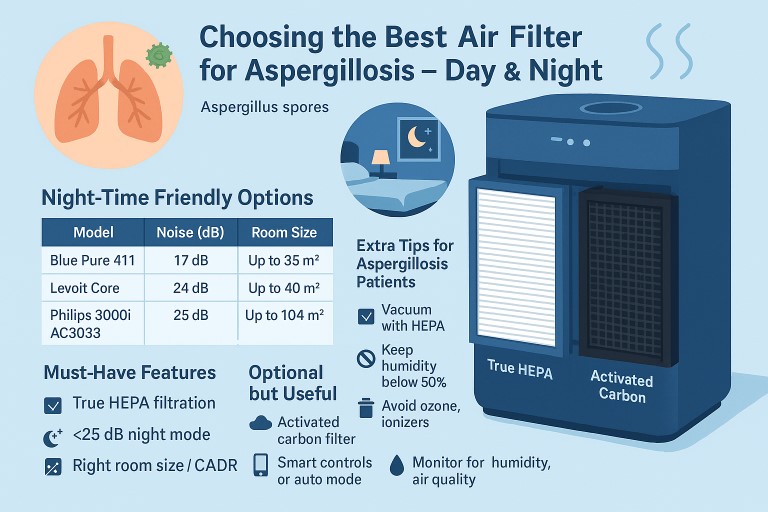
🛡️ Choosing the Best Air Filter for Aspergillosis – Day & Night

Living with aspergillosis (such as ABPA, CPA, aspergillus bronchitis, or SAFS) means taking extra care to avoid airborne Aspergillus spores, which can be found both outdoors and indoors. One of the most effective ways to protect yourself at home is by using a high-quality air purifier.

This guide will help you choose a purifier that works for you — especially for bedroom use at night, where quiet operation is just as important as clean air.


🎯 Why Use an Air Filter?

  • Aspergillus spores are tiny (2–3 microns), invisible to the eye, and can remain airborne for long periods.

  • Indoor sources include dust, damp areas, stored food, compost, or even indoor plants.

  • A HEPA air purifier can trap these particles, helping reduce airway irritation, infections, or allergic reactions.


✅ What to Look For

Feature Why It Matters
True HEPA Filter Captures ≥99.97% of particles ≥0.3 microns — includes Aspergillus spores
Activated Carbon Filter Helps remove odours, gases, VOCs (optional bonus)
Room Size & CADR Clean Air Delivery Rate (CADR) should match or exceed your room’s size
Quiet Operation For night-time use, look for ≤25–30 dB (whisper-quiet)
Sleep Mode / Dim Lights Prevents disturbance from lights or fan noise overnight
Filter Replacement Easy to change, ideally with indicator for when to replace
No Ozone or Ionisers Avoids irritation to sensitive lungs — stick with mechanical HEPA filtration

🌙 Night-Time Friendly Options

Model Noise (dB) Room Size Notes
Blueair Blue Pure 411 Auto 17 dB Up to 35 m² Super-quiet, ideal for small bedrooms
Levoit Core 300S 24 dB Up to 40 m² Quiet, smart controls, affordable
Philips 3000i AC3033 25 dB Up to 104 m² Excellent for larger spaces, smart app
IQAir Atem Desk <22 dB Personal zone Ultra-quiet, high-quality for desks/bedsides
Dyson Purifier Cool ~24–32 dB Medium–large Stylish, also a fan, more expensive

Tip: Choose a unit slightly larger than your room size for best effect.


💡 Extra Tips for Aspergillosis Patients

  • Vacuum with a HEPA filter weekly

  • Keep humidity below 50% (use a dehumidifier if needed)

  • Avoid ionizers or ozone generators — these can irritate your lungs

  • Close windows at night during high pollen or spore seasons

  • Clean or change filters regularly (check manufacturer’s guide)


🛏 Night Setup Checklist

  1. Place the purifier 1–2 metres from your bed (not right next to your face)

  2. Use “Sleep Mode” or low fan for silent overnight cleaning

  3. Turn off indicator lights (if bright)

  4. Close doors and windows to keep clean air contained

  5. Replace filters every 6–12 months or as prompted


📌 Summary

Must-Have Features Optional but Useful
✅ True HEPA filtration 🌫 Activated carbon filter
✅ Quiet night mode (<25 dB) 📱 Smart controls or auto mode
✅ Right room size / CADR rating 🌡 Monitor for humidity or air quality
✅ No ozone, no ionizers 🔁 Filter change indicator

🗨️ Final Thought

For aspergillosis patients, an air purifier is a worthwhile investment in long-term lung health — especially in sleeping areas where your body is most vulnerable. Choosing the right device helps reduce exposure to fungal spores and improves quality of life, one breath at a time.


Severe Asthma with Fungal Sensitisation (SAFS) for Expert Patients and non-Specialist Clinicians

Expert Information for Patients, GPs, and Specialist Nurses


🔎 What Is SAFS?

SAFS describes a clinical subgroup of patients with severe asthma who are sensitised to environmental fungi, particularly Aspergillus fumigatus, but who do not meet criteria for ABPA (i.e. no high total IgE or central bronchiectasis).

Fungal sensitisation may contribute to poor asthma control, airway inflammation, and increased exacerbations.


🧬 Pathophysiology

  • IgE-mediated sensitisation to fungi in the airways

  • Chronic airway inflammation exacerbated by fungal allergens

  • Unlike ABPA, no eosinophilia, mucus plugging, or significant IgE rise


👥 Who Is at Risk?

SAFS affects adults or children with:

  • Severe asthma (high-dose ICS + additional controller medication)

  • Recurrent exacerbations or persistent symptoms

  • Evidence of IgE sensitisation to fungi, especially A. fumigatus, Alternaria, Cladosporium

It may overlap with ABPA, and some patients may transition between the two.


⚠️ Common Symptoms

  • Poor asthma control despite optimal treatment

  • Frequent exacerbations

  • Airflow limitation (FEV1 often <80%)

  • Increased oral corticosteroid use

  • Wheeze, cough, chest tightness


🧪 Diagnosis

SAFS is a diagnosis of exclusion in patients with severe asthma and fungal sensitisation, but without ABPA.

Required Features:

  1. Severe asthma, typically on BTS Step 4–5 therapy

  2. Positive fungal-specific IgE (skin prick or blood) to at least one fungus

    • Aspergillus fumigatus most common

  3. No ABPA: i.e., total IgE <1000 IU/mL, no eosinophilia, no central bronchiectasis

Investigations:

  • Skin prick testing or specific IgE blood test

  • Total IgE to exclude ABPA

  • CT chest to rule out ABPA or CPA

  • Sputum culture for A. fumigatus (not required for diagnosis)


💊 Treatment

Antifungal Therapy:

  • Itraconazole (first-line): 3–6 months may improve asthma control, reduce exacerbations

  • Posaconazole (alternative)

  • Liver function and drug levels must be monitored

The EVITA 3 and Fungal Asthma trials suggest modest benefit with antifungal therapy in SAFS.

Asthma Management:

  • High-dose inhaled corticosteroids + LABA

  • Leukotriene receptor antagonists

  • Macrolides in selected patients (anti-inflammatory benefit)

  • Biologics:

    • Omalizumab (anti-IgE)

    • Mepolizumab, Benralizumab (anti-IL-5)

    • Dupilumab (anti-IL-4/13)


🧾 Monitoring

  • Asthma control questionnaires (ACT, ACQ)

  • Exacerbation frequency

  • Spirometry

  • Fungal IgE titres (do not typically change with treatment)

  • LFTs and drug levels if on antifungals


📚 More Information

  • SAFS patients often benefit from review in a specialist asthma clinic or severe asthma network centre.

  • Overlap with ABPA: patients should be periodically reassessed to detect transition to ABPA.

  • Patient resources: aspergillosis.org, Asthma + Lung UK, BTS asthma guidelines

  • Resource: SAFS