🩺 Monitoring your health at home with aspergillosis
Many people with aspergillosis (ABPA, CPA, SAFS, aspergillus bronchitis) now use home devices such as pulse oximeters, blood pressure monitors, and thermometers. These are very useful tools — but only if you know how to take reliable measurements and when to act on them.
⚠️ Important: These devices are only guides. If you feel unwell, worsening, or unsafe — seek help, even if the numbers look “normal.” How you feel is always more important than a single reading.
This guide explains:
-
✅ How to measure correctly
-
🟢 When to relax, 🟠 when to monitor, 🔴 when to seek help
-
⚠️ What’s different if you have other health conditions
📏 How to take reliable measurements
🌡 Temperature
-
Use a digital thermometer (ear, mouth, or underarm).
-
Take your temperature at the same time each day when well, to learn your baseline.
-
Avoid measuring straight after a hot drink, bath, or exercise.
-
Always use the same device and method for consistency.
-
⚠️ Normal isn’t the same for everyone:
-
Typical range is 36.1–37.2 °C.
-
Some people naturally run a little “cooler” or “warmer.”
-
Temperature changes with time of day, age, hormones, and medicines (e.g. steroids, paracetamol).
-
Your personal baseline is most important.
-
💨 Oxygen saturation (SpO₂)
-
Sit quietly and rest for 5 minutes before checking.
-
Warm your hands — cold fingers reduce accuracy.
-
Remove nail polish, gel nails, or false nails.
-
Place the oximeter on your index or middle finger.
-
Keep your hand still, relaxed, and at heart level.
-
Wait 30–60 seconds until numbers settle, then record both SpO₂ and pulse.
❤️ Pulse rate
-
Normally shown on your oximeter.
-
Measure when sitting calmly.
-
If irregular, double-check manually by counting your pulse at the wrist or neck for 30 seconds ×2.
-
Record alongside oxygen reading.
🔹 Blood pressure (BP)
-
Rest for 5 minutes before measuring.
-
Use the same arm each time (usually left).
-
Keep your arm supported at heart level.
-
Sit with feet flat on the floor, legs uncrossed.
-
Avoid caffeine, smoking, or exercise for 30 minutes before.
-
Take two readings, 1–2 minutes apart, and record the average.
📝 Recording results
-
Note date, time, reading, and how you feel.
-
Keep a diary or use an app to spot trends over time.
-
Share with your GP or specialist, especially if you reach “amber” or “red” zones.
📊 When to seek help — traffic light system
⚠️ Don’t rely on numbers alone. If you feel unwell, dizzy, very breathless, confused, or unsafe, seek medical help — even if your readings are in the “green” zone.
🌡 Temperature
-
Green (OK): Within your baseline range.
-
Amber (monitor/GP): ≥37.5 °C repeatedly, or ≥1 °C above your baseline.
-
Red (urgent help): ≥38 °C once with feeling unwell; any fever with severe breathlessness, chest pain, or confusion.
💨 Oxygen saturation (SpO₂)
-
Green (OK): 93–100% (or your personal baseline).
-
Amber (monitor/GP): Drop of ≥3% from normal; persistent 89–92% at rest; dips after mild exertion that recover slowly.
-
Red (urgent help): ≤88% at rest, or sudden fall with confusion, blue lips/fingers, severe breathlessness.
❤️ Pulse rate
-
Green (OK): 60–100 bpm at rest, regular.
-
Amber (monitor/GP): >100 but <120 bpm; <50 bpm with fatigue/dizziness; irregular pulse.
-
Red (urgent help): >120 bpm at rest; chest pain, collapse, or fainting.
🔹 Blood pressure (BP)
-
Green (OK): 100/60 – 140/90 (unless advised otherwise).
-
Amber (monitor/GP): Systolic >150 or <95; diastolic >95 or <60 on repeated readings.
-
Red (urgent help): ≥180/110, or systolic <80 with dizziness, fainting, or collapse.
⚠️ Comorbidities: special considerations
If you have other health conditions, your safe ranges may be different:
-
COPD or severe chronic lung disease → Oxygen targets are usually 88–92% (not higher).
-
Heart disease or pulmonary hypertension → Leg swelling + falling oxygen may need urgent review.
-
Atrial fibrillation / irregular heart rhythm → Oximeters may give unreliable pulse readings. Confirm with your GP or specialist.
-
Diabetes or thyroid problems → Can affect pulse rate and blood pressure; your “green” zone may differ.
-
Kidney disease, diabetes, cardiovascular disease → Stricter BP targets may apply (often <130/80).
-
Older age or steroid/immune-suppressing treatment → You may not get a high fever with infection. Even a small rise above your baseline could be important.
👉 Always ask your clinician:
-
“What’s my personal safe oxygen range?”
-
“What blood pressure or pulse numbers should trigger a call for me?”
⚠️ Other warning signs to act on
-
Sudden increase in sputum (more volume, colour change, or blood-streaked)
-
Fever with worsening cough or breathlessness
-
Rapid swelling of legs, ankles, or abdomen
-
New confusion, drowsiness, or severe fatigue
🟢 AMBER RED system
-
Green: Stay calm, record readings.
-
Amber: If new or persisting >24–48 hours, contact your GP or specialist.
-
Red: Seek urgent medical help (999 / A&E).
✅ Key message:
Home monitors are helpful, but they don’t replace how you feel. Always act on symptoms first — numbers are just part of the picture. If in doubt, seek medical advice.
Medicine Leaflets, Side Effects, and Interactions: Where to Find Reliable Information
When you open a new box of medicine, you’ll usually find a folded sheet of paper inside — the Patient Information Leaflet (PIL). These leaflets are important, but they can be hard to read because of the tiny print and the amount of information squeezed onto the page.
Patients often ask: Where does this information come from? What if I can’t read it? And how do I check for drug interactions as well as side effects?
Here’s what you need to know.
1. Where do leaflets come from?
-
Written by the manufacturer – The drug company that makes the medicine is legally required to prepare the leaflet.
-
Checked by regulators – In the UK, the MHRA (Medicines and Healthcare products Regulatory Agency) reviews and approves the leaflet before the medicine is sold. In Europe, this role is carried out by the EMA.
-
Updated regularly – If new safety information comes to light (for example, through the Yellow Card reporting system), the leaflet must be revised and re-approved.
By law, leaflets must include:
-
What the medicine is for.
-
Who can and cannot take it.
-
How to take it.
-
Side effects and how common they are.
-
Possible drug interactions.
-
Storage instructions.
-
How to report suspected side effects.
2. Why the text is so small
Because there’s so much information to fit into a tiny folded sheet, the print is often very small and difficult to read. For many patients, the leaflet in the box just isn’t practical.
3. Where to find more readable versions
If the leaflet is hard to read, you have better options:
-
Electronic Medicines Compendium (eMC)
-
Up-to-date PILs and professional information for nearly all UK-licensed medicines.
-
Easy to zoom, search, and print in large text.
-
BNF (British National Formulary)
-
Trusted source for doctors and pharmacists, but also useful for patients.
-
Lists side effects, cautions, and drug interactions clearly.
-
NHS.uk
-
Easy-to-read summaries of common medicines.
-
Pharmacist
-
Can print a large-text version of the leaflet.
-
Can check for interactions with other medicines you take.
-
Some companies provide Braille, audio, or large-print versions on request.
-
4. Where to check drug interactions
Drug interactions are just as important as side effects, because they can make medicines stronger, weaker, or more dangerous.
-
BNF online (bnf.nice.org.uk) – the best source in the UK, used by clinicians, with a clear section on interactions.
-
eMC (SmPC section) – each drug’s Summary of Product Characteristics includes detailed interaction data.
-
Pharmacist or GP – the safest and most personal check, since they know your full medication list.
-
Hospital specialists – especially important if you are on antifungals, as these interact with many other medicines.
5. The bottom line
Medicine leaflets are carefully written, regulated documents — but the folded sheet in your box isn’t the only option, and it’s often not the easiest to use.
👉 You don’t have to struggle with tiny print. Reliable, readable versions are available online (eMC, BNF, NHS.uk), and your pharmacist can explain and print large-text copies.
👉 For drug interactions, never rely on random internet sources — use the BNF, eMC, or your healthcare team.
And if you’re ever unsure, ask your doctor or pharmacist before starting anything new, including over-the-counter medicines or supplements.
Side Effects, New Medicines, and Safety Reporting: What Every Patient Should Know
Modern medicines, including antifungals used for aspergillosis, can be life-saving. But they can also have powerful side effects. One patient recently described developing nerve damage (neuropathy) while on treatment, but never mentioned it to their doctor, because they didn’t know it could be a side effect. Sadly, by the time it was recognised, the damage was permanent.
This story shows why patients and doctors need to work together in partnership to spot and report side effects early — especially when medicines are new and real-world safety data is still limited.
1. From passive role to partnership
In the past, healthcare was one-way: the doctor gave instructions, the patient followed. Today the NHS encourages shared responsibility:
-
Doctors bring their expertise about the illness and treatments.
-
Patients bring their daily experience of living with the condition.
-
Together they can make safer, better-informed decisions.
This partnership is essential for powerful drugs like antifungals, where side effect monitoring depends on both sides working together.
2. Why side effect statistics can be misleading
Leaflets list side effects as “common” or “rare,” often with percentages. But these figures don’t always reflect real life because:
-
Trials are limited – only a few thousand people take part, often younger and healthier than typical NHS patients.
-
Under-reporting is common – doctors and patients often fail to report side effects, especially mild ones.
-
Bias exists – severe or unusual reactions are reported more often than everyday ones.
👉 Bottom line: leaflets tell us what can happen, not always how often it happens.
3. The Yellow Card system
The UK’s main tool for detecting safety issues is the Yellow Card Scheme, run by the MHRA.
-
Anyone can report: doctors, nurses, pharmacists, patients, or carers.
-
Reports are vital: patterns in these reports may reveal risks not seen in trials.
-
Action is taken: if needed, leaflets are updated, warnings issued, or drugs restricted/withdrawn.
You can report suspected side effects at yellowcard.mhra.gov.uk.
4. Why reporting matters
Poor reporting leads to harm:
-
Delayed warnings – e.g. photosensitivity with voriconazole took years to be recognised.
-
Biased safety data – drugs may seem safer than they are.
-
Preventable harm – patients may suffer permanent injury before action is taken.
For new medicines (marked with a ▼ black triangle in the BNF and leaflets), the MHRA asks for all side effects to be reported, no matter how small.
5. Extra protections for new medicines
When a drug is new, safety systems are stronger than usual:
-
Black triangle (▼) – signals “additional monitoring” so all suspected ADRs should be reported.
-
Specialist prescribing – new antifungals are usually limited to centres like NAC.
-
Closer monitoring – frequent blood tests, drug levels, eye or skin checks depending on risk.
-
Risk Management Plans – agreed with regulators, spelling out what to watch for.
-
Post-marketing studies – Phase 4 trials track safety in real-world patients.
These safeguards are extensive, but not fool-proof. Rare or long-term effects may still emerge only after years of wider use.
6. The NHS challenge
Despite the systems:
-
Only a small percentage of doctors file Yellow Card reports each year.
-
Most GPs never prescribe brand-new drugs — so reporting falls heavily on specialist centres like NAC.
-
Under-reporting risks harm, increases NHS costs, and erodes trust.
7. Who sets the rules?
Several organisations provide guidance on reporting and safety:
-
MHRA (UK regulator): runs Yellow Card, monitors new and established drugs, and issues safety updates.
-
BNF (British National Formulary): highlights side effects, black triangle drugs, and links to reporting tools.
-
GMC (General Medical Council): obliges doctors to report serious ADRs and all reactions to ▼ drugs.
-
EMA (European Medicines Agency): operates EudraVigilance, pooling reports from across Europe.
-
Global standards: the UK follows international rules (ICH E2B) so data is shared worldwide.
8. What patients can do
You are central to this safety net:
-
Be observant – notice anything new or unusual.
-
Keep a record – note when it started, how often, and any changes with medication.
-
Report promptly – tell your team and consider submitting a Yellow Card yourself.
-
Ask questions – “What side effects should I look out for? Which are urgent? How will we monitor this drug?”
-
Use trusted sources – NHS.uk, bnf.nice.org.uk, NAC, or your pharmacist.
9. The reality of side effects
For many, side effects are not “minor inconveniences.” They can mean:
-
Permanent disability (e.g. nerve or vision damage).
-
Loss of independence or mobility.
-
Social isolation and depression.
That’s why side effect monitoring is not just bureaucracy — it’s about protecting real lives.
Key message
The systems around new medicines are extensive but not fool-proof. That’s why patients and doctors must work as partners.
👉 If you notice something new, strange, or worrying while on antifungal medication — however small — tell your healthcare team and consider reporting it. Your report may be the missing piece that protects you and others.
Working With Your Medical Team: What Every Patient With Aspergillosis Needs to Know
Modern antifungal treatments, and many of the medicines used alongside them, can be life-saving. They help control infections that would otherwise cause severe damage to the lungs and other organs. But these medicines are also powerful, and like all strong treatments, they sometimes carry risks.
One patient recently shared that they developed nerve damage (neuropathy) while taking antifungal medication, but did not mention it to their doctor because they did not know it could be a side effect. Sadly, problems like this can sometimes become permanent if not spotted early.
This raises an important question: what do patients need to know about their responsibilities when taking medicines like antifungals, and more broadly, when living with aspergillosis?
From passive role to partnership
In the past, healthcare often worked in one direction: the doctor gave instructions, and the patient was expected to follow them. Patients were mostly passive, with little chance to ask questions or take part in decisions.
The NHS is now moving towards a very different way of working: partnership.
This means:
-
Doctors and nurses share their medical knowledge.
-
Patients share their experiences of living with their condition.
-
Together, both sides decide what treatment and care will work best.
Why doctors sometimes hesitate about side effects
Some patients are surprised to learn that not all doctors automatically tell patients about possible side effects. Why is this?
-
Some worry about causing anxiety or putting patients off treatment.
-
Others fear the nocebo effect — where simply knowing about a side effect can make someone more likely to notice it.
-
They may also feel that handing over a long list of possible effects is overwhelming.
But when it comes to antifungals and other long-term, powerful medicines, not knowing can be dangerous. If patients do not know what to look for, they may ignore early signs of serious problems until it is too late.
The best approach is balance:
-
Patients don’t need to memorise an endless list.
-
They do need a clear, short list of the most important and urgent symptoms to look out for — and to know what to do if they appear.
Medicines: what patients should do
-
Take medicines as prescribed – antifungals, inhalers, steroids, or biologics must be taken on schedule. Missing doses can reduce effectiveness or drive resistance.
-
Do not stop suddenly – especially steroids. Always follow tapering advice.
-
Check for interactions – antifungals can clash with common medicines such as statins, blood pressure tablets, and painkillers. Always tell your team about new prescriptions, over-the-counter drugs, or supplements.
-
Use the same pharmacy if possible – so interactions are checked consistently.
Monitoring your health
-
Attend all scheduled tests – blood work, lung function, CT scans. These can reveal hidden changes before you feel them.
-
Know your “normal” – keep track of oxygen levels (if you use a pulse oximeter), peak flow, sputum colour, cough, and breathlessness.
-
Spot infections early – worsening cough, fever, or new sputum colour may mean infection or flare-up. Report these quickly.
Communication with your team
-
Bring notes to clinic – write down questions and symptoms so nothing is forgotten.
-
Be open and honest – if you’ve missed doses, struggled with side effects, or found treatment difficult, let your team know.
-
Keep contact details handy – know who to call if problems arise (specialist nurse, hospital helpline, GP).
Lifestyle and prevention
-
Reduce exposure to moulds – avoid compost heaps, rotting leaves, damp basements, and building dust. If you cannot avoid them, wear an FFP2/3 mask.
-
Protect your lungs – keep up with vaccinations (flu, COVID-19, pneumococcal).
-
Support your overall health – eat well, stay as active as you can, and rest when needed.
-
Look after your mental health – chronic illness is stressful. Patient groups, counselling, or peer support can make a big difference.
Self-management skills
-
Recognise flare-ups – learn the difference between ABPA flare, CPA progression, and bacterial infection symptoms.
-
Know your rescue plan – what to do if you suddenly worsen (extra inhalers, antibiotics, or emergency help).
-
Keep records – note symptoms, hospital visits, and medication changes. This helps spot long-term patterns.
-
Be part of decisions – ask about benefits, risks, and alternatives of treatments. Care should fit your life as well as your lungs.
Where to find reliable information on medicines
Many patients say the leaflet in the medicine box is written in tiny print or feels overwhelming. You do have other options:
-
Ask your clinical team or pharmacist — they can give you a short list of the most important side effects to watch for and explain what’s urgent.
-
Check the BNF (British National Formulary) online — the NHS makes this trusted reference free to the public at bnf.nice.org.uk. It lists side effects, drug:drug interactions, and safety notes.
-
Use NHS.uk — clear pages on most medicines, written in plain English.
-
Patient support organisations — such as the National Aspergillosis Centre or relevant charities, which often provide tailored advice.
If you’re unsure, it’s always safer to ask rather than guess.
The bigger picture: partnership
In the past, doctors made decisions and patients followed instructions. Today, with complex conditions like aspergillosis, patients are central members of the care team.
-
You notice problems first.
-
You take daily responsibility for medication.
-
You decide when to seek help.
This isn’t about shifting the whole burden onto patients — it’s about recognising that care works best when it is a true partnership.
Key message
👉 If you notice something new, strange, or worrying while on antifungal medication — however small — tell your healthcare team. Don’t assume it’s not important.
And remember: safe, effective treatment is a two-way street. Your role as a patient is not just to take medicines, but to observe, record, communicate, and partner with your team. That partnership is what keeps you safe and makes your treatment work.
👩⚕️ Martha’s Law – What It Means for Aspergillosis Patients
Why the law was introduced
-
Martha Mills was a 13-year-old girl who died in 2021 after developing sepsis in hospital.
-
Her parents felt their concerns were not acted on quickly enough and that they were not given access to a second opinion.
-
In response, the government announced Martha’s Law, to ensure patients and families can easily get a second clinical opinion if they feel their concerns are not being taken seriously.
What the law requires
-
Hospitals must provide a clear and simple process for patients and families to request a second opinion from a senior doctor.
-
This right applies when someone feels that:
-
Their symptoms are worsening or not being managed properly.
-
They are not being listened to by the care team.
-
They need reassurance that their treatment plan is the right one.
-
-
Staff must also inform patients and carers about this right so people know it is available.
Why this matters for people with Aspergillosis
-
Aspergillosis is a rare and complex condition, and not all hospitals or clinicians have specialist knowledge.
-
Symptoms (e.g. breathlessness, chest pain, fever, wheeze, coughing blood) can be misinterpreted as asthma, pneumonia, or something less serious.
-
Martha’s Law means that if you or your family feel your care isn’t right, you can:
-
Request a second opinion promptly.
-
Be assessed by another senior doctor, potentially with respiratory or infectious disease expertise.
-
Gain access to the National Aspergillosis Centre or another specialist service if appropriate.
-
What you can do if concerned
-
Speak up early: tell staff if you are worried about your symptoms getting worse.
-
Ask for a second opinion: mention “Martha’s Law” if you feel you’re not being heard.
-
Bring your information: if you’re an aspergillosis patient, carry your clinic letters or patient passport to help new doctors understand your condition.
-
Involve carers/family: they can raise concerns on your behalf if you are too unwell.
✅ In summary: Martha’s Law ensures that patients and families have the right to be heard and to request a second medical opinion. For people with aspergillosis, this could be life-saving when symptoms are worsening and urgent, specialist input is needed.
Housing Reforms That Matter for Aspergillosis Patients
1. Awaab’s Law – Protecting Against Damp & Mould
-
Born from the tragic death of toddler Awaab Ishak, Awaab’s Law mandates swift action on damp and mould in social housing.
-
Phase 1 (from 27 October 2025):
-
Emergency hazards addressed within 24 hours.
-
Investigations into mould/damp begin within 10 working days.
-
Findings communicated within 3 working days.
-
Repairs completed within 5 working days, with alternative housing offered if unsafe.
Chartered Institute of HousingGOV.UK
-
For aspergillosis patients, this delivers critical protection—damp environments exacerbate lung disease, and timely remediation can make a real health difference.
2. Decent Homes Standard (DHS) – Public Consultation Open
The government is reviewing and expanding the Decent Homes Standard to include both social and private rented sectors.
-
Consultation open 2 July to 10 September 2025.
-
New proposals include:
-
A firm requirement for homes to be free from damp and mould.
-
Updating standards around heating, insulation, window security, flooring, and accessibility.
GOV.UKconsult.communities.gov.ukNorthern Housing Consortium
-
Why this matters for you: Contributing your experiences—especially how damp or poor insulation worsen aspergillosis—can help shape a standard that better protects lung health.
3. Electrical Safety Regulations for Social Landlords
-
From November 2025 (new tenancies) and May 2026 (existing tenancies), social landlords must:
-
Perform electrical safety checks (EICR) every five years.
-
Supply tenants or new occupants with the inspection report within 28 days.
-
Conduct Portable Appliance Testing (PAT) and fix any hazards within 28 days.
GOV.UKTrowers & Hamlins
-
Why it matters: Safe electrics reduce the risk of fires and power outages, which can be particularly dangerous during respiratory flare-ups or hospital recovery.
4. Other Related Reforms & Building Safety Measures
-
Gas Safety: Landlords must continue annual checks of gas appliances and provide tenants with a valid Gas Safety Certificate (CP12).
Wikipedia -
Building Safety Act & Regulations (Part P): Ensures electrical work (like rewiring or EV charger installations) meets safety standards—crucial for safe, modern living environments.
HomebuildingWikipedia -
Energy Efficiency Reforms: Proposals (not yet enacted) suggest requiring rented homes to reach a C rating on Energy Performance Certificates (EPC) by 2030 to reduce fuel poverty and keep homes warm.
The TimesThe Guardian
Summary Table
| Reform / Law | Scope & Timing | Why It Matters for Aspergillosis Patients |
|---|---|---|
| Awaab’s Law – Phase 1 | From 27 Oct 2025 | Ensures damp/mould issues are addressed fast |
| Decent Homes Standard Consultation | 2 Jul – 10 Sep 2025 | Influences future standards to protect lung health |
| Electrical Safety Regulations | From Nov 2025 / May 2026 (depending on tenancy) | Mitigates fire/electrical risks in homes |
| Gas Safety Standards | Ongoing requirement | Prevents gas-related hazards in vulnerable patients |
| Building Safety & Part P Rules | Already in effect | Ensures electrical works meet safety compliance |
| Energy Efficiency Initiatives | Proposed for 2030+ | Promotes warm, dry living conditions |
What You Can Do
-
Submit to the DHS consultation by 10 September, sharing your stories of how damp or poor heating affects your lung health.
-
Report damp or mould to your landlord and ask for Awaab’s Law protections—mention the upcoming deadlines.
-
Ensure safety checks are done—ask your landlord for the EICR or gas safety certificate.
-
Highlight your needs—if you have aspergillosis, a doctor’s note can underline the urgency for timely action.
Would you like help drafting a consultation response template or patient-facing summary sheet to guide people through these updates? Just let me know!
The Times
National Aspergillosis Centre Video Recordings

NAC Monthly Patient Meetings
The NAC monthly patient meetings provide a friendly, supportive, and informative space for anyone living with aspergillosis or related conditions. Hosted by the National Aspergillosis Centre (NAC), these sessions bring together patients, carers, and healthcare professionals to:
-
share personal experiences
-
ask questions in a safe environment
-
hear the latest updates on treatments, research, and self-care strategies
🎥 Watch past sessions
Our YouTube channel now has 87 recordings, covering everything from expert talks to personal patient stories. Whatever your stage in the journey — newly diagnosed or managing your condition for years — you’ll find something helpful and relatable.
Recent Highlights
-
September — Explored how Artificial Intelligence can support patients in finding trustworthy information. We also answered community questions about biologic medications, looking at what research tells us about their long-term effectiveness in asthma and ABPA.
-
August — Focused on new biologics for severe asthma, discussing why they don’t always work for everyone, and why some patients see benefits fade over time.
-
July — Shared updates from the British Thoracic Society meeting in Manchester, plus further insights into what the future may hold for biologic treatments.
💡 Whether you want practical advice, the latest medical updates, or simply the chance to connect with others who truly understand your journey, the NAC monthly meetings are here for you.
🧑🤝🧑 Taking Part in Your Own Care: Shared Decision-Making, Self-Management & Advocacy in the NHS
Living with a long-term condition like aspergillosis can be complicated. You may see hospital specialists, your GP, nurses, pharmacists, and sometimes social services too. The NHS is working hard to make sure patients aren’t just “done to,” but are real partners in decisions about their own health.
This approach is called shared decision-making and supported self-management.
🌱 Where did this idea come from?
-
It’s a core part of the NHS Long Term Plan (2019, refreshed 2023/24).
-
The aim: give patients a stronger voice, improve care outside hospital, and reduce emergency admissions.
-
It grew out of earlier “shared care” models, where GPs and hospitals split prescribing or monitoring tasks. Now the focus is much wider: putting patients at the centre of their own care.
💡 What does it mean?
Shared decision-making
-
You and your clinicians decide together.
-
Doctors explain the evidence, options, risks, and benefits.
-
You share what matters most to you — daily life, family, work, fears, and preferences.
-
Example: deciding whether to start biologics, taper steroids, or continue antifungal therapy.
Self-management
-
You are supported to handle your condition day-to-day.
-
This includes recognising early warning signs, having an action plan, knowing when to call for help, and using tools like the NHS App or support groups.
-
Education, pulmonary rehab, peer groups, and digital health apps can all help.
🚧 Barriers patients may face
Even though the NHS wants all patients involved in their care, challenges exist:
-
Short appointments that leave little time for discussion.
-
Medical jargon that is hard to follow.
-
Confidence gaps, especially when you feel unwell.
-
Health inequalities (literacy, language, digital access).
-
Fragmented care, where GP and hospital don’t always join up.
-
Information overload — too much general advice, not enough personalised guidance.
🧑🤝🧑 Can you have an advocate?
Yes. You don’t have to face this alone. Advocacy can come from:
-
Specialist nurses at the National Aspergillosis Centre (NAC) or your local hospital.
-
Family or friends — you are always entitled to bring someone to appointments.
-
Peer groups like NAC CARES, where other patients share practical advice.
-
PALS (Patient Advice and Liaison Service) in every NHS trust.
-
Healthwatch (local branches) or independent advocacy charities.
🔎 Care Coordinators & Link Workers
These are newer NHS roles that help patients navigate complex care.
Care coordinators
-
Support people with complex, long-term conditions.
-
Help organise appointments, blood tests, and follow-up.
-
Make sure GPs, hospitals, and community services talk to each other.
-
Often based in Primary Care Networks (PCNs) or specialist hospital clinics.
Social prescribing link workers
-
Focus on the non-medical side of health.
-
Connect patients to local community support, peer groups, exercise schemes, benefits advice, or housing help.
-
Anyone struggling with isolation, anxiety, or lifestyle issues can be referred.
📋 Criteria for Accessing Care Coordinators & Link Workers
Care Coordinators – who qualifies?
-
Patients with two or more long-term conditions, or one condition requiring complex management (e.g. aspergillosis with antifungals, steroids, biologics, adrenal monitoring).
-
People on multiple medicines or with frequent hospital admissions.
-
Patients needing help to coordinate care between GP, hospital, pharmacy, and community services.
-
Prioritised for those at risk of “falling through the cracks” in the system.
Social Prescribing Link Workers – who qualifies?
-
Any patient whose social or practical situation affects their health.
-
Examples:
-
Feeling isolated or low in mood.
-
Struggling with benefits, housing, or finances.
-
Wanting help with lifestyle changes.
-
Needing connections to peer groups or local activities.
-
-
Usually no strict medical criteria — referral is based on need.
How referrals usually happen
-
GP or practice nurse refers after spotting a need.
-
Hospital team (e.g. NAC or respiratory clinic) may suggest referral back to the GP/PCN.
-
Some PCNs allow self-referral if the service is advertised locally.
📊 How many coordinators are there?
-
As of mid-2025, NHS England data shows:
-
Around 5,000–6,800 full-time equivalent care coordinators employed across Primary Care Networks.
-
Over 3,500 social prescribing link workers active across England.
-
-
Numbers vary by area, and coverage is still expanding as ICSs and PCNs grow their teams.
🧠 Why do people think care coordination is mostly mental health?
-
Historically, most care coordinators were employed in mental health services, where patients often need joined-up support from psychiatry, GPs, housing, benefits, and social care.
-
That’s why many people first hear the term “care coordinator” in relation to community mental health teams.
-
But the NHS is now expanding care coordination into physical long-term conditions, including respiratory diseases like COPD, bronchiectasis, and aspergillosis.
-
Access still varies by region — some areas prioritise cancer, frailty, or diabetes, while others are starting to include respiratory patients.
🧑⚕️ Care Coordination: Mental Health vs Physical Health
| Aspect | Mental Health (traditional focus) | Physical Health (expanding role) |
|---|---|---|
| Where based | Community Mental Health Teams | Primary Care Networks (GP groups), hospital specialist clinics |
| Why developed | To join up psychiatry, GPs, social care, housing, and benefits | To support patients with multiple long-term conditions (e.g. COPD, diabetes, aspergillosis) |
| Patient needs | Severe mental illness, complex social problems, frequent crisis episodes | Complex care plans, multiple medicines, hospital visits, difficulty managing appointments |
| Tasks | Coordinate mental health reviews, social support, community referrals | Organise tests and follow-ups, link GP and hospital, ensure medication and monitoring plans are clear |
| Referrals | Usually from psychiatrist or community mental health nurse | Usually from GP practice, sometimes via hospital specialist or self-referral in PCN areas |
| Examples | Patient with schizophrenia needing GP, psychiatrist, housing officer all linked | Patient with aspergillosis on antifungals, steroids, and biologics needing joined-up GP + hospital care |
| Extra support | Peer groups, advocacy, PALS, housing officers | Social prescribing link workers, community health support, peer groups (e.g. NAC CARES) |
✅ What this means for aspergillosis patients
-
If you have complex care needs (antifungal monitoring, biologics, steroid side-effects, adrenal insufficiency, other chronic conditions), you are likely to meet criteria for a care coordinator.
-
If you are struggling with the social and emotional impact of illness (fatigue, isolation, money worries, lifestyle changes), you may benefit from a link worker.
-
These roles are increasingly available in GP networks, though availability may differ locally.
-
Ask both your hospital team and your GP practice what is available in your area.
🔍 Questions to ask at your next appointment
-
Could I be referred to a care coordinator to help manage my appointments and medicines?
-
Is there a link worker who can support me with non-medical needs?
-
What local services are available through my Primary Care Network or ICS?
-
Who is responsible for updating my care plan?
-
What support is there for my carer or family?
💬 In summary:
Shared decision-making and self-management mean you are an active partner in your care. Aspergillosis is complex, but you don’t have to manage it alone. Between your hospital specialists, GP, advocates, and newer NHS roles like care coordinators and link workers, there is growing support available across the NHS to help you live better and feel more in control.
⚠️ Mistakes in NHS Care: Why They Happen & What You Can Do
🔎 Why mistakes happen
-
Heavy workload: Doctors and nurses handle huge numbers of patients and results every day.
-
Fragmented IT systems: GP, hospital, and lab systems don’t always link, so information can get lost.
-
Human error: Fatigue, multitasking, and assumptions all increase the risk of oversight.
-
Defensive culture: Trusts sometimes minimise problems to protect reputation or avoid litigation.
Most errors are not deliberate — but they can cause harm if they are not caught quickly.
Martha’s Rule was created after a young girl died when her family’s concerns were ignored — it’s designed to stop that happening again.
🛡 What safeguards are already in place?
Although mistakes still happen, the NHS has many systems to reduce risk and catch errors early:
-
Critical results alerts: Labs automatically flag dangerously abnormal results so they cannot be overlooked.
-
Early Warning Scores (NEWS2): Vital signs generate a score that prompts urgent review if the patient is deteriorating.
-
Sepsis protocols: Hospitals have rapid-response pathways for suspected sepsis.
-
Cross-checking: High-risk drugs often require two professionals to sign off.
-
Incident reporting: Staff can log “near misses” to help the system learn.
-
Duty of Candour: Trusts must inform patients if serious harm has been caused by an error.
-
Martha’s Rule: Gives patients/families the right to request an urgent independent review if they feel concerns are being ignored.
💻 Are new IT systems making care safer?
The NHS is moving to large electronic patient record (EPR) systems such as Epic, Cerner and Lorenzo. These bring real safety gains:
Safer features
-
Automatic alerts for critical blood results.
-
Built-in early warning score (NEWS2) calculations to detect deterioration.
-
Electronic prescribing with dose, allergy, and interaction checks.
-
Shared records across hospitals, GPs, and community services.
-
Digital audit trails showing who reviewed results and when.
But challenges remain
-
Too many alerts can cause “alert fatigue,” leading staff to dismiss warnings.
-
System crashes or downtime can force staff back to paper, which is less safe.
-
Complexity can slow clinicians down until they are confident with the system.
-
Hospital and GP systems still don’t fully integrate everywhere, so results can still be missed.
Bottom line: New IT has improved safety compared to the old paper-and-fax systems, but it isn’t foolproof. It works best alongside clinical vigilance and patient involvement.
✅ What you can do if you suspect a mistake
Step 1. Check directly with the clinical team
-
Ask: “Can you confirm this result/issue has been reviewed?”
-
Request a written explanation or clinic letter.
-
Keep notes of the conversation.
Step 2. Escalate to a senior doctor/clinical lead
-
Ask who the consultant in charge is.
-
Write your concern clearly and factually.
Step 3. If your loved one is deteriorating: use Martha’s Rule
-
You can request an urgent review by a critical care team, separate from the ward team.
-
Available 24/7 in hospitals where introduced.
-
Say: 👉 “We want a review under Martha’s Rule.”
-
If not yet in your hospital, ask for the critical care outreach team.
Step 4. Contact PALS (Patient Advice & Liaison Service)
-
They can chase answers and log concerns.
Step 5. Make a formal complaint to the Trust
-
Keep it factual (what happened, why it matters, what outcome you want).
-
The Trust must acknowledge within 3 working days.
Step 6. Escalate outside the Trust
-
If unsatisfied, go to the Parliamentary and Health Service Ombudsman (PHSO).
🧭 Tips to protect yourself & your family
-
Keep copies of all results and letters.
-
Track your results in a simple log.
-
Bring support (family, advocate, charity like AvMA).
-
Stay factual: stick to dates, facts, and impact.
🔑 Key message
Mistakes in healthcare happen for many reasons — but the NHS has safeguards and new IT systems to reduce risk, and Martha’s Rule adds an extra urgent safety net.
Patients and families still play a vital role by asking questions, checking results, and speaking up.
You are not being difficult — you are being safe.
Misinformation on Social Media: Health and Beyond
Social media helps us stay connected, share experiences, and find support. But it also spreads false or misleading stories — about health, politics, money, and world events. These stories can cause unnecessary fear, confusion, and sometimes real harm if people act on them.
Understanding why misinformation spreads, what’s being done about it, and how to spot it helps keep you and your loved ones safe.
🚩 Why do false stories spread?
-
Algorithms reward attention
Platforms are designed to keep you scrolling. Content that shocks (“miracle cure discovered!”), scares (“hidden danger you’re not being told about!”), or excites spreads the fastest — even if it isn’t true. -
Anyone can post anything
Unlike newspapers, medical journals, or BBC/NHS websites, most social media posts aren’t checked by editors or experts before going live. -
Echo chambers
Platforms show you more of what you already click on. If you read about miracle diets or political conspiracies, you’ll see more of them — true or not. -
Deliberate misinformation
Some people spread falsehoods deliberately:-
To sell fake health products
-
To make money from clicks
-
To influence politics or sow division
-
-
Speed beats accuracy
False stories can go viral in minutes. Corrections are slower and rarely reach as many people.
⚖️ What’s being done about it?
Legal approaches
-
UK: The Online Safety Act (2023) requires platforms to remove illegal or harmful misinformation, including dangerous health advice.
-
EU: The Digital Services Act (DSA) makes large platforms responsible for acting faster against harmful content.
-
Extreme cases: Fraud, scams, defamation, or incitement of violence are not protected speech and can be prosecuted.
Technical approaches
-
Algorithms: AI flags suspicious posts.
-
Labelling: Content can be marked as “false” or “missing context.”
-
Bot control: Platforms limit fake accounts that spread stories at scale.
-
Digital nudges: Some apps ask “Do you want to read before sharing?” or warn if a post is outdated.
The limits
-
Freedom of speech protects many misleading opinions unless they cause direct harm.
-
Global reach makes it hard to police.
-
Volume — billions of posts daily are impossible to check one by one.
-
Trust — some people ignore fact-check labels, believing platforms are biased.
🧐 How to know what’s real
Five quick checks:
-
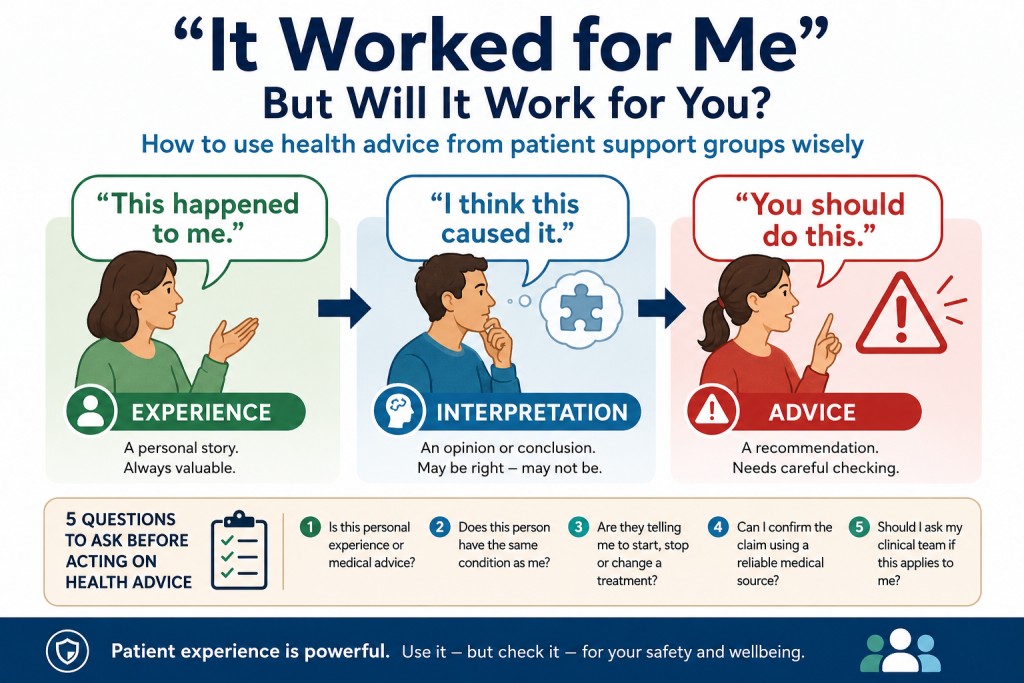
Who is posting it? NHS, WHO, BBC, or Reuters → reliable. Unknown influencer or “miracle cure” shop → beware.
-
Is it reported elsewhere? Real news appears in multiple reputable outlets.
-
Does it use scare tactics or hype? “Doctors don’t want you to know this secret cure!” → red flag.
-
Can you fact-check it? Try NHS.uk, Full Fact (UK), Snopes, Reuters Fact Check or BBC Verify.
-
Check dates and pictures — old or unrelated content is often recycled to look new.
🚦 The traffic-light test
-
🟢 Green – from official sources, confirmed, calm tone → likely true.
-
🟡 Amber – source unclear, dramatic style, no confirmation elsewhere → pause, check.
-
🔴 Red – sensational, “miracle” claims, conspiracy, or urging you to share → almost certainly false.
💡 Should we avoid social media completely?
Not necessarily. Social media has real value for support, awareness, and connection. The key is using it wisely:
-
Follow trusted organisations for health and news.
-
Unfollow or mute accounts that regularly spread falsehoods.
-
Balance social media with direct trusted sources (NHS, GP, recognised news).
-
Step away if scrolling leaves you anxious, angry, or confused.
✨ Bottom line
False stories spread online because the system rewards attention, not accuracy. Laws and technology help, but they can’t stop misinformation entirely.
The best defence is awareness. Before acting on or sharing any post — whether about health, politics, or world events — pause, check, and if in doubt, don’t share.
👉 Protecting yourself from misinformation means protecting your community too.