


NTM Lung Disease and Aspergillosis: Why They Can Overlap
Nontuberculous mycobacteria (NTM) and aspergillosis are different types of lung disease, but they can sometimes occur together. Both may develop in lungs that have already been damaged by bronchiectasis, COPD, previous tuberculosis or other chronic conditions.
When NTM and aspergillosis overlap, symptoms and CT scan changes can be difficult to interpret. It may not be immediately clear whether deterioration is caused by NTM, chronic pulmonary aspergillosis (CPA), another infection, or more than one condition at the same time.
What is NTM lung disease?
Nontuberculous mycobacteria are environmental bacteria related to the organism that causes tuberculosis. They are found naturally in soil, water, dust and plumbing systems.
There are many species of NTM. Those most commonly associated with lung disease include:
- Mycobacterium avium complex (MAC)
- Mycobacterium abscessus complex
- Mycobacterium kansasii
NTM are not the same as tuberculosis and, in general, NTM lung disease is not spread from person to person.
Many people encounter NTM without becoming ill. Infection is more likely when the lungs are already damaged or when the immune system cannot clear the bacteria effectively.
How does NTM affect the lungs?
NTM can cause a long-term inflammatory infection in the lungs. It may produce nodules, bronchiectasis, cavities or areas of lung inflammation.
Symptoms may include:
- persistent cough
- increasing sputum
- breathlessness
- fatigue
- weight loss
- low-grade fever or night sweats
- recurrent chest infections
- coughing up blood
Some people have NTM detected in a respiratory sample without clear evidence of active lung disease. This may be described as NTM isolation or colonisation. Active NTM pulmonary disease requires the clinical, radiological and microbiological findings to fit together.
Why can NTM and aspergillosis occur together?
Both conditions are more likely when the lungs have structural damage. Bronchiectasis and cavities can make it easier for NTM and Aspergillus to remain in the lungs.
Several factors may contribute:
- damaged or widened airways
- cavities within the lungs
- impaired mucus clearance
- persistent inflammation
- repeated antibiotic or steroid treatment
- low body weight or poor nutritional status
- reduced immune protection
NTM infection may further damage lung tissue, creating conditions in which Aspergillus can grow. Conversely, existing Aspergillus-related disease may make the lungs more vulnerable to NTM.
What forms of aspergillosis may occur?
Several different Aspergillus-related conditions can occur in people with NTM lung disease.
- Chronic pulmonary aspergillosis (CPA), a long-term fungal infection
- chronic cavitary pulmonary aspergillosis
- chronic fibrosing pulmonary aspergillosis
- Aspergillus nodules
- an aspergilloma or fungal ball within a cavity
- less commonly, subacute invasive pulmonary aspergillosis
A positive Aspergillus culture or blood test does not automatically mean that active CPA is present. Aspergillus may sometimes be detected in damaged airways without causing progressive disease.
Why can the diagnosis be difficult?
NTM and CPA can cause similar symptoms and similar changes on CT scans. Both may produce:
- cavities
- nodules
- bronchiectasis
- lung inflammation
- progressive scarring
- persistent cough and sputum
- weight loss and fatigue
This means that a new cavity or worsening scan does not always identify which infection is responsible.
Doctors may need to compare scans over time and look for clues such as:
- a new or enlarging cavity
- a fungal ball within a cavity
- progressive fibrosis around a cavity
- increasing pleural thickening
- new nodules or areas of consolidation
- symptoms that continue despite treatment for NTM
CT findings can suggest CPA, but they need to be interpreted alongside blood tests, sputum results and the clinical course.
What does recent research show?
A 2026 multicentre prospective study followed 365 people with respiratory samples positive for NTM, including MAC, M. kansasii and M. abscessus complex.
Approximately one-third had raised Aspergillus-specific IgG, while 9% developed CPA during the study period. CPA was more common in people with active NTM pulmonary disease than in those with NTM detected without clear evidence of active disease.
The risk of CPA increased over time. Among people with active NTM pulmonary disease, the cumulative incidence of CPA was approximately 2.7% at one year, 8.3% at two years and 14.7% at three years.
People who developed CPA had a higher risk of radiological progression and poorer overall survival. The study also found that some people who initially had a negative Aspergillus IgG test later became positive, suggesting that the result can change during follow-up.
These findings do not mean that everyone with NTM needs antifungal treatment. They do suggest that new or worsening symptoms and CT changes should prompt consideration of CPA, particularly in people with cavities, active NTM disease or repeated steroid treatment.
How is NTM lung disease diagnosed?
Diagnosis usually requires three types of evidence:
- symptoms or other clinical evidence of lung disease
- compatible changes on chest imaging
- repeated or otherwise convincing microbiological evidence of NTM
A single positive sputum sample does not always prove active NTM lung disease. NTM can sometimes be present in the airways without causing progressive infection.
Testing may include:
- sputum cultures for mycobacteria
- chest X-rays and CT scans
- bronchoscopy and bronchoalveolar lavage
- lung-function tests
- blood tests and inflammatory markers
How is CPA investigated?
Assessment for CPA may include:
- symptoms and how they have changed
- comparison of serial CT scans
- Aspergillus-specific IgG
- sputum culture or PCR for Aspergillus
- galactomannan testing in selected circumstances
- bronchoscopy or tissue sampling when necessary
Read more about how aspergillosis is diagnosed.
A raised Aspergillus IgG supports the possibility of CPA but does not prove it on its own. People with structural lung disease may have raised antibody levels without active CPA, so the result must be interpreted with the CT findings and clinical progression.
Can treatment for one condition affect the other?
Yes. Treatment can be complicated when NTM and CPA occur together.
NTM treatment often involves several antibiotics over many months. CPA may require a prolonged course of an oral azole antifungal. These medicines can interact with one another and may affect liver function, heart rhythm or the blood levels of other medicines.
It is therefore important that treatment is coordinated between respiratory, infectious-disease and fungal-disease specialists where appropriate.
Corticosteroids may also require careful consideration. They can be essential for some people with asthma, ABPA or other inflammatory conditions, but they may reduce the immune response that helps control NTM and Aspergillus.
Medicines should never be stopped or changed without advice from the treating team.
What does this mean for someone with NTM?
Having NTM detected in a respiratory sample does not mean that you will develop aspergillosis. Many people with NTM do not develop CPA.
Further assessment may be particularly important if you develop:
- new or worsening breathlessness
- persistent cough or sputum despite NTM treatment
- unexplained weight loss or fatigue
- new or enlarging cavities on CT
- new haemoptysis
- progressive changes despite apparently successful treatment
- repeated courses of steroids
These symptoms can have many causes. They do not automatically mean that CPA is present, but they deserve review rather than being attributed to NTM alone.
Key message: NTM and aspergillosis are different diseases, but they can coexist in structurally damaged lungs. Because symptoms and CT findings overlap, diagnosis may require repeated assessment, Aspergillus IgG testing, sputum microbiology and comparison of scans over time.
Reducing exposure to NTM
NTM are environmental organisms and cannot be avoided completely. They are commonly found in soil, dust, natural water and household plumbing.
People with chronic lung disease may choose to reduce exposure to heavily aerosolised water or soil by:
- avoiding breathing in steam from hot tubs or spa pools
- using care around dusty soil, compost and potting mix
- wearing a well-fitting mask when gardening or working with dusty materials
- maintaining nebulisers and humidifiers carefully
- following local advice about water and plumbing hygiene
These measures cannot guarantee prevention and should not become a source of anxiety. Discuss personal precautions with your healthcare team.
Related information
- Understanding chronic pulmonary aspergillosis
- Bronchiectasis and aspergillosis
- COPD and aspergillosis
- How aspergillosis is diagnosed
- Mucus clearance techniques
- Staying safe from NTM
- Diseases associated with aspergillosis
Further reading
Lee M-R, Shao P-L, Wu C-W, et al.
Clinical impact of chronic pulmonary aspergillosis in patients with pulmonary nontuberculous mycobacterial disease and colonization: a multicentre prospective cohort study.
Annals of Medicine. 2026.
Read the study on PubMed
Clinical impact of chronic pulmonary aspergillosis in patients with nontuberculous mycobacterial pulmonary disease and role of computed tomography in the diagnosis.
Internal Medicine. 2023.
Read the study on PubMed
This information is for education and should not replace advice from your own healthcare team.

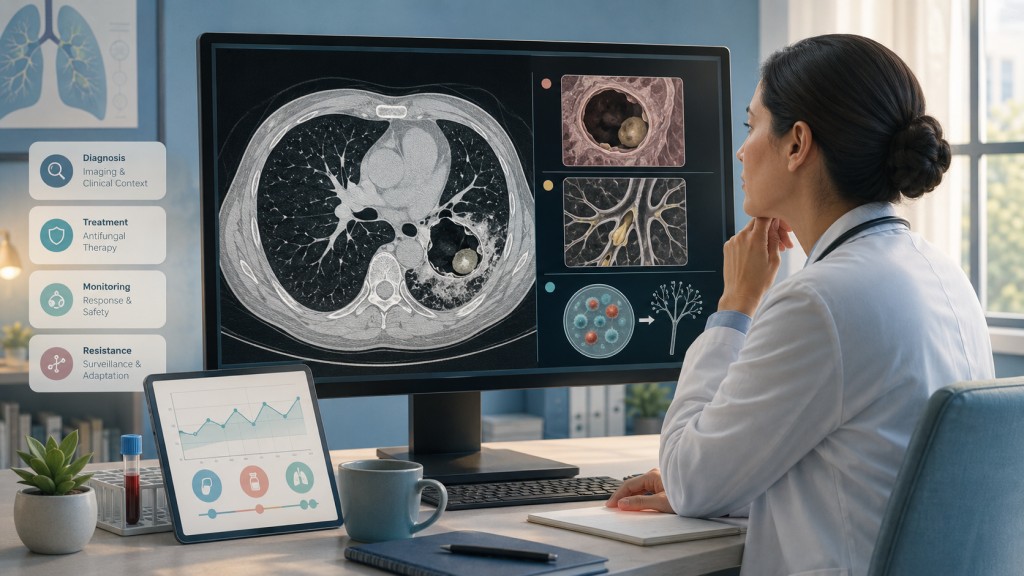
Aspergillosis Weekly Research Update: New Clues About Diagnosis, Treatment and Resistance
Research published this week has explored several different aspects of aspergillosis, including complications of chronic pulmonary aspergillosis, CT findings in ABPA, antifungal resistance and the challenges of adjusting voriconazole treatment.
There were no findings likely to change treatment immediately, but several papers provide useful insights into how these conditions are diagnosed and monitored.
Paper of the week: treating an abscess inside a CPA cavity
A case report describes a person with chronic pulmonary aspergillosis who developed a lung abscess inside an existing pulmonary cavity.
The abscess was successfully treated using percutaneous drainage, a procedure in which a catheter is passed through the chest wall into the infected area to allow the contents to drain. This was used alongside antifungal treatment.
Most people with CPA do not develop this complication. However, the report illustrates how the appearance of a cavity can change over time and why new symptoms or changes on scans may require further investigation.
A worsening cavity does not always mean that antifungal treatment has simply failed. There may be an additional problem, such as an abscess, bacterial infection or obstruction, requiring a different treatment approach.
This was a single case report, so it cannot tell us how often this approach will be useful. It does, however, show that drainage may occasionally provide an additional treatment option when infection becomes trapped within a cavity.
Read the case report on PubMed
Dense mucus on CT may help identify ABPA
A radiology report has highlighted the importance of high-attenuation mucus in allergic bronchopulmonary aspergillosis.
In ABPA, thick mucus can collect inside widened airways. On a CT scan, some mucus appears unusually dense or bright. This is called high-attenuation mucus.
Although it is not present in every person with ABPA, this finding can be a useful clue, particularly when someone has difficult-to-control asthma, bronchiectasis, eosinophilia or evidence of sensitisation to Aspergillus.
The finding is important because mucus plugging can contribute to:
- worsening cough and wheeze;
- repeated chest infections;
- blocked airways;
- temporary or permanent changes in lung function; and
- the development or progression of bronchiectasis.
A CT scan is only one part of the diagnostic process. High-attenuation mucus does not diagnose ABPA on its own, and its absence does not exclude ABPA. Doctors also consider symptoms, asthma or bronchiectasis, blood tests and the overall pattern on imaging.
Read the radiology report on PubMed
Genetic variants did not predict viral-associated aspergillosis
A multicentre study investigated whether common genetic variants in two immune-related genes—PTX3 and CLEC7A, also known as Dectin-1—were associated with invasive pulmonary aspergillosis following severe influenza or COVID-19.
The study did not find an association between these genetic variants and either the occurrence or outcome of invasive pulmonary aspergillosis.
This is useful information, but it does not mean that genetics are irrelevant to aspergillosis. The immune system involves many genes, and susceptibility may depend on combinations of genetic variants, the type of underlying illness, immune treatments and the particular form of aspergillosis.
It does show that testing one or two common genetic variants is unlikely to provide a simple way of predicting who will develop viral-associated aspergillosis.
Early signs of resistance to olorofim
Olorofim is a newer antifungal drug being developed for difficult-to-treat fungal infections. Laboratory researchers have identified amino-acid changes in Aspergillus flavus that can reduce susceptibility to olorofim.
This is laboratory research rather than evidence that olorofim resistance is already widespread in patients. Nevertheless, it is important because antifungal resistance can reduce the effectiveness of treatment.
Whenever a new antifungal becomes available, doctors and laboratories need to monitor:
- whether resistant strains are already present;
- whether resistance develops during treatment;
- how resistance is detected; and
- whether a different antifungal is needed.
The study involved Aspergillus flavus, whereas many chronic lung infections are caused by Aspergillus fumigatus. The findings therefore cannot be applied directly to every person with aspergillosis. They are an early warning that resistance testing will remain important as new treatments are introduced.
Why voriconazole blood tests remain important
Voriconazole is affected by genetic differences in an enzyme called CYP2C19. Some people process the drug quickly, while others process it more slowly.
A case report describes a patient with a CYP2C19 result expected to indicate normal metabolism. Despite this, she required a much higher-than-usual dose of voriconazole to achieve therapeutic blood concentrations.
The authors also noted that increased C-reactive protein, or CRP, appeared to be associated with reduced CYP2C19 activity. Inflammation may therefore alter how the body processes voriconazole, even when genetic testing suggests that metabolism should be normal.
This is one reason why a genetic result cannot replace therapeutic drug monitoring. Blood tests can show whether enough voriconazole is present to be effective without reaching unnecessarily high concentrations.
The report does not mean that people with inflammation should automatically receive higher doses. It describes one patient, and dose changes must be guided by clinical review and blood-level monitoring.
Read the case report on PubMed
What does this mean for patients?
The papers published this week reinforce several practical points:
- New or worsening symptoms during CPA may need investigation for complications rather than being assumed to represent simple treatment failure.
- CT findings can provide important clues in ABPA, especially when thick mucus blocks widened airways.
- Genetic testing is unlikely to give a complete answer about susceptibility to aspergillosis.
- Resistance to new antifungals must be monitored as these drugs enter clinical use.
- Voriconazole doses cannot always be predicted accurately from genetics alone, which is why therapeutic drug monitoring is so valuable.
As usual, these studies add to our understanding but do not replace individual medical assessment. Decisions about antifungal treatment, drainage procedures or drug doses should be made by the clinical team caring for the patient.

COPD, Bronchiectasis and Aspergillosis: Understanding Overlapping Lung Conditions
Bronchiectasis and chronic obstructive pulmonary disease (COPD) are different lung conditions, but they can cause many of the same symptoms. Some people also have both conditions at the same time.
This overlap can make diagnosis difficult. It is one reason why doctors may review or refine a diagnosis when symptoms persist, test results change or treatment does not have the expected effect.
Aspergillosis can add another layer of complexity. COPD and bronchiectasis may create the damaged-lung environment in which chronic pulmonary aspergillosis develops, while Aspergillus can also cause allergic or airway disease such as ABPA and Aspergillus bronchitis.
These conditions may share symptoms such as cough, sputum, breathlessness, fatigue, recurrent infections and changes on CT scans. A person may have one condition, two overlapping conditions or several contributing problems at the same time.
The key difference
The simplest distinction is:
COPD mainly causes persistent airflow obstruction, while bronchiectasis is permanent structural damage and widening of the airways.
However, this is an oversimplification. Both conditions can involve airway inflammation, mucus, infection, reduced lung function and progressive lung damage.
What is COPD?
Chronic obstructive pulmonary disease (COPD) is a long-term condition in which airflow through the lungs becomes restricted.
COPD mainly includes two overlapping types of lung damage:
- Chronic bronchitis: long-term inflammation of the airways, often with increased mucus production and a persistent cough.
- Emphysema: damage to the small air sacs in the lungs, reducing the area available for oxygen to pass into the blood.
COPD can also cause narrowing of the smaller airways, trapping of air and difficulty breathing out fully.
Symptoms may include:
- breathlessness, especially during activity
- a persistent cough
- regular production of sputum
- wheezing or chest tightness
- repeated chest infections
- reduced exercise tolerance
- fatigue
COPD is often associated with smoking, but it can also result from long-term exposure to air pollution, occupational dusts and fumes, previous infections, childhood lung problems or genetic conditions such as alpha-1 antitrypsin deficiency.
What is bronchiectasis?
Bronchiectasis is a long-term condition in which one or more airways become permanently widened, thickened or scarred.
Healthy airways use mucus and tiny hair-like structures called cilia to remove dust, microbes and other particles. In bronchiectasis, damaged airways often clear mucus less effectively. Mucus can collect in widened parts of the airway, allowing bacteria and fungi to remain in the lungs for longer.
Bronchiectasis may develop after:
- severe or repeated chest infections
- tuberculosis or other lung infections
- immune-system problems
- asthma or allergic bronchopulmonary aspergillosis
- cystic fibrosis or primary ciliary dyskinesia
- autoimmune or inflammatory conditions
- airway blockage or inhaled foreign material
Sometimes no clear cause is found.
Common symptoms include:
- a long-term cough
- regular production of sputum
- repeated chest infections
- breathlessness
- wheezing
- fatigue
- coughing up blood
Find out more about mucus clearance and airway-clearance techniques.
Why are widened airways a problem?
It may seem that wider airways should make breathing easier. In bronchiectasis, however, widening is a sign that the airway walls have been damaged and weakened.
The widened airways may become floppy and lose their normal ability to move mucus upwards. Mucus can pool in the enlarged sections, where bacteria and fungi may remain and multiply.
This creates a self-reinforcing cycle:
airway damage → widening → mucus retention → infection and inflammation → further airway damage
So, although COPD is often associated with airways that are too narrow, bronchiectasis involves airways that are too damaged and inefficient to clear mucus properly.
How are the conditions diagnosed?
Respiratory diagnoses are not usually based on symptoms or lung function alone. Doctors combine:
- symptoms and medical history
- spirometry and other lung-function tests
- CT imaging
- sputum and blood tests
- examination findings
- response to treatment
A useful way to think about this is:
Lung function measures what the lungs can do; imaging shows what has happened to their structure.
Diagnosing COPD
COPD is mainly identified by persistent airflow obstruction. Spirometry measures how much air a person can breathe out and how quickly they can do so.
Current COPD guidance uses post-bronchodilator spirometry to confirm persistent airflow obstruction. Other information, including symptoms, smoking history, CT scans and exacerbations, helps assess the wider disease.
Diagnosing bronchiectasis
Bronchiectasis is fundamentally an anatomical diagnosis. A thin-section or high-resolution CT scan is usually needed to show that the airways are permanently widened or distorted.
Lung function in bronchiectasis may be:
- normal
- obstructive
- restrictive
- mixed
A normal spirometry result therefore does not exclude bronchiectasis.
Can someone have both COPD and bronchiectasis?
Yes. COPD and bronchiectasis can coexist, particularly in people with more advanced lung disease, frequent exacerbations or persistent sputum production.
When both conditions are present, a person may have:
- greater breathlessness
- more frequent exacerbations
- greater sputum production
- more persistent airway infection
- more complex treatment needs
The correct conclusion may not be that someone has COPD instead of bronchiectasis. They may have COPD and bronchiectasis, with each condition contributing to their symptoms.
Where does aspergillosis fit?
People with COPD or bronchiectasis may be more vulnerable to Aspergillus-related disease because their lungs or airways are already damaged.
Possible conditions include:
- chronic pulmonary aspergillosis
- Aspergillus bronchitis
- allergic bronchopulmonary aspergillosis
- Aspergillus sensitisation
- Aspergillus colonisation without active disease
These conditions are different. A positive sputum culture or blood test does not automatically mean that active aspergillosis is present.
Assessment may involve:
- symptoms and their pattern over time
- CT imaging
- Aspergillus-specific IgG or IgE
- total IgE and eosinophils
- sputum culture or PCR
- lung-function testing
- occasionally bronchoscopy
Read more about how aspergillosis is diagnosed.
What about asthma and other lung diseases?
Asthma can also cause wheeze, cough and variable airflow obstruction. Some people have features of both asthma and COPD, particularly later in life. Asthma may also coexist with bronchiectasis.
Other conditions can produce similar symptoms, including:
- interstitial lung disease
- previous tuberculosis
- heart failure
- lung cancer
- pulmonary hypertension
- non-tuberculous mycobacterial infection
- chronic pulmonary aspergillosis
This is why a diagnosis may need to be reconsidered when symptoms, scans or test results do not fit the original explanation.
Why might doctors change the diagnosis?
Doctors sometimes appear to switch between diagnoses such as COPD, asthma, bronchiectasis and aspergillosis. This can happen because the conditions share many symptoms, and because more than one condition may be present at the same time.
Early in an assessment, a doctor may use a working diagnosis based on the information available. That diagnosis may be refined when spirometry, CT scans, sputum tests or blood tests provide more evidence.
For example:
- a person initially thought to have COPD may later be found to have bronchiectasis on CT
- someone diagnosed with asthma may later develop persistent airflow obstruction or emphysema
- a person with bronchiectasis may be found to have an underlying immune problem or previous infection
- Aspergillus-related disease may become apparent when symptoms persist despite usual treatment
A changing diagnosis does not necessarily mean that earlier care was misguided. It may mean that the clinical picture has become clearer.
Can poor treatment response suggest another diagnosis?
Sometimes. If symptoms do not improve as expected, doctors may ask:
- Was the original diagnosis correct?
- Is another condition present as well?
- Is there an infection or complication?
- Is the treatment being taken correctly and tolerated?
- Has the disease changed over time?
For example, someone repeatedly treated for COPD exacerbations who continues to produce large amounts of sputum may need assessment for bronchiectasis, chronic infection or Aspergillus-related disease.
However, lack of improvement does not prove that the diagnosis was wrong. Treatment may have been insufficient, difficult to take, affected by another medicine or aimed at only one part of a complex condition.
The most useful response is usually reassessment rather than an automatic change of label.
Why identifying the full picture matters
Different diagnoses lead clinicians to look for different problems and choose different treatments.
- COPD may require bronchodilators, pulmonary rehabilitation and exacerbation prevention.
- Bronchiectasis may require airway clearance, sputum monitoring and investigation of its cause.
- Asthma may require treatment aimed at variable airway inflammation.
- Aspergillus-related disease may require specific blood tests, microbiology or antifungal treatment.
Recognising one diagnosis does not exclude another. The aim is to understand all the factors contributing to a person’s symptoms.
Key message: COPD, bronchiectasis, asthma and aspergillosis can overlap, but they are not interchangeable diagnoses. Lung function shows how well the lungs work, while CT scans show structural damage. When symptoms persist or treatment is not working as expected, reassessing the diagnosis may reveal another condition—or several conditions acting together.
Related information
- COPD and aspergillosis
- Bronchiectasis and aspergillosis
- Understanding chronic pulmonary aspergillosis
- How aspergillosis is diagnosed
- Mucus clearance techniques
- Diseases associated with aspergillosis
Further reading
British Thoracic Society guideline for bronchiectasis in adults
Global Initiative for Chronic Obstructive Lung Disease: 2025 report
European Respiratory Society guideline for the management of adult bronchiectasis
This information is for education and should not replace advice from your own healthcare team.
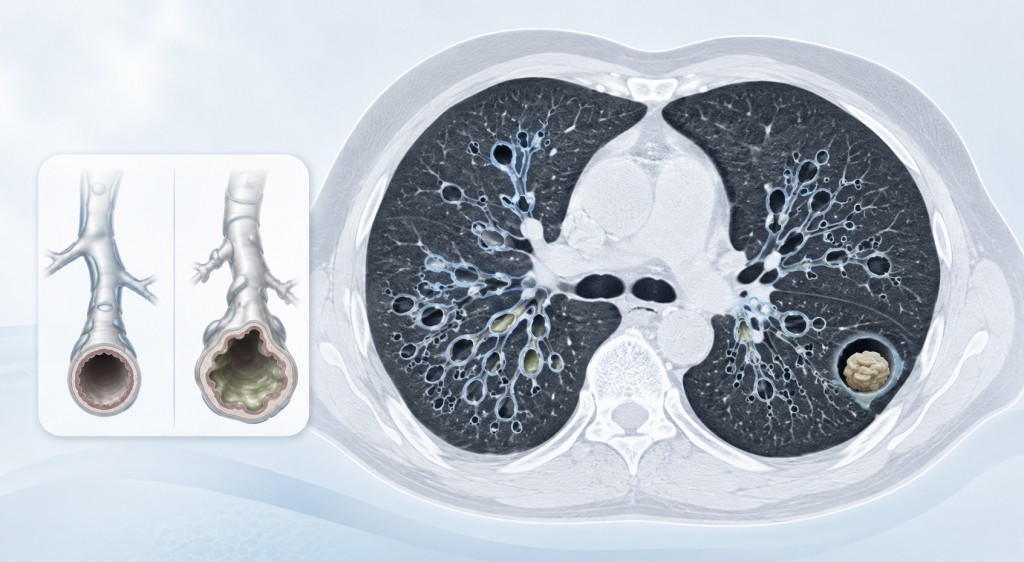
Bronchiectasis and Aspergillosis: Understanding the Connection
Bronchiectasis and aspergillosis are separate conditions, but they can sometimes occur together. Bronchiectasis damages and widens the airways, making it more difficult to clear mucus and inhaled particles such as Aspergillus spores.
Most people with bronchiectasis will not develop aspergillosis. However, Aspergillus-related disease may be overlooked because its symptoms can resemble bronchiectasis itself, a bacterial chest infection or a flare-up.
What is bronchiectasis?
Bronchiectasis is a long-term lung condition in which one or more airways become permanently widened, thickened or scarred.
Healthy airways use a thin layer of mucus and tiny hair-like structures called cilia to remove dust, microbes and other particles. In bronchiectasis, damaged airways often clear mucus less effectively. Mucus can collect in widened parts of the airway, allowing bacteria and fungi to remain in the lungs for longer.
Bronchiectasis may develop after:
- severe or repeated chest infections
- tuberculosis or other lung infections
- immune-system problems
- asthma or allergic bronchopulmonary aspergillosis
- cystic fibrosis or primary ciliary dyskinesia
- autoimmune or inflammatory conditions
- airway blockage or inhaled foreign material
Sometimes no clear cause is found.
Common symptoms include:
- a long-term cough
- regular production of sputum
- repeated chest infections
- breathlessness
- wheezing
- fatigue
- coughing up blood
Find out more about mucus clearance and airway-clearance techniques.
Why can bronchiectasis increase the risk of aspergillosis?
Bronchiectasis changes the structure of the airways and makes it harder to remove mucus. This may allow Aspergillus spores to remain in the airways and interact with the immune system.
The risk of Aspergillus-related disease may be influenced by:
- the extent and location of bronchiectasis
- how much mucus is retained
- the number and severity of chest infections
- underlying asthma or allergy
- previous tuberculosis or other structural lung disease
- corticosteroid or other immunosuppressive treatment
- the individual immune response to Aspergillus
Aspergillus may be present in sputum without causing active disease. This is sometimes described as colonisation or airway carriage. Other people develop an exaggerated allergic response, Aspergillus bronchitis or a chronic fungal infection.
Different Aspergillus-related conditions
Several different Aspergillus-related conditions can occur in people with bronchiectasis. They should not be treated as if they are all the same.
Aspergillus sensitisation
Aspergillus sensitisation means that the immune system has developed an allergic response to Aspergillus. It may be associated with wheezing, airway inflammation or more frequent exacerbations, but it is not the same as an active fungal infection.
Allergic bronchopulmonary aspergillosis
Allergic bronchopulmonary aspergillosis (ABPA) occurs when the immune system reacts strongly to Aspergillus in the airways. It is traditionally associated with asthma and cystic fibrosis, but it can also occur in people with bronchiectasis who do not have either condition.
ABPA may cause:
- worsening wheeze or breathlessness
- thick or difficult-to-clear mucus
- recurrent chest symptoms
- increased eosinophils or IgE
- fleeting or changing shadows on chest imaging
- central bronchiectasis or high-attenuation mucus on CT
Read more about allergic bronchopulmonary aspergillosis.
Aspergillus bronchitis
Aspergillus bronchitis is a condition in which Aspergillus is repeatedly detected in the airways and is associated with a persistent productive cough, sputum and airway inflammation.
It is more likely to be considered when a person has:
- a chronic productive cough
- repeated detection of Aspergillus in sputum or bronchoscopy samples
- an increased Aspergillus IgG level
- no clear evidence of ABPA or CPA
Learn more in our guide to Aspergillus bronchitis.
Chronic pulmonary aspergillosis
Chronic pulmonary aspergillosis (CPA) is a long-term fungal infection that usually develops in structurally abnormal lungs. It may cause cavities, nodules, thickening around cavities or progressive changes over time.
Symptoms may include:
- persistent cough
- increasing breathlessness
- weight loss
- fatigue
- night sweats or a low-grade fever
- persistent sputum
- coughing up blood
Read more about the different types of CPA.
What does recent research show?
A 2025 review examined ABPA and other Aspergillus-related airway diseases in bronchiectasis. It concluded that ABPA, Aspergillus sensitisation, chronic Aspergillus infection and Aspergillus bronchitis may form a spectrum of disease influenced by both airway damage and the immune response.
The review estimated that ABPA affects approximately 4% of people with bronchiectasis, although estimates vary substantially between studies and populations. It also reported that Aspergillus sensitisation and chronic Aspergillus infection may collectively affect up to 30% of people with bronchiectasis.
These figures should be interpreted cautiously. They do not mean that one in three people with bronchiectasis has an active fungal infection. Sensitisation, colonisation and active disease are different findings, and not everyone with a positive test requires antifungal treatment.
The review argued that Aspergillus-related disease may be associated with more severe bronchiectasis and more frequent exacerbations. It also noted that ABPA may sometimes contribute to bronchiectasis, rather than simply occurring as a result of already damaged airways.
A separate 2026 international study found that sensitisation to particular Aspergillus allergens was associated with markers of higher-risk bronchiectasis, including exacerbations, hospital admissions and Pseudomonas aeruginosa infection. The study does not prove that sensitisation causes bronchiectasis, but it suggests that fungal sensitisation may identify a subgroup needing closer assessment.
Can ABPA cause bronchiectasis?
The relationship between ABPA and bronchiectasis is complex.
Bronchiectasis may make it easier for Aspergillus to remain in the airways, increasing the opportunity for an allergic immune response. However, repeated Aspergillus-driven inflammation in ABPA may also damage the airways and contribute to bronchiectasis.
Recent research suggests that ABPA may contribute to bronchiectasis in some susceptible people, particularly when there is prolonged allergic inflammation and mucus plugging. However, not every person with ABPA develops bronchiectasis, and not every person with bronchiectasis has ABPA.
Symptoms can overlap
Bronchiectasis and Aspergillus-related disease may all cause:
- cough
- breathlessness
- wheeze
- fatigue
- increased sputum
- repeated chest infections
- reduced exercise tolerance
This overlap can make it difficult to know whether symptoms represent a usual fluctuation, a bacterial infection, ABPA, Aspergillus bronchitis, CPA or a combination of conditions.
Further assessment may be useful when symptoms are unusually persistent, severe or different from previous exacerbations.
How might doctors investigate Aspergillus-related disease?
Assessment usually combines several types of information:
- symptoms and their pattern over time
- the frequency and severity of exacerbations
- chest X-rays and CT scans
- sputum cultures and other microbiology
- Aspergillus-specific IgE and IgG blood tests
- total IgE and eosinophil counts
- lung-function testing
- occasionally bronchoscopy
Read more about how aspergillosis is diagnosed.
Aspergillus-specific IgG may support a diagnosis of CPA or Aspergillus bronchitis. Aspergillus-specific IgE and total IgE are more relevant when ABPA is suspected.
A positive blood test does not automatically prove active disease. Test results need to be interpreted with symptoms, imaging and sputum findings.
Why CT scans are important
CT scans can show the pattern and extent of bronchiectasis and may identify additional findings such as:
- mucus plugging
- high-attenuation mucus
- nodules
- cavities
- thickening around cavities
- changes suggesting a fungal ball
A CT scan may help distinguish established bronchiectasis from new changes that require further investigation. Read more about CT scans and aspergillosis.
When should someone with bronchiectasis seek further assessment?
Speak to your healthcare team if you have bronchiectasis and develop:
- a clear change in your usual cough or sputum
- repeated exacerbations or chest infections
- symptoms that do not respond as expected to antibiotics
- new or worsening wheeze
- unexplained weight loss or fatigue
- new changes on a chest X-ray or CT scan
- repeated courses of steroids
- coughing up blood
These symptoms do not necessarily mean that you have aspergillosis. They may be caused by bronchiectasis, bacteria, viruses, asthma or other conditions. The purpose of further assessment is to identify the cause accurately.
How is treatment decided?
Treatment depends on which Aspergillus-related condition is present.
- Aspergillus sensitisation may require monitoring and treatment of associated airway disease rather than antifungal medication.
- ABPA may require corticosteroids, antifungal treatment or other specialist therapies.
- Aspergillus bronchitis may be considered for antifungal treatment when symptoms and microbiology support the diagnosis.
- CPA may require prolonged antifungal treatment and careful monitoring.
Airway clearance, vaccination, treatment of bacterial infections and management of the underlying bronchiectasis remain important regardless of whether Aspergillus is detected.
Antifungal medicines can interact with inhalers, corticosteroids and other medicines, so they should only be started under appropriate medical supervision.
Key message: Bronchiectasis makes it harder to clear mucus and inhaled particles, which may increase vulnerability to several Aspergillus-related conditions. Most people with bronchiectasis will not develop active aspergillosis, but persistent or unusually severe symptoms may justify assessment for Aspergillus sensitisation, ABPA, Aspergillus bronchitis or CPA.
Related information
- Understanding chronic pulmonary aspergillosis
- Aspergillus bronchitis
- Allergic bronchopulmonary aspergillosis
- How aspergillosis is diagnosed
- Understanding Aspergillus blood tests
- Mucus clearance techniques
- Diseases associated with aspergillosis
Further reading
Recent review: Agarwal R, Chotirmall SH, Chalmers JD.
Allergic bronchopulmonary aspergillosis and Aspergillus-related airway diseases in bronchiectasis: a narrative review.
Journal of Thoracic Disease. 2025;17:11501–11519.
Read the review on PubMed
Recent research: Tiew PY, Narayana JK, Jaggi TK, et al.
Aspergillus fumigatus sensitization is associated with high-risk bronchiectasis.
Chest. 2026;169:932–946.
Further discussion: Agarwal R, Sehgal IS, Muthu V, Bardin P.
Does ABPA contribute to bronchiectasis? A structured evaluation of competing hypotheses.
Clinical & Experimental Allergy. 2026;56:498–505.
Read the paper
This information is for education and should not replace advice from your own healthcare team.
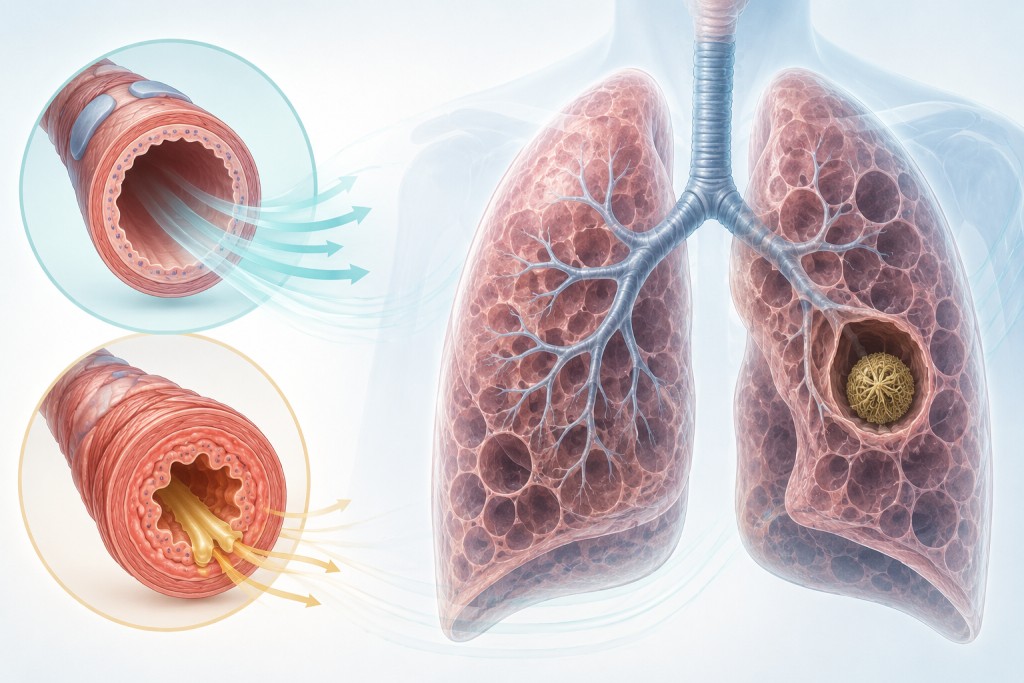
COPD and Aspergillosis: Understanding the Connection
Chronic obstructive pulmonary disease (COPD) and aspergillosis are separate conditions, but they can sometimes occur together. COPD can damage the airways and lung tissue, making it more difficult to clear inhaled Aspergillus spores.
Most people with COPD will not develop aspergillosis. However, Aspergillus-related disease may be overlooked because its symptoms can resemble a COPD flare-up or a chest infection.
What is COPD?
Chronic obstructive pulmonary disease (COPD) is a long-term condition in which airflow through the lungs becomes restricted. The obstruction usually develops gradually and may become more noticeable over time.
COPD mainly includes two overlapping types of lung damage:
- Chronic bronchitis: long-term inflammation of the airways, often with increased mucus production and a persistent cough.
- Emphysema: damage to the small air sacs in the lungs, reducing the area available for oxygen to pass into the blood.
Many people have features of both. COPD can also cause narrowing of the smaller airways, trapping of air and difficulty clearing mucus from the lungs.
Symptoms may include:
- breathlessness, especially during activity
- a persistent cough
- regular production of sputum
- wheezing or chest tightness
- repeated chest infections
- reduced exercise tolerance
- fatigue
Symptoms may remain fairly stable for long periods, but can suddenly worsen during an exacerbation. An exacerbation may be triggered by a viral or bacterial infection, air pollution, smoke, cold weather or other factors.
COPD is often associated with smoking, but it can also result from long-term exposure to air pollution, occupational dusts and fumes, previous infections, childhood lung problems or genetic conditions such as alpha-1 antitrypsin deficiency.
COPD is not contagious. It is also not simply an inevitable part of getting older. Diagnosis usually involves a medical history, examination and breathing tests such as spirometry.
What is aspergillosis?
Aspergillosis describes several different conditions caused by Aspergillus, a common mould found in soil, dust, compost and the air.
Most people breathe in Aspergillus spores without becoming ill. Problems are more likely when a person has damaged lungs, an altered immune response or treatment that suppresses immunity.
Relevant forms of disease include:
- chronic pulmonary aspergillosis (CPA)
- aspergilloma, sometimes called a fungal ball
- Aspergillus bronchitis
- allergic bronchopulmonary aspergillosis (ABPA)
- invasive pulmonary aspergillosis
These conditions are different and require different investigations and treatments.
Why can COPD increase the risk of aspergillosis?
COPD can affect the lungs in several ways that may increase vulnerability to Aspergillus:
- damaged airways may clear mucus and inhaled particles less effectively
- emphysema can create areas of structurally abnormal lung
- previous infections may leave scars or cavities
- repeated exacerbations can increase inflammation and lung damage
- corticosteroid treatment can alter the immune response
The risk is not caused by COPD alone. It depends on the severity and type of lung damage, previous infections, smoking history, immune function, steroid exposure and other health conditions.
New research: Aspergillus allergy and sensitisation in COPD
A 2026 systematic review and meta-analysis examined allergic bronchopulmonary aspergillosis (ABPA) and Aspergillus sensitisation in people with COPD. The researchers combined evidence from 23 studies involving more than 5,000 people.
They estimated that:
- approximately 2.1% of people with COPD had ABPA
- approximately 10.4% had evidence of sensitisation to Aspergillus
These findings suggest that Aspergillus-related allergy may occur in COPD more often than previously recognised. However, sensitisation is not the same as active infection or ABPA. A positive allergy or blood test does not automatically mean that treatment is needed.
The findings support a more careful assessment of people with COPD who have unexplained wheezing, difficult-to-control symptoms, recurrent exacerbations or features suggesting an allergic fungal response.
Read our summary of the 2026 COPD and Aspergillus review.
Chronic pulmonary aspergillosis and COPD
CPA is a long-term fungal lung infection that usually develops in areas of existing lung damage. It may cause cavities, thickening around cavities, nodules or progressive changes in the lungs.
Symptoms of CPA can include:
- persistent cough
- increasing breathlessness
- fatigue
- weight loss
- night sweats or a low-grade fever
- persistent or increasing sputum
- coughing up blood
These symptoms can also occur during COPD exacerbations, which makes diagnosis difficult. Symptoms that continue after the usual treatment for a COPD flare-up may need further investigation.
Could Aspergillus be contributing to repeated COPD flare-ups?
Not every COPD exacerbation is caused by Aspergillus. Bacteria, viruses, pollution, smoking, weather changes and other factors can all trigger worsening symptoms.
However, Aspergillus may sometimes be involved when a person has:
- frequent or unusually severe exacerbations
- symptoms that do not respond as expected to antibiotics or inhalers
- persistent chest symptoms between exacerbations
- unexplained weight loss or fatigue
- new cavities, nodules or other changes on a CT scan
- recurrent haemoptysis
- a history of tuberculosis or another condition causing structural lung damage
Research has also found Aspergillus in the airways of some people with COPD without proving that it is causing active disease. Detection of Aspergillus therefore needs to be interpreted alongside symptoms, imaging and other test results.
Why steroids need careful balancing
Corticosteroids may be prescribed during COPD exacerbations and, in some people, as part of regular inhaled treatment. They can reduce airway inflammation and improve symptoms.
However, corticosteroids can also affect the immune response that helps control Aspergillus. Recent research has reported an association between corticosteroid exposure and pulmonary aspergillosis, with higher exposure associated with greater risk.
This does not mean that people with COPD should stop their inhalers or avoid steroids when they are medically necessary. Treatment should only be changed with advice from a healthcare professional.
The important point is that repeated or prolonged steroid treatment, particularly when symptoms are not improving as expected, may be one reason to review the diagnosis and consider whether fungal disease or another infection is contributing. Read more about steroids, aspergillosis and the immune system.
How might doctors investigate aspergillosis?
There is no single test that diagnoses every form of aspergillosis. Assessment may include:
- symptoms and how long they have been present
- previous chest imaging and a current CT scan
- lung-function testing
- Aspergillus-specific IgG blood testing
- total IgE and Aspergillus-specific IgE when ABPA is suspected
- sputum culture, PCR or other microbiology
- occasionally bronchoscopy
Read more about how aspergillosis is diagnosed.
An Aspergillus IgG blood test can provide evidence of a longer-term immune response to Aspergillus and is often useful when CPA is being considered. However, a positive result does not prove active CPA by itself.
CT scans may help identify cavities, nodules, fibrosis, emphysema, mucus plugging or other changes that are difficult to see on a chest X-ray. Read more about why CT scans are used in aspergillosis.
When should someone with COPD seek further assessment?
Speak to your healthcare team if you have COPD and develop:
- breathlessness that is worsening or different from usual
- a cough that does not settle after an exacerbation
- persistent or increasing sputum
- unexplained weight loss or fatigue
- repeated courses of antibiotics or steroids
- new abnormalities on a chest X-ray or CT scan
- coughing up blood
These symptoms do not necessarily mean that you have aspergillosis. They may result from COPD itself, infection, heart disease, medication effects or other causes. The purpose of further assessment is to identify the cause accurately so that treatment can be chosen appropriately.
Key message: Most people with COPD will not develop aspergillosis. However, COPD-related lung damage, repeated exacerbations and corticosteroid exposure may increase susceptibility. If symptoms are unusually persistent, severe or difficult to explain, Aspergillus-related disease may need to be considered alongside the more common causes of COPD deterioration.
Related information
- Understanding chronic pulmonary aspergillosis
- How aspergillosis is diagnosed
- Understanding Aspergillus blood tests
- Steroids and the immune system
- Diseases associated with aspergillosis
Further reading
Recent systematic review: Ajayababu A, Antony A, Goyal B, Ray A.
Prevalence of allergic bronchopulmonary aspergillosis/Aspergillus sensitization in chronic obstructive pulmonary disease: A systematic review and meta-analysis.
Respiratory Investigation. 2026.
Read the paper on PubMed
Clinical overview: Otu A, et al.
The clinical spectrum of aspergillosis in chronic obstructive pulmonary disease.
Infection. 2023;51:813–829.
Clinical guidance: The British Thoracic Society has published a clinical statement on
Aspergillus-related chronic lung disease
This information is for education and should not replace advice from your own healthcare team.
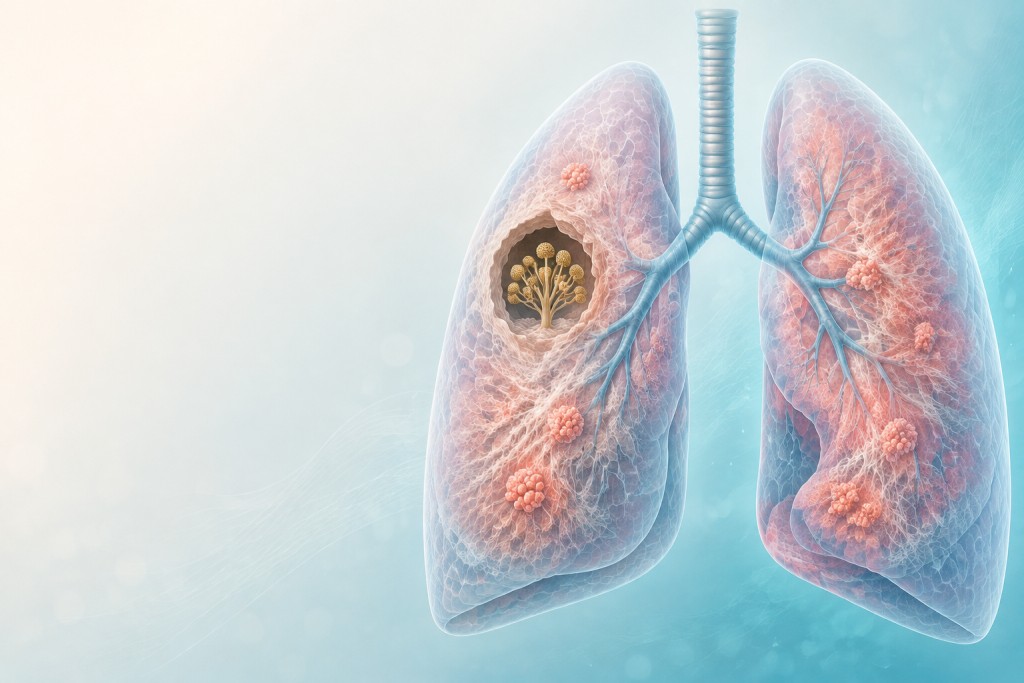
Sarcoidosis and Aspergillosis: Understanding an Important Connection
Sarcoidosis and aspergillosis are different conditions, but they can sometimes occur in the same person. The relationship is most important when sarcoidosis has caused lasting damage to the lungs, including scarring, fibrosis or cavities.
This does not mean that everyone with sarcoidosis will develop aspergillosis. Most people with sarcoidosis do not. However, when symptoms or lung changes worsen, it is important not to assume automatically that sarcoidosis is becoming more active.
What is sarcoidosis?
Sarcoidosis is an inflammatory condition in which groups of immune cells form small areas of inflammation called granulomas. It can affect several parts of the body, but the lungs and lymph nodes in the chest are most commonly involved.
Some people have few or no symptoms. Others may experience:
- breathlessness
- a persistent cough
- chest discomfort
- fatigue
- reduced exercise tolerance
- weight loss or a general feeling of being unwell
In some people, inflammation settles without causing permanent damage. In others, long-term inflammation can lead to scarring and changes in the structure of the lungs.
Why can sarcoidosis increase the risk of aspergillosis?
Chronic pulmonary aspergillosis (CPA) is a long-term lung infection caused by Aspergillus, a mould that is commonly found in the environment and is breathed in regularly by most people. You can read more about the different forms of CPA.
Healthy lungs usually clear inhaled Aspergillus spores without difficulty. However, damaged or scarred lung tissue can make it easier for Aspergillus to persist and grow.
Advanced pulmonary sarcoidosis may cause:
- fibrosis and scarring
- distortion of the airways
- areas of poorly functioning lung
- cavities or spaces within the lungs
These changes may create conditions in which chronic pulmonary aspergillosis or an aspergilloma can develop. An aspergilloma, sometimes called a fungal ball, is a collection of fungal material that grows within an existing lung cavity.
The risk is not caused by sarcoidosis alone. It reflects a combination of factors, including the amount and type of lung damage, the immune response, exposure to Aspergillus and treatments such as corticosteroids or other immunosuppressive medicines.
How common is the association?
The relationship between sarcoidosis and chronic pulmonary aspergillosis is clinically important, but it remains relatively understudied. A 2026 review reported that approximately 2% of people with sarcoidosis developed CPA in some recent tertiary-care cohorts.
Older studies involving people with more advanced fibrocystic sarcoidosis reported higher estimates, between 3% and 12%. These figures are not directly comparable because specialist centres tend to see more people with severe and complicated disease.
The available evidence does not suggest that sarcoidosis commonly or inevitably leads to aspergillosis. Instead, risk appears to result from several factors acting together:
- fibrosis, cavities or other structural lung damage
- changes in local and general immune function
- regular exposure to Aspergillus in the environment
- corticosteroid or other immunosuppressive treatment
Symptoms can overlap
One of the difficulties is that sarcoidosis and chronic pulmonary aspergillosis can cause similar symptoms. These may include:
- increasing breathlessness
- persistent or worsening cough
- fatigue
- weight loss
- reduced lung function
- declining ability to exercise
- changes visible on chest X-rays or CT scans
This overlap can make it difficult to tell whether symptoms are caused by active sarcoidosis, permanent lung damage, chronic infection, or more than one condition at the same time.
Blood in the sputum, known as haemoptysis, can occur with several lung conditions. It may also occur when an aspergilloma or CPA affects blood vessels in damaged lung tissue. Any new or significant haemoptysis should be discussed promptly with a healthcare professional.
Why scans may need careful interpretation
Chest imaging is an important part of assessing both sarcoidosis and aspergillosis. A CT scan may show fibrosis, nodules, cavities, thickening around cavities or changes in existing areas of lung damage.
Some of these findings can be seen in advanced sarcoidosis as well as CPA. A single scan does not always provide the complete answer. Doctors may need to compare scans over time and consider:
- whether existing cavities or scars are changing
- whether new cavities or nodules have appeared
- whether there is thickening around a cavity
- whether a fungal ball is present
- how scan findings relate to symptoms and lung-function results
The overall pattern, and how it changes over time, is often more useful than one isolated scan finding. Read more about why CT scans are used in aspergillosis.
The challenge of steroid treatment
Corticosteroids are often used to control inflammation caused by sarcoidosis. Other immunosuppressive medicines may also be used when sarcoidosis affects the lungs or other organs.
These treatments can be very important and should not be stopped suddenly or changed without medical advice. However, corticosteroids and some other immunosuppressive medicines can reduce the body's ability to control infection.
If chronic pulmonary aspergillosis is present but not recognised, increasing immunosuppression may allow the infection to become more active. This is one reason why unexpected deterioration, new radiological changes or symptoms that do not respond as expected should be assessed carefully before assuming that sarcoidosis is the only cause.
This does not mean that steroids are always unsafe for people with sarcoidosis. The decision is individual and may involve balancing inflammation, infection risk, lung damage and other health needs. Read more about steroids, aspergillosis and the immune system.
What does recent research show?
A 2026 review concluded that CPA occurs mainly when sarcoidosis has caused substantial structural lung damage, particularly fibrosis or cavities. The authors described the association as clinically important but relatively understudied.
In a study of 65 people with CPA complicating sarcoidosis, almost all had advanced fibrocystic pulmonary disease. Chronic cavitary pulmonary aspergillosis was the most common form of CPA. The factors most strongly associated with outcome were the extent of fibrosis, reduced overall lung function and pulmonary hypertension.
The study also found that poor outcomes were more often related to advanced sarcoidosis and the resulting loss of lung function than to aspergillosis alone. This is important because it shows that CPA is part of a complex picture rather than necessarily being the only cause of deterioration.
These findings help explain why assessment needs to consider the whole clinical picture. A change in symptoms or a scan may reflect active sarcoidosis, permanent lung damage, CPA or a combination of these conditions.
How might doctors investigate aspergillosis?
There is no single test that diagnoses every form of aspergillosis. Doctors usually combine several types of information, including:
- symptoms and how they have changed
- previous CT scans and current imaging
- lung-function tests
- blood tests for Aspergillus-specific antibodies, particularly Aspergillus IgG
- sputum testing for Aspergillus and other organisms
- occasionally bronchoscopy or other specialised tests
Blood tests for Aspergillus-specific IgG may support the diagnosis of CPA. However, a positive result does not prove by itself that active infection is present. It must be interpreted alongside symptoms, imaging and other test results.
Doctors may also use sputum testing, lung-function tests and, occasionally, bronchoscopy. Read more about how aspergillosis is diagnosed.
The 2026 review emphasised that diagnosis usually depends on combining imaging, Aspergillus-specific IgG and microbiological evidence with evidence of clinical progression.
Why specialist review may be helpful
Managing sarcoidosis and CPA together can be complicated. Treatment for sarcoidosis may involve corticosteroids or other medicines that suppress inflammation, while CPA may require prolonged antifungal treatment.
These medicines can interact with each other, and antifungal treatment may require monitoring for side effects, liver problems and drug levels. Some patients may need long-term antifungal treatment, particularly if disease is progressive or returns after treatment is stopped.
For this reason, unexpected deterioration, new cavities, progressive changes on CT, persistent systemic symptoms or haemoptysis may require discussion between respiratory, sarcoidosis and fungal-disease specialists.
What does this mean for someone with sarcoidosis?
Having sarcoidosis does not mean that you will develop aspergillosis. The association is most relevant in people with significant structural lung damage, particularly fibrosis or cavities.
It is worth telling your healthcare team if you develop:
- new or worsening breathlessness
- a persistent change in your cough
- unexplained weight loss or worsening fatigue
- repeated chest infections
- new changes on a chest X-ray or CT scan
- coughing up blood
- symptoms that continue despite treatment for sarcoidosis
These symptoms can have many causes, and they do not necessarily mean that you have aspergillosis. They simply deserve appropriate assessment rather than being automatically attributed to sarcoidosis.
Key message: Sarcoidosis and aspergillosis are separate conditions, but advanced sarcoidosis can sometimes cause lung changes in which chronic pulmonary aspergillosis develops. Most people with sarcoidosis will not develop CPA. When symptoms or scans change unexpectedly, considering both inflammation and infection can help doctors choose the safest treatment.
Related information
- Understanding chronic pulmonary aspergillosis
- How aspergillosis is diagnosed
- Understanding Aspergillus blood tests
- Diseases associated with aspergillosis
- Steroids and the immune system
Further reading
Recent review:
Jeny F, Brun S, Tran Ba S, Uzunhan Y.
Chronic pulmonary aspergillosis and sarcoidosis.
Current Opinion in Pulmonary Medicine, 2026.
Read the review on PubMed
.
Clinical study:
Uzunhan Y, Nunes H, Jeny F, et al.
Chronic pulmonary aspergillosis complicating sarcoidosis.
European Respiratory Journal. 2017;49:1602396.
Read the study on the ERS website
.
Earlier cohort and literature review:
Pena TA, Soubani AO, Samavati L.
Aspergillus lung disease in patients with sarcoidosis: a case series and review of the literature.
Lung. 2011;189:167–172.
Read the article information
.
This information is for education and should not replace advice from your own healthcare team.
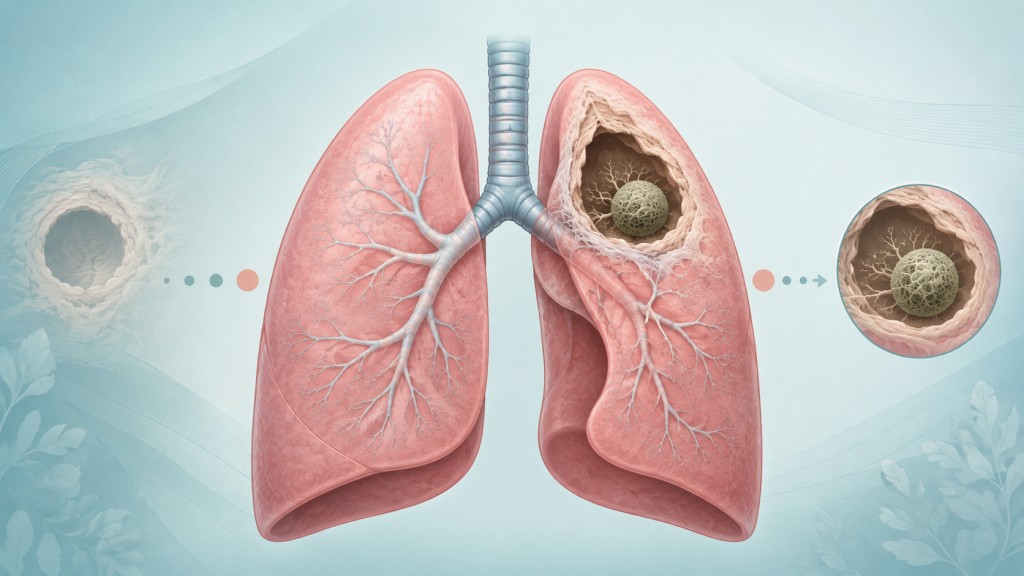
Tuberculosis and Aspergillosis: Why Lung Symptoms Can Continue After TB Treatment
Most people who complete treatment for pulmonary tuberculosis do not develop aspergillosis. However, TB can leave cavities, scarring and widened airways in the lungs. These structural changes sometimes allow Aspergillus to grow and cause chronic pulmonary aspergillosis (CPA).
TB and chronic pulmonary aspergillosis can cause remarkably similar symptoms and changes on chest imaging. This means that aspergillosis may be mistaken for recurrent TB, treatment failure or simply permanent damage left by the original infection.
Recognising the connection is particularly important when cough, breathlessness, weight loss, fatigue or coughing up blood continue or return after apparently successful TB treatment.
What is pulmonary tuberculosis?
Tuberculosis (TB) is an infection caused by bacteria belonging to the Mycobacterium tuberculosis group. It can affect several parts of the body, but pulmonary TB affects the lungs.
Active pulmonary TB can cause inflammation and destroy areas of lung tissue. Treatment can remove the active bacteria, but it cannot always reverse the structural damage that has already occurred.
Changes remaining after treatment may include:
- scarring and fibrosis;
- persistent spaces or cavities within the lungs;
- bronchiectasis, in which damaged airways become widened;
- thickening of the lining around the lungs;
- reduced lung volume or distortion of the airways;
- impaired mucus clearance.
These changes are collectively described as part of post-tuberculosis lung disease. They can cause long-term symptoms even when no active TB bacteria remain.
How can previous TB lead to aspergillosis?
Aspergillus is a common mould found in soil, compost, dust and the air around us. Most people inhale its microscopic spores regularly without becoming ill.
A healthy lung usually clears the spores effectively. However, a cavity left by pulmonary TB provides an abnormal space in which Aspergillus may settle and grow.
This can lead to several different problems:
- Aspergilloma: a fungal ball that forms inside an existing lung cavity.
- Chronic cavitary pulmonary aspergillosis: one or more cavities that persist or gradually enlarge, sometimes containing a fungal ball.
- Chronic fibrosing pulmonary aspergillosis: extensive scarring and destruction that can develop when chronic disease progresses.
- Aspergillus nodules: one or more rounded abnormalities that may resemble cancer or another infection on a scan.
These forms sit within the spectrum known as chronic pulmonary aspergillosis.
Post-TB bronchiectasis may also impair mucus clearance and make the lungs more vulnerable to repeated bacterial or fungal infection.
Does everyone who has had TB need to worry?
No. Most people treated for TB will not develop CPA.
The risk is greater when pulmonary TB has left substantial structural damage, particularly one or more persistent cavities. Other factors may include:
- bronchiectasis;
- COPD or emphysema;
- low body weight or poor nutrition;
- diabetes;
- immune suppression;
- long-term or repeated corticosteroid treatment;
- more than one episode of pulmonary TB.
Latent TB—where TB bacteria are present without active disease—does not usually produce the same lung cavities and is not equivalent to having had destructive pulmonary TB.
Why are TB and CPA easily confused?
The two conditions share several possible symptoms:
- a persistent cough;
- increasing breathlessness;
- fatigue;
- weight loss or difficulty regaining weight;
- fever or night sweats;
- chest discomfort;
- coughing up blood (haemoptysis).
Both can also produce cavities, scarring and areas of inflammation on chest X-rays or CT scans.
When symptoms recur after TB treatment, it is therefore understandable that recurrent TB may be suspected first. In countries where TB is common but fungal diagnostic tests are difficult to obtain, some people may receive further courses of anti-TB treatment without convincing evidence that active TB has returned.
However, TB medicines do not treat Aspergillus. Delayed recognition allows CPA to continue damaging the lungs.
Can active TB and aspergillosis occur together?
Yes. Although CPA often becomes apparent after TB treatment, active TB and Aspergillus-related disease can occasionally coexist.
Finding evidence of one condition therefore does not always exclude the other. Clinicians may need to investigate for both, particularly when:
- symptoms or imaging do not improve as expected;
- TB tests are repeatedly negative despite continuing symptoms;
- the patient initially improves but then deteriorates;
- there is a persistent cavity or a possible fungal ball;
- significant coughing of blood develops.
Coexisting disease can make treatment more complicated. Rifampicin and some other TB medicines interact strongly with azole antifungal medicines, so treatment must be planned and monitored by clinicians experienced in managing these interactions.
When should CPA be considered after TB?
Further assessment may be appropriate when respiratory or constitutional symptoms persist for several months, return after treatment or gradually worsen—especially in someone with cavities or other substantial changes on lung imaging.
Symptoms warranting discussion with a healthcare professional include:
- a cough that does not settle;
- gradually worsening breathlessness;
- ongoing or unexplained fatigue;
- unintentional weight loss;
- recurrent chest infections;
- blood in the sputum;
- new or enlarging cavities on imaging.
These symptoms have many possible causes. They do not prove that CPA is present, but they should not automatically be attributed to old TB damage without considering other explanations.
How is chronic pulmonary aspergillosis diagnosed?
There is no single test that diagnoses every case. Clinicians combine the person’s history, symptoms, imaging and laboratory results. You can find a broader explanation on our diagnosis of aspergillosis page.
Chest imaging
A CT scan provides much more detail than a chest X-ray. Features that may raise suspicion include:
- one or more lung cavities;
- a cavity that is enlarging or developing a thicker wall;
- a fungal ball within a cavity;
- thickening around the cavity or lining of the lung;
- new areas of inflammation around an old cavity;
- progressive fibrosis or loss of lung volume;
- one or more nodules.
Comparison with older images is extremely valuable. A single abnormal scan may show the damage left by TB, but scans taken over time can reveal whether the disease is stable or progressing.
Aspergillus IgG blood testing
An Aspergillus IgG antibody test is one of the most useful blood tests for CPA. A positive result indicates that the immune system has made a significant response to Aspergillus.
The result must be interpreted alongside symptoms and imaging. A positive result alone does not prove active CPA, while a negative result does not exclude every case, particularly in someone whose immune system cannot produce a strong antibody response.
Sputum testing
Sputum may be tested using fungal culture or molecular techniques such as PCR. Finding Aspergillus supports the diagnosis, but cultures are often negative even when CPA is present.
A negative sputum culture should therefore not be used by itself to rule out CPA.
Sputum should also be tested for TB and, where appropriate, other bacteria or nontuberculous mycobacteria. More than one infection may be present.
Other investigations
Depending on the individual case, clinicians may use:
- lung-function testing;
- bronchoscopy and samples from the lower airways;
- biopsy of a nodule or other abnormal area;
- tests for other fungal infections found in particular parts of the world;
- assessment for lung cancer or another cause of cavitation.
How is CPA treated?
Treatment depends on the form and severity of disease, the person’s symptoms, whether imaging is progressing and their other medical conditions.
Oral antifungal medicines such as itraconazole or voriconazole are commonly used. Posaconazole or isavuconazole may be considered in some circumstances. Treatment frequently continues for many months and sometimes longer.
Monitoring is important because antifungal medicines can:
- interact with other medicines;
- affect the liver or cause other adverse effects;
- produce blood levels that are too low or too high;
- be ineffective if the infecting Aspergillus is resistant.
Blood tests, antifungal drug-level measurements and follow-up imaging may therefore be required. Read more about drug interactions with antifungal medicines.
A single stable aspergilloma without significant symptoms may sometimes be monitored rather than treated immediately. Surgery may be considered in selected patients with a localised fungal ball and adequate lung function. Significant bleeding may require urgent treatment, including a procedure to block the responsible blood vessel.
Why does earlier recognition matter?
Untreated CPA can gradually enlarge lung cavities, increase fibrosis and further reduce lung function. It can also cause severe or recurrent bleeding.
Earlier diagnosis offers several potential benefits:
- avoiding unnecessary repeat courses of TB medication;
- starting appropriate antifungal treatment when needed;
- monitoring cavities before extensive damage develops;
- identifying other causes of persistent symptoms;
- improving recognition of post-TB lung disease more broadly.
Not every person who has completed TB treatment needs extensive fungal testing. A more practical approach is to investigate people with persistent or recurrent symptoms, residual cavities or unexplained progression on imaging.
The global diagnostic gap
TB affects millions of people worldwide, particularly in countries where access to CT scanning, Aspergillus IgG testing and specialist fungal services may be limited.
Recent research has confirmed a substantial burden of CPA among people previously treated for TB. However, estimates vary widely between studies because the populations, diagnostic tests and definitions differ.
This is not simply a problem in countries with a high TB incidence. People may move between countries many years after treatment, and CPA can emerge or be recognised long after the original infection.
A history of pulmonary TB remains clinically relevant even if treatment took place decades earlier.
Healthcare professionals can read our specialist evidence summary on CPA during tuberculosis treatment for a more detailed discussion of recent research and diagnostic pathways.
What should patients do?
If you have previously been treated for pulmonary TB and continue to experience respiratory symptoms:
- tell your clinician about the previous TB, even if it occurred many years ago;
- ask whether old and current scans have been compared;
- ask whether cavities, bronchiectasis or substantial scarring remain;
- discuss whether Aspergillus IgG and sputum testing would be appropriate;
- seek prompt advice if you cough up blood;
- do not stop or alter TB or antifungal medication without medical advice.
Coughing up more than a few streaks or spots of blood, or bleeding accompanied by breathlessness, dizziness or weakness, requires urgent medical assessment. Call emergency services if the bleeding is substantial.
For more detailed information about recognising and responding to bleeding, see our patient guide to haemoptysis.
Key points
- Pulmonary TB can leave cavities, scarring and bronchiectasis even after the infection has been successfully treated.
- These structural changes can increase susceptibility to chronic pulmonary aspergillosis.
- TB and CPA can both cause cough, weight loss, fatigue, breathlessness, bleeding and lung cavities.
- CPA may be mistaken for recurrent TB or dismissed as permanent post-TB damage.
- Diagnosis usually requires a combination of CT imaging, Aspergillus IgG testing and microbiological evidence.
- A negative sputum fungal culture does not exclude CPA.
- Most people treated for TB do not develop CPA, but persistent or worsening symptoms deserve investigation.
Further information and evidence
- Systematic review of chronic pulmonary aspergillosis among people treated for pulmonary tuberculosis
- British Thoracic Society Clinical Statement on Aspergillus-related chronic lung disease
- World Health Organization: global burden of CPA following pulmonary tuberculosis
- Prospective study of CPA following tuberculosis in Nigeria
This article provides general information and does not replace assessment by a TB, respiratory or fungal-infection specialist.

Respiratory Infections and Aspergillosis: Reducing Your Risk and Knowing When to Seek Help
Respiratory infections are difficult to avoid completely, but a combination of vaccination, cleaner air, good hygiene and early action can reduce both your risk of infection and the chance of becoming seriously unwell.
For people living with aspergillosis, ABPA, bronchiectasis, asthma or another chronic lung condition, an ordinary cold or viral infection can sometimes cause a significant worsening of respiratory symptoms. This guide explains how to reduce your risk without withdrawing unnecessarily from everyday life—and what to do if you become unwell.
Why can respiratory infections matter more when you have aspergillosis?
Respiratory infections include the common cold, influenza (flu), COVID-19, respiratory syncytial virus (RSV) and bacterial chest infections. Most are not caused by Aspergillus, but they can still affect an existing fungal lung condition.
An infection may:
- increase coughing, wheezing and breathlessness;
- increase mucus production or make mucus thicker and harder to clear;
- trigger an asthma or ABPA flare;
- cause an exacerbation of bronchiectasis or COPD;
- allow a secondary bacterial chest infection to develop;
- temporarily reduce exercise tolerance and oxygen levels;
- make recovery slower in someone whose lungs are already damaged.
Some people are also more vulnerable because they take corticosteroids or other treatments that affect the immune response. The degree of risk varies considerably, so ask your clinical team if you are unsure how vulnerable you are.
Use several layers of protection
No single precaution can prevent every infection. Protection is usually strongest when several practical measures are used together, particularly when respiratory viruses are circulating widely or someone close to you is unwell.
1. Keep vaccinations up to date
Vaccination may not prevent every infection, but it can substantially reduce the risk of severe illness, hospital admission and complications.
Depending on your age, medical history, treatment and current NHS eligibility, vaccinations to discuss with your GP or respiratory team may include:
- the annual influenza vaccine;
- COVID-19 vaccination when offered;
- pneumococcal vaccination;
- RSV vaccination if you are in an eligible group.
People with chronic respiratory conditions are commonly eligible for influenza and pneumococcal vaccination. Eligibility for COVID-19 and RSV vaccination can change between programmes, so check the current NHS guidance rather than relying on an old list.
If you have previously reacted to a vaccine or take medication that affects your immune system, discuss this with a healthcare professional. Do not assume that vaccination is unsuitable without asking.
2. Pay attention to the air you share
Respiratory viruses can spread through particles released when an infected person breathes, talks, coughs or sneezes. Risk is generally higher during prolonged close contact in crowded, enclosed or poorly ventilated places.
Useful measures include:
- opening windows or doors to bring in fresh air when practical;
- meeting outdoors or choosing a well-ventilated venue;
- avoiding particularly crowded indoor settings when infection levels are high;
- shortening the time spent in a poorly ventilated space;
- asking visitors to postpone their visit if they are unwell.
Ventilation does not have to mean making the home uncomfortably cold. Even opening a window for a short period can help replace contaminated indoor air. Take particular care during cold weather if you are sensitive to low temperatures.
3. Consider a well-fitting mask in higher-risk situations
A well-fitting mask can reduce the spread of respiratory particles from someone who is infected and may also provide the wearer with some protection.
You might consider wearing one:
- in a crowded or poorly ventilated indoor space;
- on busy public transport;
- in a healthcare waiting area;
- when respiratory infections are particularly widespread;
- when you need to be near someone who is unwell.
A mask should fit closely around the nose, cheeks and chin. Higher-filtration masks generally provide more protection when they fit well, but the best option is one that you can wear safely and comfortably. Some people with severe breathlessness may need individual advice.
4. Clean your hands at useful times
Handwashing remains helpful, particularly after blowing your nose, coughing, using public transport or returning from a public place, and before preparing food or touching your face.
- Wash with soap and water for about 20 seconds.
- Use alcohol-based hand sanitiser when washing facilities are unavailable.
- Cough or sneeze into a tissue and dispose of it promptly.
- Avoid sharing drinking vessels with someone who is unwell.
- Clean frequently touched surfaces if there is an infection in the household.
Hands and surfaces matter, but they are only part of prevention. For infections that spread through the air, ventilation and reducing close exposure are also important.
5. Support your usual lung health
Keeping your underlying lung condition as stable as possible may help you cope better if you catch an infection.
- Take prescribed inhalers, antifungals and other medicines as directed.
- Continue your usual airway-clearance exercises if you have been taught them.
- Keep nebulisers and airway-clearance equipment clean according to the manufacturer’s and clinical team’s instructions.
- Stay physically active within your abilities.
- Avoid smoking and second-hand smoke.
- Ask for a written self-management or exacerbation plan if you experience recurrent flare-ups.
What if someone in your household becomes unwell?
Complete isolation is not always practical, but temporary precautions can reduce the chance of infection spreading:
- increase ventilation in shared rooms;
- avoid prolonged close face-to-face contact where possible;
- sleep separately for a few nights if this is practical and appropriate;
- do not share towels, cups or cutlery before they have been washed;
- consider masks in shared areas;
- clean frequently touched surfaces;
- ask the unwell person to cover coughs and dispose of tissues promptly.
The person who is unwell should avoid visiting someone who is especially vulnerable until they are feeling better and no longer have a high temperature.
If you develop symptoms
Symptoms such as a runny nose, sore throat and mild cough are often caused by a virus and may improve with rest, fluids and time. However, people with existing lung disease should watch for changes from their normal respiratory symptoms.
Possible signs of a chest infection or respiratory exacerbation include:
- increasing breathlessness or wheeze;
- coughing more than usual;
- producing more sputum;
- a change in sputum colour, thickness or smell;
- fever, chills or feeling markedly unwell;
- chest discomfort;
- unusual tiredness or reduced ability to carry out normal activities;
- oxygen readings that are persistently below your normal level, if you have been advised to monitor them.
These changes do not prove that an infection is bacterial, and they do not necessarily mean that your aspergillosis has worsened. Viral infection, bacterial infection, airway inflammation and an exacerbation of an existing condition can produce overlapping symptoms. Medical assessment may be needed to distinguish between them.
Follow your personal treatment plan
If you have bronchiectasis, COPD, asthma or recurrent chest infections, your clinical team may have given you a written action plan or prescribed rescue medication.
- Follow the plan you have been given.
- If advised, collect a sputum sample before starting antibiotics—but do not delay urgent treatment solely because you cannot produce a sample.
- Only start standby antibiotics or corticosteroids according to your agreed plan.
- Tell your GP or respiratory team when you use a rescue pack, particularly if you are not improving.
Do not use leftover antibiotics or another person’s medicine. Antibiotics do not treat viral infections, and the correct antibiotic for someone with bronchiectasis may depend on previous sputum results.
If you take long-term corticosteroids or have adrenal insufficiency, follow your steroid sick-day rules and seek advice if you cannot keep medication down. Do not abruptly stop prescribed corticosteroids.
When should I seek medical advice?
Contact your GP, respiratory team or NHS 111 promptly if:
- your breathing, cough or sputum is clearly worsening;
- you have a high temperature or feel significantly more unwell than with an ordinary cold;
- your symptoms are not beginning to improve;
- you are needing your reliever inhaler more frequently than usual;
- your oxygen level is persistently below the range agreed with your clinical team;
- you cough up blood, even if the amount is small;
- you are taking antibiotics but continue to deteriorate or are not improving as expected;
- you are immunosuppressed and develop symptoms of an infection.
Seeking advice early can be particularly important if you have severe bronchiectasis, reduced lung function, previous hospital admissions or a history of rapidly worsening infections.
Seek emergency help
Call 999 or go to A&E if you:
- are severely breathless, gasping or unable to speak in complete sentences;
- develop blue, grey or unusually pale lips or skin;
- become confused, very drowsy or difficult to wake;
- have severe or persistent chest pain;
- cough up more than a few streaks or spots of blood;
- have a sudden, substantial fall in oxygen level accompanied by worsening symptoms.
Finding a sensible balance
It is not possible—or desirable—to avoid all contact with other people. Social contact, activity and time outside the home are important for physical and emotional health.
The aim is to use proportionate precautions at times and in places where they are most useful. For example, you might choose good ventilation and a mask for a crowded winter journey while continuing to meet friends outdoors or in a spacious, well-ventilated room.
Your choices may vary according to:
- how stable your lung condition is;
- whether you are taking immune-suppressing treatment;
- how much respiratory infection is circulating locally;
- whether someone nearby has symptoms;
- the importance of the activity to you.
Rather than trying to remove every risk, concentrate on the precautions that provide meaningful protection with the least disruption to your life.
Key points
- Common respiratory infections are not the same as aspergillosis, but they can worsen an existing lung condition.
- Vaccination, ventilation, masks in selected situations and good hand hygiene provide complementary layers of protection.
- Know what is normal for your cough, sputum, breathing and oxygen level.
- Ask for a personalised exacerbation plan if you experience recurrent chest infections.
- Use antibiotics or corticosteroids only as prescribed or directed in that plan.
- Seek advice early if your respiratory symptoms are significantly worsening.
Further information
- NHS vaccinations and when to have them
- NHS flu vaccine guidance
- NHS RSV vaccine guidance
- UK guidance for people with symptoms of a respiratory infection
This information is intended as general guidance and does not replace advice from your own healthcare team. Vaccination programmes and eligibility criteria can change, so check current NHS information.
Last reviewed: August 2026
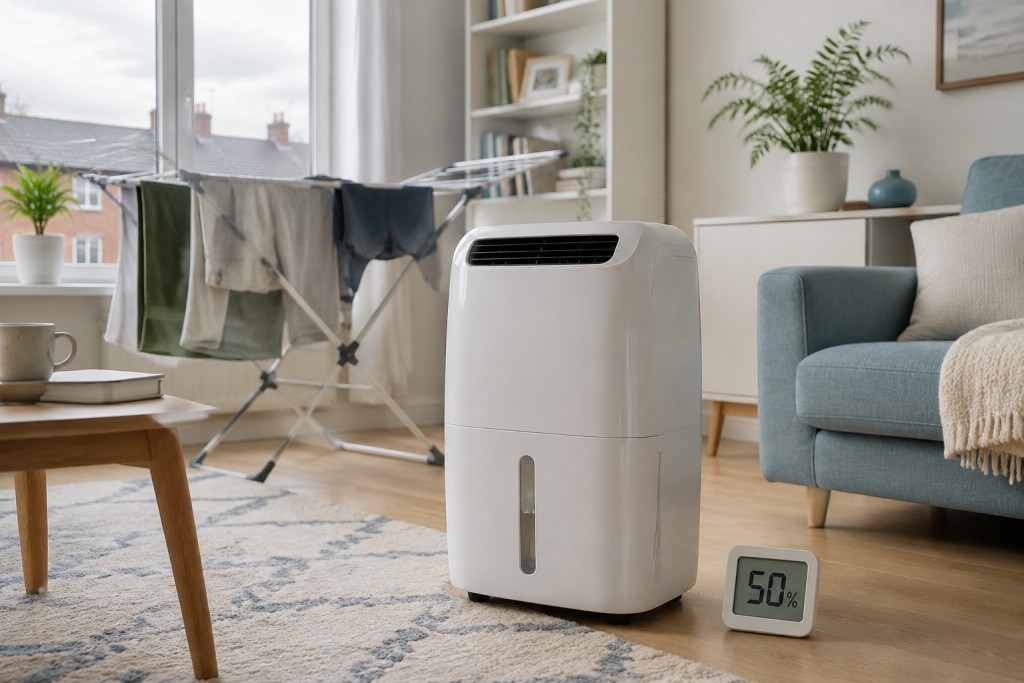
Dehumidifiers: How to Reduce Damp, Condensation and Mould Safely
How to choose, use and clean a dehumidifier safely—and understand what it can and cannot do about damp and mould
Dehumidifiers can be useful when excess moisture is building up inside a home. They can reduce condensation, help laundry dry indoors and make it harder for mould to grow.
However, a dehumidifier is not a complete solution to every damp problem. It removes water from the air; it does not repair a leaking roof or pipe, stop rain entering through a wall, correct rising damp, insulate a cold surface or provide fresh air.
Quick answer
- Use an inexpensive digital hygrometer to measure relative humidity.
- A practical target for most homes is approximately 40–55% relative humidity.
- Try to prevent humidity remaining above 60%, where condensation and mould become more likely.
- Do not try to make the air extremely dry: prolonged humidity below about 30% may irritate the eyes, skin and airways.
- Choose a unit appropriate for the room temperature and size—not simply the largest number printed on the box.
- Empty and clean the water tank and filter regularly so that the appliance itself does not become contaminated.
Contents
- Where does indoor moisture come from?
- Find the cause before buying a dehumidifier
- What humidity should I aim for?
- When is a dehumidifier helpful?
- Compressor, desiccant or mini dehumidifier?
- How to choose a suitable model
- How to use it effectively
- Cleaning and preventing fungal growth
- How to calculate the running cost
- What does this mean for someone with aspergillosis?
- If you rent your home
Where Does Indoor Moisture Come From?
Moisture is continually added to indoor air by ordinary activities, including:
- breathing and perspiration
- showering and bathing
- cooking and boiling water
- drying washing indoors
- unvented tumble dryers
- paraffin or portable bottled-gas heaters
- aquariums and large numbers of houseplants
- water entering through leaks or defects in the building
Warm air can contain more water vapour than cold air. When warm, moist air meets a cold window, outside wall or other cold surface, some of that water may condense. This is why dripping windows and mould in cold corners are often most noticeable during winter.
Find the Cause Before Buying a Dehumidifier
Different forms of damp require different solutions.
| Likely problem | Typical clues | What is needed? |
|---|---|---|
| Condensation | Water on windows; mould in corners, behind furniture or on cold outside walls; worse during cold weather or after cooking, showering or drying laundry. | Reduce moisture production, improve ventilation and heating, address cold surfaces and consider a dehumidifier. |
| Penetrating damp or a leak | A localised wet patch, staining, damaged plaster or worsening after rain; possible leaking roof, gutter, pipe or window. | Repair the source of water. A dehumidifier may help the structure dry afterwards but cannot repair the fault. |
| Rising damp | Damp and salts low down on ground-floor or basement walls, sometimes with a visible tide mark. | Professional investigation and appropriate building repair. |
| Construction moisture | A new building, extension, plastering or other recent wet building work. | Time, appropriate heat and ventilation; a suitable dehumidifier may speed drying. |
If water is entering the property, the priority is to stop it. Continuously operating a dehumidifier while a leak remains is like emptying a bath while leaving the tap running.
A dehumidifier does not replace ventilation. It removes water from existing indoor air but does not remove carbon dioxide, cooking pollutants, odours or other contaminants, and it does not bring fresh air into the home.
What Humidity Should I Aim For?
Relative humidity—usually shown as % RH—describes how much water vapour the air contains relative to the maximum it could contain at that temperature.
NHS advice recommends keeping indoor humidity between 40% and 60%. For a home with recurring condensation or for someone trying to reduce conditions favourable to mould, a practical operating target is often around 45–55%.
- Repeatedly above 60%: investigate moisture production, ventilation, heating, cold surfaces and building defects.
- Around 40–55%: a useful practical range for many occupied homes.
- Below 30% for long periods: may be unnecessarily dry and can irritate airways, skin and eyes.
A small digital hygrometer is more useful than guessing. Place it away from radiators, windows, direct sunlight and the dehumidifier’s air outlet. If possible, move it between rooms or use more than one to identify where and when humidity rises.
Remember that relative humidity changes with temperature. A cold wall may still develop surface condensation even when the centre of the room appears acceptable.
When Is a Dehumidifier Helpful?
A dehumidifier may be useful:
- when condensation persists despite reasonable heating and ventilation
- in a basement or other area where effective ventilation is difficult
- while drying laundry indoors, particularly when outdoor drying is impossible
- after a leak or flood has been repaired
- during humid weather when opening windows does not lower indoor humidity
- as a temporary measure while a landlord or contractor investigates the underlying problem
On a dry day, opening windows and using extractor fans may remove moisture more cheaply while also improving air quality. On a very humid day, bringing outdoor air inside may not lower the humidity, so a hygrometer can help you judge what works.
A dehumidifier will not remove mould that is already growing. Existing mould and its underlying moisture source still need to be dealt with safely.
Compressor, Desiccant or Mini Dehumidifier?
| Type | Usually best for | Important limitations |
|---|---|---|
| Compressor or refrigerant | Heated living spaces. These cool humid air so that water condenses into a tank. | Performance falls in colder rooms, and the unit may need to pause for defrosting. Usually heavier and contains refrigerant. |
| Desiccant | Cooler spaces such as an unheated room, garage, boat or conservatory. An absorbent material captures moisture. | Often uses more electricity, although the warm outlet air can be useful in a cold space. |
| Thermoelectric or Peltier mini unit | A very small enclosed space with a minor moisture problem. | Removes far less water than a full-sized unit and is unlikely to control serious room-scale condensation. |
| Disposable moisture absorber | A cupboard, wardrobe or similarly small enclosed space. | Not a substitute for an electric dehumidifier in a damp room or home. The collected liquid also needs careful handling. |
For most normally heated UK bedrooms and living rooms, a compressor model is usually the starting point. A desiccant model may be more effective if the space is consistently cold.
How to Choose a Suitable Model
Do not rely on the advertised litres per day alone
Extraction figures are commonly measured under warm and very humid test conditions. A machine advertised as removing 12 or 20 litres per day will usually collect much less in an ordinary UK home, especially in a cooler room.
Use the manufacturer’s recommended room size as a starting point, but also consider how cold the space is, how severe the moisture problem is and whether you are trying to dry laundry. A very small machine may run continuously without ever reaching the target humidity.
Useful features
- An adjustable humidistat: allows the unit to stop automatically when the chosen RH is reached.
- Automatic restart: useful after a brief power interruption, where appropriate.
- Automatic defrost: important for compressor units used in cooler rooms.
- A washable or replaceable air filter: check how easily it can be removed and cleaned.
- A visible tank and full-tank shut-off: reduces the risk of overflow.
- Continuous drainage: useful if the unit will operate for long periods and a safe drain is available.
- Appropriate noise level: particularly important for a bedroom or shared living space.
- Clear power consumption: compare watts as well as the purchase price.
- Laundry mode: useful, but normally means a higher fan speed and greater noise or electricity use.
Independent comparative testing can be more informative than the headline extraction figure because it may measure performance at both normal room temperature and colder conditions.
How to Use a Dehumidifier Effectively
- Read the manufacturer’s instructions. Required clearances, operating temperatures and drainage arrangements differ between models.
- Place it where air can circulate. Do not cover the inlet or outlet, press it against curtains or furniture, or put laundry directly over it.
- Use the humidistat. Start at approximately 50–55% RH rather than running continuously at the driest possible setting.
- Close windows and outside doors while actively dehumidifying a room. Otherwise, the machine may continually try to dry incoming outdoor air.
- Contain high-moisture activities. When drying laundry, use a suitable room, close its internal door and follow the appliance’s safety instructions.
- Continue to ventilate the home appropriately. Use bathroom and kitchen extractors and trickle vents to remove pollutants and moisture at source.
- Keep the building reasonably and evenly heated. Warmer surfaces are less likely to collect condensation.
- Move the unit only as instructed. Compressor models may need to remain upright for a period after transport before being switched on.
If one unit is being used for several rooms, it is often more effective to treat the worst room with the door closed and then move the unit, rather than expecting a small machine in a hallway to control an entire home.
Cleaning and Preventing Fungal Growth
A dehumidifier deliberately collects water and dust. If neglected, its tank or filter can become dirty and may support microbial growth.
- Empty the tank whenever it is full and do not leave collected water standing unnecessarily.
- Wash and dry the tank at the interval recommended by the manufacturer.
- Clean the air filter regularly—some housing guidance recommends checking it weekly during frequent use.
- Inspect the tank, float, drainage hose and accessible surfaces for slime, deposits or visible growth.
- If using continuous drainage, make sure the hose falls correctly to a suitable drain and cannot develop stagnant loops of water.
- Do not add fragrances, bleach, disinfectants or other chemicals to the tank unless the manufacturer specifically permits this.
- Before storing the machine, clean it and allow the tank and accessible components to dry fully.
For people with aspergillosis or another chronic lung condition: if the machine smells musty, contains visible mould or has inaccessible contamination, avoid running it and blowing air through it. Ask someone else to clean it safely according to the instructions, or seek advice from the manufacturer.
How to Calculate the Running Cost
Electricity prices change, so a fixed “cost per day” quickly becomes inaccurate. You can calculate the approximate cost from the appliance’s power rating:
Power in watts ÷ 1,000 × hours used × your electricity price per kWh
For example, a 300-watt machine used for eight hours consumes up to:
300 ÷ 1,000 × 8 = 2.4 kWh
Multiply 2.4 by the price per kWh shown on your electricity tariff. A humidistat will usually reduce consumption once the target humidity is reached, so actual use may be lower than this maximum calculation.
Compare machines by how much useful water they remove under realistic conditions, not wattage alone. A low-powered but ineffective unit that runs continuously may not be the cheapest option.
What Does This Mean for Someone With Aspergillosis?
Damp and mould are associated with respiratory health problems, and people with existing respiratory disease may be more vulnerable to their effects. Reducing persistent dampness and preventing mould growth is therefore sensible.
However:
- a dehumidifier does not treat aspergillosis
- it does not remove fungal growth already present in a building
- it cannot guarantee that airborne fungal exposure has been eliminated
- there is not enough evidence to promise that buying one will improve an individual patient’s symptoms or prevent a relapse
Its role is practical: controlling excess indoor moisture when that is part of the problem.
People with significant lung disease should avoid personally disturbing large or extensive areas of mould. Dry brushing or sanding can release particles into the air. The moisture source and necessary remediation should be assessed, and appropriate professional help may be needed.
If You Rent Your Home
Do not allow a supplied dehumidifier to become the landlord’s only response to a leaking, structurally damp, poorly insulated or inadequately ventilated property.
Government guidance for England states that landlords should identify and address the underlying causes of damp and mould rather than dismissing the problem as the result of a resident’s “lifestyle”. Report problems in writing, keep photographs and dates, and record any effects on health or damage to belongings.
For social housing in England, the first phase of Awaab’s Law has applied since 27 October 2025 and covers emergency hazards and significant damp-and-mould hazards. Rights and procedures differ elsewhere in the UK and internationally, so use the housing guidance for your location.
A dehumidifier may be a useful temporary safety measure while investigation and repair take place. It should not transfer responsibility for a defective building to the tenant.
Summary
A dehumidifier can reduce excess moisture and condensation when it is correctly sized, correctly used and properly cleaned. Aim for a measured indoor relative humidity of approximately 40–55%, and investigate readings that remain above 60%.
The best long-term solution is always to control moisture at source: repair leaks, use effective extraction and ventilation, avoid unnecessary moisture production, provide appropriate heating and address cold or poorly insulated surfaces.
Control the moisture, but also find out why it is there.
Further Reading and References
- NHS: Condensation, damp and mould
- UK Government: Understanding and addressing the health risks of damp and mould in the home
- Energy Saving Trust: Fixing damp and condensation
- Energy Saving Trust: How to improve your home’s ventilation
- UK Government: Awaab’s Law in the social rented sector
- Which?: How to buy the best dehumidifier
Last reviewed: August 2026.
Gardening Safely With Aspergillosis: Soil, Compost and Mould Exposure
How to enjoy gardens while reducing exposure to compost, soil, dust, mould spores and pollen
Gardening can provide gentle physical activity, enjoyment, purpose and valuable time outdoors. Having aspergillosis does not automatically mean that you must give it up.
However, Aspergillus is common in soil, compost and decaying vegetation. Activities that disturb these materials can release large numbers of spores and other particles into the air. The sensible approach is therefore to identify the highest-exposure jobs, adapt or delegate them, and take precautions suited to your individual health.
Quick guide
- Enjoy the garden, but reduce avoidable exposure.
- Avoid turning compost heaps, shredding decaying vegetation, using leaf blowers and opening dusty compost bags yourself.
- Never open or tip compost, bark, mulch or potting mix inside a greenhouse, shed or other enclosed space.
- Ask someone else to do the dustiest jobs whenever possible.
- If exposure cannot be avoided, use a well-fitting certified respirator—preferably FFP3 for high levels of mould spores—and understand its limitations.
- Wear gloves, cover cuts, wash your hands and change dusty clothing afterwards.
- If you are severely immunocompromised, ask your specialist team whether you should avoid soil and compost completely during the high-risk period.
Contents
- Why can gardening create an exposure?
- Does everyone with aspergillosis need the same precautions?
- Which gardening jobs create the most exposure?
- Lower-exposure ways to enjoy gardening
- Compost, potting mix, mulch and bark
- Choosing and using a mask
- Before, during and after gardening
- Greenhouses, sheds and enclosed spaces
- What about pollen and asthma?
- When should I seek medical advice?
Why Can Gardening Create an Exposure?
Aspergillus species occur naturally throughout the environment. They help break down dead plant material and are particularly associated with soil, compost, leaf litter, stored vegetation and other decomposing organic matter.
The fungus produces microscopic airborne spores. We all breathe some spores during everyday life, and completely avoiding them is impossible. Exposure can rise sharply, however, when contaminated material is disturbed.
Examples include:
- opening and tipping a bag of compost
- turning a warm compost heap
- sweeping a dry shed or greenhouse
- shredding leaves or woody garden waste
- using a leaf blower
- moving damp or mouldy bark, mulch or wood chips
- handling decaying plants
The concern is inhalation rather than simply touching an ordinary healthy plant. The amount released varies greatly with the material, moisture, temperature, weather, ventilation and how vigorously it is disturbed.
Compost is also one of the environmental settings in which azole-resistant Aspergillus fumigatus has been detected. This is another reason to reduce intense compost exposure, but it does not mean that every compost bag contains resistant fungus or that a single gardening session will cause infection.
Does Everyone With Aspergillosis Need the Same Precautions?
No. “Aspergillosis” includes several different illnesses, and people’s immune systems, lungs, treatments and gardening activities differ.
| Situation | How to think about gardening |
|---|---|
| Aspergillus allergy, asthma or ABPA | Dust, fungal particles and pollen may provoke airway symptoms. Concentrate on avoiding visible dust and high-spore tasks and make sure asthma treatment is well controlled. |
| CPA, bronchiectasis or another chronic lung condition | There is no precise exposure threshold known to be safe or harmful. Reducing concentrated exposure is sensible, while adapted lower-exposure gardening may remain valuable. |
| Severely weakened immune system | People who are neutropenic, receiving certain chemotherapy or transplant treatments, or otherwise at high risk of invasive aspergillosis may be advised to avoid gardening, soil, compost and dusty outdoor work. Follow the specialist team’s advice. |
| Taking corticosteroids or other immune-modifying treatment | Risk depends on the medicine, dose, duration and the rest of your health. Do not assume that every steroid inhaler creates the same risk as high-dose systemic immunosuppression; ask the clinical team if uncertain. |
If your immune status has recently changed—for example, following transplantation, chemotherapy, a major increase in systemic steroid treatment or a very low white-cell count—check whether your previous gardening routine remains appropriate.
Protective measures reduce exposure; they cannot make a high-exposure activity completely risk-free. The more vulnerable the person, the more important avoidance and delegation become.
Which Gardening Jobs Create the Most Exposure?
Consider asking someone else to do the following:
- turning or emptying a compost heap or bin
- opening, tipping or mixing bagged compost, manure, bark or mulch
- shredding or chipping garden waste
- handling heaps of dead leaves, grass clippings or rotting vegetation
- using a leaf blower or dry power sweeper
- mowing very dry grass, particularly if grass or pollen triggers symptoms
- cleaning a dusty or mouldy greenhouse, shed or plant pot store
- moving mouldy wood, hay, straw or stored bulbs
- pressure-washing or dry-brushing visibly mouldy surfaces
Distance matters. If someone else is doing one of these jobs, do not stand nearby. Stay upwind and allow airborne dust to settle before returning.
Dry and windy conditions make dust harder to control. Waiting for calmer weather or lightly dampening dry soil before someone works on it may reduce dust, although it will not remove fungal spores or make mouldy material safe.
Lower-Exposure Ways to Enjoy Gardening
Many activities involve little or no disturbance of compost or decaying matter. Depending on your mobility and respiratory health, possibilities include:
- watering established plants
- dead-heading healthy flowers before material begins to decay
- light pruning of healthy plants
- planning planting schemes or choosing plants
- harvesting fruit, vegetables or herbs from established plants
- using raised beds to reduce bending and effort
- working with someone else who handles soil and compost
- buying pre-planted containers rather than filling pots yourself
- photography, birdwatching or simply spending time in the garden
A “no-dig” approach may reduce repeated soil disturbance, although the compost or mulch used to establish it should be handled and spread by someone else.
Gardening can still be physically demanding. Pace activity, use lightweight or long-handled tools, sit for suitable tasks and take rests before breathlessness becomes severe. Pulmonary rehabilitation principles—gradual activity, pacing and breathing control—can be useful in the garden too.
Compost, Potting Mix, Mulch and Bark
Commercial bags are not sterile. Compost and related materials may contain fungi even when they look normal and carry no visible mould.
If possible, ask someone else to:
- open bags outdoors
- stand upwind while opening or pouring them
- avoid squeezing a sealed bag and forcing dusty air towards the face
- tip the material gently rather than from a height
- prepare pots before you enter the area
- close or cover unused material and store it outside living areas
Never open compost inside the home, greenhouse, conservatory, garage or shed. Enclosed spaces allow released particles to become concentrated and remain in the air.
Homemade compost heaps are particularly active biological environments. Adding kitchen or garden waste from a distance is less disturbing than turning, sieving or emptying the heap, but a severely immunocompromised person may be advised to avoid the area entirely.
Choosing and Using a Mask
A loose surgical mask, fabric face covering or single-strap “nuisance dust mask” is not designed to provide reliable protection from fine airborne dust and mould spores.
Use a certified filtering respirator marked to the appropriate standard. In the UK, disposable respirators should carry the relevant conformity marking and EN 149 classification.
- FFP2: may reduce inhalation during lower-level dusty tasks when it fits correctly.
- FFP3: provides a higher level of filtration and is advised by the Health and Safety Executive for high levels of mould spores.
The stated protection is only achieved when the respirator seals properly to the face.
- Follow the manufacturer’s fitting instructions.
- Check the seal every time it is worn.
- A beard or heavy stubble prevents a tight seal on most disposable respirators.
- Replace a disposable respirator if it becomes damp, damaged, dirty or difficult to breathe through.
- Do not touch the contaminated outside unnecessarily.
- Do not store a used disposable respirator in a dusty shed for repeated use.
A respirator can feel hot and may increase the sensation of breathing effort. If you have severe lung disease, discuss suitable respiratory protection with your clinical team. A reusable or powered option may sometimes be more appropriate, but it also requires correct selection, cleaning and maintenance.
A mask is the last line of protection, not the first. Avoiding or delegating a high-spore task is more reliable than using a mask to make the task appear completely safe.
For more information about choosing a respirator, getting a good fit, preventing glasses from fogging and understanding what masks can and cannot protect against, see our
Face Masks and Aspergillosis guide.
Before, During and After Gardening
Before
- Check whether the planned job involves compost, decaying plants or visible dust.
- Choose a calm day and avoid the hottest part of the day if heat worsens breathlessness.
- Make sure prescribed inhalers and any agreed respiratory action plan are available.
- Cover cuts and broken skin with a waterproof dressing.
- Wear gloves, closed shoes and clothing that covers exposed skin for soil-related work.
- Use eye protection when pruning thorny plants, using powered tools or where debris may fly.
During
- Work upwind of any dust source.
- Avoid touching the face or adjusting the respirator with dirty gloves.
- Stop if you become unusually wheezy, tight-chested, dizzy or breathless.
- Do not push through severe symptoms simply to finish a job.
After
- Remove dusty shoes and outer clothing before entering the main living space.
- Wash hands and exposed skin thoroughly.
- Clean any scratches or puncture wounds promptly with soap and water.
- Shower and wash hair after a particularly dusty exposure if practical.
- Keep visibly dusty work clothing separate until it can be washed.
- Clean reusable protective equipment according to its instructions.
Plant thorns and sticks can injure the eye and, rarely, introduce fungi. Seek prompt assessment for eye pain, redness, sensitivity to light or blurred vision following a gardening injury.
Greenhouses, Sheds and Enclosed Spaces
A greenhouse or shed can accumulate dust, decaying leaves, old compost and mouldy wood. Because the air volume is small and ventilation may be poor, disturbing this material can create a more concentrated exposure than doing the same task outdoors.
- Ventilate the space fully before entering.
- Ask someone else to remove old compost, mouldy pots and decaying plants.
- Use wet-wiping rather than dry sweeping where appropriate.
- Do not use a leaf blower inside.
- Do not store open compost beside a frequently used chair or workspace.
- If the building smells strongly musty or has extensive visible mould, avoid entering until it has been dealt with.
What About Pollen and Asthma?
Fungal exposure is not the only gardening issue. Grass and other plant pollen can aggravate allergic rhinitis and asthma in susceptible people.
If pollen is one of your triggers:
- check the pollen forecast
- avoid mowing or being nearby while grass is cut
- garden outside peak pollen periods where possible
- choose plants less likely to release large quantities of wind-borne pollen
- change clothes and wash after high-pollen exposure
- keep asthma and allergy treatment under review
Pollen sensitivity and Aspergillus sensitivity are not the same thing, although a person may have both.
When Should I Seek Medical Advice?
A brief garden exposure does not automatically mean that you have developed a new fungal infection, and it is not usually possible to attribute ordinary day-to-day symptoms to a single exposure.
Follow your existing respiratory action plan and seek advice if symptoms are new, persistent or substantially worse than usual, particularly:
- increasing cough, wheeze or chest tightness that does not settle
- worsening breathlessness
- fever or feeling systemically unwell
- new or increased coughing of blood
- a sustained fall in oxygen levels from your usual range
Seek urgent medical help for severe breathing difficulty, blue or grey lips or skin, confusion, chest pain, fainting or significant haemoptysis. Follow the emergency advice appropriate to your country.
If you are severely immunocompromised and have had a major soil, compost or mould exposure, contact your specialist team for individual advice rather than starting or changing antifungal treatment yourself.
Finding a Sustainable Balance
Gardening offers genuine physical and emotional benefits. The aim of this guidance is not to remove those benefits unnecessarily.
For many people with aspergillosis, a workable balance is to continue lower-exposure activities while delegating compost handling, leaf blowing, shredding, dry sweeping and other jobs that generate concentrated dust. Correctly fitted respiratory protection adds another layer when exposure cannot be avoided.
People at high risk of invasive aspergillosis need more cautious, personalised advice and may need to avoid soil and compost work during vulnerable periods.
Keep the garden where possible; change the way the riskiest jobs are done.
Further Reading and References
- NHS: Aspergillosis
- US Centers for Disease Control and Prevention: Reducing risk for aspergillosis
- Health and Safety Executive: Disposable dust masks, fit and protection levels
- Shelton JMG and colleagues: Citizen-science surveillance of triazole-resistant Aspergillus fumigatus in UK residential garden soils
- Poole CJM and colleagues: Allergic bronchopulmonary aspergillosis in garden-waste compost workers
- US Centers for Disease Control and Prevention: Fungal eye infections and plant-material injuries
- Royal Horticultural Society: Gardening for health and wellbeing
Last reviewed: August 2026.