


Organ Transplant and Aspergillosis: Understanding Infection Risk
An organ transplant can be life-changing treatment for severe organ failure. To protect the new organ, people need anti-rejection medicines that reduce the activity of the immune system.
These medicines can also make some infections more likely, including the uncommon but serious fungal infection invasive aspergillosis. Risk varies greatly by the transplanted organ, the medicines used, the time since transplant and any complications such as rejection.
This article is for people who have had, or are preparing for, a solid-organ transplant. Invasive aspergillosis is not the form of aspergillosis usually associated with asthma, COPD, bronchiectasis or ordinary mould exposure at home.
Why transplant treatment can increase the risk
We all breathe in tiny Aspergillus spores from the environment. In most people, the immune system clears them without difficulty.
After an organ transplant, anti-rejection medicines deliberately reduce immune activity so that the body does not attack the new organ. High doses of steroids or stronger immune-suppressing treatment may sometimes be needed, particularly soon after transplant or during treatment for rejection.
This can create an opportunity for Aspergillus to grow into lung tissue and cause invasive aspergillosis.
Does risk differ between transplant types?
Yes. The risk is not the same for everyone.
Lung transplant
Lung transplant recipients have particular reasons for careful monitoring. The transplanted lungs are directly exposed to inhaled spores, and the airways may take time to heal after surgery. Aspergillus can sometimes be found in airway samples without causing invasive disease, but it still needs careful assessment by the transplant team.
Different transplant centres use different approaches to antifungal prevention and monitoring after lung transplant. Decisions take account of local fungal patterns, previous cultures, airway healing, medication interactions and individual risk factors.
Liver transplant
Invasive aspergillosis remains uncommon after liver transplant. Risk may be higher in people who are very unwell around the time of transplant, need kidney replacement treatment, have a repeat transplant or require stronger immune-suppressing treatment.
Kidney and heart transplant
For most kidney and heart transplant recipients, invasive aspergillosis is uncommon. The risk can rise if there is severe immune suppression, treatment for rejection, low white blood cell counts, serious infection, diabetes or significant lung disease.
Your transplant team assesses these factors when deciding whether extra monitoring or preventive antifungal treatment is needed.
Colonisation and invasive infection are not the same
In people with lung transplants, Aspergillus may sometimes be found in sputum or samples taken during bronchoscopy. This can be called colonisation: the fungus is present, but there is no clear evidence that it has invaded tissue or is causing illness.
Colonisation does not automatically mean that someone has invasive aspergillosis or needs the same treatment. However, it is important information for the transplant team because it may influence monitoring, repeat testing or preventive treatment.
How teams reduce the risk
Transplant teams plan for infection risk from the beginning. Depending on the transplant type and individual circumstances, this may include:
- Preventive antifungal medication during higher-risk periods
- Regular blood tests and review of drug levels
- Routine respiratory samples or bronchoscopy after lung transplant
- Review of chest imaging when symptoms or test results suggest infection
- Careful adjustment of anti-rejection medicines and antifungal treatment to avoid serious drug interactions
Prevention is not one-size-fits-all. In particular, antifungal medicines can interact strongly with anti-rejection medicines such as tacrolimus, ciclosporin, sirolimus or everolimus. This is one reason why treatment and monitoring need to be managed by the transplant team.
Symptoms that need urgent discussion
Contact your transplant team promptly if you feel unwell or develop new symptoms. Follow the emergency contact instructions supplied by your transplant centre.
Possible symptoms of invasive aspergillosis include:
- Fever, particularly if it persists or returns despite antibiotic treatment
- New or worsening cough
- Breathlessness
- Chest pain, especially pain that is worse when breathing in
- Coughing up blood
- Marked tiredness or a general deterioration without a clear cause
These symptoms can have many possible causes, including viral or bacterial infection, medication effects, rejection or other transplant complications. They do not mean that someone has aspergillosis, but they need prompt assessment while immune defences are reduced.
How is invasive aspergillosis investigated?
Tests may include:
- Blood tests, including checks of white blood cell counts and organ function
- Chest X-ray and CT scanning
- Blood tests for fungal markers, such as galactomannan or beta-D-glucan
- Sputum or airway samples
- Bronchoscopy, particularly after lung transplant, when it is safe and likely to help
The transplant, infectious diseases, respiratory, microbiology and pharmacy teams may work together to interpret the results and decide on treatment.
Treatment
Invasive aspergillosis requires specialist treatment. Antifungal medicines such as voriconazole, posaconazole or isavuconazole may be used, depending on the individual situation.
Treatment can last for weeks or months. Drug levels, liver and kidney function, side effects and interactions with anti-rejection medicines all need careful monitoring. The transplant team will balance infection control with protecting the transplanted organ.
What you can do
Take anti-rejection and antifungal medicines exactly as prescribed. Do not stop, start or change medicines without speaking to your transplant team, including medicines bought over the counter or prescribed by another service.
Keep the emergency contact details from your transplant centre easy to find. If you are unsure about your own risk, ask which medicines affect your immune system most, whether you are receiving antifungal prevention and which symptoms should prompt an urgent call.
Related information
- Invasive aspergillosis
- Blood cancer and aspergillosis
- Stem-cell transplant and aspergillosis
- Treatment for aspergillosis
- How aspergillosis is diagnosed
- Common associated conditions

Stem-Cell (Bone Marrow) Transplant and Aspergillosis
A stem-cell transplant, sometimes called a bone marrow transplant, can be an important treatment for blood cancers and some serious blood or immune-system conditions. It replaces damaged or diseased bone marrow with healthy blood-forming stem cells.
For a time, the treatment also leaves the immune system much weaker than usual. This makes infections more likely, including the uncommon but serious fungal infection invasive aspergillosis.
This article is for people having, or recovering from, a stem-cell transplant. Invasive aspergillosis is a specific risk when immune defences are severely weakened. It is not the form of aspergillosis usually associated with asthma, COPD, bronchiectasis or ordinary mould exposure at home.
Why transplant treatment can increase the risk
We all breathe in tiny Aspergillus spores from the environment. In most people, immune cells remove them before they cause harm.
Before a stem-cell transplant, intensive treatment known as conditioning is used to prepare the body. This can reduce the number of infection-fighting white blood cells, especially neutrophils. It may take time for the transplanted stem cells to begin producing enough new blood cells and for the immune system to recover.
The risk is not the same throughout transplant. Your transplant team assesses it at each stage and may use preventive antifungal treatment, blood tests and other monitoring.
When is the risk highest?
Before engraftment: very low white blood cell counts
In the first weeks after conditioning and transplant, white blood cell counts can be very low. This is called neutropenia. During this period, the body has fewer neutrophils to control infections, including invasive fungal infections.
People are usually monitored closely in hospital at this stage. Fever or feeling unwell is taken seriously and should be reported immediately.
Early immune recovery
As the transplant begins to work, blood counts recover. This is known as engraftment. The risk of infection usually falls, but the immune system is still rebuilding and may not work normally for some time.
Previous infections, ongoing treatment, complications and the type of transplant can all affect individual risk.
Later after an allogeneic transplant
An allogeneic transplant uses stem cells from a donor. Some people develop graft-versus-host disease (GvHD), where donor immune cells attack parts of the recipient’s body.
Treatment for GvHD may include steroids or other medicines that suppress the immune system. This can increase the risk of invasive aspergillosis again, sometimes months after the transplant. The risk can remain higher while significant GvHD or immune-suppressing treatment continues.
Autologous and allogeneic transplants
An autologous transplant uses a person’s own stem cells. The main period of infection risk is usually the early phase when blood counts are low.
An allogeneic transplant uses donor stem cells. It can involve a longer period of immune suppression, particularly if GvHD develops or needs treatment. Your transplant team can explain what this means for your individual plan.
How teams reduce the risk
Transplant teams expect infection risk and plan for it. Depending on your treatment and risk factors, this may include:
- Preventive antifungal medication during higher-risk periods
- Regular blood tests and close review of symptoms
- Advice on food safety, hand hygiene and avoiding contact with people who are unwell
- Vaccination planning after immune recovery
- Rapid investigation of fever, cough, breathlessness or other possible signs of infection
Follow the guidance from your own transplant centre. Recommendations vary according to the type of transplant, blood counts, other medicines and local clinical protocols.
Symptoms that need urgent discussion
During transplant treatment or while taking immune-suppressing medicine, contact your transplant or haematology team urgently if you develop a fever or feel significantly unwell. Use the emergency contact details they have given you.
Possible symptoms of invasive aspergillosis include:
- Fever that does not settle, returns or continues despite antibiotic treatment
- New or worsening cough
- Breathlessness
- Chest pain, especially pain that is worse when breathing in
- Coughing up blood
- Severe tiredness or unexplained deterioration
These symptoms have many possible causes. They do not mean that someone has aspergillosis, but prompt assessment is important because infections can become serious quickly when immune defences are low.
How is invasive aspergillosis investigated?
Diagnosis can be challenging because symptoms and scan changes can overlap with other infections, medication effects and transplant complications. Tests may include:
- Blood tests and regular checks of blood counts
- Chest X-ray and CT scanning
- Blood tests for fungal markers, such as galactomannan or beta-D-glucan
- Sputum or airway samples, where available
- Bronchoscopy or other procedures when they are safe and likely to help
The transplant, infectious diseases, respiratory, microbiology and pharmacy teams may work together to interpret results and plan treatment.
Treatment
Invasive aspergillosis needs specialist treatment. Antifungal medicines such as voriconazole or isavuconazole are commonly used, but the choice depends on the individual situation and any possible interactions with transplant medicines.
Treatment may continue for weeks or months. It is guided by symptoms, scans, test results and recovery of the immune system. Drug levels, kidney and liver function, and possible side effects may need close monitoring.
What you can do
Keep the emergency numbers from your transplant team easy to find and follow their advice about infection prevention. Do not stop antifungal prevention or immune-suppressing medicines without discussing this with your team.
If you are unsure about your own risk, ask your transplant team which phase of recovery you are in, whether you are receiving antifungal prevention and which symptoms should prompt an urgent call.
Related information
- Blood cancer and aspergillosis
- Invasive aspergillosis
- Treatment for aspergillosis
- How aspergillosis is diagnosed
- Common associated conditions
Sources: American Society of Transplantation and Cellular Therapy guidance on aspergillosis in haematopoietic cell transplant recipients; Review of fungal infections in haematopoietic stem-cell transplant recipients; Anthony Nolan information on infection after stem-cell transplant.

Flu, COVID-19 and Aspergillosis: When Severe Viral Pneumonia Changes the Risk
Flu (influenza) and COVID-19 can be particularly difficult for people with lung conditions. They may worsen cough, breathlessness, fatigue or asthma symptoms, and can sometimes lead to pneumonia or a flare of an existing lung disease.
Very rarely, severe viral pneumonia can also be complicated by a type of invasive aspergillosis. This is mainly a concern for people who are seriously ill in hospital, particularly in intensive care. It is not something that usually follows an ordinary flu-like illness or a positive COVID-19 test managed at home.
This article is about severe viral pneumonia in hospital or intensive care. It does not mean that people with asthma, COPD, bronchiectasis, ABPA or CPA will develop invasive aspergillosis whenever they catch flu or COVID-19.
Why can severe viral pneumonia increase the risk?
Most people breathe in tiny Aspergillus spores every day without becoming ill. The lining of the airways, mucus clearance and immune system normally stop the spores from causing infection.
Severe influenza or COVID-19 pneumonia can damage the lining of the airways and lungs. In people who are critically unwell, this damage may combine with other factors such as intensive care treatment, mechanical ventilation, prolonged steroid treatment or a weakened immune system. This can create an opportunity for Aspergillus to grow into lung tissue.
This is called invasive pulmonary aspergillosis.
IAPA and CAPA
Doctors sometimes use specific names for invasive aspergillosis linked with severe viral pneumonia:
- IAPA — influenza-associated pulmonary aspergillosis
- CAPA — COVID-19-associated pulmonary aspergillosis
Both conditions are mainly recognised in people admitted to hospital with severe viral pneumonia, especially those needing critical care. They are different from chronic pulmonary aspergillosis (CPA), which develops gradually over months in structurally damaged lungs, and from ABPA, which is an allergic reaction to Aspergillus.
Who is most likely to be affected?
Severe influenza or COVID-19 pneumonia is the main concern. The risk may be higher in people who also have:
- A very weakened immune system, for example because of blood cancer treatment or transplant medicines
- Prolonged or high-dose steroid treatment
- Serious underlying lung disease
- Other severe illness requiring intensive care treatment
However, IAPA has also been reported in some critically ill people with influenza who did not have a previously recognised immune problem. This is why intensive care teams remain alert to the possibility when severe viral pneumonia is not improving as expected.
What symptoms or changes make doctors investigate?
People with severe viral pneumonia are already being closely monitored in hospital. Doctors may consider invasive aspergillosis if there is a persistent or returning fever, worsening breathing, new changes on a chest CT scan, or deterioration despite treatment for the viral infection and possible bacterial infection.
These changes can have many explanations. They do not automatically mean that someone has aspergillosis. Testing is needed because viral pneumonia, bacterial infection, inflammation and invasive aspergillosis can look similar.
How is it investigated?
Assessment may include:
- Chest X-ray and CT scanning
- Blood tests for fungal markers, such as galactomannan or beta-D-glucan
- Testing sputum or samples from the airways
- Bronchoscopy, when it is safe and likely to provide useful information
- Review by critical care, respiratory, infectious diseases and microbiology teams
No one test answers every question. Teams interpret the results alongside the severity of illness, scan findings, other infections and any treatments that affect the immune system.
Treatment
When invasive aspergillosis is suspected or confirmed, treatment is coordinated by specialist hospital teams. Antifungal medicines such as voriconazole or isavuconazole are commonly used, with the choice depending on the individual situation, other medicines and kidney and liver function.
Prompt diagnosis and treatment are important, but care also includes treating the viral pneumonia, supporting breathing and managing any other infections or medical problems.
What this means for people living with chronic lung disease or aspergillosis
Flu and COVID-19 can still be significant infections for people with asthma, COPD, bronchiectasis, ABPA or CPA. They may trigger a flare of existing symptoms or lead to a chest infection, so it is sensible to follow your usual action plan and seek medical advice if you are becoming more unwell.
But invasive aspergillosis after flu or COVID-19 is not the expected outcome of an ordinary respiratory virus. The terms IAPA and CAPA mainly describe a rare complication of severe viral pneumonia in hospital.
Prevention
Vaccination is an important way of reducing the chance of severe respiratory infection. Keep up to date with flu and COVID-19 vaccines if they are recommended for you, and ask your GP, pharmacist or specialist team if you are unsure about eligibility.
Vaccines do not treat aspergillosis directly. Their value in this context is that preventing severe influenza or COVID-19 also reduces the chance of the serious complications that can follow severe viral pneumonia.
Related information
- Invasive aspergillosis
- Blood cancer and aspergillosis
- Chronic pulmonary aspergillosis (CPA)
- Allergic bronchopulmonary aspergillosis (ABPA)
- Treatment for aspergillosis
- Common associated conditions
Sources: Review of influenza-associated and COVID-19-associated pulmonary aspergillosis; ECMM/ISHAM guidance on COVID-19-associated pulmonary aspergillosis; NHS COVID-19 vaccination information.
Blood Cancer and Aspergillosis: Understanding Invasive Aspergillosis
People being treated for blood cancer are at increased risk of infection because the cancer itself, chemotherapy and some other treatments can reduce the number or function of infection-fighting white blood cells.
One uncommon but serious infection is invasive aspergillosis. Unlike chronic pulmonary aspergillosis, which usually develops slowly in already damaged lungs, invasive aspergillosis can develop more quickly when immune defences are severely weakened. It needs prompt specialist assessment and treatment.
This information is mainly for people receiving treatment that significantly weakens the immune system. Invasive aspergillosis is not the form of aspergillosis usually associated with asthma, COPD, bronchiectasis or ordinary mould exposure at home.
Why blood cancer treatment can increase the risk
We all breathe in tiny Aspergillus spores from the environment. In most people, immune cells clear them before they cause a problem.
Blood cancers and their treatment can sometimes reduce these defences. The most important risk is neutropenia: a low level of neutrophils, a type of white blood cell that helps the body control many infections.
The risk may be higher during or after:
- Treatment for acute leukaemia, particularly intensive chemotherapy
- Treatment for relapsed or difficult-to-treat blood cancer
- Some treatments for lymphoma or myeloma
- Long periods of low white blood cell counts
- High-dose steroid treatment or other medicines that suppress the immune system
- Stem-cell (bone marrow) transplant treatment
Risk varies greatly between people and between treatment plans. Your haematology team will know when your blood counts and treatment make infection more likely.
What is invasive aspergillosis?
In invasive aspergillosis, Aspergillus grows into lung tissue rather than simply being present in the airways. The lungs are most often affected, but infection can occasionally spread to other parts of the body.
This is different from:
- ABPA, an allergic reaction to Aspergillus that mainly affects people with asthma or cystic fibrosis
- CPA, a long-term infection that usually develops over months in structurally damaged lungs
- Colonisation, where Aspergillus is found in a sample without clear evidence that it is causing illness
How teams reduce the risk
Haematology and transplant teams take the risk of infection seriously. Depending on the type of treatment and the expected duration of neutropenia, they may use antifungal medicines to prevent mould infections, arrange regular blood tests and advise when urgent assessment is needed.
You may also be given practical advice about food safety, avoiding contact with people who are unwell and when to contact the hospital. Follow the advice from your own treatment team, as it will be tailored to your blood counts and treatment plan.
Symptoms that need urgent discussion
During treatment for blood cancer, a fever or feeling unwell can be an emergency because infections may become serious quickly. Follow the emergency contact instructions given by your haematology team.
Possible symptoms of invasive aspergillosis include:
- Fever, particularly one that does not settle or returns despite antibiotic treatment
- New or worsening cough
- Breathlessness
- Chest pain, especially pain that is worse when breathing in
- Coughing up blood
- Severe tiredness or a general deterioration without a clear cause
These symptoms can have many causes, including bacterial or viral infections, treatment effects and the blood cancer itself. They do not mean that someone has aspergillosis. But they should be assessed promptly, especially during neutropenia or when taking immune-suppressing treatment.
How is invasive aspergillosis investigated?
Diagnosis can be difficult because early symptoms are often non-specific and respiratory samples may not always be available. Tests may include:
- Blood tests and repeated checks of blood counts
- A chest CT scan
- Blood tests for fungal markers, such as galactomannan or beta-D-glucan
- Sputum testing, where a sample can be produced
- Bronchoscopy or other procedures when these are safe and likely to help
Doctors interpret these results together. No single blood test, scan or culture proves every case, and treatment may need to begin before every test result is available when the clinical concern is high.
Treatment
Invasive aspergillosis is treated by specialist haematology, infectious diseases and respiratory teams. Antifungal medicines such as voriconazole or isavuconazole are commonly used, with the choice tailored to the individual situation.
Treatment is often given for weeks or months and continues until the infection is controlled and immune recovery allows the body to help clear it. Drug levels, liver and kidney function, side effects and interactions with cancer medicines may all need close monitoring.
What you can do
Keep the emergency contact numbers supplied by your haematology team easy to find. Contact them promptly if you develop a fever or feel significantly unwell during treatment, even if symptoms seem minor.
Do not stop antifungal prevention or other prescribed treatment without discussing it with your team. If you have questions about your individual risk, ask when your white blood cell count is expected to be lowest and what symptoms should prompt an urgent call.
Related information
- Invasive aspergillosis
- Stem-cell transplant and aspergillosis
- Treatment for aspergillosis
- How aspergillosis is diagnosed
- Common associated conditions
Sources: ECIL guidance on invasive fungal disease in cancer and transplant patients; IDSA aspergillosis guidance; Blood Cancer UK information on neutropenia and infection.
Lung Cancer and Aspergillosis: When Symptoms and Scan Changes Need Careful Assessment
Lung cancer and aspergillosis can sometimes occur in the same person, but having lung cancer does not mean that someone will develop a fungal infection. Aspergillosis is still uncommon.
It becomes important to consider when lung cancer, previous lung disease or cancer treatment has changed the structure of the lungs or weakened the body’s ability to control infection. Symptoms and scan changes can then be difficult to interpret: they may be due to cancer, treatment effects, bacterial infection or an Aspergillus-related lung condition.
Why lung cancer can change the risk
Most people breathe in Aspergillus spores without becoming ill. Healthy lungs and immune defences normally clear them.
For some people with lung cancer, several factors can combine to make aspergillosis more likely:
- Underlying COPD, emphysema, bronchiectasis, previous tuberculosis or other lung damage
- Surgery that removes part of the lung or leaves an altered area of lung structure
- Radiotherapy, which can sometimes cause scarring or damage to lung tissue over time
- Chemotherapy, prolonged steroid treatment or other medicines that suppress immune defences
- Reduced lung function, weight loss or general frailty during cancer treatment
These factors do not cause aspergillosis on their own. They change the balance between the fungus, the lungs and the immune system.
Which forms of aspergillosis can occur?
The type of aspergillosis depends largely on lung structure and immune status.
Chronic pulmonary aspergillosis (CPA)
CPA is a long-term infection that usually develops over months in lungs that are already damaged. It can cause cavities, scarring or nodules, sometimes with an aspergilloma (fungal ball) in a cavity. CPA may occur months or years after surgery or radiotherapy for lung cancer.
Invasive aspergillosis
Invasive aspergillosis is a more serious infection in which the fungus damages lung tissue and may spread beyond the lungs. It is more likely when the immune system is very weakened, for example during some intensive chemotherapy treatments, prolonged high-dose steroid treatment or treatment for blood cancers.
Aspergillus colonisation
Sometimes Aspergillus is found in sputum without clear evidence that it is causing disease. This is called colonisation. A positive culture needs to be interpreted alongside symptoms, scans and blood tests; it does not automatically mean that antifungal treatment is needed.
Why diagnosis can be difficult
Lung cancer, surgery, radiotherapy, bacterial infection and aspergillosis can all cause cough, breathlessness, tiredness, weight loss and changes on a CT scan. A new nodule, cavity or area of shadowing may need careful investigation to distinguish between cancer recurrence, treatment-related change and infection.
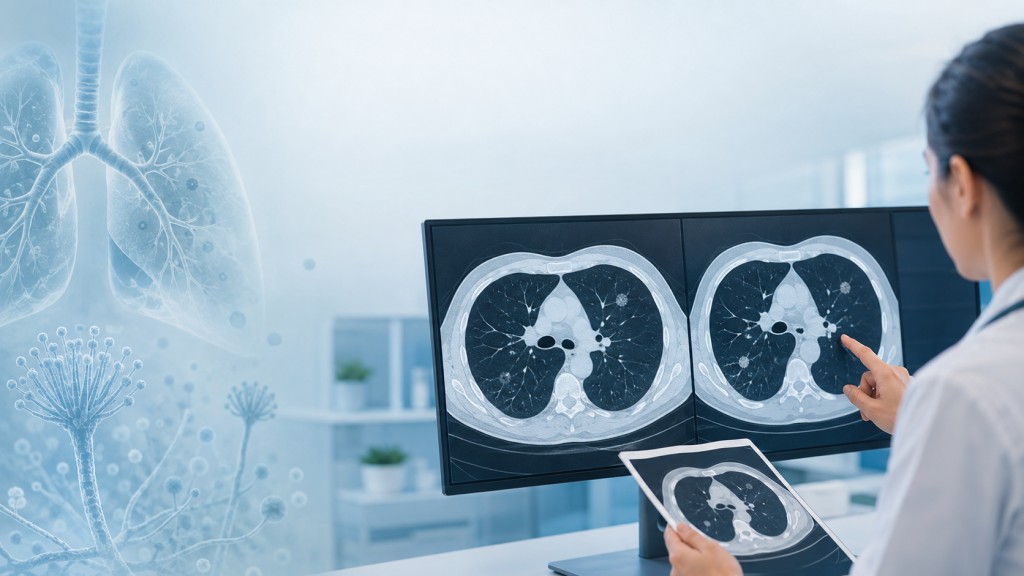
An aspergilloma can also be mistaken for lung cancer on imaging. A fungal ball inside a cavity, or an Aspergillus nodule, may appear as a mass or nodule on a chest X-ray, CT scan or PET scan. Equally, a new cancer can sometimes be mistaken for infection. This is why doctors may need to compare scans over time and use blood tests, respiratory samples or a biopsy before reaching a diagnosis.
Aspergillosis can mimic lung cancer on a scan. An Aspergillus nodule or an aspergilloma may look like a lung mass, while cancer or cancer recurrence can sometimes resemble infection. Careful specialist assessment helps avoid premature conclusions in either direction.
Diagnosis usually combines several sources of information:
- Symptoms and the timeline of cancer treatment
- Comparison of current and previous chest CT scans
- Blood tests, including Aspergillus IgG antibodies when CPA is suspected
- Sputum or bronchoscopy samples, where appropriate
- Additional imaging or biopsy when the diagnosis remains uncertain
No single test gives every answer. A specialist respiratory, oncology and fungal infection team may need to review the findings together.
Symptoms that should be discussed promptly
Let your cancer or respiratory team know about symptoms that are new, worsening or not improving as expected. These include:
- Persistent or worsening cough
- Increasing breathlessness
- Fever or repeated chest infections
- Ongoing fatigue or unexplained weight loss
- Chest pain or discomfort
- Coughing up blood (haemoptysis)
Coughing up blood should always be reported. Seek urgent medical help for significant, repeated or rapidly increasing bleeding.
Treatment needs to be coordinated
If aspergillosis is diagnosed, treatment depends on the type of infection, the extent of lung disease, immune status and the cancer treatment plan.
CPA is often treated with long-term antifungal medication and regular monitoring. Invasive aspergillosis needs urgent specialist treatment. An aspergilloma causing significant bleeding may sometimes be treated with surgery or a procedure to block the bleeding blood vessels.
Antifungal medicines can interact with some cancer treatments and other medicines. It is therefore important that the oncology, respiratory and pharmacy teams know about every medicine being taken before treatment starts or changes.
What you can do
Keep attending planned cancer and respiratory follow-up appointments, and report symptoms rather than assuming they are simply part of recovery or treatment.
Aspergillosis is not the most likely explanation for a new symptom or scan change in someone with lung cancer. But a history of lung cancer and its treatment is important information when clinicians are considering persistent symptoms, cavities, nodules or unexplained changes on a scan.
Related information
- Lung surgery and aspergillosis
- Chronic pulmonary aspergillosis (CPA)
- Invasive aspergillosis
- Aspergilloma (fungal ball)
- How aspergillosis is diagnosed
- Treatment for aspergillosis
- Coughing up blood (haemoptysis)
- Common associated conditions
Sources: ERS/ESCMID clinical guidelines for chronic pulmonary aspergillosis; European Respiratory Society review of pulmonary aspergillosis.
Pneumothorax, Bullae and Aspergillosis: Why Old Lung Damage Can Matter
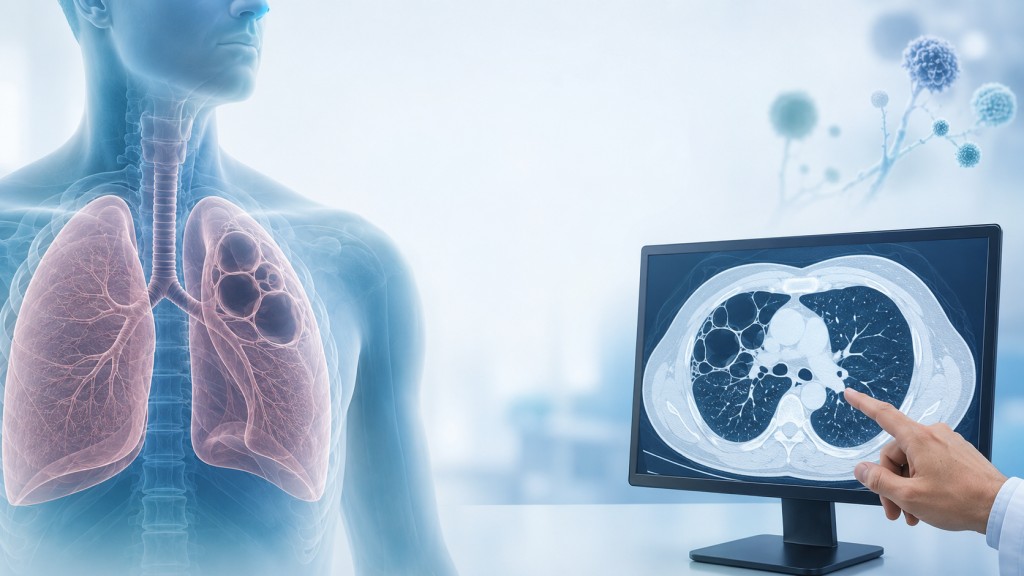
A pneumothorax is a collapsed lung. It happens when air enters the space between the lung and the chest wall, causing part or all of the lung to collapse. A bulla is a large air-filled space within the lung, most often linked with emphysema or other structural lung damage.
Most people who have had a pneumothorax or have bullae will never develop aspergillosis. However, these conditions can be part of the lung history that makes chronic pulmonary aspergillosis (CPA) more likely in a small number of people.
The important issue is not the past event alone. It is whether it has left an area of damaged, scarred or poorly functioning lung in which Aspergillus can persist.
Why lung structure matters
Everyone breathes in tiny Aspergillus spores from the environment. Healthy lungs normally clear them without difficulty.
When airways or lung tissue are already damaged, mucus may be harder to clear and the lung can contain spaces where spores can settle. Over time, Aspergillus may grow in these areas. This can lead to CPA or, in some cases, an aspergilloma—a fungal ball within an existing cavity or air space.
Bullae and cavities are not the same thing. A bulla is an enlarged air space caused by destruction of lung tissue, whereas a cavity usually develops within an area of abnormal lung tissue. But both can be signs that lung structure has changed, and both may be relevant when a doctor is investigating persistent symptoms or unusual scan findings.
Pneumothorax and Aspergillus
A previous pneumothorax does not mean that Aspergillus caused the collapse, or that aspergillosis will develop afterwards. In most cases it will not.
However, pneumothorax can occur alongside bullae, emphysema, previous infection or other lung conditions that have already changed the structure of the lungs. It may also lead to surgery or pleural procedures. This wider lung history is why clinicians may consider CPA if symptoms persist or scans later show a cavity, progressive scarring or a possible fungal ball.
Bullae, emphysema and COPD
Bullae are often associated with emphysema and COPD. They can vary greatly in size and effect on breathing. Some remain stable for years; others are part of more extensive lung damage.
COPD and emphysema are recognised underlying conditions for CPA. This does not mean that a bulla becomes infected simply because it exists. Rather, structural damage, reduced mucus clearance, repeated infection, steroid treatment and other aspects of lung health can combine to create a more favourable environment for Aspergillus.
Symptoms that should be checked
CPA usually develops slowly, over at least several months. Its symptoms can overlap with COPD, emphysema, recovery from pneumothorax or recurrent chest infection.
Speak to your respiratory team if you notice:
- A cough that persists or becomes worse
- Increasing breathlessness beyond your usual level
- Persistent tiredness, low energy or unintentional weight loss
- Recurrent chest infections or symptoms that do not settle as expected
- Chest discomfort
- Coughing up blood (haemoptysis)
A small streak of blood in sputum can have several causes, but should always be reported. Seek urgent medical help for significant, repeated or rapidly increasing bleeding.
How is aspergillosis investigated?
A previous pneumothorax or bulla is only one piece of the picture. Doctors usually need to combine several types of information:
- Symptoms and the history of previous lung problems
- Chest X-ray and, usually, a CT scan
- Blood tests, including Aspergillus IgG antibodies
- Sputum testing, where a sample can be produced
- Comparison with previous scans to see whether a change is stable or progressing
CPA is not diagnosed from one scan finding or a single positive sputum sample alone. Specialists look for consistent evidence of Aspergillus-related disease, usually with symptoms or progressive imaging changes lasting at least three months, while ruling out other causes.
Treatment and monitoring
Some people with bullae or old pneumothorax-related changes only need routine follow-up for their underlying lung condition. A stable bulla or scar is not treated as aspergillosis.
If CPA is diagnosed, treatment may include antifungal medication, often with regular blood tests and scans. Treatment is tailored to the type of aspergillosis, the amount of healthy lung remaining and any other medicines being taken.
If a fungal ball is causing significant bleeding and is single and localised, surgery may sometimes be an option. Where surgery is not suitable, other approaches may include antifungal treatment or bronchial artery embolisation—a procedure that can help control bleeding.
What you can do
Keep attending planned follow-up after a pneumothorax or lung surgery, and make sure your respiratory team knows about any change from your usual symptoms.
A previous collapsed lung or bullae do not mean aspergillosis is inevitable. But if you have persistent symptoms, worsening scans or coughing up blood, mention your full lung history and ask whether Aspergillus needs to be considered.
Related information
- Chronic pulmonary aspergillosis (CPA)
- Aspergilloma (fungal ball)
- COPD and aspergillosis
- Lung surgery and aspergillosis
- How aspergillosis is diagnosed
- Coughing up blood (haemoptysis)
- Common associated conditions
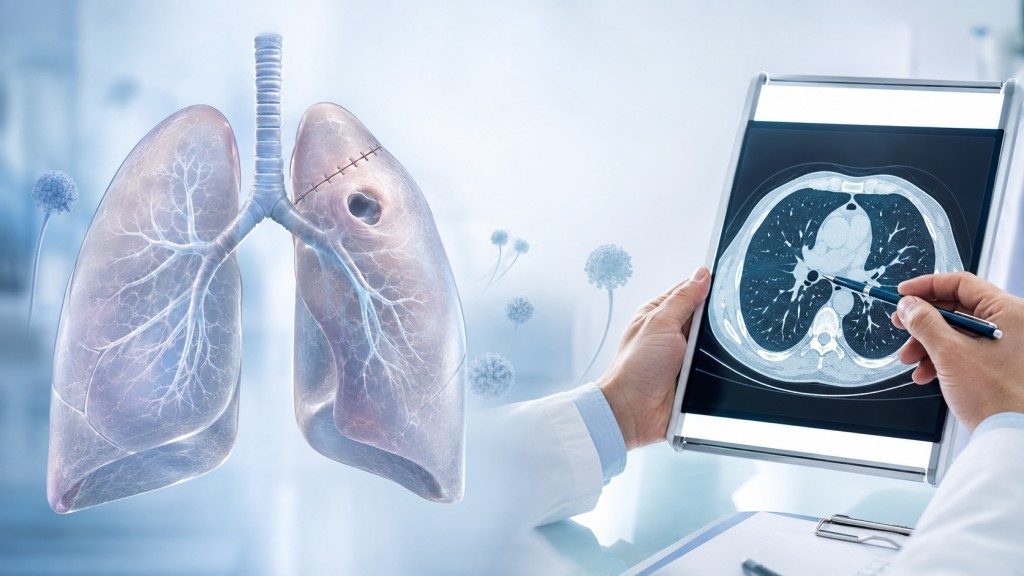
Lung Surgery and Aspergillosis: When Previous Lung Damage Matters
Recovering from lung surgery can take time. It is normal to have some breathlessness, discomfort, tiredness or changes on a chest scan while the lung and chest heal.
For a small number of people, however, previous surgery or other damage to the lungs can create conditions in which Aspergillus causes a longer-term lung problem. This does not mean that everyone who has had lung surgery is at risk. It means that persistent or unexplained symptoms deserve careful assessment, particularly when scans show a cavity or other structural change in the lung.
Why previous lung surgery can matter
Most people breathe in Aspergillus spores every day without becoming ill. The lungs usually clear them before they cause a problem.
After surgery, part of the lung may have been removed or the lung may heal with scarring, altered airways or, occasionally, an air-filled space. These changes can reduce normal mucus clearance. If there is already lung damage from another condition, the effect can be greater.
Aspergillus can sometimes grow in these altered areas of lung. This may lead to chronic pulmonary aspergillosis (CPA), or to an aspergilloma (a fungal ball) within an existing cavity.
Which operations or conditions are relevant?
Aspergillosis is still uncommon after lung surgery, but the possibility may be considered after:
- Surgery to remove part or all of a lung
- Previous treatment for lung cancer, including surgery or radiotherapy
- Surgery for collapsed lung (pneumothorax), bullae or severe emphysema
- Operations following serious infection, tuberculosis or other destructive lung disease
The risk depends on the condition that led to surgery, the amount of underlying lung damage, other treatments and overall lung health. It is not caused by poor hygiene, and CPA is not contagious.
What symptoms should be checked?
Symptoms of CPA can develop gradually over months and may overlap with the effects of the original lung condition or surgery. They can include:
- Persistent or worsening cough
- Increasing breathlessness
- Ongoing tiredness, low energy or weight loss
- Repeated chest infections or symptoms that do not settle as expected
- Chest discomfort
- Coughing up blood (haemoptysis)
A small streak of blood in sputum can have several causes, but should be reported to a healthcare professional. Seek urgent medical help for significant, repeated or rapidly increasing bleeding.
What might be seen on a scan?
Chest X-rays and CT scans are important because they show the structure of the lungs. After surgery, scans may show expected scarring and post-operative change. In CPA, doctors may look for a cavity, thickening around a cavity, a fungal ball, nodules or changes that progress over time.
These findings are not specific to aspergillosis. Cancer recurrence, bacterial infection, inflammation and post-operative change can sometimes look similar. This is why scan findings need to be considered alongside symptoms and laboratory tests.
How is aspergillosis diagnosed after surgery?
There is no single test that can diagnose CPA on its own. Assessment may include:
- A review of symptoms and previous lung history
- Chest X-ray and, usually, a CT scan
- Blood tests, including Aspergillus IgG antibodies
- Sputum testing, where a sample can be produced
- Other tests or specialist review when the diagnosis remains unclear
For CPA, doctors look for a consistent picture of symptoms or progressive scan changes lasting at least three months, evidence that Aspergillus is involved, and exclusion of other likely causes.
What treatment is available?
Treatment depends on the type and extent of aspergillosis, symptoms, lung function and the reason for the original surgery.
Some people with stable findings need regular monitoring rather than immediate treatment. Others need antifungal medication, often for many months or longer. These medicines need careful monitoring because they can interact with other treatments and may cause side effects.
If there is a single aspergilloma causing significant bleeding or other problems, surgery or a procedure to block the bleeding blood vessels may be considered. These decisions are individual and are usually made with a respiratory, thoracic surgical and specialist fungal infection team.
What you can do
Keep attending your planned follow-up appointments after lung surgery and report symptoms that persist, worsen or do not fit with the recovery you expected.
If you have previously had lung surgery and are experiencing ongoing cough, fatigue, weight loss, worsening breathlessness or coughing up blood, ask your respiratory team whether your scans and symptoms need further investigation. A history of surgery does not prove aspergillosis, but it is an important part of the wider lung history.
Related information
- Understanding chronic pulmonary aspergillosis (CPA)
- Aspergilloma (fungal ball)
- How aspergillosis is diagnosed
- Treatment for aspergillosis
- Coughing up blood (haemoptysis)
- Common associated conditions
Sources: ERS/ESCMID clinical guidelines for chronic pulmonary aspergillosis; National Aspergillosis Centre information on CPA.
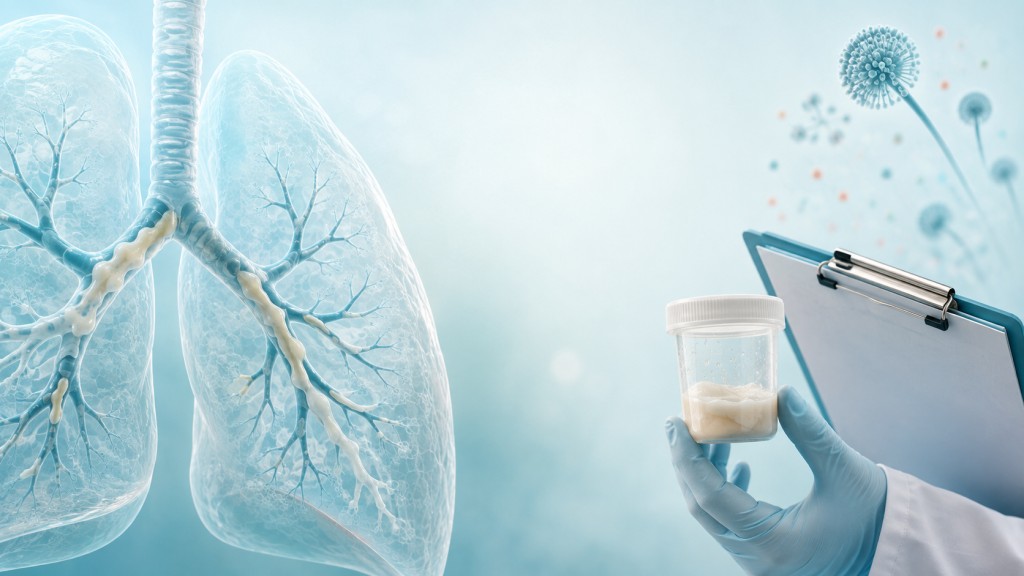
Cystic Fibrosis and Aspergillus: When Does It Matter?
Cystic fibrosis (CF) affects the way mucus is made and cleared from the lungs. Thick, sticky mucus can make it easier for bacteria and fungi to remain in the airways, including Aspergillus fumigatus.
An Aspergillus result in sputum is therefore not unusual in CF. But it does not automatically mean that the fungus is causing lung disease or that antifungal treatment is needed. The key question is whether it is contributing to a change in symptoms, inflammation or lung damage.
Why Aspergillus is more common in cystic fibrosis
Healthy airways clear inhaled particles and fungal spores through mucus and tiny hairs called cilia. In CF, mucus is harder to move and can collect in the airways. Repeated infection and inflammation may also lead to bronchiectasis, where airways become widened and further mucus can build up.
These conditions can allow Aspergillus to be found repeatedly in respiratory samples. This may be described as colonisation: the fungus is present, but there is no clear evidence that it is causing an active Aspergillus-related illness.
Do highly effective CF medicines change this?
Highly effective CFTR modulator medicines, especially the triple treatment elexacaftor/tezacaftor/ivacaftor (Kaftrio), improve CFTR function and mucus clearance. Recent studies suggest that, after starting this treatment, Aspergillus fumigatus is found less often and in smaller amounts in respiratory samples from people with CF.
This may also reduce the chance of Aspergillus-related inflammation and ABPA. However, it does not mean that every existing Aspergillus problem disappears: ABPA and other lung complications can still need assessment, monitoring and treatment.
Aspergillus can mean different things
In CF, clinicians consider several possible explanations.
Colonisation
Aspergillus is detected in sputum or another respiratory sample, but there is no clear associated deterioration or allergic reaction. It may be monitored rather than treated.
Aspergillus sensitisation
The immune system shows an allergic response to Aspergillus, often on blood or skin testing, without enough features to diagnose ABPA. This can be relevant when reviewing ongoing symptoms, but it is not the same as ABPA.
Allergic bronchopulmonary aspergillosis (ABPA)
ABPA is an excessive allergic immune reaction to Aspergillus growing in the airways. It is a recognised complication of CF, and can cause wheeze, cough, thick mucus plugs, worsening breathlessness, changes on chest imaging and a fall in lung function.
Symptoms often overlap with a CF pulmonary exacerbation, so ABPA can be difficult to recognise.
Other Aspergillus-related lung disease
Less commonly, clinicians may consider other forms of Aspergillus-related disease. The interpretation depends on the whole picture: symptoms, CT scans, sputum results, blood tests, previous lung damage and response to usual CF treatment.
When should ABPA be considered?
ABPA may be considered when someone with CF develops a deterioration that is not fully explained by a usual bacterial infection, particularly if antibiotics are not helping as expected.
Possible clues include:
- New or increased wheeze, cough or breathlessness
- Thick mucus plugs or a change in sputum
- A fall in lung function
- New shadows, mucus impaction or other changes on chest imaging
- Raised total IgE and evidence of allergy to Aspergillus
- Repeated growth of Aspergillus in respiratory samples
No single test gives the answer. The diagnosis is usually based on a combination of symptoms, blood tests, sputum or other respiratory samples, lung function and imaging. This is important because CF, bacterial infection, bronchiectasis and ABPA can all produce similar symptoms and scan appearances.
Why the distinction matters
ABPA causes inflammation that can lead to further airway damage if it is not recognised and treated. On the other hand, treating every positive sputum culture for Aspergillus would expose people to medicines and potential side effects without clear benefit.
Treatment for ABPA is planned by the CF and respiratory teams. It commonly aims to control the allergic inflammation, sometimes alongside antifungal treatment to reduce the amount of fungus in the airways. The best approach varies between individuals and needs to take account of other CF medicines, possible drug interactions and monitoring requirements.
What you can do
Tell your CF team if your symptoms change, especially if you have more wheeze, persistent deterioration, new mucus plugging or a flare that is not improving as expected. Ask what a positive Aspergillus result means in your particular situation, and whether further testing is needed.
Do not assume that a positive culture means you have ABPA—or that it can be ignored. In CF, Aspergillus findings need to be interpreted alongside the full clinical picture.
Related information
- Allergic bronchopulmonary aspergillosis (ABPA)
- Understanding bronchiectasis
- How aspergillosis is diagnosed
- Treatment for aspergillosis
- Common associated conditions
Source: Cystic Fibrosis Foundation ABPA clinical care guidance.
ERS Vision Live
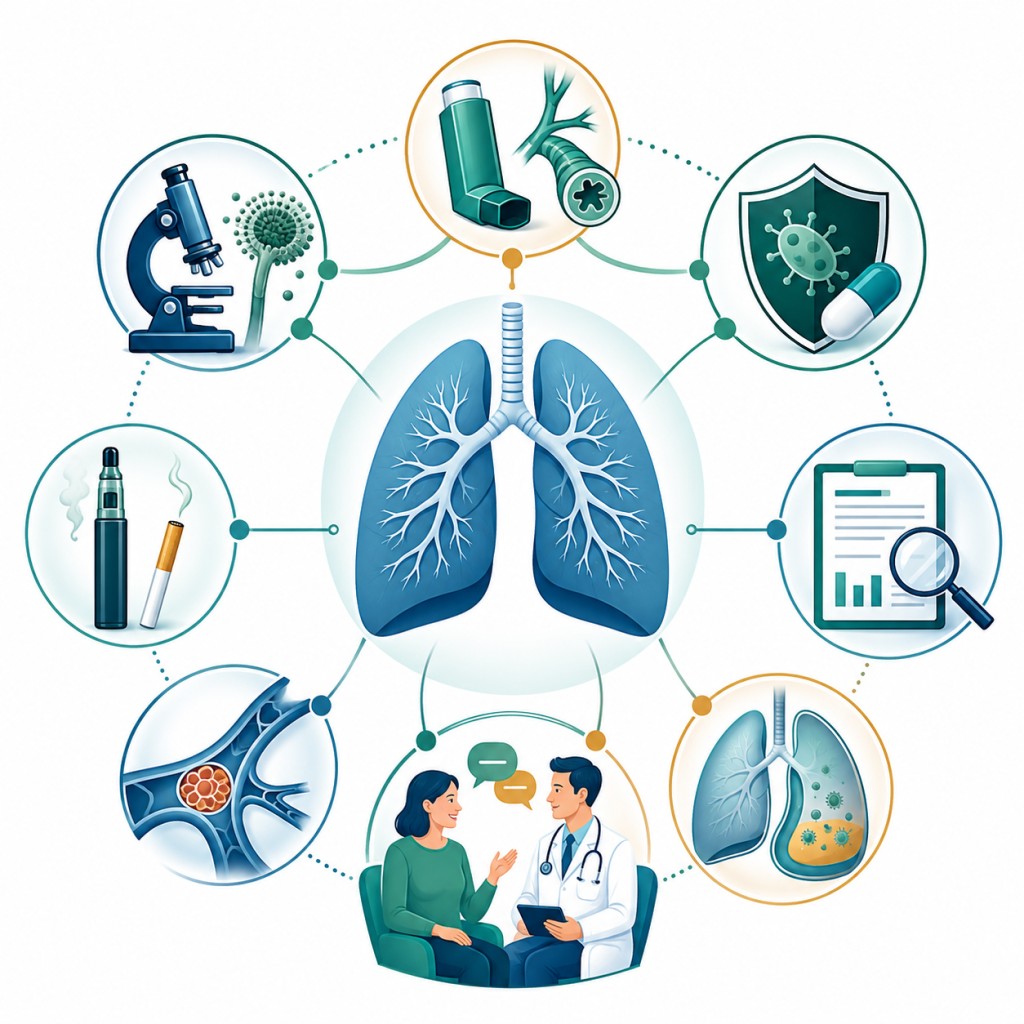
ERS Vision Live is a continuing video collection covering developments across respiratory medicine.
Recent programmes have explored COPD and biologic treatments, pleural infection, antimicrobial resistance, pulmonary toxicity, tuberculosis guidance, pulmonary embolism, vaping and tobacco use, interstitial pneumonia classification, and partnership between patients, clinicians and researchers.
Although the collection is not specific to aspergillosis, several topics are relevant to people living with chronic respiratory disease, including fungal infection, treatment development, antimicrobial resistance and patient involvement in research and care.
Explore the ERS Vision Live collection
The channel states that these programmes are provided by industry partners and are not contributed to or endorsed by the European Respiratory Society.

Amphotericin B resistance in Aspergillus: protecting an important treatment for the future
Amphotericin B is one of the oldest antifungal medicines still used in specialist care. It remains important because it works differently from azole antifungals such as itraconazole, voriconazole, posaconazole and isavuconazole.
Resistance to azole antifungals is an increasing clinical concern in aspergillosis. Amphotericin B resistance can occur, but it is much less commonly encountered in routine patient care.
For most people with aspergillosis, this research is not a reason to worry that amphotericin B will fail if it is needed. Instead, recent research is helping scientists understand how amphotericin B resistance develops and how this valuable treatment might be protected or improved for the future.
What is amphotericin B?
Amphotericin B is an antifungal medicine that damages the fungal cell membrane. It binds to ergosterol, an important component of that membrane, causing damage that can lead to fungal cell death.
It is available in different formulations, including liposomal amphotericin B. It may be used for serious or invasive fungal infections, particularly when azole treatment is unsuitable, ineffective or affected by resistance.
Amphotericin B is valuable partly because it attacks fungi in a different way from the azoles. More information about antifungal treatment is available in our guide to the management of aspergillosis.
What did the original study find?
The original article on this website described a 2019 study from Brazil. Researchers tested 228 Aspergillus isolates and found that 27% of the Aspergillus fumigatus isolates tested showed reduced susceptibility or resistance to amphotericin B.
This was an important warning, but the figure needs careful interpretation. It did not mean that 27% of patients with aspergillosis had amphotericin B-resistant infections. The isolates came from a particular study population and cannot be used to estimate the risk for all patients.
Laboratory resistance results also do not always translate directly into treatment failure. The species of Aspergillus, the type of infection, the patient’s immune system, the drug formulation and the laboratory method used for susceptibility testing all matter.
How is this different from azole resistance?
Azole resistance is currently the more important resistance problem in clinical aspergillosis.
Azole resistance may develop during long-term treatment, but resistant Aspergillus strains can also be acquired from the environment. When resistance is suspected, it can make treatment more difficult because azoles are commonly used for several forms of aspergillosis.
Amphotericin B resistance is less commonly encountered in clinical practice. It remains an important alternative in some situations because it has a different mechanism of action.
That difference is valuable. If resistance to one antifungal class develops, another class may still be effective. Treatment decisions are made by specialist teams using the patient’s clinical condition, laboratory results and response to treatment.
New research is explaining how resistance works
Recent laboratory research is beginning to identify possible mechanisms behind amphotericin B resistance.
A 2024 study of A. fumigatus found that exposure to amphotericin B affected proteins involved in membrane transport, lipid handling and fungal metabolism. One protein, called RtaA, appeared to influence the movement or organisation of sterols within the fungal cell. Changes involving RtaA altered the fungus’s sensitivity to amphotericin B.
This does not mean that RtaA testing is currently available for patients. The finding is experimental. Its importance is that it gives researchers a possible biological pathway to investigate when developing new treatments or resistance tests.
Read the study on RtaA and amphotericin B resistance.
A separate 2025 study examined Aspergillus terreus. This species is already known to have naturally reduced susceptibility to amphotericin B. The researchers found that changes in fungal growth and genetic activity could alter amphotericin B susceptibility, highlighting how complicated resistance can be within a single species.
Read the study of Aspergillus terreus and amphotericin B susceptibility.
Why does species identification matter?
Not all Aspergillus species respond to antifungal medicines in the same way.
Some non-fumigatus Aspergillus species may have higher amphotericin B minimum inhibitory concentrations in laboratory testing. However, interpreting these results is difficult because clinical breakpoints are not available for every species, and studies may use different laboratory methods.
This is one reason specialist laboratories and clinical teams need to interpret susceptibility results in context. A laboratory result is not, by itself, a prediction of what will happen to an individual patient.
Could newer medicines preserve the benefits of amphotericin B?
Researchers are also developing newer polyene antifungals. Polyenes are the drug family that includes amphotericin B.
One example is SF001, an experimental next-generation polyene. Laboratory studies suggest that it may retain broad antifungal activity, including activity against some amphotericin B-resistant isolates, while potentially causing less toxicity.
SF001 is not yet a routine treatment and requires further development and clinical testing. However, this research illustrates how understanding resistance mechanisms may help scientists develop safer and more effective medicines for the future.
Read the study of SF001 and amphotericin B.
What does this mean for patients?
For most people living with aspergillosis:
- amphotericin B resistance is not a common everyday concern;
- azole resistance is currently the more important clinical resistance problem;
- a laboratory finding of reduced susceptibility does not automatically mean treatment will fail;
- species identification and specialist interpretation are important;
- treatment decisions depend on the type of aspergillosis, the patient’s health, drug levels, side effects and laboratory results.
Patients receiving long-term azole treatment may need regular monitoring of symptoms, blood tests, liver function and antifungal drug levels. This is known as therapeutic drug monitoring and can help clinicians judge whether treatment exposure is adequate and whether side effects are developing. See our information about antifungal monitoring and therapeutic drug monitoring.
Protecting an important treatment for the future
Recent research is moving beyond simply detecting resistance. Scientists are beginning to understand the biology behind amphotericin B resistance and are using that knowledge to explore new and potentially safer antifungal medicines.
Amphotericin B resistance is not currently the same kind of widespread clinical problem as azole resistance. For most patients, this research is not a reason to expect treatment failure.
Its importance is that amphotericin B remains a valuable antifungal option, and research into resistance may help preserve or improve the polyene medicines available to patients with serious fungal infections in the future.
References
- Abou-Kandil et al. The proteomic response of Aspergillus fumigatus to amphotericin B reveals the involvement of the RTA-like protein RtaA in AmB resistance. MicroLife.
- Eisele et al. Aspergillus terreus sectorization: a morphological phenomenon shedding light on amphotericin B resistance mechanism. mBio. 2025.
- Vahedi-Shahandashti and Lass-Flörl. In vitro activity of SF001: a next-generation polyene versus amphotericin B. Antimicrobial Agents and Chemotherapy. 2025.