


The Thursday Sessions: Living with Aspergillosis Day to Day
Every Thursday at 10 am UK time, people affected by aspergillosis, relatives and carers meet online for a friendly, guided discussion. You can join in, ask a question, share an experience or simply listen. There is no need to book.
See the next Thursday meeting and join here. Please use this page for the current joining link and final details.
Our recent topic was: what parts of everyday life have changed most since aspergillosis became part of it?
The answers were varied, because everyone’s health, treatment and triggers are different. But several shared themes emerged: learning what affects you, protecting your limited energy, finding ways to remain connected, and building confidence to speak up for what you need.
Finding people who understand
For many people, receiving a diagnosis can be a relief but also the start of a steep learning curve. Aspergillosis is unfamiliar to many friends, relatives and even some healthcare professionals. That can leave people feeling they have to explain the condition repeatedly—or that others cannot see how unwell they are because they do not “look ill”.
Talking with others who have similar experiences can make a real difference. It creates space for practical tips, but also for the simple recognition that breathlessness, fatigue, medication effects and uncertainty are real. Sometimes it is enough not to have to explain everything from the beginning.
Learning your own patterns and triggers
People described gradually noticing that some places or situations can make symptoms worse for them. Examples included damp or musty environments, piles of decaying leaves, strong fragrances and aerosol sprays, busy indoor spaces, and situations where the risk of respiratory infection feels higher.
These experiences are personal, not a list of rules. What bothers one person may not affect another. The useful approach is to notice patterns, discuss important concerns with your clinical team, and make sensible adjustments where you can.
Plan ahead—but leave room to change your mind
A recurring challenge was the unpredictability of symptoms. Plans may have to change because of fatigue, breathlessness, infection risk or a difficult treatment day. Some people find it helps to choose flexible arrangements: meet at a quieter time, choose a familiar venue, arrive early, sit near an exit, or avoid buying non-refundable tickets far in advance.
Planning can also make social life more possible. One person described going out with family while choosing not to eat, so they could still enjoy the company without worrying about food-related symptoms. Others found low-pressure ways to see people, such as a quiet coffee, an exercise session at their own pace, or inviting a friend to their home.
Protect your energy
Living with a long-term lung condition often means making choices about where to spend your energy. This may include pacing activities, saying no without guilt, and recognising when a conversation, errand or social commitment is simply too demanding on that day.
Protecting energy is not giving up. It is an active way of making room for the things that matter most. Several people spoke about the value of accepting help, using a temporary solution when a problem cannot be solved immediately, and returning attention to what is manageable today.
Be informed and keep useful records
Participants felt that understanding their own condition helped them feel more in control, especially when they met professionals who had limited experience of aspergillosis. Reliable information can help you prepare for appointments and ask clearer questions.
A simple symptom diary or personal health file can be useful. You might record changes in symptoms, medicines and side effects, test results, questions for clinic, and the contacts who know your care. This is particularly helpful when different services use incomplete or outdated information.
Always take medicines as prescribed, and if you have a possible side effect or another concern, seek advice from your treating team rather than stopping a medicine on your own.
Acceptance, hope and boundaries
Acceptance came up repeatedly—not as liking the restrictions that illness can bring, but as recognising the reality of the condition and then finding a way forward. For some, that means focusing on useful information; for others, it means stepping back from negativity, choosing supportive people, or allowing a difficult day to be just that.
There is no single right way to live with aspergillosis. Small adaptations can add up: learning what helps, keeping your support network close, and being kind to yourself when plans need to change.
Join the conversation
Thursday meetings begin with a suggested everyday topic, then open into a relaxed group conversation. They are a chance to hear how others approach the same challenges, pick up practical ideas and feel less alone. You do not have to speak or turn your camera on.
Weekly peer-support discussions are not recorded, so people can speak freely. Join us next Thursday at 10 am UK time: see the meeting details and current joining link.
This article summarises themes from a patient discussion. It is not individual medical advice. Please discuss your own symptoms, medicines and risk factors with your clinical team.
More Thursday Sessions: explore discussion summaries and find out how to join.


Join our online aspergillosis meetings
Our online meetings offer information, shared experience and friendly peer support for people affected by aspergillosis, along with relatives and carers. You are welcome whether you are newly diagnosed, have been living with aspergillosis for many years, or simply want to understand more.
There are two easy ways to keep up to date: our website has the full, current meeting details and joining links; our Facebook group helps you discover upcoming meetings and receive reminders.
Need to join a meeting?
Go straight to our Online meetings page. It is the one page to bookmark. There you can quickly:
- see the next meeting and its UK start time;
- read the topic and any joining information; and
- open the current joining link when it is time to attend.
If you use Facebook, look in the group’s Events section as well and click Interested or Going to receive a reminder. The Event will always send you back to the website for the joining link.
1. Start with the Online meetings page
The Online meetings page is the best place to check what is happening and to join. It contains the current date, time, topic and joining link for each meeting.
We may occasionally need to change a speaker, topic or link. For this reason, please return to the website shortly before the meeting rather than relying on an old link in a social-media post or email.
You do not normally need to book a place in advance. Simply open the joining link a few minutes before the meeting starts.
2. Use Facebook Events for reminders
If you use Facebook, join our Facebook group and look for Events in the menu below the group cover image. On a phone, tap More if you cannot see Events straight away. This shows meetings that are coming up.
Open the Event and click Interested if you hope to attend, or Going if you expect to be there. Facebook can then send you its usual reminders, depending on your own notification settings.
The Facebook Event will direct you back to the Online meetings page for the definitive information and joining link. Please check the Event as well as the website near the time of the meeting, as we may post a practical update there.
3. Choose the meeting that suits you
- Tuesday social meeting, 2 pm UK time: an informal opportunity to say hello and talk with other people.
- Thursday discussion, 10 am UK time: a friendly group discussion, sometimes with a suggested topic to get the conversation started.
- First Friday monthly meeting, 1 pm UK time: a longer session with talks, discussion and practical information, usually held on Microsoft Teams.
If you live outside the UK, please check the time difference where you are. The current meeting page will always show the UK time.
4. Join the meeting
- Open the joining link from the Online meetings page a few minutes early.
- Enter the name you would like others to see. A first name, initials or a nickname are all fine.
- Allow microphone access if you would like to speak.
- Choose whether to turn on your camera. It is completely fine to join with it off.
- Wait for the host to let you in, if the meeting uses a waiting room.
Most meetings can be joined using a browser on a computer, tablet or phone. You do not usually need to create an account. Microsoft Teams may offer its app, but you can normally choose to join in your browser instead.
Want to see what Thursday Sessions are like? Explore previous discussion summaries.
Come in as you are
You can join late, leave early, listen quietly, use the chat, or speak when you feel ready. There is no pressure to share personal information. If it is your first meeting, joining a few minutes early can make the technology feel less rushed.
Our meetings are for information and support, not individual medical advice. Please continue to discuss symptoms, treatment decisions and urgent health concerns with your own clinical team.
Privacy and recordings
Weekly peer-support discussions are not recorded, so people can speak more freely. Some planned monthly presentations may be recorded; if so, we will say so clearly at the start. Please respect everyone’s privacy and avoid posting personal medical information in Facebook Event discussions.
If you cannot join
First, check the Online meetings page for the most up-to-date link. You can also try opening it in another browser such as Chrome, Edge or Safari. If you miss a recorded monthly presentation, useful recordings and resources may be available on our Recorded patient meetings page.
We hope to see you at a meeting soon.

Cleaner air is lung care: why the ULEZ study matters for asthma, bronchiectasis and aspergillosis
A major new UK study has found that children living in central London experienced faster lung-function growth after traffic-related air pollution fell following the introduction of the Ultra Low Emission Zone (ULEZ).
This does not mean that ULEZ treats aspergillosis, asthma or bronchiectasis. But it is an important reminder that the air around us is part of lung health. For people already living with a respiratory condition, cleaner air can mean one less pressure on lungs that may already be inflamed, damaged or working hard.
What did the study find?
The Children’s Health in London and Luton (CHILL) study followed 3,414 children aged 6–9 years in central London and Luton. The researchers measured lung function each year and estimated exposure to nitrogen dioxide (NO2), a pollutant strongly linked to traffic exhaust.
Before ULEZ was introduced, children in London had greater traffic-pollution exposure and poorer measured lung function than the comparison group in Luton. Over the following years, NO2 exposure fell faster in London and the children’s lung function grew faster too. A key measure, FEV1 (the amount of air someone can blow out in one second), caught up with the Luton group.
This was not a simple before-and-after comparison. Luton was included to help account for wider changes that affected both places, such as the COVID-19 pandemic and general changes in traffic. The study cannot prove that ULEZ alone caused every improvement, but it provides strong evidence that reducing traffic pollution can benefit children’s lung development.
Why does this matter if you already have a lung condition?
Air pollution does not cause every respiratory illness, and it does not cause aspergillosis directly. Aspergillosis is caused by infection or an allergic response to Aspergillus fungi. However, polluted air can irritate and inflame the airways, increase cough and breathlessness, and trigger worsening symptoms in people with asthma, COPD and other lung conditions.
Many people with aspergillosis also have asthma, bronchiectasis, COPD or previous lung damage. For them, a pollution episode may be another trigger alongside infection, allergens, cold air, smoke or exertion. Reducing pollution cannot replace treatment, airway-clearance techniques, inhalers, antifungal medicines or clinical care. It can reduce one avoidable stress on the lungs.
Cleaner air is about the future as well as today
The most striking lesson from this study is that lungs are not entirely fixed in childhood. When traffic pollution fell, the children’s lung-function growth accelerated. This suggests that reducing exposure while lungs are still developing can allow important catch-up.
That matters for every generation. Children who grow up with healthier lungs may enter adult life with more respiratory reserve. In later life, that could mean greater resilience when faced with asthma, infections, smoking, occupational exposures or other lung disease.
For adults with established lung disease, cleaner air is less likely to reverse structural damage. But it can still matter greatly: fewer bad-air days may mean fewer symptom flare-ups, more confidence to be active and less pressure on already vulnerable lungs.
What can individuals do?
Air pollution is a public-health issue, so the main solutions must be collective: cleaner vehicles, cleaner public transport, safer walking and cycling routes, well-insulated homes with clean heating, and action on sources such as traffic and wood burning.
There are also small practical steps that may help on days when air quality is poor:
- Check the local air-quality forecast before planning outdoor activity.
- Where possible, choose quieter routes away from heavy traffic rather than stopping activity altogether.
- Avoid adding to indoor air pollution: do not smoke indoors, and take care with wood or coal burning.
- Continue your prescribed medicines and airway-clearance routine.
- Follow your usual action plan and seek clinical advice if worsening breathlessness, wheeze or chest symptoms are not settling.
For most people, the benefits of staying active remain important. The aim is not to make people fearful of going outside, but to make it easier for everyone to breathe cleaner air while doing so.
A public-health benefit we can now see
Measures such as clean-air zones can be controversial, particularly when the cost of replacing an older vehicle falls on individuals or small businesses. That makes fair transition support essential.
But this study gives the public-health benefit a much clearer human meaning. Cleaner air was associated not only with a lower number on a pollution monitor, but with children’s lungs growing better. For people living with aspergillosis, asthma and bronchiectasis, that is a reminder that clean air is not a luxury or simply an environmental aspiration. It is part of prevention, part of respiratory care, and part of giving future generations a healthier start.
Further information
- Read the CHILL study in The Lancet Public Health
- Plain-language summary from the CHILL research team
- Check the UK air-quality forecast
This article is for general information and is not a substitute for personal medical advice. Contact your clinical team if worsening respiratory symptoms are not responding to your usual management plan.
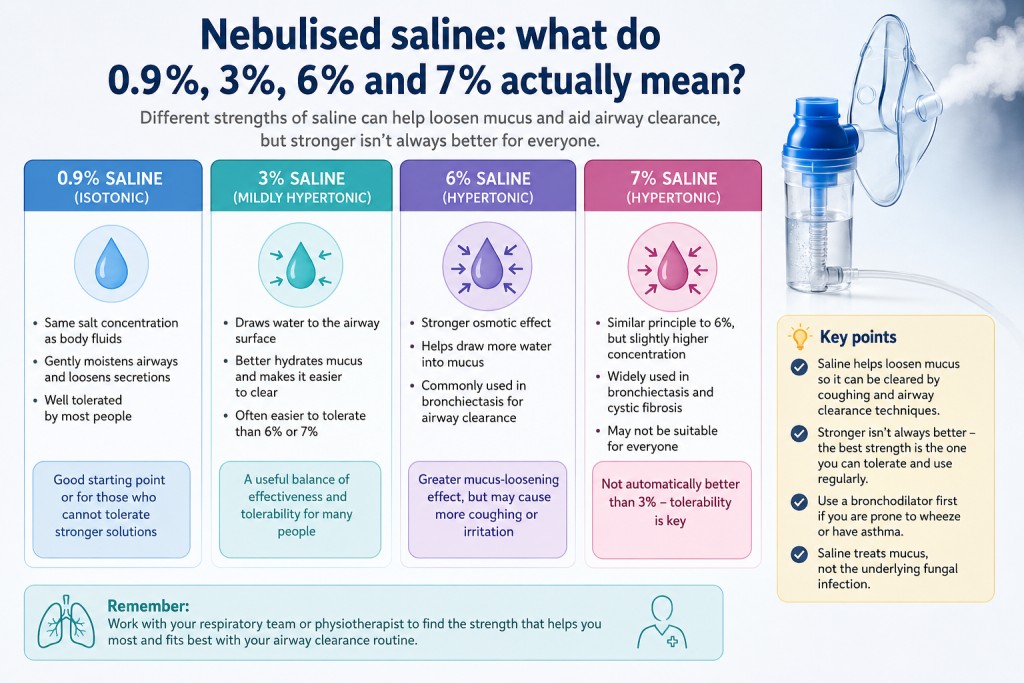
Nebulised saline: what do 0.9%, 3%, 6% and 7% actually mean?
People with bronchiectasis and other long-term lung conditions are sometimes advised to inhale saline through a nebuliser to help with airway clearance. If you have been prescribed it, you may have noticed that saline comes in different strengths — commonly 0.9%, 3%, 6% or 7%.
So what do those numbers mean? Is stronger saline better? And why can one person comfortably use 7% saline while another finds even 3% makes them cough or wheeze?
The answer is that nebulised saline is not simply “salt water”. Its concentration changes how it interacts with the surface of the airways and with mucus.
Why use nebulised saline?
Healthy airways are lined by a thin layer of fluid. Tiny hair-like structures called cilia beat through this fluid, helping move mucus and trapped particles towards the throat, where they can be coughed up or swallowed.
In bronchiectasis, mucus can become unusually thick and difficult to clear. Damaged and widened airways can also allow mucus to accumulate, creating an environment in which bacteria and other microorganisms can persist.
Nebulised saline can help by adding water to the airway surface and making secretions easier to move and cough up. It is generally used alongside an airway-clearance technique rather than instead of one.
Current European bronchiectasis guidance suggests considering mucoactive treatments when airway-clearance techniques alone have not adequately controlled symptoms. Treatment should be individualised, taking account of tolerability and treatment burden.
What does the percentage mean?
The percentage tells you how much sodium chloride — ordinary salt — is dissolved in the sterile solution.
0.9% saline — isotonic or “normal” saline
A 0.9% sodium chloride solution has approximately the same salt concentration as body fluids, which is why it is described as isotonic.
When nebulised, it moistens the airways and can help loosen secretions. British Thoracic Society guidance suggests considering humidification with sterile water or normal saline to facilitate airway clearance.
Because it is relatively gentle on the airways, 0.9% saline may be useful for people who cannot tolerate stronger solutions.
3% saline — mildly hypertonic
Anything above 0.9% is described as hypertonic saline.
The higher salt concentration creates an osmotic effect that helps draw water towards the airway surface. This can increase the hydration of mucus and make it easier to move.
Three per cent saline therefore provides a stronger effect than normal saline while potentially being easier to tolerate than 6% or 7%.
It can be a useful compromise for someone who benefits from hypertonic saline but develops excessive coughing, chest tightness or wheezing with a higher concentration.
6% and 7% saline — hypertonic saline
Six and seven per cent saline have been studied as airway-clearance treatments in bronchiectasis and are commonly encountered in respiratory practice.
The principle is the same: the concentrated salt solution draws water towards the airway surface, helping hydrate thick secretions so that airway-clearance techniques and coughing can remove them more effectively.
British Thoracic Society guidance describes hypertonic saline as saline at 3% or above and suggests evaluating isotonic or hypertonic saline when airway clearance is inadequate, particularly where secretions are viscous or there is sputum plugging.
Does stronger mean better?
Not necessarily.
It is tempting to think:
0.9% → 3% → 6% → 7% = increasingly effective treatment.
Biologically, increasing the concentration can produce a greater osmotic effect. But what matters clinically is whether that translates into a useful improvement for the individual person.
The evidence is less clear-cut than might be expected.
Some relatively small studies have found improvements in sputum clearance, ease of expectoration, lung function or quality of life with hypertonic saline. However, other studies have found that normal saline also produces worthwhile benefits.
The British Thoracic Society concluded that hypertonic saline may improve sputum clearance and quality of life, but that it was uncertain how much additional benefit it provided over isotonic saline.
More recently, a systematic review and meta-analysis found that, overall, hypertonic saline produced results comparable with control treatment — which included isotonic saline in some studies — for outcomes including lung function and pulmonary exacerbations. The available evidence remains limited and further trials are needed.
So 7% is not automatically “better treatment” than 3%, and 3% is not automatically better than 0.9%.
The best concentration is the one that provides useful mucus clearance while remaining tolerable enough to use regularly.
Why does hypertonic saline make me cough?
Coughing is partly the point: mobilising mucus and making it easier to cough up is one reason saline is used.
But hypertonic saline can also irritate sensitive airways.
Some people experience:
- increased coughing
- wheezing
- chest tightness
- breathlessness
- throat irritation or an unpleasant salty taste.
This is particularly important for people who also have asthma or bronchial hyper-responsiveness.
For this reason, British Thoracic Society guidance recommends an airway-reactivity challenge when inhaled mucoactive treatment is first given. It also advises considering treatment with a bronchodilator beforehand in people at greater risk of bronchoconstriction, including those with asthma or very severe airflow obstruction.
This is one reason people should not simply decide for themselves to move from 3% to 7% saline because the higher number sounds more effective.
What if I cannot tolerate 7% saline?
This is an important point.
Being unable to tolerate a stronger saline solution does not mean airway-clearance treatment has failed.
A lower concentration may still provide useful benefit.
For example, someone might find that 7% saline causes considerable wheezing and coughing, whereas 3% saline loosens their sputum sufficiently for them to complete their airway-clearance routine comfortably.
Another person may do perfectly well with 0.9%.
In practice there is a balance between effectiveness, tolerability and treatment burden. This individualised approach is reflected in current bronchiectasis guidance.
A treatment that is theoretically more powerful but is so unpleasant that it is rarely used may be much less useful than a gentler treatment that can be incorporated reliably into everyday life.
Where does saline fit into airway clearance?
Nebulised saline is usually an adjunct to airway clearance, rather than a replacement for it.
Airway-clearance techniques can include:
- Active Cycle of Breathing Techniques (ACBT)
- huff coughing
- positive expiratory pressure (PEP)
- oscillating PEP devices
- positioning
- exercise.
The British Thoracic Society recommends that people with bronchiectasis are taught airway-clearance techniques by a respiratory physiotherapist.
Where several inhaled treatments are prescribed, the order can also matter. BTS physiotherapy guidance gives the general sequence:
bronchodilator → mucoactive treatment such as saline → airway clearance → nebulised antibiotic and/or inhaled steroid, where prescribed.
Individual treatment plans can differ, however, so people should follow the regimen recommended by their respiratory team or physiotherapist.
What does this have to do with aspergillosis?
Many people with aspergillosis also have structural or inflammatory airway disease.
For example, bronchiectasis commonly occurs alongside allergic bronchopulmonary aspergillosis (ABPA) and may also be present in people with chronic pulmonary aspergillosis (CPA) or other chronic lung conditions.
These people can produce substantial amounts of thick sputum and sometimes mucus plugs.
Nebulised saline may therefore form an important part of managing their airway secretions and bronchiectasis.
However, saline does not kill Aspergillus and is not an antifungal treatment.
It should be thought of as part of managing mucus and airway clearance rather than as treatment for the fungal infection or allergic response itself.
The important question isn't always “Which strength is best?”
A better question may be:
“Which strength helps me clear my lungs effectively and is comfortable enough for me to keep using?”
For one person that may be 7%. For another it may be 6%, 3% or even 0.9%.
If nebulised saline causes significant wheezing, chest tightness or breathlessness, or if you are struggling to clear your sputum despite using it, discuss this with your respiratory physiotherapist or clinical team. They can review both the saline concentration and the rest of your airway-clearance technique.
Sometimes stepping down the concentration isn't stepping down the quality of treatment at all — it is finding the treatment that works best for you.
Further reading
- British Thoracic Society guideline for bronchiectasis in adults
- British Thoracic Society bronchiectasis resources
- European Respiratory Society bronchiectasis guideline

How Do I Know Whether an Aspergillosis Research Study Is Trustworthy?
Research news can be exciting. A headline may suggest that a new blood test, medicine, supplement or genetic discovery could transform care for aspergillosis. Sometimes it may point towards a real future improvement. But a single study rarely tells us enough to change treatment today.
This guide can help you read research more confidently, ask sensible questions, and separate an interesting early finding from evidence that is ready to influence care.
The most important rule: research can improve understanding, but it should not lead you to start, stop or change treatment without discussing it with your clinical team.
Start with the headline—but do not stop there
News headlines and social-media posts are designed to attract attention. They may simplify a careful scientific finding into a promise of a breakthrough.
When you see a claim, pause and ask:
- Does the headline link to the original study?
- Was the research carried out in people, animals, laboratory cells or computer models?
- Does it involve aspergillosis, or a different condition entirely?
- Does the study show a possible association, or prove that one thing caused another?
- Has the finding been confirmed by other research?
A study can be interesting and well conducted while still being far too early to affect patient care.
What kind of study is it?
Different kinds of research answer different questions. There is no single perfect study type, but some are better suited to guiding treatment decisions than others.
| Study type | What it can tell us | Important limitation |
|---|---|---|
| Laboratory or cell study | How Aspergillus, immune cells or a medicine might behave | Promising results in a laboratory do not always work in people |
| Case report | What happened to one patient or a very small number of patients | It cannot show how common an effect is or prove that a treatment caused the outcome |
| Observational study | Patterns, risk factors and possible links in real groups of people | People differ in many ways, so an association does not automatically prove cause and effect |
| Clinical trial | Whether a treatment appears safe and effective in selected patients | Early trials may be small, short or focused on a particular group |
| Systematic review or guideline | What the whole body of relevant evidence suggests | Its conclusions can only be as strong as the studies available |
For treatment decisions, doctors usually look for a consistent pattern across several studies, alongside clinical experience, safety information and guidance from expert groups.
How many people took part?
Small studies are often an essential first step, particularly in rare diseases such as aspergillosis. However, a result from 10 or 20 people may change when it is tested in larger and more varied groups.
Numbers are not everything. It also matters who was included. A study in people receiving chemotherapy or a lung transplant may not apply directly to someone with ABPA, chronic pulmonary aspergillosis (CPA), asthma or bronchiectasis.
Does the study apply to my situation?
Before assuming that a finding applies to you, look for:
- the form of aspergillosis studied;
- other lung conditions people had, such as asthma, COPD, cystic fibrosis or bronchiectasis;
- whether people were taking antifungals, steroids, biologics or chemotherapy;
- the country and healthcare setting; and
- the outcome measured—symptoms, blood tests, scans, hospital admissions, quality of life or survival.
For example, a test that performs well in a specialist laboratory may not yet be available or reliable enough for routine use everywhere. A treatment that helps one group may not be safe or effective for another.
Be careful with the word “breakthrough”
Research often progresses in small but valuable steps. A new diagnostic method may improve accuracy but still need validation. A drug may show activity against Aspergillus in the laboratory but require years of clinical testing. A genetic finding may help explain why disease develops without becoming a test doctors can use in clinic.
Useful questions include:
- Has this changed any clinical guideline or specialist practice?
- Is it available outside a research study?
- What are the possible harms, costs or uncertainties?
- Have other teams found the same result?
Look for conflicts of interest—but keep them in perspective
Research may be funded by universities, charities, public bodies, the NHS, governments or companies developing a test or medicine. Funding does not automatically make research unreliable, but it is reasonable to check who funded the work and whether the authors describe any relevant interests.
Good research reports explain their methods, funding and limitations openly.
Why one paper should not change your treatment
Most treatments become part of routine care only after several stages of evidence: early laboratory work, clinical studies, independent confirmation, safety monitoring and review by experts. For aspergillosis, treatment choices also need to take account of your diagnosis, scans, symptoms, other medicines, drug interactions and blood-test monitoring.
That is why a specialist may be interested in a new paper without immediately changing anyone’s medication. They are weighing it alongside the wider evidence and your individual circumstances.
A simple checklist
When you see a research story, ask:
- What type of study was it?
- How many people were involved?
- Was it carried out in people with a condition like mine?
- What did it actually measure?
- Does it show an association, or prove a cause?
- Have other studies found the same thing?
- Has it changed clinical guidance or routine practice?
Where can I discuss research I have found?
Bring the paper, headline or link to your next appointment, or ask your specialist nurse, doctor or pharmacist about it. You can also discuss general research topics in our community meetings—but remember that other patients’ experiences can be helpful context, not a substitute for individual medical advice.
For current studies, evidence summaries and emerging developments, visit the Aspergillosis Research Hub. You may also find our guide to using AI safely when you have aspergillosis helpful when you are searching for or interpreting health information online.
Key message
A good research paper can add an important piece to the picture. It is rarely the whole picture on its own. Staying curious is valuable; staying cautious protects you from false hope, unnecessary expense and unsafe treatment changes.
Last reviewed: August 2026. This information is for general education and does not replace advice from your healthcare team.
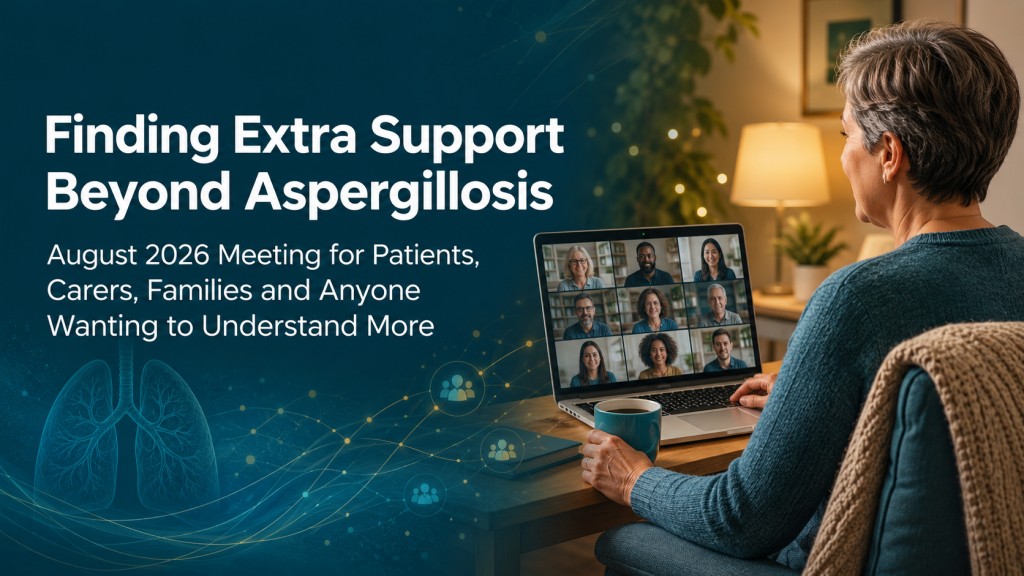
Finding Extra Support Beyond Aspergillosis: Groups for People with Lung Conditions
Living with aspergillosis can affect far more than the lungs. It can bring fatigue, anxiety, isolation, practical challenges and questions that may not always fit neatly into one support group.
The National Aspergillosis Centre community is a place to meet people who understand aspergillosis. But some people may also find it helpful to explore wider support for asthma, bronchiectasis, pulmonary fibrosis, oxygen use, breathing, gentle activity or emotional wellbeing.
Watch: finding additional respiratory support
In this short clip from the National Aspergillosis Centre’s August 2026 online meeting, Beth explains how wider respiratory-support groups can offer another source of information, encouragement and connection.
Asthma + Lung UK groups and activities
Asthma + Lung UK’s Groups + Support directory brings together local and online support for people with a wide range of lung conditions. It includes support groups, exercise and activity sessions, Singing for Lung Health, and other ways to connect with people who understand the impact of lung disease.
You may find something useful if you have an overlapping condition, such as asthma or bronchiectasis, or if you would simply like to meet people facing similar challenges. Some groups are based locally, while others are online.
There is no need to choose between support communities. The NAC community can remain your aspergillosis-focused home, while another group may offer something different that is helpful to you.
Finding the right kind of support
Different people want different things from a group. You might be looking for practical information, a social conversation, gentle activity, help with confidence after a diagnosis, or simply the reassurance of knowing you are not alone.
It is fine to try a group and decide that it is not for you. Finding the right support can take time, and your needs may change as your health changes.
Support from the National Aspergillosis Centre
Our online meetings and community spaces are designed for people affected by aspergillosis, their carers and families. They offer a chance to share experiences, hear useful information and stay connected.
Find support and community information from the National Aspergillosis Centre
Find out about upcoming NAC online meetings
Watch more: Explore recordings from NAC online meetings for patients, carers and families on YouTube.
This article provides general information and does not replace advice from your own clinical team.
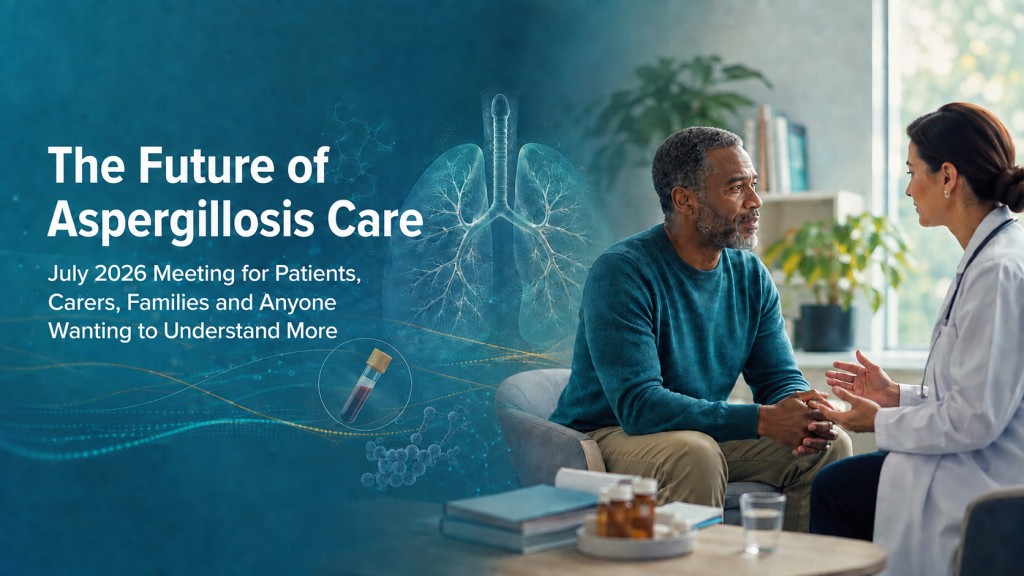
The Future of Aspergillosis Care: Earlier Diagnosis, New Treatments and Personalised Support
Aspergillosis care is changing. Better tests, new medicines, improved monitoring and more careful use of health data may help clinicians diagnose disease earlier and make care more personal in the years ahead.
These short clips come from the National Aspergillosis Centre’s July 2026 online meeting. They are designed for people living with aspergillosis, their carers and families, and anyone wanting to understand more about how care may develop.
There are important reasons for optimism, but progress takes time. New tests and treatments need careful research, and decisions about diagnosis and treatment should always be made with an individual’s own clinical team.
The next 10 years: a more personal future for aspergillosis care
Care is increasingly moving away from a one-size-fits-all approach. In future, diagnosis, monitoring and treatment may be better tailored to the type of aspergillosis a person has, their other health conditions, how their illness affects daily life, and what matters most to them.
In this short video, we explore what a more personal future for aspergillosis care could look like.
The future of treating aspergillosis
Current antifungal medicines remain extremely important, but treatment can be difficult because people respond differently and medicines can have side effects or interactions with other drugs. Research is continuing into new antifungal treatments, better ways to monitor treatment safely, and ways of choosing the most suitable option for each person.
Artificial intelligence and other digital tools may also help clinicians bring together complex information and support more personalised decisions. They are not a replacement for clinical expertise or shared decision-making.
In this short video, we look at how future treatments may offer more options and more personalised care.
The future of diagnosing aspergillosis
Diagnosing aspergillosis is not always straightforward. Symptoms can overlap with asthma, bronchiectasis, COPD and other lung conditions, while different forms of aspergillosis need different tests and treatments.
Future diagnosis may become earlier and more accurate through improved laboratory tests, better interpretation of imaging and blood results, and a fuller picture of each person’s symptoms, lung health and medical history. Earlier recognition matters because it can help people reach the right specialist support sooner.
In this short video, we explore how diagnosis could become earlier, more accurate and more personal.
What this means for patients
The future of care is not only about technology or new medicines. It is also about listening carefully to patients, recognising the impact of long-term illness, and making sure that diagnosis, treatment and support are shaped around the individual.
If you have questions about your own symptoms, tests or treatment, speak to your respiratory, infectious diseases or specialist clinical team. You can also find more patient information and support at Aspergillosis.org.
Watch more: Explore our series of NAC online meetings for patients, carers and families on YouTube.
These videos provide general information for patients, carers, families and anyone wishing to understand more. They do not replace medical advice from your own clinical team.
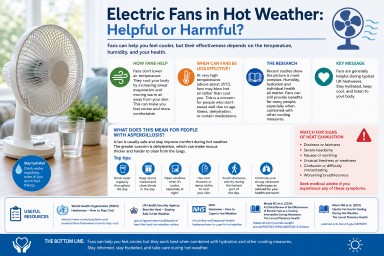
Electric Fans in Hot Weather: Helpful or Harmful?
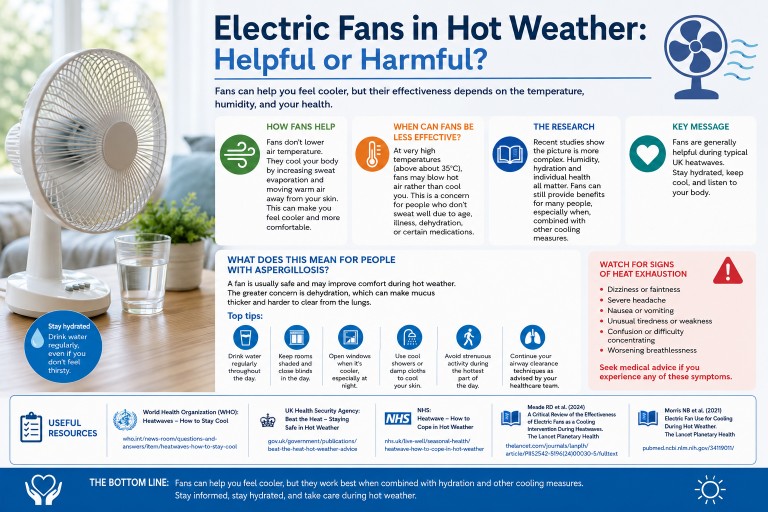
As temperatures rise across the UK, many people reach for an electric fan to stay cool. However, you may have seen advice suggesting that fans should be used with caution during very hot weather. Why is that, and what does it mean for people living with aspergillosis and other chronic lung conditions?
Key points
- Electric fans can help most people stay comfortable during UK heatwaves.
- Fans cool the body by increasing the evaporation of sweat.
- In extreme heat, above about 35°C, fans may become less effective for some people.
- Hydration remains one of the most important ways to protect yourself during hot weather.
- People with chronic lung conditions should pay particular attention to avoiding dehydration, which can make mucus thicker and harder to clear.
How do electric fans cool us?
Electric fans do not lower the temperature of the air. Instead, they move air across the skin, helping sweat evaporate more quickly. Because evaporation removes heat from the body, this can make you feel cooler and more comfortable.
For most people, particularly during typical UK summer temperatures, fans are a useful and inexpensive way to reduce discomfort during hot weather.
Why is there advice to limit fan use in extreme heat?
Some public health guidance advises caution when temperatures rise above about 35°C. At these temperatures, a fan may simply blow very hot air across the body. If a person is unable to sweat effectively because of age, illness, dehydration or certain medicines, the cooling benefit may be reduced.
This concern led organisations such as the NHS, UK Health Security Agency (UKHSA) and World Health Organization (WHO) to recommend that fans should not be relied upon as the only cooling strategy during extreme heat.
However, research over the last few years has shown that the situation is more complicated than a simple temperature cut-off. Factors such as humidity, hydration, age and overall health all influence whether a fan is helpful.
What does the research say?
Recent studies suggest that electric fans may still provide benefits for many people, even when temperatures exceed 35°C, particularly if humidity levels are high and the body is able to sweat normally.
Researchers now recognise that there is no single temperature at which fans suddenly become harmful. Instead, their effectiveness depends on the balance between heat gained from the surrounding air and heat lost through sweat evaporation.
The overall message from researchers and public health organisations is that fans remain useful for many people but should be combined with other cooling measures such as drinking fluids, seeking shade and cooling the skin with water.
What does this mean for people with aspergillosis?
For people living with aspergillosis, asthma, chronic pulmonary aspergillosis (CPA), allergic bronchopulmonary aspergillosis (ABPA) or bronchiectasis, a fan is generally safe and may improve comfort during hot weather.
The greater concern is often dehydration. Hot weather can lead to fluid loss through sweating, which may cause mucus and sputum to become thicker and more difficult to clear from the lungs. This can increase coughing, breathlessness and discomfort.
If you use a fan during hot weather:
- Drink water regularly throughout the day.
- Keep curtains or blinds closed on sun-facing windows.
- Open windows when outdoor temperatures are cooler, particularly overnight.
- Use cool showers, damp cloths or a spray bottle to cool the skin.
- Avoid strenuous activity during the hottest part of the day.
- Continue any airway-clearance techniques recommended by your healthcare team.
Video: keeping cool, safe and well during a heatwave
In this short clip from a National Aspergillosis Centre online meeting, we discuss practical ways to stay cooler, safer and well during a heatwave. It is designed for people living with aspergillosis, their carers and families.
Watch for signs of heat exhaustion
Seek medical advice if you experience:
- Dizziness or fainting
- Severe headache
- Nausea or vomiting
- Excessive tiredness or weakness
- Confusion or difficulty concentrating
- Worsening breathlessness
The bottom line
For most people in the UK, electric fans remain a helpful way to stay comfortable during hot weather. Current evidence suggests that fans are generally beneficial during typical UK heatwaves, especially when used alongside other cooling measures.
The most important message for people with chronic lung conditions is to stay hydrated. Fans can help you feel cooler, but drinking enough fluids, avoiding overheating and recognising the signs of heat-related illness are equally important.
Further reading
- World Health Organization (WHO): Heatwaves – How to Stay Cool
- UK Health Security Agency (UKHSA): Beat the Heat – Staying Safe in Hot Weather
- NHS: Heatwave – How to Cope in Hot Weather
- Meade RD et al. A Critical Review of the Effectiveness of Electric Fans as a Cooling Intervention During Heatwaves. The Lancet Planetary Health (2024)
- Morris NB et al. Electric Fan Use for Cooling During Hot Weather. The Lancet Planetary Health (2021)
Watch more: Explore our series of NAC online meetings for patients, carers and families on YouTube.
Author: National Aspergillosis Centre Team
Reviewed: August 2026
Next review: August 2027
This article is intended for educational purposes and should not replace advice from your healthcare team.

Is a vaccine for chronic pulmonary aspergillosis (CPA) being developed?
Patients sometimes ask whether there is progress towards a vaccine for aspergillosis, and whether it could help people with chronic pulmonary aspergillosis (CPA).
The short answer is: research is continuing, but there is not yet a vaccine available for CPA or any other form of aspergillosis. In fact, there is currently no licensed vaccine for any human fungal infection.
Why has this taken so long?
Scientists have been investigating vaccines against Aspergillus fumigatus for more than 20 years. Early studies showed that several experimental vaccines could help protect mice from severe invasive aspergillosis. Some were based on individual fungal proteins; others used immune cells or parts of the fungal cell wall to train the immune system.
However, a result in mice is only the beginning. A vaccine has to be made consistently, shown to be safe, and then tested in people. This is particularly challenging for aspergillosis because people at greatest risk of severe invasive infection—such as people having chemotherapy or a transplant—may have an immune system that cannot respond strongly to vaccination.
Which forms of aspergillosis are vaccine researchers concentrating on?
Most vaccine research has focused on preventing invasive aspergillosis: the rapidly developing infection that can affect people with severely weakened immune systems. It has the strongest scientific case for prevention, because it can be life-threatening and is often linked to a known period of risk, such as chemotherapy or transplantation.
However, this also creates the central difficulty: people at greatest risk may be least able to produce a strong and lasting response to a vaccine. There is no vaccine for invasive aspergillosis close to routine clinical use.
The chronic and allergic forms of aspergillosis bring further challenges. In allergic bronchopulmonary aspergillosis (ABPA), severe asthma with fungal sensitisation and allergic fungal sinusitis, any approach that stimulates immunity against Aspergillus would have to avoid increasing allergy, IgE responses or harmful inflammation. For aspergillus bronchitis and bronchiectasis, there is not currently a specific vaccine pathway; better diagnosis, airway clearance and antifungal treatment remain the more immediate priorities.
What about CPA?
CPA is different again. It is a long-term infection which usually develops in lungs already affected by conditions such as COPD, previous tuberculosis, bronchiectasis, non-tuberculous mycobacterial infection or previous lung surgery. The relationship between the fungus, the damaged lung and the immune system is complex.
A future vaccine might potentially reduce the risk of infection in some people, but it would not repair the damaged lung that makes CPA possible. There is no vaccine currently in clinical development that is expected to treat established CPA. Treatment continues to rely on careful diagnosis, antifungal medicines when appropriate, monitoring, management of the underlying lung condition, and sometimes surgery or other procedures.
Is there any reason for optimism?
Yes—but it is realistic, long-term optimism. Newer vaccine work is looking at better ways to stimulate the T-cell part of the immune system, which is important in protection against fungi. Researchers are also exploring “pan-fungal” vaccines, designed to protect against more than one serious fungal infection, including Aspergillus.
A vaccine that could help protect against several fungi may be more attractive to fund and develop than one aimed at a single infection. This is a potentially important direction for the field, but it remains early-stage research rather than a treatment likely to reach CPA clinics soon.
For people with CPA, the nearer-term progress is more likely to come from improved diagnosis, new antifungal drugs, better use of existing medicines, therapeutic drug monitoring and research into how the immune response can be supported safely.
Further reading
- 2006 study: an experimental Aspergillus vaccine protected mice from invasive aspergillosis
- 2012 research on the immune mechanisms involved
- 2025 review of progress and challenges in fungal vaccine development
This information is for general education and is not a substitute for individual medical advice. If you have CPA, discuss questions about your treatment or future options with your specialist team.
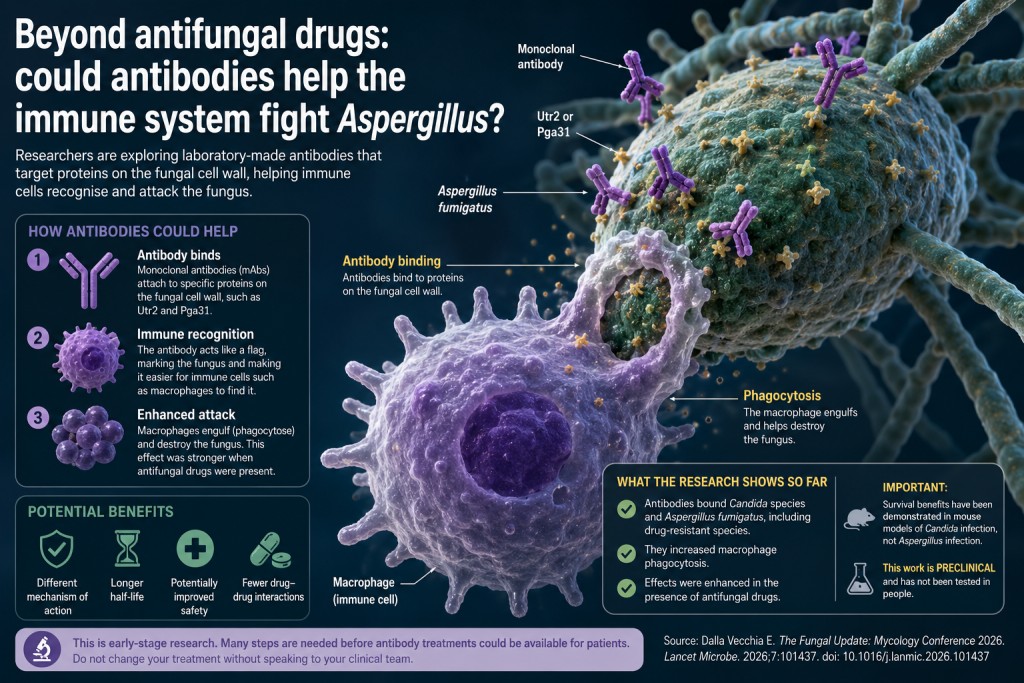
Beyond antifungal drugs: could antibodies help the immune system fight Aspergillus?
Most treatments for aspergillosis work by attacking the fungus directly. But researchers are exploring another possibility: helping the immune system recognise and attack the fungus more effectively.
One particularly interesting approach presented at the Fungal Update: Mycology Conference 2026 involves laboratory-made human antibodies designed to recognise proteins in the fungal cell wall.
The work is still at a preclinical stage — it has not yet been tested as a treatment for aspergillosis in people — but it points towards a potentially very different way of treating serious fungal infections.
What are monoclonal antibodies?
Antibodies are proteins made by our immune system. They recognise particular molecular structures, allowing the immune system to identify potential threats.
A monoclonal antibody, or mAb, is an antibody produced specifically to recognise a chosen target.
Monoclonal antibody medicines are already widely used in medicine. Some people with severe asthma, for example, receive biologic treatments based on monoclonal antibodies.
Researchers are now investigating whether the same basic technology could be used against fungi.
Instead of targeting part of the human immune system, these experimental antibodies are designed to recognise structures on the fungus itself.
Are antibodies already used against infections?
Yes. Although using monoclonal antibodies against fungal infections is experimental, the broader idea of using laboratory-made antibodies to prevent or treat infection is already well established.
For example, monoclonal antibodies are used to protect babies and young children against respiratory syncytial virus (RSV). Other antibody treatments have been developed for serious infections including Ebola, HIV and anthrax.
There are also examples of antibodies being used alongside conventional antimicrobial treatment. Bezlotoxumab, for example, targets a toxin produced by Clostridioides difficile and has been used with antibiotics to reduce the risk of recurrent infection.
These treatments work in different ways. Some antibodies block a virus from entering human cells, while others neutralise toxins or interfere with another important part of the infectious process.
The experimental fungal antibodies described at the Fungal Update conference use another strategy. They bind proteins on the fungal cell wall and appear to make the fungus easier for macrophages to recognise and engulf. The researchers also found that this effect was stronger in the presence of antifungal drugs.
So the new idea is not that antibodies can be used against infectious diseases — we already know that they can. The important question is whether this established medical technology can be successfully extended to infections caused by fungi such as Aspergillus.
Targeting the fungal cell wall
At the Fungal Update conference in London in March 2026, Professor Carol Munro of the University of Aberdeen presented preclinical research into human monoclonal antibodies targeting two fungal cell-wall proteins called Utr2 and Pga31.
The researchers are interested in developing a pan-fungal treatment — one potentially capable of recognising more than one important fungal pathogen.
According to the conference report published in The Lancet Microbe, the antibodies bound to both Candida species and Aspergillus fumigatus, including drug-resistant species.
That is particularly interesting because antifungal resistance is an increasing concern. If an antibody attacks a completely different fungal target from conventional antifungal medicines, existing resistance mechanisms might not necessarily prevent it from working.
However, considerably more research will be needed to establish whether that potential translates into an effective treatment.
Helping immune cells recognise the fungus
Binding to the fungus is only part of the story.
The antibodies also increased phagocytosis by macrophages.
Macrophages are immune cells capable of recognising, engulfing and destroying microorganisms and other foreign material.
One way of thinking about an antibody is therefore as a highly specific biological marker. By attaching to its target on a fungus, it can potentially make that fungus easier for immune cells to recognise and attack.
This is fundamentally different from simply giving another conventional antifungal drug.
Antibodies and antifungal drugs might work together
Perhaps one of the most intriguing observations reported at the conference was that antibody binding and macrophage phagocytosis were enhanced in the presence of antifungal drugs.
That raises an interesting possibility.
Future antibody treatments might not necessarily replace drugs such as azoles or echinocandins. Instead, they could potentially be used alongside antifungal treatment, attacking the infection through complementary mechanisms.
The antifungal drug could interfere directly with fungal growth or survival while the antibody helps the immune system recognise and remove the fungus.
Whether this combination would provide a meaningful clinical advantage in aspergillosis remains to be established.
What has actually been demonstrated so far?
This distinction is important.
The experiments reported for Aspergillus fumigatus showed that the antibodies could bind the fungus and enhance its phagocytosis by immune cells.
The striking survival results presented at the conference came from mouse models of Candida infection, not Aspergillus infection.
In immunocompetent mice with disseminated candidiasis, monoclonal antibody treatment was associated with an 83% improvement in survival, together with reductions in fungal burden and kidney lesions.
Researchers also studied immunosuppressed mice with Candida albicans candidaemia. Survival increased from 40% with caspofungin alone to 80% when monoclonal antibodies were added.
Those are encouraging preclinical results, particularly because serious fungal infections often occur in people whose immune systems are weakened.
But they should not be interpreted as evidence that the antibody treatment has already been shown to cure invasive aspergillosis.
Why might antibodies be useful?
Existing antifungal medicines can be highly effective, but treating serious fungal infections presents several difficulties.
One of the attractions of antibody-based treatment is the possibility of attacking fungi through a completely different biological mechanism.
Professor Munro hopes that these potential treatments could also offer advantages such as improved safety, a longer half-life and fewer drug–drug interactions compared with existing small-molecule antifungal drugs.
These remain hoped-for advantages rather than demonstrated benefits in patients.
Nevertheless, they are particularly interesting in fungal disease because people requiring long courses of antifungal treatment can encounter toxicity, interactions with other medicines and difficulties maintaining appropriate drug concentrations.
Treating the fungus — or helping the host?
The antibody research also fits into a wider shift in thinking about fungal treatment.
At the same conference, Professor Frank van de Veerdonk described a phase 3 trial investigating interferon-gamma immunotherapy for candidaemia. The trial had completed enrolment, with the conference report stating that interim results showed no safety signal.
Interferon-gamma and monoclonal antibodies are very different approaches, but they illustrate the same broader idea: treating a fungal infection might involve not only attacking the fungus directly but also using or modifying the patient's immune response.
This is known as host-directed therapy or immunotherapy.
For infections such as aspergillosis, where the interaction between the fungus and the patient's immune system is central to whether disease develops, this is an important area of research.
What happens next?
The monoclonal antibodies described at the conference remain preclinical experimental treatments.
Before a new antibody therapy could become available to patients, researchers would need to establish its safety, determine an appropriate dose, investigate how it behaves in the human body and then test whether it actually improves outcomes in people with fungal infections.
Many treatments that look promising in laboratory and animal experiments do not ultimately succeed in human clinical trials.
Professor Munro nevertheless hopes that these antibodies can progress to clinical testing.
A different direction for antifungal treatment
The antifungal development pipeline is already beginning to expand, including new antifungal drugs designed to attack fungal cells in different ways.
Monoclonal antibodies represent something different again.
Rather than developing another version of an existing antifungal, researchers are exploring whether highly targeted biological treatments could mark fungi for attack by the immune system and work alongside conventional antifungal medicines.
For Aspergillus, the evidence is still at an early stage. The antibodies have been shown to recognise A. fumigatus and enhance its uptake by immune cells in laboratory experiments, but the survival benefits reported so far come from Candida models.
That distinction matters.
But if future studies demonstrate similar effects against Aspergillus in living organisms and eventually in people, monoclonal antibodies could open an entirely new avenue for treating fungal disease.
Research source
Dalla Vecchia E. The Fungal Update: Mycology Conference 2026. The Lancet Microbe. Published online 7 May 2026; 7:101437.
Read The Lancet Microbe conference report
This article discusses early-stage research and does not describe a treatment currently available for aspergillosis. Patients should not change their antifungal treatment without discussing it with their clinical team.