


When illness changes life: finding meaning and support
Chronic illness does not only bring symptoms and treatment. It can change how we see ourselves and our future. A person who has always been independent may need help. Someone whose work or family role gave their days structure may have to step back. Plans can become uncertain. Even when treatment is going well, it can be difficult to recognise the life that has replaced the one you expected.
This is one reason why meaning matters. It is not about finding a positive side to illness, or pretending that loss does not hurt. It is about the things that help us remember who we are, what still matters to us, and what makes a difficult life feel worth living.
People find this in many different places: in relationships, nature, music, humour, work, creativity, caring for others, personal values, faith or spirituality. There is no single answer, and the answer may change as illness changes.
Why meaning can help
When much of life is organised around symptoms, appointments and treatment, it is easy to feel that illness has taken over the whole story. Staying connected to people, activities and beliefs that matter can restore some sense of identity and control.
It may be something very small: a favourite programme, a daily walk when possible, a grandchild’s visit, tending a plant, writing a message to a friend, or being part of a group where you do not have to explain everything. These things do not remove illness, but they can make room for life alongside it.
Faith, spirituality and personal belief
For many people, faith is one important source of support. This may involve prayer, a relationship with God, sacred texts, worship, a faith community, meditation, or a personal sense of connection and purpose. For others, a similar sense of peace or meaning comes through nature, reflection, relationships or deeply held values without being religious.
Research suggests that spiritual wellbeing—particularly a sense of meaning and peace—is associated with better reported quality of life for many people living with chronic illness. This does not mean that faith prevents illness, removes symptoms or is the answer for everyone. It recognises that a person’s beliefs and sources of meaning can matter when they are facing difficult circumstances.
You do not have to feel strong all the time
People living with long-term illness are often described as “strong”. Usually this is meant with warmth and admiration, but it can sometimes feel like another expectation to meet.
Strength does not have to mean feeling positive, brave or grateful all the time. It may mean getting through today. It may mean resting, accepting help, asking a difficult question, or admitting that you are frightened.
For some people with faith, strength comes from feeling that they are not carrying everything alone. For others, it comes from love, friendship, responsibility or a determination to keep going. None is better than another.
Faith can be difficult too
Faith and spirituality are not always straightforward sources of comfort. Illness can bring doubt, anger, guilt and questions that have no easy answer. A person may feel supported by a faith community, or may feel misunderstood by it. These experiences are valid too.
No one should be made to feel that illness is a punishment, a test they have failed, or something they must accept without sadness or anger. Good support makes room for the whole experience—not just hope, but fear, loss and uncertainty as well.
What matters to you?
There is no need to solve the biggest questions all at once. It can be enough to ask:
- What helps me feel most like myself?
- Who helps me feel heard or understood?
- What gives me a little peace, enjoyment or perspective?
- Are there beliefs, values or practices that I want to keep close?
- What small part of today can still belong to me?
Your answers may be practical, emotional, spiritual, social—or a mixture of all of these. They may change with time. That is completely normal.
Support should fit the person
Some people do not want to discuss faith or spirituality at all. Others consider it central to how they understand illness and life. Both positions deserve respect.
If faith or spirituality is important to you, you can mention this to your healthcare team. Many hospitals have chaplaincy or spiritual-care services. These services support people of all faiths and none, and should be led by what matters to you rather than by an attempt to impose beliefs.
Living with chronic illness is not a test of positivity, courage or faith. It is an ongoing process of adapting, finding support and staying connected, where possible, to the people and things that give life meaning.
Further reading
- Spiritual wellbeing and quality of life: a systematic review
- NHS England: chaplaincy and spiritual care


Making room for life alongside aspergillosis
Aspergillosis can change the shape of a life. There may be things you once did easily that now need planning, take more energy, or are no longer possible in the same way.
There may be medication to organise, appointments to attend, symptoms to watch and uncertainty to live with. There may also be things you miss deeply: travelling, work, hobbies, meals out, long walks, independence, or being as active with family as you would like.
It is reasonable to feel sad, frustrated, angry or frightened about those losses. Living with a long-term illness is not simply a practical challenge; it can mean adjusting to a life you did not choose.
Grief and adjustment are rarely a straight line
A diagnosis of aspergillosis can involve grief: grief for the health, freedom, confidence, routines or future you expected to have. Those losses are real, even when other people cannot easily see them.
There is no single route through that grief. You may feel shock, disbelief, anger, fear, sadness, envy, determination, relief at finally having an explanation—or several of these feelings at once. They do not come in a fixed order, and they do not disappear permanently once you have felt them.
A flare-up, a difficult appointment, a new limitation or seeing someone else do something you miss can bring old feelings back. This does not mean you are going backwards. It is part of adjusting to a condition that may be unpredictable and that changes what life looks like.
When you are not ready
Advice about acceptance, gratitude or focusing on what is still possible can be helpful—but not always, and not straight away.
When you feel frightened, exhausted or out of control, these words can sound glib. They may even feel like another demand: something you are expected to do well while you are already trying to cope with symptoms, treatment and uncertainty.
You do not have to feel positive about aspergillosis. You do not have to be “ready” to accept it on anyone else’s timetable. It is enough to acknowledge that this is hard, and that you may need time, support and space to work out what living with it means for you.
People who seem to have found a way forward have usually not done so because they never feel despair, anger or envy. They have often had those feelings too. What helps one person may not help another, and what helps today may not help tomorrow.
This is not a set of rules for how you should live. It is an invitation to notice what might make life a little more bearable, when—and if—you are ready.
Acceptance is not approval
People sometimes talk about “accepting” illness. This can sound like a large and impossible demand, particularly when a diagnosis is new or symptoms are difficult.
Acceptance does not mean that you like having aspergillosis, that you stop hoping for improvement, or that you must be cheerful about the things it has taken from you. It may simply mean recognising the reality of today, so that you can spend less energy fighting the fact of it and more energy living as well as you can within it.
For many people, this happens gradually. There are likely to be days when it feels easier and days when it does not. That is normal.
Small pleasures still count
When life is dominated by appointments, medication and symptoms, it can help to protect one small thing each day that is not about illness.
It might be sitting with a cup of tea, looking through a box of fabric and imagining a future project, reading, music, a favourite television programme, time in the garden, a phone call, watching birds from the window, or simply being outside for a few minutes.
On better days, it may be a gentle walk, a visit, a hobby or time with children and grandchildren. The walk may be shorter, the outing may need more preparation, and the energy may run out sooner—but the pleasure can still be real.
Both things can be true
You can be thankful for supportive family, good care or a peaceful moment and feel devastated by what illness has changed. One feeling does not cancel the other.
You can miss something deeply while finding a different way to take part. Perhaps you cannot take a grandchild to the park today, but you can play a game, share a funny conversation or be an important, loved presence in their life.
The word but can sometimes help:
- “I cannot do that today, but I can do this.”
- “This is not the life I expected, but there are still good things in it.”
- “I need to rest now, but that does not mean the whole day is lost.”
Try not to measure your life against someone else’s
It can be painful to watch others do things that are currently out of reach: travelling, eating out, walking long distances or making plans without considering symptoms first.
One short phrase that some people find useful is: “Let them.” Let other people enjoy what they can do, without making it a judgement on what you cannot do at this point in your life.
Your energy is valuable. It may be kinder to use it for the people, places and activities that give something back to you.
Be gentle on the hard days
There will be sad days and anxious days. A long-term illness can be tiring physically and emotionally, and there is no need to apologise for finding it hard.
On those days, aim smaller. Rest. Accept help. Do the next manageable thing. Speak to someone you trust. If low mood, anxiety or feeling overwhelmed is becoming difficult to manage, tell your GP or clinical team; emotional support is part of living well with a long-term condition.
You are still you
Aspergillosis may require a great deal of attention, but it does not define everything about you. You remain a parent, grandparent, partner, friend, maker, reader, gardener, traveller-in-waiting, music-lover—or whatever matters most to you.
There is no timetable for coming to terms with a long-term illness. You can only move forward at your own speed, and that speed is shaped by many things: your symptoms, treatment, relationships, work, finances, past experiences and private worries that other people may not see.
Be kind to yourself. Give yourself time—not just today, but as long as you need. Better times can still lie ahead, perhaps when you are able to loosen your grip on the life you expected and make space for the life that is possible now.
This article was inspired by a thoughtful discussion in the Aspergillosis Support community. Thank you to everyone who shares their experience so generously.
Our Thursday Sessions offer a supportive space to discuss the practical and emotional realities of living with aspergillosis.

The Thursday Sessions: When Managing Treatment Becomes as Exhausting as Managing Illness
At this week’s Thursday Session, we discussed a difficult but very recognisable part of life with a long-term condition: the point at which managing treatment, appointments, symptoms and safety starts to feel as exhausting as the illness itself.
A short note about the recording: unfortunately, it did not save, so this is a reconstructed summary rather than a verbatim account. Some details will inevitably be missing. We have reviewed the recording setup again so future discussions are less likely to be lost.
The hidden work of staying safe
Treatment burden is not only about the number of tablets, inhalers, appointments or side effects. It can mean having to stay alert enough to explain your condition and advocate for the right care when you are at your most unwell.
People spoke about arriving in unfamiliar settings—such as A&E, a ward or critical care—where staff may not immediately recognise complex needs. Someone with an adrenal-crisis risk, important steroid-replacement requirements or a serious medicine reaction may feel they have to remain lucid, remember vital information and make sure it is acted on, even when they are severely ill, sleepy or exhausted.
Laminated summaries, emergency cards and medicine lists can help, but only if they are noticed and used. No one should feel that their safety depends on being well enough to make sure a document is read.
Sitting between clinicians
Another exhausting experience is being caught between different parts of the healthcare system. A GP, hospital clinician and specialist may each see only part of the picture, and advice can sometimes feel inconsistent.
Patients can then find themselves repeating the same history, trying to reconcile different instructions, deciding whose advice to follow, and acting as the coordinator of their own care. That work is demanding in itself—and particularly hard when fatigue and illness are already limiting concentration.
Carers carry part of the burden too
For many people, a partner, family member or carer becomes an essential advocate. They may have to explain the history again when a new clinician arrives, remember medication details, notice when something is being missed, and speak up when the patient cannot.
That support can be lifesaving and deeply valued, but it is also exhausting and emotionally demanding. The burden of navigating care should not fall so heavily on families.
Fatigue has to be managed in small units
A major thread was fatigue. Sometimes it has to be managed from meal to meal, rather than day to day.
People described saving energy early in the day, not using a brief good spell too enthusiastically, and constantly weighing up the cost of an activity tomorrow—or even for several days afterwards. A good day is welcome, but it can bring the difficult decision of whether to enjoy the energy now or save it for essentials later.
One memorable analogy was to watch what a cat does: eat, sleep, have a little gentle activity or go outside, then rest again. It is not about giving up on life; it is about recognising a natural rhythm of activity and recovery.
Food and forward planning
Eating can become another demanding task. On a bad day someone may be too tired to cook, have little appetite, feel nauseated or have an upset stomach, or simply find food unappealing.
Preparing and freezing simple meals when energy is better, keeping easy foods available, and sharing the planning with a carer where possible can help. But this revealed an important paradox: all the things that make illness easier to manage—planning meals, arranging medicines, preparing for appointments, writing emergency notes and pacing activity—also require energy, attention and organisation.
When someone is already exhausted, even good self-management advice can feel like another job.
What can make the burden lighter?
There is no single solution, and what is possible will vary from person to person. But several practical approaches may reduce the amount that has to be held in one exhausted mind.
- Make the plan simpler where possible. At appointments, it can help to ask: Which parts of this plan are essential right now? Is there anything we can simplify, combine or postpone safely?
- Share the remembering. A short, current medicine list, key diagnoses, emergency needs and contact details can help a family member, carer or unfamiliar clinician understand the essentials quickly.
- Plan for low-energy days. Simple food, repeat prescriptions, transport, essential phone numbers and rest can be prepared when energy is better—not as a test of organisation, but as a way of protecting the person you will be on a bad day.
- Pace before the crash. Resting between tasks, between meals, and before exhaustion becomes overwhelming may be more sustainable than trying to recover afterwards.
- Tell someone when it is becoming too much. A clinician, pharmacist, family member or carer may be able to help identify priorities, organise support or review whether treatment side effects are adding to the problem.
- Use support spaces. Talking with people who understand the constant calculations of long-term illness can reduce isolation and produce ideas that are realistic rather than idealised.
The aim is not perfect self-management. It is to make life a little safer, less demanding and more liveable.
Stability helps, but pacing still matters
People also reflected that getting through unstable periods, taking medicines as agreed and finding treatment that improves control can reduce fatigue over time. Biologics can make a real difference for some people.
But even in a more stable phase, the same principles may apply: ration energy, do things slowly and gently, save some for later, and rest properly and often—sometimes even between meals.
When it all feels too much
Perhaps the deepest point was that people can become so tired of managing everything that they feel like giving it up for a while. That does not mean they do not care about their health. It is often a sign that the work of managing illness has become relentless.
If someone feels close to stopping an important treatment, or simply cannot keep up with the plan, it is important to tell a clinical team, GP, pharmacist or trusted person early. Sometimes the answer may be to simplify what is expected, identify immediate priorities, organise more support, or review whether treatment side effects are adding to the problem.
Even recognising that help is needed does not guarantee it is accessible. People spoke about the effort of trying to reach a clinician at home, navigating call systems, waiting for a reply, or trying to get the right person’s attention in hospital. When symptoms, fatigue or anxiety are already high, barriers to accessing care can be the final strain that makes self-management feel impossible.
One participant also mentioned the Asthma + Lung UK helpline as a useful source of support when it had been difficult to get hold of their usual GP or clinical team. Speaking to someone who understands lung conditions can help people think through what is happening, what questions to ask and where to seek the right help next.
The helpline is not an emergency or out-of-hours service, but it offers practical, emotional and health-related support on weekdays. For urgent help outside usual services, NHS 111 can advise on the right local route; for a life-threatening emergency, call 999.
Asthma + Lung UK helpline and support →
Managing is the way ahead
One participant reflected that sometimes talking things through brings insight and understanding at another level. Their conclusion was simple but powerful: managing is the way ahead.
That is a positive reframing. Managing does not mean giving in to illness. It means changing the frame: finding ways to pace, plan, rest, ask for help and live alongside an illness without allowing its demands to take over everything.
The Thursday Session showed that treatment burden is not simply “too many medicines”. It is the cumulative work of staying safe, organising care, explaining yourself, managing energy, feeding yourself, planning ahead and trying to access help—often while feeling least able to do any of it.
But sharing that work, speaking honestly about it and finding manageable ways forward can make the burden feel less lonely.
Join the next Thursday Session
The Thursday Sessions are friendly online discussions for people living with aspergillosis, family members and carers. You are welcome to share, ask a question or simply listen.
Find the meeting details and join the next session →
More Thursday Sessions: explore discussion summaries and find out how to join.

⭐ Allergic Bronchopulmonary Aspergillosis (ABPA): Why Diagnosis Is Missed and Who Needs to Be More Aware
For patients, families and non-specialist healthcare professionals
Allergic bronchopulmonary aspergillosis (ABPA) is an immune reaction to Aspergillus that usually affects people with asthma or cystic fibrosis. It can cause worsening wheeze, cough, thick mucus, repeated flare-ups and, over time, bronchiectasis.
ABPA is treatable, but is often mistaken for difficult asthma, recurrent chest infections or a routine asthma flare. Earlier recognition matters because repeated inflammation and mucus plugging can cause avoidable airway damage.
Why ABPA is missed
It can look like difficult asthma
Wheeze, cough, breathlessness and sputum are common in asthma. When symptoms continue despite appropriate inhaler treatment, repeated courses of oral steroids, or biologic treatment, it is easy to keep escalating asthma treatment without considering a fungal allergy.
Flare-ups may be labelled as “chest infections”
ABPA can cause new or worsening cough, mucus, chest tightness and changes on an X-ray or CT scan. These episodes may be treated as bacterial or viral infections. Infection can certainly coexist, but recurring episodes should prompt a review of whether ABPA has been considered.
Blood results need context
Total IgE, Aspergillus-specific IgE, Aspergillus-specific IgG and eosinophils can all help, but none is sufficient alone. Oral steroids and some biologic medicines can alter eosinophil counts; different laboratories also use different methods and reference ranges.
Imaging clues can be overlooked
Mucus plugging, fleeting lung shadows, bronchiectasis and—in some people—high-attenuation mucus are important clues. Comparing scans over time and asking the radiology team to consider ABPA can be helpful when the clinical picture fits.
Responsibility crosses several specialties
ABPA may first be encountered in general practice, severe-asthma services, respiratory medicine, emergency care, radiology or cystic fibrosis services. That makes a simple shared question valuable: could fungal sensitisation or ABPA explain this pattern?
Who is most likely to need assessment?
- People with asthma that remains poorly controlled despite appropriate treatment.
- People needing repeated rescue courses of oral steroids.
- People with recurrent episodes of thick mucus, mucus plugging or unexplained changes on chest imaging.
- People with asthma and bronchiectasis, especially when flare-ups are frequent.
- People with cystic fibrosis and compatible symptoms or imaging changes.
- People with known sensitisation to Aspergillus whose respiratory symptoms are worsening.
How ABPA is assessed
Current international guidance uses a combination of clinical, laboratory and imaging findings. In someone with asthma, cystic fibrosis or a compatible clinical-radiological presentation, clinicians usually look for:
- Sensitisation to Aspergillus, most commonly a positive A. fumigatus-specific IgE test.
- Total IgE of 500 IU/mL (kU/L) or above, recognising that treatment and clinical circumstances can affect results.
- At least two supporting features: Aspergillus-specific IgG, a current or previous raised eosinophil count, or imaging changes that fit ABPA.
This is a clinician-led diagnostic framework, not a checklist for self-diagnosis. The tests and thresholds need to be interpreted with symptoms, medicines, scan findings and the laboratory method in mind.
Red flags worth discussing with a clinician
- Asthma with repeated unexplained exacerbations or poor response to usual treatment.
- Thick plugs of mucus, especially recurrent or dramatic episodes.
- A high or rising total IgE, particularly alongside evidence of Aspergillus sensitisation.
- Bronchiectasis, new infiltrates, mucus plugging or other suggestive CT findings.
- A current or previous raised eosinophil count, while recognising this may be suppressed by treatment.
- Aspergillus detected in sputum in a person with compatible asthma symptoms or imaging.
What can happen if diagnosis is delayed?
Untreated or repeatedly active ABPA can contribute to ongoing inflammation, recurrent flare-ups, mucus plugging and bronchiectasis. These can affect day-to-day quality of life and may make respiratory problems harder to manage. Timely recognition does not guarantee that all damage can be reversed, but it gives the best opportunity to control inflammation and reduce further harm.
What should patients do?
If this description sounds familiar, do not change treatment yourself. Ask your GP, respiratory clinician or asthma team whether ABPA has been considered, and whether blood tests, sputum testing or chest imaging should be reviewed. Keep a record of flare-ups, steroid courses, mucus symptoms and previous scans if you can.
Seek urgent medical help for severe breathlessness, significant coughing of blood, severe chest pain, confusion, blue lips or face, or rapidly worsening illness.
When is specialist advice helpful?
Specialist advice can be useful when the diagnosis remains uncertain, treatment has not worked as expected, there are important drug interactions or side effects, or there is complex coexisting bronchiectasis or chronic lung disease. The National Aspergillosis Centre provides specialist support and remote advice for complex cases through the usual clinical referral routes.
Further reading
- Understanding Aspergillus blood tests: IgE and IgG
- Allergic bronchopulmonary aspergillosis (ABPA)
- Diagnosing Aspergillus infections in the lungs
- Find an aspergillosis clinic
- Revised ISHAM guidance on diagnosing and managing ABPA
Last reviewed: August 2026.
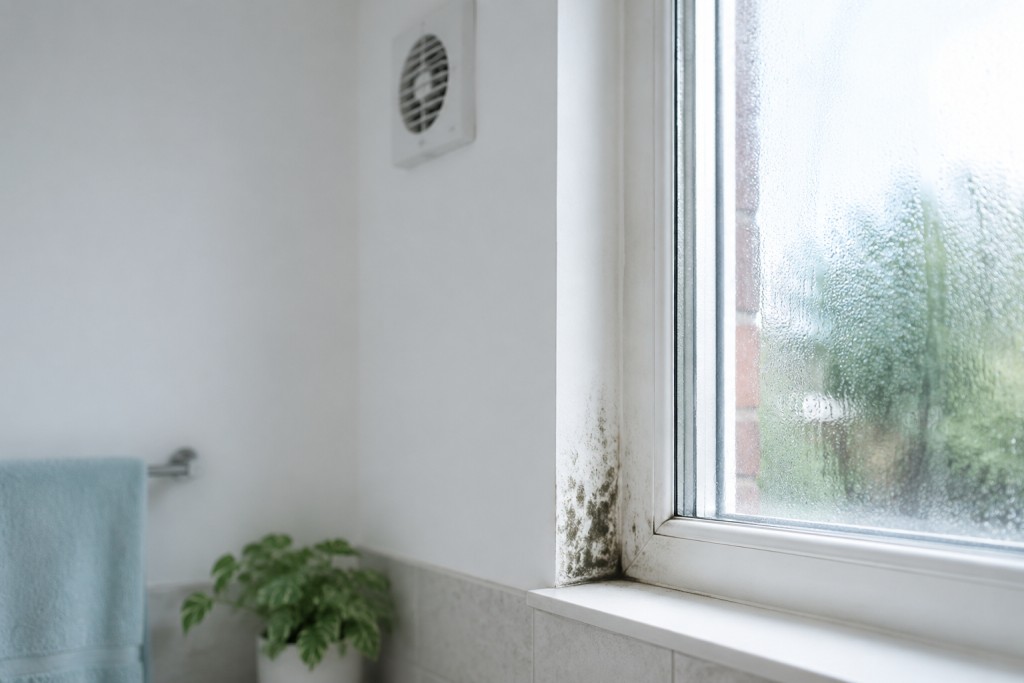
Verified UK Resources for Damp, Mould & Health
For people in the UK worried about damp, mould and health
Damp and mould can worsen asthma and other respiratory conditions. For people living with aspergillosis, bronchiectasis, severe asthma or other long-term lung disease, it is reasonable to take a persistent problem seriously and ask for the underlying cause to be put right.
This guide brings together reliable UK health, housing and practical-support sources. It does not promote commercial mould testing, urine mycotoxin tests or “detox” treatments.
Health information you can trust
UKHSA and government guidance on damp and mould
The government’s consolidated guidance explains the health risks of damp and mould and the actions expected of rented-housing providers. It is the best starting point for understanding why the issue matters and why it should not simply be blamed on a tenant’s lifestyle.
UKHSA / GOV.UK: Understanding and addressing the health risks of damp and mould
NICE: indoor air quality at home
NICE guidance covers indoor air quality in homes, including damp and mould. It is helpful for understanding practical measures such as ventilation and moisture control, while recognising that tenants cannot fix structural defects or inadequate building design on their own.
NICE: Indoor air quality at home (NG149)
Asthma + Lung UK
This gives accessible advice for people with asthma and other lung conditions, including practical steps and housing-rights information for renters.
Asthma + Lung UK: Damp and mould in a rented home
Support for renters in England
Housing law differs across the UK. The following links are mainly for England; if you live in Scotland, Wales or Northern Ireland, use your local council or national housing-advice service for the equivalent rules.
Private renters
Shelter explains how to report damp and mould, what a private landlord may need to repair, and when to ask the council’s environmental-health team for help.
Shelter: Damp and mould in private rented homes
Council and housing-association tenants
Shelter provides practical guidance and letter templates for reporting damp and mould to a council or housing association.
Shelter: How to deal with damp and mould in social housing
Citizens Advice
Citizens Advice offers straightforward help on responsibility for repairs and how to take the next step when a landlord does not respond.
Citizens Advice: Damp in rented homes
Awaab’s Law: what it means for social-housing tenants in England
Awaab’s Law came into force on 27 October 2025. It introduces fixed timeframes for social landlords in England to investigate and address reported damp and mould hazards, particularly where there is a significant risk of harm.
For serious damp or mould that is not an emergency, current guidance describes a 10-working-day investigation period, followed by requirements to make a home safe and communicate the next steps. Emergency hazards must be dealt with much faster. The exact duties depend on the facts of the case, so use the current official guidance rather than relying on a general summary.
If your landlord does not act
- Keep copies of emails, letters, photographs and notes of phone calls.
- Ask your council’s environmental-health or private-rented-housing team for an inspection if the problem is serious or persistent.
- If you rent from a council or housing association, use its formal complaints process. The Housing Ombudsman explains how complaints are handled.
- Do not stop paying rent or move out without taking housing advice first; this can have serious consequences.
Practical steps at home
Small measures may reduce condensation while you wait for repairs, but they are not a substitute for a landlord fixing a leak, poor ventilation, failed heating or other building defect.
- Use fitted extractor fans where available and report them if they do not work.
- Ventilate briefly and safely when weather and security allow.
- Keep furniture slightly away from cold external walls where possible.
- Follow manufacturer safety advice for any dehumidifier or heater; never use unsafe heating methods to dry a room.
What about “toxic mould”, mycotoxins and commercial tests?
There is good evidence that damp and mouldy homes can worsen respiratory symptoms and health. That does not mean that every symptom is caused by “toxic mould”, or that expensive environmental tests, urine mycotoxin tests or detox programmes can diagnose or treat illness from a home.
The useful intervention is to identify and fix the moisture problem, remove visible mould safely where appropriate, and seek proper medical advice for symptoms. For a broader evidence review, see World Health Organization: Dampness and mould.
When to seek medical advice
Speak to your GP or usual respiratory team if damp or mould appears to be worsening asthma, cough, wheeze or breathlessness. Seek urgent help for severe breathlessness, chest pain, significant coughing of blood, blue lips or face, confusion, or rapidly worsening illness.
Last reviewed: August 2026.

🧪 Understanding Aspergillosis Blood Tests: IgE and IgG Explained
For patients in the UK and internationally
Blood tests for Aspergillus are often an important part of investigating and monitoring aspergillosis. They can be confusing because a result may be raised for several reasons, different laboratories use different methods, and no single blood test can diagnose every form of aspergillosis on its own.
This guide explains the three results people most commonly ask about: total IgE, Aspergillus-specific IgE and Aspergillus-specific IgG.
What do the different tests measure?
| Test | What it measures | How it may help |
|---|---|---|
| Total IgE | The overall level of an allergy-related antibody in the blood. | Often raised in allergic conditions, including ABPA, but also in asthma, eczema and other conditions. It is not specific to Aspergillus. |
| Aspergillus-specific IgE | Evidence that the immune system is sensitised to Aspergillus, usually A. fumigatus. | Important when investigating allergic bronchopulmonary aspergillosis (ABPA) or fungal sensitisation in asthma. |
| Aspergillus-specific IgG | A different immune response, often associated with longer-term exposure or infection. | Can support investigation of chronic pulmonary aspergillosis (CPA) and can contribute to assessment of ABPA. The laboratory method and clinical context matter greatly. |
Why the number alone is not the answer
Laboratories use different testing platforms, units and locally validated reference ranges. This means that a result cannot safely be interpreted by comparing it with a number found online or with somebody else's result. Always keep the result together with the laboratory reference range and the name of the test.
In particular, IgG results from different assays are not interchangeable. A result may be reported in mgA/L, AU/mL or another unit, with a different threshold for that assay.
How blood tests fit into ABPA assessment
ABPA is an allergic lung condition that usually occurs in people with asthma or cystic fibrosis, and sometimes in people with a compatible clinical and radiological picture. Current international guidance uses a combination of findings rather than one result.
In broad terms, clinicians look for:
- evidence of sensitisation to Aspergillus (usually a positive A. fumigatus-specific IgE);
- a total IgE of 500 IU/mL (kU/L) or above, although treatment such as oral steroids can affect the result;
- and supporting evidence, such as Aspergillus-specific IgG, a current or previous raised eosinophil count, or characteristic changes on chest imaging.
This is a diagnostic framework, not a home diagnostic test. Some people with asthma have fungal sensitisation without ABPA, and some people with suspected ABPA need repeat testing or specialist interpretation.
What about CPA?
For chronic pulmonary aspergillosis, an Aspergillus-specific IgG result can be an important clue, but it is considered alongside symptoms lasting over time, lung imaging and evidence of Aspergillus infection. A normal or only slightly raised result does not settle the question on its own, particularly if there is a strong clinical reason to investigate further.
What tests might be needed as well?
| Test or information | Why it may matter |
|---|---|
| Symptoms and medical history | Asthma control, cough, mucus, breathlessness, weight loss, previous lung disease and treatment history all change how results are understood. |
| Chest imaging | A chest X-ray or CT may show bronchiectasis, mucus plugging, cavities, nodules or other changes that help distinguish different conditions. |
| Sputum culture or PCR | May detect Aspergillus in the airways. A result still needs clinical interpretation: detecting the fungus is not always the same as proving disease. |
| Eosinophil count and lung function | Can help assess allergic airway inflammation and asthma, but can be altered by steroids and some biologic medicines. |
Can treatment affect the results?
Yes. Oral steroids can reduce some signs of allergic inflammation, including eosinophils, and biologic medicines can make eosinophil counts look lower than they were before treatment. This is one reason why your clinician may look at older blood results, repeat a test, or interpret a result differently in the light of your medicines.
For people with ABPA, total IgE is sometimes measured over time as one part of monitoring response or a possible flare. The pattern matters more than a single isolated number, and results should usually be compared using the same laboratory method where possible.
Questions you can ask at an appointment
- Which Aspergillus blood tests have I had, and what are the laboratory reference ranges?
- Does this result suggest sensitisation, infection, both, or neither?
- Do my symptoms and scan findings fit with the blood test result?
- Could my current steroid or biologic treatment affect the result?
- Would repeating the test, checking sputum, or seeking specialist advice help?
When to seek advice promptly
Seek clinical advice promptly if you have worsening breathlessness, chest pain, coughing up blood, a significant fever, rapidly worsening asthma symptoms or feel severely unwell. Blood-test results should not delay assessment of worrying symptoms.
Further reading
- Revised ISHAM guidance on diagnosing and managing ABPA
- Allergic bronchopulmonary aspergillosis (ABPA)
- Chronic pulmonary aspergillosis (CPA)
- Diagnosing Aspergillus infections in the lungs
Last reviewed: August 2026.
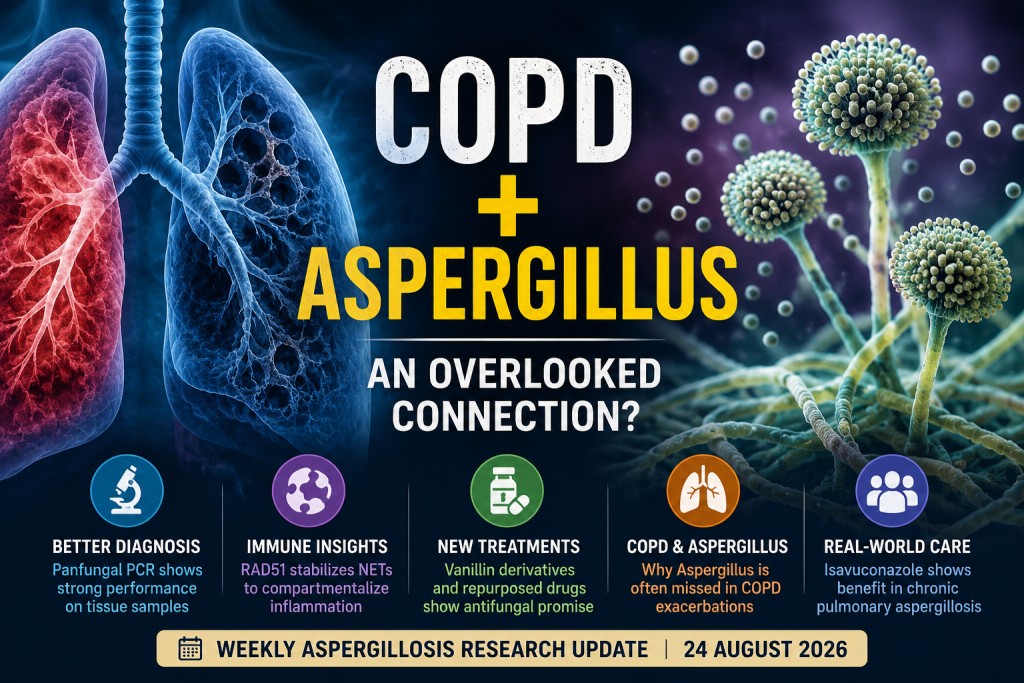
Weekly Aspergillosis Research Update – 24 August 2026
This week's research spans chronic obstructive pulmonary disease (COPD), fungal diagnostics, neutrophil biology and several potential antifungal strategies.
Particularly notable are a major review of the relationship between COPD and Aspergillus, a meta-analysis supporting panfungal PCR on tissue samples, and new work in Science exploring how neutrophil extracellular traps may contain inflammation during aspergillosis.
COPD and Aspergillus: an increasingly important combination
Denning DW, Bertuzzi M, Chotirmall SH, et al.
COPD and Aspergillus—a complex interaction of global health importance.
Lancet Infectious Diseases. Published 18 August 2026.
This major review brings together growing evidence that Aspergillus is an important and probably under-recognised problem in people living with COPD.
People with COPD may experience several different interactions with Aspergillus, ranging from airway colonisation and sensitisation through to chronic pulmonary aspergillosis (CPA) and invasive pulmonary aspergillosis.
The authors highlight several factors that may increase susceptibility, including damaged airways, repeated exacerbations, corticosteroid exposure, respiratory viral infections and environmental exposure to fungal spores.
The review also argues that fungal disease may sometimes be missed in patients whose deterioration is assumed to be another bacterial COPD exacerbation.
Improved investigation may therefore include fungal culture, Aspergillus PCR and, where clinically appropriate, tests such as Aspergillus IgG or antigen detection.
Why this matters: COPD is extremely common worldwide. Even if only a relatively small proportion of people with COPD develop clinically important aspergillosis, the potential number of affected patients is substantial. Better recognition could prevent repeated courses of inappropriate treatment and identify CPA or invasive disease earlier.
Panfungal PCR improves detection of invasive fungal disease in tissue
Filippidis P, El Khoury C, Cruciani M, et al.
Diagnostic performance of panfungal PCR on tissue specimens for the diagnosis of invasive fungal diseases: a systematic review and meta-analysis of the Fungal PCR Initiative (FPCRI).
Journal of Clinical Microbiology. Published 21 August 2026.
Diagnosing invasive fungal disease from tissue can be difficult. Conventional fungal culture is specific when positive but often lacks sensitivity, particularly when patients have already received antifungal treatment.
This systematic review and meta-analysis examined 28 studies evaluating panfungal PCR assays performed on tissue samples.
Panfungal PCR targets genetic sequences shared across many fungi and then identifies the fungus using sequencing. This means it can detect organisms even when clinicians did not know which fungus to look for beforehand.
The researchers found good overall diagnostic performance. Sensitivity was higher in fresh or frozen tissue than in formalin-fixed paraffin-embedded (FFPE) samples, although PCR remained useful in FFPE material.
In direct comparisons, panfungal PCR was substantially more sensitive than fungal culture.
Why this matters: Tissue biopsies are precious samples and may be difficult or risky to obtain. Adding molecular testing can increase the chance of obtaining a fungal diagnosis from tissue that would otherwise remain culture-negative.
This is particularly important for invasive aspergillosis and other invasive fungal infections where identifying the responsible organism can directly affect treatment.
How neutrophil extracellular traps may keep inflammation contained
Tsansizi LI, Guan SY, Aramburu IV, et al.
RAD51 stabilizes neutrophil extracellular traps to compartmentalize inflammation.
Science. Published 20 August 2026.
Neutrophils are among the immune system's first responders to fungal infection. One way they attack microorganisms is by releasing neutrophil extracellular traps (NETs): webs of DNA and antimicrobial proteins that can trap microbes.
This study identifies the DNA-repair protein RAD51 as an important structural component helping NETs form stable, branched networks.
In a mouse model of pulmonary aspergillosis, disrupting RAD51 reduced local containment of NET-associated inflammation. Material escaped more readily into the circulation and was associated with increased inflammatory signalling, including IL-6 and type-2 inflammatory responses.
The researchers also found associations between circulating DNA, IL-6 and eotaxin in people with aspergillosis.
Why this matters: NETs are often discussed as potentially damaging inflammatory structures. This research suggests the picture is more complicated: their architecture may also help keep inflammatory material confined to the site of infection.
Understanding how this balance works could eventually help researchers separate protective antifungal immunity from harmful inflammation.
Existing medicines repurposed to weaken fungal metabolism
Song Z, Zhao C, Wang Q, et al.
Repurposing FDA-Approved Drugs to Inhibit Fungal PPTases for Broad-Spectrum Synergy.
Advanced Science. Published 21 August 2026.
Researchers have identified fungal phosphopantetheinyl transferases (PPTases) as a potential new antifungal target.
PPTases are involved in activating enzymes needed for the production of several fungal metabolites, including molecules that contribute to virulence and fungal survival.
Rather than developing entirely new drugs from scratch, the researchers screened medicines that are already approved for other diseases and identified compounds capable of interfering with fungal PPTases.
Two drugs, tepotinib and eltrombopag, showed antifungal activity and enhanced the activity of existing antifungal treatment in experimental models. The compounds also reduced fungal burden and inflammation in a mouse model of pulmonary aspergillosis.
Why this matters: Repurposing existing medicines can sometimes accelerate drug development because much is already known about their pharmacology and safety.
However, this remains preclinical research. These medicines are not approved treatments for aspergillosis and patients should not attempt to use them for fungal disease.
Isavuconazole in aspergilloma and chronic cavitary pulmonary aspergillosis
Deviaene M, Dumoulin E, Somayaji R, et al.
Isavuconazole as an adjunctive antifungal in the multimodal management of pulmonary aspergilloma and chronic cavitary pulmonary aspergillosis: a single-centre case series.
Respiratory Medicine Case Reports. 2026;63:102486.
This single-centre case series describes the use of isavuconazole as part of the management of people with pulmonary aspergilloma and chronic cavitary pulmonary aspergillosis (CCPA).
CPA treatment often requires a combination of approaches. These may include long-term antifungal therapy, management of underlying lung disease and, in selected patients, surgery or other interventions.
Isavuconazole is one of several azole antifungals available to specialist teams and may be particularly useful in patients who cannot tolerate other azoles or where drug interactions and adverse effects make alternative treatment difficult.
Why this matters: This is only a small observational case series and cannot establish that isavuconazole is superior to other antifungals. However, it adds useful real-world evidence about its role in difficult-to-manage CPA and aspergilloma.
Our patient information page on isavuconazole has recently been updated to reflect current UK monitoring recommendations.
Read: Isavuconazole in Aspergillosis
Vanillin derivatives show experimental activity against Aspergillus fumigatus
Flores Maldonado OE, De Anda-Mora K, Jiménez-Barrientos JG, et al.
Vanillin derivatives as antifungal agents against Aspergillus fumigatus: in vitro activity, in vivo efficacy, and mechanistic insights.
Canadian Journal of Microbiology. Published 19 August 2026.
Researchers investigated vanillin and chemically related compounds for activity against Aspergillus fumigatus.
Several compounds inhibited fungal growth in laboratory experiments. The researchers also observed effects on fungal adhesion, biofilm formation and ergosterol, an important component of the fungal cell membrane.
One derivative, o-vanillin, also showed activity in an experimental model of aspergillosis.
Why this matters: New antifungal chemical structures are urgently needed as resistance to existing drugs increases.
However, these findings should not be interpreted as evidence that vanilla, vanilla extract or dietary vanillin can treat aspergillosis. The research concerns experimental antifungal compounds studied under controlled laboratory conditions.
What stands out this week?
Three themes emerge from this week's research.
- Better recognition: the COPD review reinforces how frequently fungal disease may be overlooked in patients with chronic lung disease.
- Better diagnosis: panfungal PCR is becoming an increasingly important way of identifying fungi when tissue cultures are negative.
- New treatment strategies: researchers continue to explore both new molecular targets and ways of extending the usefulness of existing antifungal drugs.
The RAD51 study also reminds us that successful treatment of aspergillosis is not only about killing the fungus. Understanding how the immune system contains infection without causing excessive inflammation remains an important part of developing better treatments.
This weekly research update summarises recently published scientific papers for general information. Laboratory and animal research is included to show where the field may be heading, but experimental findings should not be interpreted as treatments available to patients. Treatment decisions should always be discussed with an appropriate clinical team.
“It Worked for Me”: How to Use Health Advice from Patient Support Groups
Patient support groups can be an extraordinary source of information.
Someone who has lived with aspergillosis for ten years may be able to tell you things about fatigue, coughing, medication, appointments and everyday life that you will never find in a medicine information leaflet.
That lived experience is valuable.
But there is an important difference between someone telling you what happened to them and telling you what you should do.
Learning to recognise that difference can help you get the enormous benefits of patient communities without being misled by well-intentioned advice.
Why patient experience matters
Medical information usually tells us what happens to groups of people. Patient communities tell us what illness and treatment can actually feel like to an individual.
Someone might explain how they organise their medicines, cope with fatigue, manage nebulisers when travelling, deal with changes in taste or find the confidence to ask their consultant about a troublesome side effect.
They can also provide something equally important: reassurance that somebody else understands.
Research into online patient communities confirms that useful information and support are exchanged in these groups. However, research also finds inaccurate and misleading medical information, particularly in discussions about long-term and serious conditions.
A 2025 scoping review of health information in online peer-support groups found evidence of both good-quality information and misinformation. Importantly, the researchers also found that other patients frequently played an active role in correcting inaccurate claims.
The challenge isn't to stop listening to other patients. It is to recognise what kind of information they are giving you.
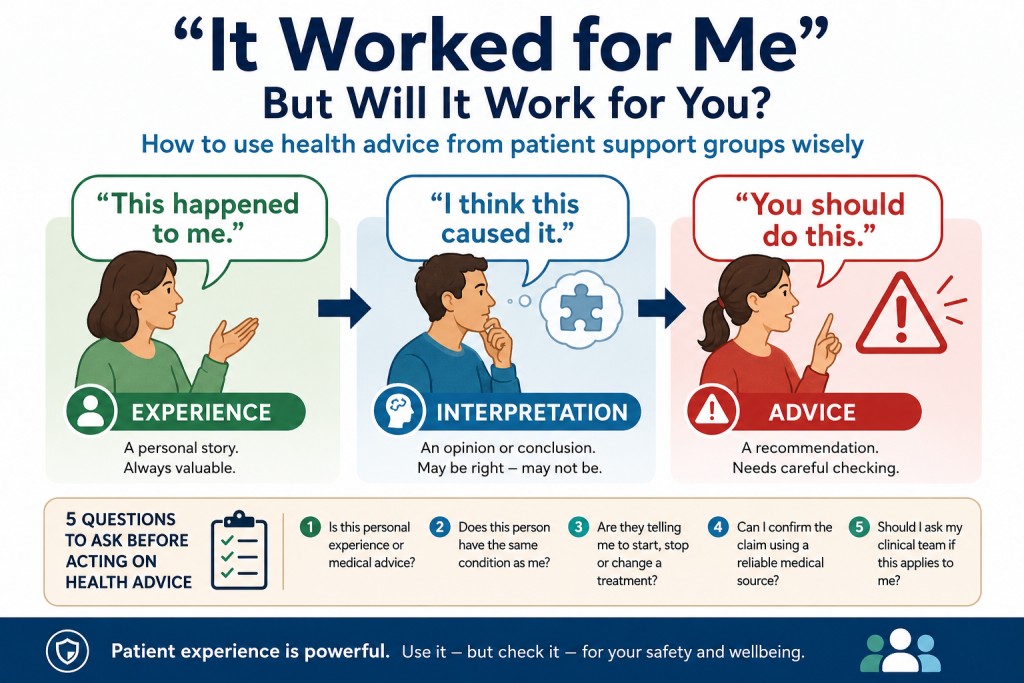
Experience, interpretation and advice are different things
Consider three statements:
1. Experience
“I started itraconazole and felt nauseous.”
That is someone's personal experience. There is no reason to dispute it.
2. Interpretation
“Itraconazole caused my nausea.”
That may well be correct, but now an interpretation has been added. Nausea has many possible causes and sometimes establishing whether a medicine is responsible requires clinical assessment.
3. Advice
“Itraconazole made me ill, so you shouldn't take it.”
Now the statement has changed completely. One person's experience has become medical advice for another person.
That is where caution is needed.
The most useful question you can ask
When you read health information in a patient group, ask yourself:
“Is this person telling me what happened to them, or telling me what I should do?”
Personal experience can be extremely useful.
Instructions about changing your treatment require a much higher level of evidence.
Why completely honest patients can give conflicting advice
One person may say an antifungal transformed their life. Another may say the same medicine did nothing. A third may have experienced significant side effects.
All three can be telling the truth.
People differ in their diagnosis, severity of disease, other medical conditions, other medicines, drug absorption, genetics and many other factors.
Even two people who both say they have “aspergillosis” may have very different diseases.
Allergic bronchopulmonary aspergillosis (ABPA), chronic pulmonary aspergillosis (CPA), an aspergilloma and invasive aspergillosis are not interchangeable diagnoses. A treatment that is essential for one person may be unnecessary or inappropriate for another.
Before comparing your treatment with somebody else's, therefore, one of the first questions should be:
“Do we actually have the same condition?”
Why frightening stories can seem more common than they really are
Imagine 100 people start a medicine.
Most take it without anything particularly interesting happening. A few experience dramatic side effects.
Who is most likely to write a long social media post about it?
Probably someone in the second group.
This doesn't make their experience untrue or unimportant. But reading patient discussions cannot tell you how frequently something happens.
People experiencing problems often have a particularly strong reason to seek help and post about them. People whose treatment is working uneventfully may have much less reason to say anything.
This is one reason online discussions can unintentionally make rare or unusual experiences appear commonplace.
“It worked for me” doesn't prove that a treatment works
The opposite problem occurs when somebody improves after trying a treatment, supplement, diet or other intervention.
If somebody says:
“I tried this and felt much better.”
their improvement may be completely genuine.
But that alone cannot establish why they improved.
The underlying illness may have changed, another treatment may have started working, symptoms may naturally have fluctuated, or several things may have changed simultaneously.
This is one reason clinical trials compare groups of patients rather than simply collecting success stories.
A testimonial can tell you that someone improved. It cannot by itself prove that the treatment caused the improvement.
Be particularly cautious when someone tells you to stop treatment
Statements such as these deserve particular caution:
“Stop taking it.”
“Reduce the dose yourself.”
“You don't need that medicine.”
“Replace it with this supplement instead.”
There may be circumstances in which a medicine genuinely does need to be stopped or changed, particularly if serious side effects occur.
But another patient usually cannot know enough about your medical circumstances to make that decision for you.
If a patient describes a side effect that sounds similar to something you are experiencing, their experience may provide an extremely useful prompt to contact your doctor, pharmacist or specialist team.
That is very different from using their experience to change your own prescription.
Watch out for absolute statements
Medical misinformation often sounds unusually certain.
Be cautious about statements containing words such as:
- always
- never
- everyone
- no one
- guaranteed
- cure
For example:
“Everyone with aspergillosis needs antifungals.”
That isn't correct. Different forms and clinical states of aspergillosis require different approaches.
Equally:
“Antifungals are toxic and should be avoided.”
is an unjustified generalisation from the fact that antifungals can cause important side effects in some people.
Good medical information often contains apparently less exciting words such as may, can, usually, in some patients and depending on the circumstances.
That isn't uncertainty caused by ignorance. It often reflects the reality that medicine is complicated.
Popularity isn't the same as evidence
A comment with dozens of likes can still be wrong.
Repeated claims can also start to feel more trustworthy simply because we have encountered them several times.
Patient communities can unintentionally amplify particular beliefs as people repeat information they originally heard from somebody else.
Before accepting an important medical claim, try to find out where it originated.
Was it:
- a patient's personal experience?
- something their doctor apparently told them?
- a newspaper story?
- a research paper?
- a clinical guideline?
- an NHS or specialist medical information source?
These aren't equivalent forms of evidence.
“My doctor said...” can still be difficult to interpret
People frequently share advice given by their own doctors, and this can be very useful.
But there is another important qualification.
The doctor was advising that particular patient.
There may have been scan findings, blood results, previous treatments, other illnesses or medications influencing that advice which aren't mentioned in the social media post.
Even accurately remembered medical advice can therefore become misleading when removed from the circumstances in which it was given.
Check extraordinary claims
If you encounter something surprising – particularly a claim that contradicts what your medical team has told you – don't assume either source must automatically be wrong.
Check it.
Reliable places to look include NHS information, recognised professional organisations, published clinical guidelines and specialist centres with expertise in the condition.
You can also take the question back to your clinical team:
“I've read this in a patient group. Does it apply to me?”
That is a perfectly reasonable question.
What should moderators do about incorrect information?
Good patient communities do not need to remove every incorrect statement.
People should normally be able to describe their own experiences – including difficult, unusual or negative experiences.
But there is an important distinction between:
“This happened to me.”
and:
“Everyone should do this.”
When a claim could cause somebody to stop necessary treatment, take an inappropriate treatment or misunderstand the seriousness of their condition, it is reasonable for moderators or knowledgeable members to add accurate information.
Research suggests that this kind of correction already happens naturally in patient communities. A 2025 scoping review of online peer-support groups found that fellow members often responded to false claims or subsequently provided correct information.
The researchers also suggested that clinical and academic experts could have a valuable role in helping to improve the quality of health information shared in these communities.
The objective isn't to win an argument. It is to make sure that somebody reading the discussion six months later sees reliable information alongside the original claim.
A simple five-question check
Before acting on health advice from Facebook, Telegram or another patient community, ask:
- Is this personal experience or medical advice?
- Does this person actually have the same condition as me?
- Are they telling me to start, stop or change a treatment?
- Can I confirm the claim using a reliable medical source?
- Should I ask my clinical team whether this applies to me?
If the proposed action could significantly affect your health, questions four and five become particularly important.
Another useful way to check health information
NHS England has developed a free resource called Misinformation UnMASKED to help people decide whether health information they encounter online can be trusted.
It includes practical guidance for checking online health information and is designed for patients, families and carers as well as health and care staff.
Visit NHS Misinformation UnMASKED – checking online health information.
Patient groups and medical professionals provide different things
This doesn't mean doctors are always right and patients are always wrong.
That would miss much of the value of patient communities.
A clinician may know far more about the evidence supporting a treatment. Someone who has taken that treatment for five years may know far more about what taking it every morning actually feels like.
Those are different kinds of knowledge.
The best patient communities bring them together.
Keep sharing your experiences
None of this should discourage people from talking openly about treatment.
If a medicine helped you, tell people.
If you experienced a side effect, tell people.
If you found a useful way of managing fatigue, mucus clearance, appointments or everyday life, other patients may benefit enormously from hearing about it.
Just remember the small distinction that makes patient communities safer:
Share what happened to you. Be much more cautious about telling somebody else what should happen to them.
That allows patient experience to remain one of the greatest strengths of a support community without accidentally turning experience into a prescription.
Online patient communities can provide valuable peer support and lived experience, but they cannot replace individual medical advice. If you are considering changing prescribed treatment, discuss it with your doctor, pharmacist or specialist team.
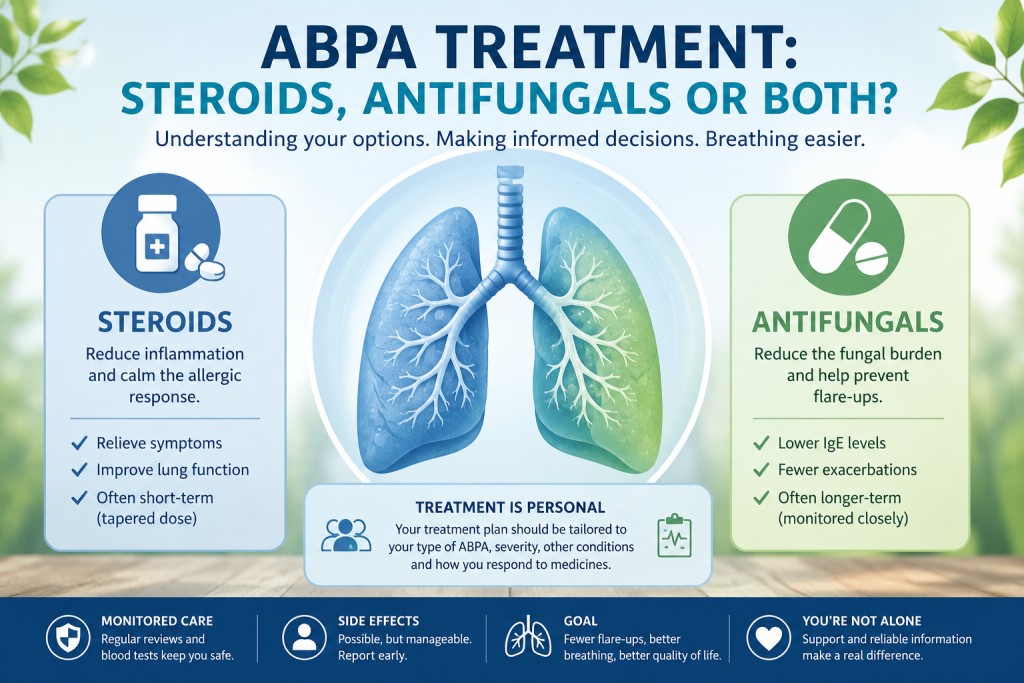
I've Been Diagnosed with ABPA – Do I Really Need Steroids and Antifungals?
Being diagnosed with allergic bronchopulmonary aspergillosis (ABPA) can be frightening. Then you read about the medicines used to treat it – corticosteroids such as prednisolone and antifungal medicines such as itraconazole – and their lists of possible side effects can be frightening too.
It is quite reasonable to wonder: would I be better off taking nothing?
The answer isn't simply “take every medicine you are offered”. ABPA varies considerably between people, and modern treatment is increasingly individualised. The aim is to control the disease while exposing you to as little treatment – and as few side effects – as reasonably possible.
Why is ABPA treated?
ABPA is not the same as an invasive fungal infection. In ABPA, Aspergillus growing in the airways triggers an excessive immune and inflammatory response.
This can cause worsening asthma, coughing, wheezing, mucus plugging and exacerbations. Repeated or poorly controlled inflammation can also contribute to permanent changes in the lungs, including bronchiectasis.
Treatment therefore has two main approaches:
- Corticosteroids reduce the damaging allergic inflammation.
- Antifungal medicines reduce the amount of Aspergillus in the airways and therefore reduce one of the triggers for that inflammation.
But that does not mean everyone with ABPA automatically needs both.
Do I have to take prednisolone?
Not necessarily.
Oral corticosteroids such as prednisolone are very effective at suppressing the inflammation caused by active ABPA and have therefore been a mainstay of treatment for many years.
However, systemic steroids can cause significant side effects, particularly when used repeatedly or for prolonged periods. These can include changes in mood and sleep, increased appetite and weight gain, raised blood glucose, thinning of the bones and skin, increased susceptibility to infection and suppression of the body's own production of cortisol.
Doctors therefore try to balance the benefits against these risks.
The 2024 international ISHAM guidelines recommend a low-to-moderate dose course of oral prednisolone, tapered and completed over several months, as one first-line option for acute ABPA.
But it is not the only first-line option.
Do I have to take an antifungal?
Again, not necessarily.
Itraconazole is another recommended first-line treatment for acute ABPA and may be particularly useful when systemic corticosteroids are contraindicated or undesirable.
Antifungals can cause side effects and interact with other medicines. Azoles such as itraconazole are processed by the liver and can occasionally cause liver problems.
That doesn't mean that taking an azole will damage your liver.
Doctors can use blood tests to monitor liver function and, in some circumstances, measure the amount of antifungal medicine in the blood. Medication interactions also need to be checked carefully.
If one antifungal cannot be tolerated, that does not necessarily mean every antifungal will cause the same problem. Other treatment options may sometimes be considered by the specialist team.
Do I need steroids and an antifungal?
This is an important area where treatment thinking has changed.
For newly diagnosed acute ABPA, the 2024 ISHAM international guidelines recommend either:
- oral prednisolone, or
- oral itraconazole
as initial treatment.
They do not recommend routinely giving prednisolone and itraconazole together as first-line treatment for acute ABPA. Combination treatment has a more important role in people experiencing recurrent ABPA exacerbations.
There are exceptions, and your specialist may have good reasons for recommending a particular regimen based on your previous treatment, lung disease, scans, blood results, other illnesses and medications.
If you are concerned about being prescribed both medicines, it is reasonable to ask your specialist:
“Why have you recommended both treatments in my particular case?”
Does everyone diagnosed with ABPA need treatment?
No.
The 2024 international guidelines do not recommend routine systemic treatment for people with asymptomatic ABPA.
People with serological ABPA (ABPA-S), where there is no ABPA-associated bronchiectasis on CT, may also not require systemic treatment if their asthma is well controlled and they are not experiencing recurrent exacerbations.
This is another reason why somebody else's experience of ABPA may not apply to you.
What happens if I don't treat it?
This depends on your individual disease.
It is wrong to say that everybody with untreated aspergillosis will die. “Aspergillosis” describes several very different diseases.
However, active ABPA should not simply be ignored. Repeated inflammation and mucus plugging can damage the airways and contribute to bronchiectasis. Early identification and appropriate treatment are intended to control the disease and reduce that risk.
If fear of medication is making you consider refusing treatment, tell your doctor. There may be more than one reasonable treatment strategy to discuss.
What does “Stage 4 ABPA” mean?
You may encounter numbered ABPA stages on older websites, patient forums and medical papers.
These numbers can be misleading because they were not like cancer stages, where a higher number necessarily means more advanced disease.
In the previous ISHAM classification, for example, Stage 4 meant remission.
The 2024 international guidelines have moved away from numbered stages and instead describe five clinical states:
- acute ABPA
- response
- remission
- treatment-dependent ABPA
- advanced ABPA
So statements such as “Stage 4 aspergillosis is terminal” are incorrect.
It is also important to distinguish ABPA from chronic pulmonary aspergillosis (CPA), aspergilloma and invasive aspergillosis. They are different diseases with different treatments and outlooks.
What if the first treatment causes side effects?
Contact your clinical team.
Don't assume that experiencing a side effect means you have only two choices: endure it or abandon treatment altogether.
Depending on the circumstances, clinicians may be able to alter the treatment, investigate whether the symptom really is caused by the medicine, or consider another approach.
For people with recurrent or treatment-dependent ABPA, specialist treatment options can also include longer-term azole therapy, nebulised amphotericin B and, in selected patients, biological medicines.
ABPA treatment is no longer simply a choice between “steroids or nothing”.
What about biological treatments for ABPA?
Biological medicines – often called biologics – are becoming increasingly important in the treatment of difficult-to-control asthma and ABPA.
These medicines target specific parts of the immune response involved in allergic and eosinophilic inflammation. They include omalizumab, mepolizumab, benralizumab, dupilumab and tezepelumab.
Biologics are not currently recommended as routine first-line treatment for a new episode of acute ABPA. Steroids and/or antifungal treatment remain the usual initial approaches.
However, biologics may be considered in some people with treatment-dependent or recurrent ABPA, particularly when severe asthma is also present or repeated courses of oral corticosteroids are causing problems.
One important potential advantage is their steroid-sparing effect: controlling the underlying allergic inflammation may allow some patients to reduce their exposure to systemic corticosteroids.
Omalizumab has the longest history of use in ABPA, but there is increasing experience with other biologics targeting different parts of the inflammatory pathway. Which, if any, is appropriate depends on the individual's asthma, ABPA, blood results, previous treatments and other clinical factors.
Research in this area is developing rapidly, so the role of biologics in ABPA treatment is likely to continue evolving.
A particular warning about antifungals and sunlight
You may occasionally see claims that sitting in the sun or “heliotherapy” can help the inflammation associated with aspergillosis.
Sunlight is not a recognised treatment for ABPA.
There is an additional reason to be cautious if you take certain antifungals.
Voriconazole can cause significant photosensitivity. People taking it are advised to protect themselves from sunlight because prolonged treatment is also associated with an increased risk of phototoxic skin damage and squamous cell carcinoma.
Always check the advice for the particular medicine you have been prescribed.
Patient experiences are valuable – but they aren't prescriptions
Patient support groups can be enormously helpful.
One person may tell you that itraconazole transformed their symptoms. Another may have stopped it because of side effects. Someone else may have taken corticosteroids for years, while another person has hardly needed them.
All of those experiences can be genuine.
But none tells you what will happen to you.
When reading patient discussions, it can help to separate:
“This is what happened to me.”
from:
“This is what you should do.”
The first can be extremely valuable. The second needs much more caution.
Questions to ask your doctor
If you have recently been diagnosed with ABPA and are worried about treatment, consider asking:
- How active or severe is my ABPA at the moment?
- What are we trying to achieve with this treatment?
- Why have you chosen this particular medicine for me?
- Do I need a steroid, an antifungal, or both?
- How long do you expect me to take it?
- What side effects should I report?
- What blood tests or other monitoring will I need?
- What happens if I cannot tolerate this treatment?
- How will we know whether it is working?
Understanding the purpose of treatment often makes the decision much less frightening.
The important message
A new diagnosis of ABPA does not mean that you are inevitably going to become seriously ill, nor does it mean that you must simply accept whatever side effects treatment causes.
ABPA is treatable, and there are now several approaches to managing it.
The aim is to find the treatment that controls the disease effectively while minimising its impact on the rest of your health.
If you are worried enough about a prescribed treatment that you are considering not starting it or stopping it, talk to your clinical team before making the change. There may be alternatives or adjustments that you have not yet discussed.
This information is intended to help people understand ABPA and its treatment. It does not replace individual advice from your doctor or specialist aspergillosis team.