🌿 Seasonal Patterns in Aspergillosis (General Overview for UK)
🔹 1. Allergic Bronchopulmonary Aspergillosis (ABPA)
ABPA symptoms — including cough, wheezing, chest tightness, and sputum plugs — often flare in spring and autumn, due to:
-
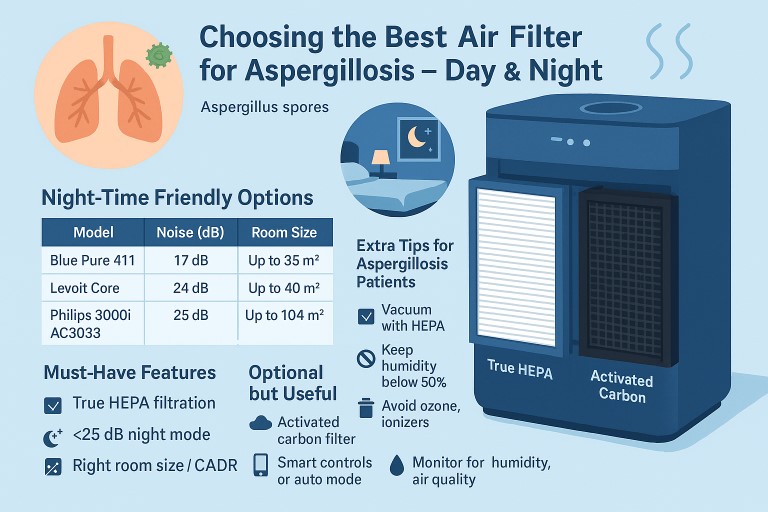
🌸 Increased spore counts in the air (Aspergillus spores peak with leaf mold, compost, and decaying plant material)
- Homes that have poorly controlled humidity tend to grow moulds more in Autumn/Winter
-
🤧 Coinciding with other allergies and asthma triggers
-
🍂 Damp weather and decaying vegetation can promote indoor mold growth
📌 Patients often report flares in April–May and September–October, sometimes needing steroids or antifungals adjusted.
🔹 2. Chronic Pulmonary Aspergillosis (CPA)
CPA may show less dramatic seasonality, but symptoms (fatigue, cough, haemoptysis) can worsen in:
-
❄️ Winter – due to:
-
Increased viral infections (influenza, RSV, etc.)
-
Cold air worsening underlying lung disease (COPD, bronchiectasis)
-
Indoor heating leading to drier air and more airborne spores
- Homes that have poorly controlled humidity tend to grow moulds more in Autumn/Winter
-
-
📉 Reduced sunlight/vitamin D may also affect immunity
🔹 3. Invasive Aspergillosis (IA)
Invasive disease tends to be more linked to hospital exposure, immunosuppression, and construction/dust, rather than season. However:
-
Some studies have linked higher hospital-acquired IA rates to building works in warmer months, when air filtration is challenged.
✅ Summary Statement You Could Use:
“While aspergillosis can cause symptoms year-round, many patients with ABPA or chronic forms report worsening symptoms in spring and autumn, likely due to increased mold exposure, humidity changes, and seasonal allergens. Winter can also pose challenges for those with weakened lungs or immune systems.”
When Breath Becomes Panic: Coping with Breathing-Related Fear in Aspergillosis
For many people living with aspergillosis—whether it's ABPA, CPA, or another form—there’s a quiet fear that goes beyond the coughing, mucus, or fatigue. It’s the fear of simply not being able to breathe.
And when that fear takes hold, it can become a panic attack, made worse by breathlessness itself. It’s a vicious cycle: the harder it is to breathe, the more fear takes over… and the more fear takes over, the harder it becomes to breathe.
For some, these episodes can be so intense that they involve loss of bladder or bowel control, trembling, dizziness, or a terrifying feeling of doom. These are real physical symptoms. They’re not “just in your head.” They’re a nervous system in overdrive, reacting to what feels like a life-or-death moment.
You are not alone in this.
What Is a Breathing Panic?
A breathing panic (or panic attack triggered by breathlessness) is when a person’s body and mind go into full emergency mode — often without warning — because they feel they’re not getting enough air.
In aspergillosis, this can happen:
-
During a flare-up or infection
-
After exertion or exposure to allergens
-
At night, when mucus blocks airways
-
During coughing fits
-
When feeling isolated, scared, or overwhelmed
The body releases adrenaline, heart rate speeds up, muscles tighten, and breathing becomes shallow or frantic. The brain believes it’s under threat. And sometimes, that intense physical response can lead to involuntary bladder or bowel release, shaking, chest pain, or feeling faint.
“I Thought I Was Dying” — You're Not Alone
Many patients describe these episodes as terrifying. Some feel embarrassed or afraid to tell others about what really happened — especially if they lost control of bodily functions. But this is not weakness or failure. It is the body doing its best to survive a perceived emergency.
There is no shame in what your body does when it’s frightened.
How to Cope During a Breathing Panic
Here are some tools used by people living with lung conditions to manage and reduce panic when it strikes:
1. Focus on the Out-Breath
When panicking, many people gasp for air. But exhaling fully is key. Try:
-
Pursing your lips like blowing out a candle
-
Slowly exhaling for longer than you inhale
-
Counting the exhale to 4 or 5 if you can
2. Ground Your Senses
To bring your mind back into your body:
-
Look around and name 5 things you see
-
Touch 4 things and describe their texture
-
Listen for 3 sounds
-
Smell 2 things
-
Say 1 thing out loud that you’re grateful for
3. Position Your Body
Sit upright or lean forward slightly. A position known as “tripod breathing” — resting forearms on a table or knees — can help open the lungs.
4. Cool Air on the Face
A small fan blowing gently on your face can help signal to the brain that it’s safe to slow down.
Preventing Future Panic Episodes
You can’t always avoid breathlessness, but you can build confidence in managing it:
- Respiratory Physiotherapy
Ask your GP or consultant to refer you to a respiratory physio. They can teach breathing control techniques that may reduce the risk of panic and improve mucus clearance.
- Psychological Support
Breathing panic has a huge emotional impact. You may benefit from talking therapies like:
-
CBT (Cognitive Behavioural Therapy) tailored to breathlessness
-
ACT (Acceptance & Commitment Therapy) for chronic illness
-
Trauma-informed therapy if panic stems from medical trauma
In many parts of the UK, IAPT services offer free NHS therapy — you can even self-refer online.
- Pelvic Floor Support
If you’ve experienced bladder or bowel accidents during panic, there is help available. Continence nurses and pelvic health physios can offer discreet support, exercises, and advice to rebuild control and confidence.
You Deserve Support, Not Silence
Panic is not a failure. It’s your body’s alarm bell — but you don’t have to live in fear of it. With the right tools, support, and compassion (for yourself as well as from others), you can take steps to feel safer in your body again.
If you’ve been through this, speak to your respiratory team. They need to know. If you’ve felt alone, reach out to a support group — like the Aspergillosis Support UK group — where others truly understand.
You’re not alone. And you are stronger than your worst moments.
Understanding Drug Interactions with Antifungal Medications
Information for patients and carers receiving treatment for aspergillosis
Why drug interactions matter
Many antifungal medications used to treat aspergillosis can affect — or be affected by — other medicines you may be taking. These drug interactions can change how well a medication works, increase side effects, or cause unexpected reactions.
Knowing what to watch for and sharing your full medication list with your healthcare team can help keep you safe.
Antifungal medicines that interact with other drugs
Common antifungals:
- Voriconazole
- Posaconazole
- Itraconazole
- Isavuconazole
These drugs are processed through the liver and can interfere with enzymes (like CYP3A4) that control how other medications are broken down.
Examples of drugs that may interact
Heart medications
- Statins (e.g. simvastatin) — can build up and cause muscle damage
- Calcium channel blockers (e.g. amlodipine) — may cause low blood pressure
- Warfarin and other anticoagulants — may require closer INR monitoring
Mental health medications
- SSRIs (e.g. sertraline, fluoxetine) — can increase side effects
- Benzodiazepines (e.g. diazepam) — may be stronger or last longer
Steroids
- Prednisolone — levels may increase with antifungals, increasing risk of side effects
Immunosuppressants
- Tacrolimus, cyclosporine — antifungals can raise their levels significantly
Other
- Oral contraceptives — effectiveness may be reduced (use backup contraception)
- Some diabetes medications — risk of low or high blood sugar
- Antacids or proton pump inhibitors — can reduce absorption of antifungals
What you can do
- Make sure your drug list is kept up to date and brought to every clinic visit or hospital appointment
- You can ask your pharmacist or look up your medicines in the British National Formulary (BNF) or NHS Medicines A-Z to find out more about possible interactions. The Fungal Infection Trust also maintains a list specifically for antifungal medication
- Always give your care team a full, up-to-date medication list, including over-the-counter medicines, supplements, and herbal remedies
- Don’t stop or start any medicines without checking first
- Let your GP and pharmacist know you're taking antifungal treatment
- Ask your team if your medication needs to be monitored more closely (e.g. blood levels)
Signs of a potential drug interaction
- Unexplained dizziness, fainting, or fast heart rate
- New or worsening side effects
- Signs of toxicity (nausea, confusion, muscle pain, tremors)
- Bleeding or bruising more easily
If you notice anything unusual, contact your healthcare team or pharmacist.
When to Speak Up About Side Effects
For patients and carers managing aspergillosis treatment
Why this matters
Treatment for aspergillosis is often long-term and involves medications that can affect people in different ways. It's important to know that you don’t have to suffer in silence. Recognising side effects early and reporting them can help you stay well and improve your quality of life.
Medications commonly used in aspergillosis
Antifungals
Voriconazole, Posaconazole, Itraconazole, Isavuconazole
Steroids
Prednisolone (oral), Inhaled corticosteroids
Biologic therapies
Omalizumab (anti-IgE), Mepolizumab/Benralizumab (anti-IL-5), Dupilumab (anti-IL-4/IL-13)
What to watch for
Note: These side effects range from common to rare. Most people do not experience all of them, but it's important to be aware of what might occur. If you’re unsure whether a symptom is related to your medication, always ask.
Cardiac side effects (uncommon to rare, but important to report)
- Palpitations (racing or irregular heartbeat)
- Dizziness or fainting
- Swelling in the legs or ankles
- Chest pain or tightness
- Changes in blood pressure or heart rhythm (QT prolongation) (can occur with antifungals or steroids)
- Palpitations (racing or irregular heartbeat)
- Dizziness or fainting
- Swelling in the legs or ankles
- Chest pain or tightness
- Changes in blood pressure or heart rhythm (QT prolongation)
Let your healthcare team know if you have a history of heart conditions, or experience any of these symptoms during treatment.
Antifungal side effects (common to occasional)
- Skin rash, burning, or sun sensitivity, even indoors (through windows or from reflected light)
- Visual changes (blurred vision, colour distortion, photophobia)
- Liver enzyme abnormalities (can show up on blood tests)
- Nausea, abdominal discomfort, or taste changes
- Hallucinations, anxiety, or confusion (rare but serious — seek help immediately)
Steroid side effects (common with long-term use)
- Mood swings, anxiety, or irritability
- Insomnia or restlessness
- Increased appetite or weight gain
- High blood sugar, especially if diabetic
- Bone thinning (osteoporosis) over time
- Skin thinning, easy bruising, or delayed healing
- Eye pressure/glaucoma or cataracts (with long-term use)
Biologic side effects (generally well-tolerated; uncommon side effects listed below)
- Localised reactions at the injection site (pain, swelling, redness)
- Headache, fatigue, or low-grade fever
- Worsening eye symptoms, especially with dupilumab (e.g. dry eyes, redness)
- Rare: allergic reactions or increased infection risk (let your team know if you’re feeling unwell after a dose)
When to get in touch
You should contact your care team if:
- A side effect is persistent, worsening, or interfering with your daily life
- You notice any mental health changes (anxiety, low mood, agitation)
- You feel dizzy, unwell, or unable to tolerate food or fluids
- There are signs of infection (e.g. fever, cough, chills, pain)
- You are unsure whether what you’re feeling is a side effect or something else
You're not being a nuisance
Asking questions or raising concerns is part of staying safe. Medications can usually be adjusted, paused, or switched — but your team needs to know how you’re feeling to make those decisions. You are an expert in your own experience.
Tip: Keep a side effect diary
- Note any changes in sleep, mood, appetite, skin, or digestion
- Bring this with you to appointments
- If helpful, ask a family member or friend to help observe changes
Voriconazole and Sun Sensitivity
People taking voriconazole need to be very cautious in the sun because this antifungal can cause photosensitivity reactions—meaning the skin becomes more sensitive to sunlight, even through glass or on cloudy days. This can lead to severe sunburn, skin blistering, and long-term damage, including premalignant and malignant skin changes (like squamous cell carcinoma), especially with prolonged use.
Here’s what people on voriconazole should do to protect themselves:
☀️ Sun Safety Tips for Voriconazole Users
-
Avoid direct and reflected sunlight:
-
Try to stay indoors between 10 a.m. and 4 p.m., when UV rays are strongest.
-
Choose shaded routes or walk on the shady side of the street.
- Avoid indirect or reflected sunlight (e.g. off windows, water, sand, snow)
-
-
Wear protective clothing:
-
Long-sleeved tops, trousers, and wide-brimmed hats are essential.
-
Consider UV-protective clothing (many brands offer this specifically).
-
Use UV-protective sunglasses to shield your eyes.
-
-
Use high-factor sunscreen:
-
Broad-spectrum SPF 50+ sunscreen is best.
-
Apply generously to all exposed skin, including hands, ears, and neck.
-
Reapply every 2 hours, and after sweating or washing.
-
-
Avoid sunbeds and tanning lamps:
-
Artificial UV exposure can also cause damage.
-
-
Check windows:
-
UV-A rays can penetrate glass, so use UV-filtering films on car and home windows if needed.
-
-
Regular skin checks:
-
Long-term voriconazole use has been linked to skin cancer, especially in immunocompromised individuals.
-
See a dermatologist regularly, and report any new or changing skin lesions.
-
⚠️ Signs of Photosensitivity to Watch For:
-
Red, itchy, or painful rash in sun-exposed areas
-
Skin blistering or peeling
-
New moles or spots, or changes to existing ones
If you're on long-term voriconazole and sun exposure is unavoidable, it might be worth discussing alternative antifungal treatments with your doctor, especially if skin damage begins to occur.
Here’s a mix of recommended sunscreens and UV-protective gear that people on voriconazole (especially those with prolonged use or immunosuppression) often find effective. These are high-protection, broad-spectrum, and suitable for sensitive or compromised skin.
🧴 Top Sunscreens for Voriconazole Users
🇬🇧 Available in the UK
-
La Roche-Posay Anthelios UVMune 400 Invisible Fluid SPF 50+
-
Extremely high UVA/UVB protection.
-
Lightweight, non-greasy, great for sensitive skin.
-
Popular among transplant and cancer patients for sun protection.
-
-
Altruist Dermatologist Sunscreen SPF 50/50+
-
Developed by a UK dermatologist.
-
Broad-spectrum, affordable, fragrance-free.
-
Available in bulk (good for daily use on large areas).
-
-
Ultrasun Extreme SPF 50+
-
Long-lasting protection, water-resistant.
-
Ideal for extreme sun sensitivity.
-
One application can last several hours if you’re not sweating heavily.
-
-
Eucerin Sun Fluid Pigment Control SPF 50+
-
High UVA/UVB and HEVIS (visible light) protection.
-
Helps prevent hyperpigmentation from sun damage.
-
-
Heliocare 360° Mineral Tolerance Fluid SPF 50+
-
100% mineral filters (ideal for highly sensitive or reactive skin).
-
Broad-spectrum including infrared and visible light.
-
Often recommended by dermatologists for patients with photosensitive conditions.
-
👕 UV-Protective Clothing
Look for clothes labelled UPF 50+ (Ultraviolet Protection Factor), which blocks 98% of UV rays. Here are some trusted brands:
🇬🇧 Available in the UK or for international shipping:
-
Solbari (Australia/UK)
-
Offers UPF 50+ certified clothing, including hats, long-sleeve tops, trousers, and gloves.
-
Specifically designed for people with photosensitivity and skin cancer risks.
-
-
Coolibar (US-based, ships to UK)
-
One of the gold-standard brands for UV-protective clothing.
-
Comfortable, stylish, and medically recommended for sun-sensitive conditions.
-
-
Uniqlo Airism Long Sleeve Tops
-
While not marketed as UV-protective, many of their Airism or UV-cut ranges have built-in UV filters.
-
Great for layering or casual use.
-
-
Decathlon UV Protection Range
-
Affordable UPF clothing, especially good for outdoor walking and travel.
-
Includes UV-protective hats, neck gaiters, and swimwear.
-
🕶️ UV-Protective Sunglasses
Make sure they:
-
Are labelled UV400 or 100% UVA & UVB protection
-
Preferably have wraparound lenses to protect the sides
-
Brands: Ray-Ban, Oakley, M&S UV-protection glasses, or Fitovers if you already wear prescription glasses.
What are all the diseases that link to higher risk of aspergillosis?
Here's a breakdown of the diseases and conditions linked to higher risk of aspergillosis, categorized by underlying mechanism:
🧬 1. Immunosuppression-Related Conditions
These are major risk factors for invasive aspergillosis:
-
Hematologic malignancies (e.g., leukemia, lymphoma, multiple myeloma)
-
Hematopoietic stem cell transplantation (HSCT)
-
Solid organ transplantation (especially lung, liver, heart)
-
Prolonged neutropenia (e.g. after chemotherapy)
-
Chronic granulomatous disease (CGD)
-
Severe aplastic anemia
-
Primary immunodeficiencies (e.g., CARD9 deficiency)
-
AIDS (late-stage, esp. with neutropenia or co-infections)
🫁 2. Pre-existing Lung Disease
Especially relevant to chronic pulmonary aspergillosis (CPA), aspergilloma, and ABPA:
-
Tuberculosis (TB) – especially cavitary or healed TB
-
Non-tuberculous mycobacterial (NTM) infection
-
Chronic obstructive pulmonary disease (COPD)
-
Asthma (moderate-severe or steroid-dependent)
-
Cystic fibrosis (CF)
-
Bronchiectasis (including post-infectious or idiopathic)
-
Sarcoidosis (esp. fibrocavitary)
-
Pneumoconiosis (e.g. silicosis)
-
Old healed fungal infections (e.g., histoplasmosis)
-
Post-COVID lung damage (e.g., fibrosis or cavitation)
💊 3. Medication or Treatment-Induced Immunosuppression
-
High-dose corticosteroids (especially prolonged use)
-
TNF-alpha inhibitors (e.g., infliximab, etanercept)
-
Calcineurin inhibitors (e.g., cyclosporine, tacrolimus)
-
Chemotherapy
-
JAK inhibitors (e.g., tofacitinib, ruxolitinib)
-
Anti-IL-5, IL-4, IL-13 monoclonal antibodies (possible ABPA risk modifiers)
🧠 4. ICU or Hospital-Acquired Risk
-
Severe COVID-19 pneumonia (→ COVID-associated pulmonary aspergillosis, CAPA)
-
Severe influenza (→ Influenza-associated pulmonary aspergillosis, IAPA)
-
ARDS (acute respiratory distress syndrome)
-
Mechanical ventilation
-
Broad-spectrum antibiotics
-
Renal replacement therapy / dialysis
🧬 5. Genetic/Allergic Conditions
-
Atopy (strong personal or family history)
-
Allergic bronchopulmonary aspergillosis (ABPA) risk is higher in:
-
Asthma
-
Cystic fibrosis
-
-
HLA associations (e.g. HLA-DR2, DR5 in ABPA)
🦠 6. Other Conditions with Fungal Susceptibility
-
Diabetes mellitus (especially poorly controlled)
-
Liver cirrhosis (linked to immune dysregulation)
-
Chronic kidney disease (esp. end-stage and dialysis patients)
-
Malnutrition or cachexia
-
Post-surgical states (e.g. after lung surgery, esp. with bronchopleural fistula)
🕊️ Reassurance for Patients: Understanding Aspergillosis Risk
If you’ve been told you’re at higher risk of aspergillosis, it’s completely natural to feel concerned. But it’s important to know that risk doesn’t mean certainty — and that many people live full, healthy lives even with underlying conditions linked to this infection.
Here are a few key points to help you feel more at ease:
🌿 1. Risk Isn’t the Same as Diagnosis
Being “at risk” means doctors will keep a closer watch for early signs — not that you will get the infection. Many people with risk factors never develop aspergillosis at all.
🛡️ 2. Monitoring & Prevention Are Powerful
Your healthcare team is trained to spot the earliest signs of infection, and tools like chest scans, blood tests, and symptom checks mean infections can often be detected early — when they’re most treatable.
💊 3. Treatments Are Effective and Improving
From antifungal medications to inhaled therapies and new biologic drugs, we have more tools than ever to manage all forms of aspergillosis — often with minimal impact on day-to-day life.
🧠 4. You’re Not Alone
Millions of people around the world live with asthma, COPD, or other chronic conditions. Support groups, clinics, and community resources are there to help you feel supported and empowered.
🌞 5. Focus on What You Can Control
Healthy lifestyle choices, regular medical checkups, avoiding dusty environments, and good hygiene all reduce your chances of exposure. You have real power to protect your health.
❤️ In Short:
Risk awareness is a tool for empowerment — not a cause for fear.
With vigilance, care, and support, most people do very well.
Full list:
[pdf-embedder url="https://aspergillosis.org/wp-content/uploads/2025/04/Aspergillosis_Risk_Factors.pdf"]
We can estimate the level of the increased risk in many cases - ie. by how much is the risk of getting aspergillosis increased over people who do not have the named risk factor?
[pdf-embedder url="https://aspergillosis.org/wp-content/uploads/2025/04/Quantified_Aspergillosis_Risk_With_Multipliers.pdf"]
Taking itraconazole for the first time?
✅ Checklist for Taking Itraconazole the First Time
💊 1. Know Your Form: Capsule vs Liquid
-
Capsules:
-
Must be taken with a full meal (ideally high-fat) to help absorption
-
Avoid taking with antacids, PPIs, or H2 blockers (like omeprazole, ranitidine)
-
-
Liquid (solution):
-
Must be taken on an empty stomach
-
Better absorption than capsules—but tastes unpleasant to some
-
👉 Make sure you know which form you're on and follow the correct instructions. If unsure, ask your pharmacist.
🕒 2. Stick to a Routine
-
Take it at the same time every day
-
Don’t skip doses
-
If you miss one and it's within a few hours—take it. If it’s close to the next dose, skip it—don’t double up.
🥗 3. Food and Drug Interactions
-
Avoid grapefruit juice – it can increase side effects
-
Avoid alcohol – adds to liver strain
-
Tell your doctor/pharmacist if you take:
-
Statins
-
Calcium channel blockers
-
Steroids
-
Blood thinners (e.g., warfarin)
-
Drugs that reduce stomach acid
-
🩺 4. Baseline & Follow-Up Tests
-
Before or soon after starting, you should have:
-
Liver function tests (LFTs)
-
Kidney function tests
-
Itraconazole blood levels (usually after 1–2 weeks if long-term treatment)
-
ECG if there's any heart history (due to rare risk of heart problems)
-
✅ Ask your doctor to schedule a check-up in 2–4 weeks to make sure the drug level is therapeutic and safe.
📋 5. Watch for Side Effects
Common but usually mild:
-
Nausea
-
Diarrhea
-
Headache
-
Rash
More serious (call your doctor if these occur):
-
Upper right abdominal pain, yellowing of the eyes/skin (⚠️ possible liver injury)
-
Shortness of breath, ankle swelling (⚠️ possible heart effects)
-
Tingling or numbness (⚠️ rare nerve effects)
-
Fatigue, dizziness, or mood changes
💡 6. Stay Hydrated and Track Symptoms
-
Keep a daily symptom diary (breathlessness, fatigue, cough, rash, mood, etc.)
-
Stay hydrated, eat well, and let your team know if anything feels “off”
💬 Want a Tip?
You can ask for a medication review a couple weeks after starting—especially if you're on other long-term meds. That’s often when interactions or early side effects show up.
Keep your prescribing doctor informed of any new symptoms, and don't forget your pharmacist is a great source of good advice about any drug you are taking and how they may interact with each other.
What drugs are being developed to reduce steroid intake
Here’s a breakdown of what’s already available and what’s on the horizon:
🧬 Biologics – the biggest game-changer
These are antibody-based therapies that target specific immune pathways, rather than suppressing the whole immune system like steroids do.
✅ Already used off-label or in trials for ABPA:
1. Omalizumab (Xolair)
-
Targets IgE (the allergy antibody that’s sky-high in ABPA)
-
Already licensed for severe allergic asthma
-
Studies show it reduces exacerbations, improves lung function, and helps taper off steroids
-
Limitations: expensive, dosing based on IgE levels and weight (difficult in patients with very high IgE)
2. Mepolizumab (Nucala)
-
Targets IL-5, which drives eosinophil activity
-
Approved for eosinophilic asthma
-
Used in some ABPA patients, especially when eosinophils remain high
-
Can help reduce steroid use and fungal exacerbations
3. Benralizumab (Fasenra)
-
Also targets IL-5 receptor – causes direct depletion of eosinophils
-
Similar benefits to mepolizumab but may act faster
-
Small studies and case reports show promise in ABPA and chronic pulmonary aspergillosis with eosinophilia
4. Dupilumab (Dupixent)
-
Blocks IL-4 and IL-13, key drivers of Th2 inflammation
-
Approved for asthma, atopic dermatitis, and nasal polyps
-
Early evidence suggests it may benefit ABPA patients, especially those with co-existing nasal polyps or eczema
-
Could be ideal for steroid-sparing in allergic fungal disease
💊 Antifungals as steroid-sparing agents
Already in use, but still being optimized:
-
Itraconazole
-
Voriconazole
-
Posaconazole
-
Isavuconazole (being explored more recently, better tolerated in some patients)
These reduce fungal burden, which helps turn down the immune overreaction—letting steroids be tapered or even avoided in some patients.
🔬 In Development or Under Investigation
🧪 Tezepelumab
-
Blocks TSLP (thymic stromal lymphopoietin) – an early signal in allergic inflammation
-
In trials for severe asthma
-
May be helpful in ABPA down the line – trials are ongoing
🧪 Anti-IL-33 and Anti-ST2 therapies
-
IL-33 is another "alarmin" involved in allergic responses
-
Still in early stages, but being watched closely for steroid-sparing potential in allergic lung diseases
🌍 Other Strategies Being Studied
-
Inhaled antifungals (e.g., inhaled voriconazole or amphotericin B) – may reduce systemic side effects
-
Vaccines against Aspergillus – still early stage
-
Mucolytics and anti-inflammatory antibiotics (e.g., azithromycin) as steroid-sparing support in some patients
🤔 What You Can Do Now
-
If you’re struggling with steroid side effects or dependency, it’s totally reasonable to ask your respiratory team:
-
“Am I a candidate for a biologic like omalizumab or mepolizumab?”
-
“Is my antifungal therapy optimized?”
-
“Would a switch to inhaled or combination therapy help reduce my steroid use?”
-
🌙 How to Manage Insomnia (Gently and Practically)
🧠 1. Understand the Type
Not all insomnia is the same — and understanding the pattern helps guide what to try.
-
Sleep-onset insomnia = can’t fall asleep
-
Sleep maintenance insomnia = wake up often or too early
-
Mixed = both
This affects what works — e.g., sleep-onset responds well to wind-down rituals, while maintenance might need different support.
🕯️ 2. Evening Wind-Down (Not Just “No Screens”)
Forget rigid rules — the key is sending cues to your nervous system that it’s safe to rest.
✅ Try:
-
Warm drink (caffeine-free herbal tea, warm milk)
-
Warm bath or shower
-
Dim lights, soft music, reading something gentle
-
A short evening walk (light exposure helps your body clock)
❌ Avoid:
-
Stressful news
-
Heavy exercise right before bed
-
Working or arguing in the bedroom
⏰ 3. Rethink the Clock
Insomnia often creates performance anxiety: “I must sleep now.” This makes things worse.
💡 Try:
-
Cover the clock or put it out of view
-
Get out of bed if you're awake >20–30 mins, and do something boring or calming (puzzle, stretching, audiobook)
-
Go back to bed only when sleepy
📆 4. Consistency is King
Even if you sleep badly, try to:
-
Wake up at the same time every day
-
Don’t “make up” for poor sleep with long naps or sleeping in — it confuses your body clock
This retrains your circadian rhythm.
🧘♀️ 5. Calm the Mind (Not Force Sleep)
Racing thoughts? Try:
-
Box breathing or 4-7-8 breathing
-
Body scan meditation (many free ones on YouTube or Calm app)
-
Journaling before bed to “park” worries
-
CBT for Insomnia (CBT-I) — best evidence-based therapy
Apps like Sleepio, Pzizz, Insight Timer, or Headspace have helpful guided sessions.
🌿 6. Gentle Natural Aids
These aren’t cures, but they can help some people feel drowsier:
-
Magnesium glycinate
-
Valerian root, passionflower, ashwagandha
-
Melatonin (best for circadian issues like shift work or jet lag — less effective for general insomnia)
Always check for interactions, especially with other meds.
🗣️ 7. When to Get Help
See a GP or sleep specialist if:
-
It’s lasting more than 3 months
-
It’s impacting daily functioning or mood
-
You have signs of sleep apnea, restless legs, or depression/anxiety
They can guide you through structured therapy or rule out hidden causes.
Swimming for people with aspergillosis
How could you advise someone with aspergillosis who wants to swim but finds the local pool triggers their asthma?
Great question — and can be really important for quality of life. For someone with aspergillosis (especially ABPA or CPA) and asthma that worsens in chlorinated pools, here’s a tailored guide that balances safety with enjoyment:
🏊♀️ Swimming with Aspergillosis + Chlorine Sensitivity: A Practical Guide
💡 1. Choose the Right Pool Environment
Goal: Minimise chloramine exposure (which irritates airways).
✅ Best options:
-
Ozone- or UV-treated pools: These significantly reduce chloramine levels.
-
Saltwater pools: Gentler, although still chlorinated (just less harsh).
-
Natural pools or lidos: Often free from chlorine, especially in outdoor settings.
-
Seawater swimming: The ultimate in chlorine-free options if you're near the coast and it's safe.
🚫 Avoid:
-
Indoor pools with poor ventilation
-
Pools that "smell strongly of chlorine" — this usually means high chloramines
🕗 2. Swim at Low-Traffic Times
-
Early morning swims are ideal — before other swimmers add organic matter (sweat, sunscreen, etc.), which reacts with chlorine to form irritants.
-
Ask the pool when they clean/shock it — swimming after that is usually better.
🧤 3. Protect Your Airways
-
Use a nose clip to avoid inhaling water vapor directly through the nasal passages.
-
Consider wearing a light face mask (e.g., FFP2) on the poolside until just before entering, to avoid breathing chloramines in enclosed spaces.
-
Ventolin (salbutamol) or another rescue inhaler should always be close by — even poolside if staff are aware.
💊 4. Pre-medicate if Needed
With your doctor’s advice, consider:
-
Short-acting bronchodilator 15–30 mins before swimming (e.g., salbutamol)
-
Leukotriene receptor antagonists (like montelukast) for added airway protection
-
Nasal rinses or corticosteroid sprays post-swim if you’re prone to sinus issues
🚿 5. Shower Immediately After
To reduce any skin or airway irritation:
-
Warm shower straight after
-
Nasal rinse or saline spray
-
Clean/dry clothes quickly to avoid damp mold exposure
🏞️ 6. Explore Alternative Swimming Options
-
Outdoor pools or lidos
-
Swimming lakes or sea-based pools (like Bude Sea Pool)
-
Private or spa pools with alternative sanitisation systems
-
Aquatherapy centres: Often use lower chemical levels and may cater to sensitive lungs
💬 7. Talk to Pool Staff
Many pools are willing to help. Try:
“I have a medical lung condition that reacts to chloramines — can you tell me when chlorination is lowest or if you use UV systems?”
You might be surprised how supportive they are.