🛁 Outdoor Hot Tubs & Aspergillosis — The Key Issues

For someone with aspergillosis (especially chronic pulmonary aspergillosis or ABPA), **outdoor hot tubs are usually not recommended — or at the very least, should be approached with serious caution.


❗ 1. Fungal Exposure Risk (including Aspergillus):

  • Hot tubs — even well-maintained ones — are prone to harbouring fungal spores, biofilms, and moulds, especially in:

    • Filters and jets

    • Under the covers and around the edge

    • The aerosolised mist from bubbles and heat

  • Aspergillus and other moulds can thrive in warm, damp, organic-rich environments — exactly what a hot tub is.

❗ 2. Risk of “Hot Tub Lung” (hypersensitivity pneumonitis):

  • Caused by inhalation of waterborne organisms, especially Mycobacterium avium and fungal spores.

  • Can mimic or worsen chronic lung conditions and is dangerous in someone with underlying aspergillosis.

⚠️ 3. Chlorine or Bromine May Not Be Enough:

  • While disinfection kills many bacteria, fungal spores and biofilm-forming organisms can persist — especially in jets or hard-to-reach areas.


🟡 If a patient insists on using a hot tub, they should:

  • Only use tubs maintained to hospital-grade cleanliness standards (rare in private settings)

  • Avoid if there's any cover of mould, visible residue, or musty smell

  • Use during off-peak times to reduce aerosol exposure

  • Avoid placing head near water jets or breathing in rising steam

  • Limit time in the tub and shower immediately afterward

  • Consider wearing a high-grade mask while near the tub when not submerged


Safer Alternatives for Relaxation:

  • Dry saunas (if tolerated)

  • Warm baths indoors in clean, ventilated bathrooms

  • Gentle hydrotherapy pools with strict water quality controls


🔍 Summary:

For someone with aspergillosis, outdoor hot tubs are generally not recommended due to the risk of fungal aerosol exposure and potential lung flare-ups. Even “clean” tubs can harbour hidden risks.


✅ Best Practice for Taking Blood Pressure at Home

Taking BP at home can be very helpful, but only if it's done correctly and consistently. Here's how to make sure the readings are accurate and meaningful:


1. Use a Validated BP Monitor

  • Choose an upper arm cuff, not a wrist or finger monitor.

  • Make sure the cuff is the right size for the arm (not too tight or loose).

  • Devices that are clinically validated (e.g., British and Irish Hypertension Society, BHF or NICE recommended) are best.

2. Timing Matters

  • Take readings at the same time(s) each day — typically:

    • Morning (before meds, breakfast, and activity)

    • Evening (before bed)

  • If taking just once daily, do it in the morning.

3. Prepare Properly:

  • Sit quietly for 5 minutes before measuring.

  • No coffee, smoking, or exercise for 30 minutes beforehand.

  • Sit upright, back supported, feet flat on the floor (no crossing legs).

  • Rest the arm on a table at heart level.

  • Be calm and quiet (no talking or watching TV).

4. How to Measure:

  • Take 2 readings, 1 minute apart.

  • If they’re very different, take a 3rd and record the average of the closest two.

5. Record the Results:

  • Keep a written or digital log (eg. Blood_Pressure_Diary):

    • Date & time

    • Reading (systolic/diastolic)

    • Pulse

    • Any symptoms (e.g. dizzy, headache, breathless)

Example:

Tue 8:00am – 132/78, pulse 72 – Felt fine


❗ Extra Tips for Reliable Results:

  • Avoid taking BP when in pain or upset — it can falsely elevate the reading.

  • Don’t obsessively repeat it all day (this can cause "white coat at home" effect).

  • Show the log to the GP/consultant — ideally with at least 5–7 days of morning & evening readings.


🟩 Patient Advice for Starting Posaconazole


1. ✅ What It’s For:

  • Used to treat or prevent serious fungal infections, especially in the lungs (like aspergillosis), or in patients with weakened immune systems.


2. 💊 How to Take It:

Form matters:

  • Tablets (most common):

    • Take with food (preferably a full meal or nutritional drink).

    • Swallow whole — do not crush or chew.

  • Oral suspension:

    • Take with a high-fat meal or acidic drink (like cola) to help absorption.

    • Shake well before use.

    • Must be taken multiple times a day — unlike tablets.

  • IV form:

    • Given in hospital or monitored settings.

⚠️ Important: Tablets and oral suspension are NOT interchangeable. Stick with what was prescribed.


3. 🧪 Monitoring and Tests:

  • Regular liver function tests (LFTs).

  • Blood tests to check posaconazole levels, especially if:

    • You’re not improving

    • You’re feeling unwell

    • Other meds are added

  • Electrolytes (like potassium, magnesium)

  • ECG (if you’re at risk for heart rhythm problems)


4. ⚠️ Side Effects to Watch For:

Common:

  • Nausea, vomiting, diarrhea

  • Headache or dizziness

  • Loss of appetite

  • Fatigue

Call your doctor immediately if you get:

  • Yellowing of skin or eyes, dark urine (possible liver problem)

  • Fast or irregular heartbeat, fainting, chest pain (QT prolongation)

  • Severe rash, skin peeling

  • Muscle cramps, weakness, or palpitations (possible low potassium)


5. 🚫 Interactions – Very Important!

  • Posaconazole interacts with many medicines:

    • Statins, blood pressure drugs, anti-seizure meds

    • Immunosuppressants (like tacrolimus, cyclosporine)

    • Steroids (levels may increase)

  • Avoid grapefruit and St. John’s wort

  • Always check with your doctor or pharmacist before starting new meds or supplements.


6. 🚗 Driving and Activities:

  • Be careful with driving or using machinery if you feel dizzy or have vision problems.


7. 🧴 Storage:

  • Tablets: room temperature

  • Suspension: room temp (not refrigerated); shake well before use


🧾 In Simple Terms for the Patient:

“Take posaconazole with food every day. You’ll need blood tests to check your liver and drug levels. Let your doctor know if you feel dizzy, have yellow skin, a fast heartbeat, or any rash. Don’t take grapefruit, and always check with your doctor before starting any new medicines.”


🟦 Key Advice for Patients Taking Itraconazole for the First Time

1. How to Take It – Depends on the Form:

  • Capsules:

    • Take with a full meal (ideally a fatty meal) to help absorption.

    • Do not take with antacids, proton pump inhibitors (like omeprazole), or H2 blockers (like ranitidine) — they reduce stomach acid and block absorption.

    • If acid-reducing medications are necessary, ask your doctor about strategies (e.g., acidic drinks like cola to help).

  • Liquid (oral solution):

    • Take on an empty stomach, at least 1 hour before or after food.

    • Swish in your mouth for a few seconds before swallowing if you're treating oral or throat infections.

Always stick to the form (capsule vs liquid) your doctor prescribed — they’re not interchangeable.


2. What It’s For:

  • Used to treat fungal infections such as Aspergillosis, histoplasmosis, onychomycosis, and others.


3. Common Side Effects:

  • Nausea, bloating, or diarrhea

  • Headache

  • Mild dizziness or fatigue

  • Transient changes in liver enzymes


4. Serious Side Effects – Call a Doctor If:

  • Liver trouble: yellowing of skin/eyes, dark urine, pale stools, nausea, or upper right-sided pain

  • Heart symptoms: swelling in ankles/legs, shortness of breath, fatigue — may indicate congestive heart failure

  • Severe rash, itching, or skin peeling

  • Tingling, numbness, or nerve pain (rare)


5. Monitoring:

  • You’ll need:

    • Liver function tests (LFTs) — regularly

    • Itraconazole levels (blood test) — to ensure it’s effective and not toxic

    • Potassium levels — may drop in some patients

    • ECG (if at risk for heart rhythm problems)


6. Important Interactions – Tell Your Doctor About:

  • Steroids (especially if taken long-term)

  • Heart medications, statins, antacids, seizure drugs, and warfarin

  • Avoid grapefruit juice — it can interfere with metabolism

  • Avoid alcohol if possible (increases liver risk)


7. Driving and Activities:

  • Can cause dizziness — don’t drive or operate machinery until you know how it affects you.


🧾 Summary:

“Take itraconazole exactly as prescribed — with food if it’s capsules, or on an empty stomach if it’s liquid. Let your doctor know if you get nausea, yellowing skin, or ankle swelling. You’ll need regular blood tests to check your liver and drug levels. Avoid antacids, grapefruit, and always check for interactions before starting new meds.”


🟦 Key Patient Advice for Starting Voriconazole

When starting voriconazole for the first time, it's important to provide clear, practical, and safety-focused information. Here's what a patient should be told:


1. How to Take It:

  • Take voriconazole on an empty stomach — at least 1 hour before or 1 hour after food.

  • Take it exactly as prescribed — usually twice daily at regular times.

  • Don’t stop suddenly unless advised.


2. Common Side Effects to Watch For:

  • Visual disturbances (blurry vision, changes in color or brightness) — often early on and usually temporary.

  • Photosensitivity (sunburn easily) — wear sunscreen and protective clothing.

  • Nausea or upset stomach

  • Skin rashes — report any rash, as rare serious reactions can occur.

  • Liver irritation — signs include dark urine, yellowing of skin/eyes, or upper right abdominal pain.


3. Serious Side Effects – Report Immediately:

  • Visual symptoms that worsen or don’t go away

  • Severe rash or peeling skin

  • Confusion, hallucinations, or tremors

  • Signs of liver trouble (yellow eyes, dark urine, pale stools)


4. Blood Monitoring Needed:

  • Liver function tests (LFTs) are usually checked before treatment and regularly during treatment.

  • Blood levels of voriconazole may also be monitored, especially if:

    • You're not responding

    • Side effects occur

    • You're on other medications that interact


5. Medication Interactions:

Voriconazole interacts with many drugs including:

  • Steroids (may increase steroid levels)

  • Warfarin, statins, some diabetes medications

  • Proton pump inhibitors (like omeprazole)

  • Some heart or seizure drugs

Always tell your doctor or pharmacist about all medications and supplements.


6. Driving and Activities:

  • Avoid driving or operating machinery if you have visual symptoms or feel dizzy.


7. Alcohol and Grapefruit:

  • Avoid or limit alcohol, as it may increase side effects.

  • Avoid grapefruit — it can affect how voriconazole is processed.


🌍 Global Aspergillosis Specialist Centres

ECMM Centres of Expertise
European Confederation of Medical Mycology Centres of Expertise

While the UK hosts the National Aspergillosis Centre, several renowned institutions worldwide specialize in the diagnosis and treatment of aspergillosis. Here's a list of notable centers across different regions:​


🇺🇸 United States

  • Mayo Clinic (Rochester, Minnesota; Jacksonville, Florida; Scottsdale, Arizona)

    • Offers comprehensive care for aspergillosis patients, with multidisciplinary teams experienced in managing complex cases.

    • Provides advanced diagnostic tools and individualized treatment plans.

    • More information: Mayo Clinic Aspergillosis

  • Johns Hopkins Hospital (Baltimore, Maryland)

    • Renowned for its pulmonary and infectious disease departments, offering specialized care for fungal infections.

    • More information: JHH Aspergillosis​

  • MD Anderson Cancer Center (Houston, Texas)

    • Specializes in treating immunocompromised patients, including those with invasive aspergillosis.

    • More information: MDACC Aspergillosis​

🇩🇪 Germany

  • Charité – Universitätsmedizin Berlin

    • One of Europe's largest university hospitals, with expertise in infectious diseases and mycology.

  • University Hospital Cologne

    • Recognized for its research and treatment of fungal infections, including aspergillosis.

🇫🇷 France

  • Institut Pasteur (Paris)

    • Conducts extensive research on aspergillosis and offers clinical services for patients with fungal infections.

    • More information: Institut Pasteur Aspergillosis

🇸🇬 Singapore

  • National University Hospital (NUH)

    • Provides specialized care in respiratory and infectious diseases, including aspergillosis management.

    • More information: NUH​

🇦🇺 Australia

  • Royal Prince Alfred Hospital (Sydney)

    • Offers comprehensive respiratory services with experience in treating fungal lung diseases.

    • More information: RPAH​

  • Alfred Hospital (Melbourne)

    • Known for its expertise in infectious diseases and respiratory medicine.

    • More information: AH


🧭 Finding Aspergillosis Expertise Near You

If you're seeking care outside these regions:


UK Aspergillosis Specialist Centres

Here's a list of UK hospitals and specialist centres with expertise in managing aspergillosis, including chronic pulmonary aspergillosis (CPA), allergic bronchopulmonary aspergillosis (ABPA), and invasive aspergillosis:


🇬🇧 UK Aspergillosis Specialist Centres

1. National Aspergillosis Centre (NAC) – Wythenshawe Hospital, Manchester

  • Overview: The NAC is the UK's only NHS Highly Specialised Service for chronic pulmonary aspergillosis.

  • Services: Comprehensive care including diagnosis, treatment, and long-term management of aspergillosis.

  • Multidisciplinary Team: Includes respiratory physicians, infectious disease specialists, mycologists, specialist nurses, and pharmacists.

  • Research: Collaborates with the Manchester Fungal Infection Group (MFIG) for cutting-edge research.

  • Remote Support: Offers virtual multidisciplinary team (MDT) meetings and telemedicine consultations for patients across the UK.

  • Contact: NAC Website

2. Royal Brompton and Harefield NHS Foundation Trust – London

  • Overview: Renowned for respiratory medicine, including the management of complex fungal lung diseases like ABPA and CPA.

  • Services: Specialist respiratory care with experience in fungal infections.

  • Contact: Royal Brompton Website

3. Royal Papworth Hospital NHS Foundation Trust – Cambridge

  • Overview: Specializes in respiratory and thoracic medicine, with expertise in fungal lung diseases such as CPA and ABPA.

  • Services: Advanced diagnostics and treatment for fungal infections.

  • Contact: Royal Papworth Website

4. University Hospitals Birmingham NHS Foundation Trust – Birmingham

  • Overview: Provides care for patients with chronic fungal lung infections, including aspergillosis.

  • Services: Comprehensive respiratory and infectious disease services.

  • Contact: University Hospitals Birmingham Website

5. North Bristol NHS Trust (Southmead Hospital) – Bristol

  • Overview: Offers respiratory care, including management of ABPA and fungal lung diseases.

  • Services: Specialist respiratory services with experience in fungal infections.

  • Contact: Southmead Hospital Website

6. Nottingham University Hospitals NHS Trust – Nottingham

  • Overview: Known for its expertise in managing fungal diseases, including aspergillosis.

  • Services: Specialist respiratory and infectious disease services.

  • Contact: NUH Website

7. Addenbrooke’s Hospital (Cambridge University Hospitals NHS Foundation Trust) – Cambridge

  • Overview: Provides advanced respiratory care, including diagnostics and treatment for fungal lung infections.

  • Services: Comprehensive respiratory and infectious disease services.

  • Contact: Addenbrooke’s Website


🔍 How to Access These Services

  • NHS Referral: Speak to your GP or current specialist about a referral to one of these centres.

  • Private Consultation: Some centres offer private consultations; check their websites for more information.

  • Support Networks: Joining patient support groups like the National Aspergillosis Centre Support  or Aspergillosis Trust can provide additional guidance and shared experiences.

  • Find an Expert Link

There are experienced centres in Scotland, Wales, and Northern Ireland that manage aspergillosis, although none are officially designated as national specialist centres like the National Aspergillosis Centre (NAC) in Manchester. Patients in these regions can still access expert care through local respiratory and infectious disease services, and referrals to the NAC are possible when needed.


🏴 Scotland

  • Royal Infirmary of Edinburgh (NHS Lothian)
    Offers advanced respiratory services, including management of fungal lung diseases.

  • Queen Elizabeth University Hospital, Glasgow
    Provides comprehensive respiratory and infectious disease care, with experience in treating aspergillosis.

  • Aberdeen Royal Infirmary
    Hosts a regional respiratory unit with expertise in managing chronic pulmonary conditions, including fungal infections.


🏴 Wales

  • University Hospital of Wales, Cardiff
    Features a specialist respiratory department experienced in managing conditions like ABPA and CPA.

  • Morriston Hospital, Swansea
    Offers respiratory services with experience in treating fungal lung diseases.


🇬🇧 Northern Ireland

  • Belfast City Hospital
    Provides specialist respiratory and infectious disease services, including management of aspergillosis.


🔄 Referral to the National Aspergillosis Centre (NAC)

Patients from Scotland, Wales, and Northern Ireland can be referred to the NAC for specialized care. Referrals are typically made by a respiratory consultant or specialist. The NAC offers remote consultations and multidisciplinary team (MDT) meetings to support local clinicians.National Aspergillosis Centre


🧭 Next Steps

  • Consult Your GP or Specialist: Discuss your condition and the possibility of referral to a local specialist or the NAC.

  • Contact the NAC: For more information or to facilitate a referral, visit the National Aspergillosis Centre.

  • Patient Support: The Aspergillosis Trust offers resources and support for patients across the UK.


Managing Aspergillosis Health Risks: Patients Perspective

🗣️ Advice to a Patient:

"When you're living with aspergillosis, it's important to know that we can't completely avoid risk — but what we can do is balance it. The amount of risk you take should match how important the activity is to your health or happiness."

"The basic rule is: always weigh the risk of fungal exposure against the benefits you’ll get from doing something."


Here’s how it works in everyday life:

  • If it’s something essential, like a hospital appointment, even if there's a moderate risk, it’s really important for your health. We accept the risk — but protect you properly with things like masks and hand hygiene.

  • If you’re doing something low-risk, like taking a walk in a clean park, the benefit is huge for your mental and physical health. You should enjoy it freely — no extra precautions needed unless it’s particularly dusty.

  • If it’s something high-risk like gardening with compost, but it's just for enjoyment, we don’t tell you to give it up — we modify it. Wear an N95 mask, use bagged compost, and avoid stirring up the dust.

  • If it’s something non-essential with high dust exposure, like home renovations, it’s best to delay it or stay somewhere else until it’s safe.

  • If you’re thinking about overseas travel to places with high fungal spore levels, it depends. If the trip is very important, we plan extra precautions. If it’s just for pleasure, we weigh it carefully and might suggest safer options.

  • If you have emotional bonds — like living with a pet bird —, there’s risk, but there's also huge emotional benefit. We don’t say "get rid of the pet"; instead, we manage the risks carefully, like wearing a mask during cage cleaning and improving ventilation.


The main things to remember are:

  • Essential activities always come first — over the ones that are just "nice to do."

  • We try to modify activities rather than asking you to avoid everything.

  • If your immune system is weaker temporarily, you’ll need to be extra cautious just for that time.

  • It’s your decision — once you understand the risks, you choose what you feel comfortable with.

  • Risk tolerance can change — your lung health, immune status, even the season can affect how careful you need to be.


🧡 "You can't live in a bubble. Our goal is to help you do the things that matter most to you — safely, sensibly, and without giving up your quality of life."


🌿 Aspergillosis Risk Acceptance Decision Chart

Step 1: Identify the Activity
➡️ What do you want or need to do?


Step 2: Assess the Potential Exposure Risk

  • Low Risk (e.g., walking outside on a dry day, visiting a clean indoor space)

  • Moderate Risk (e.g., busy public spaces, gardening carefully, mild dust)

  • High Risk (e.g., heavy dust, compost handling, construction zones, visible mold)


Step 3: Assess the Importance of the Activity

  • Essential (e.g., medical appointment, critical family event)

  • Important but Optional (e.g., exercise, visiting friends, hobbies)

  • Non-Essential (e.g., DIY projects, risky travel purely for leisure)


Step 4: Decision Guide


Risk Importance Action
Low Risk Any importance ✅ Go ahead, no special precautions needed.
Moderate Risk Essential or Important ✅ Modify (mask, avoid peak times, ventilate) and proceed.
Moderate Risk Non-Essential ⚠️ Consider delaying or enhancing precautions.
High Risk Essential ✅ Proceed only with strong protections (mask, HEPA filters, time limits).
High Risk Important/Non-Essential ❌ Avoid if possible, or find a safer alternative.

Step 5: Extra Protection if Needed
🛡️ Use a high-grade mask (N95/FFP2)
🛡️ Keep time in risky areas as short as possible
🛡️ Shower and change clothes after high-risk exposure
🛡️ Monitor symptoms for 48–72 hours after any major exposure


📝 Quick Tip:

"If the risk is high and the benefit is low, it's usually best to delay, avoid, or modify the activity."
"If the benefit is high and you protect yourself well, it's usually worth doing."


🌸 Spring & Summer Advice for ABPA and CPA Patients

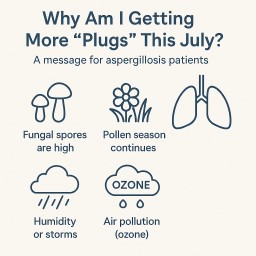
🟡 1. Watch for Rising Mold and Pollen Levels

  • Spring = exploding pollen (trees first, then grasses).

  • Early summer = mold spore counts rise sharply (especially after rain or damp evenings).

  • Pollen and mold are inflammatory triggers for ABPA.

  • CPA patients also risk extra mucus, chest tightness, and infections after pollen/mold exposure.

Action: ✅ Check daily mold and pollen forecasts (AccuWeather, Met Office, University of Worcester).
✅ On high pollen/high spore days → limit time outdoors, mask if needed, and keep windows closed.


🔵 2. Avoid Gardening Without Protection

  • Soil and compost are full of Aspergillus and other molds — especially after spring rains.

  • Even "dry" gardens can have dangerous spore clouds when digging, mowing, or raking leaves.

Action: ✅ Wear an FFP2/N95 mask for light gardening.
✅ For heavy work (mowing, compost turning), use an FFP3/N99 mask (preferably valved).
✅ Shower and change clothes immediately after heavy garden work.


🟠 3. Stay Cool but Stay Safe Indoors

  • Summer heat = open windows — but warm damp air boosts indoor mold growth.

  • CPA patients are especially vulnerable to indoor mold spores triggering flares.

Action: ✅ Use fans, shades, or air conditioning to cool the house without leaving windows wide open all day.
✅ If you open windows, close them at night when humidity rises.
✅ Use a dehumidifier if your home gets humid (>50% humidity inside = higher mold risk).


🔴 4. Hydrate and Protect Airways

  • Warm weather dries out airways, making mucus thicker and harder to clear — dangerous for CPA.

  • ABPA patients also get thicker mucus in drier air, risking plugging and flares.

Action: ✅ Drink plenty of water (keep mucus thin).
✅ Consider using a saline nasal spray or humidifier if indoors with air conditioning.
✅ Continue any airway clearance techniques your doctor or physio recommended.


🧹 5. Be Extra Cautious After Rain

  • After a spring/summer rainstorm, mold spore counts spike massively outdoors.

  • Within hours of rain stopping, air can be thick with spores — even if it smells fresh.

Action: ✅ If you're outside right after rain, mask up.
✅ Prefer next-day outings once things dry fully.


🚨 Bonus Caution for CPA:

  • CPA patients are prone to bacterial infections after pollen/mold exposure + mucus retention.

  • Any sudden worsening of cough, fever, or chest pain → seek help fast (don't wait days).

Spring/summer CPA flares often start as "just pollen" or "just tiredness" but can tip into infections without quick action.


🎯 Simple Spring & Summer Rule for ABPA/CPA

If it’s damp, dusty, or smells “earthy” outside → mask up.
If pollen count is high → limit time outdoors.
Stay hydrated, stay cool, and protect your lungs.


✅ Quick Mini Checklist:

Risky Activity What to Do
Gardening FFP2/FFP3 mask + change clothes
After rain Mask up or delay outing
High pollen/mold forecast Indoor day or short trip with mask
Open windows at night Avoid or control humidity indoors
Feeling tight or coughing Rest + rescue inhaler if prescribed

🧡 You absolutely can enjoy spring and summer —

you just need to plan ahead, protect yourself smartly, and listen carefully to your body.


🫁 Advice for Outdoor Air Pollution for Patients with Lung Conditions

Here’s clear advice we would give to people with breathing sensitivities like ABPA (Allergic Bronchopulmonary Aspergillosis), CPA (Chronic Pulmonary Aspergillosis), Asthma, Bronchiectasis, or COPD:


✅ 1. Check Air Quality Before Going Out


✅ 2. Time Your Outdoor Activity Smartly

  • Early mornings often have higher pollution (overnight trapping by cold air).

  • Mid-morning to early afternoon (10 am – 2 pm) often cleaner if sunny and breezy.

  • Avoid rush hours — pollution is highest when traffic is heavy.

🔵 Good practice:

Walk, shop, or garden during cleaner, warmer parts of the day if possible.


✅ 3. Mask Up on Moderate or Higher Pollution Days

  • If AQI (Air Quality Index) is moderate or worse:

    • Use a lightweight FFP2/N95 or better mask outdoors.

    • Valved masks are better for breathing comfort but remember: valve masks protect you, not others.

  • Reusable masks with PM2.5 filters are also helpful (e.g., Cambridge Mask Pro).


✅ 4. Avoid High-Risk Locations

  • Don't walk along busy main roads if you can avoid it.

  • Stay a block back from heavy traffic routes — pollution drops dramatically even just 100 meters away!

  • Avoid construction sites, open fires, industrial areas, and bus depots.


✅ 5. Protect Indoors Too

  • Close windows on bad air days (especially facing traffic).

  • Use HEPA air purifiers indoors if you can — they trap fine pollution particles and mold spores too.

  • Shower/change clothes after coming inside if you've been out during very polluted times — particles stick to hair and clothing.


✅ 6. Listen to Your Body

  • If you feel tight-chested, start coughing, or wheezy after being outside:

    • Stop, mask up immediately if you haven't.

    • Use a rescue inhaler if prescribed (salbutamol, Ventolin).

    • Get into cleaner air (indoors with windows shut).

Even if pollution readings seem only “moderate,”
if your lungs react badly, trust your body first, not the number.


🎯 Simple Golden Rules for ABPA/CPA patients:


Condition When to mask outdoors When to stay indoors
ABPA flare Mask on at AQI moderate or higher Stay indoors if AQI high/very high
CPA stable Mask if dusty or AQI moderate+ Avoid heavy exertion on polluted days
Bronchiectasis Always mask if dusty + avoid traffic Rest indoors if air quality poor

🧡 Quick "Air Quality Survival Kit" for Sensitive Lungs

  • Small FFP2/N95 mask (valved for comfort)

  • Small bottle of water (stay hydrated — pollution thickens mucus)

  • Rescue inhaler (if prescribed)

  • Air quality app installed and checked daily

  • Lightweight jacket/hat to minimize particles on hair and skin


🔵 Final Mindset Tip:

🌿 You don’t have to avoid outdoors forever
you just need to be strategic about which days and where you go.

“Pick your battles. Choose your air.”

Download quick checklist for your phone [pdf-embedder url="https://aspergillosis.org/wp-content/uploads/2025/04/Air_Pollution_Risk_Chart_Mobile.pdf"]

Download checklist for your wall [pdf-embedder url="https://aspergillosis.org/wp-content/uploads/2025/04/Air_Pollution_Risk_Chart_Final.pdf"]