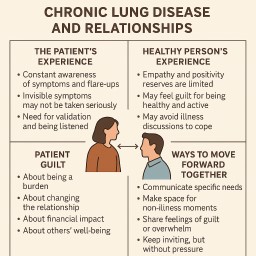
Chronic Lung Disease and Relationships: The Emotional Impact for Patients, Partners, Friends & Family
Living with chronic lung disease — such as ABPA, CPA, bronchiectasis, or severe asthma — affects far more than the body.
It alters the emotional landscape between the person with the illness and the people around them.
This isn’t just about physical limitations — it’s about how empathy, energy, guilt, and emotional resilience are shared (or strained) over time.
This guide explores both perspectives — the patient and the healthy person — and offers ways to keep relationships strong.
1. The Patient’s Perspective
For the person with the illness, the condition is ever-present:
-
Constant awareness – Every breath, plan, or activity is influenced by symptoms, medication schedules, and the risk of flare-ups.
-
Invisible symptoms – You can feel like you’re drowning without looking or sounding breathless. The absence of obvious signs often means people underestimate how unwell you are.
-
Need for validation – Being listened to, believed, and taken seriously is essential. Dismissive comments such as “you don’t sound wheezy” can feel like a denial of your lived reality.
-
Loss of role – Illness can mean stepping back from work, family responsibilities, or social life, leaving you feeling less “you” and more “the patient.”
2. The Healthy Person’s Perspective
Even the most loving partner, friend, or family member has finite emotional reserves:
-
Empathy fatigue – Offering compassion in a crisis is natural; sustaining it daily for years is emotionally exhausting.
-
Positivity limits – Staying upbeat to encourage the patient can drain energy, sometimes leading to withdrawal.
-
Healthy guilt – Feeling bad for having health, energy, freedom, or the ability to enjoy life.
-
Emotional self-protection – Avoiding deep illness discussions to manage their own fear, helplessness, or sadness.
-
Mismatch of experience – The healthy person dips in and out of illness awareness, while the patient lives in it constantly.
3. Patient Guilt
While healthy guilt is common, patient guilt is just as powerful:
-
Feeling like a burden – Worrying that you limit others’ activities, social life, or freedom.
-
Changing the relationship – Feeling bad that a partner now has to act partly as a carer.
-
Financial strain – Guilt over reduced income or increased expenses.
-
Impact on others’ wellbeing – Feeling responsible for your partner’s, friends’, or family’s stress or fatigue.
-
Mood and personality changes – Guilt about being irritable, anxious, or withdrawn because of the illness or medication effects.
4. Common Relationship Challenges
For partners:
-
Role shift – Moving from equal partnership to a dynamic where one is part-carer.
-
Social imbalance – One may want to go out more than the other can manage.
-
Resentment risk – If needs are unspoken, one may feel abandoned and the other may feel trapped.
For family:
-
Unequal support – Some relatives engage, others withdraw.
-
Generational differences – Older relatives may minimise invisible illness (“just push through”).
-
Positive minimising – Trying to “cheer you up” by downplaying symptoms, which can feel invalidating.
For friends:
-
Friendship drift – Reduced shared activities can lead to less contact.
-
Fear of offending – Friends stop inviting you to events so you won’t have to say no.
-
Discomfort with illness – Some disappear entirely rather than risk awkwardness.
5. The Psychology Behind These Changes
-
Finite empathy and energy – The brain isn’t wired for sustained crisis-mode support.
-
Visible vs. invisible illness gap – We respond more readily to what we can see (limping, coughing) than what we can’t (chest tightness, fatigue).
-
Avoidance coping – Healthy people sometimes step back emotionally to manage their own distress.
-
Healthy guilt – Creates distance when the healthy person hides their joy to avoid hurting you.
-
Patient guilt – Creates distance when you hold back your needs to avoid burdening them.
6. Strategies for Moving Forward Together
For Patients:
-
Be specific – Say what you need: “I need you to just listen” or “Could you help with…?”
-
Make space for non-illness moments – Talk about hobbies, TV shows, shared memories.
-
Recognise recharge needs – Allow healthy people breaks from illness talk without taking it as a lack of care.
-
Value their life too – Encourage them to enjoy activities even if you can’t join.
For Partners, Friends, and Family:
-
Believe them – Accept what the patient says about symptoms, even if they “look fine.”
-
Share your feelings – Guilt, overwhelm, or fear are normal; discussing them prevents silent withdrawal.
-
Keep inviting – Offer options, but no pressure — inclusion matters more than attendance.
-
Balance care with normality – Don’t let every interaction be about the illness.
7. Talking About Guilt (Both Sides)
-
Name it openly – “I feel guilty for being well” or “I feel guilty for needing so much help.”
-
Acknowledge the illness isn’t anyone’s choice – Blame the condition, not each other.
-
Agree on boundaries – Both lives matter, both deserve joy.
-
Share in two directions – Illness updates and everyday life keep relationships in balance.
8. Final Thought
Chronic illness can strain relationships, but it can also deepen them — if both sides:
-
Understand that empathy, positivity, and energy are finite.
-
Recognise both healthy guilt and patient guilt.
-
Protect space for joy, humour, and connection beyond the illness.
Love doesn’t mean living in the illness 24/7 — it means walking alongside each other, even when the paths look different.
Chronic Pulmonary Aspergillosis (CPA) – Information For Family and Friends
Print this off or share electronically
WHAT IT IS
CPA (Chronic Pulmonary Aspergillosis) is a long-term lung infection caused by the Aspergillus fungus. It often develops where lungs are already damaged (e.g., TB, COPD, bronchiectasis, sarcoidosis) and may form cavities, sometimes with fungal balls (aspergillomas).
WHAT IT'S NOT
-
Not contagious – you can't catch CPA.
-
Not poor hygiene – spores are everywhere in the air.
-
Not the patient's fault – flare-ups or setbacks happen because of the illness, not something they did wrong.
WHY AREN'T OTHERS AFFECTED?
Most people remove spores without trouble. CPA appears when lungs are already damaged or the immune system can't fight the fungus well – after past infections, chronic lung disease, or weakened defences. It's not about choices; it's lung history and chance.
TYPICAL SYMPTOMS
-
Persistent cough (sometimes with blood)
-
Breathlessness
-
Fatigue and low energy
-
Weight loss
-
Recurring chest infections
WORST SYMPTOMS
-
Coughing up blood – can be small streaks or larger amounts; sudden and frightening; urgent if heavy.
-
Severe fatigue – can stop even simple tasks; not just ‘tiredness’.
TREATMENT
-
Long-term antifungal medication
-
Regular scans and blood tests
-
Surgery in selected cases
THE REALITY
CPA is a serious, long-term condition. On bad days, people may not be able to do much at all. Symptoms can dominate daily life and limit social plans – cancelled arrangements are the illness talking, not them. It can also make people feel grumpy or irritable – not because they don't care, but because constant symptoms, tiredness, and limits on daily life are frustrating and exhausting. There’s often a mental load too – always thinking about avoiding dust, damp, or mould spores, and sometimes feeling overcautious about activities like going on boats, visiting old buildings, or anywhere that might harbour moisture or mould. This risk-checking is a form of self-protection, even if it means missing out.
It’s important to mention the mood swings and fatigue caused not only by the disease but also by the medication. For some, constant hand tremors are also part of daily life — these are often misunderstood by others.
LOOKING AHEAD
-
With effective treatment – Many people can keep the infection stable for years, control symptoms, and stay independent.
-
Risks – CPA can slowly progress, and severe flare-ups (like coughing large amounts of blood) may need urgent treatment.
-
Change over time – The illness can be stable for long periods, but it often needs lifelong monitoring and treatment changes. Support from specialists helps keep people well for longer.
ENVIRONMENTAL TRIGGERS & PROTECTION
Some people with CPA need to avoid environments with high levels of dust or fungal spores. This includes gardening, composting, building work, or damp/mouldy places. Wearing a protective mask during these activities can help reduce risk. Avoiding these triggers is about preserving lung health – not being fussy or antisocial.
HOW FRIENDS AND FAMILY CAN BEST HELP
-
Respect limits – breathlessness, fatigue, or coughing up blood can stop plans at short notice; it's not a choice.
-
Minimise exposure risks – avoid inviting them to dusty, damp, or mouldy places.
-
Offer practical help – driving to appointments, carrying shopping, or helping at home during flare-ups.
-
Be patient with mood changes – grumpiness can come from exhaustion and constant vigilance against triggers.
-
Talk openly about safety – if you suggest an outing, ask “Would this feel safe for you?”
-
Stay connected – even if they can't join in physically, a call or small gesture keeps them included.
MORE INFORMATION & SUPPORT
National Aspergillosis Centre (UK): https://mft.nhs.uk/wythenshawe/services/infectious-diseases/national-aspergillosis-centre/
Patient information & community: https://aspergillosis.org
Being Heard in Healthcare: Confidence, Communication, Gender Bias, and Your Rights
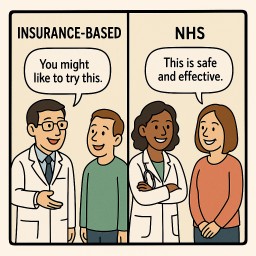
Living with aspergillosis or severe asthma often means frequent contact with healthcare professionals — GPs, hospital specialists, nurses, physiotherapists, pharmacists, and more. Most of these encounters are positive, but sometimes patients leave feeling they weren’t truly listened to. This can be frustrating, especially when symptoms are complex, variable, or invisible to others.
Why Some Patients Feel Unheard
Some patients report that their background, gender, education, or knowledge of their condition seems to affect how clinicians speak to them. If a clinician thinks you are “well informed,” they may change their approach — sometimes giving you more detail, but occasionally becoming defensive or dismissive.
This shouldn’t happen. Every patient deserves the same respect, attention, and clear explanations, regardless of their background or experience.
Occasionally, what feels like “healthcare ego” may actually come from other sources:
-
Time pressure in busy clinics
-
Stress or fatigue
-
Overconfidence in diagnostic skills
-
Unconscious bias about gender, age, or condition severity
The Role of Gender Bias
Research in the UK and internationally shows that gender can sometimes influence how symptoms are interpreted and how seriously they are taken. Women are, on average, more likely to have their symptoms attributed to stress or anxiety, while men may be assumed to under-report pain or discomfort.
In conditions like asthma and aspergillosis — where breathlessness, fatigue, and chest symptoms may not always show clearly on tests — this bias can delay diagnosis, affect treatment urgency, and shape how much explanation is given. Recognising that this bias exists can help you prepare to advocate for yourself more effectively, regardless of gender.
The Women’s Health Strategy for England — A Step Forward
The Women’s Health Strategy for England (gov.uk link) is a landmark initiative aiming to transform how healthcare listens to and serves women. It highlights priorities that matter for anyone with a long-term, complex condition:
-
Women’s Voices Must Be Heard – 84% of women surveyed said they often felt ignored or dismissed by healthcare professionals.
-
More Inclusive Policies and Training – Increased focus on women’s health education for healthcare staff and embedding shared decision-making into routine care.
-
Closing the Research Gap – Improving female representation in clinical research and analysing data by sex and life stage.
-
System-Level Change – Appointing a Women’s Health Ambassador, setting up women’s health hubs, and introducing women’s health leads for accountability.
For the aspergillosis community, this means a greater push for inclusive research, equal access to treatment, and recognition of symptoms that might otherwise be overlooked.
What to Do if You Feel You Weren’t Heard
If you leave an appointment feeling your concerns weren’t addressed:
-
Restate your main concern politely but firmly, explaining why it matters.
-
Ask the clinician to repeat back what they understood, so you can correct any misunderstandings.
-
Request that your concerns be recorded in your medical notes.
-
Follow up in writing via a patient portal, email, or letter.
-
Bring a trusted supporter (trusted friend, family member, or advocate) to future appointments to help make your case.
Building Confidence in Healthcare Conversations
Confidence in speaking up grows with preparation:
-
Prepare your top two or three key points before the appointment.
-
Practise saying them aloud so they feel natural.
-
Use clear phrases like “I am concerned about…” or “I need to understand…”
-
Remember — you have a right to clear information about your diagnosis, treatment, and risks.
-
If you can’t speak up in the moment, follow up in writing afterwards.
Why This Works — The Evidence
Research shows prepared, assertive patients get clearer, more thorough answers:
-
The “Ask Me 3” approach improves understanding and engagement.
-
Shared decision-making studies show prepared patients are more likely to have concerns addressed and remember what was discussed.
-
BMJ and Patient Education & Counseling studies find that specific, assertive language leads to better explanations and consideration of alternatives.
-
Having an advocate present improves follow-up and adherence to care plans.
Final Thought
In aspergillosis care, where symptoms can be complex and treatments long-term, good communication is as important as good medicine. Speaking up respectfully but confidently helps you get the care you need and supports a culture where every patient — regardless of gender or background — is listened to from the first moment. The Women’s Health Strategy shows there is now national recognition of these issues, and your voice is a vital part of making change happen.
Debate: Gender Bias in Science and Clinical Trials & Why It Matters to Patients
Introduction: A History of Exclusion For decades, medical research and clinical trials were built around a default male body. Women were routinely excluded from studies out of concern for hormonal variation, pregnancy risks, or assumptions that female responses would mirror male ones. The consequences? Misdiagnoses, incorrect dosing, side effects overlooked in women, and entire conditions dismissed as psychological.
This pattern of systemic gender bias has had real-life consequences for millions of women, especially those living with chronic or misunderstood illnesses like ME/CFS (Myalgic Encephalomyelitis/Chronic Fatigue Syndrome), long COVID, autoimmune diseases — and potentially, aspergillosis.
Section 1: Real Consequences of Exclusion
Why Gender Bias Matters in Asthma and Aspergillosis
Both asthma and aspergillosis are diseases where gender can influence immune response, disease progression, and side effects of treatment. Women are more likely to develop certain asthma subtypes (e.g., late-onset eosinophilic asthma), which overlap with allergic fungal conditions like ABPA. They may also experience more frequent exacerbations and are more vulnerable to long-term steroid side effects such as adrenal insufficiency and bone loss. Despite this, sex-specific analysis is rare in fungal disease trials, and asthma research has only recently begun to explore these differences.
Is Gender Relevant in Aspergillosis? While aspergillosis affects people of all sexes, some patterns suggest potential sex differences in prevalence, diagnosis, immune response, and treatment side effects:
- Chronic Pulmonary Aspergillosis (CPA) appears more common in men, especially in post-TB or COPD populations, but women may experience more severe fatigue or be underdiagnosed.
- In ABPA (Allergic Bronchopulmonary Aspergillosis), hormonal differences may influence disease severity, and women often report more exacerbations or sensitivity to long-term steroid treatment.
- Invasive aspergillosis is less well studied for sex differences, though some research in animal models suggests hormonal influences on fungal immunity.
- Women may also be more vulnerable to side effects of antifungals and corticosteroids, such as adrenal suppression, hearing loss, or osteoporosis.
Despite these observations, most clinical studies do not stratify by sex or explore gender-specific differences, leaving important questions unanswered.
A Message to Women Living with Aspergillosis
If you're reading this as a woman affected by aspergillosis, please don’t feel discouraged. While we highlight gaps in past research, the goal is to push for better inclusion, not to suggest you're being overlooked in care. You are not alone. Clinicians are becoming more aware of these issues, and researchers — especially in the UK — are actively working to close the gender gap. Patient groups and specialist centres like the NAC are also strong advocates for fair, personalised treatment. Your voice matters, and being informed is a powerful step in making future care better for everyone.
Clinical trials that exclude or underrepresent women have led to:
- Drugs that stay longer in women's bodies (e.g., Zolpidem) causing next-day drowsiness and driving risk
- Heart medications being under-prescribed to women, because early trials only studied men
- Misunderstanding of how autoimmune diseases develop and respond to treatment
- Failure to understand symptoms unique to women, such as how heart attacks present differently
Historically, women were also more likely to have their physical symptoms dismissed as anxiety or "hysteria." ME/CFS, a condition affecting mostly women, was dismissed for decades as psychological. When patients with ME later caught COVID-19, many were again left behind as new post-viral syndromes took priority.
For patients with aspergillosis, particularly chronic forms like CPA or ABPA, the relevance is clear. These conditions are under-researched and under-recognised, and early studies may not fully reflect how they impact women. Steroid-related side effects like osteoporosis, adrenal suppression, and hearing loss may differ by sex — yet sex-stratified data is rarely available.
Section 2: Has Anything Changed?
Yes. In the UK, the National Institute for Health and Care Research (NIHR) and the Medical Research Council (MRC) have taken steps to improve inclusion:
- NIHR-funded studies are expected to include representative populations and report on diversity
- UK Research and Innovation (UKRI) promotes equality in trial design, including sex and gender analysis
- The DecodeME study (the world’s largest ME/CFS genetics study, based in the UK) is actively engaging with female participants
But gaps remain — especially in rare diseases, chronic illnesses, and reproductive health. For fungal disease and aspergillosis specifically, many trials still do not analyse sex-specific outcomes, despite women forming a significant proportion of the affected population.
Section 3: Are Women Now Being Protected Too Much? Some worry that extra precautions — like excluding women from early-phase trials — may backfire:
- Delaying access to life-changing drugs
- Forcing women to wait until post-marketing surveillance to be included
- Excluding pregnant and breastfeeding women entirely, even when they are at high risk (e.g., in pandemics)
This creates a paradox: either women are harmed by being ignored, or excluded "for their safety."
The solution is not to avoid studying women — but to design smarter, safer, inclusive trials from the beginning.
Section 4: Will We Need Two Trials — One for Men, One for Women? This concern is understandable. Stratifying data by sex, running subgroup analyses, and including both pre- and post-menopausal women does cost more.
But it's not about running two separate trials. It's about:
- Recruiting balanced numbers of men and women
- Analysing sex-specific outcomes from one trial
- Designing adaptive trials or pooled data studies
Neglecting sex differences costs more in the long run — through failed drugs, recalls, and harm to patients.
Section 5: Positive Examples of Progress
- UK heart disease research now includes female-specific risk factors and symptom profiles in NICE guidance
- Autoimmune research increasingly uses female animal models and stratifies analysis by sex
- Endometriosis, menopause, and menstrual health are finally getting targeted research funding in the UK
- DecodeME is helping uncover the genetic basis of ME/CFS with full inclusion of women
- Long COVID clinics in the NHS are building on lessons from women-led ME/CFS research
- New studies on asthma and fungal allergy (e.g., ABPA) are beginning to explore hormonal and immunological factors that may differ by sex
Section 6: Where Patients Fit In Patients have led many of these changes:
- Women with ME, long COVID, POTS, or fibromyalgia have insisted their experiences are real
- Advocacy groups in the UK (e.g. Action for M.E., LongCovidSOS, National Aspergillosis Centre support groups) have pushed for sex-specific research
- Patient-led data collection and patient involvement in trial design are now expected in NIHR-funded studies
- In rare fungal diseases like CPA, SAFS, and ABPA, patients can support research by contributing to trials that welcome women and report on sex-specific outcomes
Conclusion: A Call to Patients This isn’t just a scientific issue — it’s a patient rights issue. Without full inclusion of women in research, we can't expect safe, effective, and equitable treatments.
Ask questions. Share your stories. Advocate for better science. And when possible, participate in trials that commit to transparency and inclusivity.
For patients with aspergillosis, the message is clear: We need sex-aware, inclusive research to understand this complex disease in all its forms — and that means including and reporting on women properly.
Medicine must work for everyone — not just the default male.
🚨 When to Go to A&E or Call 999
A Guide for People with Chronic Aspergillosis, Asthma, and Other Long-Term Conditions
When you live with a long-term health condition like chronic aspergillosis (CPA), allergic bronchopulmonary aspergillosis (ABPA), severe asthma, or immunosuppression, it can be hard to know when a flare-up is “just part of the illness” — and when it’s something more serious that needs emergency medical care.
This guide is designed to help you — or someone you care for — recognise the signs that mean it’s time to stop waiting, stop asking for online advice, and get help immediately.
🧠 A Special Note for People with Aspergillosis
People living with chronic aspergillosis often get used to symptoms like breathlessness, coughing, fatigue, or chest tightness. That makes it easy to miss or downplay serious changes — especially if you're reluctant to make another trip to A&E.
But there are times when acting fast is critical.
If you have CPA, ABPA, SAFS, or aspergillus bronchitis, you should go to A&E or call 999 immediately if you experience:
-
🫁 Sudden or worsening breathlessness, especially if it’s different from your usual
-
💨 Breathing that doesn’t improve after using inhalers, nebulisers, or oxygen
-
💔 New chest pain or tightness — particularly if it spreads or worsens when breathing
-
🌡️ A high fever, shaking chills, or flu-like symptoms
-
🩸 Coughing up blood — especially if it's fresh or in large amounts
-
🧠 Feeling confused, drowsy, or faint
-
❗ Severe weakness, fatigue, or inability to stand or walk
-
💊 Severe reaction to medications (e.g. antifungals, steroids, or biologics) — rash, swelling, dizziness, jaundice
⚠️ Don’t Wait or Ask Online — Act Fast When These Signs Appear
We completely understand why some people — particularly those with severe asthma, CPA, or ABPA — may be hesitant to go to A&E. You may have faced:
-
Long waits
-
Feeling dismissed or misunderstood
-
Fear of hospital admission
-
Exhaustion from too many medical appointments
These are real concerns, but when you're struggling to breathe, disoriented, or deteriorating rapidly, it’s not the time to post in a support group or wait for reassurance. It’s time to act.
In life-threatening moments, what you need isn’t advice — it’s treatment.
No support group — no matter how compassionate — can replace oxygen, IV antibiotics, a steroid boost, or emergency care.
Please don’t delay. You are never wasting anyone’s time by seeking help when something feels wrong.
🔥 Emergency Symptoms That Always Need 999 or A&E
Whether you have a long-term condition or not, there are symptoms that require immediate action:
🫁 Breathing Problems
-
Severe breathlessness, even at rest
-
Struggling to speak or complete sentences
-
Gasping, wheezing, choking
-
Blue or grey lips, face, or fingertips
-
No response to inhalers or nebulisers
-
Sudden onset shortness of breath
❤️ Chest Pain or Heart Symptoms
-
Crushing or heavy chest pain
-
Pain radiating to jaw, neck, arms, or back
-
Palpitations + fainting, dizziness, or breathlessness
-
Fast or irregular heartbeat
-
Suspected heart attack or angina
🧠 Neurological Emergencies
-
Sudden weakness or numbness (especially on one side)
-
Slurred speech, facial droop, or confusion
-
Seizures or fits (especially if new or lasting >5 minutes)
-
Sudden, severe headache
-
Loss of consciousness or collapse
🌡️ Infection / Sepsis Signs
-
High fever with chills or rigors
-
Very fast breathing or heartbeat
-
Cold, mottled, clammy skin
-
Feeling very drowsy, confused, or unable to stay awake
-
Not passing urine or drinking
-
Feeling like something is seriously wrong
🩸 Bleeding or Trauma
-
Heavy bleeding that doesn’t stop
-
Major burns or deep wounds
-
Suspected broken bones
-
Head, neck, or spinal injury
-
Bleeding from eyes, genitals, or rectum
💊 Medication-Related Emergencies
-
Anaphylaxis: swelling, rash, shortness of breath, collapse
-
Adrenal crisis (especially in those on long-term steroids): vomiting, confusion, weakness, fainting
-
Severe side effects to antifungals or biologics: dizziness, liver pain, rash, yellowing skin
-
Sudden change in behaviour or mental state after a new medication
🧭 Not Sure? Here's What to Do
-
If you’re in doubt, but worried: Call NHS 111
-
If symptoms are severe, worsening, or causing distress: Call 999 or go to A&E
-
If you’re alone, unwell, and unsure — you are safer being checked
📘 Summary: When to Get Help Immediately
| Symptom Area | Emergency Signs |
|---|---|
| Aspergillosis-specific | Sudden breathlessness, new chest pain, coughing blood, fever, severe weakness, confusion |
| Breathing | Gasping, cyanosis, wheezing unrelieved by inhalers |
| Heart | Chest pain, palpitations with collapse, irregular pulse |
| Neurological | Stroke signs, seizures, new confusion, severe headache |
| Infection/Sepsis | High fever + confusion or fast breathing, cold mottled skin |
| Trauma/Bleeding | Uncontrolled bleeding, deep wounds, broken bones, burns |
| Medication-related | Anaphylaxis, adrenal crisis, severe side effects, sudden mental health change |
💬 Final Word
If you're experiencing any of these symptoms, this is not the time to post in a support group or wait to see how things go.
Please don’t delay — even if you’ve had difficult A&E experiences in the past. The risk of waiting is far greater than the discomfort of being seen.
You are never wasting anyone’s time by protecting your health or saving your life.
🧾 Rezafungin: A New Antifungal Being Trialled for CPA
Some people with chronic pulmonary aspergillosis (CPA) have trouble tolerating standard antifungal medications. Commonly used drugs like voriconazole and posaconazole can cause serious side effects such as hallucinations, liver enzyme disturbances, or gut problems. When these medications can’t be used, options become limited.
A new antifungal, rezafungin, is now being studied as a possible treatment for CPA — especially in people who can't tolerate azoles. It is not yet approved for aspergillosis, but a major clinical trial is under way.
🧬 What Is Rezafungin?
Rezafungin is part of a newer group of antifungal drugs called echinocandins. These work by weakening the fungal cell wall — a very different mechanism to azole drugs like itraconazole or voriconazole.
Key features:
-
Given as a weekly intravenous (IV) drip
-
Long-acting: stays in the body for days after each dose
-
Designed to provide high drug levels in the lungs and bloodstream
-
Early studies show less frequent side effects than with some older antifungals
It is already licensed for treatment of Candida bloodstream infections but is being studied now for CPA.
🧪 Current Research: Trial for CPA
A clinical trial is currently recruiting people with CPA who:
-
Cannot take azole antifungals because of side effects or resistance
-
Need alternative or combination therapy
This trial (called REZAFUNGin Efficacy and Safety for Aspergillus – CPA) is being conducted in the UK and internationally. The goal is to test whether rezafungin is safe and effective in CPA patients who have few remaining options.
🔗 View the clinical trial (NCT06794554)
📊 What Have Previous Studies Found?
While studies in CPA are just beginning, previous trials in other fungal infections provide important clues:
✅ Phase 2 & 3 Studies (Candida Infections)
-
Rezafungin was found to be as effective as daily echinocandins (like caspofungin)
-
Once-weekly dosing worked just as well as daily treatment
-
Side effects were mild, and liver toxicity was rare
-
No CNS side effects (like hallucinations) were reported
🧫 Laboratory Evidence
-
Rezafungin is active against Aspergillus fumigatus, including some azole-resistant strains
-
It reaches good levels in lung tissue — an important feature for CPA
-
May be used alone or with another antifungal in complex cases
🩺 Case Example
A recent case report described successful treatment of chronic pulmonary aspergillosis using rezafungin plus voriconazole in a patient with resistant infection (Oxford University Press, 2024).
⚠️ Is Rezafungin Available Now?
Not yet. Rezafungin is only available for CPA:
-
Through a clinical trial, or
-
By special approval for compassionate use in selected cases
It is not currently licensed for aspergillosis in the UK or elsewhere.
💬 What Should I Discuss with My Doctor?
If you're considering participation in a clinical trial or if standard treatments have failed, you might ask:
-
Am I eligible for the rezafungin CPA trial?
-
What are the benefits and risks of trying this treatment?
-
Will I still need other antifungals (e.g. azoles or amphotericin)?
-
How often will I need blood tests and hospital visits?
-
Will this help if I have azole resistance or liver side effects?
📌 Summary
Rezafungin is a new antifungal drug being tested for people with chronic pulmonary aspergillosis who cannot take older treatments. It offers once-weekly dosing and early signs suggest a favourable safety profile, including in patients with liver concerns or those who had side effects from azoles.
Although not yet widely available, it may offer hope for people with limited options. If you or someone you know is struggling with antifungal intolerance, you may wish to speak to your medical team about the CPA clinical trial or explore compassionate access routes.
👉 Learn more or check trial sites:
🔗 https://clinicaltrials.gov/study/NCT06794554
Cyber Safety for Aspergillosis Patients: Supplement to UK NCSC Advice
This guide builds on the official UK Government cybersecurity advice for families and individuals (www.ncsc.gov.uk/section/advice-guidance/you-your-family) and adds patient-specific tips for people with aspergillosis.
Feeling overwhelmed?
You're not alone. The internet and phone landscape can feel like a minefield, especially when you're trying to manage your health too. No one expects you to become an expert in cybersecurity overnight. The aim of this guide isn’t to scare you — it’s to help you take small, realistic steps to protect yourself.
Just like with your health, doing the basics well goes a long way. You don’t need to memorise everything — focus on:
- Using strong passwords (or a password manager)
- Being cautious with texts, links, and phone calls
- Asking for help when something doesn’t feel right
- Always accept updates on your phone, browser, or computer when offered — these often fix known security problems and help keep you protected.
It's okay to stop and ask: “Does this sound right?” If in doubt, check with someone you trust.
Top Scam Red Flags
Watch out for these common signs that something could be a scam:
- You’re told to act urgently or keep it secret
- You’re offered money, discounts, prizes or help out of the blue
- You’re asked to click a link or open an attachment in a message
- A caller claims to be from the bank, NHS, government, or police, but something feels off
- You’re told the second part of a message will come from a different number or address
- You’re asked to confirm personal, financial or password information
- You’re asked to download software or apps to “fix” your device
- You’re pressured to stay on the phone or not call anyone else
If in doubt, hang up, delete, or double check with someone you trust.
1. Protecting Your NHS and Medical Accounts
- Use strong, unique passwords for your NHS login, GP apps (e.g. Patient Access, myGP), or hospital portals.
- Enable two-factor authentication (2FA) wherever it’s offered.
- Never share your NHS login or codes with anyone.
- Always go directly to the official app or website, not through links in emails or texts.
2. Beware of Scams
- Scams can take many forms — phone calls, emails, texts, or fake websites.
- Be especially wary of anyone offering money, discounts, prizes, or urgent deals.
- Criminals may pose as trusted organisations like your bank, utility provider, government, or even the NHS.
- As a general principle: if something seems too good to be true — such as offers of free money, major discounts, prizes, or miracle cures — it almost certainly isn't real. Be suspicious of anything that promises unusually high benefits for little or no effort.
- If in doubt, forward suspicious messages to [email protected] (Link) or speak to someone you trust before taking action.
3. Using Online Support Groups Safely
- Facebook groups and forums can be great for connection, but don’t post:
- Your address, phone number, or full date of birth
- Photos of prescriptions or test results
- Don’t click links shared by strangers, even if they seem friendly.
- Moderators or admins should never ask for sensitive personal details.
4. Shopping and Donations
- Be cautious when buying medical supplies or donating online.
- Stick to trusted UK pharmacies and charities.
- Watch for copycat sites that look like legitimate health organisations.
5. Email, Phone & Text Safety
- Don’t click on links or open attachments in messages claiming to be from the NHS, unless you were expecting them.
- Never share passwords or bank details over email or text.
- Never give out your account numbers or passwords, especially if someone is trying to rush or pressure you.
- Scam texts can fake NHS or GOV.UK addresses — check official sites if unsure.
- Even texts or emails that appear to come from your bank can be faked. A common red flag is a message saying that a second text or email will come from a different number or sender — ask yourself why a genuine organisation would do this. Real authorities go to great lengths to be verifiable.
- If someone calls and tries to rush or scare you, hang up and call back using an official number from the NHS or your GP’s website.
- If in doubt — or even as a general principle — hang up and call a number you can verify yourself, such as:
- The number printed on the back of your bank card
- The official website of a company or authority (searched independently)
- Avoid using any contact information provided by the caller or in a suspicious message — treat it as untrustworthy until confirmed.
- To check a suspicious link in a text, don’t click — instead, search for the organisation’s website directly or ask someone you trust.
6. If You're Shielding or Vulnerable
- You may be more targeted by scams pretending to offer:
- COVID-19 test kits, antifungal treatments, or priority delivery slots
- Access to urgent medical appointments or services
- Verify any offer with your NHS care team before taking action.
7. Keeping Your Devices Safe
- Install antivirus and keep your phone/tablet/computer updated.
- Always accept software updates — they patch security flaws that criminals may try to exploit.
- Set devices to auto-lock and use a passcode or fingerprint.
- Avoid using public Wi-Fi for medical logins or financial information.
Do You Still Need Antivirus?
- Windows PCs: Yes — always install antivirus. Microsoft Defender (built-in) is good and free. You can also consider free versions of AVG, Avast, or Bitdefender.
- Mac computers: Less targeted, but still recommended. Free options include Avira or Sophos Home.
- Android phones: A good idea, especially if you install apps outside the Play Store. Try Bitdefender or AVG.
- iPhones/iPads: Antivirus apps aren’t usually needed if you keep iOS updated and install apps only from the App Store.
Whichever device you use, updates and cautious browsing are just as important as antivirus software.
8. Best Ways to Use Strong Passwords
Cyber security can be time-consuming and even irritating — but as malicious activity becomes more sophisticated, it’s worth the effort. Consider using different levels of passwords for different kinds of accounts:
- Low-level passwords for things like newsletters or forums
- High-level, strong passwords for NHS, banking, or health-related logins
Make Passwords Long and Unique
- Use at least 12 characters, mixing letters, numbers, and symbols
- Avoid personal info like names or birthdates
Use a Password Manager
- Tools like Bitwarden, 1Password, or Apple Keychain securely store passwords
- You only need to remember one master password
Use Passphrases for Important Accounts
- Combine random words to create a memorable but strong password, like:
Correct!Horse-Battery!Staple99
Turn On Two-Factor Authentication (2FA)
- Adds a second layer of protection, such as a code from your phone
- 2FA ties your account to a specific device (like your phone), meaning a criminal would need access to that device as well as your password to break in
Use a Unique Password for Every Account
- Never reuse passwords
Avoid These Mistakes
| Mistake | Better Option |
|---|---|
| Reusing passwords | Use a password manager |
| Writing them down | Use encrypted storage |
| Adding "123" to a word | Use unrelated, random words/symbols |
When to Change Passwords
- If your account may have been hacked
- If the same password is used elsewhere
Is It Safe to Use Chrome or Other Browser Autofill?
Using Chrome, Firefox, Safari, or Edge to autofill logins can be safe with the right precautions:
- Your device should be private and locked with a passcode or fingerprint
- Your browser and operating system should be kept fully up to date
- You should avoid storing logins for sensitive accounts (e.g. banking, NHS login)
Risks to consider:
- Passwords stored in browsers can be accessed by malware or rogue extensions
- If someone gets access to your device, they may access saved logins
Safer Alternative:
- Use a dedicated password manager (like Bitwarden, 1Password, or Dashlane)
- These offer stronger security and are harder for malware or hackers to access
If you do use browser autofill, protect your device and account with:
- Two-factor authentication for your Google, Apple, or Microsoft account
- A strong device password or biometric lock
9. Finding the Happy Medium
Cybersecurity doesn’t have to take over your life — the key is to find a realistic balance between staying safe and staying sane:
- Focus on protecting your most important accounts first — especially NHS, email, banking, and anything medical
- Don’t ignore warning signs, but don’t feel you have to be perfect with every app or device
- Use automation where possible (e.g. password managers, browser autofill, device lock)
- Ask for help if you’re unsure — carers, family members, or digital support charities can assist
Think of it like seatbelts — you hope you never need them, but they’re worth the hassle when something goes wrong.
Useful Links
- UK NCSC advice for individuals & families - constantly updated and UK government verified: https://www.ncsc.gov.uk/section/advice-guidance/you-your-family
- Report phishing emails: [email protected]
Remember: Your health is private and valuable. Treat your medical and personal information like you would your bank details. Stay cautious, ask questions, and when in doubt, ask a trusted health professional or carer.
Asthma & Lung: 5 tips to help you breathe better and stay well
Dr Andy offers five tips to help you breathe better and stay well.
We know that things like hay fever, air pollution and hot weather can make breathing more difficult and stop you doing the things you love. Our clinical lead, Dr Andy, offers five tips to help you breathe better and stay well. Head to our website to find more easy-to-follow tips and advice to improve your breathing during the warmer months: https://orlo.uk/v9JT2
🫁 Mucus Plugging in Aspergillosis: What It Is, Why It Happens, and What It Means
For patients with ABPA, CPA, Aspergillus bronchitis, or asthma
🔍 What Is a Mucus Plug?
A mucus plug is a thick clump of sticky mucus that becomes trapped in your lungs. It can block airways, cause coughing, and make breathing more difficult. In people with aspergillosis, this is common — but the type, location, and cause of the mucus can vary.
🧪 What Causes Mucus Plugging?
Your lungs naturally make mucus to protect against germs and irritants. But in fungal or allergic lung disease, this mucus may:
-
Be produced in excess
-
Become too thick or sticky
-
Get trapped due to airway damage
Aspergillosis-related causes include:
-
ABPA (Allergic Bronchopulmonary Aspergillosis) – inflammation causes thick, sticky mucus
-
Aspergillus bronchitis – fungus lives in mucus, producing biofilms
-
CPA (Chronic Pulmonary Aspergillosis) – may lead to mucus due to structural damage
-
Bronchiectasis – airways are widened and can no longer clear mucus properly
🧬 Are All Mucus Plugs the Same?
No. Mucus plugs vary in colour, texture, cause, and treatment. Here's how they differ:
| Type of Plug | What You Might See | What It Could Mean | Common in... |
|---|---|---|---|
| Sticky, stringy | Clear/yellow, like glue | Allergic inflammation | ABPA, asthma |
| Rubbery or solid | Brown, rubbery, “slug-like” | Allergic + fungal mix | ABPA, Aspergillus bronchitis |
| Green or smelly | Thick, foul-smelling | Infection (bacteria) | Bronchiectasis |
| Foamy or frothy | Clear/white, bubbly | Non-infectious irritation | COPD, asthma |
| Black or speckled | May contain fungal specks | Fungal growth | CPA, fungal bronchitis |
🖼️ What Do Mucus Plugs Look Like on a CT Scan?
Below are real examples of CT scan findings showing mucus plugging in different forms of aspergillosis and related conditions.
🧷 1. Finger-in-glove sign (ABPA)
Mucus in large airways appears like fingers inside a glove. This is common in allergic fungal airway disease.
➡ Seen in: ABPA, bronchiectasis with fungal colonisation
📍 Note: Branching tubular opacities filled with mucus.
🌿 2. Tree-in-bud pattern
Small airway blockage — plugs in the tiniest branches of the lungs. Common in infection, inflammation, and Aspergillus bronchitis.
➡ Seen in: Aspergillus bronchitis, asthma, CPA with superinfection
📍 Note: Tiny dots and lines in a tree-like shape.
🧱 3. Lung collapse (atelectasis) from plug
A large mucus plug can block a main airway, causing collapse of part of the lung.
➡ Seen in: Severe ABPA, CPA, patients with weakened cough reflex
📍 Note: Whiteout of part of lung where plug is blocking airflow.
📸 Example CT Findings

1. Bronchiectasis + mucus plug
Area in the left lower lung shows dilated bronchi filled with mucus—classic for bronchiectasis with mucoid impaction

2. Extensive bronchiectasis with plugs
Widespread thick-walled airway dilatation accompanied by mucus plugs (black arrows) and consolidation (black arrowheads)

3. Luminal plugging in small airways
Subtle luminal opacities in peripheral bronchi—the “tree‑in‑bud” pattern common in asthma, COPD, and infections.

4. Atelectasis (part of the lung has collapsed or isn’t fully inflating) due to mucus plugging
Consolidation and small airway blockage leading to lung collapse, highlighted by arrows in the upper lobe.
💡 Clinical Takeaways
| Feature | What it indicates |
|---|---|
| Mucoid impaction | Large airway fungal/allergic plugs (e.g., ABPA) or bronchiectasis |
| Tree‑in‑bud | Small-airway infection/inflammation (e.g., TB, PCD, asthma) |
| Atelectasis | Complete blockage, leading to collapse and consolidation |
| Persistent luminal plugs | Associated with worse airflow obstruction and symptoms in COPD/asthma |
✅ Next Steps / Applications
-
These CT examples are valuable for educational use—they illustrate the different patterns seen in mucus plugging across disease types.
-
Radiologists often use these signs to help diagnose and tailor management (infection, allergy, structural lung disease).
-
If your patients or students need simplified visuals, these scans paired with annotations (e.g., arrows, labels) can make great teaching tools.
🧠 What Does It Feel Like?
People often say:
“It felt like something was stuck and wouldn’t come out.”
“I finally coughed up a rubbery strand — like glue.”
“Once it cleared, I could breathe better instantly.”
🧼 How Are Mucus Plugs Treated?
Treatment depends on the underlying cause:
✅ Medications
-
Steroids – reduce inflammation in ABPA and asthma
-
Antifungals – lower fungal load (e.g., itraconazole, posaconazole)
-
Mucolytics – thin mucus (e.g., carbocisteine, hypertonic saline)
-
Antibiotics – treat bacterial infections
✅ Airway Clearance Techniques
-
Respiratory physio – helps you learn how to shift mucus
-
Devices – flutter valve, PEP mask, Acapella
-
Inhaled/nebulised therapy – opens airways and loosens plugs
⚠️ Always speak to your clinical team before starting a new technique.
🧪 Can Coughing Up a Plug Help Diagnosis?
Yes! If you cough up a rubbery, large, or unusual plug, it can be:
-
Tested for fungus, bacteria, or allergy cells (eosinophils)
-
Sent for culture to detect Aspergillus
-
Helpful in guiding or confirming diagnosis of ABPA or Aspergillus bronchitis
👣 Key Points for Aspergillosis Patients
| Question | Answer |
|---|---|
| Is mucus plugging common? | Yes, especially in ABPA, CPA, and bronchiectasis |
| Are all mucus plugs the same? | No – they vary in size, shape, colour, and cause |
| What should I do if I cough one up? | Tell your doctor – it may be useful to test |
| Can it be seen on scans? | Yes – CT can show where plugs are and how severe |
| Can it be treated? | Yes – treatments include steroids, antifungals, mucolytics, and physio |
Other forms of aspergillosis: 🛡️ Tracheobronchial Aspergillosis (TBA), A Rare Airway Form of Aspergillus Infection
🌿 What is Tracheobronchial Aspergillosis?
Tracheobronchial aspergillosis (TBA) is a rare type of aspergillosis that affects the large airways (the trachea and bronchi), rather than the deeper parts of the lungs. It happens when Aspergillus, a common environmental mould, starts to grow in the airways, either sitting in mucus or, in severe cases, invading the airway wall itself.
❗How Rare Is It?
TBA is uncommon — even among people who already have aspergillosis.
It is mostly seen in:
-
Very unwell hospitalised patients
-
People with severe immune suppression
-
Patients in intensive care units (ICU)
🧠 If you have ABPA, CPA, asthma, or chronic sinus issues, your risk of developing TBA is usually very low, unless your immune system becomes severely weakened.
🔍 What Causes It?
The Aspergillus fungus is found everywhere — but in some people with weak defences, it can take hold in the airways. Depending on the type and severity, this can cause:
-
Thick fungal mucus or plugs in the airways
-
Persistent coughing or wheezing
-
Breathlessness
-
In serious cases, damage to the airway lining or even bleeding
🚨 Who Is Most at Risk?
People most at risk of invasive or serious TBA include those who are:
| High-Risk Group | Why They're at Risk |
|---|---|
| ICU patients on ventilators | Damaged airways + suppressed local immunity |
| Patients with severe viral pneumonias (e.g. COVID-19, influenza) | Airways inflamed and vulnerable |
| Stem cell or organ transplant recipients | Profound immune suppression |
| Cancer patients undergoing chemotherapy | Low white blood cells (neutropenia) |
| People on high-dose steroids or immunosuppressants | Weakens the body's response to fungal growth |
| People with COPD or bronchiectasis in critical care | Pre-damaged airways and infection risk |
🧬 What About People with CPA, ABPA, or Asthma?
Many people living with:
-
Chronic Pulmonary Aspergillosis (CPA)
-
Allergic Bronchopulmonary Aspergillosis (ABPA)
-
Asthma with fungal sensitisation (SAFS)
…may worry that Aspergillus in their lungs or sinuses could spread to their airways.
🟢 Good news: TBA is not common in these groups unless:
-
You become severely immunocompromised (e.g. after a transplant or due to high-dose steroids)
-
You are admitted to ICU or receive strong immunosuppressive therapy
If you are on replacement doses of steroids (e.g. for adrenal insufficiency) or biologics for asthma, your risk is generally low, especially if you are also on antifungal treatment when needed.
🧪 How Is TBA Diagnosed?
Doctors may consider TBA if someone at risk develops:
-
New or worsening cough
-
Mucus that won’t clear
-
Breathing difficulties
-
Signs of bleeding in the airways
Diagnosis may involve:
-
Bronchoscopy (looking into the lungs with a camera)
-
Bronchoalveolar lavage (BAL) to test for Aspergillus DNA or galactomannan
-
CT scans of the chest
💊 How Is TBA Treated?
Treatment depends on whether the infection is simply growing in mucus or is invading tissue:
| Type of TBA | Treatment |
|---|---|
| Fungal growth in mucus only | Bronchoscopic removal of plugs ± antifungals if immunocompromised |
| Inflammation of airway lining | Oral or inhaled antifungals, possibly systemic therapy if symptoms persist |
| Tissue-invasive TBA | Urgent treatment with voriconazole or isavuconazole, often for 6–12 weeks; sometimes with amphotericin or an echinocandin |
✅ Summary for Aspergillosis Patients
| Question | Answer |
|---|---|
| Is TBA common? | ❌ No — it is rare |
| Who usually gets it? | ICU patients, transplant recipients, cancer patients, or those with severe immune suppression |
| Can people with CPA or ABPA get TBA? | 🟠 Possibly — but only if their immunity becomes severely weakened |
| Are replacement steroids or asthma biologics risky? | 🟢 Not usually — especially if antifungal cover is used when needed |
| Is it treatable? | ✅ Yes — if caught early and treated appropriately with antifungals |
🧠 Final Advice
If you have any form of aspergillosis, it's important to work closely with your clinical team. Most people will never develop TBA. But if you are on strong immune-suppressing treatment or become very unwell in hospital, make sure your team is aware of your history. With careful monitoring and the right treatment, outcomes can be good.