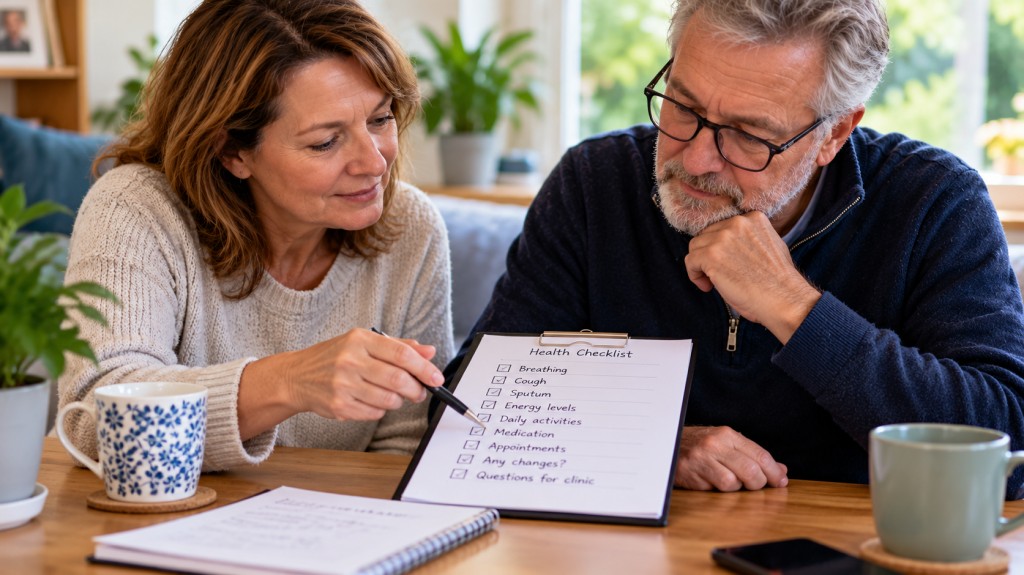
Living with chronic lung disease — such as ABPA, CPA, bronchiectasis, or severe asthma — affects far more than the body.
It alters the emotional landscape between the person with the illness and the people around them.
This isn’t just about physical limitations — it’s about how empathy, energy, guilt, and emotional resilience are shared (or strained) over time.
This guide explores both perspectives — the patient and the healthy person — and offers ways to keep relationships strong.
1. The Patient’s Perspective
For the person with the illness, the condition is ever-present:
-
Constant awareness – Every breath, plan, or activity is influenced by symptoms, medication schedules, and the risk of flare-ups.
-
Invisible symptoms – You can feel like you’re drowning without looking or sounding breathless. The absence of obvious signs often means people underestimate how unwell you are.
-
Need for validation – Being listened to, believed, and taken seriously is essential. Dismissive comments such as “you don’t sound wheezy” can feel like a denial of your lived reality.
-
Loss of role – Illness can mean stepping back from work, family responsibilities, or social life, leaving you feeling less “you” and more “the patient.”
2. The Healthy Person’s Perspective
Even the most loving partner, friend, or family member has finite emotional reserves:
-
Empathy fatigue – Offering compassion in a crisis is natural; sustaining it daily for years is emotionally exhausting.
-
Positivity limits – Staying upbeat to encourage the patient can drain energy, sometimes leading to withdrawal.
-
Healthy guilt – Feeling bad for having health, energy, freedom, or the ability to enjoy life.
-
Emotional self-protection – Avoiding deep illness discussions to manage their own fear, helplessness, or sadness.
-
Mismatch of experience – The healthy person dips in and out of illness awareness, while the patient lives in it constantly.
3. Patient Guilt
While healthy guilt is common, patient guilt is just as powerful:
-
Feeling like a burden – Worrying that you limit others’ activities, social life, or freedom.
-
Changing the relationship – Feeling bad that a partner now has to act partly as a carer.
-
Financial strain – Guilt over reduced income or increased expenses.
-
Impact on others’ wellbeing – Feeling responsible for your partner’s, friends’, or family’s stress or fatigue.
-
Mood and personality changes – Guilt about being irritable, anxious, or withdrawn because of the illness or medication effects.
4. Common Relationship Challenges
For partners:
-
Role shift – Moving from equal partnership to a dynamic where one is part-carer.
-
Social imbalance – One may want to go out more than the other can manage.
-
Resentment risk – If needs are unspoken, one may feel abandoned and the other may feel trapped.
For family:
-
Unequal support – Some relatives engage, others withdraw.
-
Generational differences – Older relatives may minimise invisible illness (“just push through”).
-
Positive minimising – Trying to “cheer you up” by downplaying symptoms, which can feel invalidating.
For friends:
-
Friendship drift – Reduced shared activities can lead to less contact.
-
Fear of offending – Friends stop inviting you to events so you won’t have to say no.
-
Discomfort with illness – Some disappear entirely rather than risk awkwardness.
5. The Psychology Behind These Changes
-
Finite empathy and energy – The brain isn’t wired for sustained crisis-mode support.
-
Visible vs. invisible illness gap – We respond more readily to what we can see (limping, coughing) than what we can’t (chest tightness, fatigue).
-
Avoidance coping – Healthy people sometimes step back emotionally to manage their own distress.
-
Healthy guilt – Creates distance when the healthy person hides their joy to avoid hurting you.
-
Patient guilt – Creates distance when you hold back your needs to avoid burdening them.
6. Strategies for Moving Forward Together
For Patients:
-
Be specific – Say what you need: “I need you to just listen” or “Could you help with…?”
-
Make space for non-illness moments – Talk about hobbies, TV shows, shared memories.
-
Recognise recharge needs – Allow healthy people breaks from illness talk without taking it as a lack of care.
-
Value their life too – Encourage them to enjoy activities even if you can’t join.
For Partners, Friends, and Family:
-
Believe them – Accept what the patient says about symptoms, even if they “look fine.”
-
Share your feelings – Guilt, overwhelm, or fear are normal; discussing them prevents silent withdrawal.
-
Keep inviting – Offer options, but no pressure — inclusion matters more than attendance.
-
Balance care with normality – Don’t let every interaction be about the illness.
7. Talking About Guilt (Both Sides)
-
Name it openly – “I feel guilty for being well” or “I feel guilty for needing so much help.”
-
Acknowledge the illness isn’t anyone’s choice – Blame the condition, not each other.
-
Agree on boundaries – Both lives matter, both deserve joy.
-
Share in two directions – Illness updates and everyday life keep relationships in balance.
8. Final Thought
Chronic illness can strain relationships, but it can also deepen them — if both sides:
-
Understand that empathy, positivity, and energy are finite.
-
Recognise both healthy guilt and patient guilt.
-
Protect space for joy, humour, and connection beyond the illness.
Love doesn’t mean living in the illness 24/7 — it means walking alongside each other, even when the paths look different.

Did this page help you?
Tell us in one minute