🫁 Mucus Plugging in Aspergillosis: What It Is, Why It Happens, and What It Means
For patients with ABPA, CPA, Aspergillus bronchitis, or asthma
🔍 What Is a Mucus Plug?
A mucus plug is a thick clump of sticky mucus that becomes trapped in your lungs. It can block airways, cause coughing, and make breathing more difficult. In people with aspergillosis, this is common — but the type, location, and cause of the mucus can vary.
🧪 What Causes Mucus Plugging?
Your lungs naturally make mucus to protect against germs and irritants. But in fungal or allergic lung disease, this mucus may:
-
Be produced in excess
-
Become too thick or sticky
-
Get trapped due to airway damage
Aspergillosis-related causes include:
-
ABPA (Allergic Bronchopulmonary Aspergillosis) – inflammation causes thick, sticky mucus
-
Aspergillus bronchitis – fungus lives in mucus, producing biofilms
-
CPA (Chronic Pulmonary Aspergillosis) – may lead to mucus due to structural damage
-
Bronchiectasis – airways are widened and can no longer clear mucus properly
🧬 Are All Mucus Plugs the Same?
No. Mucus plugs vary in colour, texture, cause, and treatment. Here's how they differ:
| Type of Plug | What You Might See | What It Could Mean | Common in... |
|---|---|---|---|
| Sticky, stringy | Clear/yellow, like glue | Allergic inflammation | ABPA, asthma |
| Rubbery or solid | Brown, rubbery, “slug-like” | Allergic + fungal mix | ABPA, Aspergillus bronchitis |
| Green or smelly | Thick, foul-smelling | Infection (bacteria) | Bronchiectasis |
| Foamy or frothy | Clear/white, bubbly | Non-infectious irritation | COPD, asthma |
| Black or speckled | May contain fungal specks | Fungal growth | CPA, fungal bronchitis |
🖼️ What Do Mucus Plugs Look Like on a CT Scan?
Below are real examples of CT scan findings showing mucus plugging in different forms of aspergillosis and related conditions.
🧷 1. Finger-in-glove sign (ABPA)
Mucus in large airways appears like fingers inside a glove. This is common in allergic fungal airway disease.
➡ Seen in: ABPA, bronchiectasis with fungal colonisation
📍 Note: Branching tubular opacities filled with mucus.
🌿 2. Tree-in-bud pattern
Small airway blockage — plugs in the tiniest branches of the lungs. Common in infection, inflammation, and Aspergillus bronchitis.
➡ Seen in: Aspergillus bronchitis, asthma, CPA with superinfection
📍 Note: Tiny dots and lines in a tree-like shape.
🧱 3. Lung collapse (atelectasis) from plug
A large mucus plug can block a main airway, causing collapse of part of the lung.
➡ Seen in: Severe ABPA, CPA, patients with weakened cough reflex
📍 Note: Whiteout of part of lung where plug is blocking airflow.
📸 Example CT Findings

1. Bronchiectasis + mucus plug
Area in the left lower lung shows dilated bronchi filled with mucus—classic for bronchiectasis with mucoid impaction

2. Extensive bronchiectasis with plugs
Widespread thick-walled airway dilatation accompanied by mucus plugs (black arrows) and consolidation (black arrowheads)

3. Luminal plugging in small airways
Subtle luminal opacities in peripheral bronchi—the “tree‑in‑bud” pattern common in asthma, COPD, and infections.

4. Atelectasis (part of the lung has collapsed or isn’t fully inflating) due to mucus plugging
Consolidation and small airway blockage leading to lung collapse, highlighted by arrows in the upper lobe.
💡 Clinical Takeaways
| Feature | What it indicates |
|---|---|
| Mucoid impaction | Large airway fungal/allergic plugs (e.g., ABPA) or bronchiectasis |
| Tree‑in‑bud | Small-airway infection/inflammation (e.g., TB, PCD, asthma) |
| Atelectasis | Complete blockage, leading to collapse and consolidation |
| Persistent luminal plugs | Associated with worse airflow obstruction and symptoms in COPD/asthma |
✅ Next Steps / Applications
-
These CT examples are valuable for educational use—they illustrate the different patterns seen in mucus plugging across disease types.
-
Radiologists often use these signs to help diagnose and tailor management (infection, allergy, structural lung disease).
-
If your patients or students need simplified visuals, these scans paired with annotations (e.g., arrows, labels) can make great teaching tools.
🧠 What Does It Feel Like?
People often say:
“It felt like something was stuck and wouldn’t come out.”
“I finally coughed up a rubbery strand — like glue.”
“Once it cleared, I could breathe better instantly.”
🧼 How Are Mucus Plugs Treated?
Treatment depends on the underlying cause:
✅ Medications
-
Steroids – reduce inflammation in ABPA and asthma
-
Antifungals – lower fungal load (e.g., itraconazole, posaconazole)
-
Mucolytics – thin mucus (e.g., carbocisteine, hypertonic saline)
-
Antibiotics – treat bacterial infections
✅ Airway Clearance Techniques
-
Respiratory physio – helps you learn how to shift mucus
-
Devices – flutter valve, PEP mask, Acapella
-
Inhaled/nebulised therapy – opens airways and loosens plugs
⚠️ Always speak to your clinical team before starting a new technique.
🧪 Can Coughing Up a Plug Help Diagnosis?
Yes! If you cough up a rubbery, large, or unusual plug, it can be:
-
Tested for fungus, bacteria, or allergy cells (eosinophils)
-
Sent for culture to detect Aspergillus
-
Helpful in guiding or confirming diagnosis of ABPA or Aspergillus bronchitis
👣 Key Points for Aspergillosis Patients
| Question | Answer |
|---|---|
| Is mucus plugging common? | Yes, especially in ABPA, CPA, and bronchiectasis |
| Are all mucus plugs the same? | No – they vary in size, shape, colour, and cause |
| What should I do if I cough one up? | Tell your doctor – it may be useful to test |
| Can it be seen on scans? | Yes – CT can show where plugs are and how severe |
| Can it be treated? | Yes – treatments include steroids, antifungals, mucolytics, and physio |
Other forms of aspergillosis: 🛡️ Tracheobronchial Aspergillosis (TBA), A Rare Airway Form of Aspergillus Infection
🌿 What is Tracheobronchial Aspergillosis?
Tracheobronchial aspergillosis (TBA) is a rare type of aspergillosis that affects the large airways (the trachea and bronchi), rather than the deeper parts of the lungs. It happens when Aspergillus, a common environmental mould, starts to grow in the airways, either sitting in mucus or, in severe cases, invading the airway wall itself.
❗How Rare Is It?
TBA is uncommon — even among people who already have aspergillosis.
It is mostly seen in:
-
Very unwell hospitalised patients
-
People with severe immune suppression
-
Patients in intensive care units (ICU)
🧠 If you have ABPA, CPA, asthma, or chronic sinus issues, your risk of developing TBA is usually very low, unless your immune system becomes severely weakened.
🔍 What Causes It?
The Aspergillus fungus is found everywhere — but in some people with weak defences, it can take hold in the airways. Depending on the type and severity, this can cause:
-
Thick fungal mucus or plugs in the airways
-
Persistent coughing or wheezing
-
Breathlessness
-
In serious cases, damage to the airway lining or even bleeding
🚨 Who Is Most at Risk?
People most at risk of invasive or serious TBA include those who are:
| High-Risk Group | Why They're at Risk |
|---|---|
| ICU patients on ventilators | Damaged airways + suppressed local immunity |
| Patients with severe viral pneumonias (e.g. COVID-19, influenza) | Airways inflamed and vulnerable |
| Stem cell or organ transplant recipients | Profound immune suppression |
| Cancer patients undergoing chemotherapy | Low white blood cells (neutropenia) |
| People on high-dose steroids or immunosuppressants | Weakens the body's response to fungal growth |
| People with COPD or bronchiectasis in critical care | Pre-damaged airways and infection risk |
🧬 What About People with CPA, ABPA, or Asthma?
Many people living with:
-
Chronic Pulmonary Aspergillosis (CPA)
-
Allergic Bronchopulmonary Aspergillosis (ABPA)
-
Asthma with fungal sensitisation (SAFS)
…may worry that Aspergillus in their lungs or sinuses could spread to their airways.
🟢 Good news: TBA is not common in these groups unless:
-
You become severely immunocompromised (e.g. after a transplant or due to high-dose steroids)
-
You are admitted to ICU or receive strong immunosuppressive therapy
If you are on replacement doses of steroids (e.g. for adrenal insufficiency) or biologics for asthma, your risk is generally low, especially if you are also on antifungal treatment when needed.
🧪 How Is TBA Diagnosed?
Doctors may consider TBA if someone at risk develops:
-
New or worsening cough
-
Mucus that won’t clear
-
Breathing difficulties
-
Signs of bleeding in the airways
Diagnosis may involve:
-
Bronchoscopy (looking into the lungs with a camera)
-
Bronchoalveolar lavage (BAL) to test for Aspergillus DNA or galactomannan
-
CT scans of the chest
💊 How Is TBA Treated?
Treatment depends on whether the infection is simply growing in mucus or is invading tissue:
| Type of TBA | Treatment |
|---|---|
| Fungal growth in mucus only | Bronchoscopic removal of plugs ± antifungals if immunocompromised |
| Inflammation of airway lining | Oral or inhaled antifungals, possibly systemic therapy if symptoms persist |
| Tissue-invasive TBA | Urgent treatment with voriconazole or isavuconazole, often for 6–12 weeks; sometimes with amphotericin or an echinocandin |
✅ Summary for Aspergillosis Patients
| Question | Answer |
|---|---|
| Is TBA common? | ❌ No — it is rare |
| Who usually gets it? | ICU patients, transplant recipients, cancer patients, or those with severe immune suppression |
| Can people with CPA or ABPA get TBA? | 🟠 Possibly — but only if their immunity becomes severely weakened |
| Are replacement steroids or asthma biologics risky? | 🟢 Not usually — especially if antifungal cover is used when needed |
| Is it treatable? | ✅ Yes — if caught early and treated appropriately with antifungals |
🧠 Final Advice
If you have any form of aspergillosis, it's important to work closely with your clinical team. Most people will never develop TBA. But if you are on strong immune-suppressing treatment or become very unwell in hospital, make sure your team is aware of your history. With careful monitoring and the right treatment, outcomes can be good.
Other forms of Aspergillosis
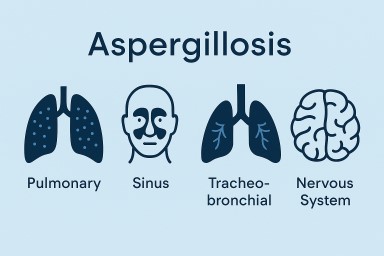
The majority of patients with aspergillosis will have forms that affect their lungs, as of course, that is where most exposure to Aspergillus occurs when we inhale the spores. There are, however, many more areas of our bodies that can be infected with Aspergillus. The sites of infection are much more difficult for spores to reach, so these forms of aspergillosis are much rarer compared with pulmonary forms, but they do occasionally happen, and as this is a website concerned with all forms of aspergillosis, we will try to summarise each form in this series of articles.
If you have been diagnosed with one of these rarer forms of aspergillosis you are welcome to join our support groups on Facebook, but be sure to explain which form you have, in any questions that you may ask, to avoid confusion. Different forms of aspergillosis can be treated in very different ways so be sure that the information you read is relevant to your aspergillosis.
There has long been a listing of other forms of aspergillosis in the treatment section of the Aspergillus & Aspergillosis website. These articles are intended for medical specialists so we will attempt to interpret them here for patients & non-specialists and also provide updated information where appropriate.
- Acute Invasive Aspergillus Sinusitis (AIAFS)
- Airways (tracheobronchial)
- Aspergillus Empyema
- Aspergillus Endocarditis
🫁 Airway Clearance in Aspergillosis: A Patient Guide
Managing mucus to breathe easier, stay healthier, and feel more in control
💡 Why Is Mucus Clearance Important?
If you’re living with a condition like chronic pulmonary aspergillosis (CPA), allergic bronchopulmonary aspergillosis (ABPA), or aspergillus bronchitis, you may experience ongoing mucus build-up in your lungs. This can:
-
Make breathing harder
-
Trap infection
-
Cause inflammation and damage
-
Trigger coughing, wheeze or breathlessness
Airway clearance techniques (ACTs) help loosen and remove this mucus, reduce chest infections, and improve daily comfort.
🗣️ “Before I started clearing mucus properly, I thought breathlessness was just something I had to live with. But it’s made a big difference.”
🔧 What Techniques Are Available?
| Type | Examples | Purpose | Needs Guidance? |
|---|---|---|---|
| Breathing exercises | ACBT (Active Cycle of Breathing), huffing | Loosens mucus, clears airways | ✅ Yes – to be effective |
| Postural drainage | Lying in specific positions | Uses gravity to drain mucus | ✅ Yes – to avoid reflux or fatigue |
| Devices | Flutter, Acapella, Aerobika (OPEP devices) | Vibrate airways + create back pressure to shift mucus | ✅ Yes – to use correctly |
| Manual techniques | Chest percussion, assisted cough | Help loosen stubborn mucus | ✅ Often needs a helper |
| Mechanical devices | HFCWO (“The Vest”), IPV | Used in severe or complex cases | ✅ Prescribed in specialist settings |
🗣️ “I use the Acapella in the mornings while the kettle boils. It’s part of my routine now – and it really helps.”
🗣️ What Do Other Patients Say?
People with aspergillosis often try more than one method before finding what works best. Here are some common reflections:
On devices:
“The flutter helped a lot once I got the angle and rhythm right – but I needed someone to show me how.”
On ACBT:
“Breathing control and huffing helped me get more up with less effort than coughing all day.”
On adapting to daily life:
“It’s about what fits into your day. If something’s too awkward or tiring, you won’t keep doing it – and that’s okay.”
On trial and error:
“It took me months to find the right technique – but now I can manage my mucus better and avoid antibiotics.”
⚠️ Should I Use a Flutter or Acapella Without Help?
Not at first. These devices are effective only if used correctly. Risks of incorrect use include:
-
Not moving mucus effectively
-
Fatigue or breathlessness
-
Worsening reflux or chest tightness
-
In rare cases, worsening of lung symptoms (e.g., if air trapping occurs)
🗣️ “I bought a device online and started using it myself – but it made me dizzy. A physio later explained I was blowing too hard.”
Always ask your respiratory team or GP for referral to a respiratory physiotherapist before starting.
📝 Patient Decision Guide: Should You Use ACTs?
✅ You may benefit if:
-
You cough up mucus daily or feel it’s “stuck”
-
You’ve had repeated chest infections
-
You live with CPA, ABPA, bronchiectasis, or aspergillus bronchitis
❌ Don’t start without guidance if:
-
You have COPD, asthma, or lung scarring
-
You’ve had haemoptysis (coughing up blood)
-
You experience dizziness, nausea, or chest pain during breathing exercises
-
You have gastric reflux or recent chest surgery
🧑⚕️ What Can I Start Safely at Home?
Without needing equipment, you can begin with:
-
💧 Drink plenty of fluids – thin mucus is easier to clear
-
🪑 Sit upright – especially when coughing or during infections
-
🌬️ Use breathing control – calm, gentle breaths can reduce breathlessness
-
🗣️ Try huffing – like breathing out a mirror; easier than deep coughing
🗣️ “Even on days when I’m tired, I try to stay upright and do a few rounds of breathing exercises. It’s become a habit that helps.”
🧭 Next Steps: What to Ask Your Doctor or Nurse
-
Could I see a respiratory physiotherapist to help with mucus clearance?
-
What technique is best for my condition (e.g., ABPA vs. CPA)?
-
Can I be shown how to use a flutter device or Acapella safely?
-
What should I do if I feel worse after using a technique?
🗣️ “The physio made all the difference – she explained what my lungs were doing and helped me pick something that actually worked.”
💬 Final Word
🗣️ “It’s not just about technique – it’s about what fits your life. Small steps like staying hydrated, using huffing, and getting guidance made a big difference for me.”
There’s no one-size-fits-all approach – but with the right support, airway clearance can help you take control of your lungs, reduce flare-ups, and breathe easier.
🌬️ Living with Asthma and Aspergillosis: Understanding the Overlap, the Immune System, and the Right Treatment
If you live with asthma and have been told you also have aspergillosis, such as ABPA (Allergic Bronchopulmonary Aspergillosis) or SAFS (Severe Asthma with Fungal Sensitisation), your situation is more complex than most people realise.
This guide explains:
-
The different types of asthma
-
How aspergillosis complicates asthma
-
The role of eosinophils, IgE, and the immune system
-
Why some people don’t have “typical” symptoms (like wheeze)
-
What treatments are available — and how to personalise your care
🧠 Asthma Isn’t One Disease
Asthma is a condition where the airways (breathing tubes) become:
-
Inflamed (swollen and irritated)
-
Overreactive to certain triggers (allergens, cold air, infection, etc.)
-
Narrowed and often filled with mucus, making breathing difficult
But not everyone with asthma has the same cause, symptoms, or treatment response. Asthma actually includes many subtypes — and understanding your type is key to getting the right care.
🧬 Common Asthma Types in Aspergillosis
| Asthma Type | Cause / Trigger | Key Features |
|---|---|---|
| Allergic asthma | IgE-driven allergy to pollen, dust, pets, fungi | Common in early-life asthma |
| Eosinophilic asthma | High levels of eosinophils (a white blood cell) | Often adult-onset and hard to control |
| SAFS | Allergy to fungi (especially Aspergillus) | Severe, steroid-resistant asthma |
| ABPA | Allergic reaction to Aspergillus growing in lungs | Very high IgE, eosinophils, mucus, lung damage |
| Cough-variant asthma | Inflammation without wheeze | Dry cough as the only symptom |
| “Silent” asthma | Reduced or absent warning signs | No wheeze, may present with fatigue, cough or breathlessness only |
🫢 New Section: What Is “Silent Asthma”?
“Silent asthma” is not an official medical term, but it’s used to describe:
-
Asthma without the classic wheeze (often just cough or tightness)
-
Or where asthma attacks happen suddenly, without clear warning
This is important because:
-
People may not realise they have asthma
-
Diagnosis may be delayed or missed
-
Flare-ups can be severe or even life-threatening
-
It may occur in people with fungal asthma, ABPA, or airway damage
Silent asthma is especially relevant in:
-
Older adults
-
People with ABPA or SAFS
-
People with cough-variant asthma
-
Anyone whose asthma doesn’t “sound” typical
🧪 Tests like FeNO, spirometry, and blood eosinophil counts are vital for confirming what’s really happening inside the lungs — even if symptoms are subtle.
🔬 Why ABPA Adds Complexity
If you have ABPA, the asthma symptoms are made worse by:
-
A hypersensitive immune reaction to Aspergillus fumigatus
-
Mucus plugging and blocked airways
-
Lung damage (bronchiectasis) that doesn’t improve with inhalers alone
-
A mix of allergic and eosinophilic inflammation
Key signs include:
-
Extremely high IgE levels
-
Raised eosinophils
-
Positive blood tests for Aspergillus
-
Lung CT scan changes
💊 Treatment Options Based on Asthma Type
| Treatment | Used For |
|---|---|
| Inhaled corticosteroids (ICS) | All types, first-line |
| Antifungal medications | ABPA, SAFS |
| Oral steroids (e.g. prednisolone) | ABPA flares, severe asthma |
| Biologics (e.g. mepolizumab, omalizumab) | Severe allergic or eosinophilic asthma |
| Chest physiotherapy | Mucus clearance in ABPA or bronchiectasis |
Each treatment is tailored based on whether your asthma is driven by:
-
IgE (allergy)
-
Eosinophils (inflammation)
-
Fungal exposure or colonisation
📍 What to Discuss with Your Healthcare Team
If you:
-
Have asthma that isn’t well controlled
-
Need frequent steroids
-
Have a chronic cough, thick mucus, or lung damage
-
Have high IgE or eosinophils
-
Or don’t wheeze, but still get breathless or fatigued…
… it’s important to ask your doctor:
-
Could I have ABPA or SAFS?
-
Is there a fungal or eosinophilic component to my asthma?
-
Should I be tested for Aspergillus allergy or IgE?
-
Am I a candidate for biologics or antifungals?
✅ Final Takeaway
Asthma with aspergillosis is more than just “bad asthma” — it’s a complex condition involving allergy, inflammation, fungal exposure, and in some cases, permanent airway changes. Some patients don’t experience wheeze — this is called “silent asthma,” and it deserves just as much attention.
You don’t have to manage this alone — and there are now targeted treatments that can help reduce symptoms, prevent damage, and improve quality of life.
🧭 Self-Health Management: Then, Now, and What’s Coming Next
Over the past 20 years, the way people manage their health in the UK has changed dramatically — and more changes are on the horizon. For people living with long-term or complex conditions like aspergillosis, asthma, or chronic lung disease, this shift has brought both new opportunities and new burdens.
This article explains what’s changed, what the government is planning, what benefits are hoped for — and what happens if you can’t or don’t want to use online tools.
🕰️ What Was Self-Health Management Like 20 Years Ago?
In the early 2000s:
-
Patients relied heavily on their GP or hospital specialist for every decision.
-
Access to records was limited or non-existent.
-
Health information came from leaflets, GPs, or occasional TV programmes.
-
Appointments were mostly face-to-face and arranged by phone.
-
There was less expectation for people to self-manage complex conditions.
📲 What’s Different Today?
Patients today are expected to:
-
Track symptoms themselves and know when to seek help.
-
Use digital tools like the NHS App, online consultations, and health monitoring apps.
-
Interpret test results, medication side effects, and care plans with less direct support.
-
Coordinate care between services — sometimes across different hospitals or systems.
-
Understand and act on complex health advice, often with less contact from clinicians.
For people with chronic respiratory conditions like CPA or ABPA, this can sometimes improve control — but it can also feel overwhelming, especially when care is fragmented or specialists are hard to reach.
🧑⚕️ How Are Healthcare Staff Adapting?
Many GPs, nurses, and hospital teams are trying to:
-
Embrace shared decision-making and educate patients more directly.
-
Offer video, phone, or online consultations when appropriate.
-
Provide tools like self-monitoring diaries, peak flow meters, or oxygen saturation monitors.
-
Rely on electronic triage systems and limit in-person appointments to the most complex cases.
But many are also under pressure. Staff shortages, long waiting lists, and increased demand mean clinicians have less time per patient, making it harder to offer the detailed guidance many people still need.
🏛️ What Is the UK Government Planning for the Future?
The government’s current plans aim to make the NHS more digital, preventative, and self-directed. This is laid out in the NHS Long Term Plan, the Digital Health and Care Strategy, and the Data Saves Lives policy.
| Goal | Target |
|---|---|
| Make the NHS App the main access point for care | 2025–2026 |
| Move more routine care to remote monitoring and self-management | By 2026–2029 |
| Personalise prevention and reduce avoidable illness | By 2029 |
| Reduce reliance on face-to-face appointments | Ongoing since 2021 |
| Digitise health records across all services | By 2025–2027 |
Patients with long-term conditions are expected to:
-
Manage their own prescriptions
-
Monitor symptoms at home
-
Use digital tools to stay informed and in control
-
Access care only when needed, rather than by default
🎯 What Are the Hoped-For Benefits?
The government promotes these changes as delivering:
✅ Better Outcomes
-
Early intervention, better symptom tracking, and fewer complications.
-
Personalised care plans based on your data and condition.
✅ More Convenient Care
-
Fewer unnecessary visits
-
More control over your own information and appointments
✅ NHS Cost Savings
-
Reducing face-to-face appointments and hospital stays frees up staff time.
-
Less duplication, fewer unnecessary tests, better resource use.
⚠️ But Is It Better for Everyone?
Not necessarily. These benefits are not equally felt by all patients.
🧓 Digital Exclusion Is a Real Problem
-
Around 1 in 5 UK adults struggle with using digital health services.
-
Older adults, people on low incomes, and those with disabilities or learning needs are most affected.
-
Some patients simply don’t feel confident, or don’t trust digital systems.
🧭 What Happens If You’re Left Behind?
Government guidance insists that non-digital options must remain — but this isn’t always consistent. Some patients report:
-
Difficulty reaching practices by phone
-
Online-only booking or consultations
-
Fewer letters and face-to-face reviews
Patients with complex, fluctuating, or rare conditions like aspergillosis may find it harder to get appropriate support without a strong digital presence — especially if care crosses multiple departments or regions.
🧠 So What Needs to Happen?
To make this shift work for everyone, the system must:
-
Protect non-digital access routes (e.g. phone, letter, face-to-face)
-
Offer digital training and support to those who want it
-
Make sure apps and online tools are inclusive and easy to use
-
Involve patients in designing these services — especially those with long-term conditions
-
Keep monitoring for harm or exclusion, and respond quickly
📍 Where Can Patients Get Help Today?
| Support Type | Where to Find It |
|---|---|
| 🔬 Specialist advice | National Aspergillosis Centre, hospital respiratory clinics |
| 👨⚕️ Local support | GP, pharmacist, practice nurse |
| 📱 Digital tools | NHS App, condition-specific apps, NHS websites |
| 🤝 Peer support | Online groups, charities, forums (e.g. Asthma + Lung UK, aspergillosis.org) |
| 💬 Advice lines | NHS 111, condition-specific helplines |
✅ In Summary
The NHS is changing — and patients are expected to change with it. Over 20 years, self-management has gone from optional to expected, and digital care is being rapidly expanded.
For some, this means more control and quicker help. For others, it can feel isolating, confusing, or unsafe. The challenge is to design systems that support everyone — not just the tech-savvy or well-connected.
If you’re living with a long-term condition like aspergillosis, you should never be left managing alone.
Key Shifts to Reinvent the NHS - The 10 Year plan
The plan introduces three radical shifts to modernize the NHS and secure its future:
-
🏥 Hospital → Community
-
Build a Neighbourhood Health Service: community health centres open 6 days/week for 12 hours/day
-
Provide integrated care closer to home—GPs, diagnostics, mental health, rehab, dentists, pharmacists, and even social support
-
Aim to reduce reliance on hospitals and cut waiting lists
-
-
📱 Analogue → Digital
-
Transform the NHS App into a “doctor in your pocket”—for appointments, advice, care plans, and self-referral
-
Embed AI to reduce admin, transcribe consultations, and support clinical decision-making
-
-
🛡️ Sickness → Prevention
-
Emphasize early intervention through more health checks, screenings, vaccines, and public health services
-
Shift funding towards community and preventative care, away from reactive hospital-based services
-
🏗 Underpinning Measures
To support these shifts, the plan introduces:
-
A new operating model & statutory framework to streamline the NHS structure
-
Transparency and accountability through metrics and patient feedback
-
Workforce transformation, including new training and wellbeing support
-
Innovation strategy harnessing genomics, AI, and tech
-
Financial reform via value-based funding—where providers are rewarded for outcomes
🔍 What This Means for You
-
Access to GP advice and care should be faster and more local – with reduced “8 am scramble”
-
More services like scans, mental healthcare, rehab, smoking cessation, and job support delivered at local centres
-
Greater convenience—use the App to manage care, book appointments, or message clinicians
-
Stronger focus on staying healthy—through screening, prevention, and early treatment support
🧩 Challenges & Expert Views
-
Funding & staffing: A £29 billion investment is pledged, but staffing shortages and infrastructure needs remain concerns
-
Implementation: Organisations like the King’s Fund highlight the absence of operational details and worry pilot projects may lead to regional variation
-
Behavioural shift: Success depends on NHS culture evolving—from reactive treatment to proactive, tech-enabled care
✍️ Final Take
The 10‑Year Health Plan represents a transformative vision: bring care closer to home, empower patients digitally, and focus on prevention. With strong backing from Starmer and Health Secretary Streeting, it aims to reshape NHS services by 2035. While optimism is growing, the effectiveness of implementation and securing resources will determine whether it truly delivers for patients and staff.
🌫️ A Life Shaped by Mould: One Person’s Journey with CPA and Lung Disease
Sadly, at the time of writing this story has to be paid for to read the full article. What follows is a summary of the free-to-access abstract.
“It started with damp walls – but it didn’t end there.”
This is the story of someone who spent a lifetime battling the hidden effects of mould exposure and fungal lung disease, from childhood through adulthood. Their experience is a powerful reminder of how long-term exposure to poor indoor environments — especially damp, flood-prone homes — can leave a lasting imprint on lung health.
🧒 Early Clues: Breathing Problems in Childhood
-
The author grew up in mouldy homes, regularly affected by floods.
-
As a teenager, they suffered from collapsed lungs, underwent pleurectomies, and were diagnosed with blebs (small air-filled sacs on the lung lining).
-
No one realised at the time that this could be linked to inhaled fungal spores.
🩺 The Long Road to Diagnosis
-
Years later, symptoms returned: chest infections, breathlessness, persistent coughing.
-
Eventually, doctors diagnosed:
-
Chronic pulmonary aspergillosis (CPA) – a long-term fungal infection
-
Severe bronchiectasis – a condition where the airways become damaged and inflamed
-
The root cause was now clear: years of breathing in airborne mould spores had likely caused permanent lung damage.
💊 Managing CPA: A Complex Balancing Act
The chapter describes the difficulty of living with CPA, including:
-
Strong antifungal medications (like itraconazole or posaconazole) and their side effects
-
Emergency lung procedures
-
Ongoing adjustments in daily life — from avoiding certain environments to managing fatigue
🤝 What Helped Most: Self-Advocacy and Support
This is also a story of resilience and empowerment. The author learned to:
-
Ask better questions at medical appointments
-
Work closely with specialists in fungal lung disease
-
Use trusted online resources to understand their condition
-
Keep going, even when progress was slow
💬 “I had to become my own advocate – not to fight my doctors, but to work with them more effectively.”
🧭 Advice for Others
The author shares practical tips that could help anyone dealing with CPA, bronchiectasis, or long-term lung illness:
-
Track your symptoms and treatments
-
Stay informed – but avoid misinformation online
-
Get help from respiratory physiotherapists
-
Don’t ignore your environment – especially damp, mouldy places
-
Keep asking questions until the answers make sense
🌟 A Message of Hope
This chapter isn’t just a medical account – it’s a message of hope and strength. It shows how understanding your own health, building a good medical team, and staying proactive can make a big difference, even in the face of serious illness.
Best Types of Cleaning Products for Chemical Sensitivities
For people with chemical sensitivities—such as Multiple Chemical Sensitivity (MCS), asthma, or other respiratory conditions—it's important to use gentle, non-toxic cleaning products that don't contain harsh chemicals, fragrances, or volatile organic compounds (VOCs). Here's an overview:
✅ Best Types of Cleaning Products for Chemical Sensitivities
🧴 1. Fragrance-Free and Dye-Free Products
-
Look for labels that say “fragrance-free,” “unscented,” and “free and clear.”
-
Avoid products labeled "natural" if they still contain essential oils or botanical fragrances (these can still trigger reactions).
🌿 2. Simple, Non-toxic Ingredients
Safer cleaning agents often include:
-
White vinegar – natural disinfectant, but avoid if the smell is bothersome.
-
Baking soda – gentle abrasive cleaner, excellent for scrubbing.
-
Castile soap – a mild, vegetable-based soap (e.g. Dr. Bronner’s).
-
Hydrogen peroxide (3%) – for disinfecting and stain removal.
-
Rubbing alcohol (70%) – effective on surfaces, but test for sensitivity.
🔄 3. DIY Cleaning Solutions
Many people with sensitivities prefer to make their own:
-
All-purpose cleaner: 1 part vinegar + 1 part water (optional: a drop of castile soap).
-
Glass cleaner: 2 cups water + 2 tablespoons vinegar + 1 tablespoon rubbing alcohol.
-
Soft scrub: Baking soda + a small amount of water or castile soap.
👩⚕️ Recommendations from Support Groups and Allergy Specialists
-
Choose products that are certified by:
-
EcoLogo
-
Green Seal
-
Safer Choice (US EPA)
-
Allergy UK’s Seal of Approval
-
-
Common brands used by sensitive individuals:
-
Ecover Zero
-
Attitude (Sensitive line)
-
Seventh Generation Free & Clear
-
Molly’s Suds
-
Clean Living
-
Simple Truth Free & Clear
-
(Always patch test new products first.)
🧠 Tips from People Living with Sensitivities
-
Ventilate well during and after cleaning.
-
Use microfiber cloths and steam mops to reduce the need for chemical cleaners.
-
Avoid air fresheners, candles, and essential oils, even if labeled “natural.”
-
Store cleaning products away from living spaces to limit fumes.
🧬 Are Vaccines for Aspergillosis on the Horizon?
If you live with aspergillosis—whether it's ABPA (Allergic Bronchopulmonary Aspergillosis), CPA (Chronic Pulmonary Aspergillosis), or invasive aspergillosis—you’ve probably wondered if a vaccine might one day help prevent or control this condition. As of 2025, there is no licensed vaccine for any form of aspergillosis, but scientists are actively working on it.
This article explains where things stand, what’s being developed, and what it could mean for people like you.
🦠 What is Aspergillosis?
Aspergillosis is a group of illnesses caused by the fungus Aspergillus fumigatus. It’s very common in the environment, especially in soil, dust, and decaying vegetation. Most people breathe in the spores without getting sick, but if you have:
-
Damaged lungs (due to asthma, COPD, or TB)
-
A weakened immune system
-
An allergic reaction to fungal spores
…you may develop a form of aspergillosis, such as:
-
ABPA – a severe allergic lung condition
-
CPA – long-term fungal infection in damaged lungs
-
Invasive aspergillosis – a fast-moving, life-threatening infection in immunocompromised people
💉 Why Develop a Vaccine?
A vaccine could:
-
Prevent serious illness in high-risk people (like cancer or transplant patients)
-
Reduce allergic sensitisation in ABPA
-
Lower the need for long-term antifungal drugs, which can have side effects and lose effectiveness
-
Protect against lung damage caused by repeated infections
But making a vaccine isn’t easy—especially for a disease that behaves differently depending on a person’s immune system.
🧪 Vaccines in Development (2025)
While none are yet available for patients, several experimental vaccines are being tested in laboratories and early-stage trials. Here are the most promising ones:
1. NDV-3A Vaccine
-
Originally developed for a yeast infection (Candida albicans)
-
Found to trigger cross-protection against Aspergillus fumigatus
-
Uses a protein called Als3p, shared between fungi
-
Completed early safety trials for Candida
-
Being explored for people with weak immune systems, like transplant recipients
2. AF.KEX1 DNA Vaccine
-
Uses a fungal protein called Kexin 1
-
Delivered as a DNA vaccine to help the body produce protective immune cells
-
Shown to work well in animal models
-
Designed to help high-risk patients, such as those having chemotherapy
3. Asp f3 Protein Vaccine
-
Focuses on a specific Aspergillus protein (Asp f3)
-
Stimulates T-helper cells (Th1 and Th17), important for fighting fungal infections
-
Still in preclinical stages, but results in mice are promising
4. Nasal Spray Vaccine with Nanoparticles
-
Uses chitosan (a natural substance) to deliver the vaccine via the nose
-
Aims to stimulate mucosal immunity (lining of the lungs and airways)
-
Could be useful for people with ABPA or cystic fibrosis, who often have fungal colonisation in the lungs
5. Exploratory mRNA Vaccines
-
Inspired by COVID-19 vaccine technology
-
Still experimental, but may offer faster, more targeted vaccine design
-
No clinical trials yet, but research is underway
🚧 Why Don’t We Have a Vaccine Yet?
Developing a vaccine for aspergillosis is challenging:
-
The immune response needed varies between allergic, chronic, and invasive forms
-
Many people most at risk (e.g. after organ transplant) are too immunocompromised to respond well to vaccines
-
Aspergillus has many different proteins—no single target works for everyone
-
Research funding is often limited, because aspergillosis is considered rare
👥 Who Might Benefit Most?
A future vaccine could be life-changing for:
-
People with weakened immune systems (e.g. after stem cell or organ transplant)
-
People with long-term lung disease, including ABPA and CPA
-
Children and adults with cystic fibrosis
-
People undergoing chemotherapy or immune-suppressing treatment
🗣️ What Can Patients Do?
You can help push this research forward:
-
Join a registry or research study if asked by your hospital
-
Share your story with groups like the National Aspergillosis Centre (NAC) or Rare Disease UK
-
Support advocacy efforts calling for better funding of fungal research
-
Stay up to date with trial opportunities on trusted sites like aspergillosis.org
📌 Key Takeaways
| Question | Answer |
|---|---|
| Is there a vaccine for ABPA or CPA? | Not yet — but several are in development. |
| Who might benefit from a vaccine? | People with asthma, CF, CPA, ABPA, or weakened immunity |
| When will it be available? | Likely several more years away — still early in trials |
| What’s the biggest challenge? | Complex immunity, rare disease status, limited funding |
🧭 Looking Ahead
Although no vaccine is available yet, the science is moving forward — thanks to global research teams who see the impact aspergillosis has on patients’ lives. Even small steps now could lead to major breakthroughs in future care.
Your voice matters. Stay connected, stay informed — and keep asking for more focus on this important condition.