Adrenal Insufficiency in Aspergillosis: Important Risks for Patients and GPs

🫁 Who is at Risk?
People with aspergillosis — especially ABPA (Allergic Bronchopulmonary Aspergillosis) and CPA (Chronic Pulmonary Aspergillosis) — are often treated with:

  • Steroids (inhaled or oral, such as fluticasone or prednisolone)
  • Azole antifungal medications (like itraconazole, voriconazole, posaconazole)

Both of these can affect the adrenal glands, though azole antifungals only do so indirectly in combination with a steroid medication. When used together, or when steroids are used on their own for long periods of time at a high dose, they can significantly increase the risk of a serious condition called adrenal insufficiency (AI) — when the body can’t produce enough cortisol to respond to stress or illness.

💊 Why Azole Antifungals Make This Worse
Azoles (itraconazole, voriconazole, posaconazole) block liver enzymes (CYP3A4) that normally break down inhaled or oral steroids. As a result:

  • Even inhaled steroids (like fluticasone or budesonide) can build up in the body

This can lead to systemic steroid effects, including:

  • Adrenal suppression
  • Cushing’s-like symptoms (weight gain, moon face, skin thinning)
  • Higher risk of adrenal crisis if steroids are stopped too fast or during illness

This is especially well documented with fluticasone + itraconazole — a known high-risk combination.

🚨 What is Adrenal Insufficiency?
Adrenal insufficiency means your adrenal glands cannot produce enough cortisol, the hormone your body needs to:

  • Regulate blood pressure and sugar
  • Respond to infections and illness
  • Maintain energy, mood, and salt balance

Without cortisol, even a minor illness can become life-threatening — this is called an adrenal crisis.

🔍 Warning Signs of Adrenal Suppression

  • Fatigue and muscle weakness
  • Low mood or confusion
  • Weight loss or loss of appetite
  • Dizziness when standing (low blood pressure)
  • Nausea, abdominal pain
  • Skin changes (e.g. thin skin, stretch marks, bruising)
  • Cushingoid appearance (round face, fat on upper back)
  • During stress (infection, surgery, trauma), people may:
  • Vomit or collapse
  • Become drowsy or disoriented
  • Experience dangerously low blood pressure or blood sugar

🛡️ What GPs and Patients Should Do
For GPs:

  • Be alert to the interaction between inhaled corticosteroids and azoles
  • If a patient is using inhaled fluticasone or budesonide and starts azoles:
  • Consider switching to a non-CYP3A4-metabolised inhaler (e.g. beclometasone)
  • Monitor for signs of adrenal suppression or Cushing’s
  • If adrenal insufficiency is suspected:
  • Arrange morning cortisol testing
  • Consider Short Synacthen Test (SST)
  • Educate patients on sick day rules and ensure:
  • A steroid emergency card is provided
  • An adrenal crisis plan is in place
  • Emergency hydrocortisone is prescribed if needed

For Patients:

Tell your GP or specialist if you are on:

    • Azoles (like itraconazole, posaconazole)
    • Any form of steroids (inhaled, nasal, oral, injected)
  • Never stop steroids suddenly — they may need to be reduced slowly
  • Report symptoms like fatigue, nausea, or dizziness
  • Ask about a sick day plan — you may need to double your steroid dose during illness
  • If you become very unwell, tell emergency services you are at risk of adrenal crisis

💬 Summary
Adrenal insufficiency is a real and under-recognised risk in aspergillosis — especially when azole antifungals are used alongside inhaled or oral steroids. Patients and GPs should work together to prevent and manage this serious complication.


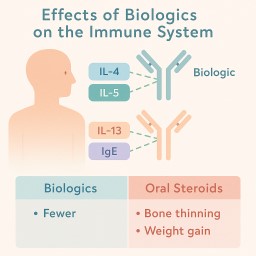
💉 Best Practices for Self-Injecting Biologics

1. Choose the Right Injection Site

Biologics are usually given subcutaneously (just under the skin).

Most common sites:

  • Abdomen (at least 2 inches away from the belly button)

  • Thighs (top outer area)

  • Sometimes upper outer arm (if someone else is injecting)

👉 Rotate sites to avoid irritation or lumps.


🧊 2. Warm Up the Medicine First

  • Take it out of the fridge 30–60 minutes before injecting

  • Cold biologics can sting — warming it to room temperature reduces discomfort

❌ Never heat in a microwave or hot water — just let it sit at room temperature.


🧼 3. Prepare Properly

  • Wash your hands

  • Clean the injection site with an alcohol swab — let it dry fully before injecting

  • Check the pen or syringe for:

    • Expiry date

    • Clarity of solution (should be clear, no lumps or particles)


💡 4. Use the Right Technique

  • If using a pre-filled syringe:

    • Pinch the skin gently

    • Insert the needle at a 45° angle

    • Inject slowly and steadily

  • If using an auto-injector (pen):

    • Place flat against the skin

    • Press firmly until you hear a click

    • Hold for the full time recommended (usually 5–15 seconds)

Don’t rub the site afterward — this can increase irritation.


🧘‍♀️ 5. Reduce Pain and Anxiety

  • Breathe out slowly as you inject — this reduces muscle tension

  • Use distraction (music, cold pack, or mental focus techniques)

  • If nervous, consider numbing the skin with an ice pack for 30 seconds before cleaning with alcohol

  • Inject slowly with syringes — fast injection = more sting


🧴 Aftercare

  • Apply light pressure with a cotton ball or tissue

  • Avoid rubbing or massaging

  • Use a cold pack if sore or bruised

  • Report any ongoing redness, swelling, or allergic reaction


🛠️ Tools That Help

  • Needle-free injection devices (limited availability)

  • Numbing creams like lidocaine/prilocaine (available OTC or by GP)

  • Sharps disposal bin — request one from your pharmacy or consultant team

  • Injection reminder apps if on a schedule (e.g. MyTherapy, Medisafe)


🧑‍⚕️ When to Speak to Your Team

  • If injections remain very painful

  • If you're unsure about technique

  • If you develop redness, swelling, or lumps that last more than 24–48 hours

  • If you feel light-headed or allergic afterward


BBC Food Nutrition Calculator – Summary for Patients and Public

The BBC Food Nutrition Calculator is an easy-to-use, interactive tool designed to help you understand whether your diet is meeting your nutritional needs. By entering your age and sex, the calculator evaluates your intake of key nutrients and highlights any you might be under- or over-consuming. It also suggests foods rich in those nutrients to help you make healthy dietary adjustments.


Key Features

  • Personalised Assessment: Calculates your nutritional needs based on age and sex.

  • Food Recommendations: Suggests nutrient-rich foods if your intake is too low or too high.

  • Supplement Guidance: Explains when supplements might be useful—e.g. vitamin D in winter months or when housebound.

  • Immune System Support: Highlights nutrients that support immune health (vitamins A, C, D, B6, B9, B12, zinc, and iron).


Common Nutrient Gaps in the UK

According to UK dietary surveys, many people do not get enough of the following nutrients:

  • Fibre – under-consumed across all age groups

  • Vitamin D – commonly low year-round

  • Iron – especially low in girls and women aged 11–49

  • Calcium – often low in girls aged 11–18

  • Selenium – low among most females and older males

  • Zinc – insufficient in teenagers and adults over 75

Additionally, many people exceed recommended levels of free sugars, saturated fats, and salt.


Is the Information Verified?

Yes. The nutritional guidance in the BBC Food Nutrition Calculator is based on verified and reliable sources, including:

  • NHS and Public Health England recommendations

  • National Diet and Nutrition Survey (NDNS) data

  • Scientific consensus on daily nutrient requirements and health effects

While the BBC may not cite sources on every page, its content is regularly reviewed and reflects the current public health standards in the UK. You can trust this tool as a credible and evidence-based guide to dietary health.


Try the Calculator

You can access the BBC Nutrition Calculator here:
🔗 bbc.co.uk/food/articles/nutrition_calculator


💊 How Medicines Are Approved — and What “Off-Label” Means

🔹 1. What Is “Licensed” or “Approved” Medication Use?

Before a medicine can be prescribed in the UK (or any country), it goes through a formal approval process:

Step What Happens
Clinical trials The medicine is tested for safety, effectiveness, and quality.
Regulatory review In the UK, the Medicines and Healthcare products Regulatory Agency (MHRA) or the European Medicines Agency (EMA) reviews trial data.
Marketing authorisation If approved, the medicine is “licensed” for specific conditions, doses, age groups, and methods of use.

🟢 A licensed use means the drug has been judged safe and effective for that specific use, based on strong clinical evidence.


🔹 2. What Is “Off-Label” Use?

Off-label use means a doctor prescribes a medicine in a way that is not covered by its official license.

This could include:

  • Using a medicine for a different condition

  • Giving it at a different dose or frequency

  • Using a different route (e.g. inhaled instead of injected)

  • Giving it to a different age group (e.g. in children)

This is legal, but it means the prescriber is using their clinical judgement outside the official licensing terms.


🔹 3. Why Might a Doctor Use a Medicine Off-Label?

Reason Example
There is no licensed treatment for a rare condition e.g. inhaled amphotericin B for CPA or ABPA
The licensed treatment doesn’t work or causes side effects e.g. switching antifungal drugs
New evidence supports another use, but the company hasn’t applied for a new licence e.g. old drugs used in new ways based on research
Medicines used in children or elderly often lack specific licensing data

🔹 4. Is Off-Label Use Safe?

It can be, but it requires:

  • Good clinical judgement

  • Use of the best available evidence

  • Often, discussion with a multidisciplinary team

  • Informed consent from the patient (especially important in high-risk cases)

The prescriber takes more responsibility, because the use hasn’t been formally approved by regulators.


🔹 5. Who Oversees This in the UK?

  • The MHRA licenses medicines.

  • The General Medical Council (GMC) and NHS allow doctors to prescribe off-label when it’s in the patient’s best interest.

  • NICE guidelines sometimes include off-label use if evidence supports it.


🔹 6. Real-World Example: Inhaled Amphotericin

  • Licensed: Amphotericin B is approved for injection to treat fungal infections.

  • Off-label: Nebulised (inhaled) use is not officially licensed, but it is used in some centres to treat or prevent fungal lung disease (e.g. CPA, ABPA) where evidence and specialist experience supports it.


🔹 Summary: Key Points

Term Meaning
Licensed use The use of a medicine that has been approved for a specific purpose by a regulator.
Off-label use Prescribing a medicine in a different way than officially licensed — legal, but used with clinical caution.
Who decides? Ultimately, the prescribing clinician, supported by evidence, guidance, and the needs of the individual patient.

🫁 Inhaled Amphotericin: What You Need to Know

For patients with CPA, ABPA, and other lung-based fungal conditions


What is Amphotericin B?

Amphotericin B is a powerful antifungal medicine used to treat serious fungal infections, including those affecting the lungs. It is most often given by intravenous (IV) infusion, but in some cases, it can be given through inhalation (nebulisation) to target the lungs more directly.

It may be considered in conditions such as:

  • Chronic Pulmonary Aspergillosis (CPA) – a long-term infection of the lungs caused by Aspergillus fungi

  • Allergic Bronchopulmonary Aspergillosis (ABPA) – an allergic lung reaction to Aspergillus, common in people with asthma or bronchiectasis

  • Fungal infections after lung transplants or in people with severely weakened immune systems


Why Use It Inhaled?

Inhaled amphotericin may be used to:

  • Treat lung-based fungal infections, especially in CPA

  • Help reduce the fungal burden in the lungs of patients with ABPA, when other treatments are not enough

  • Prevent fungal infections in at-risk patients (e.g. those undergoing chemotherapy or organ transplantation)

  • Lower the risk of systemic side effects compared to IV treatment


What Makes Inhaled Amphotericin Challenging?

Amphotericin B can be difficult to inhale because:

  • It doesn’t dissolve easily in water, making it hard to turn into a fine mist.

  • It can irritate the lungs, causing coughing, wheezing, or chest tightness — which is particularly concerning for people with ABPA or asthma.

  • It may not reach all parts of the lung evenly, especially in patients with cavities or damaged lung tissue seen in CPA.

  • There is no licensed, standard inhaled product — it is often used “off-label” under specialist care.


What is Liposomal Amphotericin (Ambisome)?

Ambisome® is a special formulation of amphotericin B. It uses tiny liposomes to deliver the drug.

What is a Liposome?

A liposome is a microscopic, fat-based bubble. It:

  • Protects the medicine until it reaches the right part of the body

  • Reduces irritation and side effects

  • Helps deliver amphotericin more gently to the lungs

You can think of liposomes like tiny protective vans, carrying the medicine where it’s needed most — often areas affected by CPA or ABPA.


Benefits of Inhaled Liposomal Amphotericin

  • Better tolerated than older versions (especially important for people with sensitive airways)

  • Safer for the lungs and kidneys

  • Can be used to target Aspergillus in the lungs directly

  • Suitable for people with CPA or difficult-to-control ABPA

  • May be used alongside antifungal tablets or corticosteroids


What to Expect During Treatment

  • You’ll use a nebuliser, a machine that turns liquid medicine into a fine mist.

  • Treatment usually takes around 15–30 minutes.

  • You may be asked to use a bronchodilator inhaler first (e.g. salbutamol) to open up your airways.

  • Your first treatment may be supervised to check for any side effects.


Common Side Effects

Most people tolerate liposomal amphotericin well, but possible side effects include:

  • Mild coughing or throat irritation

  • Chest tightness or wheezing (more likely with non-liposomal versions)

  • Unpleasant taste or dry mouth

People with ABPA may be more sensitive to these effects due to their underlying allergic response. If you have CPA, it’s important to report any new or worsening symptoms like increased coughing or breathlessness.


Inhalable Antifungals

Inhalable antifungal medication for Aspergillosis

Inhalable Antifungals

Inhaled antifungals are an area of active development, especially for targeting fungal lung infections like aspergillosis and candidiasis. This approach allows for high local drug concentrations in the lungs while minimizing systemic side effects. Here’s a summary of current and emerging inhaled antifungals:


Currently Available or in Clinical Use (select cases or trials)

Antifungal Formulation Indication / Use Notes
Amphotericin B (liposomal) Inhaled (off-label) Prophylaxis in immunocompromised patients (e.g. post-transplant) Used for inhaled prophylaxis against invasive aspergillosis; available in some UK centres
Voriconazole Inhaled (compounded) Limited use in chronic fungal lung disease Very limited data; some use in compassionate settings
Itraconazole Inhaled (experimental) Chronic pulmonary aspergillosis Inhalable versions have been studied (e.g. PUR1900/Pulmazole)
Nystatin Inhaled (rare/off-label) Oropharyngeal candidiasis or tracheobronchial use Sometimes nebulized in ICU; limited absorption

🧪 In Development / Clinical Trials

Antifungal Developer / Status Target Use Notes
Opelconazole (PC945) Pulmocide Ltd – in Phase 3 trials Inhaled for chronic aspergillosis, prophylaxis Designed specifically for inhalation; long lung retention, minimal systemic exposure
Pulmazole (PUR1900) Pulmatrix (partnering with Cipla) – early trials ABPA, CPA in asthma/bronchiectasis Inhaled itraconazole dry powder; promising lung targeting
Inhaled amphotericin B lipid complex Aridis / others Invasive fungal prophylaxis Advanced animal and some early human data
Encochleated Amphotericin B Matinas BioPharma (oral/inhaled being explored) Aspergillosis, mucormycosis Cochleate delivery protects drug; inhaled route under study

🔬 Preclinical / Exploratory

Antifungal Class Notes
Echinocandins (e.g. caspofungin) Not yet available in inhaled form, but being explored for nebulization
Azole reformulations Research ongoing into nebulized posaconazole or isavuconazole for direct lung delivery
Novel agents (e.g. olorofim) Olorofim is oral/IV only currently, but inhaled versions could emerge in future studies

🧩 Potential Advantages of Inhaled Antifungals

  • High concentration directly at the site of infection (lungs)

  • Reduced systemic toxicity

  • Less interaction with hepatic CYP450 pathways (important for azoles)

  • Better for long-term suppression in CPA, ABPA, SAFS


🚧 Challenges

  • Delivery devices and patient technique (e.g. DPI vs nebuliser)

  • Ensuring adequate deposition in damaged or obstructed airways

  • Regulatory hurdles due to novel delivery routes

  • Limited real-world data so far


Managing Life with Haemoptysis

Managing life with haemoptysis — especially when it's recurrent, low-volume, or threatening to recur — can be physically and emotionally exhausting. Whether due to CPA, ABPA, bronchiectasis, aspergillus bronchitis, or other underlying lung conditions, the goal is to minimise triggers, support healing, and maintain safety without living in constant fear.

Here’s a comprehensive, practical guide to managing haemoptysis during recovery or periods of fragility:


🔴 Understanding the Risk

Haemoptysis (coughing up blood) can range from:

  • Minor (streaks in mucus)

  • Moderate (5–50ml)

  • Massive or life-threatening (>200–600ml in 24h — a medical emergency)

If you're in a recovery phase, you may be:

  • Post-bleed but still inflamed

  • Dealing with recurrent trickles

  • Worried about provoking a bleed due to fragile blood vessels or fungal activity


✅ Core Management Goals

Goal How to Achieve It
Prevent rebleeding Avoid straining, irritating airways, or increasing pressure
Allow fragile vessels to heal Stay well-hydrated, avoid airway trauma, reduce inflammation or infection
Identify and treat causes Maintain antifungal, antibiotic or anti-inflammatory treatment as prescribed
Stay calm during symptoms Know how to position yourself and who to contact
Keep life going gently Pace activity, prioritise rest, manage anxiety without isolation

🔹 1. Activity & Positioning: How to Move Safely

  • Avoid intense exercise, heavy lifting, straining (including on the toilet).

  • Keep your head elevated when sleeping (2 pillows or wedge).

  • If coughing blood:

    • Sit upright or lean slightly forward (don’t lie flat).

    • Lie on the side that’s bleeding (if known) — this protects the better lung.


🔹 2. Breath & Cough Management

  • Cough suppression may help reduce vessel trauma:

    • Use warm steam or gentle hydration first.

    • Use prescribed suppressants only if safe (some conditions need mucus clearance).

  • Huffing can be gentler than coughing.

  • Avoid dry air — use a humidifier, nasal rinses, or saltwater gargles.


🔹 3. Medication Adherence

  • Antifungals (e.g., voriconazole, itraconazole): Maintain strict levels.

  • Steroids (if prescribed): Taper cautiously under supervision.

  • Antibiotics or macrolides: Prevent secondary infection.

  • Tranexamic acid: Sometimes used short-term to reduce bleeding risk (under guidance).


🔹 4. Environmental & Lifestyle Support

  • Avoid dust, smoke, aerosols, strong odours, and temperature extremes.

  • Wear a mask when gardening, cleaning, or in crowded spaces.

  • Avoid alcohol and anti-inflammatory meds (NSAIDs) unless cleared.

  • Maintain gentle hydration, warm teas, and soothing soups to support healing.


🔹 5. Psychological Support: Managing Fear and Anxiety

  • It’s normal to fear rebleeding — but hypervigilance can increase stress and airway irritation.

  • Use mindfulness or grounding during panic (see above).

  • Talk with a support group or therapist if fear is affecting sleep or daily life.

  • Ask for a written plan from your medical team: “What to do if it happens again.”


🔹 6. When to Seek Help

Call your medical team or go to A&E if:

  • Bleeding increases or becomes bright red and continuous

  • You cough up >1 tablespoon of blood

  • You feel faint, breathless, or distressed

  • Blood is mixed with froth, or you feel it rising in your throat


📦 Preparedness Tips

  • Keep a rescue plan printed or saved on your phone.

  • Store clean cloths or tissues, bottled water, and calming items near where you rest.

  • Carry a medical ID or information card if you’re going out alone.


🧘‍♀️ Living Well While Letting It Heal

  • Maintain light, slow routines – a little movement, some fresh air, safe distraction.

  • Avoid cough triggers like strong smells or cold air.

  • Use the time to focus on recovery, build strength gradually, and connect with others.


🧠 What Is Mindfulness? Can it Help Living With Aspergillosis?

Mindfulness can be a powerful support tool for people living with aspergillosis, whether it's CPA, ABPA, SAFS, or related conditions like bronchiectasis or asthma. It doesn’t replace medical treatment, but it can significantly help with coping, symptom awareness, and emotional wellbeing.

Below is a breakdown of how mindfulness practices may benefit people with aspergillosis:


Mindfulness means paying attention, on purpose, in the present moment, without judgment. It involves noticing your thoughts, feelings, and physical sensations — without getting caught up in them or trying to change them immediately.

This can be done through:

  • Breath awareness

  • Body scans

  • Guided meditation

  • Mindful movement (e.g. yoga, tai chi)

  • Mindful walking or eating


🌿 How Can Mindfulness Help with Aspergillosis?

Challenge How Mindfulness Helps
Breathlessness / coughing fits Helps calm panic and reduce over-breathing; improves awareness of breath patterns
Medication side effects (e.g. voriconazole) Reduces anxiety and fear responses; helps observe sensations without spiralling
Chronic fatigue / brain fog Supports pacing and acceptance; improves focus and attention
Pain or chest discomfort Helps reduce distress by observing pain without fighting it (used in pain management)
Anxiety or health fear Teaches how to sit with fear without letting it dominate thinking
Frustration with slow progress Encourages self-kindness and reduces reactivity to setbacks
Isolation / low mood Builds resilience and reduces rumination by shifting focus to what is happening now
Poor sleep Calms a racing mind before bedtime

🧘‍♀️ Simple Mindfulness Practices for Patients

1. Breath Awareness (1–2 minutes)

Focus gently on the in-breath and out-breath. When your mind wanders (and it will), gently bring it back to the breath.

Use when: You feel overwhelmed, panicked, or need to slow down.


2. Body Scan (5–10 minutes)

Lie or sit down, and slowly move your attention through your body from feet to head. Notice sensations — tension, warmth, numbness — without judgment.

Use when: Resting, falling asleep, or managing pain or fatigue.


3. Mindfulness in Everyday Tasks

Choose a task (e.g., washing up, brushing teeth, folding clothes). Do it slowly and notice the sensations, smells, sounds — staying fully present.

Use when: You feel disconnected or anxious during the day.


4. RAIN Method for Anxiety

  • Recognise what’s happening

  • Allow the experience to be there

  • Investigate with curiosity (Where in my body do I feel this?)

  • Nurture (What do I need right now?)

Use when: You’re feeling a strong emotional response (fear, frustration, sadness).


💬 What Patients Have Said

“It doesn’t stop the coughing, but I panic less when I feel it coming on.”
“I used to fear every twinge in my chest. Mindfulness gave me space before I reacted.”
“When I feel the visual side effects starting, I breathe and tell myself: just observe, it will pass.”


📱 Resources and Apps (Many Are Free)

  • Headspace (good for beginners)

  • Insight Timer (lots of free guided meditations)

  • Calm (for sleep and anxiety)

  • Breathworks (mindfulness for health conditions)

  • Smiling Mind (free and evidence-based)


⚠️ Important Notes

  • Mindfulness is a skill — it takes time and practice. Start small.

  • It can feel uncomfortable at first, especially if you're used to avoiding difficult thoughts or sensations.

  • If you’ve experienced trauma or distressing symptoms, guided mindfulness with a therapist may be safer.


Visual Disturbances on Voriconazole: What’s Happening and Why It Can Feel So Scary

If you're experiencing frightening or panicked feelings due to visual disturbances while taking voriconazole, you're not alone — and there are reasons behind both the symptoms and your emotional response.


🧠 What Causes Visual Disturbances with Voriconazole?

  • Voriconazole crosses the blood–brain barrier and affects the central nervous system (CNS).

  • It interacts with retinal photoreceptors (especially rods), which may explain:

    • Lights seeming too bright or flickering.

    • Halos, flashes, or color distortions.

    • Visual “trails” following movement.

  • Although not fully understood, it may involve:

    • Temporary interference with visual signal processing in the brain and retina.

    • Altered neurotransmitter activity or enhanced retinal light sensitivity.


⏱️ When Do These Disturbances Happen and How Long Do They Last?

  • Onset: Symptoms typically begin 30 minutes to 2 hours after a dose.

  • Duration: They usually last 2 to 6 hours, fading as the drug is processed.

  • Resolution: Most people find the effects wear off before the next dose.

  • Over time, even if you stay on the drug, your body often adapts, and the symptoms lessen or disappear entirely within a few days to weeks.


😰 Why Do They Feel So Scary?

  • The effects are sudden and intense, often catching people off guard.

  • Our brains rely on visual input for safety — when this gets disrupted, it can trigger anxiety or panic.

  • If you live with anxiety or take other medications, your brain may amplify the sense of threat, even though the effect is temporary.

  • Descriptions like “psychedelic” or “derealised” are common — which understandably causes distress.


🩺 What Can You Do?

  1. Talk to your medical team. They may:

    • Check voriconazole blood levels.

    • Reduce the dose or change timing.

    • Switch to an alternative antifungal if needed.

  2. Avoid driving at night or doing visually demanding tasks until things settle.

  3. If anxiety is a problem:

    • Try grounding techniques (e.g. breath control, sound orientation).

    • Ask your doctor whether temporary support (like anti-anxiety medication or CBT) might help.

  4. Some patients find taking voriconazole in the evening lets them sleep through the worst of it — but check this with your prescriber first.


🔔 When to Get Urgent Help

If symptoms last unusually long, worsen over time, or include confusion, agitation, or hallucinations, contact your healthcare provider. These may be signs of CNS toxicity, especially if blood levels are high.


🧠 Why Some Medications Can't Be Prescribed by GPs

In the UK, the NHS uses a tiered prescribing system that sometimes prevents GPs from prescribing certain medications, even if those medicines are available elsewhere in the NHS.

Here’s a clear explanation of how and why this happens:


🔒 1. Shared Care or Specialist-Only Medications

Some medicines are designated as “specialist-only” or “shared care” treatments. This means:

  • GPs are not authorised to initiate them.

  • In some cases, they can continue a prescription once a specialist starts it — but only if a formal shared care agreement is in place.

Examples include:

  • Biologics for asthma, ABPA, or autoimmune disease

  • High-risk antifungals like voriconazole or posaconazole

  • Certain cancer, transplant, or hormone drugs

This system ensures that:

  • The medication is closely monitored by someone with specialist knowledge

  • Risks like interactions, side effects, and required blood tests are safely managed


📜 2. Local Prescribing Formularies

Each NHS Integrated Care Board (ICB) or local NHS Trust maintains a formulary — a list of medicines approved for use in that area.

  • If a medicine isn't on the local formulary, the GP may be unable to prescribe it, even if NICE (the National Institute for Health and Care Excellence) says it's effective.

  • These decisions are based on local budget priorities, agreements with hospitals, and clinical capacity.


💷 3. Cost Controls and Prior Approvals

Some medications are expensive or highly specialised, and require:

  • Prior approval by a funding panel

  • A hospital-based consultant to apply for and justify the treatment

GPs usually cannot access these approval pathways directly.


⚠️ 4. Liability and Risk

Even if a GP understands the condition, they may not have:

  • Access to monitoring protocols

  • Up-to-date knowledge of rare drug interactions or side effects

  • The ability to interpret complex blood results needed for safe prescribing

For legal and safety reasons, GPs must follow guidance from their local ICB or NHS England on what they can and can’t prescribe.


✅ What Patients Can Do

  • Ask the hospital team if the medication can be prescribed under shared care, and whether your GP has agreed to it.

  • Ask your GP to request guidance from the local medicines management team.

  • Request a hospital prescription if urgent — but note this often requires collection from hospital pharmacies.