Mould, “Toxins” and Aspergillus: Understanding What’s True and What Isn’t
Last reviewed: April 2026
Key points
- Exposure to mould is not the same as having aspergillosis.
- Aspergillus is a common environmental fungus that most people inhale daily.
- “Mycotoxin” and “detox” explanations are common online but are not part of standard diagnosis.
- Symptoms usually arise from a combination of lung disease, infection, inflammation, and environment.
- Diagnosis relies on clinical tests (scans, blood tests, microbiology), not environmental testing alone.
- Specialist home testing is sometimes used—but only in specific clinical situations.
A guide for patients and carers
Many people with lung conditions come across information linking mould exposure, toxins, and Aspergillus infections. Some of this information can be helpful—but much of it can also be confusing.
This article explains the most common misunderstandings and what current medical practice actually relies on.
Important: Some tests measure exposure—but medical diagnosis requires evidence of disease.
Contents
- Why this topic is confusing
- Mould exposure vs Aspergillus disease
- Mycotoxins and “detox” claims
- Why “mould toxin tests” are not used diagnostically
- Why symptoms don’t have one single cause
- How Aspergillus conditions are actually diagnosed
- When home testing may be used
- What matters most for patients
Why this topic is confusing
- Mould is visible and easy to focus on
- Symptoms (fatigue, cough, breathlessness) are non-specific
- Online information often mixes different conditions together
This can lead to the idea that one single cause—such as “mould toxicity”—explains everything. In practice, respiratory conditions are usually more complex.
Mould exposure vs Aspergillus disease
Mould exposure
- Common in homes and outdoor air
- Can irritate airways
- May worsen symptoms
Aspergillus disease
- Occurs in specific medical contexts
- Related to lung structure and immune response
- Requires clinical diagnosis
Important context: Aspergillus spores are present in the air we breathe every day. Most people inhale them without developing disease.
Mycotoxins and “detox” claims
You may see references to:
- “Mycotoxin illness”
- “Die-off reactions”
- “Binders” to remove toxins
These ideas are widely discussed online, but they are not part of standard medical diagnosis or treatment for Aspergillus lung conditions.
This does not mean symptoms are not real. It means they are usually explained through:
- Inflammation
- Infection
- Underlying lung disease
Why “mould toxin tests” are not used diagnostically
Exposure is common
Many people have detectable environmental exposure, so results are not specific.
Results do not match symptoms reliably
Levels do not consistently correlate with disease or severity.
Lack of standardisation
Different labs use different methods, making interpretation difficult.
Not part of clinical guidelines
Major respiratory guidelines do not include these tests in diagnosing Aspergillus conditions.
Risk of confusion
- May cause unnecessary concern
- May lead to unproven treatments
Why symptoms don’t have one single cause
Symptoms often arise from a combination of:
- Underlying lung disease
- Inflammation
- Infection (fungal or bacterial)
- Environmental triggers (pollution, damp)
This is why symptoms can fluctuate and may not respond to a single explanation or treatment.
How Aspergillus conditions are actually diagnosed
Diagnosis is based on a combination of:
- CT imaging
- Blood tests (e.g. IgE, IgG)
- Microbiology (sputum or bronchoscopy)
Environmental testing alone is not sufficient to diagnose disease.
When home testing may be used
In some cases, specialist teams (for example via the Mycology Reference Centre Manchester) may arrange targeted environmental sampling.
This is different from commercial testing and focuses on:
- Specific clinically relevant fungi (e.g. Aspergillus species)
- Known allergens or pathogens
Why it is done
- Established Aspergillus-related disease
- Unexplained or persistent symptoms
- Concern about ongoing exposure
This testing is used to answer specific clinical questions and is interpreted alongside medical findings.
What matters most for patients
- Work with your clinical team for diagnosis and treatment
- Address damp and mould in your home
- Focus on practical steps that improve symptoms
- Avoid relying on a single explanation for complex symptoms
Final takeaway
Mould, environment, and Aspergillus are connected—but not in a simple cause-and-effect way.
Understanding this helps you focus on what is most likely to improve your health: appropriate treatment, good living conditions, and ongoing monitoring.
Author: aspergillosis.org
Note: Educational content only – not medical advice.
Indoor Air Quality, Damp, Mould and Aspergillus
Last reviewed: April 2026
Key points
- Indoor air problems usually relate to pollution, damp, or mould—these are different but can overlap.
- Aspergillus is a normal part of the environment and not automatically a sign of a problem indoors.
- Damp and mould can worsen breathing symptoms and should be taken seriously.
- Fixing the underlying moisture problem is more important than cleaning visible mould.
- Knowing who to contact (GP, landlord, council) is key to resolving problems.
Indoor Air Quality, Damp, Mould and Aspergillus
A practical guide for patients
Many people with aspergillosis or other lung conditions are concerned about the air inside their home. This article explains how indoor air quality works, how to recognise problems, and what steps you can take to improve your environment.
Contents
- What affects indoor air?
- Three common problems
- Aspergillus in the home
- Damp and mould
- Symptoms and health effects
- Identifying problems
- Getting the right help
- Practical steps
- Air purifiers
What affects indoor air?
Indoor air quality is influenced by both indoor and outdoor factors. People spend most of their time indoors, so even small issues can have a noticeable effect on health. :contentReference[oaicite:0]{index=0}
Indoor air can be affected by:
- Outdoor pollution entering the building
- Damp and moisture
- Mould growth
- Cooking, heating, and cleaning products
- Dust and particles
Three common indoor air problems
1. Indoor air pollution
- Particles from cooking, heating, and candles
- Outdoor pollution enters indoors
2. Damp (moisture)
- Condensation, leaks, poor ventilation
- Creates conditions for mould growth
3. Mould
- Visible fungal growth on surfaces
- Releases spores into the air
Aspergillus in the home
Aspergillus is a common environmental fungus found in air, dust, and soil.
This means:
- Everyone breathes in Aspergillus spores regularly
- Indoor exposure is not unusual
Important: Exposure does not equal disease. Aspergillosis depends on lung health and immune response—not just environment.
Damp and mould
Damp and mould are important because they can affect respiratory health. Damp homes are linked with increased respiratory symptoms and illness. :contentReference[oaicite:1]{index=1}
UK guidance highlights that damp and mould can produce irritants and spores that affect the lungs and should be addressed promptly. :contentReference[oaicite:2]{index=2}
Symptoms and health effects
Indoor air problems may contribute to:
- Cough
- Breathlessness
- Wheeze
- Chest tightness
- Fatigue
These symptoms often overlap with infection or underlying disease, making them difficult to interpret.
Identifying problems
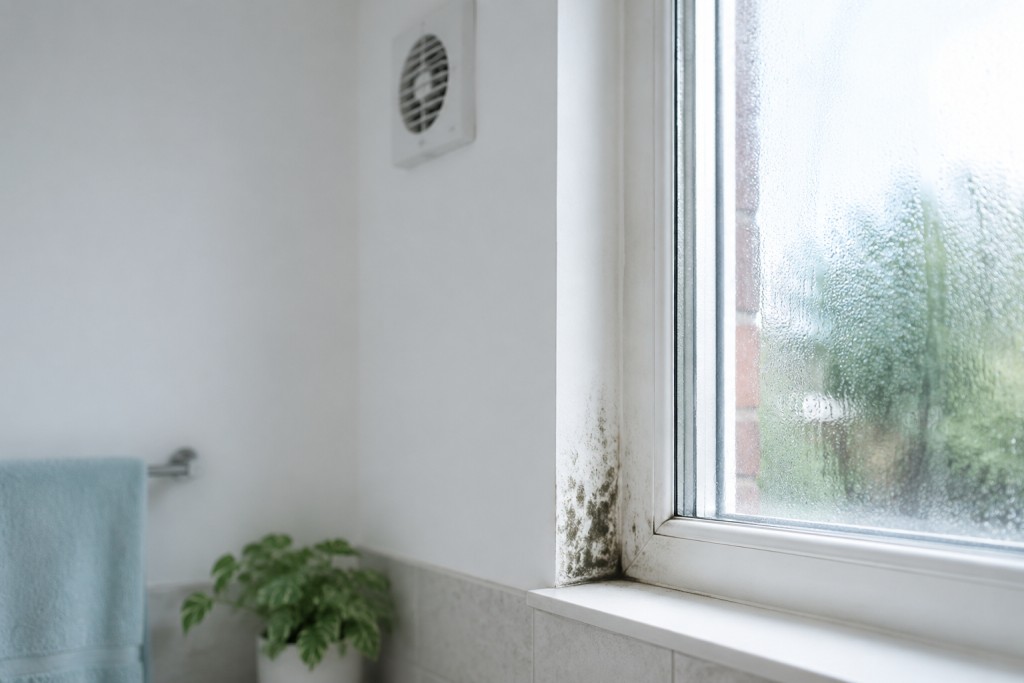
Signs of damp
- Condensation on windows
- Cold or damp walls
- Peeling paint or wallpaper
- Musty smell
Signs of mould
- Black or green patches
- Mould returning after cleaning
- Growth behind furniture or in corners
Hidden issues
- Persistent damp smell
- Symptoms are worse in certain rooms
Getting the right help
1. Your healthcare team
- If symptoms worsen
- If you suspect your environment is affecting your health
2. Landlord or housing provider
- Report problems early
- Keep records (photos, dates)
UK guidance makes clear that damp and mould should be addressed promptly and not ignored.
3. Local council
- If landlord does not act
- If health is affected
Further reading
See more detailed guidance and support resources here:
Housing, damp and mould articles (aspergillosis.org)
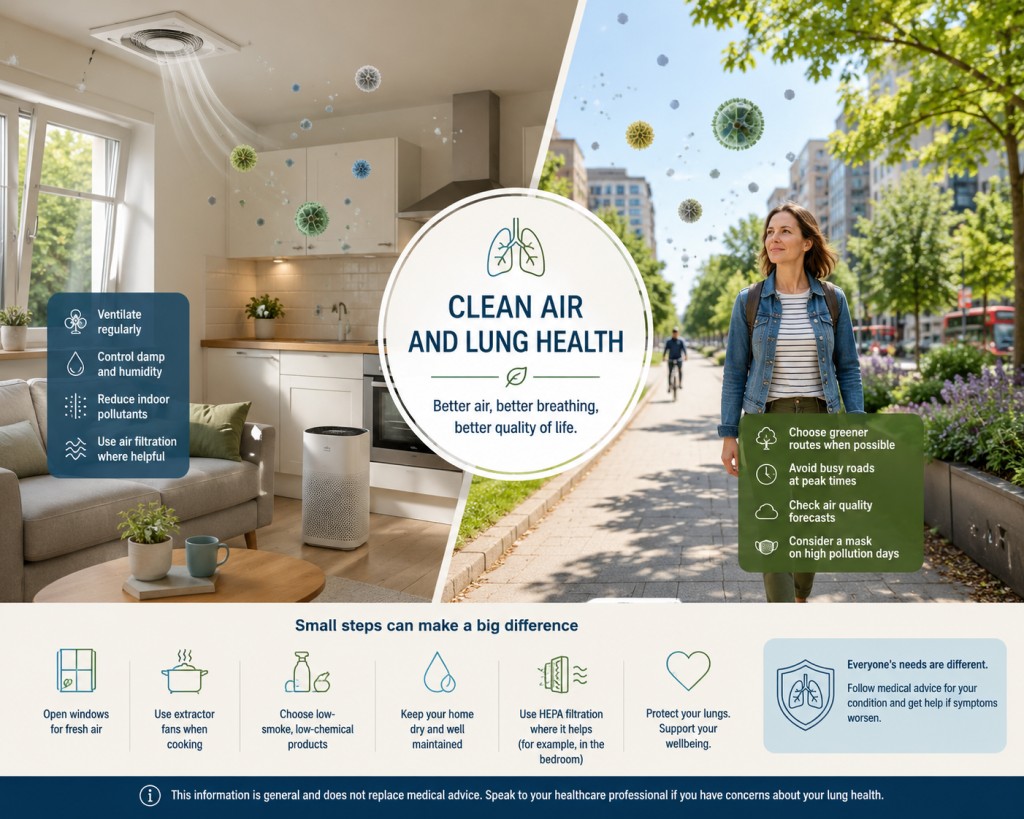
Practical steps
- Improve ventilation (especially kitchens and bathrooms)
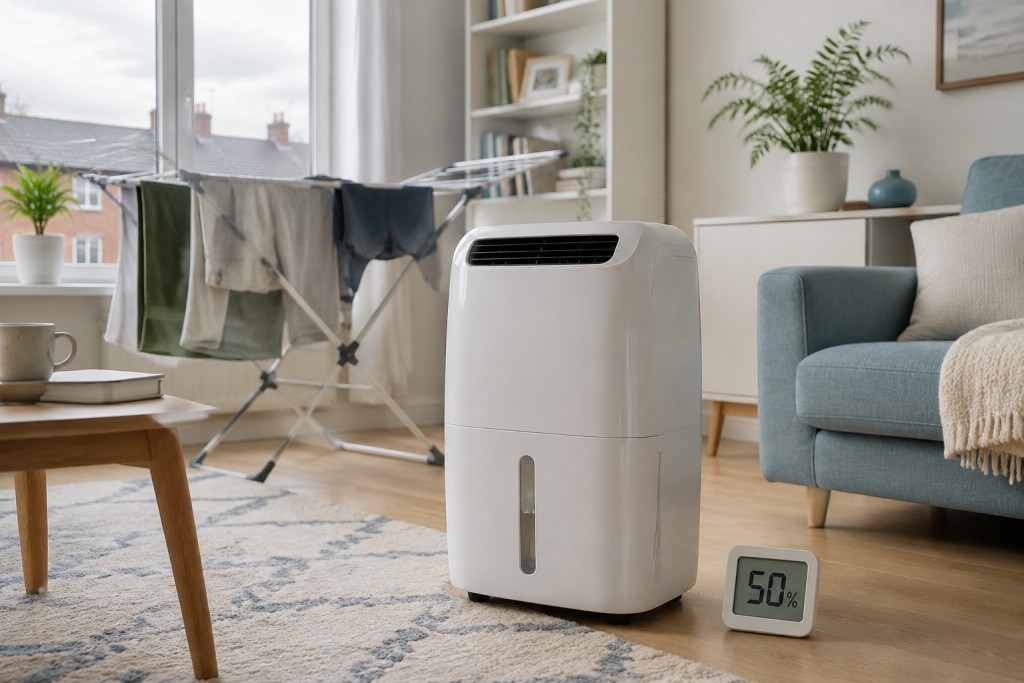
- Reduce moisture
- Address leaks quickly
- Clean small mould areas safely
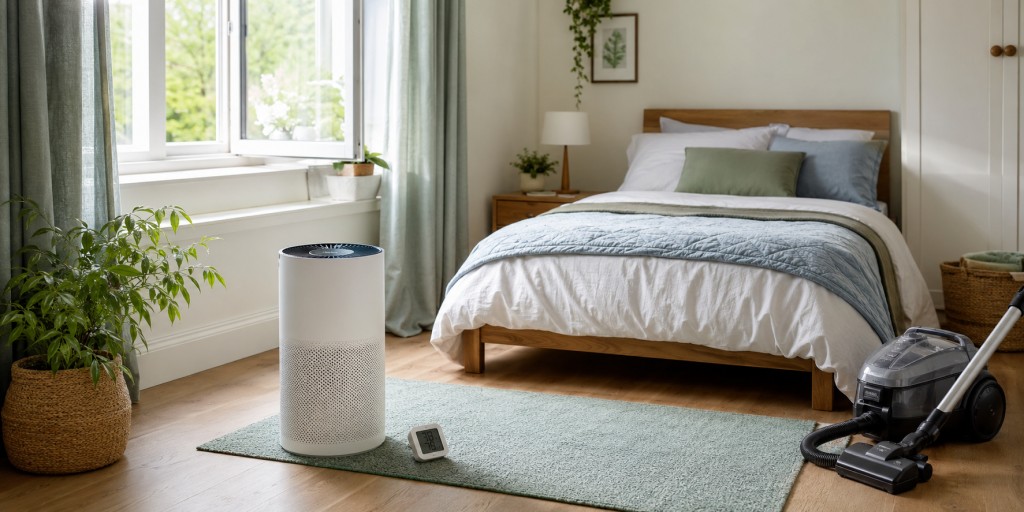
Air purifiers
Air purifiers can reduce airborne particles, but:
- They do not fix damp
- They do not remove mould from surfaces
- They do not treat aspergillosis
Final takeaway
Indoor air problems are common and often manageable. The key is to:
- Recognise the signs early
- Address moisture and mould properly
- Seek help when needed
Author: aspergillosis.org
Note: This article is for general education and does not replace medical advice.
Damp & Mould Health Evidence Monitor: 4 March 2026
Date of check
4 March 2026
🆕 New papers since last check
Early-life indoor mould exposure and lung function
Journal: Environmental Research: Health
Published: Feb 2026
Summary
Children exposed to serious indoor mould in early life showed:
-
reduced lung function in adolescence
-
increased risk of asthma during childhood
This study used long-term cohort data and objective lung function testing, strengthening the evidence that early mould exposure can have lasting respiratory consequences.
PMID: 39162373
PubMed link:
https://pubmed.ncbi.nlm.nih.gov/39162373/
Damp and mouldy homes: impact on lung health in childhood
Authors: Moorcroft C, Whitehouse A, Grigg J
Journal: Archives of Disease in Childhood (2025)
Summary
This clinical review explains how damp housing contributes to:
-
childhood asthma
-
recurrent respiratory infections
-
allergic disease
It emphasises that paediatric clinicians frequently encounter children whose symptoms are linked to poor housing conditions.
PMID: 39814530
PubMed link:
https://pubmed.ncbi.nlm.nih.gov/39814530/
Damp housing and mental health effects
Journal: Environmental Health Perspectives
Summary
A major review examining whether damp and mould exposure affects mental health.
Evidence suggests associations with:
-
anxiety
-
depression
-
psychological stress
Mechanisms may include chronic illness, housing insecurity, and inflammatory responses to mould exposure.
PMID: 39162373
PubMed link:
https://pubmed.ncbi.nlm.nih.gov/39162373/
📊 Summary
New or important items identified
• Evidence continues to strengthen the link between damp housing and respiratory disease
• Long-term cohort data show effects on lung development
• Emerging research also suggests mental health impacts
Health effects: why aspergillosis patients are higher-risk
Home › Knowledge Hub › Damp, mould and aspergillosis › Health effects
This page explains what damp and mould can do to the lungs and how to recognise patterns that suggest your home is contributing to symptoms.
How damp buildings can affect the lungs
Damp homes can increase exposure to airborne particles including fungal spores and fragments. For many people this causes irritation; for people with chronic lung disease it can trigger significant exacerbations.
- Worsening cough, wheeze, breathlessness
- Increased mucus and reduced airway clearance
- More frequent chest infections / antibiotic courses
- Allergic-type reactions in sensitised individuals
Why aspergillosis and severe airways disease are different
If you have Aspergillus-related disease or severe asthma/bronchiectasis, your airways may react strongly to fungal material and irritants. Some patients also require systemic or inhaled corticosteroids, which can increase susceptibility to infections and complicate symptom control.
Important nuance: a damp home does not automatically “cause” aspergillosis, but it can be a powerful driver of persistent symptoms and repeated flares.
Patterns that support a housing contribution
- Time-and-place pattern: symptoms worsen at home and improve when away (even partially).
- Multi-person effects: more than one household member develops respiratory/allergic symptoms.
- Post-disturbance worsening: symptoms worsen after “repairs” or “remediation”.
- Escalating medication use: increased reliever inhaler/nebuliser use, repeated steroid bursts, more antibiotics.
Simple symptom timeline template (copy/paste)
Keeping a short, factual timeline helps clinicians and councils understand risk.
Date(s): Where damp/mould is present: What changed (rain event, leak, repair work, return after decant): Symptoms (breathlessness/wheeze/cough/fever/skin/eyes/nose): Medication change (inhalers, steroids, antibiotics): Healthcare use (GP/A&E/hospital): Improves when away from home? (yes/no, how quickly):
What to ask your clinician to document
- Diagnosis (e.g., Chronic pulmonary aspergillosis, allergic bronchopulmonary aspergillosis, asthma, bronchiectasis)
- That symptoms are consistent with environmental triggers or worsened by damp/mould exposure (they do not need to prove causation)
- Any vulnerability factors (steroid use, immunosuppression, reduced lung function)
Damp, mould and aspergillosis in rented homes (UK)
Home › Knowledge Hub › Damp, mould and aspergillosis (UK rented homes)
A comprehensive guide for patients and carers. If you rent your home and worry that damp or mould may be worsening symptoms, these pages explain how to recognise risk, what to do next, and how to escalate safely.
Who this guide is for
- People living with Chronic pulmonary aspergillosis and other long-term lung disease.
- People living with Allergic bronchopulmonary aspergillosis or Severe asthma with fungal sensitisation.
- Carers, family members, and support workers.
- Clinicians and housing professionals seeking a patient-centred overview.
The key message
A damp home does not automatically cause aspergillosis. However, damp and mould can:
- worsen airway inflammation and symptoms
- trigger exacerbations in asthma/bronchiectasis
- increase allergic-type reactions in sensitised people
- make it harder to stabilise symptoms even with optimal treatment
This hub focuses on practical steps: recognising risk early, communicating effectively, understanding remediation quality, and using UK escalation routes.
How to use this hub
- Start with Recognising a damp home to build an evidence base.
- Read Health effects to understand patterns that support an environmental contribution.
- Use Landlord communications to push for a safe plan, not cosmetic fixes.
- Check Remediation & refusal to move if you’re being pressured to return.
- Use Law & support for UK rights and escalation routes.
Important safety note
If you have severe breathlessness, chest tightness, wheeze, or features of anaphylaxis (for example lip/tongue swelling, throat tightness, collapse), seek urgent medical help. If you are repeatedly attending A&E with symptoms that seem worse at home, tell clinicians you are concerned about damp/mould exposure.
Recognising a damp or mouldy home
Home › Knowledge Hub › Damp, mould and aspergillosis › Recognising a damp home
Many high-risk exposures occur before mould is obvious. This page helps you identify early signs and start documenting evidence.
Early warning signs (often missed)
- Condensation on windows most mornings
- Cold, clammy walls or cupboards; wardrobes that feel “damp”
- Persistent musty odour (especially when returning home)
- Peeling wallpaper, bubbling paint, cracking plaster
- Recurring black staining on silicone/grout
- Swollen skirting boards, warped flooring, rusting fittings
High-risk hidden locations
- Behind wardrobes/sofas on external walls
- Inside cupboards on outside walls
- Under sinks, behind washing machines, around toilets/baths
- Window reveals, behind curtains/blinds
- Loft hatches and boxed-in pipework
Common causes (useful when speaking to landlords)
- Water ingress (doors/windows, defective seals, roof, gutters, downpipes)
- Plumbing leaks (slow leaks behind walls or under floors)
- Ventilation failures (broken/weak extract fans, blocked vents)
- Cold bridging and persistent condensation in poorly insulated areas
- Previous flooding/leaks with inadequate drying
Quick evidence checklist (10 minutes)
- Take dated photos of any mould, staining, peeling paint, wet patches.
- Photograph likely sources: door thresholds, window seals, gutters if visible, extractor fans, vents.
- Write down where the smell is strongest and when it’s worst (after rain, in winter, after showers).
- Start a brief symptom note (see Page 3) and keep everything in one folder.
- Report the issue in writing to your landlord/agent and keep screenshots/confirmation.
What not to do (for safety)
- Do not scrape or disturb mouldy plasterboard or insulation yourself.
- Do not rely on bleach-only cleaning as a “solution” (it may not address underlying moisture or embedded contamination).
- Do not accept repeated “paint over and close the ticket” approaches without a cause-and-fix plan.
Your rights, the law, and UK support organisations
Key legal frameworks (plain English)
- Fitness for human habitation: rented homes must be safe and fit to live in. Damp and mould can make a home unfit.
- Local council enforcement: councils can inspect and require action where hazards exist (including damp and mould).
- Social housing (England): stronger timeframes and duties apply for significant damp/mould hazards.
Note: housing law differs across England, Scotland, Wales, and Northern Ireland. Health risks are consistent UK-wide, but escalation routes can vary by nation.
Escalation pathway (practical)
- Landlord/agent (in writing): report damp/mould + request an evidence-based plan (Page 4 templates).
- Formal complaint: ask for escalation to stage 2 / senior review.
- Environmental Health (local council): request inspection for damp/mould hazards if unresolved.
- Ombudsman/regulator route: for social housing complaints after internal process.
- Independent housing advice: Shelter or Citizens Advice can help with wording and next steps.
UK support organisations (start here)
- Shelter (England) — housing rights and escalation support.
- Shelter Scotland
- Shelter Cymru (Wales)
- Housing Rights (Northern Ireland)
- Citizens Advice — practical support and signposting.
- Housing Ombudsman — complaints for social housing providers (after the landlord complaints process).
What you do not need to prove
- You do not need a blood test “proving mould exposure”.
- You do not need to name a specific fungal species.
- You do not need the landlord’s contractor to agree with you.
What matters is credible evidence of a hazard plus a plausible link to health deterioration (especially with clinically vulnerable occupants).
Suggested “resources” box for this hub
These are authoritative starting points you can list at the end of each page (optional):
- UK Government: Damp and mould — health risks and guidance
- UK Government: Awaab’s Law guidance (England, social rented sector)
- UK Government: Fitness for Human Habitation — tenant guide
- UK Parliament: Damp and mould — tenant briefing (England)
- Housing Ombudsman: Damp and mould spotlight report
- Asthma + Lung UK (health advice and support)
Remediation, verification, and refusal to move you
Home › Knowledge Hub › Damp, mould and aspergillosis › Remediation & refusal to move
If remediation is done but symptoms persist or worsen, the key question becomes: has the home been demonstrated to be safe to occupy?
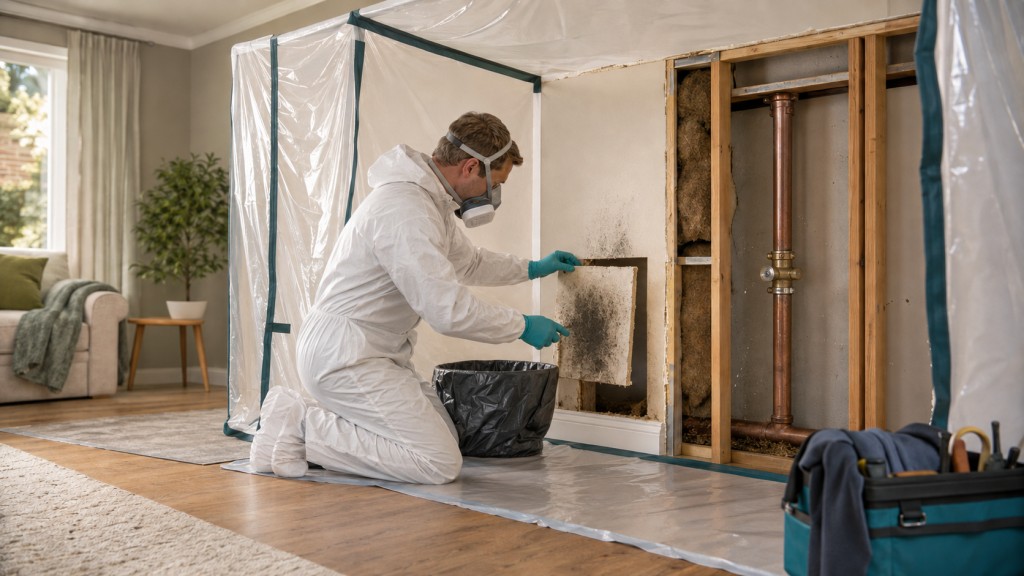
What “good remediation” should include
- Cause fixed: leak/ingress/defect repaired, not just cleaned.
- Drying: adequate drying time and moisture checks.
- Material decisions: water-damaged porous materials removed where needed.
- Safe work: dust/spore spread controlled (important for medically vulnerable households).
- Verification: documented checks that work is complete and the home is safe.
Red flags (“bad remediation”)
- Paint over staining or “mould spray” only
- No drying plan, no moisture measurements
- No documentation of what was removed/replaced
- Work that creates dust without protection/containment
- Refusal to provide any meaningful post-remediation checks
If symptoms worsen after remediation
Worsening symptoms can occur if contaminated materials were disturbed or if damp persists behind walls/floors. This is a strong indicator that the hazard may not be resolved.
Actions:
- Document symptoms and healthcare visits (Page 3 template).
- Ask landlord for written evidence of safety and remediation details.
- Request escalation to Environmental Health if unresolved.
If the landlord refuses to move you (decant)
Use this framing:
- The issue is not “repairs completed” — it is safety and health risk.
- Ask: “What evidence shows the home is safe to occupy?”
Template request for temporary alternative accommodation
Subject: Request for temporary alternative accommodation (health risk / damp and mould) Hello [Name/Team], Despite remediation work, we are experiencing ongoing damp/mould concerns and worsening health symptoms in a clinically vulnerable household. Please provide written evidence that the home is safe to occupy, including: - confirmation the moisture source has been resolved, - evidence of drying/moisture checks, - what materials were removed/replaced, - what post-remediation checks were completed. Given the uncertainty around safety and the health impacts, we are requesting temporary alternative accommodation until the property can be demonstrated to be safe to occupy. Kind regards, [Name]
If you return “under protest”
If you have no alternative but to return, keep it in writing:
We are returning to the property due to lack of alternative accommodation. We do not accept that the damp/mould hazard has been resolved and will continue to document health impacts and seek independent assessment.
How to raise damp and mould with your landlord (and get action)
Home › Knowledge Hub › Damp, mould and aspergillosis › Raising with your landlord
Your aim is to secure a safe, evidence-based plan: fix the cause, dry properly, remediate safely, and confirm the home is safe to occupy.
Principles that prevent “cosmetic fixes”
- Source control: stop the leak/ingress/defect.
- Drying: dry building fabric, not just the air.
- Safe remediation: remove/clean contaminated materials appropriately.
- Verification: show the home is safe to occupy.
How to report effectively
- Report in writing (email/portal) and keep everything.
- Attach dated photos and a brief symptom timeline.
- Use health-focused language: “damp and mould hazard”, “medical vulnerability”, “safe to occupy”.
- Ask for timescales, named contact, and written findings.
Template email (copy/paste)
Subject: Damp and mould hazard – urgent investigation and repair plan (health impact) Hello [Landlord/Housing Officer/Letting Agent], I am reporting ongoing damp and/or mould at [address], affecting [rooms/locations]. This has been present since [date] and appears linked to [water ingress/leak/condensation/ventilation failure]. We have clinically vulnerable occupants in the household, including [brief: chronic lung disease / aspergillosis / severe asthma / bronchiectasis], and symptoms are worsening. Please confirm in writing: 1) the inspection date and who will attend, 2) the findings (including likely cause), 3) the repair and drying plan (including timeframes), 4) what remediation will be undertaken (not just surface cleaning/painting), 5) how you will confirm the property is safe to occupy once works are completed. Thank you, [Name] [Phone]
If you are told it is “lifestyle” or “just condensation”
You can reply calmly:
Thank you. We are doing reasonable ventilation and heating measures. However, the pattern and location suggest a building/ventilation defect that requires investigation and repair. Given medical vulnerability in the household, we need a written plan that addresses the underlying cause and confirms the home is safe to occupy.
When to escalate early
- Repeated failed repairs, or mould returns quickly
- Visible mould plus long-term damp patches
- Health deterioration, repeated GP/A&E attendances
- Pressure to accept repainting/bleach-only cleaning
See Page 6 for UK escalation routes and support organisations.
Trials, systematic reviews, and state-of-the-science reviews from ~2016–2026 on damp housing, mould, and health
Executive summary (what 10 years of evidence consistently shows)
1) Damp and mouldy housing is a causal driver of respiratory disease
-
Strong, repeated associations with asthma incidence, asthma exacerbations, wheeze, chronic cough, and poorer lung function, especially in children.
-
Effects persist across countries, climates, and housing systems.
-
Evidence is strongest for asthma and allergic respiratory disease, but extends to bronchitis, infections, and symptom burden in people with existing lung disease.
2) Health effects are dose-related, not binary
-
Risk increases with extent, persistence, and visibility of dampness/mould (patch size, odour, condensation, repeated water damage).
-
No safe threshold has been identified → “any dampness matters.”
3) Mental health impacts are now well-established
-
Damp and mould exposure is associated with depression, anxiety, stress, sleep disturbance, and reduced wellbeing.
-
Pathways are both biological (inflammation, immune activation) and psychosocial (lack of control, stigma, housing insecurity).
4) Children are disproportionately affected
-
Strong paediatric evidence links damp homes to asthma development, poorer asthma control, and higher healthcare use.
-
Early-life exposure appears particularly important.
5) Damp housing is a marker of structural inequality
-
Concentrated in low-income, overcrowded, poorly maintained, or privately rented housing.
-
Acts as a health inequality amplifier, not just an environmental exposure.
6) Remediation works—but prevention works better
-
Interventions that fix the building (leaks, insulation, ventilation) improve symptoms.
-
Education alone is insufficient if the housing defect remains.
Thematic synthesis of the literature
1. Respiratory health (strongest evidence base)
Consistent findings across reviews (2016–2025):
-
Dampness and mould exposure increases:
-
Asthma onset in children
-
Asthma severity and exacerbations
-
Wheeze, cough, breathlessness
-
-
Associations hold even after adjusting for smoking, socioeconomic status, and outdoor pollution.
Key insight
Damp housing is not merely an “asthma trigger” — it is a risk factor for developing disease, especially in childhood.
2. Childhood lung health (very strong, clinically relevant)
-
Paediatric reviews emphasise that clinicians routinely see children whose symptoms are driven or sustained by housing conditions.
-
Poor housing undermines:
-
Controller medication effectiveness
-
Self-management plans
-
Long-term lung development
-
Clinical implication
Asking about housing conditions should be as routine as asking about pets or smoking in paediatric respiratory clinics.
3. Mental health and wellbeing (rapidly strengthening evidence)
Recent state-of-the-science reviews conclude:
-
Damp and mould exposure is associated with:
-
Depression
-
Anxiety
-
Psychological distress
-
-
Effects persist even when respiratory disease is accounted for.
Mechanisms proposed
-
Chronic inflammation and immune signalling
-
Sleep disruption
-
Loss of control and “housing stress”
-
Fear for children’s health
Important shift
Damp housing is no longer viewed as purely a respiratory issue—it is a whole-person health exposure.
4. Measurement and exposure assessment (important but imperfect)
What works reasonably well
-
Visual inspection and standard dampness indices
-
Structured questionnaires (especially for asthma cohorts)
-
ERMI (Environmental Relative Moldiness Index) as a research tool
What does NOT yet exist
-
A clinically agreed safe exposure threshold
-
A single test that rules exposure in or out
Consensus
Absence of a perfect test does not mean absence of harm.
5. Built environment, ventilation, and remediation
Clinical trials and housing intervention studies show:
-
Improved ventilation and moisture control:
-
Reduces indoor humidity
-
Improves reported physical and mental health
-
-
Poorly executed energy efficiency measures can worsen damp if ventilation is not addressed.
Critical point
“Warmth without ventilation” is a known failure mode.
6. Housing as a social determinant of health
Major public health frameworks now explicitly define healthy housing as:
-
Warm
-
Dry
-
Well-ventilated
-
Free from mould and toxins
-
Secure and accessible
Shift in framing
Damp housing is not an individual lifestyle issue—it is a system-level health determinant.
What the evidence does not support (important for countering misinformation)
-
No convincing evidence that:
-
“Detox” supplements treat mould exposure
-
Binding agents reverse health effects
-
Genetic susceptibility alone explains illness without exposure
-
-
Evidence strongly favours environmental remediation, not biomedical “workarounds”.
Implications for practice, policy, and patient support
For clinicians
-
Ask about damp and mould explicitly.
-
Document housing conditions when symptoms are unexplained or refractory.
-
Support patients with letters or reports—this is evidence-based advocacy, not speculation.
For public health & housing services
-
Damp housing remediation is preventive medicine.
-
Children’s respiratory health and mental health outcomes justify investment.
For patients
-
Symptoms are not imagined.
-
The problem is the building, not personal failure.
-
Improvement often requires structural change, not just treatment escalation.
Bottom line (10-year consensus)
Damp and mouldy housing causes avoidable disease, worsens inequality, and undermines medical care.
Fixing homes is one of the most effective—and underused—public health interventions available.
References
-
Bentley R, Mason K, Jacobs D, Blakely T, Howden-Chapman P, Li A, Adamkiewicz G, Reeves A.
Housing as a social determinant of health: a contemporary framework. Lancet Public Health. 2025;10(10):e855–e864. doi:10.1016/S2468-2667(25)00142-2. PMID: 40953578. -
Moorcroft C, Whitehouse A, Grigg J.
Damp and mouldy home: impact on lung health in childhood. Archives of Disease in Childhood. 2025;110(6):419–421. doi:10.1136/archdischild-2023-326035. PMID: 39814530. -
Gatto MR, Mansour A, Li A, Bentley R.
A state-of-the-science review of the effect of damp- and mold-affected housing on mental health. Environmental Health Perspectives. 2024;132(8):086001. doi:10.1289/EHP14341. PMID: 39162373. -
Patti MA, Henderson NB, Phipatanakul W, Jackson-Browne M.
Recommendations for clinicians to combat environmental disparities in pediatric asthma. Chest. 2024;166(6):1309–1318. doi:10.1016/j.chest.2024.07.143. PMID: 39059578. -
Punyadasa D, Adderley NJ, Rudge G, Nagakumar P, Haroon S.
Self-reported questionnaires to assess indoor home environmental exposures in asthma patients: a scoping review. BMC Public Health. 2024;24:2915. doi:10.1186/s12889-024-20418-8. PMID: 39434085. -
Kozajda A, Miśkiewicz E.
Exposure to bioaerosol in the residential environment. Medycyna Pracy. 2024;75(6):545–560. doi:10.13075/mp.5893.01508. PMID: 39688367. -
Vesper SJ.
The development and application of the Environmental Relative Moldiness Index (ERMI). Critical Reviews in Microbiology. 2025;51(2):285–295. doi:10.1080/1040841X.2024.2344112. PMID: 38651788. -
Nabaweesi R, Hanna M, Muthuka JK, Samuels AD, Brown V, Schwartz D, Ekadi G.
The built environment as a social determinant of health. Primary Care. 2023;50(4):591–599. doi:10.1016/j.pop.2023.04.012. PMID: 37866833. -
Grant TL, Wood RA.
The influence of urban exposures and residence on childhood asthma. Pediatric Allergy and Immunology. 2022;33(5):e13784. doi:10.1111/pai.13784. PMID: 35616896. -
Coulburn L, Miller W.
Prevalence, risk factors and impacts related to mould-affected housing: an Australian integrative review. International Journal of Environmental Research and Public Health. 2022;19(3):1854. doi:10.3390/ijerph19031854. PMID: 35162876. -
Wimalasena NN, Chang-Richards A, Wang KI, Dirks KN.
Housing risk factors associated with respiratory disease: a systematic review. International Journal of Environmental Research and Public Health. 2021;18(6):2815. doi:10.3390/ijerph18062815. PMID: 33802036. -
Ali SH, Foster T, Hall NL.
The relationship between infectious diseases and housing maintenance in Indigenous Australian households. International Journal of Environmental Research and Public Health. 2018;15(12):2827. doi:10.3390/ijerph15122827. PMID: 30545014. -
Wolkoff P.
Indoor air humidity, air quality, and health – an overview. International Journal of Hygiene and Environmental Health. 2018;221(3):376–390. doi:10.1016/j.ijheh.2018.01.015. PMID: 29398406. -
Mendell MJ, Kumagai K.
Observation-based metrics for residential dampness and mold with dose–response relationships to health: a review. Indoor Air. 2017;27(3):506–517. doi:10.1111/ina.12342. PMID: 27663473. -
Francisco PW, Jacobs DE, Targos L, Dixon SL, Breysse J, Rose W, Cali S.
Ventilation, indoor air quality, and health in homes undergoing weatherization: a randomized trial. Indoor Air. 2017;27(2):463–477. doi:10.1111/ina.12325. PMID: 27490066. -
Barnes CS, Horner WE, Kennedy K, Grimes C, Miller JD.
Home assessment and remediation. Journal of Allergy and Clinical Immunology: In Practice. 2016;4(3):423–431.e15. doi:10.1016/j.jaip.2016.01.006. PMID: 27157934. -
Chew GL, Horner WE, Kennedy K, Grimes C, Barnes CS, Phipatanakul W, Larenas-Linnemann D, Miller JD.
Procedures to assist health care providers to determine when home assessments for potential mold exposure are warranted. Journal of Allergy and Clinical Immunology: In Practice. 2016;4(3):417–422.e2. doi:10.1016/j.jaip.2016.01.013. PMID: 27021632. -
Vesper S, Wymer L.
The relationship between Environmental Relative Moldiness Index values and asthma. International Journal of Hygiene and Environmental Health. 2016;219(3):233–238. doi:10.1016/j.ijheh.2016.01.006. PMID: 26861576.