Understanding the HPA Axis and Long-Term Steroid Use in Aspergillosis
For patients living with ABPA, CPA, or other forms of aspergillosis who have used steroids long term
What is the HPA Axis?
The HPA axis stands for the Hypothalamic–Pituitary–Adrenal axis. It's a vital communication system between three parts of your body:
- The Hypothalamus (in the brain)
- The Pituitary gland (also in the brain)
- The Adrenal glands (on top of your kidneys)
These three work together to manage your body’s response to stress, regulate inflammation, and control levels of a hormone called cortisol.
Cortisol helps you respond to illness, injury, or stress. It also affects energy levels, blood pressure, immune function, and even mood.
How Does the HPA Axis Work?
Here’s a simplified version:
- The hypothalamus senses stress or inflammation and sends a hormone called CRH to the pituitary.
- The pituitary gland then sends ACTH to the adrenal glands.
- The adrenal glands release cortisol, which acts throughout your body to reduce inflammation and keep your systems balanced.
Once enough cortisol is in the blood, it signals the brain to stop releasing more. This keeps the system in balance.
Why Aspergillosis Patients Need to Understand This
Many people with aspergillosis—especially those with ABPA (Allergic Bronchopulmonary Aspergillosis)—are treated with oral corticosteroids such as prednisolone. These steroids reduce inflammation but can also interfere with the HPA axis.
Over time, the body may stop producing natural cortisol because it detects enough from medication. This condition is called adrenal insufficiency (AI) or HPA axis suppression.
Symptoms of Adrenal Insufficiency (AI)
If your adrenal glands are underactive, especially after long-term steroid use, you may experience:
- Extreme fatigue or feeling drained
- Muscle weakness
- Joint pain
- Feeling dizzy or faint, especially when standing
- Low blood pressure
- Nausea, vomiting, or abdominal pain
- Loss of appetite
- Worsening of general health during mild illnesses
In severe cases, a lack of cortisol can lead to an adrenal crisis, which is a medical emergency.
What to Do if You Suspect Adrenal Insufficiency
- Never stop steroids suddenly. Your dose should always be tapered under medical supervision.
- If you’ve been on steroids for several weeks or more, ask your doctor whether you should be tested for adrenal insufficiency using a short Synacthen test, which checks how well your adrenal glands respond to a synthetic version of ACTH (not cortisol itself). Synacthen is not your natural corticosteroid, but it helps doctors assess whether your adrenal glands are producing enough natural cortisol..
- You may be switched from prednisolone to hydrocortisone, which is a more natural replacement for cortisol and easier to adjust during illness.
When to Stress Dose (and Why It Matters)
Your stress dosing plan must always be agreed with your doctor. It should be tailored to your specific needs and medical history. If your body is under stress (e.g., illness, surgery, trauma), it needs more cortisol. If your adrenal glands aren’t working properly, this extra cortisol must come from medication.
Common stress dosing scenarios include:
- Fever over 38°C
- Vomiting or diarrhoea
- Dental surgery or minor operations
- Respiratory infections or flare-ups
- Emotional trauma or physical injury
Typical stress dosing guidance:
- Double your usual dose for 2–3 days during mild illness
- Seek emergency care immediately if you can’t keep down tablets or feel seriously unwell. In some cases, emergency medical staff may need to inject hydrocortisone (100 mg intramuscularly) to stabilise you. This should only be done by trained professionals unless you have been specifically trained and advised to self-administer by your specialist.
Always carry:
- A Steroid Emergency Card
- A medical alert bracelet
- An emergency hydrocortisone injection kit if advised
Why Doctors May Switch You to Hydrocortisone
Even though prednisolone can be used to replace cortisol, some patients still experience symptoms of adrenal insufficiency while on it. This can happen because:
- The dose might be too low for your needs
- Prednisolone doesn’t follow the body’s natural cortisol rhythm, which peaks in the early morning and drops throughout the day
- During illness or stress, the body needs more cortisol, and prednisolone doesn’t automatically increase
- Individuals metabolise steroids differently, so a standard dose may not be right for everyone
Common symptoms despite taking prednisolone may include:
- Ongoing fatigue, especially in the morning or late afternoon
- Poor stress tolerance
- Dizziness or weakness during illness
- Slow recovery after infections
For these reasons, your doctor may switch you to hydrocortisone, which is:
- Shorter-acting and better mimics natural cortisol rhythms
- Easier to adjust during illness or stress
- Often better tolerated long term with fewer side effects Hydrocortisone is shorter-acting and more closely mimics the natural rhythm of cortisol. It is usually taken in two or three doses throughout the day — for example, a larger dose in the morning, a smaller dose at lunchtime, and sometimes a final small dose in the early afternoon. This schedule helps replicate the natural daily rise and fall of cortisol and may improve energy levels, mood, and overall well-being.. It may be preferred if:
- You’re tapering from long-term prednisolone
- You’ve developed confirmed adrenal insufficiency
- You need a safer long-term maintenance dose
- You experience steroid-related side effects
Key Reminders for Aspergillosis Patients
| Do This | Why It Matters |
|---|---|
| Follow your tapering plan | Prevents adrenal crisis |
| Ask about adrenal testing if fatigued | Catches suppressed adrenal function early |
| Know your sick-day rules | Allows for stress dosing during illness |
| Consider switching to hydrocortisone | Safer, more natural for long-term hormone replacement |
| Carry emergency ID and hydrocortisone | Life-saving in a crisis |
Final Thoughts
Long-term steroid use helps many aspergillosis patients control inflammation and stay well. But it comes with responsibilities — particularly the need to monitor for adrenal suppression.
Understanding the HPA axis, recognising symptoms of AI, and knowing when and how to stress dose can empower you to live safely and confidently with aspergillosis.
Always talk to your specialist team if you’re unsure about fatigue, tapering, or illness management. You are not alone — and support is available.
🫁 ABPA Treatment: Why Are Steroids First, Even if They Can Increase Fungal Growth?

If you've been diagnosed with Allergic Bronchopulmonary Aspergillosis (ABPA), you may have heard that treatment often starts with oral steroids like prednisolone. But ABPA is triggered by a reaction to the Aspergillus fungus — so why use a treatment that might actually let that fungus grow more?
It’s a great question. This guide explains why steroids are still often the first step, what other treatments are available, and when they might be used.
🌿 What Is ABPA?
ABPA is not an infection — it’s an allergic immune reaction in the lungs to the fungus Aspergillus fumigatus. This overreaction causes:
-
Lung inflammation
-
Mucus plugging
-
Breathlessness and wheezing
-
Possible long-term lung damage (e.g., bronchiectasis)
People with asthma or cystic fibrosis are more likely to develop ABPA.
💊 Why Are Steroids Usually the First Treatment?
🔥 The key problem in ABPA is inflammation, not the fungus itself.
Steroids like prednisolone are often used first because they:
-
Act quickly to calm the allergic immune reaction
-
Reduce inflammation and mucus
-
Help relieve symptoms fast (wheezing, tight chest, breathlessness)
-
Prevent long-term damage if started early
Even though steroids may allow some fungal growth, their fast action against inflammation is often more important — especially in flare-ups.
🍄 What About Antifungal Treatments?
Antifungals like itraconazole or posaconazole reduce the amount of Aspergillus in the lungs. This helps to:
-
Reduce allergic triggers
-
Prevent future flare-ups
-
Lower the need for steroids
However, antifungals:
-
Take weeks to work
-
Don’t control inflammation well on their own during a flare
-
Can have side effects and interact with other medications
➡️ That’s why they are often used after steroids, or alongside them — especially in people who flare up often or need steroids long term.
🧬 What About Biologics?
Biologic therapies like:
-
Omalizumab (anti-IgE)
-
Dupilumab (blocks IL-4 and IL-13)
-
Mepolizumab (anti-IL-5)
…are used to help regulate the immune system in patients who:
-
Can’t tolerate steroids
-
Have frequent relapses
-
Need ongoing treatment despite antifungals
Biologics can help:
-
Reduce steroid use
-
Lower flare frequency
-
Improve asthma control
But they’re not yet approved as first-line treatments and are generally reserved for more complex or persistent cases.
✅ What Happens If My Symptoms Are Mild?
Good question. In mild ABPA (e.g. stable breathing, low IgE, no major lung damage), specialists may:
-
Monitor closely before starting any treatment
-
Try antifungals alone, especially if steroid use is risky
However, regular follow-up is essential to make sure inflammation doesn’t silently worsen.
🔄 Typical ABPA Treatment Steps
| Stage | Treatment |
|---|---|
| First flare or moderate symptoms | Steroids (short course) ± antifungals |
| Steroid side effects or long-term use | Add antifungals |
| Recurrent or steroid-dependent ABPA | Add or switch to biologics |
| Mild symptoms and stable lungs | Possibly antifungals first (specialist decision) |
🧘 Staying Well with ABPA
-
Follow your treatment plan closely
-
Keep lungs clear with mucus clearance techniques
-
Avoid damp, mouldy environments
-
Keep up with regular check-ups and lung tests
-
Let your team know if symptoms return
🗨️ In Summary
Steroids are still first-line because they work fast to stop inflammation.
Antifungals and biologics are important longer-term options that help reduce fungal triggers and flare-ups — and may reduce or even replace steroids over time.
Every ABPA patient is different, and your care should be tailored to you.
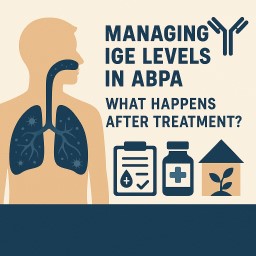
📘 Managing IgE Levels in ABPA: What Happens After Treatment?
If you have ABPA (Allergic Bronchopulmonary Aspergillosis), you’ve likely been told your IgE levels are high. Many patients ask:
“Once my IgE goes down with treatment, how do I keep it down without staying on steroids or antifungals forever?”
This guide explains why IgE is important, how it’s treated, and what long-term steps you can take to stay well.
🧪 What is IgE and Why Is It High in ABPA?
IgE (Immunoglobulin E) is an antibody your immune system makes in response to allergens. In ABPA, your immune system overreacts to Aspergillus, a common fungus, causing inflammation in the lungs. This leads to:
-
High total IgE levels (often over 1,000–10,000 IU/mL)
-
Symptoms like coughing, wheezing, and mucus plugs
-
Lung changes on scans, if untreated
🎯 Treatment Goals
Treatment aims to:
-
Lower inflammation
-
Reduce the fungal burden
-
Bring IgE levels down (a marker that your inflammation is settling)
-
Prevent long-term lung damage
You might be treated with:
-
Oral steroids (e.g. prednisolone)
-
Antifungal tablets (e.g. itraconazole or voriconazole)
These medications help bring IgE levels down, sometimes dramatically. But they can’t usually be taken forever — long-term use may cause side effects.
🔄 After IgE Drops – What Next?
Even after successful treatment, ABPA can flare up again. So the key questions become:
How do we keep IgE low?
How do we prevent future flare-ups?
🧭 Long-Term Management Options
1. Close Monitoring
-
IgE is checked every 2–6 months
-
Doctors look for a doubling in IgE — this can mean a flare is starting
-
Regular chest scans and lung function tests are also used to spot changes early
2. Tapering Medication
-
Steroids are slowly reduced, not stopped suddenly
-
Your doctor will watch for any return of symptoms or rise in IgE
3. Biologic Treatments
Some newer medications can help long-term, especially if you:
-
Have frequent flare-ups
-
Can’t reduce steroids safely
-
Have asthma or eosinophilic inflammation
These include:
-
Omalizumab (anti-IgE antibody)
-
Mepolizumab / Benralizumab (target eosinophils)
-
Dupilumab (blocks part of the allergy pathway)
Biologics are usually injections given every 2–4 weeks, and can help reduce relapses and steroid need.
🏡 Lifestyle & Environmental Tips
Reducing your exposure to Aspergillus can help keep IgE from rising again.
🔹 Avoid:
-
Damp or moldy areas
-
Compost, rotting leaves, hay, or soil dust
-
Rooms with poor ventilation
🔹 Use:
-
Ventilate your home well (eg open windows/extractor fans)
-
A HEPA-filter air purifier at home
-
An FFP2/FFP3 mask when doing dusty activities (gardening, cleaning mold)
🥗 Eat for Immune Support:
-
Anti-inflammatory foods (vegetables, oily fish, berries)
-
Reduce sugar (high sugar may promote inflammation)
-
Stay well hydrated
-
Ask your doctor about vitamin D — it may help regulate immunity
📅 Follow-up Schedule (General examples, yours may differ)
| Time Since Treatment | What to Expect |
|---|---|
| 1–3 months | Blood tests (IgE, eosinophils), lung check |
| 3–6 months | Check for symptoms, possibly repeat IgE |
| 6–12 months | CT scan or lung function, if needed |
| After 1 year | Stable patients may have annual reviews |
Let your team know if any symptoms return — even if your last IgE result was stable.
🧠 Final Thoughts
-
You may always have “elevated” IgE compared to someone without ABPA — that’s okay. The goal is stability, not “zero IgE”.
-
Many patients live well with ABPA for years by learning to manage flare-ups early and avoiding fungal exposure.
-
Ask your clinic about your personal IgE pattern — some people flare with small changes; others don’t.
-
Support groups and educational resources (like aspergillosis.org) can help you stay informed and confident.
📩 Have questions for your team?
Bring these up at your next appointment:
-
Can I reduce my medication safely?
-
Could I benefit from a biologic?
-
How often should I check my IgE?
-
How can I reduce exposure at home?
🩹 Caring for Fragile Skin and Wounds When You're on Long-Term Steroids
A practical guide for patients and carers
If you take long-term steroid medication (such as prednisolone or hydrocortisone), you may have noticed your skin becoming thinner, more fragile, and slower to heal. Even a small bump can cause the skin to split or bleed, and wounds can sometimes leave behind rolled-up or crumpled skin edges.
This guide offers practical, gentle steps to help you manage these wounds safely and support healing.
💥 Why does steroid-thinned skin split so easily?
Steroids weaken the skin by:
-
Thinning the outer layers
-
Reducing collagen and connective tissue
-
Making small blood vessels more fragile
This makes the skin prone to tearing and bruising, especially on the arms, chest, and legs — even from minor knocks or pressure.
🩸 What to do if your skin splits and bleeds
Step-by-step first aid:
-
Clean gently
-
Use lukewarm water and mild soap or saline
-
Pat dry — don’t scrub
-
-
Stop bleeding
-
Apply light pressure with a clean cloth or sterile gauze
-
Be patient — bleeding may take longer to stop
-
-
Protect the wound
-
Apply a non-stick dressing (e.g. Melolin, Mepilex, or Adaptic)
-
Secure gently with paper tape or soft bandage — avoid sticky plasters that may damage skin when removed
-
-
Keep it moist
-
Use a simple ointment like Vaseline, Epaderm, or Cetraben
-
Moisture helps the skin heal more quickly and reduces scabbing
-
-
Watch for infection
-
Look out for redness spreading, pus, warmth, or pain
-
If this happens, contact your GP or nurse
-
🟣 What if there’s rolled-up skin around the wound?
This is common when the top layer of skin tears and crumples. Here's what to do:
✅ If the skin is still attached:
-
Do not pull or cut it off
-
Gently lay it back over the wound like a natural dressing
-
Cover with a moist, non-stick dressing
✅ If it’s dead or dry:
-
Leave it in place for now
-
Ask a nurse or GP to remove it safely at your next dressing change
❌ Do not try to trim it yourself
Even small cuts can lead to bleeding, infection, or more tearing. Let a professional assess it first.
🧴 Daily skin care to prevent splits and bruising
-
Moisturise daily with thick creams (like Cetraben, Epaderm, or Diprobase)
-
Wear soft clothing to reduce rubbing
-
Use padding or bandages on vulnerable areas (e.g. forearms) if you're active
-
Avoid harsh soaps and antiseptics like Dettol or TCP
-
Use paper tape or silicone dressings to avoid trauma when removing plasters
🗣️ Talk to your healthcare team if:
-
Wounds are slow to heal
-
You're getting frequent tears or bruises
-
You’ve noticed signs of infection
-
You need help with dressings or pain relief
-
You're unsure about your steroid dose or if you're on replacement therapy
You may benefit from a review by a nurse, pharmacist, or dermatologist who can suggest extra skin protection or dressing supplies.
💬 Final reassurance:
If your skin is tearing more easily, it’s not your fault — it’s a known effect of steroids, and there are gentle, effective ways to protect yourself.
Don’t hesitate to ask for help with wound care — and always speak up if something doesn’t feel right.