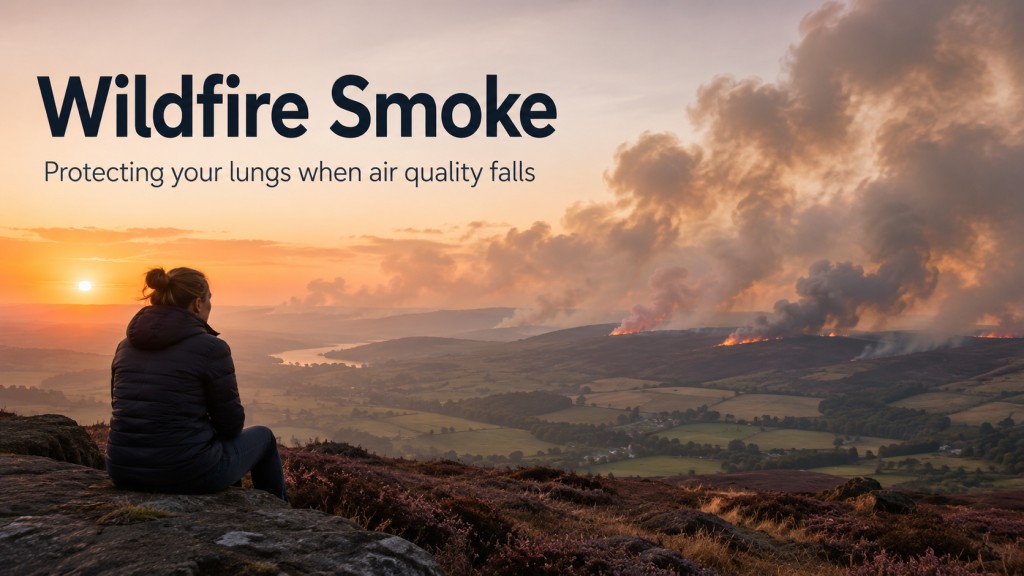
Wildfires in parts of the UK and Europe can produce smoke that travels considerable distances. Even when a fire is many miles away, fine particles carried in the air may temporarily reduce local air quality.
People with aspergillosis, asthma, bronchiectasis, COPD or another chronic lung condition may be more sensitive to wildfire smoke. Smoke can irritate the airways and cause coughing, wheezing, chest tightness, breathlessness, sore eyes or a sore throat. It can also aggravate an existing respiratory condition.
Check the air quality where you live. UK residents can use the official Defra UK Air website. International websites such as IQAir can also provide useful local maps, forecasts and measurements.
What should people with lung conditions do?
UK health advice recommends reducing exposure to smoke and air pollution, particularly if you develop symptoms.
- Reduce strenuous outdoor activity. Exercise causes you to breathe more deeply and may increase the amount of smoke particles reaching your lungs.
- Stay indoors when smoke is affecting your area and keep doors and windows closed while the outdoor air quality is poor.
- Ventilate when conditions improve. Open windows when the smoke has cleared and outdoor air quality is better, particularly if the building is becoming hot.
- Take your usual medication as prescribed. Do not alter antifungal treatment, inhalers, steroids or other medicines unless advised by your healthcare team.
- Keep your reliever inhaler with you if one has been prescribed.
- Follow your asthma, COPD, bronchiectasis or respiratory action plan if you have one.
- Avoid adding more particles indoors. During a smoke episode, avoid smoking, wood-burning stoves, candles and other activities that create smoke.
- Keep cool and hydrated. Wildfires often occur during hot weather, which can place additional strain on people with heart, lung, kidney or other long-term conditions.
Do masks help?
A well-fitting particulate respirator such as an FFP2 or FFP3 mask may reduce the amount of fine particulate matter inhaled while outdoors. Loose-fitting surgical or fabric masks provide much less protection against fine smoke particles.
However, some people with significant lung disease may find tight-fitting masks uncomfortable or may become more breathless while wearing one. A mask should not be used as a reason to remain outdoors in heavy smoke. Reducing exposure remains the priority.
Does wildfire smoke increase Aspergillus infection?
Wildfire smoke is primarily a mixture of gases and very small particles produced by burning vegetation and other materials. Its immediate health effect is irritation and inflammation of the lungs and airways.
Smoke exposure does not necessarily mean that Aspergillus is growing in the lungs or that aspergillosis is worsening. However, people whose lungs are already damaged or inflamed may notice increased coughing, wheezing, mucus production or breathlessness.
Symptoms caused by smoke can resemble a respiratory flare-up. Contact your healthcare team if symptoms are new, unusually severe, persist after the air quality has improved, or are not controlled by your normal treatment plan.
When should you seek medical help?
Contact your GP, respiratory team or NHS 111 if:
- you develop new or worsening breathlessness, wheezing or chest tightness;
- you need your reliever inhaler more often than usual;
- your symptoms are not responding to your agreed treatment plan;
- your symptoms persist after the smoke has cleared; or
- you are concerned about a change in your condition.
Call 999 for severe breathing difficulty. This includes rapidly worsening breathlessness, being unable to speak normally, becoming confused or drowsy, developing blue or grey lips or skin, or an asthma attack that is not improving after using your reliever inhaler as directed.
Understanding air-quality alerts
The UK Daily Air Quality Index runs from 1 to 10:
- Low, 1–3: most people can continue normal outdoor activity.
- Moderate, 4–6: people with lung or heart conditions who develop symptoms should reduce strenuous outdoor activity.
- High, 7–9: people with lung conditions should reduce strenuous outdoor exertion, particularly if symptomatic.
- Very high, 10: people with lung or heart conditions and older adults should avoid strenuous physical activity.
People vary considerably in their sensitivity. Some people with severe asthma, bronchiectasis or aspergillosis may experience symptoms even when the overall air-quality rating is described as low or moderate. Your symptoms and personal respiratory action plan remain important.
Useful sources
- Defra UK Air: current air-quality measurements and alerts
- UK government health advice for the Daily Air Quality Index
- IQAir international air-quality map
- NHS advice about asthma and asthma attacks
This information is intended as general guidance and does not replace advice from your own healthcare team.

Did this page help you?
Tell us in one minute