Diagram showing inflamed airway with mucus and narrowing compared to improved airway with clearer airflow and better lung function

Can Lung Function Improve After Infection or Treatment?

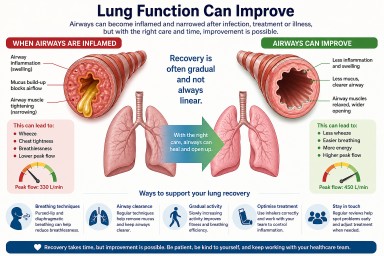
Diagram showing inflamed airway with mucus and narrowing compared to improved airway with clearer airflow and better lung function
Airways can become narrowed by inflammation and mucus after infection or treatment. With time and the right support, airflow can improve and symptoms may ease.

Last reviewed: May 2026
Audience: Patients, carers, and non-specialists


Key Points

  • Lung function often can improve after infections, chemotherapy, or inflammation—but recovery may take weeks to months.
  • A drop in peak flow usually reflects airway narrowing, inflammation, or mucus, not always permanent damage.
  • Normal oxygen levels (e.g. 95–100%) are reassuring and suggest gas exchange is still working well.
  • Symptoms like breathlessness and wheeze can persist even while the lungs are gradually recovering.
  • If symptoms are not improving, further assessment may help identify treatable causes.

Contents


Can lung function recover?

In many cases, yes—lung function can improve after a significant illness such as a chest infection, chemotherapy, or inflammation affecting the airways.

However, recovery is often gradual and not always straightforward. It may take:

  • Several weeks after an infection
  • Several months after more severe illness or treatment

It is also common for symptoms to fluctuate during recovery rather than steadily improve.


Why has my lung function dropped?

A reduction in peak flow or increased breathlessness does not always mean permanent damage. Common causes include:

  • Airway inflammation (swelling inside the breathing tubes)
  • Mucus build-up, which can block airflow
  • Airway narrowing or spasm, similar to asthma
  • Post-infectious sensitivity (airways remain irritated after infection)
  • Reduced fitness after illness (deconditioning)

In some patients, conditions such as Allergic Bronchopulmonary Aspergillosis (ABPA) or other airway diseases can contribute to ongoing symptoms.

Important: If oxygen levels remain normal (for example, around 97%), this suggests that the lungs are still transferring oxygen effectively, which is reassuring.


Why does recovery feel slow or “stuck”?

Many people feel frustrated because they are doing everything “right” but not seeing improvement. This is very common.

Possible reasons include:

  • Residual mucus that is difficult to clear
  • Ongoing low-level inflammation
  • Airways that remain sensitive after infection
  • Effects of steroid treatment, especially during dose changes
  • Fatigue and reduced activity levels

Recovery can happen slowly in the background, even when symptoms remain noticeable.


What might help?

Different approaches may support recovery. These should be discussed with your clinical team where appropriate.

1. Airway clearance

  • Regular airway clearance techniques can help remove mucus
  • Some people benefit from devices that assist mucus clearance

2. Breathing techniques

Breathing techniques can help reduce breathlessness and improve control. A more detailed guide is provided below.

3. Gradual activity

  • Slowly increasing activity levels can rebuild strength
  • Pacing is important—avoid pushing too hard too quickly

4. Optimising treatment

  • Ensuring inhaler technique is correct
  • Reviewing whether airway inflammation is fully controlled

Breathing Techniques in Detail

Breathing techniques can help reduce breathlessness, improve airflow, and make breathing feel more controlled—especially when airways are inflamed or narrowed.

They do not treat the underlying condition directly, but they can improve symptoms, confidence, and daily activity.

Pursed-Lip Breathing

What it does: Helps keep airways open for longer during breathing out, reducing air trapping and easing breathlessness.

How to do it:

  1. Breathe in slowly through your nose (about 2 seconds)
  2. Purse your lips (as if whistling)
  3. Breathe out slowly through your lips (about 4 seconds)
  4. Keep the breath out gentle, not forced

When to use it:

  • During breathlessness
  • With activity (e.g. walking, stairs)
  • To regain control of breathing

Tip: Aim for a longer out-breath than in-breath.

Diaphragmatic (Belly) Breathing

What it does: Encourages more efficient breathing using the diaphragm rather than upper chest muscles.

How to do it:

  1. Sit or lie comfortably
  2. Place one hand on your chest, one on your abdomen
  3. Breathe in through your nose and allow your abdomen to rise
  4. Breathe out slowly (through pursed lips if helpful)

Tip: Keep shoulders relaxed and avoid lifting the chest.

Breathing Control (for flare-ups)

  • Pause and rest
  • Breathe slowly through the nose
  • Breathe out gently through relaxed or pursed lips
  • Release tension in shoulders and neck

Helpful positions:

  • Sitting leaning forward with arms supported
  • Standing leaning on a surface

“Blow as You Go”

Use during activity:

  • Breathe in before effort
  • Breathe out during effort (e.g. standing up, climbing)

This helps prevent breath-holding and reduces strain.

Important: These techniques should feel comfortable and controlled. If symptoms worsen, stop and rest.


When might further tests be needed?

If symptoms are persistent, worsening, or not improving as expected, your clinical team may consider:

  • Spirometry (lung function tests)
  • Imaging such as a chest CT scan
  • Assessment for:
    • Airway inflammation
    • Bronchiectasis
    • Fungal-related lung disease

Common Questions

Does a drop in peak flow mean permanent damage?

No. Peak flow mainly reflects how open your airways are and can improve with treatment.

Why do I feel breathless if my oxygen levels are normal?

Breathlessness is often caused by airway narrowing or inefficient breathing, not low oxygen.

Can lungs fully recover?

Some people return to their previous baseline. Others improve significantly but may not reach exactly the same level.


When to seek medical advice

  • Worsening breathlessness
  • Increasing wheeze or chest tightness
  • New or persistent cough
  • Changes in sputum (including blood)
  • No improvement over time

If symptoms suddenly worsen, seek urgent medical attention.


Final Thoughts

A drop in lung function after infection or treatment can feel worrying, but it often reflects treatable airway changes. Improvement is possible, although recovery may take time.

Staying in contact with your healthcare team helps ensure that any ongoing issues are identified and managed appropriately.


References & Further Reading

  • British Thoracic Society (BTS) guidance
  • European Respiratory Society (ERS) patient resources
  • National Aspergillosis Centre patient information

This article is for general information only and does not replace medical advice. Always consult your healthcare team.