Cyber Safety for Aspergillosis Patients: Supplement to UK NCSC Advice

This guide builds on the official UK Government cybersecurity advice for families and individuals (www.ncsc.gov.uk/section/advice-guidance/you-your-family) and adds patient-specific tips for people with aspergillosis.


Feeling overwhelmed?

You're not alone. The internet and phone landscape can feel like a minefield, especially when you're trying to manage your health too. No one expects you to become an expert in cybersecurity overnight. The aim of this guide isn’t to scare you — it’s to help you take small, realistic steps to protect yourself.

Just like with your health, doing the basics well goes a long way. You don’t need to memorise everything — focus on:

  • Using strong passwords (or a password manager)
  • Being cautious with texts, links, and phone calls
  • Asking for help when something doesn’t feel right
  • Always accept updates on your phone, browser, or computer when offered — these often fix known security problems and help keep you protected.

It's okay to stop and ask: “Does this sound right?” If in doubt, check with someone you trust.


Top Scam Red Flags

Watch out for these common signs that something could be a scam:

  • You’re told to act urgently or keep it secret
  • You’re offered money, discounts, prizes or help out of the blue
  • You’re asked to click a link or open an attachment in a message
  • A caller claims to be from the bank, NHS, government, or police, but something feels off
  • You’re told the second part of a message will come from a different number or address
  • You’re asked to confirm personal, financial or password information
  • You’re asked to download software or apps to “fix” your device
  • You’re pressured to stay on the phone or not call anyone else

If in doubt, hang up, delete, or double check with someone you trust.


1. Protecting Your NHS and Medical Accounts

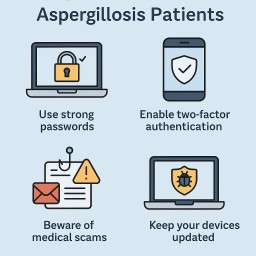
  • Use strong, unique passwords for your NHS login, GP apps (e.g. Patient Access, myGP), or hospital portals.
  • Enable two-factor authentication (2FA) wherever it’s offered.
  • Never share your NHS login or codes with anyone.
  • Always go directly to the official app or website, not through links in emails or texts.

2. Beware of Scams

  • Scams can take many forms — phone calls, emails, texts, or fake websites.
  • Be especially wary of anyone offering money, discounts, prizes, or urgent deals.
  • Criminals may pose as trusted organisations like your bank, utility provider, government, or even the NHS.
  • As a general principle: if something seems too good to be true — such as offers of free money, major discounts, prizes, or miracle cures — it almost certainly isn't real. Be suspicious of anything that promises unusually high benefits for little or no effort.
  • If in doubt, forward suspicious messages to [email protected] (Link) or speak to someone you trust before taking action.

3. Using Online Support Groups Safely

  • Facebook groups and forums can be great for connection, but don’t post:
    • Your address, phone number, or full date of birth
    • Photos of prescriptions or test results
  • Don’t click links shared by strangers, even if they seem friendly.
  • Moderators or admins should never ask for sensitive personal details.

4. Shopping and Donations

  • Be cautious when buying medical supplies or donating online.
  • Stick to trusted UK pharmacies and charities.
  • Watch for copycat sites that look like legitimate health organisations.

5. Email, Phone & Text Safety

  • Don’t click on links or open attachments in messages claiming to be from the NHS, unless you were expecting them.
  • Never share passwords or bank details over email or text.
  • Never give out your account numbers or passwords, especially if someone is trying to rush or pressure you.
  • Scam texts can fake NHS or GOV.UK addresses — check official sites if unsure.
  • Even texts or emails that appear to come from your bank can be faked. A common red flag is a message saying that a second text or email will come from a different number or sender — ask yourself why a genuine organisation would do this. Real authorities go to great lengths to be verifiable.
  • If someone calls and tries to rush or scare you, hang up and call back using an official number from the NHS or your GP’s website.
  • If in doubt — or even as a general principle — hang up and call a number you can verify yourself, such as:
    • The number printed on the back of your bank card
    • The official website of a company or authority (searched independently)
  • Avoid using any contact information provided by the caller or in a suspicious message — treat it as untrustworthy until confirmed.
  • To check a suspicious link in a text, don’t click — instead, search for the organisation’s website directly or ask someone you trust.

6. If You're Shielding or Vulnerable

  • You may be more targeted by scams pretending to offer:
    • COVID-19 test kits, antifungal treatments, or priority delivery slots
    • Access to urgent medical appointments or services
  • Verify any offer with your NHS care team before taking action.

7. Keeping Your Devices Safe

  • Install antivirus and keep your phone/tablet/computer updated.
  • Always accept software updates — they patch security flaws that criminals may try to exploit.
  • Set devices to auto-lock and use a passcode or fingerprint.
  • Avoid using public Wi-Fi for medical logins or financial information.

Do You Still Need Antivirus?

  • Windows PCs: Yes — always install antivirus. Microsoft Defender (built-in) is good and free. You can also consider free versions of AVG, Avast, or Bitdefender.
  • Mac computers: Less targeted, but still recommended. Free options include Avira or Sophos Home.
  • Android phones: A good idea, especially if you install apps outside the Play Store. Try Bitdefender or AVG.
  • iPhones/iPads: Antivirus apps aren’t usually needed if you keep iOS updated and install apps only from the App Store.

Whichever device you use, updates and cautious browsing are just as important as antivirus software.


8. Best Ways to Use Strong Passwords

Cyber security can be time-consuming and even irritating — but as malicious activity becomes more sophisticated, it’s worth the effort. Consider using different levels of passwords for different kinds of accounts:

  • Low-level passwords for things like newsletters or forums
  • High-level, strong passwords for NHS, banking, or health-related logins

Make Passwords Long and Unique

  • Use at least 12 characters, mixing letters, numbers, and symbols
  • Avoid personal info like names or birthdates

Use a Password Manager

  • Tools like Bitwarden, 1Password, or Apple Keychain securely store passwords
  • You only need to remember one master password

Use Passphrases for Important Accounts

  • Combine random words to create a memorable but strong password, like:
    • Correct!Horse-Battery!Staple99

Turn On Two-Factor Authentication (2FA)

  • Adds a second layer of protection, such as a code from your phone
  • 2FA ties your account to a specific device (like your phone), meaning a criminal would need access to that device as well as your password to break in

Use a Unique Password for Every Account

  • Never reuse passwords

Avoid These Mistakes

Mistake Better Option
Reusing passwords Use a password manager
Writing them down Use encrypted storage
Adding "123" to a word Use unrelated, random words/symbols

When to Change Passwords

  • If your account may have been hacked
  • If the same password is used elsewhere

Is It Safe to Use Chrome or Other Browser Autofill?

Using Chrome, Firefox, Safari, or Edge to autofill logins can be safe with the right precautions:

  • Your device should be private and locked with a passcode or fingerprint
  • Your browser and operating system should be kept fully up to date
  • You should avoid storing logins for sensitive accounts (e.g. banking, NHS login)

Risks to consider:

  • Passwords stored in browsers can be accessed by malware or rogue extensions
  • If someone gets access to your device, they may access saved logins

Safer Alternative:

  • Use a dedicated password manager (like Bitwarden, 1Password, or Dashlane)
  • These offer stronger security and are harder for malware or hackers to access

If you do use browser autofill, protect your device and account with:

  • Two-factor authentication for your Google, Apple, or Microsoft account
  • A strong device password or biometric lock

9. Finding the Happy Medium

Cybersecurity doesn’t have to take over your life — the key is to find a realistic balance between staying safe and staying sane:

  • Focus on protecting your most important accounts first — especially NHS, email, banking, and anything medical
  • Don’t ignore warning signs, but don’t feel you have to be perfect with every app or device
  • Use automation where possible (e.g. password managers, browser autofill, device lock)
  • Ask for help if you’re unsure — carers, family members, or digital support charities can assist

Think of it like seatbelts — you hope you never need them, but they’re worth the hassle when something goes wrong.


Useful Links


Remember: Your health is private and valuable. Treat your medical and personal information like you would your bank details. Stay cautious, ask questions, and when in doubt, ask a trusted health professional or carer.


💊 Staying Safe on Long-Term Treatment for Aspergillosis

(Steroids and Azole Antifungal Medicines)

If you're living with aspergillosis, your treatment plan may include long-term antifungals (e.g. itraconazole, voriconazole, posaconazole, or isavuconazole) and sometimes oral steroids like prednisolone. These medicines can be essential in managing your symptoms and preventing long-term lung damage.

But like all strong medicines, they need to be monitored closely—and you should be part of every treatment decision.


🗣️ You Should Be Involved in Every Medication Decision

NHS and NICE guidance recommend that:

  • Medicines should be reviewed regularly

  • Reviews should include the patient’s voice

  • Decisions to continue, stop, or adjust a medicine should be made together

🔗 NICE Medicines Optimisation Guidance:
https://www.nice.org.uk/guidance/ng5


⚠️ Why Regular Reviews Matter – Especially with Steroids and Azoles

Azole antifungals and steroids are powerful tools for treating aspergillosis, but they can cause side effects—especially if taken for long periods. Regular reviews help ensure you're getting the benefit of treatment without unnecessary risk.

🧪 Azole Antifungals Used in Aspergillosis

Drug Brand name(s) Notes
Itraconazole Sporanox Common first-line; blood level monitoring needed
Voriconazole Vfend May affect vision, liver; used in severe cases
Posaconazole Noxafil Often well tolerated; used if others don’t suit
Isavuconazole Cresemba Newer; fewer interactions and side effects

These antifungals can interact with many other medicines. The British National Formulary (BNF) lists over 300 interactions for itraconazole alone.

🔗 https://bnf.nice.org.uk


🧠 What About Prednisolone?

Prednisolone is a steroid that helps reduce inflammation but may cause side effects like:

  • Weight gain, diabetes, mood swings

  • Eye problems (e.g. cataracts)

  • Bone thinning (osteoporosis)

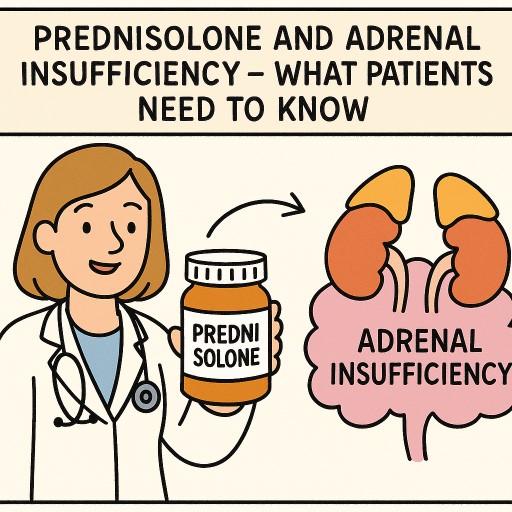
  • Adrenal insufficiency—where the body stops making enough natural steroid hormone

This is why lowest dose for the shortest time is best, and stopping should always be gradual and supervised.


🔁 What If You Can’t Stop These Medications?

In ABPA or chronic pulmonary aspergillosis, long-term antifungals or steroids may be the only effective treatment for now. That’s okay—what matters is staying safe and supported.

Here’s how your team should help:

  • ✅ Use the lowest effective dose

  • Monitor side effects and blood levels (especially for itraconazole and voriconazole)

  • ✅ Watch for liver, nerve, adrenal, or eye problems

  • ✅ Consider switching antifungals if side effects develop

  • ✅ Look into steroid-sparing options (e.g. biologics like omalizumab or benralizumab for ABPA—though not yet widely approved)


👥 What If You’re Experiencing a Side Effect?

Here’s an example of a positive, patient-led conversation:

Patient:
"Since starting itraconazole, I’ve had tingling in my feet and some burning pain at night. I’m worried it’s the medicine."

Doctor:
"Thank you for bringing this up. That’s important. Let’s review your timing and symptoms. Itraconazole can sometimes cause nerve issues—let’s check your drug level and liver tests, and talk about adjusting the dose or switching antifungals."

Patient:
"Is it dangerous to stop suddenly?"

Doctor:
"No, not if done with supervision from your doctor—we’ll make any changes carefully and monitor you throughout. I’ll schedule follow-up, and please get in touch if anything worsens."

✅ You deserve to be listened to. Never ignore a side effect or worry that you’re being a nuisance—your body knows when something isn’t right.


🔎 Who Should You Talk To?

Here’s who to contact depending on the concern:

Type of Concern Best First Contact Why
Side effects (e.g. nausea, mood, tingling) GP or clinical pharmacist Pharmacists are medication experts and often easier to access than specialists
Drug interactions Pharmacist They can check for dangerous combinations
Monitoring (e.g. blood tests, drug levels) Specialist team Usually manages antifungals and steroid tapering
Suspected allergy or adrenal issues GP or endocrinologist referral For detailed hormone testing or allergy support
General concerns or you're unsure who to ask GP They can coordinate referrals and advice

🧩 What If You React Differently Than Expected?

Rare side effects do happen—including steroid allergy or intolerance, or nerve pain from azoles. You might feel dismissed, especially if the reaction is unusual or not in the textbook.

You are entitled to:

  • A proper medication review

  • A second opinion

  • Referral to pharmacy, allergy, or endocrine clinics

  • Kind, respectful care from professionals who take you seriously

True reactions are rare—but not imaginary. Speak up, document what you notice, and ask for help.


📚 Stay Informed with Reliable Sources


🤝 Final Word

If you're on long-term treatment for aspergillosis, you're not failing—you're managing a difficult condition with strength and persistence. What matters is that you’re:

  • Heard

  • Supported

  • Included in every decision

You are the expert in how your body feels—and when your voice is part of the team, the care is always better.


🛡️ Understanding Your Risk: Aspergillosis, Steroids, and the Immune System

If you’ve been diagnosed with an Aspergillus-related condition, such as chronic pulmonary aspergillosis (CPA), ABPA, or a fungal ball (aspergilloma), you might wonder:
“Am I immunocompromised? And do steroids or biologics put me at more risk?”

The answers depend on your underlying health, medications, and how your body responds to Aspergillus.


🌍 Aspergillus is Common — But Not Harmless

Aspergillus is a type of mould found everywhere — in soil, air, and dust. Most people breathe it in daily without problems. But in some people, it can:

  • Trigger an allergic reaction (ABPA or fungal sinusitis)

  • Cause infection in damaged lungs (CPA or aspergilloma)

  • Spread aggressively in those with very weak immune systems (invasive aspergillosis)

Understanding your level of immune defence helps explain your risk and how your treatment should be managed.


🧬 Levels of Immunocompromise: What They Mean

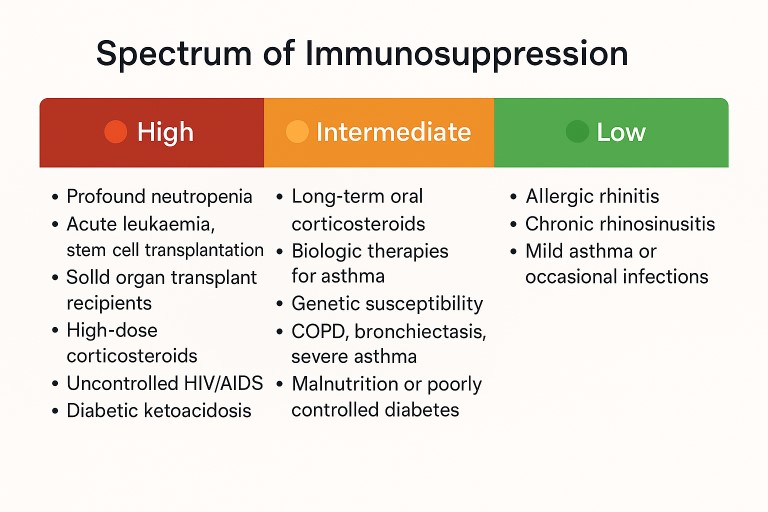
Immunosuppression isn't black-and-white — it's a spectrum. Here's how it applies to people with or at risk of aspergillosis:

🔴 High-Level Immunosuppression (High Risk)

  • Recent chemotherapy or bone marrow transplant

  • Stem cell or organ transplant

  • Severe neutropenia (very low white blood cell count)

  • High-dose steroids (e.g. ≥20 mg prednisolone daily for weeks)

  • Uncontrolled HIV/AIDS

  • Intensive care or mechanical ventilation

🧠 These people are at risk of serious, fast-spreading infections — including invasive aspergillosis (IA), which is rare but life-threatening.


🟠 Moderate Immunosuppression (Common in Aspergillosis Patients)

  • Long-term low-to-moderate steroids (e.g. <10–15 mg prednisolone)

  • Biologics for asthma (e.g. omalizumab, benralizumab)

  • Chronic lung disease (COPD, bronchiectasis, asthma)

  • Diabetes, malnutrition, or genetic immune traits

  • Previous TB, sarcoidosis, or other lung damage

🧠 This group is at greater risk of chronic forms of aspergillosis — especially CPA, ABPA, and aspergillus bronchitis.


🟢 Low or No Immunosuppression (Low Risk)

  • People with well-controlled asthma or sinusitis

  • Those on occasional short courses of steroids

  • No major lung or immune conditions

🧠 This group is unlikely to develop aspergillosis.


💊 What if You Already Have Aspergillosis?

If you’ve been diagnosed with CPA, ABPA, aspergilloma, or sinus disease caused by Aspergillus, some treatments may still increase your vulnerability if not carefully managed.

❗ Steroids (e.g. Prednisolone)

  • Help control inflammation (especially in ABPA)

  • But also suppress immunity, making it easier for Aspergillus to grow

  • Can worsen CPA or increase risk of bleeding in aspergilloma

  • Risk rises with higher doses and longer courses

🟠 If steroids are needed, they should usually be combined with antifungal medication (like itraconazole or voriconazole) to keep fungal growth in check.


❗ Biologics for Asthma (e.g. Omalizumab, Mepolizumab)

  • Target allergic inflammation without broadly suppressing the immune system

  • Don’t usually increase the risk of invasive fungal infections

  • May slightly alter how your immune system responds to Aspergillus

🟠 Biologics can be helpful in ABPA and severe asthma, but regular monitoring is still important.


🔍 Summary Table: Common Risk Factors and What They Mean

Factor What It Does What to Watch For
Long-term steroids Suppress immune cells, reduce inflammation Use with antifungals; monitor closely
Biologics for asthma Modulate immune pathways (e.g. IgE, IL-5) Safe in most; watch for subtle effects
TB, sarcoid, or other lung scarring Leaves cavities that allow fungal growth Regular scans and blood tests
Diabetes or malnutrition Affects immune function and tissue repair Keep well-managed
Low white blood cells (neutropenia) Limits ability to fight fungal infection Urgent action needed if fever or unwell
Lung diseases (COPD, asthma, bronchiectasis) Reduce local lung defences Increases risk of CPA, ABPA, or colonisation

✅ What Can You Do to Stay Safe?

  • Take antifungals as prescribed, especially if you're on steroids or biologics

  • Avoid unnecessary long-term steroid use — use the lowest dose for the shortest time

  • Report new or worsening symptoms early — especially breathlessness, coughing blood, fatigue, or sinus pain

  • Have regular follow-ups with your respiratory or infectious diseases team

  • Don’t stop any medication suddenly — especially steroids — without medical advice


💬 Final Reassurance

Having aspergillosis doesn’t mean you’re severely immunocompromised — but some treatments can increase your risk if not managed carefully. With the right balance of antifungals, asthma treatments, and medical support, many people live well with ABPA, CPA, and related conditions.


🩺 Why an Accurate Diagnosis Matters in Aspergillosis

If you've been told you have aspergillosis — or one of its forms like ABPA or CPA — you may wonder:
"Why does the exact diagnosis matter?"

Isn’t treatment just treatment?

Actually, no. In aspergillosis, getting the right diagnosis makes a huge difference to your care, safety, and long-term health.

This article explains why an accurate diagnosis is essential – not just for treatment, but also for recovery, monitoring, access to specialist care, and living well with the condition.


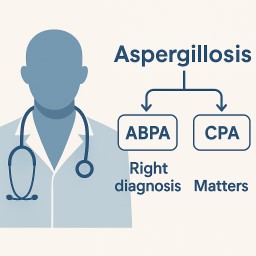
🔍 What Are ABPA and CPA?

Both ABPA and CPA are caused by the Aspergillus mould, but they affect the body in very different ways:

Condition Description
ABPA (Allergic Bronchopulmonary Aspergillosis) An allergic reaction to Aspergillus in the lungs. Most common in people with asthma or cystic fibrosis.
CPA (Chronic Pulmonary Aspergillosis) A chronic lung infection with Aspergillus. Often seen in people with damaged lungs (e.g. past TB, COPD, bronchiectasis).

Because the symptoms can overlap (like coughing, mucus, or fatigue), it's not always easy to tell them apart — but the treatments are completely different.


🎯 Why Accurate Diagnosis is So Important

1. ✅ Get the Right Treatment

Different types of aspergillosis need very different medicines.

Diagnosis Main Treatment Notes
ABPA Steroids (e.g. prednisolone), sometimes antifungals (like itraconazole) Helps control inflammation and allergy
CPA Long-term antifungals (e.g. itraconazole, voriconazole, posaconazole) Steroids may make CPA worse

A wrong diagnosis can lead to the wrong treatment — and that can delay recovery or cause harm.


2. 📆 Plan Your Long-Term Care

Each condition has its own journey:

  • ABPA tends to flare up and settle down, often alongside asthma.

  • CPA is usually chronic and progressive, slowly damaging the lungs if untreated.

Knowing your diagnosis helps your doctors decide:

  • How often to scan your lungs (CT or X-rays)

  • What blood tests to monitor (e.g. IgE for ABPA, IgG for CPA)

  • How long to continue medication

  • What symptoms need urgent review


3. ⚠️ Avoid Side Effects and Harm

If you're given steroids for the wrong condition (e.g. CPA), they can:

  • Weaken your immune system

  • Let the fungal infection get worse

  • Increase the risk of diabetes, weight gain, or bone thinning

And if you’re given antifungals for ABPA without treating the allergy side, you might still keep having flare-ups.

A correct diagnosis helps your team weigh up risks and benefits — and adjust safely.


4. 🏥 Access the Right Specialist Services

In the UK, some treatments are only available for specific diagnoses:

  • Biologic drugs like omalizumab or mepolizumab are only available for severe ABPA under strict NHS criteria.

  • Long-term antifungal treatment for CPA is provided by highly specialised services, such as the National Aspergillosis Centre in Manchester.

Without the right diagnosis on record, access to these treatments may be delayed or blocked.


5. 🧭 Understand What to Expect

An accurate diagnosis helps you understand:

  • What symptoms are normal, and what should be reported

  • Whether your condition is likely to get better, stay the same, or slowly worsen

  • What lifestyle changes, home monitoring, or support groups might help

It also allows your care team to link you to others with similar conditions — for advice, reassurance, and shared experiences.


🧪 What Tests Help Make the Diagnosis?

Your specialist may request:

  • Blood tests (e.g. IgE, IgG antibodies to Aspergillus)

  • CT scans to look at the shape of your lungs

  • Sputum or bronchoscopy samples to grow or detect the fungus

  • Breathing tests (lung function) to assess airflow and trapping

These help build a full picture — no one test is enough on its own.


💬 In Summary

“Aspergillosis” is an umbrella term — but the exact type you have really matters.

Getting the correct diagnosis helps ensure:

  • 🧬 You get the most effective treatment

  • 📊 You avoid unnecessary harm

  • 📆 You have the right follow-up plan

  • 🧠 You understand your condition better

  • 🩺 You can access the right NHS services

If you're not sure which type of aspergillosis you have — or you feel your diagnosis hasn’t been reviewed in a while — speak to your GP or respiratory team.


Biologics and Long Term Side Effects

What Are Biologics?

Biologics are targeted treatments made from living cells. They work by blocking parts of the immune system that cause inflammation — for example:

  • IL-4, IL-5, IL-13: linked to eosinophilic inflammation

  • IgE: linked to allergies and ABPA

They are not immunosuppressants like steroids or chemotherapy, but rather immune modulators.


💊 Long-Term Side Effects – What Do We Know?

👨‍⚕️ What research and experience show:

Biologic Used for Long-term safety known? Side effects most reported
Omalizumab (Xolair) Allergic asthma, ABPA 20+ years of use Injection site reactions, headache, very rare anaphylaxis
Mepolizumab (Nucala) Eosinophilic asthma, CPA 10+ years Fatigue, headache, shingles (rare), mild infections
Benralizumab (Fasenra) Severe asthma, CPA ~6–7 years Headache, pharyngitis, injection site issues
Dupilumab (Dupixent) Asthma, eczema, nasal polyps 6–8 years Eye dryness/redness, cold sores, joint pain (rare)
Tezepelumab (Tezspire) Severe asthma ~2 years Sore throat, joint pain, injection site reactions

⚠️ Possible Long-Term Concerns (but rare)

  • Infections: Some concern about slightly increased risk of herpes zoster (shingles) or respiratory viruses, but overall risk is very low compared to steroids.

  • Immunogenicity: Your body might develop antibodies to the drug over time, reducing its effect — this is more a loss of benefit, not a dangerous side effect.

  • Cancer risk: No consistent evidence linking asthma/ABPA biologics to cancer.

  • Unknowns: Because some biologics are new (e.g. tezepelumab), we don't yet have 20-year data — but so far the safety profile is reassuring.


🩺 Compared to Oral Steroids

Treatment Side Effects Over Time
Steroids (e.g. prednisolone) Weight gain, diabetes, infections, bone thinning, cataracts, adrenal suppression
Biologics Mostly minor – injection site pain, headache, mild infection risk, rare allergic reaction

So in most cases, biologics reduce the need for steroids and therefore reduce long-term harm.


💬 Patient Experience

Most patients report:

  • Improved quality of life

  • Reduced asthma/ABPA attacks

  • Fewer hospital visits

  • Very few stop due to side effects


✅ Summary

Question Answer
Do biologics have long-term side effects? Usually mild and rare; mostly injection reactions or mild infections
Are they safer than long-term steroids? Yes, especially over years
Should I be worried? Not usually — but always monitor with your team
How long have they been used? 6–20+ years, depending on the biologic, with very good safety data

🛡️ How Your Care is Changing: Understanding Antimicrobial Stewardship

A guide for patients with aspergillosis and chronic lung conditions

If you're being treated for chronic pulmonary aspergillosis (CPA), ABPA, or any long-term lung condition, you might notice changes in the way doctors use antifungal and antibiotic medicines. These changes are part of a worldwide effort to tackle antimicrobial resistance (AMR) — and to make sure the right treatment is used, in the right place, for the right reason.


💬 What is Antimicrobial Stewardship?

Antimicrobial stewardship (AMS) means using antifungal and antibiotic medications responsibly, so they work better now and stay effective for the future.

It’s about:

  • Using the right medication

  • In the right place

  • For the right reason

  • At the right dose and duration

This helps ensure patients get better faster, and we all stay protected from drug-resistant infections.


🔬 What Is Antimicrobial Resistance?

Antimicrobial resistance (AMR) happens when bacteria or fungi evolve and stop responding to medicines that used to work. This makes infections:

  • Harder to treat

  • More likely to come back

  • More dangerous for people with lung or immune conditions

There are two major types:

  • Antibiotic resistance (bacteria)

  • Antifungal resistance (fungi, including Aspergillus fumigatus)


💊 Antibiotics: Broad vs Narrow Spectrum

Doctors aim to use targeted antibiotics wherever possible. Here’s how they differ:

Type Description Examples Used For
Broad-spectrum Kills a wide range of bacteria Co-amoxiclav, meropenem, ceftriaxone Sepsis, serious infections
Narrow-spectrum Targets specific bacteria Penicillin, nitrofurantoin, flucloxacillin Simple infections

🧪 Doctors may start with broad-spectrum drugs in emergencies but switch to narrow-spectrum when test results are available — this is called de-escalation.


🦠 Antifungal Resistance and Aspergillosis

People with CPA or ABPA are often treated with antifungals like:

  • Itraconazole

  • Voriconazole

  • Posaconazole

  • Isavuconazole

But fungi can develop resistance, especially when:

  • Medications are used long-term

  • Fungi are exposed to azole sprays on crops and flowers

You may inhale resistant spores from:

  • Compost, potting soil, or garden centres

  • Fresh flowers (especially imported ones)


🏥 What Might You Notice in Hospital?

✅ Shorter or targeted treatment

  • You may be on 5–7 days of antibiotics/antifungals

  • Switch from IV to tablets happens earlier once you're stable

✅ Treatment reviews

  • Your medication will be reviewed within 48–72 hours

  • Changes may be made based on lab results

✅ More testing

  • Blood, sputum, or biopsy samples help identify infections and resistance

  • Ensures you get the right treatment

✅ Specialist involvement

  • An infection or respiratory consultant may review your case if resistant infection is suspected

✅ Infection control

  • You may notice:

    • No fresh flowers

    • HEPA filters in some wards

    • Staff using extra precautions to prevent airborne infections


🏡 What Might You Notice From Your GP?

✅ More specific prescribing

  • GPs are less likely to give antibiotics “just in case”

  • More narrow-spectrum choices based on the suspected infection

✅ Diagnostic support

  • GPs may send sputum or urine samples before prescribing

  • May test your blood for antifungal levels (TDM)

✅ Home safety advice

You may be advised to:

  • Avoid indoor compost or plant pots

  • Wear FFP2/FFP3 masks when gardening

  • Keep indoor air well ventilated


🧬 New Antifungals Being Protected for Patient Use

Several antifungals are in development and being reserved just for medical use (not agriculture), including:

Drug What it is Why it matters
Rezafungin Weekly IV echinocandin Long-lasting for serious infections
Ibrexafungerp First oral alternative to azoles Trials for aspergillosis
Olorofim New class (DHODH inhibitor) Active against resistant Aspergillus
Opelconazole Inhaled antifungal Direct treatment to the lungs
Fosmanogepix Novel target Works against drug-resistant fungi

🧠 What This All Means for You

These changes are about:

  • Better outcomes — faster recovery with fewer side effects

  • Preventing resistance — protecting future treatments

  • More personalised care — based on test results and your condition


✅ What You Can Do

Action Why It Helps
Take medications exactly as prescribed Prevents underdosing and resistance
Don’t stop treatment early Even if you feel better
Ask if your treatment has been reviewed Encourages early switch or adjustment
Use a mask and gloves for gardening Reduces spore exposure
Avoid fresh flowers and compost indoors Especially in bedrooms or when unwell
Report any new or worsening symptoms Resistance may be developing
Ask about resistance testing if you’re not improving Labs can check fungal response
Stay informed and speak up You’re part of the stewardship solution

📌 In Summary: Stewardship in Action

Antimicrobial stewardship is not about doing less — it's about doing things more precisely.
It’s how your healthcare team makes sure you receive:

The right medication, in the right place, for the right reason.


🔗 Want to Learn More?


Telecare Devices and the UK Digital Switchover: What Aspergillosis Patients and Carers Need to Know

Background By the end of 2025, traditional landline telephone networks in the UK will be phased out and replaced by digital (VoIP) systems delivered via broadband. This national "Digital Switchover" affects anyone using landline-based devices, including many telecare systems vital to people with chronic illnesses like chronic pulmonary aspergillosis (CPA), ABPA, and SAFS.

This document provides clear guidance for aspergillosis patients and carers concerned about how this change affects telecare equipment such as fall alarms, pendant buttons, and GPS trackers.


Why This Matters for Aspergillosis Patients Many people with aspergillosis rely on telecare to remain safe at home. These may include:

  • Fall detectors
  • Emergency pendant alarms
  • Door sensors
  • GPS trackers
  • Daily wellbeing check-in devices

These systems were typically connected to analogue landlines. Once the switch to digital phone lines is made, some older devices may stop working correctly unless they are upgraded or adapted.


What Changes with the Digital Switchover?

Feature Current (Analogue Landline) Future (Digital via Broadband)
Phone line works during power cuts Yes No (unless battery backup is added)
Telecare devices plug into phone socket Yes Only with compatible router or adapter
Works independently of broadband Yes No, relies on internet connection

Common Concerns and Solutions

  1. "Will my current telecare alarm still work?"
    • Possibly not. Many older alarms won't function over digital broadband lines.
    • Solution: Ask your alarm provider if your device is VoIP compatible or if they can supply a digital-ready or cellular version.
  2. "Will full fibre broadband stop my telecare from working?"
    • Not automatically, but older devices may be incompatible.
    • Solution: If switching to full fibre, ensure your telecare system can plug into the new router or ask about an analogue telephone adapter (ATA) with battery backup.
  3. "What happens during a power cut?"
    • Digital lines go down unless you have a UPS (Uninterruptible Power Supply) or the telecare device is cellular-based.
  4. "Can I upgrade to something more future-proof?"
    • Yes. Many councils and private providers now offer mobile-enabled alarms with built-in SIM cards and GPS.
    • These do not rely on landlines or home Wi-Fi.

What You Should Do Now

  1. Contact your telecare provider
    • Ask if your current device is digital-compatible.
    • Request upgrade options if needed.
  2. Speak to your broadband provider
    • Let them know you use telecare. Ask about battery backup or compatibility.
  3. Contact your local Adult Social Care team
    • Many councils are offering free or subsidised upgrades to digital or mobile telecare.
  4. Test your system
    • Before and after switching broadband providers, run a test call with your alarm provider.

Summary As the UK phases out analogue landlines, it's essential for patients and carers to act early. Ensuring your telecare system is compatible with digital broadband will help maintain your independence and safety. Monitoring your oxygen saturation may also support early detection of lung health changes.


Resources for Further Help

If you have questions or need help contacting the right services, the National Aspergillosis Centre support team can guide you.


📁 Coping with Steroid Side Effects and Finding Balance: A Guide for Aspergillosis Patients

Living with chronic forms of aspergillosis—such as chronic pulmonary aspergillosis (CPA), allergic bronchopulmonary aspergillosis (ABPA), severe asthma with fungal sensitisation (SAFS), or Aspergillus bronchitis—often means taking corticosteroids like prednisolone or hydrocortisone. These powerful medicines can be life-saving, but they also come with physical and emotional side effects, especially at high doses or when taken over long periods.

This guide is here to support you with practical tips, patient stories, and advice on reducing steroids while maintaining your quality of life.


🔊 What Do Steroids Do?

Steroids reduce inflammation and calm overactive immune responses. They're commonly used in aspergillosis to:

  • Manage allergic reactions (e.g. in ABPA)
  • Control lung inflammation
  • Treat adrenal insufficiency or steroid withdrawal symptoms

🔁 Why Reducing Steroids Can Be So Difficult

Steroids are very effective but also powerful. Tapering the dose can cause:

  • Return of pain, fatigue, breathing problems, or inflammation
  • Steroid withdrawal symptoms (fatigue, low mood, joint pain)
  • Adrenal suppression if the body has stopped making its own cortisol

Many patients report:

“I reduced by 1mg and everything fell apart.” “I want to be on less, but life is unbearable when I try.”

You are not failing. Finding the right dose is a balance between lowering risks and keeping your life manageable.


🛋 Common Side Effects and What You Can Do

Side Effect Tips to Cope
Increased appetite Plan balanced meals, high-fibre snacks, drink water, be kind to yourself
Weight gain / swelling Gentle movement, reduce salt, try pressotherapy (discuss with your team)
Mood swings or anxiety Talk about it, track your feelings, ask about counselling or peer support
Insomnia Avoid caffeine late, consider timing of dose, try a calming bedtime routine
"Moon face" / puffiness Often fades when dose is reduced; hydrate and moisturise
Muscle/joint pain or weakness Gentle stretches, walking, low-impact activity, speak to a physio if needed
Bruising/thin skin Moisturise, protect from bumps, avoid strong detergents
Raised blood sugar Eat regularly, reduce sugary drinks, ask about monitoring if concerned
Bone thinning Ask about calcium, vitamin D, or bone-protecting medications
Adrenal suppression Never stop suddenly; always taper with a doctor's guidance

👥 Real Patient Stories and Analogies

🐻 Alison's Bears

“There are two bears inside me. Prednisone Bear is wild and wants to eat and sleep and snap. But Rusty McTravel Bear is my real self—gentle, curious, slowly trying to get back on the road. I’ve learned to recognise the first and nurture the second.”

🏎️ The Revving Car

“Being on steroids sometimes feels like a car with the engine revving but the brakes on. You’re buzzing, but you’re stuck. Try easing the brakes: take a walk, make tea, do something simple to use the energy.”


🚩 Finding Your Balance: When Less Isn't Always Better

✅ Go slow

  • Taper in small steps—as little as 0.5–1mg at a time
  • Wait several weeks between reductions

✅ Keep a steroid diary

  • Note dose, mood, sleep, symptoms, activity
  • This helps identify your "minimum effective dose"

✅ Accept that a small maintenance dose may be necessary

  • You are not failing if you need 2mg, 5mg, or 7.5mg long-term
  • The goal is a life worth living, not perfection

✅ Ask about alternatives

  • Inhaled steroids, antifungals, or biologics might help reduce systemic steroid use

✅ Consider adrenal testing

  • Especially if you feel unwell during tapering or on low doses

🛏️ Other Strategies That May Help

  • Pressotherapy for leg pain and swelling
  • Mindfulness or breathing exercises for anxiety or insomnia
  • Peer support (online or in person)
  • Short-term plans: some patients use a "rescue dose" plan for flare-ups
  • Talk to your care team: never reduce on your own without guidance

💼 Summary

Reducing or living with steroids is not just about doses. It’s about protecting your body and your sense of self. If a small daily dose keeps you functioning, that is not weakness—it’s balance.

You are not alone. Many in the aspergillosis community are navigating this same path.

“The right dose is the one where I can breathe, move, smile — and still feel like myself.”


🛡️ Staying Safe with Self-Treatment and Complementary Therapies: A Guide for Aspergillosis Patients

Living with a chronic condition like aspergillosis — whether chronic pulmonary aspergillosis (CPA), allergic bronchopulmonary aspergillosis (ABPA), severe asthma with fungal sensitisation (SAFS), or aspergillus bronchitis — can be exhausting. Many patients explore over-the-counter (OTC) products, natural remedies, or complementary therapies to gain a sense of control.

But how can you be sure a product or therapy is safe, effective, and not a waste of money?

This guide aims to help.


🔍 Why Do Patients Try Things on Their Own?

In many countries, it’s common to self-medicate or explore alternative treatments without consulting a healthcare professional. Reasons include:

  • Limited access to specialist care

  • Cultural norms that favour self-management

  • Easy access to remedies and supplements online or in shops

  • Feeling unheard or unsupported in mainstream medical care

Even in the UK, patients with aspergillosis may turn to:

  • Herbal products

  • Nutritional supplements

  • Creams or gels with capsaicin (chilli), turmeric, or menthol

  • Breathing techniques, steam inhalation

  • “Immune-boosting” diets or over-the-counter fungal cleanses

Some of these may be helpful — but not all are safe or worthwhile.


✅ Step 1: How to Check if a Product or Therapy Is Safe

Before trying anything new, ask:

1. Is it approved or regulated in the UK?

Medicines and certain creams should have a Product Licence (PL) number, issued by the Medicines and Healthcare products Regulatory Agency (MHRA).
You can check the licence on the MHRA product registry.

2. Could it interact with your prescribed medications?

  • Some herbal remedies affect azole antifungal drugs (like itraconazole or voriconazole) or oral steroids.

  • Ask your GP (General Practitioner), specialist, or pharmacist before combining treatments.

3. Is it safe to apply or inhale?

  • Never use essential oils, menthol, or herbal mixtures in a nebuliser unless clearly intended for lung use.

  • Avoid applying hot or irritating creams to broken or sensitive skin.

4. Is it mentioned in NHS guidance?

Stick to advice on:


⚠️ Watch Out for Red Flags

Be cautious of any product, practitioner, or website that:

🚩 Red Flag ⚠️ Why It’s a Concern
Claims to “cure” aspergillosis There is no cure — only long-term management
Says it’s “100% natural with no side effects” Natural products can still be harmful
Uses high-pressure sales tactics Legitimate care is never urgent or fear-based
Recommends stopping your prescribed treatment Stopping antifungals or steroids can be dangerous

🧪 Step 2: Look for Evidence, Not Just Testimonials

Some treatments are promising — but we need solid evidence to know they work.

✅ Good sources of trustworthy evidence:


💬 Can You Trust a Pharmacist?

Yes — in most cases, UK pharmacists are highly trained and regulated. However, there are two kinds to be aware of:

Type of Pharmacist What to Know
Retail Pharmacist May sell you products directly; still bound by safety standards
Clinical Pharmacist (in GP surgeries or hospitals) Focused entirely on clinical care and not sales-driven

Both are regulated by the General Pharmaceutical Council (GPhC) and must put patient safety first, regardless of sales.

🟢 Ask them:

  • “Will this interact with my medications?”

  • “Is this supported by NHS or NICE?”

  • “Would this be suitable for someone with CPA or ABPA?”


🧘 What About Complementary Therapies?

Some patients explore:

  • Acupuncture

  • Herbal medicine

  • Osteopathy or chiropractic

  • Reflexology or massage

  • Nutritional therapy

  • Mindfulness and yoga

These may help with:

  • Muscle or joint pain

  • Fatigue and sleep problems

  • Emotional stress or anxiety

They can complement your medical treatment — but should never replace it.

✅ Safe if:

  • Practitioner is registered with a reputable UK body

  • The therapy does not interfere with prescribed medications

  • It is used for symptom relief, not for “cleansing” or treating the infection

❌ Risky if:

  • It’s marketed as a cure for aspergillosis

  • It encourages you to stop medical treatment

  • It is expensive, secretive, or vague about its effects

Reputable UK Registers:

Practitioner Type Regulator / Body
Acupuncturists British Acupuncture Council (BAcC)
Herbalists National Institute of Medical Herbalists (NIMH)
Osteopaths General Osteopathic Council (GOsC)
Chiropractors General Chiropractic Council (GCC)
Nutritionists Association for Nutrition (AfN)

🧾 Summary: A Safer Way to Explore New Treatments

Do This Avoid This
Check the MHRA or NHS website Trusting social media or forums alone
Look for a PL number and regulated status Using unlicensed creams, drops, or nebuliser fluids
Ask your pharmacist or GP about interactions Assuming “natural” means harmless
Use one new treatment at a time Trying multiple new remedies together
Start with low doses or small trial sessions Buying expensive long-term “packages” up front

📘 Real Example: Using Capsaicin Cream for Pain

Some patients with back pain or joint discomfort have tried capsaicin cream (chilli-based), especially if they cannot tolerate non-steroidal anti-inflammatory drugs (NSAIDs) like ibuprofen.

✅ It’s safe for many people when:

  • Applied in small amounts to intact skin

  • Hands are washed after use

  • Used up to 4 times daily

  • Product is licensed (e.g. Zacin® 0.025%)

⚠️ It may cause a burning feeling for the first few days.
Avoid contact with eyes, mouth, or mucous membranes.

Ask a pharmacist before use — especially if you’re on steroids, have skin thinning, or are very sensitive to heat or irritation.


🗂️ Want to Learn More?


🌿 Practical Steps for Managing Steroid-Related Facial Swelling

🧊 1. Cold Compresses

  • Applying a cool, damp cloth or cold gel mask to your face and neck for 10–15 minutes may help reduce inflammation and redness, especially in the evening.

  • Avoid ice directly on the skin.

🛌 2. Elevation and Sleep Position

  • Try sleeping with your head elevated on an extra pillow. This helps reduce overnight fluid pooling in the face.

  • During the day, keep your head upright when sitting or resting.

💧 3. Fluid Management

  • Paradoxically, drinking plenty of water helps your body excrete excess salt and reduce fluid retention.

  • Consider reducing your sodium intake, as salt encourages water retention and worsens facial puffiness.

🍽️ 4. Diet Adjustments

  • Avoid high-carb and sugary foods, which can worsen fluid retention and blood sugar instability (already affected by steroids).

  • Add potassium-rich foods (e.g. bananas, spinach, sweet potatoes), which help balance fluid levels.

🚶 5. Gentle Movement

  • Short walks or mild activity during the day help circulation and prevent dependent edema (swelling that increases as the day goes on).

🧴 6. Skin Soothing and Anti-Inflammatory Topicals

  • Use fragrance-free soothing moisturisers containing niacinamide or aloe vera.

  • Redness may also respond to mild over-the-counter hydrocortisone cream for short use — though caution is advised since you're already on systemic steroids.

💊 7. Medication Review

  • Diuretics (water tablets) are rarely used for steroid-induced swelling, but in some cases, a clinician may consider it if fluid retention is severe.

  • Tapering your corticosteroids (if appropriate and under supervision) can gradually improve symptoms — discuss this with your prescriber.

🩺 8. Consult a Specialist

  • If the swelling is asymmetric, very painful, or associated with new symptoms (e.g., visual changes, difficulty swallowing, skin tightness), you should be checked promptly for other causes.

  • A referral to a dermatologist or endocrinologist may help if cosmetic or systemic effects are severe or long-term.


⚠️ When to Seek Urgent Medical Advice

Call your GP or attend an urgent care clinic if you have:

  • Sudden, painful swelling

  • Shortness of breath

  • Swelling spreading rapidly

  • New rash, fever, or visual disturbance